1. SDG Overview
The United Nations Sustainable Development Goal 11 (SDG 11) aims to “make cities and human settlements inclusive, safe, resilient and sustainable.” Its targets focus on ensuring access to safe and affordable housing and basic services; providing affordable, accessible and sustainable transport systems and improving road safety; promoting inclusive and participatory urban planning; protecting cultural and natural heritage; reducing the adverse impacts of disasters; minimising the environmental impact of cities, particularly air pollution and waste generation; ensuring access to safe, inclusive and accessible green spaces and public areas; supporting least developed countries in developing sustainable and resilient buildings; and promoting integrated policies that address social inclusion, resource efficiency and disaster resilience.
Why SDG 11 Matters to KITS
Karunya Institute of Technology and Sciences (KITS) is dedicated to promoting sustainable urban development, aligning its eco-friendly campus initiatives with SDG 11: Sustainable Cities and Communities. Through projects and practices that reduce environmental impacts, foster community collaboration, and encourage inclusive education, KITS supports resilient, sustainable communities. Located in the biodiversity-rich foothills of the Western Ghats, KITS prioritizes the conservation of natural resources through scientific research and sustainable development.
The Institute is also located close to rural settlements where communities face local challenges such as human–elephant encounters. Through its extension activities, the Institute engages with these communities and supports activities related to safety, environmental awareness and community well-being.
The Vision of the Institute focuses on finding solutions to human problems related to Water, Food, Health and sustainable energy. SDG 11 provides a framework through which these commitments can be connected with the development of safe, sustainable and resilient communities.
KITS therefore addresses SDG 11 through three main areas:
(i) Sustainable campus operations: managing the campus as a resource-efficient, safe and green settlement through measures related to energy, water, waste management, mobility, green spaces and safety.
(ii) Teaching and research: developing knowledge and skills that help engineers, planners and scientists contribute to sustainable cities, infrastructure and communities.
(iii) Community engagement: working with neighbouring communities through activities related to safety, waste management, environmental health, disaster resilience and sustainable living.
1.1 SDG 11 at a Glance – Academic Year 2024–25
| Area | Key facts for AY 2024–25 |
|---|---|
| Renewable energy and efficiency | 115-kW grid-tied solar plant; 29 solar water-heating systems; 15,066 LED tube lights. |
| Waste and water management | Four biogas plants, with annual savings of ₹23.10 lakh; four sewage treatment plants with a total capacity of 2,455 KLD, with treated water reused for irrigation; rainwater harvesting and groundwater recharge, with annual savings of ₹2.00 lakh; paper-recycling plant processing about 200 kg of waste paper per day. |
| Research structure | 25 Technology Missions, including Smart City Development, Satellite & GIS Applications for disaster management, Rural Development, Wetland Conservation, Water Treatment and Smart Buildings. |
| Curriculum | 21 Civil Engineering courses with topic-level SDG 11 mapping. |
| Community and student engagement | 15 NSS activities mapped to SDG 11; NSS Special Camp covering 10 schools; NCC tree plantation involving 85 cadets; Community Connect programs addressing human–animal encounters; Wayanad landslide relief with SEESHA, including supplies for 1,000 families in the first phase. |
| Partnerships | SUEZ industrial water laboratory and MTech IWRM; Kerala State Planning Board and Water Resources Department for the Kol wetlands workshop; SEESHA; Rotary; IIT Palakkad iHub; DST; Hungarian NRDI Fund. |
| Funded research and innovation | Five funded projects relate to SDG 11 themes, including human–wildlife conflict, waste recycling, fire-resilient concrete and rural solar drying. Two patents relate to plastic-waste reduction and wild-animal intrusion detection. |
| Research output on SDG 11 | KITS faculty and research scholars published 123 peer-reviewed research papers indexed in Scopus across the 2024–2025 calendar period (51 in 2024 and 72 in 2025). Of these, 102 publications directly address core UN SDG 11 targets, with primary concentrations in sustainable transport systems and road safety (40 papers), urban air quality and municipal solid waste valorization (34 papers), smart city urban planning and GIS applications (13 papers), and flood and disaster risk resilience (11 papers). |
2. Institutional Policies and Commitments
The commitments below support SDG 11 at the institutional level. Where a formal policy or supporting document is available, it is provided as evidence. The institutional commitments outlined below govern sustainable campus operations, community engagement, and environmental resilience at KITS during the 2024–25 reporting period, supplemented by governance frameworks established under subsequent institutional revisions.
| Policy / initiative | Purpose and SDG 11 |
|---|---|
| Vision and Mission of the Institute | Commits KITS to serving humanity through education, research, products, patents and extension, and to addressing Water, Food, Health and sustainable energy. Provides the overall institutional basis for SDG 11 activities (UN SDG Targets 11.a, 11.b). |
| Green Campus Initiatives | Supports sustainable campus operations through solar power, solar water heating, LED lighting, biogas, sewage treatment and reuse, rainwater harvesting, paper recycling and campus-wide tree planting (UN SDG Goal 11.6, 11.7). |
| 25 Technology Missions | Provides multidisciplinary research groups relevant to SDG 11, including Smart City Development, Satellite & GIS Applications for disaster management, Rural Development, Wetland Conservation, Water Treatment, Smart Buildings and Small Satellite Technology for wildlife monitoring. |
| Short-Term Research Grants for Faculty and Students | Provides seed funding for research and student projects. ₹2,93,250 was sanctioned in 2024–25 and supported projects relevant to SDG 11 themes. |
| NSS and NCC Units | Supports structured student volunteering in cleanliness, tree plantation, road safety, disaster awareness and community service (UN SDG Goal 11.2, 11.5, 11.6, 11.7). |
| Safe and Inclusive Campus –Anti-Ragging Commitment | Provides measures for prevention, monitoring, reporting and disciplinary action relating to ragging and supports a safe and respectful campus environment (UN SDG Goal 11.7). The August 2024 campaign provides evidence of implementation. |
| Student and Staff Residential Facilities | Provides secure, subsidized, and affordable on-campus housing across 15 student residences (accommodating 7,863 students) and 17 residential apartment complexes (housing approximately 500 faculty and staff members (out of 665 total institutional employees) along with their families, supporting a vibrant on-campus community alongside 7,863 residential students. All residences are integrated into the university's closed-loop sustainability infrastructure, featuring subsidized rent tariffs, uninterrupted power with rooftop solar integration, 29 solar water-heating systems, 100% recycled STP water for sanitation and landscaping, four on-site hostel dining biogas plants (saving ₹23.10 lakh annually), 24/7 on-campus healthcare through the Karunya Rural Community Hospital, and walkable proximity to academic blocks that completely eliminates daily vehicular commuting emissions. |
| Green Campus, Environment and Energy Conservation Policy | Provides an institutional framework for environmental protection, energy conservation and sustainable campus development. Supports SDG 11 (UN SDG Goal 11.6 and 11.b) |
| Climate Change Mitigation and Sustainability Policy | Provides a framework for climate mitigation and sustainability, including resource efficiency, renewable energy, sustainable infrastructure and including resource efficiency, renewable energy, sustainable infrastructure and climate-related actions, under an updated institutional framework implemented in 2025. |
| Eco-Friendly Transportation Policy | Promotes walking, cycling, shared/public transport, electric mobility, regulated vehicle movement and pedestrian-friendly infrastructure. Supports sustainable transport and road safety (UN SDG Goal 11.2). |
| Student Safety and Protection Policy | Provides a framework for student safety, emergency reporting, security, medical support and hostel safety. Supports safe and resilient institutional environments. |
3. SDG Objectives
Through teaching, research, campus operations and community engagement, KITS aims to:
Operate a sustainable campus by promoting resource recovery and efficient use of energy and water through renewable energy, biogas, wastewater treatment and reuse, paper recycling, rainwater harvesting and groundwater recharge. The Institute also promotes safe and environmentally responsible green spaces (UN SDG Targets 11.6 and 11.7).
Integrate SDG 11 into the curriculum through courses covering smart cities, urban GIS, disaster management, transportation, waste management, water and wastewater management, sustainable infrastructure, geospatial technologies and climate resilience, supported by project-based, field-based and community-oriented learning (UN SDG Targets 11.2, 11.3, 11.5, 11.6, 11.b).
Encourage SDG 11-related research and innovation in areas such as air quality, waste management, microplastics, sustainable and resilient construction, intelligent transportation, urbanisation, flood and disaster management, geospatial technologies and human–wildlife conflict (UN SDG Goal 11.2, 11.3, 11.5, 11.6).
Create awareness among students, staff and neighbouring communities on waste reduction, cleanliness, tree plantation, road safety and disaster preparedness (UN SDG Goal 11.2, 11.5, 11.6, 11.7).
Improve community safety and well-being through activities related to disaster preparedness, environmental awareness, road safety, cleanliness and community engagement, particularly in neighbouring and rural communities (UN SDG Goal 11.5, 11.a).
Develop innovative solutions and partnerships with government agencies, industry and academic institutions to support sustainable infrastructure, water management, mobility, environmental protection and resilient communities (UN SDG Targets 11.a and 11.b).
4. Curriculum Integration
KITS designs its curriculum around societal needs and location-specific concerns such as water scarcity, environmental pollution, energy crisis and climate change. The curriculum uses an outcome-based and competency-focused approach, with with course outcomes addressing environmental awareness and problem-solving.
Learning is supported through flipped classrooms, case studies, community-oriented projects, field visits and industry training.
The 2024–25 Civil Engineering curriculum includes courses related to smart cities, urban planning, disaster management, water and wastewater management, solid waste, sustainable infrastructure, transportation, geospatial technologies, climate change and resilient construction.
4.1 Courses with SDG 11 Content – Division of Civil Engineering, 2024–25
| Code | Course | SDG 11 relevance |
|---|---|---|
| 20CE2009 | Smart City Planning and Management | Covers planning and management of smart cities. Blended learning through Google Classroom and sustainability mapping are recorded for the course, with Social 55.6% and Environmental 77.8% mapping. |
| 20CE2017 | Disaster Preparedness and Planning | Covers disaster preparedness and response planning. Social-domain mapping recorded at 82.2%. |
| 24CE2010 | Disaster Management and Mitigation | Topic-level mapping includes hazard, vulnerability and risk analysis, early-warning systems, preparedness, relief and recovery, with GIS and drone applications. |
| 24CE2025 | GIS for Urban Planning and Management | Covers urbanisation, urban sprawl and peri-urban areas, including the AMRUT scheme. Includes urban remote sensing using UAV and LiDAR, urban-area classification and infrastructure analysis. |
| 24CE2003 | Water Supply and Wastewater Engineering | Covers water-demand and population forecasting for city planning and planning and siting of water and wastewater treatment plants. |
| 20CE2006 / 24CE2013 | Solid Waste Management | Covers waste auditing, collection logistics, processing technologies and hazardous-waste handling, supported by project-based learning. |
| 24CE2007 | Sustainable Infrastructure Development | Covers sustainable design, energy and water efficiency, life-cycle analysis, climate resilience and waste management. |
| 20CE2044 | Sustainable Design of Campus | Treats the campus as a settlement to be planned and designed sustainably. Sustainability mapping records Social 31.1% and Environmental 68.7%. |
| 20CE2047 / 24CE2012 | Intelligent Transportation Systems | Covers traffic data collection, GIS mapping, vehicle tracking and sensor-based detection systems. |
| 20CE2007 / 20CE2008 | Transportation Engineering; Traffic Engineering and Management | Covers transportation and traffic engineering, including road intersections and traffic-management applications. |
| 24CE2011 / 24CE2015 | Geospatial Technology and Applications; Drone Surveying and Mapping | Provides hands-on GIS and remote sensing using ArcGIS, QGIS, ERDAS and ENVI, together with drone mapping for urban, hazard and land-use studies. |
| 24CE2029 | Climate Change and Water Management | Covers climate-data analysis, water-resource impacts and risk–vulnerability evaluation. |
| 18CH2001 | Environmental Studies | SDG 11 weighting of 67% for the course, reflecting its environmental sustainability content. |
| 20CE2018 / 20CE2019 / 20CE2012 / 20CE3003 | Construction Engineering & Management; Precast Concrete Structures; Mechanics and Design of Concrete Structures; Structural Dynamics & Earthquake Engineering | SDG 11 weightings of 44%, 36%, 35% and 31%, respectively. The courses support safe, resilient construction and earthquake-resistant design. |
4.2 Experiential and Community Oriented Learning
KITS supports experiential and community-oriented learning through project-based learning, blended learning, e-content, industry interaction, field exposure and applied student projects.
Project-based learning in Solid Waste Management: Students undertake project-based learning supported by peer-reviewed video demonstrations available through the JoVE platform subscribed to by KITS.
Engineer’s Day – Sustainable Infrastructure: An Engineer’s Day Programme on 18 September 2024 provided students with interaction and exposure to practitioners from L&T, Tata Consulting Engineers and SUEZ, linking professional practice with sustainable infrastructure development.
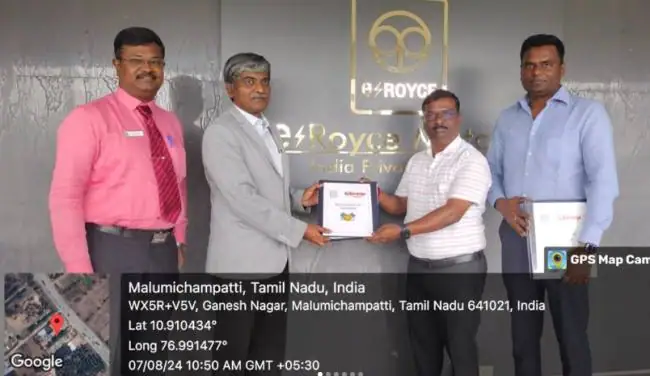
M.Tech. in Integrated Water Resources Management (IWRM) with SUEZ: The program was launched in association with SUEZ, with an on-campus industrial laboratory featuring a pilot-scale water distribution network, sensors and SCADA integration for real-time water-quality monitoring. The initiative was announced on 23 September 2024 and provides applied learning and research exposure in water-resource and urban water management.
Skill Development Centre for Electric Vehicle Technology: A Skill Development Centre for Electric Vehicle Technology was established by the Division of Mechanical Engineering and made available to students across divisions. Established on 12 April 2025, the centre provides specialized training in EV design, battery systems and electric drivetrains, offering interdisciplinary exposure to electric mobility and sustainable transportation.
Field visits, mini-projects and community-linked learning: Civil Engineering students are exposed to applied learning through field visits, mini-projects, case studies and community-linked projects.
4.3 SDG 11-Related Student Micro-Projects
During 2024–25, Short-Term Research Grants supported student-oriented research projects addressing environmental quality, solid-waste impacts and sustainable construction. The projects provide applied research exposure.
| Project Title | Theme |
|---|---|
| The Role of Wetlands as Sources and Sinks for Airborne Microplastics: A GIS-based Assessment of Public Health Impacts on Respiratory Diseases | Urban–rural environment and health |
| Microplastic Contamination from Rural Road Dust: A Pathway Linking Improper Solid Waste Disposal to Airborne Pollution | Solid waste and air quality |
| Inhalable Microplastics and Toxic Aerosols in Rural Cooking Spaces: Exposure Risks from Solid Waste Combustion and Reused Cooking Oil | Indoor air quality |
| Quantifying Microplastics in Rural Indoor Air: Influence of Household Solid Waste Practices | Indoor air and household waste |
| The Role of Solid Waste Dumping Sites in the Release of Persistent Organic Pollutants (POPs) into Rural Air and Water Systems | Solid-waste dump sites |
| Limestone Calcined Clay Cement Concrete (LC3) for Sustainable Construction | Low-carbon construction |
| Development of Sustainable Slurry Infiltrated Fibre Concrete (SIFCON) | Sustainable construction materials |
| Synthetic Wood using Discarded Coconut Coir and Resin | Waste-to-material |
| Flexural Behaviour of Sustainable Geopolymer Concrete Beams under the Influence of Corrosion and Fire | Resilient buildings |
| Axial Compression Behaviour of Corroded Geopolymer-based Reinforced Concrete Columns Subjected to Standard Fire Temperature | Resilient buildings |
5. Research and Innovation
KITS reports more than 1,673 papers in Scopus- and Web of Science-indexed journals over the last three calendar years, seven externally funded projects worth ₹906.12 lakh sanctioned in 2024–25, and 25 books and book chapters published in 2024–25. These are institution-wide figures.
For SDG 11 specifically, the university's Scopus research portfolio comprises 123 indexed publications for the 2024–2025 reporting period (51 in 2024 and 72 in 2025). Within this portfolio, 102 publications directly focus on core SDG 11 themes (detailed by UN Target in Section 5.1), while the remaining 21 publications contribute enabling technologies in environmental sensors, communication networks, and computing systems supporting urban infrastructure.
5.1 SDG 11 Publications by Theme (Scopus, 2024–2025)
| Theme | UN SDG Goal Target | 2024 | 2025 | Total |
|---|---|---|---|---|
| Transport and road safety | 11.2 | 15 | 25 | 40 |
| Air quality, waste and environmental health | 11.6 | 17 | 17 | 34 |
| Urban planning, smart cities, GIS and urbanization | 11.3 | 5 | 8 | 13 |
| Disaster and flood risk | 11.5 | 7 | 4 | 11 |
| Sustainable buildings and housing | 11.c | 1 | 1 | 2 |
| Urban green space | 11.7 | 0 | 1 | 1 |
| Arts and heritage | 11.4 | 0 | 1 | 1 |
| Enabling Urban Technologies & Smart Infrastructure (IoT sensing, green-comm antennas, edge systems, resilient networks) | Target 11.a / 11. b | 6 | 15 | 21 |
| Total: Institutional SDG 11 Scopus Portfolio | SDG 11 | 51 | 72 | 123 |
5.2 Selected High-Impact Peer-Reviewed Research Publications on SDG 11
| Title | Source (Year) | Authors (as indexed) |
|---|---|---|
| A Potential Inhalation Risk to Daily Commuter: Mobile Monitoring of Black Carbon during Journey in Traffic Emissions | Water, Air, and Soil Pollution (2024) | Mahato D.K. et al. |
| Phytomonitoring of air pollution around brick kilns in urban area: Exploring the potential of plants for the remediation of pollutants | Chemosphere (2024) | Setu S. et al. |
| Improving PM10 sensor accuracy in urban areas through calibration in Timișoara | npj Climate and Atmospheric Science (2024) | Blaga R., Gautam S. |
| Quantifying the Effects of the National Clean Air Programme on Air Quality Parameters in Chandigarh: A Scientific Assessment | Aerosol Science and Engineering (2024) | Dhote L. et al. |
| Validation and Spatial–Temporal Variability of Particulate Matter in Urban area Using WRF-Chem with Local and Global Emission Inventories | Water, Air, and Soil Pollution (2024) | Rami Y. et al. |
| Influence of localized sources and meteorological conditions on dry-deposited particles: A case study of Gabès, Tunisia | Science of the Total Environment (2024) | Ahbil K. et al. |
| College bus commuter exposures to air pollutants in Indian city: The urban-rural transportation exposure study | Geosystems and Geoenvironment (2025) | Lakra A.R. et al. |
| Urban wetlands as buffers against airborne microplastics and associated pollutants: Implications for public health and sustainable urban management | Journal of Hazardous Materials Advances (2025) | Gautam S. et al. |
| Microplastic and POP contamination in rural waste-dumping sites, India | Frontiers in Environmental Science (2025) | Gautam S. et al. |
| Assessing air pollution in a coastal urban setting: contributions of PM10, vehicular emissions, and public health impacts | Journal of Atmospheric Chemistry (2025) | Reshmy D.S. et al. |
| Spatial distribution and health implications of particulate matter concentrations across diverse land use types in Dinajpur District, Bangladesh | Geosystems and Geoenvironment (2025) | Majumder A.K. et al. |
| Dynamic change analysis of water spread region and its impact assessment using spectral indices of remotely sensed data | Environment, Development and Sustainability (2024) | Anand B. et al. |
| Spatio-temporal patterns of land use and land cover, and their impact on groundwater quality in the industrialized Muvattupuzha basin | Scientific Reports (2025) | Alagulakshmi K. et al. |
| Efficient traffic signal detection with tiny YOLOv4: enhancing road safety through computer vision | International Journal of Informatics and Communication Technology (2024) | Santhiya P. et al. |
| ITS-AI Integration: Enhanced Strategies for Mitigating Urban Traffic Congestion | ICRTCST 2024 (2024) | Santhiya P. et al. |
| An Intelligent Traffic Monitoring System in Congested Regions with Prioritization for Emergency Vehicle Using UAV Networks | Tsinghua Science and Technology (2025) | Kumar V.D.A. et al. |
| Towards Inclusive Transportation: Smart Steps for Elderly Commuters in the Public Transport Buses | Journal of Research and Applications in Mechanical Engineering (2025) | Ravi T. et al. |
| Analysis and prediction of land surface temperature with increasing urbanisation using satellite imagery | Heliyon (2024) | Vohra R. et al. |
| A Data Management System for Smart Cities Leveraging Artificial Intelligence Modeling Techniques to Enhance Privacy and Security | Journal of Internet Services and Information Security (2024) | Jyothi V. et al. |
| Integrating Demand and Supply Dynamics in the Identification of Cultural Ecosystem Services Provided by Urban Green Infrastructures | Journal of Environmental Protection and Ecology (2025) | Kumar C.P. et al. |
| Flood detection using SAR images: A review | AIP Conference Proceedings (2024) | Pillai L.G., Dolly D.R.J. |
| Advanced Weather Monitoring and Disaster Mitigation System | ICC-ROBINS 2024 (2024) | Paul D.J. et al. |
| Evaluation of the seismic performance of a multi-coil MR damper using non-linear method | Structures (2024) | Daniel C. et al. |
| Deep Learning-Based Flood Detection System Using Semantic Segmentation | ICCPCT 2024 (2024) | Chandran D.V. et al. |
| Erasure, Revival, and Commodification of Mithila Art | Economic and Political Weekly (2025) | Jose A., Wilson D.D. |
| Digital 3D modeling for preconstruction real-time visualization of home interior design through virtual reality | Construction Innovation (2024) | Joy E., R A., Raja C. |
| IoT-Guided Energy-Efficient Buildings Through Smart Material Sensing and Adaptive Control | ICINVENTS 2025 (2025) | Nandakumar E. et al. |
| A sustainable solution for mitigating environmental corrosion in the construction sector and its socio-economic concern | Case Studies in Construction Materials (2024) | B. Kanagaraj, N. Anand et al. |
| Evaluation of mechanical, durability and sustainability performance of geopolymer concrete using sodium silicate waste as source material | Case Studies in Construction Materials (2024) | B. Kanagaraj, N. Anand et al. |
| Influence of Nano-Fly Ash on mechanical properties, microstructure characteristics and sustainability analysis of Alkali Activated Concrete | Developments in the Built Environment (2024) | N. Anand, B. Kanagaraj et al. |
| Residual behaviour of fibre reinforced polymer concrete following exposure to standard fire | Structures (2024) | N. Anand, A. D. Andrushia et al. |
| SEM Image-based Porosity Analysis of Fire Damaged High Strength Concrete | Periodica Polytechnica Civil Engineering (2024) | N. Anand, A. D. Andrushia et al. |
5.3 Authored Books and Contributed Book Chapters on Urban Sustainability
| Publication | Publisher | KITS Contributors |
|---|---|---|
| Sustainable Air: Strategies for Cleaner Atmosphere and Healthier Communities (SpringerBriefs in Geography; DOI: 10.1007/978-3-031-77057-9) | Springer | S. Gautam, A. S. Gautam, A. Awasthi, N. Ramsundram |
| Aerosol Optical Depth and Precipitation: Measuring Particle Concentration, Health Risks and Environmental Impacts (DOI: 10.1007/978-3-031-55836-8). Chapters: “Aerosol Variability and Its Impact on Cloud–Precipitation Interaction in Urban Areas of Maharashtra, India” (Chelani, Vyawahare, Gautam) and “Monsoon Shifts and Their Impact on Air Quality and Weather: A Case Study of the Amaravathi River Basin, India” (R. P. Kumar, J. Brema, S. Gautam, G. Catherina) | Springer | S. Gautam, R. P. Kumar, C. Samuel (book); J. Brema (chapter) |
| Blue Sky, Blue Water: Strategies for Protecting Air and Water Quality in the 21st Century. Chapters: “Advancements and Challenges in Flood Risk Assessment: A Scientometric Analysis of Global Trends” (Singh, Gautam, Joshi; DOI: 10.1007/978-3-031-82559-0_19) and “Sustainable Strategies and Innovative Solutions for Protecting Blue Sky and Blue Water to Enhance Environmental Health” (Mary, Paul, Rose, Terence; DOI: 10.1007/978-3-031-82559-0_23) | Springer (Scopus year 2025) | S. Gautam; I. T. B. Mary; J. J. Paul; J. S. Rose; J. S. Terence |
| “Air Quality Monitoring and Prediction: Transitioning from Conventional to AI Techniques” in Artificial Intelligence for Air Quality Monitoring and Prediction | CRC Press (Taylor & Francis) | S. Gautam |
| “The future of modern transportation for smart cities using trackless tram networks”, in Conversational Artificial Intelligence (DOI: 10.1002/9781394200801.ch23) | Wiley | A. Samson Arun Raj, P. Yogesh |
| “Metals Recovery from Electrical and Electronic Waste”, in Valorization of Resources from Urban Mined Materials (DOI: 10.1142/9789811297755_0002) | World Scientific | A. Iyer et al. |
5.4 Externally Funded SDG 11 Research Projects Sanctioned in AY 2024–25
| Project | Principal Investigator | Funding Agency | Sanctioned | Amount |
|---|---|---|---|---|
| LoRa-Drone Surveillance for Human–Wildlife Conflict Mitigation | Dr. Prawin Angel Michael | IIT Palakkad Technology IHub Foundation | 16.12.2024 | ₹9,55,000 |
| Development of an Eco-Friendly Sustainable Technology – A Pilot Plant to Recycle Non-Ferrous Metallic Waste Scraps | Dr. S. J. Vijay; Dr. M. Wilson Kumar | DST-TTI-WMT | 06.11.2024 | ₹69,98,000 |
| Scale-up of Heat Pipe-Assisted Hybrid Solar Drying System for Agricultural Products in tribal areas | Dr. A. Asha Monicka; Dr. A. Brusly Solomon | IIT Palakkad Technology IHub Foundation | 16.12.2024 | ₹9,99,000 |
| Strategies for improving the performance of concrete under extreme fire condition | Dr. N. Anand | Ministry of Innovation and Technology of Hungary & National Research, Development and Innovation Fund; Budapest University of Technology and Economics | 19.12.2024 | ₹57,69,000 |
| IoT-based Remote Monitoring and Alerting of Human–Elephant Conflict Mitigation | Dr. Manoj G | MHRD – Unnat Bharat Abhiyan (Technology Development) | 13.06.2024 (field activities in 2024–25) | ₹1,00,000 |
| Total (SDG 11-Specific Research Grants) | - | - | AY 2024–25 | ₹1,48,21,000 (₹148.21 Lakh) |
5.5 Patents, Products, Start-ups, Consultancy and Facilities
| Type | Details |
|---|---|
| Patent (published) | “A Process of Preparation of Biodegradable Straws and Product Thereof” – application 202441076002, published 18.10.2024 (Dr. Pragalyaa Shree M. M., Ms. Mahalakshmi G., Ms. T. U. Nivetha, Dr. R. Freeda Blessie) |
| Patent (published) | “Edge Computing Based Wild Animal Intrusion Detection and Chasing System Using Internet of Things Technologies” – application 202441079542, published 25.10.2024 (Dr. J. Sebastian Terence et al.) |
| Product | Composite reinforcement bar using waste PET plastics, glass powder and neem-based adhesive (Dr. S. Gautam, Dr. N. Anand, Dr. K. Balamurali); Method of producing artificial wood (Dr. K. Balamurali, Dr. N. Anand) |
| Student products | Smart dustbin; autonomous surface vehicle for floating-waste collection in water bodies; AI-enabled air purifier for indoor air quality; elephant-intrusion alarm system (Robotics, Agriculture and other divisions) |
| Start-ups | Reverse vending machine delivering compacted, 99% pure recyclables; Edible cutlery as an alternative to single-use plastic utensils; Converting biowaste into composite materials through pyrolysis (alternative to plastics) |
| Consultancy and testing | Compressive-strength tests on bricks, blocks and concrete cubes for Coimbatore construction and building-material firms (e.g., Sun Bricks, Sri Amaran Construction, Kovai Fly Ash, Sri Ragam Bricks); water-sample analysis (TSS, chlorides) |
| New facilities | Environmental Engineering laboratory acquired a CO₂ monitor, a hand-held air-quality monitor and a personal dust sampler (28.04.2025), and and a portable gas analyser (procured May 2025; commissioned June 2025) (07.06.2025) |
| New facility (industry) | SUEZ–KITS Industrial Water Laboratory with a pilot-scale water distribution network, sensors and SCADA for real-time water-quality monitoring (announced 23.09.2024); supports the new M.Tech IWRM |
| New facility (skills) | Skill Development Centre for Electric Vehicle Technology, Division of Mechanical Engineering (announced 12.04.2025) |
6. Institutional Events and Activities Aligned with SDG 11
Events relevant to SDG 11 during AY 2024–25 are listed below.
6.1 Events, Guest Lectures and Training
| SI No | Activity, Date and Organiser | Description and SDG 11 Target |
|---|---|---|
| 1 | Sustainable Smart Cities 2024: Innovation for a Greener Future Aligned with SDGs – IEEE Smart Cities-sponsored National Symposium on 30.09.2024 Organiser resource persons :Dr. Suhasini (SENSE, VIT) and Prof. Vinodh Ewards (KITS) | Symposium on smart-city technologies and green innovation aligned with the SDGs. (UN SDG Goal 11.3, 11.6) |
| 2 | Engineer’s Day – Sustainable Infrastructure on 18.09.2024 Organiser: Division of Civil Engineering, speakers from L&T, L&T IDPL, Tata Consulting Engineers, SUEZ and FANUC | Practitioner talks on sustainable and resilient infrastructure. (UN SDG Goal 11.b) |
| 3 | Guest Lecture: Design for Road Safety and Role of the Civil Engineer on 13.02.2025 Speaker: Er. G. Manuneeti, Divisional Engineer, Highways Department (Road Safety Wing) | Road-safety design principles from a public-sector practitioner. (UN SDG Goal 11.2) |
| 4 | Training: Emerging Applications of Drones in Civil Engineering on 17.08.2024 Resource organisation: M/s Greentech Aviation | Drone applications in surveying, mapping and inspection. (UN SDG Goal 11.3, 11.5) |
| 5 | “Neighbourhood” – Collaborating for Breakthroughs, Innovating for Tomorrow on 07.10.2024 Speaker/organiser: Dr. J. Brema, Professor, Civil Engineering | (UN SDG Goal 11.5) |
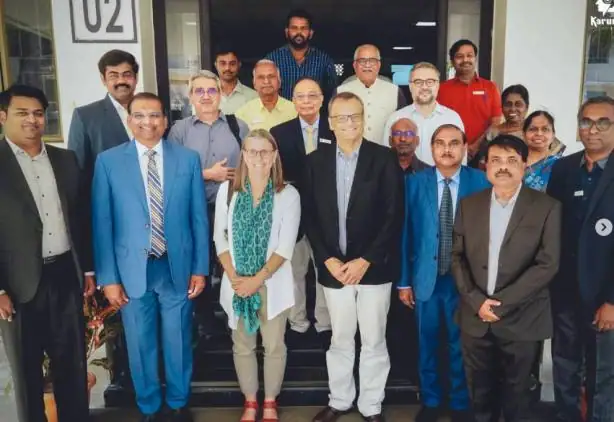
| 6 | Workshop on Government Initiatives in Kol Development (Kerala Kol wetlands) on 23.10.2024 keynotes by Prof. R. Ramakumar (Member, Kerala State Planning Board) and Shri Roshy Augustine (Minister for Water Resources, Kerala) | Release of the Ramsar report “Evaluation of Ecosystem Services of Kol Wetlands in the Context of Climate Change” and interaction with farmers on wetlands under sea-level rise and climate change. (UN SDG Goal 11.a, 11.b, 11.4) |
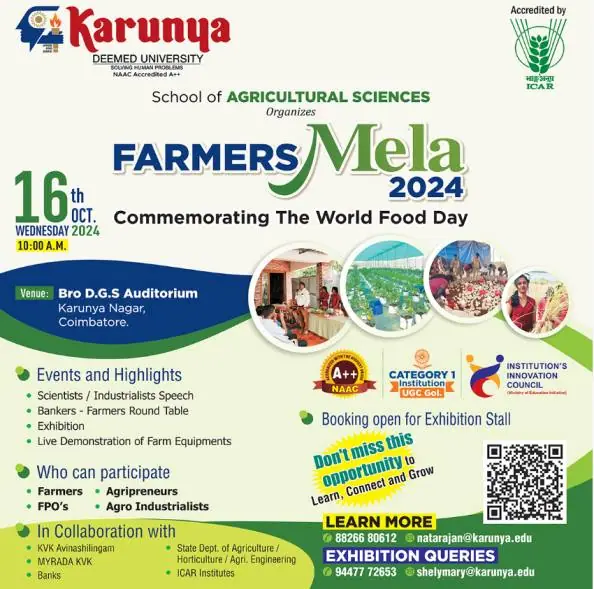
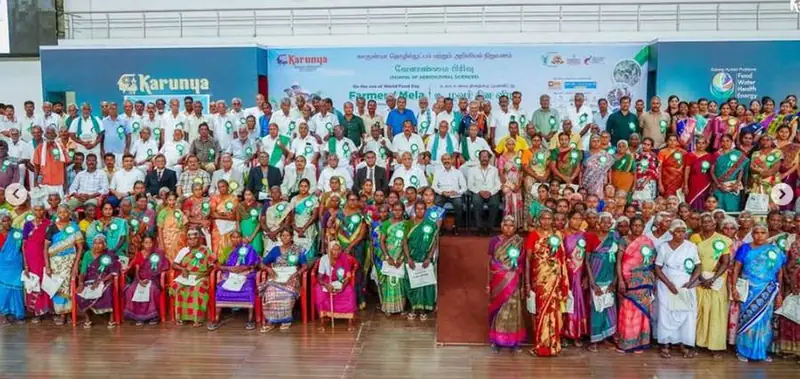
| 7 | Farmers’ Mela 2024 (World Food Day)16.10.2024 Organiser: School of Agricultural Sciences; inaugurated by Mr. Suba Nagarajan, Chairman, Coconut Development Board (Government of India) | Farm productivity and income, coconut value-added products, crop diversification, drones, data analytics and sensors; agricultural finance sessions by Punjab National Bank and Canara Bank; exhibits by KVKs of Coimbatore, Erode and Thoothukudi. (UN SDG Goal 11.a) |
| 8 | Inauguration of the SUEZ–KITS Industrial Water Laboratory and Launch of M.Tech IWRM Inaugurated by Dr. Paul Dhinakaran, Chancellor; partner: SUEZ | Pilot-scale water distribution network with sensors and SCADA for real-time water-quality monitoring, addressing urban water quality and distribution challenges. (UN SDG Goal 11.1, 11.6) |
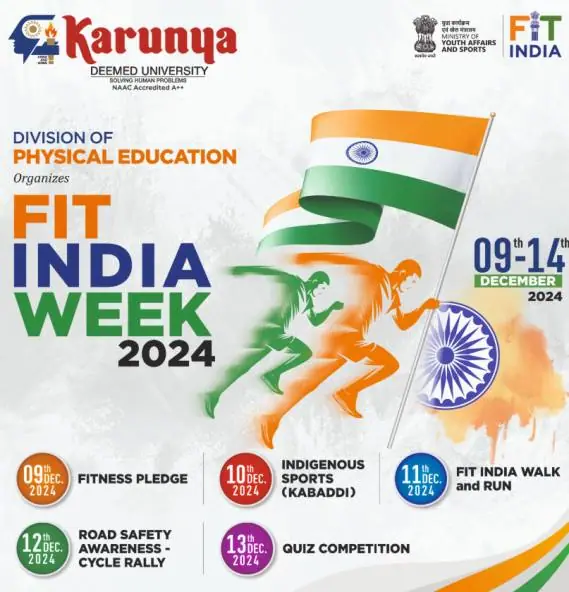
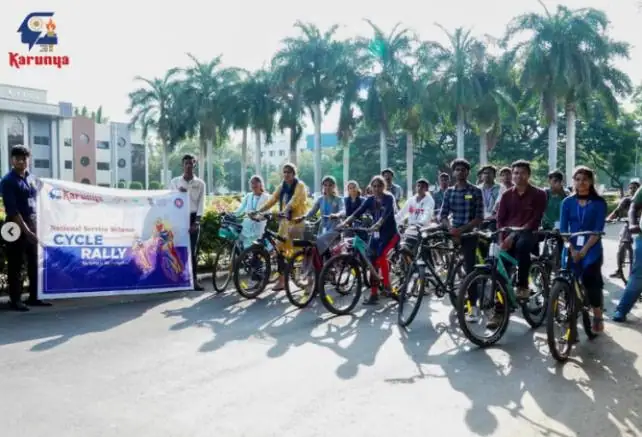
| 9 | Fit India Week 2024November 2024 (30.11.2024) Organiser: Division of Physical Education | Indigenous sports (Kabaddi), walking and running, a road-safety awareness cycle rally, a quiz and a fitness pledge. (UN SDG Goal 11.2, 11.7) |
6.2 Arts and Cultural Events
| Event | Date |
|---|---|
| MegaPlay 2024 – “FAR” | December 2024 (18.12.2024) |
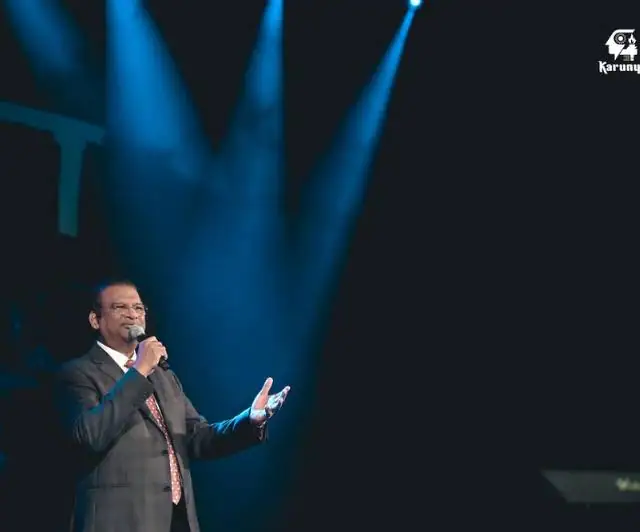
| Annual Thanksgiving 2024 with a 100-voice choir | December 2024 (posted 17.12.2024) |
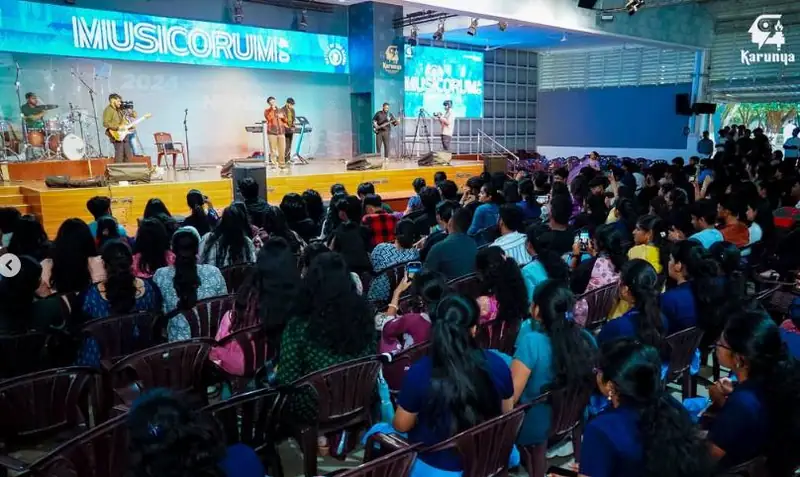
| MUSICORUM (Music Club) | October 2024 |
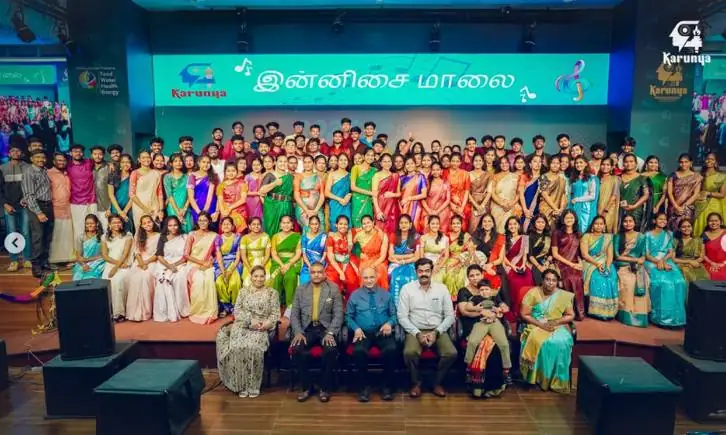
| Innisai Maalai (Tamil cultural evening) | October 2024 |
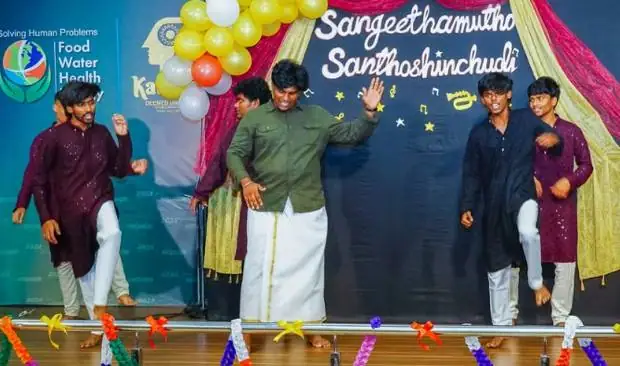
| Sangeethamtho Santhochinchudhi (Telugu cultural evening) | October 2024 |
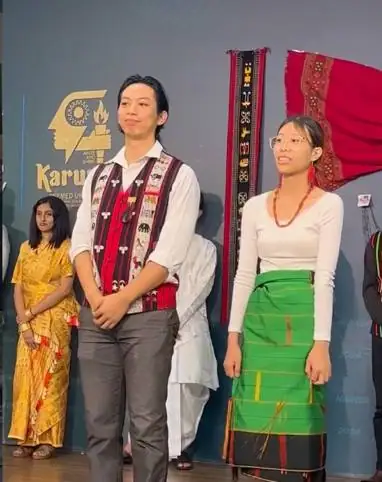
| IAESTE Evening (cultural exchange with international interns) | August 2024 |


7. Community Outreach and Extension Activities
7.1 Human–Animal Encounter Mitigation with Forest-Edge Communities
| Date | Community / Location | Problem and Intervention | Participants | Organising Unit and Partner |
|---|---|---|---|---|
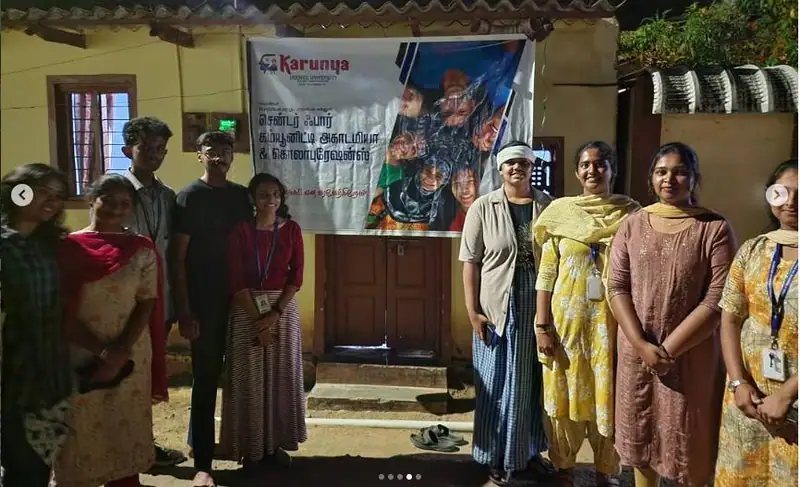
| 07.08.2024 | Singampathi, Siruvani (Community Connect) | Human–animal encounters. Study on making bar fences. | 40 | Dr . Manoj, KITS |
| 25.01.2025 | Singampathi, Siruvani (Community Connect) | Human–elephant conflict. Installation of an IoT-based remote monitoring and alerting system. | 40 | KITS with Rotary (Mr. Shravanan, President, Rotary Thondamuthoor); funded under UBA |
7.2 National Service Scheme (NSS) Activities Mapped to SDG 11
| SI No | Date | Activity | NSS Scheme |
|---|---|---|---|
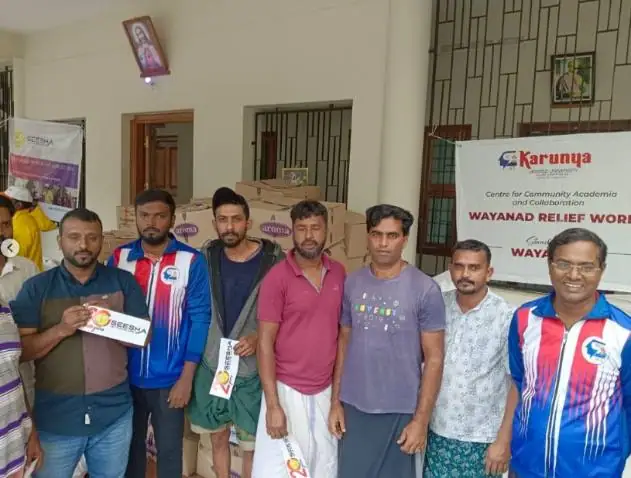
| 1 | 05.08.2024 | Warm Hearts for Wayanad – relief support after the July 2024 Wayanad landslides (see Section 7.4 and Section 8 for the KITS–SEESHA joint operation) | Shreshtha Bharat |
| 2 | 21.09.2024 | Campus Cleaning 1 | Swachh Bharat |
| 3 | 21.09.2024 | Waste to Art | Swachh Bharat |
| 4 | 28.09.2024 | Sampoorna Swachhata | Swachh Bharat |
| 5 | 19.10.2024 | Blooms and Branches – Tree Plantation | Shikshit Bharat |
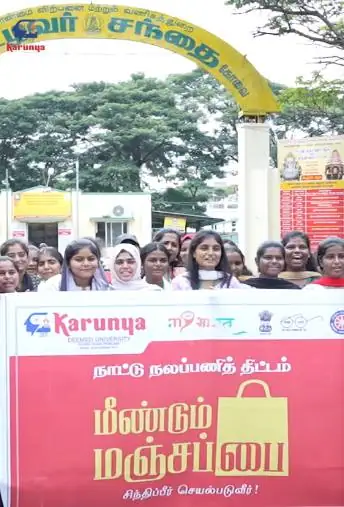
| 6 | 19.10.2024 | Meendum Manjapai (Return of the Cloth Bag) | Swachh Bharat |
| 7 | 19.10.2024 | Terra Tidy – Cleanliness Drive | Swachh Bharat |
| 8 | 26.10.2024 | Campus Cleaning 2 | Swachh Bharat |
| 9 | 26.10.2024 | Cycle Rally | Swasth Bharat |
| 10 | 26.10.2024 | Talk on Environmental Protection and Disaster Management | Swasth Bharat |
| 11 | 26.10.2024 | Safety on Wheels | Surakshit Bharat |
| 12 | 08.02.2025 | Road Safety Awareness Campaign | Surakshit Bharat |
| 13 | 22.02.2025 | Plastic Eradication – Meendum Manjapai | Swachh Bharat |
| 14 | 22.02.2025 | Swachh Bharat Drive | Swachh Bharat |
| 15 | 25–29.03.2025 | NSS Special Camp – painting, cleaning and community service across 10 rural schools (1,500 registered student volunteers) | Shikshit Bharat |
7.3 National Cadet Corps (NCC) and Heritage Club
| Date | Activity | Participants | Target and Description |
|---|---|---|---|
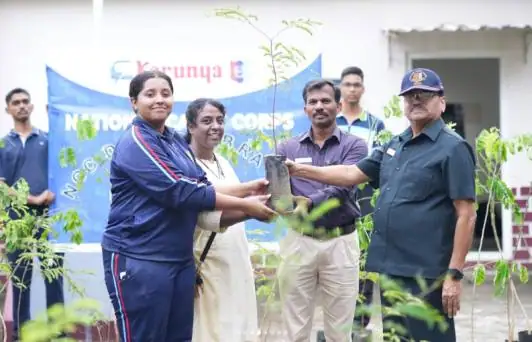
| 16.11.2024 | NCC Tree Plantation Drive | 85 cadets | (UN SDG Goal 11.7, 11.6) – “One Cadet – One Tree”: cadets travelled by bicycle and on foot from the NCC office, planting saplings outside the Bro. DGS Dhinakaran Centre and along the route to the Emmaus Quarters, to increase green cover and create a better living environment |
| 21.11.24 | NCC “Swabhav Swachhata – Sanskar Swachhata” cleanliness awareness | 85 cadets | (UN SDG Goal 11.6) – cleanliness awareness |
| 21.09.2024; 28.09.2024; 19.10.2024; 26.10.2024 | Heritage Club orientation and prayer sessions at the Bethesda International Prayer & Meditation Centre | 60 | (UN SDG Goal 11.4) – cultural and spiritual heritage; access to a 1.5-acre green prayer and meditation centre |
7.4 Community Programmes (2024–25)
| Date (Post) | Programme | Community / Place | Organiser and Partner |
|---|---|---|---|
| 06.08.2024 | Immediate Relief for Wayanad Landslide Victims | Wayanad, Kerala | KITS and SEESHA (Samiti for Education, Environment, Social and Health Action), led by the Chancellor; discussion with the MLA of Kalpetta |
| 23.09.2024 | Swachhata Hi Seva 2024 – NSS students clean a local village | Singam pathi village | NSS |
| Oct. 2024 | “Go Green with Manjapai” – plastic-free awareness | Ulavar Market | NSS |
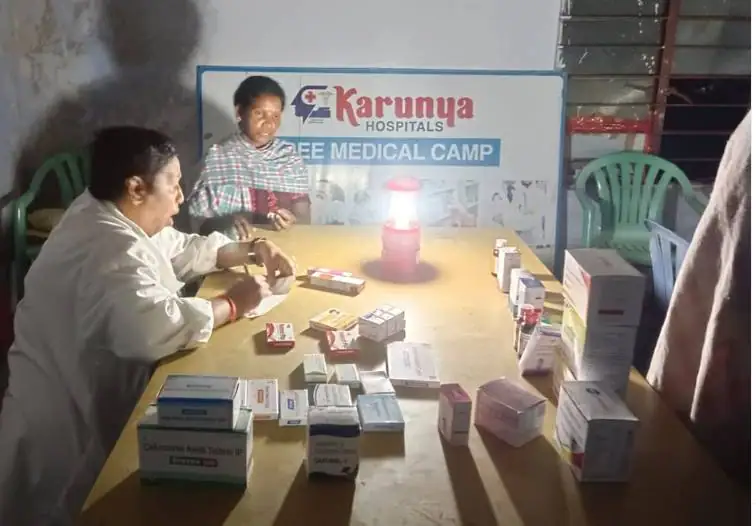
| 25.10.2024 | Medical Camp (held despite rain and power outages) | Sadivayal | Karunya Hospitals with Karunya Community Academia |
| 30.10.2024 | Health and Nutrition Awareness (skit, dance, talk on fruit and vegetables) | Perumalkovilpathy village | CCAC with the Division of Food Processing and Technology |
| 14.11.2024 | Children’s Day: Awareness on Drug Abuse, Child Protection and Excessive Mobile Use; drawing, pledge and craft at Karunya tuition centres | Kalimedu village | CCAC with the Criminology and Forensic Division |
| 12.02.2025 | NSS Roadside Clean-up and Village Awareness Campaign; awareness on elimination of lymphatic filariasis in villages | Local Municipal Area | NSS |
| 08.04.2025 (camp 25–29.03.2025) | NSS Special Camp 2025: painting, cleaning and community service in 10 schools | 10 schools | NSS with the District Educational Officer and the Tamil Nadu State NSS Cell; 1,200+ volunteers |
8. Partnerships and Collaborations
Partner
Purpose and Date
Activities
Outcome
IIT Palakkad Technology IHub Foundation; IIT Palakkad
Research funding (16.12.2024); MoU with IIT Palakkad (06.05.2025)
LoRa-drone surveillance for man–animal conflict; scale-up of hybrid solar drying for agricultural products in tribal areas
community safety and rural livelihoods; two projects sanctioned
DST (TTI-WMT programme)
Funded pilot plant (06.11.2024)
Eco-friendly technology to recycle non-ferrous metallic waste scraps
industrial waste recovery
Ministry of Innovation and Technology, Hungary; NRDI Fund; Budapest University of Technology and Economics
Funded research (19.12.2024)
Strategies to improve the performance of concrete under extreme fire
fire-resilient buildings; co-authored publications with Hungarian collaborators
MHRD – Unnat Bharat Abhiyan
Technology-development support (sanctioned 13.06.2024)
IoT-based monitoring and alerting of human–elephant conflict
community early warning
Rotary (Thondamuthoor)
Community installation (25.01.2025)
Installation of the IoT monitoring and alerting system
co-delivery with a civil-society partner
TU Berlin
Small Satellite Technology mission
Satellite for wildlife monitoring in the Western Ghats
prevention of human–animal conflict
Bangladesh Agricultural University (Department of Environmental Science)
Research collaboration
Phytomonitoring of air pollution around brick kilns (published in Chemosphere, 2024)
urban air-pollution remediation
Public agencies and industry (Highways Department – Road Safety Wing; L&T; Tata Consulting Engineers; SUEZ)
Guest speakers (18.09.2024; 13.02.2025)
Engineer’s Day and road-safety guest lecture
practitioner input into teaching
SUEZ
Industry partnership announced 23.09.2024; SUEZ speaker at Engineer’s Day on 18.09.2024
On-campus Industrial Water Laboratory with a pilot-scale water distribution network, sensors and SCADA; new M.Tech IWRM
real-time water-quality monitoring and skills for urban water management
SEESHA
Wayanad landslide relief (06.08.2024)
Joint relief operation led by the Chancellor
essential supplies for 1,000 families in the first phase
Kerala State Planning Board; Kerala Water Resources Department
Kol wetlands workshop (Oct. 2024)
Workshop on government initiatives in Kol development; release of a Ramsar report on ecosystem services of the Kol wetlands
wetland and climate-resilience planning with state authorities
Coconut Development Board; Punjab National Bank; Canara Bank; KVKs of Coimbatore, Erode and Thoothukudi; FPOs
Farmers’ Mela (16.10.2024)
Farmer discussions, finance schemes and an exhibition
links between institutions, banks and rural producers; about 400 farmers
District Educational Officer and Tamil Nadu State NSS Cell (Government of Tamil Nadu)
NSS Special Camp (25–29.03.2025)
Painting, cleaning and community service in 10 schools
safer, cleaner school premises
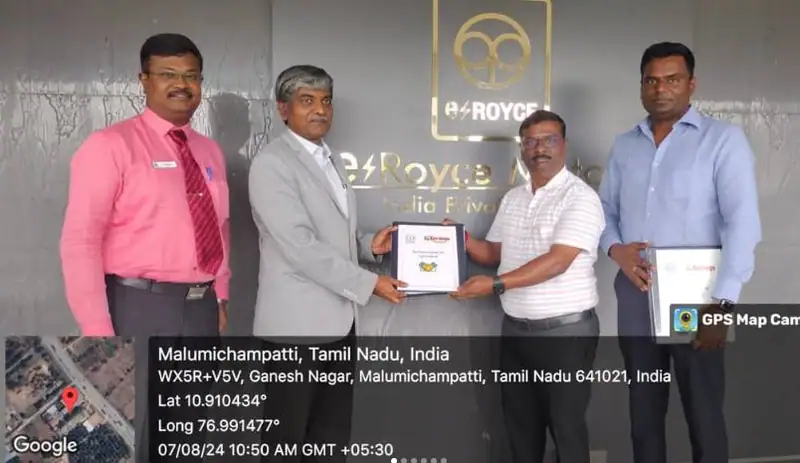
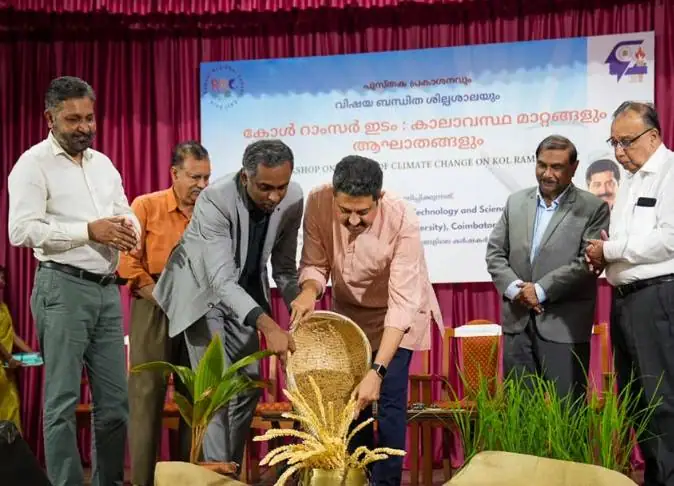
Figure 8.1: External Partnerships for Sustainable Urban and Regional Development — MoA Signing with e-Royce Motors India Ltd; National Workshop on Kol Wetlands with Kerala State Planning Board.
9. Best Practices
9.1 Community-embedded Early Warning for Human–Elephant Conflict
| Aspect | Details |
|---|---|
| Background | Residents of forest-edge settlements near Siruvani face human–animal encounters, as recorded at the Community Connect programme of 07.08.2024. |
| Objective | Reduce risk to residents by combining low-cost physical measures, sensing and alerting, developed with the community. |
| Implementation | Community Connect programmes at Singampathi, Siruvani (07.08.2024) studied bar fences and developed an encounter-detection device; an IoT-based remote monitoring and alerting system was installed with Rotary Thondamuthoor on 25.01.2025 under a UBA-funded project. A LoRa-drone surveillance project (IIT Palakkad iHub, 16.12.2024) and a Small Satellite mission with TU Berlin extend the approach. |
| Innovation | Edge-computing wild-animal intrusion detection and chasing system (patent application published 25.10.2024); student elephant-intrusion alarm; LoRa and drone sensing. |
| Beneficiaries | 80 community participants recorded across the two Community Connect sessions and 40 at the installation event (total: 120 beneficiaries). |
9.2 Campus as a Resource-Recovery System
| Aspect | Details |
|---|---|
| Background | A residential campus of 7,863 students generates continuous demand for energy and water and large volumes of kitchen, paper and sewage waste. |
| Objective | Recover energy, water and materials on site and cut environmental impact per resident |
| Implementation | 115 kW grid-tied solar plant; 29 solar water-heating systems; 15,066 LED tube lights; four biogas plants in hostels; four sewage treatment plants (2,455 KLD) with treated water reused for irrigation; rainwater harvesting, soil and water conservation and groundwater recharge; a paper-recycling plant using 200 kg of waste paper a day to make folders; campus planted with indigenous Western Ghats species. |
| Innovation | Integrated closed-loop design: kitchen waste to biogas, sewage to irrigation water, waste paper to stationery, with the campus used as a living laboratory for courses such as Sustainable Design of Campus. |
| Beneficiaries | All campus residents |
9.3 Student-led Civic Action at Scale through NSS
| Aspect | Details |
|---|---|
| Background | A large student body can be mobilised for civic work when activities are structured and recurring. |
| Objective | Build sustainable habits and civic responsibility on cleanliness, plastic reduction, greening, road safety and disaster preparedness |
| Implementation | Fifteen SDG 11-related activities between August 2024 and March 2025, including campus-cleaning drives, “Meendum Manjapai” cloth-bag campaigns (including one at Ulavar Market), a tree plantation, a cycle rally, road-safety campaigns, Wayanad relief and a special camp that painted and cleaned 10 schools. |
| Innovation | Linking each activity to a national NSS scheme theme (Swachh, Surakshit, Shikshit Bharat) and combining awareness with hands-on action. |
9.4 Research-to-Community Pathway on Air Quality and Solid Waste
| Aspect | Details |
|---|---|
| Background | Air pollution and unmanaged solid waste are central environmental-health problems for cities and villages. |
| Objective | Generate evidence and low-cost tools on air quality, microplastics and waste, and train students to carry out local assessments. |
| Implementation | Four Springer/CRC Press books and chapters (2024); five student micro-projects on rural microplastics and dump-site pollution; new air-quality instruments in the Environmental Engineering laboratory (April–June 2025); patents and products on plastic-waste reduction and waste-derived construction materials. |
| Innovation | Combining satellite and ground-based monitoring, AI prediction and field assessment; converting waste PET, coir and industrial by-products into building materials. |
Conclusion:
Karunya Institute of Technology and Sciences (KITS) demonstrates its commitment to UN Sustainable Development Goal 11 – Sustainable Cities and Communities through the integration of sustainability into teaching, research, campus operations and community engagement. During the academic year 2024–25, the Institute implemented several initiatives focusing on renewable energy, efficient water management, waste reduction, environmental protection, sustainable infrastructure and campus safety.
The Institute's contributions are further strengthened through multidisciplinary research, funded projects, innovative technologies, industry collaborations and student-led NSS and NCC activities. Special initiatives addressing human–elephant conflict, disaster relief, road safety, air pollution and solid-waste management reflect its commitment to addressing real-world societal challenges.
Through these coordinated efforts, KITS promotes resource-efficient practices, environmental responsibility, technological innovation and community participation. The Institute remains committed to developing sustainable, inclusive, safe and resilient communities and contributing meaningfully towards achieving the objectives of SDG 11.