
1. SDG Overview
This quote resonates strongly with Sustainable Development Goal 12 (SDG 12): Responsible Consumption and Production, which calls for sustainable and efficient use of natural resources, reduction of waste, responsible production practices, and the adoption of environmentally conscious lifestyles. SDG 12 emphasizes the need to transform the way resources are consumed and produced, ensuring that economic and institutional development does not compromise the needs of future generations.
In alignment with this objective, Karunya Institute of Technology and Sciences (KITS) follows the principle of 3Rs (Reduce, Reuse and Recycle) model to address the challenges of waste management in its 720-acre campus, which is located in the ecologically rich surroundings of Coimbatore, Tamil Nadu, is committed to integrating sustainability into its academic, research, campus, and community-oriented activities. Spread across a green campus surrounded by agricultural landscapes and natural ecosystems, Karunya provides a unique environment where education, innovation, and environmental responsibility can progress together.
Being a residential campus with 7863 students in 15 resident halls (hostels) and 661 faculty/staff members, many of whom reside on campus in the 17 apartment complexes, the 3R model is effective in dealing with the different types of waste namely; solid, liquid and e- waste. The institution recognizes that a sustainable campus is not merely about conserving resources but also about developing a culture of responsible consumption among students, faculty, staff, and the wider community. Through its multidisciplinary academic environment, Karunya promotes awareness and action towards sustainable resource management, environmental conservation, and responsible lifestyles.
2. Institutional Policies and Commitments
Waste and Resource Management Policy
The institute recognizes its legal and ethical responsibilities through the implementation of waste and resource management policy (KITS/WRMP/2025/01), to protect the environment through sustainable waste management. This policy was framed and implemented since 2023, which aligns with SDGs and emphasizes responsible research and campus sustainability efforts. The policy applies to all waste types, including hazardous waste, on campus and partner areas. The goal is to achieve a zero-waste campus by 2040 through various waste reduction initiatives. KITS have collaboration with suppliers and partners ensures policy implementation and waste reduction. It mandates a ban on single-use plastics, encourages reusable alternatives such as cloth bags, steel cutlery and refillable water bottles, and promotes recycling through authorized recyclers. Principles of circular economy are integrated into operations and procurement to reduce waste generation. The policy was revised on 29 August 2025 and its available at institution’s website. The Chief Engineer oversees compliance and resource allocation for waste management. Deans ensure policy implementation within their departments. The Sustainability Team and other stakeholders monitor progress and address suggestions or complaints. The Vice Chancellor is the final authority for appeals and policy revisions.
Policy on Environmental Sustainability, Green campus, Environment and Energy Conservation
This policy was implemented in 2019 which provides framework for environmentally sustainable practices, activities and operations at KITS applicable to staffs, students and visitors. The institution thrives for the environmental aspect by minimising the carbon food print of goods and services through sustainable procurement and resource conservation programmes. The faculty members and students together with the Director (Students), campus manager and construction and maintenance department ensure the management of green campus. KITS ensures that renewable energy sources are utilized to the maximum to conserve energy and reduce carbon foot print. KITS is pedestrian friendly motor vehicle free campus and encourages electric vehicles for the physically disabled to move around the campus.
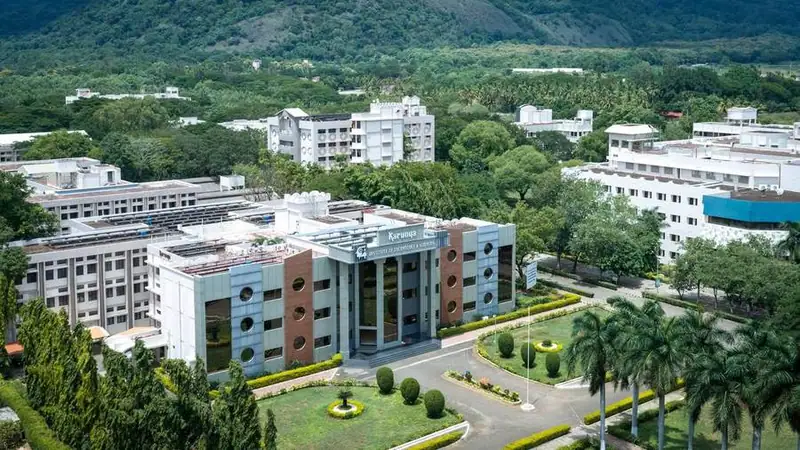
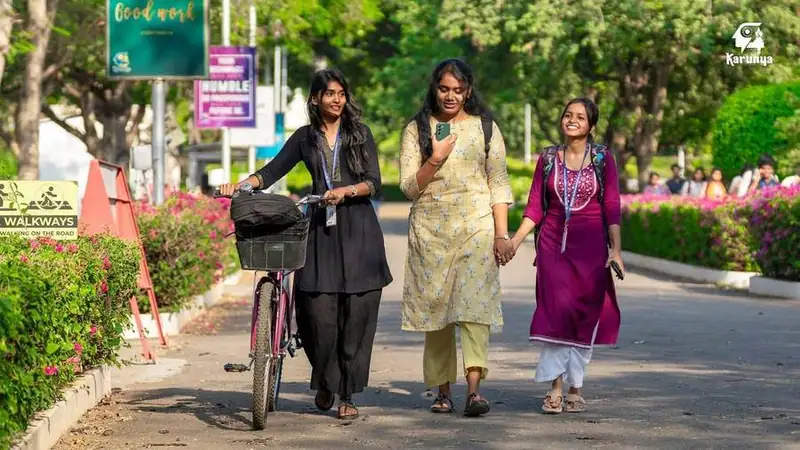
As part of Green Campus initiatives, the Institution installed a 115-kW grid-tied solar power plant, 30 solar water heating systems which produced 1,704,783.71 kWh. There are four units of biogas plants which treated 450 Tons of organic waste (Food waste: 150 Tons; Night Soil Based: 300 Tons) during 2024. Four sewage treatment plants with a total capacity of 2,455 KLD, and several rainwater harvesting structures and groundwater recharging mechanisms. The water from the STP is reused for irrigation.
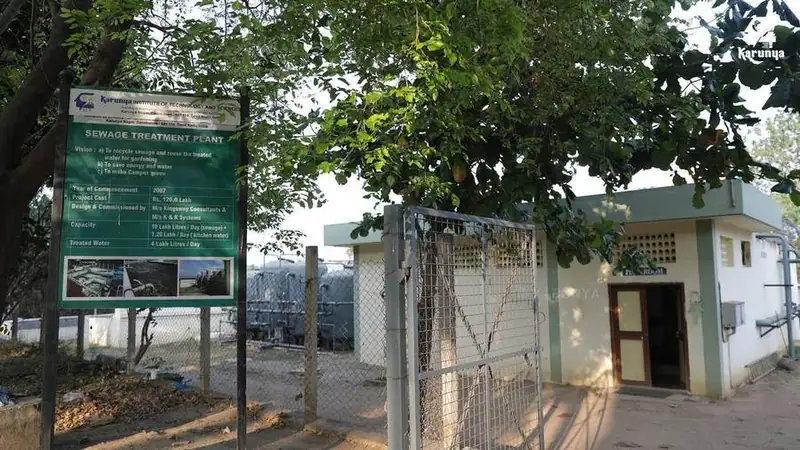
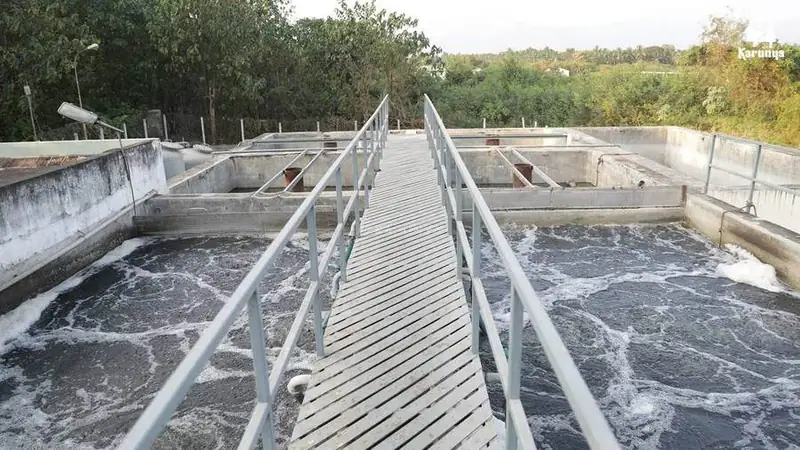
Sewage Treatment Plant
Rainwater Harvesting and Groundwater Recharge:
Karunya Institute of Technology and Sciences has implemented a rooftop rainwater harvesting system with a 201 m² catchment area and a 25,000-litre storage tank to efficiently collect and conserve rainwater. The harvested water is utilized for groundwater recharge and gardening, supporting sustainable water management and reducing dependence on conventional water sources.
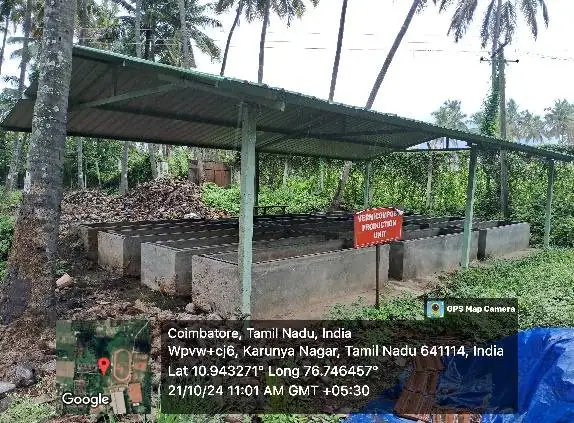
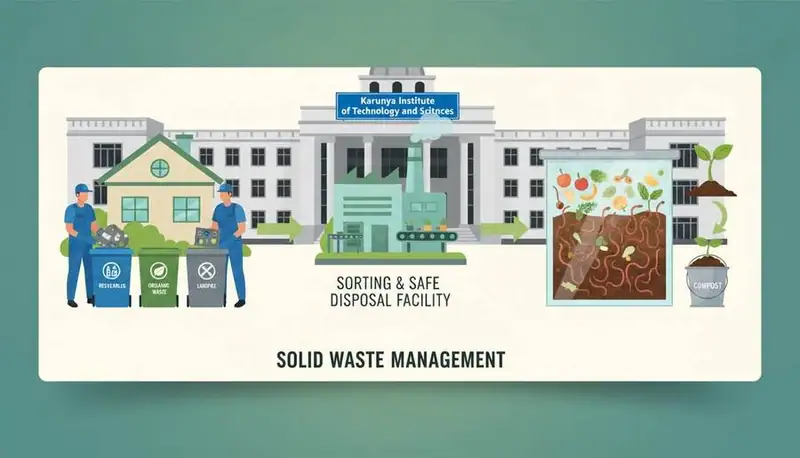
Commercial vermicompost unit at the North Farm
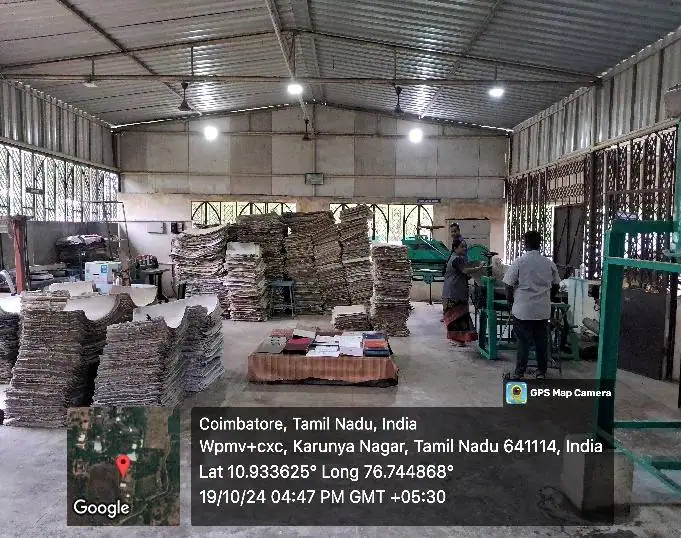
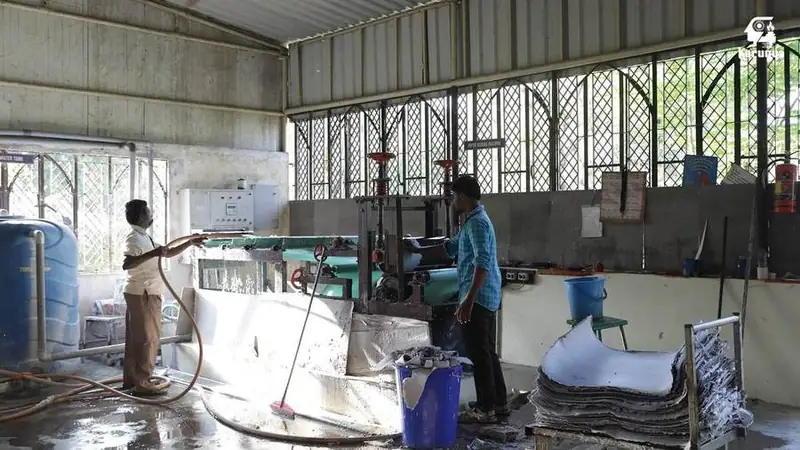
Paper Recycling Plant
The on-campus eco-friendly paper recycling plant processes approximately 200 kg of waste paper per day, converting campus paper waste into reusable office files, conference folders, and envelopes. KITS has implemented a comprehensive sewage treatment system supported by four biogas plants, generating approximately five to six cylinders of biogas per day. The sewage treatment infrastructure includes 400 KLD at the FDR/EGR Campus, 1000 KLD at the New Gents Residence Campus, 600 KLD at the Ladies Residence Campus, 450 KLD at the PRGR Campus, and 5 KLD at the Student Prayer Centre, demonstrating the institution’s commitment to sustainable wastewater management, resource recovery, and environmental conservation. Four Biogas Plants in the hostels, produce energy leading to a saving of Rs 23,10,000 per year. The eco-friendly paper recycling plant produces folders using 200 kg/day of waste paper. Soil and water conservation measures are adopted in the campus in addition to rain water harvesting, waste water treatment and recharging leading to a saving of Rs.2,00,000 per year.
Sustainable Procurement and Purchasing Policy
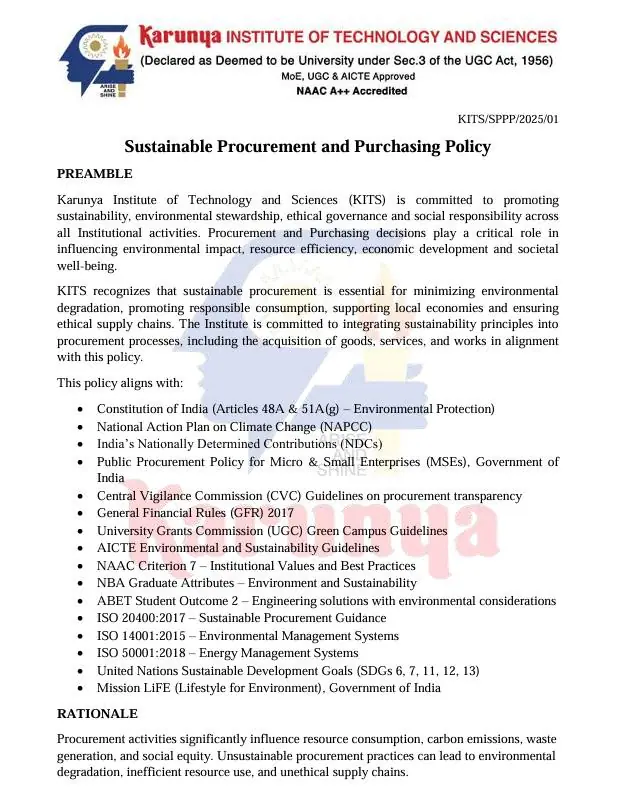
KITS has implemented a Sustainable Procurement and Purchasing Policy (KITS/SPPP/2025/01) to promote responsible consumption and production in alignment with SDG 12. The policy prioritises eco-friendly, energy-efficient, recyclable and biodegradable products, encourages local and socially responsible suppliers, reduces packaging waste, and promotes reuse, recycling and circular economy practices. It also incorporates lifecycle cost assessment, transparent procurement, supplier sustainability evaluation, digital purchasing to reduce paper consumption, and regular monitoring and reporting. The policy, created in July 2022 and revised on 29 August 2025, demonstrates the institution’s commitment to sustainable resource utilization, waste minimization and environmentally responsible purchasing.
Sustainable Investment Policy
KITS has established a Sustainable Investment Policy (KITS/SIP/2025/01) to integrate Environmental, Social and Governance (ESG) principles into institutional financial and investment decisions. The policy promotes ethical, transparent and responsible investments, prioritizes renewable energy, green infrastructure, sustainable agriculture, water conservation and socially beneficial initiatives, while avoiding investments in environmentally and socially harmful sectors. It also specifies governance responsibilities, annual ESG performance monitoring, reporting, audits and periodic reviews to ensure accountability and continuous improvement. The policy document serves as formal evidence of institutional commitment, with its reference number, annexures, ESG screening framework and approval by the Vice-Chancellor. The policy is available as institutional documentation, subject to public accessibility through the university website. Originally created in July 2022 and revised on 29 August 2025 during the 28th IQAC meeting, it fulfils the 2022–2026 policy creation/review criterion.
3. SDG Objectives
1) To encourage sustainable consumption and production practices among students, faculty, and staff through awareness programmes, resource conservation, and the efficient use of materials across the campus.
2) To minimize waste generation through waste segregation, recycling, reuse, composting and the reduction of single-use plastics to promote a clean and sustainable campus environment.
3) To promote research, innovative technologies, and community outreach initiatives that support resource efficiency, circular economy practices, sustainable agriculture, and environmentally responsible lifestyles in alignment with SDG 12.
4. Curriculum Integration
Teaching and Learning
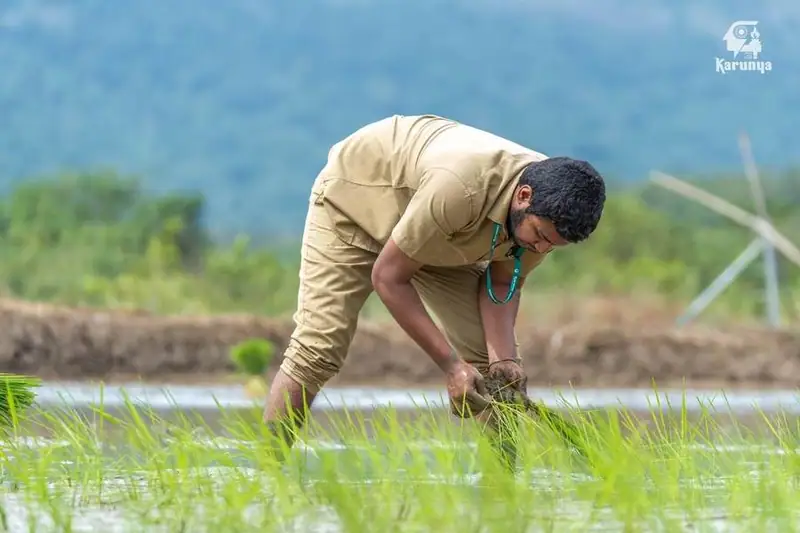
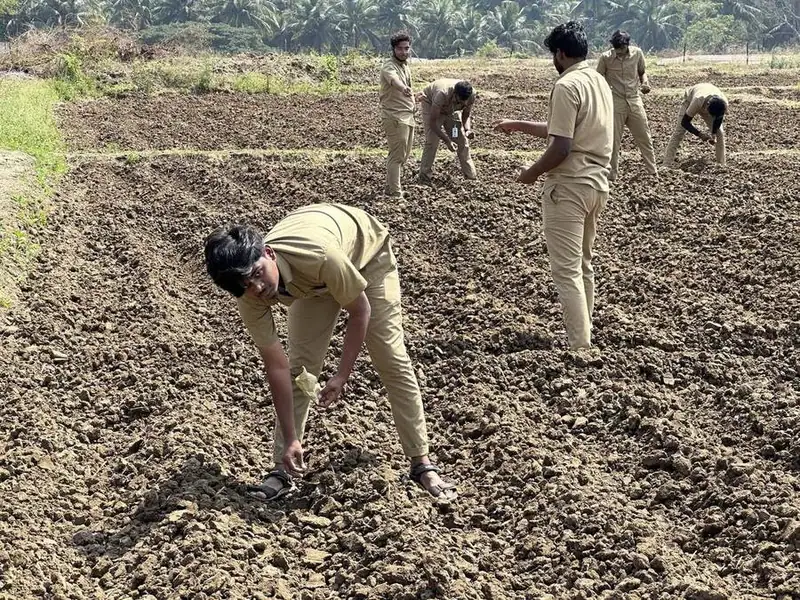
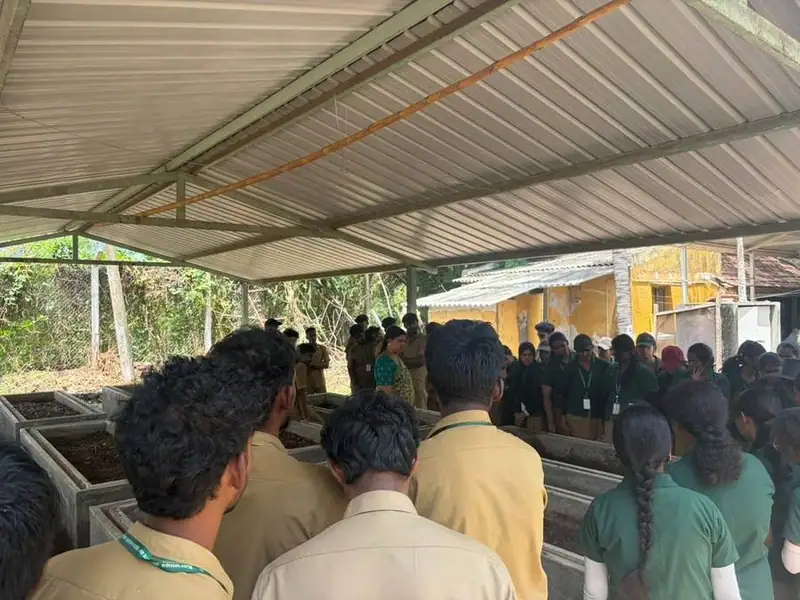
Sustainability-related concepts are also integrated into classroom teaching, practical sessions, project work, and experiential learning activities to promote responsible consumption and production in alignment with SDG 12 and other relevant SDGs. These initiatives aim to nurture environmentally conscious and socially responsible citizens who contribute to sustainable development.
| Sl. No. | Course Code | Course Title | Department |
|---|---|---|---|
| 1. | 18CE2052 | Municipal Solid Waste Management | Civil Engineering |
| 2. | 18CE3039 | Water and Wastewater Treatment Technology | Civil Engineering |
| 3. | 18CE3044 | Solid and Hazardous Waste Management | Civil Engineering |
| 4. | 20CE2006 | Solid Waste Management | Civil Engineering |
| 5. | 20FT3021 | Waste Recycling and Resources Recovery System | FPT |
| 6. | 22AG3400 | Membrane Technology for Water and Wastewater Treatment | Agriculture |
| 7. | 19CH3002 | Waste to Energy | Chemistry |
| 8. | 23AG2111 | Experiential Learning Program-Organic Production Technology | Agriculture |
| 9. | 21AG3006 | Cropping Systems and Sustainable Agriculture | Agriculture |
| 10. | 20CE1004 | Sustainable Building Materials | Civil Engineering |
| 11. | 20CE2044 | Sustainable Design of Campus | Civil Engineering |
| 12. | 20CE3024 | Sustainable Construction | Civil Engineering |
| 13. | 21AG2304 | Environmental Studies and Disaster Management | Agriculture |
| 14. | 18CE3046 | Cleaner Production and Sustainable Development | Civil Engineering |
| 15. | 21AG3012 | Principles and Practices of Organic Farming | Civil Engineering |
| 16. | 18CE2060 | Global Climate Change and its Impact | Civil Engineering |
| 17. | 18CE3002 | Environmental Chemistry and Microbiology | Civil Engineering |
| 18. | 18CE3035 | Atmospheric Environmental Pollution and Control | Civil Engineering |
| 19. | 18CE3036 | Surface Flow Hydrology | Civil Engineering |
| 20. | 18CE3037 | Environmental Chemistry and Microbiology | Civil Engineering |
| 21. | 23AG2116 | Experiential Learning Program- Commercial Beekeeping | Agriculture |
5. Research and Innovation
Students, faculty and community members collaborate on projects involving energy efficiency, water conservation, solid waste management, and biodiversity restoration.
Research Publications:
Institutional publications address the conversion of used cooking oil, tea waste, jackfruit waste, and agricultural residues into valuable products; food waste reduction; recycled construction materials; and AI-based waste management and segregation systems. These research activities promote circular economy practices, efficient resource utilization, pollution reduction and sustainable alternatives to conventional production methods. KITS faculty and scholars published 145 peer-reviewed Scopus-indexed research papers in 2024–2025 addressing waste-to-energy, circular bio-economy, agricultural waste valorization, and sustainable material production.
| SI. No. | Title | Authors | Year | Scopus Source title | Volume | Issue |
|---|---|---|---|---|---|---|
| 1 | Revolutionizing the food industry: The transformative power of artificial intelligence-a review | Zatsu, V.| Shine, A.E.| Tharakan, J.M.| Peter, D.| Ranganathan, T.V.| Alotaibi, S.S.| Mugabi, R.| Muhsinah, A.B.| Waseem, M.| Nayik, G.A. | 2024 | Food Chemistry: X | 24 | - |
| 2 | Valorization of used cooking oil: challenges, current developments, life cycle assessment and future prospects | Kumar, A.| Bhayana, S.| Singh, P.K.| Tripathi, A.D.| Paul, V.| Balodi, V.| Agarwal, A. | 2025 | Discover Sustainability | 6 | 1 |
| 3 | Limestone calcined clay cement (LC3): A sustainable solution for mitigating environmental impact in the construction sector | Kanagaraj, B.| Anand, N.| Johnson Alengaram, U.| Samuvel Raj, R.| Karthick, S. | 2024 | Resources, Conservation and Recycling Advances | 21 | - |
| 4 | Sustainable management of tea wastes: resource recovery and conversion techniques | Duarah, P.| Haldar, D.| Singhania, R.R.| Dong, C.-D.| Patel, A.K.| Purkait, M.K. | 2024 | Critical Reviews in Biotechnology | 44 | 2 |
| 5 | Advancements and environmental considerations in portland cement-based radiation shielding concrete: Materials, properties, and applications in nuclear power plants– review | Kanagaraj, B.| Anand, N.| Raj, S.| Lubloy, E. | 2024 | Cleaner Engineering and Technology | 19 | - |
| 6 | A Study on AI-ML-Driven optimizing energy distribution and sustainable agriculture for environmental conservation | Glady, J.B.P.| D'Souza, S.M.| Priya, A.P.| Amuthachenthiru, K.| Vikram, G.| Boopathi, S. | 2024 | Harnessing High-Performance Computing and AI for Environmental Sustainability | - | - |
| 7 | Application of artificial intelligence tools in wastewater and waste gas treatment systems: Recent advances and prospects | Behera, S.K.| Karthika, S.| Mahanty, B.| Meher, S.K.| Zafar, M.| Baskaran, D.| Rajamanickam, R.| Das, R.| Pakshirajan, K.| Bilyaminu, A.M.| Rene, E.R. | 2024 | Journal of Environmental Management | 370 | - |
| 8 | Behavioural studies on binary blended high strength self compacting geopolymer concrete exposed to standard fire temperature | Kanagaraj, B.| Anand, N.| Raj R, S.| Lubloy, E. | 2024 | Ain Shams Engineering Journal | 15 | 2 |
| 9 | Assessing variability and hydrochemical characteristics of groundwater fluoride contamination and its associated health risks in East Singhbhum district of Jharkhand, India | Ambade, B.| Sethi, S.S.| Patidar, K.| Gautam, S.| Alshehri, M. | 2024 | Journal of Hazardous Materials | 478 | - |
| 10 | FTIR based assessment of microplastic contamination in soil water and insect ecosystems reveals environmental and ecological risks | Rathikannu, S.| Gautam, S.| Joshi, S.K.| Katharine, P.| Mithra, K.E.| Banusaranya, P.| Amudhavarshini, V.M.| Gayatri, R.| Ho, C.-H. | 2025 | Scientific Reports | 15 | 1 |
| 11 | Impact of Cloud Computing on the Future of Smart Farming | Johnraja, J.I.| Leelipushpam, P.G.J.| Shirley, C.P.| Princess, P.J.B. | 2024 | Signals and Communication Technology | 2461 | - |
| 12 | Sustainability and durability performance evaluation of geopolymer concrete with industrial effluent as alternative to conventional river sand | Kanagaraj, B.| Anand, N.| Lubloy, E. | 2024 | Developments in the Built Environment | 19 | - |
| Beyond the surface: Microplastic pollution its hidden impact on insects and agriculture | Gautam, S.| Rathikannu, S.| Katharine, S.P.| Marak, L.K.R.| Alshehri, M. | 2024 | Physics and Chemistry of the Earth | 135 | - | |
| 13 | Fire performance of concrete: A comparative study between cement concrete and geopolymer concrete & its application - A state of art-review | Kanagaraj, B.| Raj R, S.| Anand, N.| Lubloy, E. | 2025 | Journal of Hazardous Materials | 11 | - |
| 14 | Jackfruit waste for the production of sustainable biorefinery products: a step towards bio-economic advancement | Chakraborty, A.| Panda, J.| Mishra, A.K.| Sivakumar, S.| Srinivasan, L.V.| Nongbet, A.| Mohanty, S.S.| Rustagi, S.| Nath, P.C.| Wagh, M.S.| Mohanta, Y.K. | 2025 | Biomass Conversion and Biorefinery | 15 | 7 |
| 15 | Smart home energy management systems in India: a socio-economic commitment towards a green future | George, T.| Selvakumar, A.I. | 2024 | Discover Sustainability | 5 | 1 |
| 16 | Genome editing of Plant Growth-Promoting Microbes (PGPM) towards developing smart bioformulations for sustainable agriculture: Current trends and perspectives | Thankappan, S.| Binodh, A.K.| Kumar, P.R.| Kurien, S.| Narayanasamy, S.| Prabina, J.B.| Uthandi, S. | 2024 | Genome Editing in Bacteria (Part 2) | - | - |
| 17 | Farm-era: Precision Farming with GIS, AI Pest Management, Smart Irrigation, Data Analytics, and Optimized Crop Planning | Reddy, K.P.| Roshni Thanka, M.| Edwin, E.B.| Ebenezer, V.| Stewart Kirubakaran, S.| Joy, P. | 2024 | 7th International Conference on Inventive Computation Technologies, ICICT 2024 | - | - |
| A Comprehensive Review on Bigels as a Potential Replacement to Solid Fat in Food Applications | Farzana, W.| Mahesh, S.| Sharma, S.| Syed, I.| Abdi, G.| Upadhyay, R. | 2025 | Journal of Food Quality | 2025 | 1 | |
| 18 | Electromagnetic interference shielding and mechanical and hydrophobic properties of papaya peel biocarbon and banana fiber–reinforced epoxy composite: synthesize and characterization | Mohanasundaram, S.| Kumar, G.C.S.S.| Nagabhooshanam, N.| Sharma, K.| Rao, P.K.V.| Pravallika, V.S.| Shankar, M.S. | 2025 | Biomass Conversion and Biorefinery | 15 | 8 |
| 19 | Quantifying the Effects of the National Clean Air Programme on Air Quality Parameters in Chandigarh: A Scientific Assessment | Dhote, L.| Sharma, P.| Dogra, S.| Arulrajan, P.| Pandey, P.| Kansal, A.| Dhiman, M.| Gautam, A.S.| Gautam, S. | 2024 | Aerosol Science and Engineering | 8 | 1 |
| 20 | Essential Oil Nano-Delivery Systems: Recent Developments and Emerging Applications | Jacob, A.| Nixon, R.| Thirumurthy, D.| Angel, S.| Haldar, D. | 2025 | Natural Product Communications | 20 | 11 |
| 21 | A comprehensive review on life-cycle assessment of concrete using industrial by-products | Kanagaraj, B.| Anand, N.| Johnson Alengaram, U.| Samuvel Raj, R.| Lubloy, E. | 2025 | Case Studies in Chemical and Environmental Engineering | 12 | - |
| 22 | Biofilm-associated microplastic contamination in rural soil and water: emerging hazards to ecosystems | Rakshith, B.L.| Gautam, S.| Asirvatham, L.G.| Kshetrimayum, N.| Keisham, S.| Patrik, G.| Akash, A. | 2025 | Science of the Total Environment | 1004 | - |
| 23 | Machine learning techniques for route optimizations and logistics management description | Reyana, A.| Kautish, S. | 2024 | Computational Intelligence Techniques for Sustainable Supply Chain Management | - | - |
| 24 | Influence of coatings on residual strength of geopolymer concrete columns subjected to fire exposure: An experimental investigation | Kanagaraj, B.| Anand, N.| Raj R, S.| Jerry, R.| Lukose, J.| Lubloy, E. | 2024 | Case Studies in Construction Materials | 20 | - |
| 25 | Utilizing banana peduncle as an affordable bio-adsorbent for efficient removal of lead ions from water and industrial effluents | Muthusamy, P.| Murugan, S.| Mandal, S.K.| Mishra, B.| Mohanta, Y.K.| Sarma, H.| Narayan, M. | 2024 | Sustainable Chemistry for the Environment | 7 | - |
| 26 | Nano-bentonite as a sustainable enhancer for alkali activated nano concrete: Assessing mechanical, microstructural, and sustainable properties | Samuvel Raj, R.| Arulraj, G.P.| Anand, N.| Kanagaraj, B.| Lubloy, E. | 2024 | Case Studies in Construction Materials | 20 | - |
| 27 | Assessing LDPE microplastics' impact on green gram (Vigna radiata L. Wilczek) cultivation: A greenhouse pot experiment | Sravya, G.C.| Gautam, S.| Kumar, K.U.| Poonguzhali, R.S.| Manuel, R.I. | 2024 | Physics and Chemistry of the Earth | 136 | - |
| 28 | Evaluation of mechanical, durability and sustainability performance of geopolymer concrete using sodium silicate waste as source material | Kanagaraj, B.| Anand, N.| Samuvel Raj, R.| Lubloy, E. | 2024 | Case Studies in Construction Materials | 21 | - |
| 29 | Natural and synthetic fiber reinforced recycled aggregate concrete subjected to standard fire temperature | Kanagaraj, B.| Shaji, S.| Jafrin, M.| Raj R, S.| Anand, N.| Lubloy, E. | 2024 | Heliyon | 10 | 21 |
| 30 | Eco-friendly alkali-activated nano concrete: Impact of nano-GGBFS on mechanical and microstructural properties | Raj R, S.| Arulraj, G.P.| Anand, N.| Kanagaraj, B.| Lubloy, E. | 2025 | Case Studies in Chemical and Environmental Engineering | 11 | - |
| 31 | Understanding Microplastic Pollution in Groundwater: Pathways, Health Implications and Solutions | Sumam, S.B.| Gautam, S.| Arulraj, P. | 2025 | Water Environment Research | 97 | 7 |
| 32 | Pathways to decarbonizing buildings: Harnessing energy efficiency and sustainable technologies | Qiu, L.| Li, H.| Wang, Z.| Yang, Y.| Lazarus, G.A.| Chen, Y.| Feng, Y. | 2025 | Thermal Science and Engineering Progress | 66 | - |
| 33 | Challenges and strategies for waste food anaerobic digestion: insights and future directions | Shabbirahmed, A.M.| Somu, P.| Yang, H.-H.| Hiruthyaswamy, S.P.| Karua, C.S.| Yadav, A.K. | 2025 | Environment, Development and Sustainability | 27 | 11 |
| 34 | Mitigation of drought stress effects on alfalfa (Medicago sativa L.) callus through CaO nanoparticles and graphene oxide in tissue culture conditions | YAZICILAR, B.| NADAROĞLU, H.| ALAYLI, A.| NADAR, M.| GEDİKLİ, S.| BEZİRĞANOĞLU, İ. | 2024 | Plant Cell, Tissue and Organ Culture | 157 | 3 |
| 35 | Innovations in poly(3-hydroxybutyrate-co-3-hydroxyvalerate) and nanocomposites for sustainable food packaging via biochemical biorefinery platforms: A comprehensive review | Dey, P.| Haldar, D.| Sharma, C.| Chopra, J.| Chakrabortty, S.| Dilip, K.J. | 2024 | International Journal of Biological Macromolecules | 283 | - |
| 36 | Energy-Efficient Architecture Design in Information Service Infrastructure | Salami, Z.A.| Bhaskaran, B.| Thusnavis Bella Mary, I.| Solijon Ugli, I.S.| Sripavithra, C.K.| Kalidoss, D. | 2025 | Indian Journal of Information Sources and Services | 15 | 2 |
| 37 | A Comprehensive Food Identification and Waste Reduction Solution with Built-in Nutritional Tracking using Machine Learning | Jonathan, J.| Benjamin, R.M.| Prasad, G.P. | 2024 | Proceedings - 2024 8th International Conference on Inventive Systems and Control, ICISC 2024 | - | - |
| 38 | Plant-based biopolymers for wastewater pollutants mitigation | Harshan, K.| Rajan, A.P.| Kingsley, D.| Sheikh, R.A.| Aashmi, J.| Rajan, A.P. | 2024 | Physical Sciences Reviews | 9 | 5 |
| 39 | Multifunctional biogenic Al-doped zinc oxide nanostructures synthesized using bioreductant chaetomorpha linum extricate exhibit excellent photocatalytic and bactericidal ability in industrial effluent treatment | Somu, P.| Khanal, H.D.| Gomez, L.A.| R, V.| Shim, J.-J.| Lee, Y.R. | 2025 | Biomass Conversion and Biorefinery | 15 | 15 |
| 40 | Dynamics of Microbial Ecology, Particulate Matter, and Bacterial Aerosols in Agriculture: Implications for Health and Sustainability | Gautam, S.| Rathikannu, S.| T, J.J.| Bhagat, P.S.| Singh, V.V.| Lakra, A.R. | 2024 | Water, Air, and Soil Pollution | 235 | 12 |
| 41 | Biodegradable composite films of barley fibers for food packaging applications: A review | Maddirala, S.| Tadepalli, S.P.| Lakshiakanthan, E.| Ganesan, J.J.| Issac, R.| Basavegowda, N.| Baek, K.-H.| Haldar, D. | 2025 | International Journal of Biological Macromolecules | 295 | - |
| 42 | Bamboo biochar and carbonation enhanced the compressive and flexural strength of cement mortar | Chin, S.C.| Gunasekaran, P.K.| Che, J.| Anand, N.| Gimbun, J. | 2025 | Next Materials | 9 | - |
| 43 | Technological Advancement in Product Valorization of Agricultural Wastes Treated with Deep Eutectic Solvents: A Review | Quraishi, R.| Haldar, D. | 2025 | ChemBioEng Reviews | 12 | 1 |
| 44 | Flexural behavior and performance assessment of corroded geopolymer concrete beams after fire exposure | Kanagaraj, B.| Prathana, S.| Joe, A.| Anand, N.| Naser, M.Z.| Lubloy, E. | 2025 | Case Studies in Chemical and Environmental Engineering | 11 | - |
| 45 | Spatial analysis and assessment of soil erosion in the southern Western Ghats region in India | B, A.| K.R, R.| R, S.R.| M, M.D.| K, R. | 2024 | Environmental Monitoring and Assessment | 196 | 9 |
| 46 | Redefining Supply Chain Practices in the Textile Industry – Sustainable Development through Blockchain Technology | Sadurya, G.| Selvaranee, J.K. | 2025 | Textile and Leather Review | 8 | - |
| 47 | Crop Recommendation and Disease Prediction Using IOT and AI | Sathya Priya, K.| Ancy Jenifer, J.| Janani, S.P.| Shilpa Aarthi, M.| Kavitha, T. | 2024 | Proceedings of the 2024 10th International Conference on Communication and Signal Processing, ICCSP 2024 | - | - |
| 48 | Artificial Intelligence for Precision Agriculture | Raj, P.| Gayathri, N.| Kathrine, G.J.W. | 2024 | Artificial Intelligence for Precision Agriculture | - | - |
| 49 | Deep Learning in Smart Manufacturing: Advancements, Applications, and Challenges | Natarajan, G.| Bai, S.C.P.A.| Balasubramanian, S.| Elango, E. | 2024 | Intelligent Computing and Optimization for Sustainable Development | - | - |
| 50 | Smart Waste Bins using DCNN and Internet of Things | Ande, A.| Sundar, G.N.| Thomas, R.| Nair, V.| Narmadha | 2024 | 2nd International Conference on Emerging Trends in Information Technology and Engineering, ic-ETITE 2024 | - | - |
| 51 | Unlocking potential: temperature-driven morphology and electrolyte influence on chemical-free pineapple peel-derived amorphous carbon for enhanced electrochemical performance | Shadap, M.| Vinofia, S.| Subbiah, K.| Suryakanth, J.| Ayyasamy, S. | 2024 | Ionics | 30 | 9 |
| 52 | Engineering and sustainability characteristics of concrete blended with waste rubber crumbs as an alternate to conventional coarse aggregate | Kanagaraj, B.| SS, R.| Ashutosh| Anand, N.| Lubloy, E. | 2025 | Cleaner Waste Systems | 11 | - |
| 53 | Influence of Microbial-enriched Organic Manures and Nanoemulsion Biofertilizers Combined with Inorganic Nutrients on the Growth, Yield and Economics of Chickpea Cultivation | Christina Cathrine, J.| Isaac Manuel, R.| Augustine, R. | 2025 | Indian Journal of Agricultural Research | 59 | 9 |
| 54 | Effect of sea sand in the behaviour of fresh concrete partially replaced with M-sand | Neethu, S.| Tensing, D.| Vincent Sam Jebadurai, S. | 2024 | Research on Engineering Structures and Materials | 10 | 1 |
| 55 | Petroleum and oil industries | Ray, S.| Shaju, S.T.| Jangid, C. | 2025 | Green Chemistry: A Path to Sustainable Development | - | - |
| 56 | Microplastic Transfer Pathways in Rural Household Environments Through Integrated Compartmental Analysis | Bairi Levi, B.| Gautam, S.| Oinam, R.| Lalkulsang, J.| Kriichena, M.L.| Thishon, A.| Gualnam, L.| Johnson Singh, K.| Jeff, V.| Akim Ch Momin, E.| Haokip, T.| Neithang, S.| Seth, B.J.| Shalom, E.P.| Asirvatham, L.G.| Ho, C.-H. | 2025 | IEEE Access | 13 | - |
| 57 | Enhancing lycopene stability and extraction: Sustainable techniques and role of nanotechnology | Joshi, S.| Dobhal, A.| Kaur, R.| Rawat, M.| Bhati, D.| Wilson, I. | 2025 | Journal of Food Composition and Analysis | 148 | - |
| 58 | AI-based Carbon Footprint Tracking and Reduction | Vidhya, K.| Shaik Nabeel, A.F.| Nagarajan, B.| Thiyagu, T.M.| Archpaul, J.| Shirley, C.P. | 2025 | Proceedings of 6th International Conference on Intelligent Communication Technologies and Virtual Mobile Networks, ICICV 2025 | - | - |
| 59 | Web crippling strength of GI based cold- formed steel under high temperature: experimental and analytical modeling | Sam, V.S.| Anand, N.| Joseph, D.| Chin, S.C. | 2025 | Innovative Infrastructure Solutions | 10 | 4 |
| 60 | Active and Intelligent Antimicrobial Coating Systems | Dineshkumar, T.| Sangeetha, S.| Pragalyaashree, M.M.| Freeda Blessie, R. | 2024 | Food Coatings and Preservation Technologies | - | - |
| 61 | A comprehensive study on engineering and sustainability characteristics with emphasizing on 3R's approach in building construction | Raj R, S.| Arulraj, G.P.| Anand, N.| Kanagaraj, B.| Naser, M.Z.| Lubloy, E. | 2024 | Heliyon | 10 | 11 |
| 62 | An Analysis on Energy Performance Assessment for Energy Efficiency Measures in Selected Commercial Buildings Using IoT Simulation Frameworks | Jubair Ahmed, L.| Dhanasekar, S.| Martin Sagayam, K.| Andrew, J.| Bhandage, V. | 2025 | Engineering Letters | 33 | 5 |
| 63 | Sustainable Management and Advanced Techniques of Synthetic Microfiber Waste Through Circular Economy | Iyer, A.| Nambiar, K.S.| Murugan, S. | 2024 | Environmental Science and Engineering | 2333 | - |
| 64 | Bamboo reinforced panels with recycled concrete aggregates: A comparative study between cement and geopolymer concrete | Kanagaraj, B.| Kiran, T.| Anand, N.| Jayakumar, G.| Lubloy, E. | 2025 | Developments in the Built Environment | 24 | - |
| 65 | Morphological and Productivity Response of Chickpea (Cicer arietinum L.) to Nano Biofertilization | Abisankar, M.S.| Augustine, R.| Manuel, R.I.| Kumar, S.M.S. | 2024 | Legume Research | 47 | 12 |
| 66 | Thermal degradation and crack analysis of self-compacting geopolymer concrete | Kanagaraj, B.| Raj R, S.| Joe, A.| Andrushia A, D. | 2025 | Proceedings of the Institution of Civil Engineers: Forensic Engineering | 178 | 3 |
| 67 | Adaptive Water Quality Potability Prediction and Analysis Through GEM Continual Learning Algorithm for Sustainable Resource Management | Jeremy David, C.| Shibin, D. | 2024 | 10th International Conference on Advanced Computing and Communication Systems, ICACCS 2024 | - | - |
| 68 | Enhancing impact resistance and thermal stability of alkali-activated concrete with nanomaterial integration: a sustainable approach for construction | Raj R, S.| Arulraj, P.| N, A.| Kanagaraj, B.| Stochino, F. | 2025 | Journal of Structural Fire Engineering | 16 | 2 |
| 69 | Improving the post-fire performance of reinforced concrete beams with lightweight plaster | Thanaraj, D.P.| Sam, V.S.| Anand, N.| Andrushia, D.| Cashell, K.A. | 2025 | Case Studies in Construction Materials | 23 | - |
| 70 | Multi-class Classification and Pretrained Sustainable Agriculture Model for Plant Leaf Disease Detection Using Resnet-101 | Teja, A.R.| Stephen, S.| Subathra, M.S.P.| Ewards, S.E.V.| Mahmood, Md.R.| Mohan, A.| George, S.T. | 2024 | IET Conference Proceedings | 2024 | 23 |
| 71 | Effect of Nano humic acid from agricultural land residue on physical, mechanical and thermal properties of concrete | Kanagaraj, B.| Kumar, P.D.| Angom, V.| Samuvel Raj, R.| Anand, N.| Lubloy, E. | 2025 | Progress in Engineering Science | 2 | 3 |
| 72 | Residual behaviour of cold formed stainless steel following a fire | Sam, V.S.| Alin joe, J.A.| Anand, N.| Cashell, K.A. | 2025 | Results in Engineering | 28 | - |
| 73 | A brief review on world of foxtail millet: From botanical characteristics to market trends | Gobikashri, N.| Kumar, K.U.| Nivetha, C.| Punithkumar, S.| Kousalya, A.| Flora, G.J.| Dhivyalakshimi, T.| Jeyasingh, R.A.I. | 2025 | Journal of Applied Biology and Biotechnology | 13 | 6 |
| 74 | Design of Greenhouse System with Internet of Things and Machine Learning | Pari Pugazh, M.| Arul Xavier, V.M.| Shyni, S.S. | 2024 | 10th International Conference on Advanced Computing and Communication Systems, ICACCS 2024 | - | - |
| 75 | Sustainable groundwater development using semi-supervised learning and community-led total forestry and pasture approach | S, U.M.| Alphy, A.| Deivasikamani, G.| Prakash, U.| Shadrach, F.D.| Kumar, M.A.| Manoj, S. | 2024 | Groundwater for Sustainable Development | 25 | - |
| 76 | Thermophilic Microbes: Their Role in Plant Growth Promotion and Mitigation of Biotic Stress | Kumar, S.| Rahman, M.| Gayithri, M.| Anjali| Bouket, A.C.| Naveenkumar, R.| Ranjan, A.| Rajput, V.D.| Minkina, T.| Singh, R.K. | 2024 | Extremophiles for Sustainable Agriculture and Soil Health Improvement | - | - |
| 77 | Energy Meter Data Analysis and Tariff Optimization for Consumption Management | Akkara, S.| Selvakumar, A.I. | 2024 | Proceedings of the 2024 International Conference on Advancement in Renewable Energy and Intelligent Systems, AREIS 2024 | - | - |
| 78 | Effects of Organic Manure and Recommended Dosage of Fertilizer on Nodulation, Chlorophyll Content of leaves, Availability of Nutrients and Soil Properties under Greengram [Vigna radiata (L.) Wilczek] Cultivation | Visuvasa Anto Shiny, A.| Joseph, P.A.| Ajay Arockia Iraiyanban, A.| Dhivyalakshmi, T. | 2025 | Indian Journal of Agricultural Research | 59 | 7 |
| 79 | A Biorefinery Approach to Algal Biomass Conversion for Biofuels and Bioproducts | Mohanty, K.| Mohanty, S.S. | 2025 | A Biorefinery Approach to Algal Biomass Conversion for Biofuels and Bioproducts | - | - |
| 80 | Optimizing Waste Management: Integrated Pollution Detection and Systematic Reporting for Sustainable Disposal | Samuel Prabakaran, M.| Sophia, S.| Sophas Samuel, S. | 2024 | Proceedings of the 2nd IEEE International Conference on Networking and Communications 2024, ICNWC 2024 | - | - |
| 81 | Leveraging Artificial Intelligence and IoT for Healthcare 5.0: Use Cases, Applications, and Challenges | Natarajan, G.| Elango, E.| Soman, S.| Bai, S.C.P.A. | 2025 | Edge AI for Industry 5.0 and Healthcare 5.0 Applications | - | - |
| 82 | Mechanical and sustainability performance of concrete with discarded coconut coir as an alternative to conventional sand | Kanagaraj, B.| James, S.V.| Raj, R.S.| Anand, N. | 2025 | Discover Applied Sciences | 7 | 5 |
| 83 | Investigation on Shear Strength of Fiber Reinforced GPC Exposed to Elevated Temperatures | Vijaya Prasad, B.| Balamurali, K.| Anand, N.| Arumairaj, P.D.| Francis, A.J.| Samuel Aaron, S.| Naser, M.Z. | 2025 | Fire and Materials | 49 | 4 |
| 84 | An Efficient IoT Based Solid Waste Management System Using Computer Vision | Lekshmi, V.S.| Ebenezer, V.| Thanka, M.R. | 2025 | Proceedings of 10th International Conference on Communication and Electronics Systems, ICCES 2025 | - | - |
| 85 | Post-Fire Performance of Binary-Blended Geopolymer Concrete Structural Members | Kanagaraj, B.| Anand, N.| Andrushia, D.| Cashell, K.A. | 2025 | Fire Technology | 61 | 4 |
| 86 | Microplastic and POP contamination in rural waste-dumping sites, India | Gautam, S.| Rakshith, B.L.| Asirvatham, L.G.| Haokip, J.M.| Kumar, A.| Khongsai, L.| Khongsai, L.| Ho, C.-H. | 2025 | Frontiers in Environmental Science | 13 | - |
| 87 | Integrating the NDVI-Random Forest Classification for Vegetation Analysis - Yercaud Hills, India | Navin, M.S.| Aravind Sidharth, B.G.| Richard, G.J. | 2024 | 2nd IEEE International Conference on Data Science and Information System, ICDSIS 2024 | - | - |
| 88 | Metarhizium anisopliae: Unlocking green solutions for sustainable pest management | Parveen, S.S.| Radha, R.V.| Sangeetha, B. | 2025 | Plant Science Today | 12 | 3 |
| 89 | Scouting rice (Oryza sativa L.) landraces for moisture stress tolerance using morphometric diversity analysis | Kathiresan, P.K.| Binodh, A.K.| Thankappan, S.| Francis, N.| Selvaraj, R.| Ramasamy, N.K.| Alagarswamy, S. | 2024 | Plant Science Today | 11 | 4 |
| 90 | Investigation of bismuth vanadate nanorods incorporated with banana peel biochar: multifunctional exploration as a photocatalyst and supercapacitors | Nixon, P.D.| Raveendran, A.| Gnanaraj, M.A.| Jayaseelan, E.| Preeyanghaa, M.| Ananthi, N.| Wabaidur, S.M.| Dhanusuraman, R. | 2025 | Journal of Materials Science: Materials in Electronics | 36 | 30 |
| 91 | Heteroatom-Engineered Carbon Quantum Dots for High-Performance Energy Storage: From Quantum-Level Design to Scalable Device Architectures | Shadap, M.| Stephen, S.| Ayyasamy, S. | 2025 | Carbon Quantum Dots With Tailored Heterogeneous Atoms | - | - |
| 92 | Metals Recovery from Electrical and Electronic Waste | Iyer, A.| Nambiar, K.S.| Gupta, D.K.| Murugan, S. | 2024 | Valorization of Resources from Urban Mined Materials: World Scientific Series on Advances in Environmental Pollution Management - Volume 3 | 3 | - |
| 93 | Tailoring PHA copolymer types via amino acid supplementation in dairy byproduct media | Patil, T.| Bannerjee, P.| Agarwal, A.| Tripathi, A.D.| Paul, V.| Hooda, A.| Gatasheh, M.K.| Mahato, D.K. | 2025 | Scientific Reports | 15 | 1 |
| 94 | Recovery of Elements Using Green Plants for Potential Valorization of Waste Metals | Mamatha Bhanu, L.S.| Mitra, A.| Iyer, A.| Gupta, D.K.| Chatterjee, S. | 2024 | Valorization of Resources from Urban Mined Materials: World Scientific Series on Advances in Environmental Pollution Management - Volume 3 | 3 | - |
| 95 | Recovery Approaches for Spent Batteries: A Review | Pavithra, S.| Sakunthala, A. | 2024 | Prabha Materials Science Letters | 3 | 2 |
| 96 | Development of CNN Model for Detecting Groundnut Leaf Diseases Using Mobile Net | Sree, Y.S.S.| Reddy, V.C.| Dolly, D.R.J. | 2024 | Proceedings of 2024 International Conference on Science, Technology, Engineering and Management, ICSTEM 2024 | - | - |
| 97 | VGG-16 based Deep Learning Approach for Plant Species Detection | Praveen, B.| Isravel, D.P.| Malar Dhas, J.P. | 2024 | 2024 International Conference on Advances in Modern Age Technologies for Health and Engineering Science, AMATHE 2024 | - | - |
| 98 | AI Framework for Fruit Quality Assessment: Integrating CNN-Based Spoilage Detection, Price Estimation, and LLM-Powered Insights | Joseph, K.| Thanka, M.R. | 2025 | Proceedings - 4th International Conference on Smart Technologies, Communication and Robotics 2025, STCR 2025 | - | - |
| 99 | Sustainable Cooking with AI: Generative Recipes and Smart Nutrition Assistance | Pawar, S.R.| Bertia, A. | 2025 | Proceedings of 3rd International Conference on Augmented Intelligence and Sustainable Systems, ICAISS 2025 | - | - |
| 100 | Integrating Demand And Supply Dynamics In The Identification Of Cultural Ecosystem Services Provided By Urban Green Infrastructures | Kumar, C.P.| Bridget, K.| Srikakolapu, S.R.| Sreedevi, E.| Kumar, P.R.| Chaudhary, S.| Sutha, A.| Gandhi, R.A.| Philip, J.M.| Rajaram, A. | 2025 | Journal of Environmental Protection and Ecology | 26 | 4 |
| 101 | Evaluation on the Influence of Cropping Systems and Nutrient Management Practices in Pearl Millet (Pennisetum glaucum) Growth, Crop Nutrient Uptake and Soil Fertility Status | Ajay Arockia Iraiyanban, A.| Isaac Manuel, R.| Augustine, R.| Visuvasa Anto Shiny, A. | 2025 | Indian Journal of Agricultural Research | 59 | 7 |
| 102 | Performance evaluation of bamboo reinforced concrete slab: A comparative study between fibre reinforced mix and shape optimised composite | Kanagaraj, B.| Sohliya, A.| Jayakumar, G.| Anand, N.| Lubloy, E. | 2025 | Cleaner Waste Systems | 12 | - |
| 103 | Influence of nano fertilizers on agronomic traits of pearl millet (Pennisetum glaucum L.) under irrigated conditions | Kaviya Shree, M.| Augustine, R.| Sri Abisankar, M.| Dhivyalakshmi, T.| Santhosh Anto Kumar, R. | 2025 | Plant Science Today | 12 | 2 |
| 104 | Avenues and opportunities of detoxification of micropollutants from industrial effluent using advanced biological treatment techniques | Kandasamy, S.| Babu, S.A.| Dwaraka, S.J.B.| Naveenkumar, M.| Nandakumar, N.P.| Subbiah, K. | 2024 | Emerging Innovative Trends in the Application of Biological Processes for Industrial Wastewater Treatment | - | - |
| 105 | Soil zinc dynamics over time on applied organics, bacterial inoculant and zinc fertilizers in calcareous soil of southern India | Bose, K.S.C.| Selvi, D.| Vinothini, R.| Balaganesh, B.| Kumar, V.V.| Venkatesh, V.| Kumaran, V.R.S. | 2024 | Plant Science Today | 11 | 4 |
| 106 | Performance Analysis of a Monocrystalline Solar PV Module With 144 Mono Perc Cells Used for Home Energy Management | George, T.| Selvakumar, A.I. | 2025 | AIP Conference Proceedings | 3311 | 1 |
| 107 | Drone-Sourced Crop Segmentation and Analysis System with U-Net Deep Learning and Streamlit Visualization | Krishna, C.S.| Kavitha, T.| Reddy, M.H.| Reddy, C.A.S. | 2025 | 16th International Conference on Advances in Computing, Control, and Telecommunication Technologies, ACT 2025 | 2 | - |
| 108 | Blue Economic Growth from the Southern Coast of Bangladesh: Barriers, Opportunities, and Policy Instruments | Auyon, S.T.| Islam, H.M.R.| Khatun, F.| Khan, M.B.| Gautam, S. | 2025 | Blue Sky, Blue Water: Strategies for Protecting Air and Water Quality in the 21st Century | - | - |
| 109 | Smart Diagnosis of Plant Disease using AI and Imaging Technology | Alfrin Getciyal, S.| Vignesh| Juliet, S. | 2025 | Proceedings of the 9th International Conference on Electronics, Communication and Aerospace Technology, ICECA 2025 | - | - |
| 110 | Intelligent Waste Management System using Digital Twin Technology | Thiyagarajan, V.| Jaya Singh Dhass, L.| Vensila, C.| Jebin, B.M.| Anantharaman, S. | 2025 | Proceedings of 8th International Conference on Computing Methodologies and Communication, ICCMC 2025 | - | - |
| 111 | Impact of zinc fortification on yield and quality of Pearl millet (Pennisetum glaucum L.) in the Western ghat region of Coimbatore District under irrigated conditions | Dhivyalakshmi, T.| Augustine, R.| Kumar, R.S.A.| Shiny, A.V.A. | 2025 | Journal of Applied and Natural Science | 17 | 3 |
| 112 | Circular Models and Strategies to Reduce and Reuse Food Waste | Sharath, K.N.| Ranganathan, T.V. | 2024 | Novel Approach to Sustainable Temperate Horticulture | - | - |
| 113 | Biocalcification-Based Stabilization of Cadmium-Enriched Phytoremediation Biomass Using Advenella sp. AV1 | Shah, V.| Mahanty, B.| Daverey, A. | 2024 | Water, Air, and Soil Pollution | 235 | 3 |
| 114 | Environmental Education and Youth Empowerment A Pathway to Sustainable Conservation | Jibin Jose, P.| Dhanaraj, A. | 2025 | Blue Sky, Blue Water: Advances in Air Pollution, Climate Resilience, and Water Governance for Sustainable Futures | - | - |
| 115 | Renewable energy usage for home energy management and its adverse impact due to the increasing trend of electric load addition in homes in the State of Kerala, India | George, T.| Immanuel Selvakumar, A. | 2025 | International Journal of Applied Power Engineering | 14 | 2 |
| 116 | Investigation of various autonomous mobile robot navigation controller systems for waste management in healthcare facilities | Sugandhi, R.R.| Palayya, A.C.R.| Pallissery, R.| Paul, S.J.| Paul, S.H.J. | 2025 | AIP Conference Proceedings | 3291 | 1 |
| 117 | Fabrication methodology and hardness influenced by hybrid layer of a novel Entada Rheedii and banana fibre reinforced epoxy resin composite | Unnikrishnan, C.P.| Christy, T.V.| Raja, R. | 2024 | Journal of Maritime Research | 21 | 1 |
| 118 | Characterization of Enhanced Magnetorheological Fluid Damper and Its Influence on Sustainable Hard Turning of SS410 | Ajay Vasanth, X.| Sam Paul, P.| Lawrance, G.| Rajkumar, V.| Senthilkumar, K. | 2024 | SAE Technical Papers | - | - |
| 119 | IoT-Driven Precision Agriculture: Real-Time Soil Nutrient Monitoring for Enhanced Soil Fertility Management | Singh, S.K.| Sheeba Merlin, G.| Vaithiyanathan, R.K.| Hareesha, N.G.| Aher, T.| Parida, P.K. | 2025 | Proceedings - 2025 International Conference on Recent Innovation in Science Engineering and Technology, ICRISET 2025 | - | - |
| 120 | A Machine Learning Framework for Soil Nutrient Analysis and Prediction | Prabhakar, C.N.| Kavitha, T.| Kumar, C.H. | 2025 | 16th International Conference on Advances in Computing, Control, and Telecommunication Technologies, ACT 2025 | 2 | - |
| 121 | Blast fire temperature exposure of geopolymer-based slurry infiltrated fibrous concrete | Kanagaraj, B.| Raj R, S.| Joe, A.| Anand, N.| Lubloy, E. | 2025 | Case Studies in Construction Materials | 23 | - |
| 122 | Role of Digital Twins in Promoting Sustainability in Commerce | Venkatesan, R.| Benny, B.| Shirley, C.P.| Berin Jeba Jingle, I. | 2024 | Proceedings - 2024 4th International Conference on Pervasive Computing and Social Networking, ICPCSN 2024 | - | - |
| 123 | An Ensemble Machine Learning Model for Vehicular Engine Health Prediction | Showri, N.B.P.| Joy, R.P.| Srivardhan, C. | 2025 | 16th International Conference on Advances in Computing, Control, and Telecommunication Technologies, ACT 2025 | 2 | - |
| 124 | Drone-Sourced Crop Segmentation and Analysis System with U-Net Deep Learning and Streamlit Visualization | Mohamed Thaha, M.| Silas, S.| Kathrine, G.J.W. | 2025 | Proceedings of 8th International Conference on Computing Methodologies and Communication, ICCMC 2025 | - | - |
| 125 | Real-Time Embedded Vision System for Plastic Bag Detection on Raspberry Pi 5 | Rishi Jayanath, A.| Sajikumar, A.| George, J.S.| Kathrine, G.J.W. | 2025 | 2025 5th International Conference on Artificial Intelligence and Signal Processing, AISP 2025 | - | - |
| 126 | Pre and Post Harvesting Monitoring System using Machine Learning | Reddy, N.D.P.| Kavitha, M.S.T.| Reddy, N.I.V. | 2025 | 16th International Conference on Advances in Computing, Control, and Telecommunication Technologies, ACT 2025 | 2 | - |
| 127 | Pre- and post-fire behavior of modern construction and building materials | Kanagaraj, B.| Anand, N.| Samuvel Raj, R. | 2025 | Journal of Structural Fire Engineering | - | - |
| A study on the assessment of pollution and strategies for rejuvenation of Bharathapuzha river in Kerala, India | Anto, C.A.| Verghese, V.| Kurian, P.K.| Cyriac, M.G.| Archana, S. | 2024 | International Journal of Water | 16 | 1 | |
| 128 | Nanobiotechnology: A Recipe for Food Revolution | Eden, R.S.| Dharani, D.| Selva, K.T.| Babu, L.R.| Sevanan, M.| Samuel, V.R. | 2025 | Trends in Sciences | 22 | 8 |
| 129 | Microbial taxonomic profiling of textile industry effluent from Tiruppur, Tamil Nadu for water recycling using Kaiju metagenome classifier | Iyer, A.| Murugan, S. | 2025 | Ecological Genetics and Genomics | 35 | - |
| 130 | The Smart Agricultural Revolution Across Global Nations – A Technological Perspective | Jenice Aroma, R.| Joy, E.| Raimond, K.| Andreopoulos, N.| Estrela, V.V.| Terziev, A. | 2025 | Intelligent Designs, Innovations and Sustainability in Agriculture 4.0 | - | - |
| 131 | Material Forecasting in PEB Fabrication Using Machine Learning Techniques | Raja, R.| Hemalatha| Jebadurai, V.S.| Stephen, E.A. | 2025 | SSRG International Journal of Civil Engineering | 12 | 6 |
| 132 | Green synthesis of silver nanoparticles from cymbopogon citratus and their efficacy against grey blight disease of tea | Mendez, F.L.| Paneerselvam, N.| Joseph, B.| Selladurai, R. | 2025 | Journal of Plantation Crops | 9 | 1 |
| 133 | Estimation of air quality index (AQI) in and around municipal solid waste (MSW) dump yard using artificial intelligence (AI) in India | Reymond, D.J.| Mugesh, E.| Sudarsan, J.S.| Subha, C.| Lawrance, V.| Nithiyanantham, S. | 2025 | Asian Journal of Civil Engineering | 26 | 10 |
| 134 | Microbial Therapy for Recovery of Contaminated Agricultural Soil | Laurence, L.A.| Rai, R.S.| Chandrapragasam, V.| Gomez, L.A.| Shepherd, R.| Thathapudi, J.J. | 2025 | Environmental Science and Engineering | 256 | - |
| 135 | Detecting Plant Diseases using DQN Algorithm: Enhancing Agricultural Health Insights | Boopathi, S.| Prabavathy, A.K. | 2025 | 16th International Conference on Advances in Computing, Control, and Telecommunication Technologies, ACT 2025 | 2 | - |
| 136 | AI Powered Waste Segregation using Deep Learning | Suneeram, S.| Isravel, D.P.| Dhas, J.P.M. | 2025 | Proceedings - IEEE 10th International Conference on Smart Structures and Systems, ICSSS 2025 | - | - |
| 137 | Response of Fertigation and Foliar Sprays on Yield and Fruit Quality of Papaya Variety Surya | Sebastian, K.| Bindu, B.| Rafeekher, M.| Mini, C.| Joseph, B. | 2025 | Indian Journal of Agricultural Research | 59 | 2 |
| 138 | Impact Strength of Fiber Reinforced Geopolymer Concrete Exposed to Elevated Temperatures | Vijaya Prasad, B.| Anand, N.| Sam, V.S.| Andrushia, D.| Selvarathi, M. | 2025 | Springer Proceedings in Materials | 30 | - |
| 139 | Comprehensive analysis of stability in rice genotypes for dry weight and grain yield under multi-environment stress | Devasena, N.| Jeyaprakash, P.| Vinothini Bakya, S.| Manonmani, K.| Ananda-Lekshmi, L.| Abirami, S.| Ramya Selvi, N. | 2025 | Plant Science Today | 12 | - |
| 140 | Residual mechanical properties of e-waste concrete: a comparison between cement and geopolymer concrete subjected to fire exposure | Kanagaraj, B.| Stany, T.| Anand, N. | 2025 | Journal of Structural Fire Engineering | - | - |
| 141 | Enhanced Feedback Residual Attention Network with Slanted Scarce Auto-Encoder and IoT Based Industrial Waste Water Treatment System for Effective Waste Management | Prasad, K.V.S.| Gavaskar, T.| Ravivarman, G.| Chinniah, P.| Sophia, S.| Sathyakala, S. | 2025 | Proceedings of the International Conference on Multi-Agent Systems for Collaborative Intelligence, ICMSCI 2025 | - | - |
| 142 | Application of Ozone in Preservation of Fruit Juices | Vignesh, M.| Deepa, J.| Tazeen, H.| Monicka, A.| Ganga Kishore, S. | 2025 | Ozone Applications in the Food Industry: Trends and Future Prospects | - | - |
Books/Book Chapters
| Sl. No. | Author | Title of the Book / Chapter | Publisher | Year of Publication |
|---|---|---|---|---|
| 1. | Gautam S.; Kumar R.P.; Samuel C. | Aerosol Optical Depth and Precipitation: Measuring Particle Concentration, Health Risks and Environmental Impacts | Springer Nature | 2024 |
| 2. | Thankappan S.; Binodh A.K.; Kumar P.R.; Kurien S.; Narayanasamy S.; Prabina J.B.; Uthandi S. | Genome editing of Plant Growth Promoting Microbes (PGPM) towards developing smart bioformulations for sustainable agriculture: Current trends and perspectives | Bentham Science | 2024 |
| 3. | Glady J.B.P.; D'Souza S.M.; Priya A.P.; Amuthachenthiru K.; Vikram G.; Boopathi S. | A Study on AI-ML-Driven optimizing energy distribution and sustainable agriculture for environmental conservation | IGI Global | 2024 |
| 4. | Shepherd R.; Vijay V.; Nair A.; Rai R.S.; Chandrapragasam V.; Gomez L.A.; Thathapudi J.J. | Ecology and diversity of microbial communities involved in the removal of priority contaminants and micropollutants in wastewater treatment systems | IOP Publishing Ltd | 2024 |
| 5. | Rahman A.; Rana J.; Rahman M.S.; Ferdoush Z.; Mazumder M.A.R.; Rawdkuen S.; Ranganathan T.V. | Environmentally Friendly Food Processes, Biorefineries and 3D Food Printing | CRC Press (Taylor & Francis Group) | 2024 |
| 6. | Mamatha Bhanu L.S.; Mitra A.; Iyer A.; Gupta D.K.; Chatterjee S. | Recovery of Elements Using Green Plants for Potential Valorization of Waste Metals | World Scientific | 2024 |
| 7. | Iyer A.; Nambiar K.S.; Gupta D.K.; Murugan S. | Metals Recovery from Electrical and Electronic Waste | World Scientific | 2024 |
| 8. | Gowri Lakshmi S.; Gomez L.A.; Shepherd R.; Chandrapragasam V.; Vijay V.; Thathapudi J.J. | Exploring chitosan nanocomposites for wastewater treatment via solid phase extraction biorefinery | Elsevier | 2024 |
| 9. | Krishnan S.K.; Subbiah K.; Subramanian K.; Kandasamy S. | Microbial immobilization as an adept bioremediation tool for dye degradation | Elsevier | 2024 |
| 10. | Sharath K.N.; Ranganathan T.V. | Circular Models and Strategies to Reduce and Reuse Food Waste | CRC Press (Taylor & Francis Group) | 2024 |
| *11. | Kadarkarai G.; Arumugam A.; Subramanian U.M.; Mohan R. | Fundamentals and applications of carbon nanotube-based carbocatalysts for water treatment | Elsevier | 2024 |
| 12. | Kandasamy S.; Babu S.A.; Dwaraka S.J.B.; Naveenkumar M.; Nandakumar N.P.; Subbiah K. | Avenues and opportunities of detoxification of micropollutants from industrial effluent using advanced biological treatment techniques | Elsevier | 2024 |
| 13. | Dhanapal R.; Naveenkumar R.; Vasanthi E.A.P.; Parveen S.S.; Sangeetha B.; Ramkumar G. | Exploration of Entomopathogenic Fungi for Insect Pest Management | Springer Nature | 2024 |
| 14. | Subramaniam S.; Govindaraj O.; Arumugam D.P.; Thankappan S.; Uthandi S. | Lignin-Derived Aromatics in Sugarcane Biorefinery | Springer Nature | 2024 |
| 15. | Iyer A.; Nambiar K.S.; Murugan S. | Sustainable Management and Advanced Techniques of Synthetic Microfiber Waste Through Circular Economy | Springer Nature | 2024 |
| 16. | Thathapudi J.J.; Gomez L.A.; Vijay V.; Chandrapragasam V.; Shepherd R.; Paul S.; Lee M.-J.; Somu P. | Fate of Micro/Nano Plastic Pollutants in the Marine Ecosystem | CRC Press (Taylor & Francis Group) | 2024 |
Funded Projects
| Sl. No. | Faculty Name | Title of the Project | Sanctioned Year | Funding Agency | Amount (Rs.) |
|---|---|---|---|---|---|
| 1. | Dr. S.J. Vijay Dr. M. Wilson Kumar | Development of an Eco-Friendly Sustainable Technology – A Pilot Plant to Recycle Non-Ferrous Metallic Waste Scraps | 2024 | DST-TTI-WMT | 6998000 |
| 2. | Dr. Jibu Thomas | Biohydrogen from Microalgae | 2024 | BESI USA & TECHURJA | 463000 |
Student Projects
| Sl. No. | Division | Name | Project Title |
|---|---|---|---|
| 1 | Forensic Science | Prem Kumar. V | Comparative Analysis of Adulteration in Brands of Diesel |
| 2 | Mechanical | Antony Martin A | 3D Printing Variable Natural Fibre in Cocopeat Volume Fraction and Stiffness Using Fibre |
| 3 | Mechanical | Aswin A | 3D Printing for Natural Fiber |
| 4 | Mechanical | Akash B | Investigations on Mechanical Performance of Polymer Composite Reinforced with Biochar Derived from Prosopis Juliflora |
| 5 | Mechanical | Sam Shatler M S | Pyrolysis Reactor |
| 6 | Mechanical | Korasika Vivek | Pyrolysis of Bio Waste to Composite Material |
| 7 | Mechanical | Thirumala Mithun Chakravarthi | 3D Printing of Walnut Shell Fiber Reinforced Polymer Composites |
| 8 | Mechanical | Adithya Joshi | Surface Analysis of Al-Al Scrap Alloy with Addition of Iron and Graphene |
| 9 | Mechanical | Vara Teja | Experimental Investigation of Al-Al Scrap with Addition of Iron and Graphene Powder |
| 10 | CSE | Samuel Prabakaran M | Optimizing Waste Management |
Patent Published and Granted
Published:
| Sl. No. | Faculty Name | Title of the Project | Application No. | Published Year |
|---|---|---|---|---|
| 1 | Dr. Pragalyaa Shree M.M Ms. Mahalakshmi G Ms. T U Nivetha Dr. R. Freeda Blessie | A Process of Preparation of Biodegradable Straws and Product Thereof | 202441076002 | 2024 |
Granted:
| Sl. No. | Inventors Name | Title | Granted No. | Granted Year |
|---|---|---|---|---|
| 1 | Dr. David Paul Raj, Assistant Professor Ms. Beena Kanimozhi R(PR15BT006) Mr. Gilbert Rose Rex K (RR13BT1004) Ms. Agnes Preethy (PR13BT1002) Ms. Amala Jasmine A Mr. Poomalai D, Lab Technician, BT | Dried Banana Peel Powder as an Organic Carrier in Bioformulation for Biocontrol of Pythium SP | 527352 | 2024 |
| 2 | Dr. D. Nirmal, Dr. S. Vasanth Kumar, Mr. Godfrey, Dr. Subramanian Ramanathan, Dr. Arulapan Durairaj | Biowaste Derived Carbon Electrode Supercapacitor | 532929 | 2024 |
Products Developed by Students/Faculty
| S. No | Inventor | Title of the Product |
|---|---|---|
| 1 | Dr. Sneha Gautam Dr. N. Anand Dr. K. Balamurali | Development of Composite Reinforcement Bar using Waste PET Plastics, Glass Powder, and Neem-Based Adhesive and the Process of Producing Thereof |
| 2 | Mr. Dinesh T | Z waste-biofuel alternate from agricultural waste |
| 3 | Ms. Navya Raj P | Smart dustbin |
| 4 | Ms. Mahalakshmi Dr. M. Pragalyaashree | A Process of Preparation of Biodegradable Straws and Product Thereof |
Start-Up and Entrepreneurship
| Sl. No. | Name of the Inventor | Title of the product Incubated |
|---|---|---|
| 1 | Ms. Janina Mr. Avisa Crispus Samuel Praneeth Ms. Regulla Mallika Priya Harshini Ms. Fidelia Francis Fernandes Mr. Arpit Lazaras Gaikwad Mr. Joshan Moorikottu Cherian | Reverse vending machine (The RVM ensures 99% pure, compacted recyclables—boosting revenue and reducing downstream processing costs) |
| 2 | Mr. Dinesh K | Converting biowaste into useful composite materials through pyrolysis (alternate for plastics) |
| 3 | Mr. T.S. Harish Theriraja | Edible Cutlery - an eco-friendly alternative to single use plastic utensils |
Consultancy
| SI. No. | Title of the Consultancy | Client |
|---|---|---|
| 1 | PVA & Starch based polymer, Bioplastic from kappaphycus algac, Bioplastic from banana peel | KITS, Division of Biotechnology |
| 2 | Determination of pH, Conductivity, BoD, COD, TDS, TSS, Chlorides on water samples | Pollucare Engineers India Pvt Ltd |
6. Events Organized Related to SDG
NSS Events
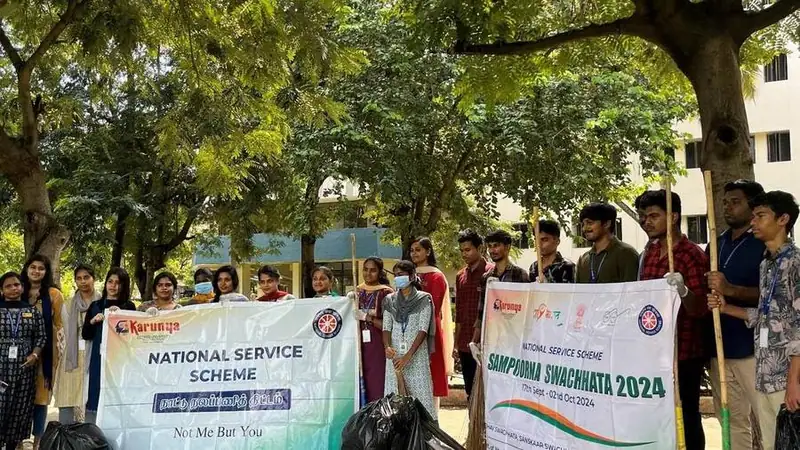
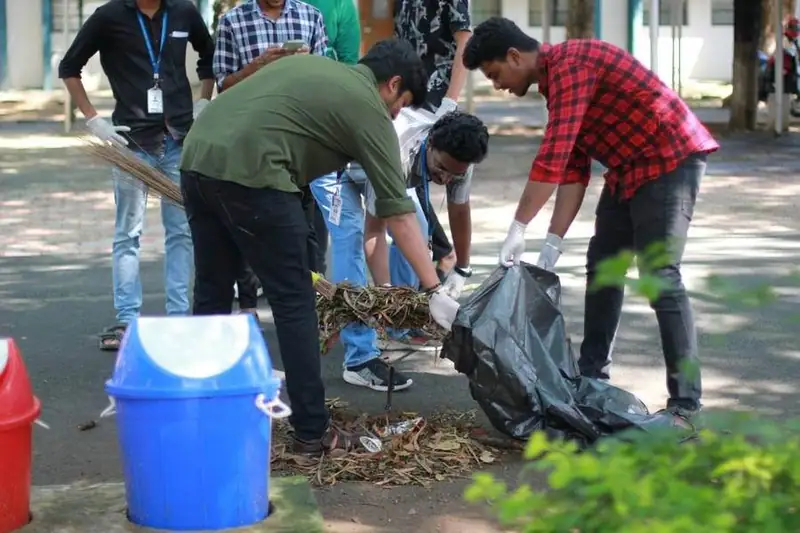
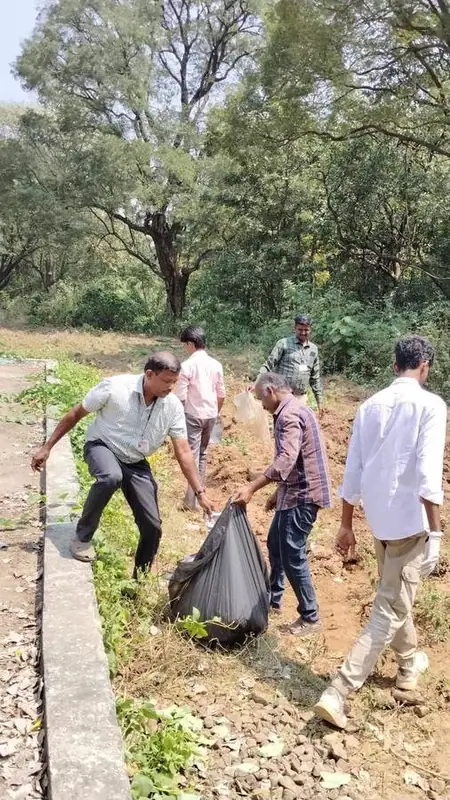
The National Service Scheme (NSS) unit of Karunya University successfully organized the "Terra Tidy – Cleanliness Drive" at Angel Garden on October 19, 2024, with 520 participants. The initiative aimed to clean the college garden and surrounding areas, promote environmental conservation, foster team spirit and responsibility among students, and contribute to campus beautification through litter removal and green space maintenance, exemplifying the core NSS mission of community service.
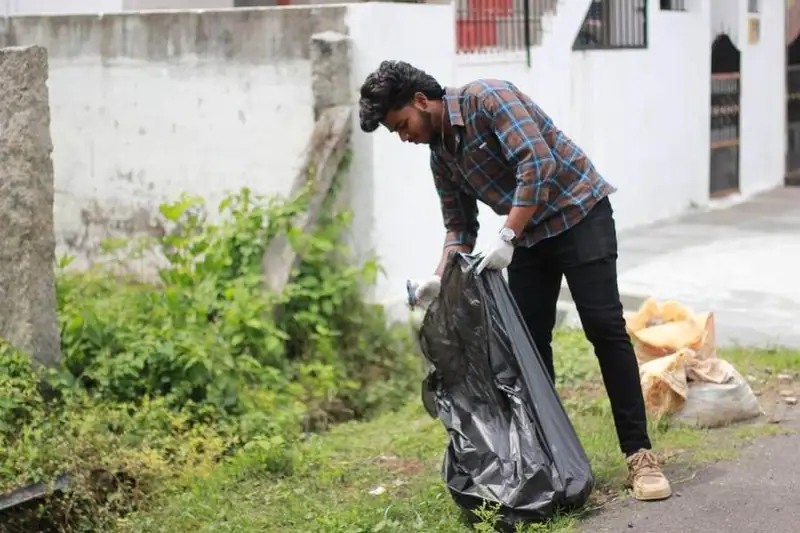
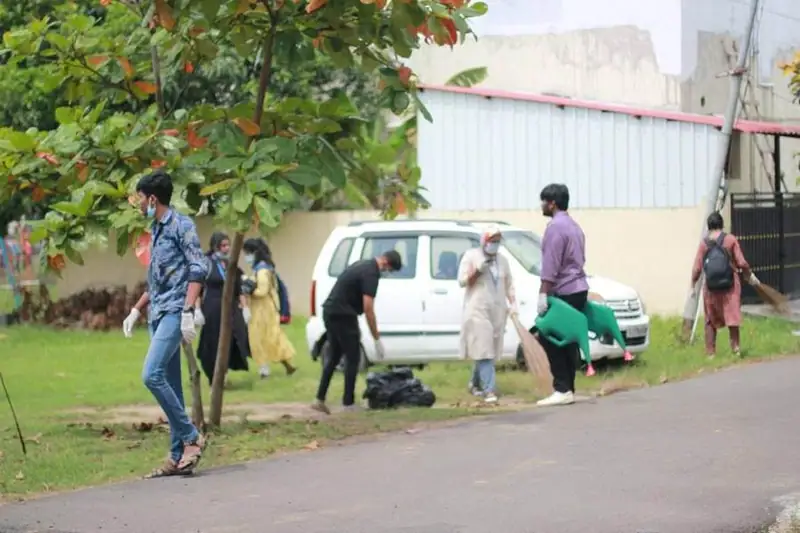
On October 26, 2024, the NSS unit of Karunya University organized a successful "Campus Cleaning" drive involving 500 participants. The event aimed to maintain a clean and hygienic campus environment while spreading awareness about waste segregation, proper disposal, and overall environmental consciousness through hands-on cleaning activities.
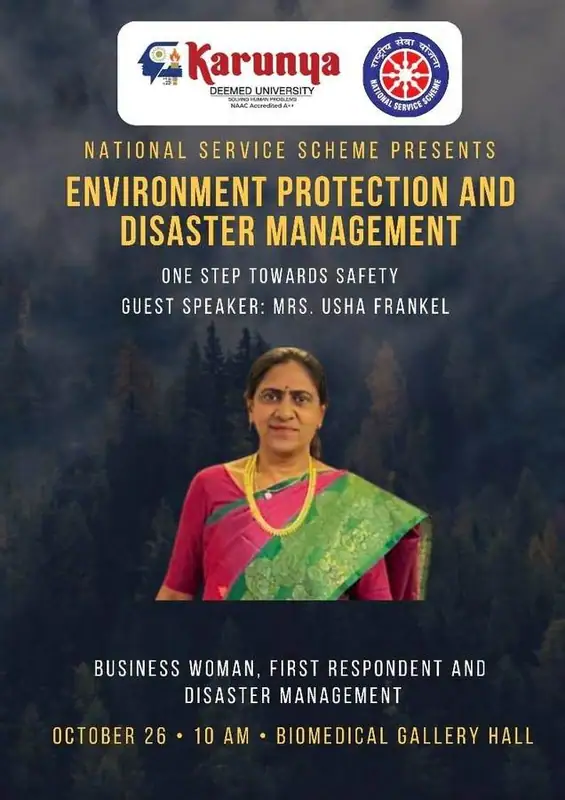
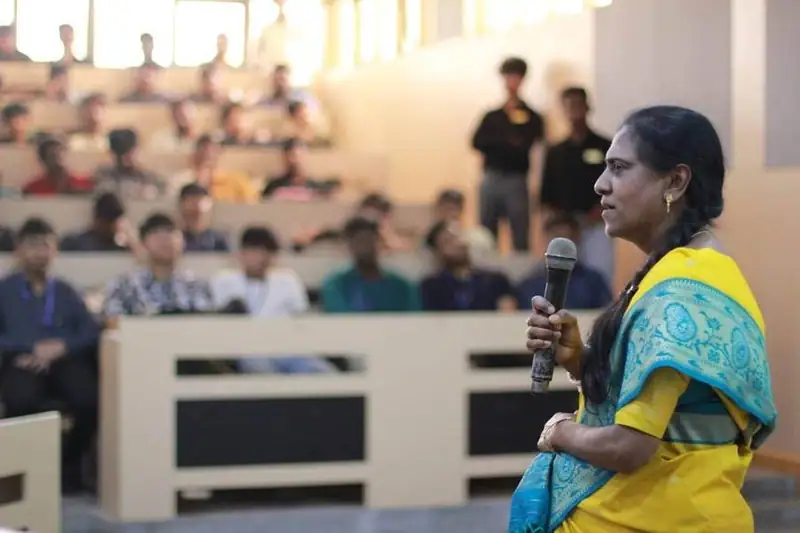
A talk on "Environmental Protection and Disaster Management" by NSS unit on October 26, 2024, at the BME Seminar Hall with 500 participants. The event featured guest speaker Mrs. Usha Frankel along with a team of experts who educated attendees on natural and man-made crises, emphasizing the three key components of effective disaster management—preparedness, response, and recovery—to foster community resilience and readiness.
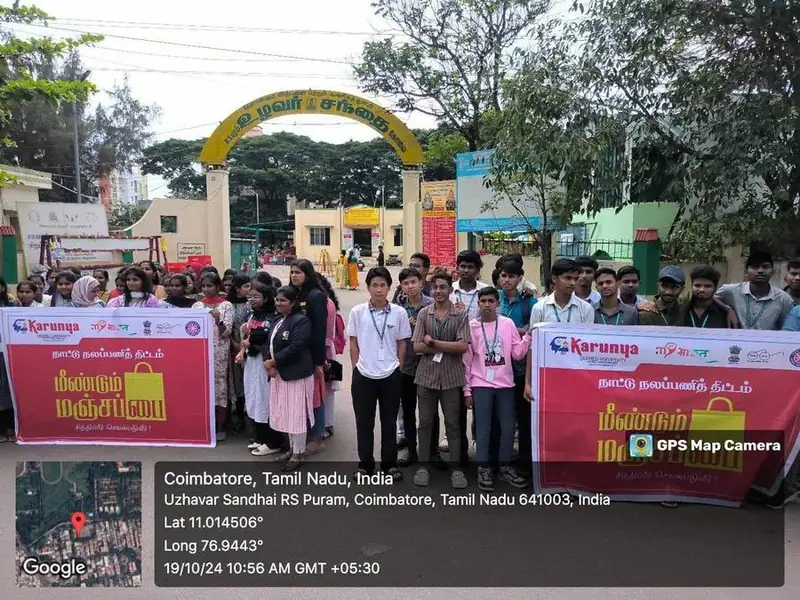
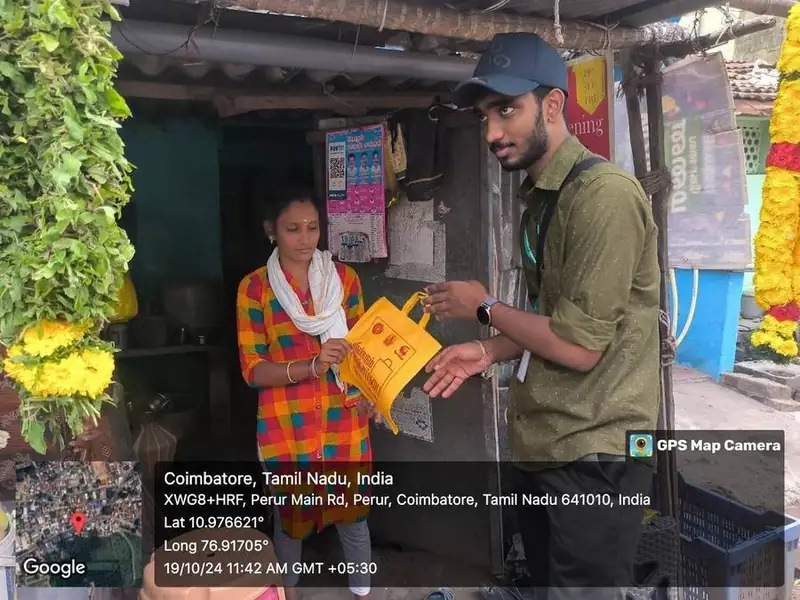
NSS unit of Karunya University organized the "Meendum Manjapai" initiative on October 19, 2024, in Coimbatore, brought together 150 participants to engage the local community in reducing plastic waste. Volunteers and staff distributed reusable yellow bags, informational leaflets, and stationary items to educate the public on the environmental impacts of plastics and promote eco-friendly daily practices.
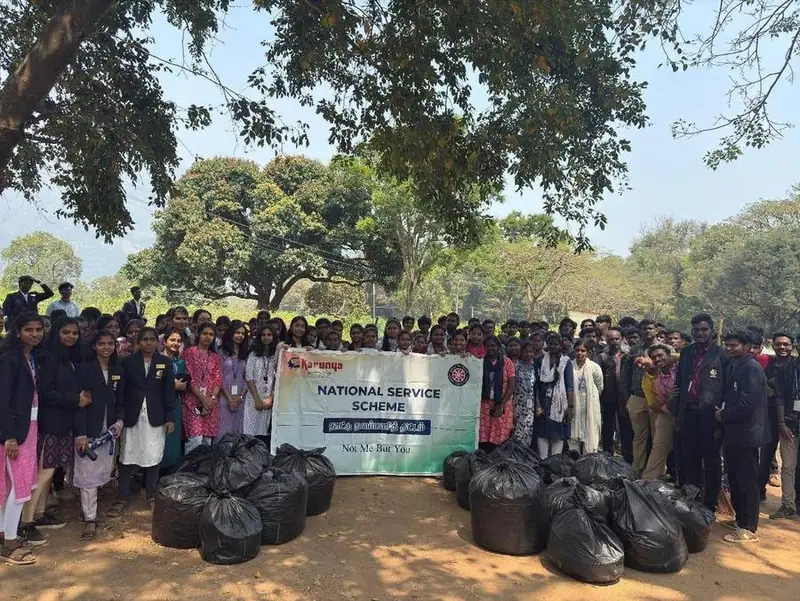
NSS volunteers of Karunya University organized a Swatchh Bharat cleanliness drive at Siruvani on February 22, 2025, with 150 participants. The initiative focused on collecting non-biodegradable waste, promoting environmental conservation, raising awareness about pollution in water bodies like the Siruvani River, and encouraging the local community to maintain cleanliness.
KALA events
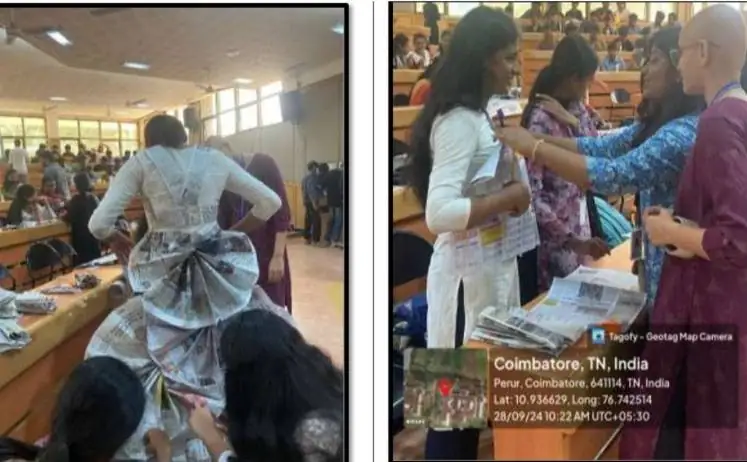
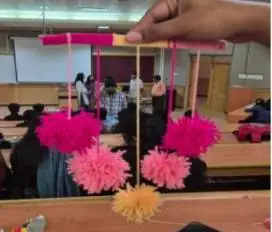
The KALA Induction Fest – Eco Craft Revolution: Sustainable Fashion Show, held on 28th September 2024 at the Food-Pro Seminar Hall, engaged around 150 students in a creative sustainability-focused activity. Students worked in teams of two to five and participated in three tasks—Eco Craft Revolution, Radiant Lantern Creations, and Palette of Imagination—using newspapers and recyclable materials under the theme “Best Out of Waste.” The activity encouraged creativity, teamwork, environmental consciousness, and sustainable practices, with all groups successfully completing their creations within the allotted time.
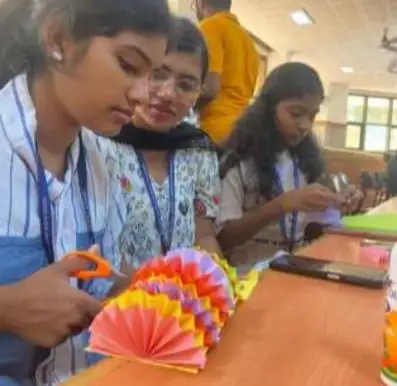
KALA organized a doodle activity focused on the theme “Empowering citizen-driven change for cleaner air and a sustainable future,” encouraging students to reflect on environmental responsibility. Around 150 students participated in this creative session and in engaged in activities such as: Origami, Floral Paper Designs and Doodle Art (My Bharat Platform Theme).
Nature Club Events
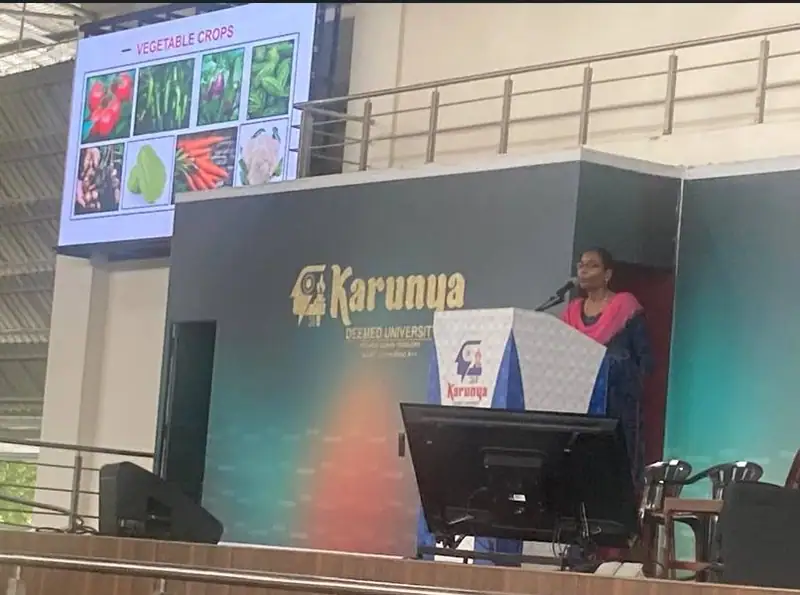
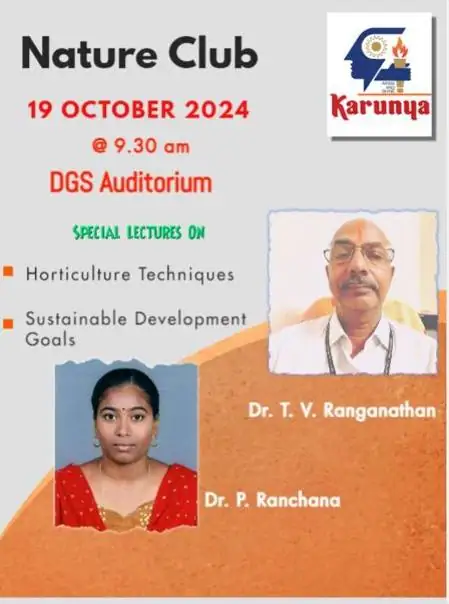
An expert talk organized by the Nature Club at Karunya Institute of Technology and Sciences on 19th October 2024 featured two insightful sessions on modern agriculture and environmental sustainability. Dr. P. Ranchana delivered the first lecture on horticulture techniques, emphasizing scientific plant propagation, crop rotation, organic inputs, and climate-smart practices to enhance agricultural resilience and value addition. The second session, led by Dr. T. V. Ranganathan, focused on the United Nations Sustainable Development Goals (SDGs), highlighting their global and local relevance, India's progress in renewable energy and sanitation, and inspiring students to act as proactive change-makers in sustainability.
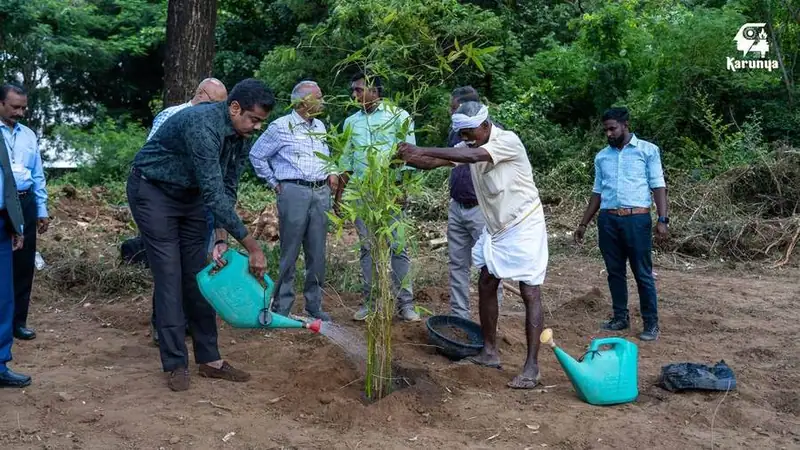
In celebration of our Chancellor’s birthday, 63 Beema Bamboo saplings were planted in the agricultural land of Karunya University on 03.09.2025. Beema Bamboo, known as the “green gold,” plays a vital role in reducing carbon dioxide and increasing oxygen, contributing to a healthier and greener planet.
NCC Events
To realize and understand the true significance of cleanliness in our lives and surroundings, Swabhav Swachatha Sanskar Swachatha was organized on 21 November 2024. NCC Cadets participated by shooting video vlogs and designing posters to spread awareness about the importance of cleanliness.
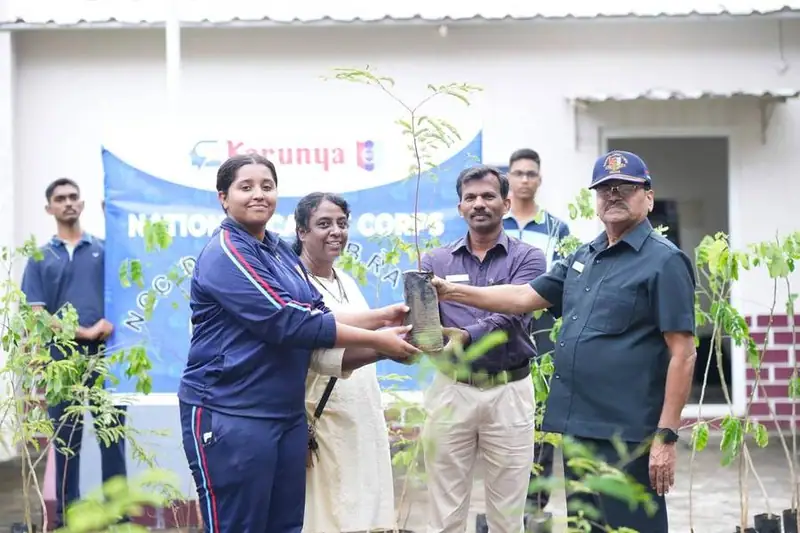
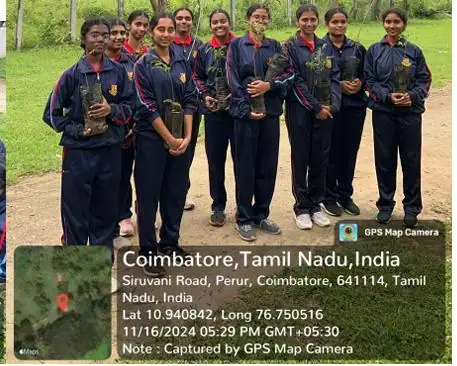
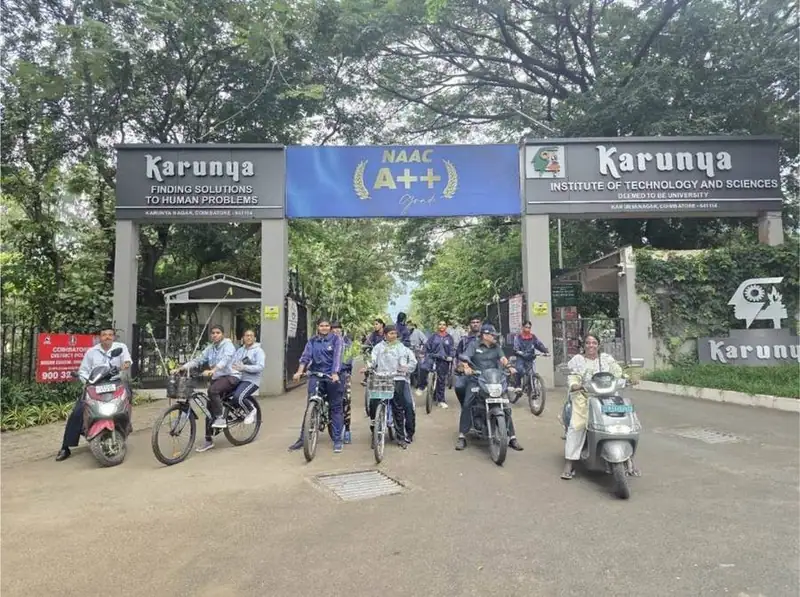
NCC Day 2024 activities focused on environmental conservation, including tree planting, cycle rallies, and youth involvement to promote sustainability. The event featured tree planting drives with participants planting saplings at various locations on 16.11.2024. A rally promoting eco-friendly transportation, especially cycling, was organized to reduce carbon emissions. The activities aimed to raise awareness and inspire collective responsibility for the environment. The event highlighted planting trees as a simple but powerful environmental action. Senior officers and students delivered speeches motivating youth to adopt eco-friendly habits. The activities aimed to inspire behavioral changes towards sustainability among the youth.
7. Community Outreach
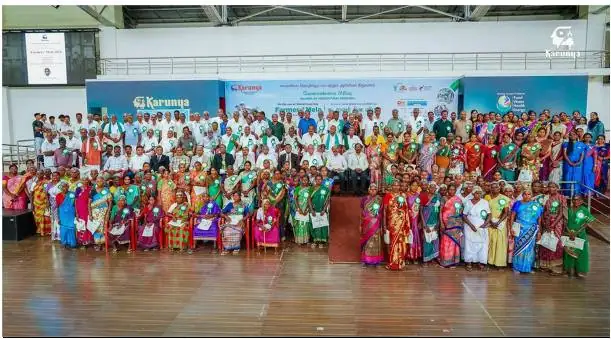
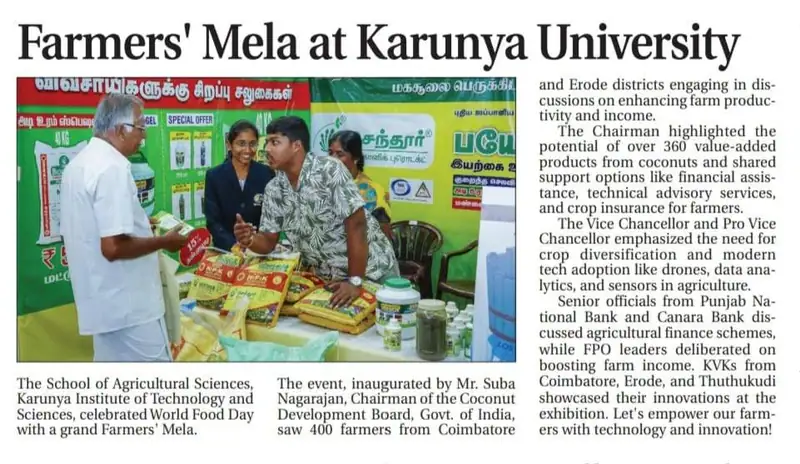
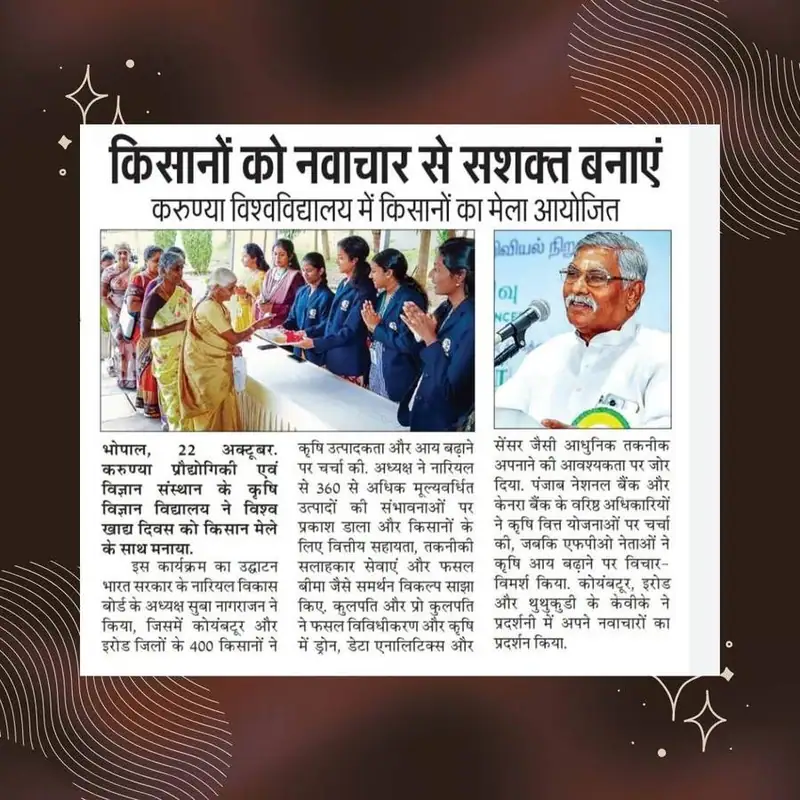
The School of Agricultural Sciences, Karunya Institute of Technology and Sciences, celebrated World Food Day with a grand Farmers' Mela October 16th, 2024 at Karunya Nagar, Coimbatore. The event, inaugurated by Mr. Suba Nagarajan, Chairman of the Coconut Development Board, Govt. of India. Across 400 farmers from Coimbatore and Erode districts were engaged in discussions on enhancing farm productivity and income.
| Sl. No. | Name of the Program | Location | Date | Technologies demonstrated | Total Farmers Benefited |
|---|---|---|---|---|---|
| 1. | Technology Transfer on Coconut, Banana and Organic Crop Management Practices | Veerapandi, Sirumugai, S.S. Kulam, Sambaravalli, Annur, Karamadai | August–September 2024 | Management of button shedding using botanical inputs (Calotropis leaves) Composting and vermicompost preparation Biological pest management Organic management of viral diseases in vegetables | 125 |
| 2. | Hands on Training on Nutrient and Crop Management | Gobichettipalayam Region | 19–23 August 2024 | Soil health improvement by reducing methanogenic activity in paddy | 62 |
| 3. | Hands on Training on Eco-friendly Crop Production Practices | Madhampatty | 28 and 29 August 2024 | Banana cultivation practices Preparation of organic formulations: NSKE 3G Karaisal Murungai Karaisal Installation of yellow sticky traps | 25 |
| 4. | Transgenders Skill Training Programme | ICAR SCAD KVK Thoothukudi | 02.08.2025 | Natural Pest management in crops, Beekeeping and Azolla production | 25 |
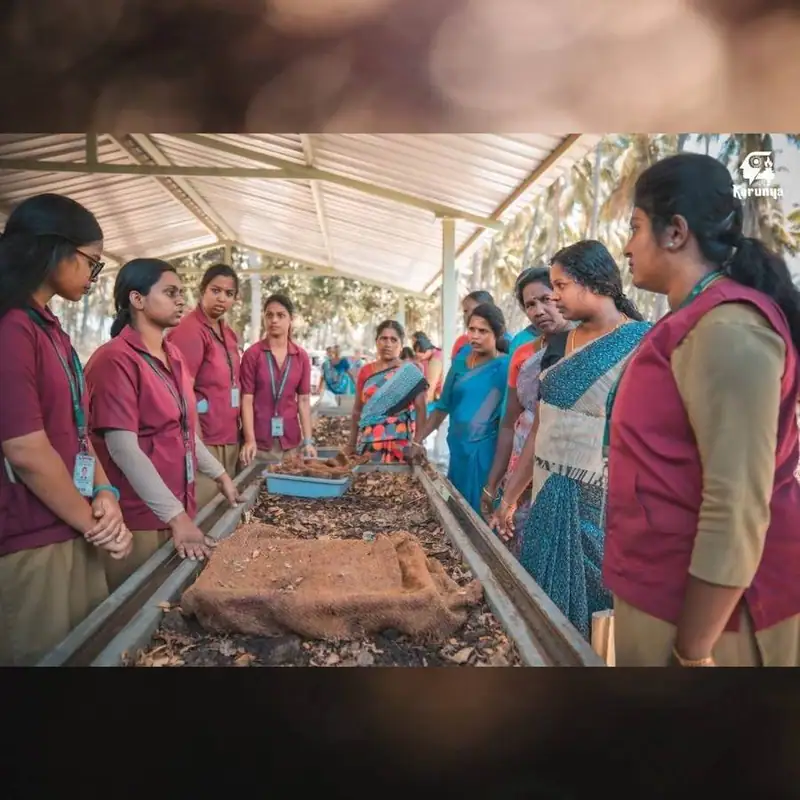
| 5 | Training on Vermicompost and Poultry to women SHG members | North Farm, Karunya | March 30, 2024 | Vermicompost and Poultry Production | 25 |
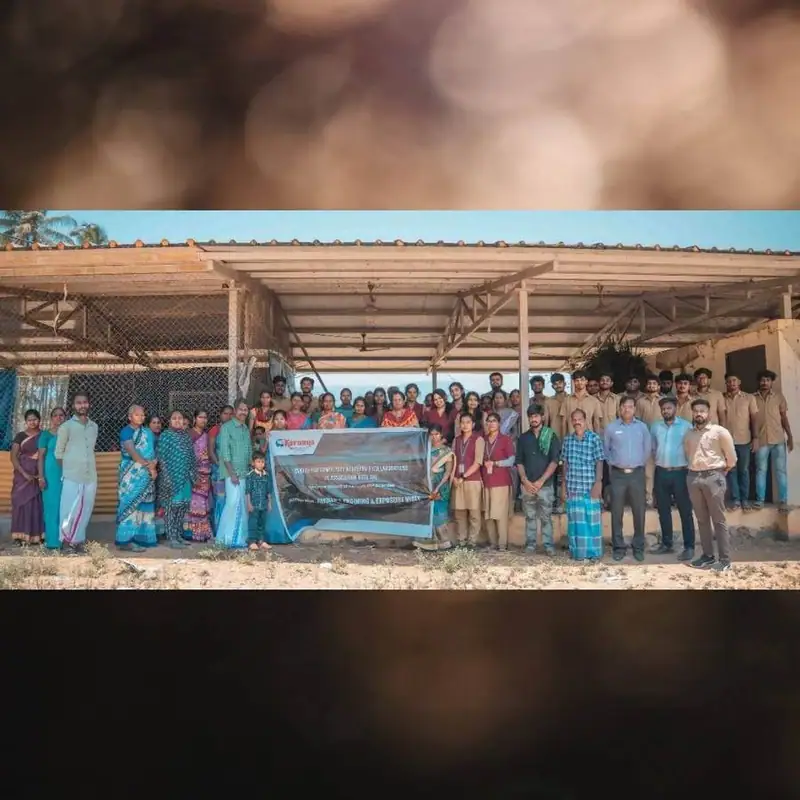
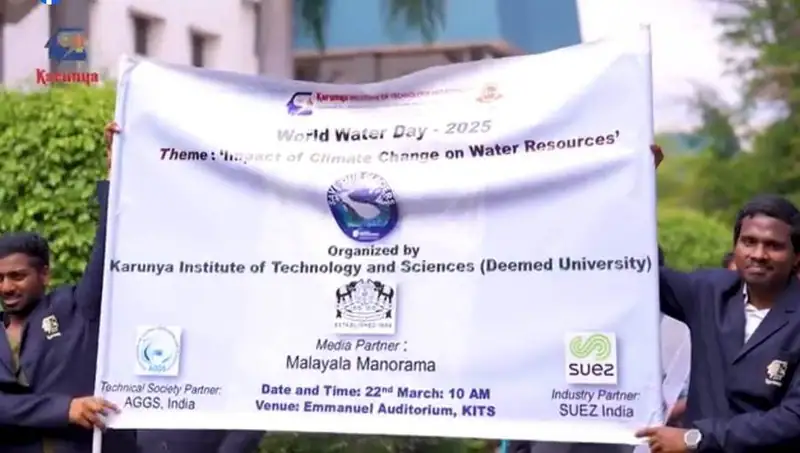
Karunya School of Agricultural Sciences conducted a community awareness rally for water conservation and responsible water consumption on 22 March 2025. (https://youtu.be/EwqpM6Cx2oQ?si=TBfReBdIlVKDYVoy).
8. Partnerships and Collaborations
Key Collaborations and Events
| Sl. No. | Event / Activity | Year | Description / Outcome | Nature of Collaboration |
|---|---|---|---|---|
| 1. | NGO Collaboration – Friends of Bharathapuzha | 2024 | Invited as keynote speaker at Water Conference, Palakkad to promote sustainable river management. | Civil Society & Environmental NGO Engagement |
| 2. | NASA Collaboration – AERONET Project | 2024 | Extension of NASA–KITS partnership on Aerosol Research Network (AERONET) confirmed by NASA HQ. | International Government Scientific Collaboration |
9. Best Practices
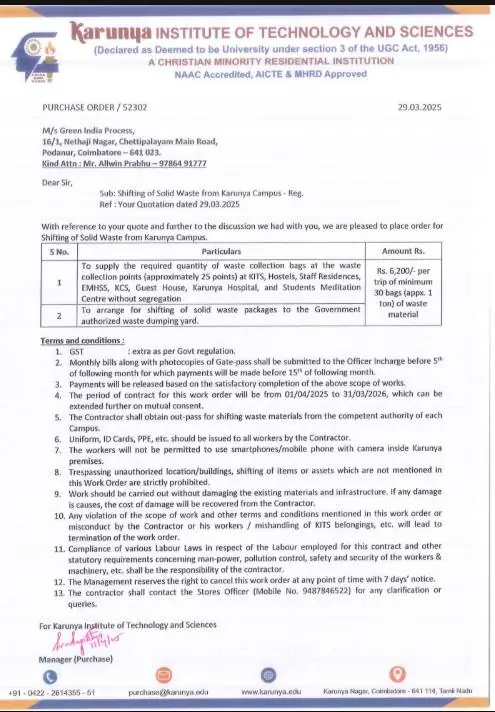
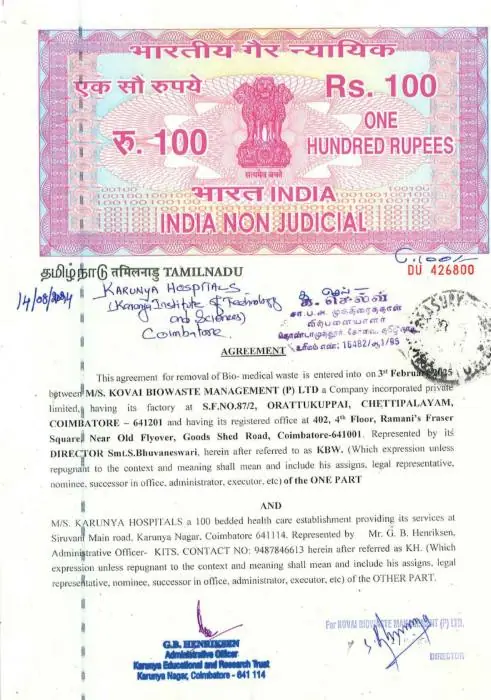
Waste tracking
Karunya Institute of Technology and Sciences is committed to maintaining an environmentally sustainable campus by effectively managing its waste generation and disposal practices. By tracking waste production, Karunya aims to strengthen its sustainability initiatives and work towards creating a zero waste and eco-friendly campus environment.
1. Waste Generation Audit by Campus Location (kg/day)
| Sl. No. | Location | Food & vegetable waste | Leafy biomass | Night soil | Waste paper | Plastic, metal, etc. | Mixed waste | E-waste | Biomedical waste |
|---|---|---|---|---|---|---|---|---|---|
| 1 | KITS Main Campus | 30 | 400 | — | 17 | 23 | 400 | 10 | 0 |
| 2 | FDR / EGR | 84 | 200 | — | 8 | 15 | 300 | 0 | 0 |
| 3 | AR / HR | 93 | 200 | — | 7 | 12 | 250 | 0 | 0 |
| 4 | IMR / BRR / BRB / JVR | 215 | 350 | — | 18 | 20 | 350 | 0 | 0 |
| 5 | Ladies Hostels | 242 | 400 | — | 18 | 35 | 500 | 0 | 0 |
| 6 | Students Meditation Centre | 7 | 50 | — | 4 | 2 | 40 | 0 | 0 |
| 7 | Karunya Hospital | 5 | 20 | — | 3 | 2 | 15 | 0 | 1 |
| 8 | Karunya Guest House | 3 | 10 | — | 1 | 1 | 5 | 0 | 0 |
| Total | 679 | 1630 | 1000 | 76 | 110 | 1860 | 10 | 1 |
2. Aggregate Waste Characterization & Annual Trajectory
| Waste category | Waste generated (tons/day) | Duration (days/year) | Waste generated (tons/year) |
|---|---|---|---|
| Food and vegetable waste | 0.68 | 300 | 204.90 |
| Leafy biomass | 1.63 | 365 | 594.95 |
| Night soil | 1.00 | 300 | 300.00 |
| Waste paper | 0.08 | 365 | 27.74 |
| Plastic, metal, etc. | 0.11 | 365 | 40.15 |
| Mixed waste | 1.86 | 365 | 678.90 |
| E-waste | 0.01 | 300 | 3.00 |
| Biomedical waste | 0.001 | 365 | 0.365 |
| Total waste generated per year | 1,850.01 |
3. Closed-Loop Organic Waste Treatment & Biogas Recovery
| Parameter / treatment method | Annual quantity |
|---|---|
| Biogas plant (food waste) | 150 tons/year |
| Vermicompost | 7.5 tons/year |
| Four biogas plants (night soil-based) | 300 tons/year |
| Total organic waste treated | 458 tons/year |
| Total organic waste generated per year | 1,099.85 tons |
| Percentage of organic waste treated | 41.67% |
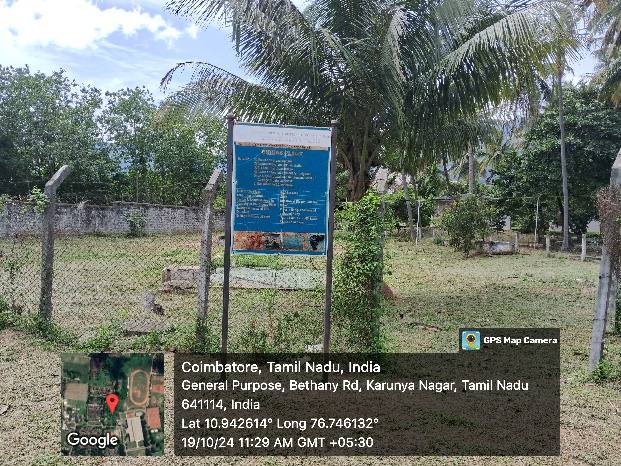
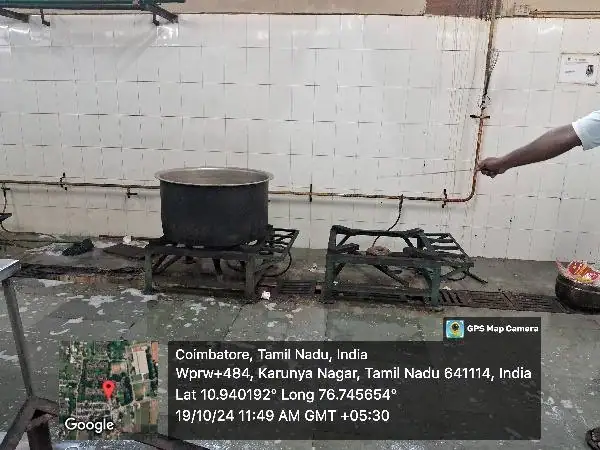
Biogas plant in residential unit at KITS
4. Sustainable Built Environment & Natural Ventilation
Soil and water conservation measures are adopted in the campus in addition to rain water harvesting, waste water treatment and recharging leading to a saving of Rs.2,00,000 per year.
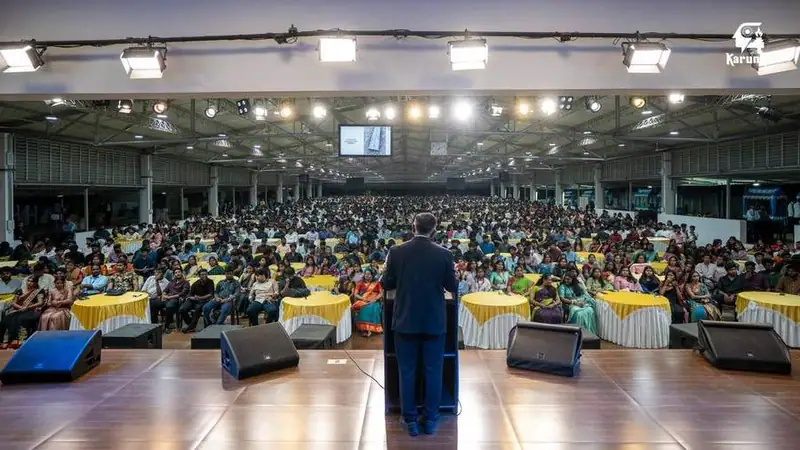
Karunya Institute of Technology and Sciences promotes energy-efficient infrastructure through naturally ventilated auditoriums that minimize the need for air conditioning. These auditoriums utilise natural airflow and ventilation to maintain indoor air circulation, reduce electricity consumption, and lower the carbon footprint associated with cooling systems. This sustainable building design supports energy conservation, resource efficiency, and the institution’s commitment to environmental sustainability.
10. Alignment with Times Higher Education (THE) Impact Rankings Metrics
10.1 Research on Responsible Consumption and Production
Publications Volume: 145 Scopus-indexed research publications (2024–2025) covering circular economy, bio-waste valorization, biodegradable polymers, and green chemistry.
10.2 Operational Measures
Ethical Sourcing Policy: Statutory implementation of the Sustainable Procurement and Purchasing Policy (KITS/SPPP/2025/01), prioritizing local, fair-trade, energy-efficient, and recyclable goods.
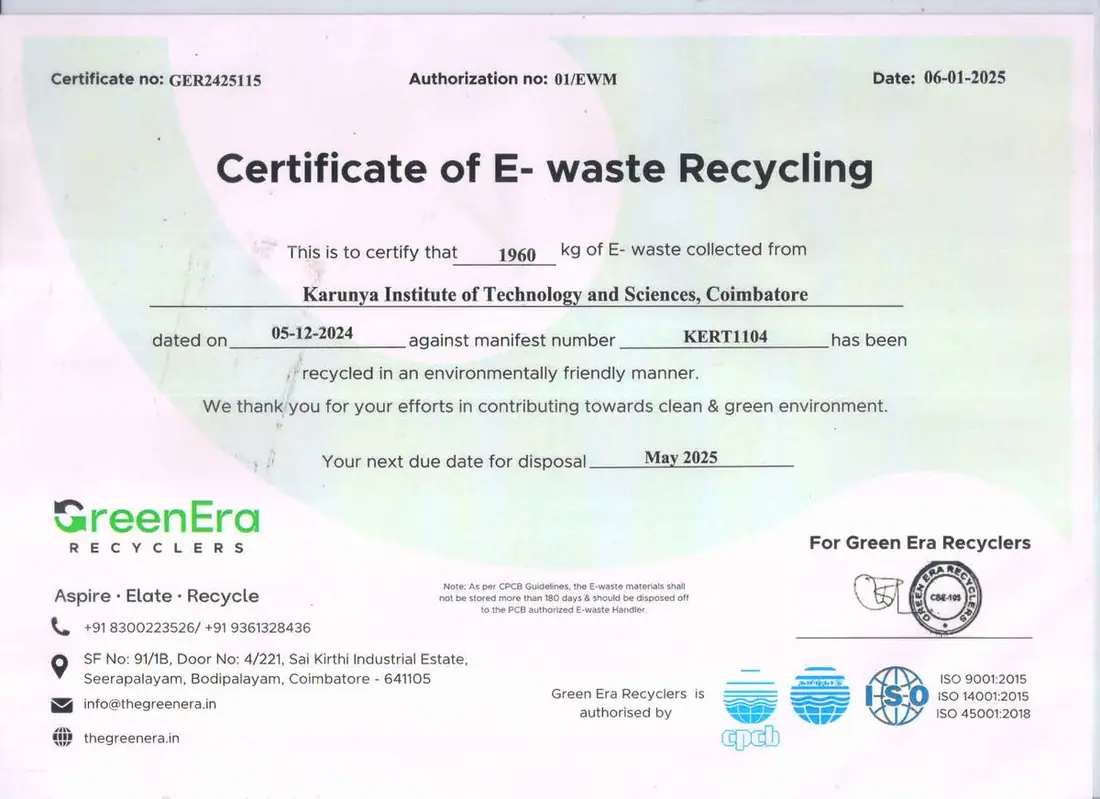
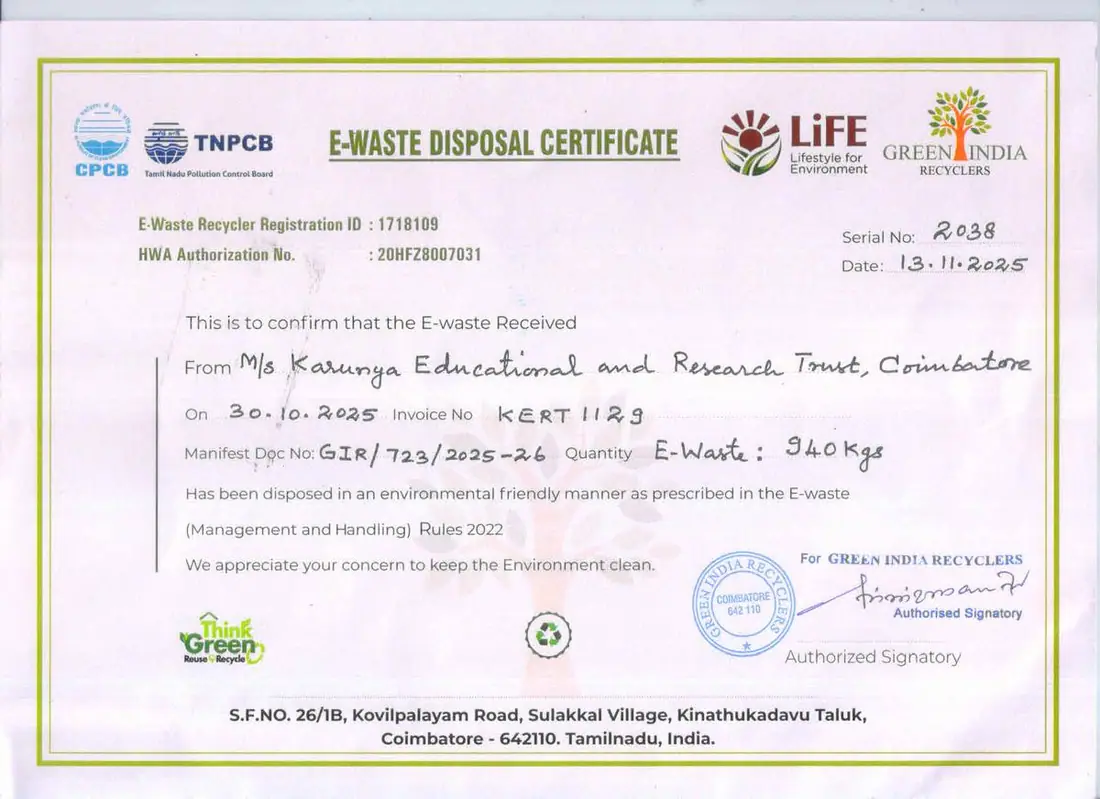
Policy on Waste Disposal: Enforced hazardous and e-waste disposal protocols via certified state pollution control board recyclers.
Policy on Minimization of Plastic Use: Formal campus ban on single-use plastics across dining halls, cafeterias, and campus stores.
Policy on Minimization of Disposable Items: Institutional mandate requiring reusable cutlery, ceramic mugs, and biodegradable packaging across all institutional events.
Disposable Policy Extension to Services: Outsourced catering contracts enforce mandatory zero-disposable clauses.
Minimization of Plastic Use Extension to Services: Commercial vendors operating on university premises are bound by plastic-free commercial lease covenants.
Tracking Plastic Waste: Systematic sorting of recyclable plastics, supplying high-grade PET to campus start-ups for composite rebars.
Tracking Hazardous Waste: Regulated handling and manifests for biomedical and chemical wastes through the Division of Civil & Environmental Engineering.
10.3 Proportion of Recycled Waste
Solid Waste Diversion: Campus paper recycling plant (200 kg/day) diverted over 60 metric tons of paper annually.
Wastewater Recycling: 100% of treated effluent (2,455 KLD capacity across 4 STPs) recycled for campus agricultural and landscape irrigation.
10.4 Publication of Sustainability Report
Annual public release of the institutional Environmental Sustainability and Green Audit Report on the university portal.
10.5 Campus Food Waste
Food Waste Diversion: Dedicated kitchen waste sorting sending 3.5 tons/day of food waste to 4 biogas plants (generating 5–6 commercial cylinders equivalent/day; saving ₹23.10 lakh annually) and vermicomposting units at the North Farm.
Conclusion
Karunya Institute of Technology and Sciences demonstrates a multidisciplinary institutional approach to SDG 12 through policies, sustainable infrastructure, curriculum integration, research and innovation, student participation, and community outreach. Its emphasis on the 3R principle, renewable energy, biogas generation, wastewater treatment, rainwater harvesting, paper recycling, sustainable procurement, and waste-to-value technologies reflects a commitment to improving resource efficiency and reducing environmental impacts.