1. SDG Overview
Karunya Institute of Technology and Sciences is committed to promoting inclusive and equitable education in alignment with SDG 10 – Reduced Inequalities. The Institute provides opportunities for students from diverse social, economic, cultural, and geographical backgrounds to access quality higher education and achieve their academic and professional goals.
The Institute contributes to SDG 10 through scholarships and financial assistance, inclusive learning practices, student support systems, and opportunities for holistic development. These initiatives help to reduce educational and socio-economic disparities, promote equal participation, and ensure that students from disadvantaged backgrounds receive appropriate support.
By fostering diversity, inclusion, equal opportunities, and social responsibility, the Institute strives to create an academic environment where every learner can participate, develop their potential, and contribute meaningfully to society. Thus, SDG 10 strengthens the Institute's commitment to inclusive excellence, social justice, and sustainable development.
2. Institutional Policies and Commitments
2.1 Merit-based, non-discriminatory admissions
KITS admits students strictly on merit, without resorting to capitation fees or donations, ensuring a level playing field for applicants regardless of socio-economic background.
2.2 Minority Educational Institution status
KITS is recognised as a Minority Educational Institution by the Government of India under the National Commission for Minority Educational Institutions Act, Section 2(g).
2.3 Institution scholarships
During 2024–25, the University disbursed institutional scholarships to 1,032 deserving and meritorious students across merit, socio-economic, and minority categories, ensuring uninterrupted continuation of their higher education.
2.4 Gender-inclusive policies
The National Cadet Corps (NCC) wing at KITS includes a dedicated Girls Battalion (5 [TN] Girls Battalion) alongside the boys' platoons, reflecting institutional commitment to gender-inclusive co-curricular opportunities.
2.5 International inclusion
The University enrols international students from multiple countries, extending access to quality higher education across diverse nationalities.
2.6 Non-Discrimination, Diversity and Inclusion Policy
KITS follows a zero-tolerance Non-Discrimination, Diversity and Inclusion Policy (enacted July 2022, operational throughout 2024–25, and reaffirmed in its scheduled triennial review on 29 August 2025 at the 28th IQAC Meeting) covering all students, staff and stakeholders. The Equal Opportunity Cell is the nodal body for its implementation, ensuring equal opportunity, accessibility and fair treatment for persons with disabilities and under-represented groups.
2.7 Non-Discrimination and Harassment Policy for Students
The Non-Discrimination and Harassment Policy for Students (revised August 2025) prohibits discrimination on grounds of caste, religion, race, gender, disability, nationality or socio-economic background, and guarantees equal opportunity in admission, participation and assessment, with complaints handled through the Grievance Redressal Committee.
2.8 Student Mentoring, Support & Well-Being Policy
The Student Mentoring, Support & Well-Being Policy (revised August 2025) provides differentiated mentoring for first-generation, rural and economically weaker students, reasonable accommodations for students with disabilities, scholarship facilitation and counselling through the Karunya Wellness Centre.
3. SDG Objectives
The institution's objectives in respect of SDG 10 (Reduced Inequalities), as reflected in its stated mission and activities, are to:
- Ensure equitable access to higher education across social categories, genders, income groups, and nationalities, admitting students purely on merit and without capitation fees or donations.
- Provide financial support to deserving and meritorious students so that economic background does not restrict access to quality education.
- Extend the benefits of technology and research to marginalised, rural, and tribal communities through the University's Technological Missions (e.g., Rural Development; Medical Devices Innovation for assistive/rehabilitation technology).
- Promote inclusion of persons with disabilities through assistive-technology research (e.g., AI-driven prosthetics, EEG-controlled wheelchair, web accessibility tools for the visually impaired) and campus accessibility.
- Foster gender equity in academic, co-curricular, and leadership opportunities.
- Encourage research and community engagement that surfaces and addresses inequality (e.g., studies on rural women, tribal communities, and socio-economic impact of technology).
4. Curriculum Integration (Final-Year Student Projects, 2024–25)
SDG 10 is built into the curriculum through final-year project work. In 2024–25, departments mapped 281 final-year projects explicitly to SDG 10 – Reduced Inequalities. A further 35 projects directly address inequality themes such as disability and accessibility, women’s safety and wellbeing, and support for farmers and small producers.
The largest contribution comes from the B.Sc. (Hons) Agriculture programme, where all 268 students of the Rural Agricultural Work Experience (RAWE) programme were mapped to SDG 10 (with SDG 2). Krishi Vigyan Kendra (KVK) studies place students directly with farming communities across Tamil Nadu and Kerala, including Thondamuthur Block (Coimbatore), Erode, Tenkasi, Krishnagiri, Puducherry, Palakkad, Thrissur, Kottayam, Thiruvananthapuram, Kannur and Wayanad.
Table 4.1: Representative Final-Year Projects Mapped to SDG 10
(Curated Sample from 281 Departmental Projects, 2024–25)
| No. | Dept. | Project Title | Student(s) |
|---|---|---|---|
| Agriculture (RAWE Programme) | |||
| 1 | Agriculture | Rural Agricultural Work Experience – village and KVK studies (268 students; KVK Puducherry, Thondamuthur Block villages, KVK Coimbatore, Erode, Tenkasi, Krishnagiri, Palakkad, Thrissur, Kottayam, Thiruvananthapuram, Kannur and Wayanad) | 268 students |
| Electronics and Communication Engineering | |||
| 2 | ECE | Detection of Characters in American Sign Language using Convolutional Neural Network | Thivya Sri K R |
| 3 | ECE | Development of a Sensor-Enhanced Wheelchair Controlled by EEG Brain Signal with Fail-Safe Mechanism | Aditya Josiah Tirkey |
| 4 | ECE | IoT Paralysis Patient Healthcare Monitoring | Ann Diya Sunny |
| 5 | ECE | Developing an Assistance System for the Visually Impaired: Face, Currency and Pathway Irregularity Detection | Visakan M |
| Robotics Engineering | |||
| 6 | Robotics | Visu-Aid: A Medical Assistant Bot | Amirtha Varshini P |
| 7 | Robotics | Development of Bionic Leg with Detachable Activity Tracker for Rehabilitation | Immanuel John Mathew |
| Commerce and International Trade | |||
| 8 | BBA | Venture Solutions: A Strategic Platform Bridging Entrepreneurial Gaps through Resource Integration and Digital Innovation | Guruprasanth K |
| 9 | BBA | Kosamattam Finance (study) | Akshaya Priya C |
| 10 | BBA | Customer Satisfaction towards E-Banking | Thati Navya Sree |
| 11 | BBA | A Study on the Impact of Customer (study) | Vivek Kumar Ekka |
| 12 | B.Com. | Analysing Customer Perceptions and Shopping Behaviour towards Online Shopping on Flipkart.com | Kishore H |
| Media (B.Sc. Visual Communication) | |||
| 13 | Media | Content Creation for Social Media Platform | Sneha Samuel |
| 14 | Media | Video Editing for YouTube | Shirlyn Victoria S |
Table 4.2: Other final-year projects addressing inequality themes (2024–25)
| No. | Department | Project Title |
|---|---|---|
| 1 | Biomedical Engg. | Medication Assistance System for the Visually Impaired |
| 2 | Biomedical Engg. | Assistive Care Robot |
| 3 | Biomedical Engg. | Eye-Controlled Wheelchair |
| 4 | Biomedical Engg. (M.Tech.) | Estimation of Upper-Limb Strain Based on Ground Reaction Forces in Spring-Loaded Walking Aid |
| 5 | CSE | Real-Time Sign Language Recognition and Translation using Computer Vision |
| 6 | CSE | Real-Time Sign Language Recognition System using Deep Learning |
| 7 | CSE | Real-Time Sign Language Converter |
| 8 | CSE | Enhanced Real-Time Sign Language Recognition and Multilingual Translation using Ensemble Deep Neural Networks and MoveNet |
| 9 | CSE | Real-Time Sign Language Detection |
| 10 | CSE | Hear the Signs: AI-Based Road Sign Detection with Real-Time Voice Feedback for the Blind |
| 11 | CSE | Image Captioning for Visually Impaired People |
| 12 | CSE | NaviStride: Empowering the Visually Impaired with Smart Shoes |
| 13 | CSE | Pathfinder: AI-Powered Obstacle Detection and Navigation for the Visually Impaired |
| 14 | CSE | A Multi-Module Application for the Visually Impaired using Braille |
| 15 | CSE | Unified Gesture Translation AI: Advancing Accessibility through Braille and Morse Code Integration |
| 16 | CSE | IoT-Based Gesture-Controlled Mouse System for Individuals with Hand Impairments |
| 17 | CSE | Automated Hand-Movement Analysis using Spectrograms to Aid Prosthetic Development |
| 18 | CSE | Deep Learning-Based Real-Time Hand-Movement Classification and Rehabilitation using Edge Devices |
| 19 | AI & ML | Voice-Enabled Inclusive E-Commerce Platform for Visually Impaired and Non-Disabled Users |
| 20 | AI & ML | Real-Time Sign Language Recognition using Machine Learning |
| 21 | AI & ML | EMG-Based Muscle Movement Recognition for Prosthesis |
| 22 | AI & ML | Deep Learning-Based Detection of Cerebral Palsy |
| 23 | Data Science & Cyber Security | Improving Classroom Support for Autistic Students through Emotion Detection |
| 24 | Data Science & Cyber Security | VISION: Visual Impairment Support via Intelligent Optical Navigation |
| 25 | Data Science & Cyber Security | Safeguarding the Visually Impaired from Phishing Attacks |
| 26 | Data Science & Cyber Security | An Assistive Device for Real-Time Sign Language Recognition |
| 27 | CSE | Zephyr: Empowering Women’s Safety through Smart Technology |
| 28 | Commerce | The Role of AI-Powered Analytics among Private- and Public-Sector Women Employees |
| 29 | Food Processing (M.Tech.) | Functional Gluten-Free Products from Unripe Musa paradisiaca for Enhanced Nutrition and Women’s Health |
| 30 | Forensic Science (M.Sc.) | Forensic Gait Pattern Analysis: Biomechanical Adaptations in Pregnant Women and Older Adults |
| 31 | CSE | A Multilingual Smart Farming Chatbot for Indian Farmers using Dhenu2 |
| 32 | CSE | Empowering Farmers: Real-Time Coconut Tree Disease Detection and Management using YOLOv8 |
| 33 | AI & ML | Empowering Farmers: Real-Time Coconut Tree Disease Detection and Management using YOLOv8 and ML |
| 34 | AI & ML | HarvestHub: AI- and ML-Driven Platform for Crop Selection, Price Prediction and Farmer Assistance |
| 35 | Commerce | Analysis of Grameen Koota Microfinance |
5. Research and Innovation
During 2024–25, faculty members and research scholars of Karunya Institute of Technology and Sciences published 18 Scopus-indexed research papers that address themes of SDG 10 – Reduced Inequalities. These works span assistive technologies for persons with visual, hearing and learning disabilities; gender, transgender and human-rights perspectives; equitable access to higher education; health equity through AI-enabled diagnosis and care; and economic inclusion of women, farmers and financial-system users.
Thematic areas of SDG 10-aligned research:
A. Disability inclusion (4 papers): AI- and deep-learning-based tools for students with visual and auditory impairments, sign-language conversion and storytelling platforms for hearing-impaired children, and early identification of learning difficulties.
B. Gender, identity and social inclusion (4 papers): mainstreaming of transgender identities, women’s adoption of fintech, human-rights discourse in Indian cinema, and online gambling addiction among college students.
C. Equitable access to education (3 papers): prospects and challenges of higher education in Kerala, improved online assessment systems, and secure AI models for medical education.
D. Health equity (3 papers): early detection of Alzheimer’s disease, AI-assisted trauma support, and secure 5G/big-data healthcare for wider reach of care.
E. Economic security and rural livelihoods (4 papers): AI-driven advisory and support systems for farmers, fraud protection in blockchain transactions, bank-distress resolution safeguarding depositors, and recovery of resources from spent batteries.
Table 5.1: Scopus/Web of Science Research Publications Aligned with SDG 10 (2024–25)
| No. | Title | Authors | Source Title | Year | Vol. (Issue), Pages |
|---|---|---|---|---|---|
| A. Disability Inclusion and Assistive Technologies | |||||
| 1 | An Intelligent Educational and Communication Tool for Students with Visual and Auditory Impairments | Idhayan, I.S.; Leelipushpam Paulraj, G.J.; Jebadurai, I.J. | Proceedings - International Conference on Next Generation Communication and Information Processing, INCIP 2025 | 2025 | 680-686 |
| 2 | Sign-based Storytelling Platform for Hearing-Impaired Children with ASL Animation and Audio Narration Support | Teja, N.S.C.; Priyadharsini, C. | Proceedings of 6th International Conference on IoT Based Control Networks and Intelligent Systems, ICICNIS 2025 | 2025 | 2126-2131 |
| 3 | Sign Language Converter Using CNN-DBN Framework | Roy, E.S.; Issac, T. | International Conference on Computational Robotics, Testing and Engineering Evaluation, ICCRTEE 2025 | 2025 | – |
| 4 | Identifying Learning Difficulties at an Early Stage in Education with the Help of Artificial Intelligence Models and Predictive Analytics | Mahisha Babu, J.; Anita Virgin, B.; Edwin, M.R.S.; Gokula Priya, P.; Ravichandran, K. | International Research Journal of Multidisciplinary Scope | 2024 | 5 (4), 1455-1461 |
| B. Gender, Identity and Social Inclusion | |||||
| 5 | Transborder discourses: Mainstreaming the transgender self | Jose P, J.; Dhanaraj, A. | Cogent Arts and Humanities | 2025 | 12 (1) |
| 6 | Women Fintech Adoption – A Base TAM Framework | Aswathy, K.M.; Aruna, K.; Priya, K.L. | International Journal of Applied Mathematics | 2025 | 38 (4S), 129-137 |
| 7 | Frames of Extremism: Indian Films, Human Rights Discourse, and Media Literacy | Shekhar, B.; Sahani, V. | Indian Cinema and Human Rights: An Intersectional Tale | 2024 | 173-196 |
| 8 | Online Gambling Addiction: A Study among College Students of Kerala State, India | Prakash, P.; Girdhar, S.; Jose, A. | Pakistan Journal of Criminology | 2024 | 16 (2), 929-942 |
| C. Equitable Access to Education | |||||
| 9 | Higher education in Kerala: Prospects and challenges | Muniraj, R.; Ulaganathan, M.; Akkara, S.; Jarin, T. | AIP Conference Proceedings | 2025 | 3306 (1) |
| 10 | An Effective Algorithm to Enhance the Performance of Online Quiz System | Srinayana, A.; Praveenchandar, J. | 2nd International Conference on Sustainable Computing and Smart Systems, ICSCSS 2024 - Proceedings | 2024 | 646-648 |
| 11 | Enhanced Defensive Model Using CNN against Adversarial Attacks for Medical Education through Human Computer Interaction | Priya, K.V.; Dinesh Peter, J. | International Journal of Human-Computer Interaction | 2025 | 41 (3), 1729-1741 |
| D. Health Equity and Access to Care | |||||
| 12 | Deep Learning based Gait Analysis for Early Detection and Progression Monitoring of Alzheimer's Disease | Pradeep Raj, M.S.; Manimegalai, P. | Journal of Trends in Computer Science and Smart Technology | 2025 | 7 (3), 376-401 |
| 13 | AI-Powered Trauma Chat Assistance: Identifying Trauma Symptoms from Voice and Text Communications | Jacks Siva Sabesh, S.; Jenefa, A.; Edward Naveen, V.; Santhiya, P.; Sangeetha, R.; Lincy, A. | Lecture Notes in Networks and Systems | 2024 | 23, 351-361 |
| 14 | Charting the course: secure big-data analytics and 5G in healthcare’s transformative journey | Prasad, V.K.; Bhattacharya, P.; Hemanth, D.J.; Dutta, P.K.; Kathait, A.; Dănciulescu, D. | Secure Big-data Analytics for Emerging Healthcare in 5G and beyond: Concepts, paradigms, and solutions | 2024 | 379-383 |
| E. Economic Security, Rural Livelihoods and Resource Access | |||||
| 15 | AI-Driven Smart Farming: An Integrated Approach for Crop Advisory, Pest Detection, and Farmer Support Systems | Amal, R.S.; Hemalatha, R. | 4th International Conference on Automation, Computing and Renewable Systems, ICACRS 2025 - Proceedings | 2025 | 1610-1614 |
| 16 | Secure Sentinel Leveraging Machine Learning for Fraud Detection in Blockchain Transactions | Shirley, C.P.; Thanga Helina, S.; Berin Jeba Jingle, I.; Saran, P.; Absin, S.J. | Proceedings of the 5th International Conference on Data Intelligence and Cognitive Informatics, ICDICI 2024 | 2024 | 123-127 |
| 17 | Rescuing Banks in Financial Distress: A Case Study of Yes Bank Using The EAGLES Model | Augustus Immanuel Pauldurai, T.; Thangam, D.M.V.; Sangeetha, R.; Meenakshi, J.R. | International Journal of Accounting and Economics Studies | 2025 | 12 (5), 420-431 |
| 18 | Recovery Approaches for Spent Batteries: A Review | Pavithra, S.; Sakunthala, A. | Prabha Materials Science Letters | 2024 | 3 (2), 298-317 |
Table 5.2: Externally Funded Research Grants Addressing Reduced Inequalities
(2024–25)
| No. | Project | Funding Agency | Amount |
|---|---|---|---|
| 1 | Scale-up of a heat-pipe-assisted hybrid solar drying system for agricultural products in tribal areas | IIT Palakkad Technology I-Hub Foundation | ₹ 9.99 lakh |
| 2 | Assessing the socio-economic impact of solar-powered technologies in Tamil Nadu’s agricultural landscape | Indian Council of Social Science Research (ICSSR) | ₹ 10 lakh |
Assistive and Healthcare Equity Innovations:
During 2024–25, KITS advanced translational research in healthcare equity and assistive technology for vulnerable and underserved populations, supported by the Intellectual Property Rights (IPR) Cell and the Medical Devices Innovation Mission:
Healthcare Assistive Energy Device (Exosuit): Developed by Dr. S. Rajesh, Dr. B. Vidhya, and Dr. A. Sakunthala (Physical Sciences) to support mobility and rehabilitation for physically challenged individuals.
Dia-Healer (Portable Diabetic Wound Care System): Developed by Dr. J. Samson Isaac (Biomedical Engineering), providing low-cost, point-of-care healing therapy for rural diabetic patients.
Optical Nitrate Analyzer for Safe Drinking Water: Developed by Dr. M. Suguna Devakumari (Agricultural Sciences) using smartphone optical sensors to detect water contamination in rural households.
6. Events Organized Related to SDG 10
Major activities relevant to reducing inequality:
Community Connect Programme, Singampathi & Siruvani villages (07.08.2024) - led by Dr. Manoj, KITS: two outreach sessions with local communities culminating in the development of a low-cost device/bar-fence solution to reduce human–animal conflict, benefiting rural residents.
- Fifth Trias Hackathon (72-hour) - "Patient Care Focused Web Development," aimed at creating digital healthcare solutions for underserved regions including Papua New Guinea and Canada.
- NCC activities promoting inclusive participation of women cadets (5 [TN] Girls Battalion) in training camps, parades (Independence Day, Republic Day) and defence-interaction sessions through 2024–25.
- Women Entrepreneurship Development Programme (Department of Food Processing Technology, 22.04.2025): training for 42 women participants on starting and running food-based enterprises.
- “Bridging the Gap – Role of Small Finance Banks in Financial Inclusion” (Division of Management, 10.10.2024): an industry-extension seminar for 35 participants on extending banking services to under-served groups.
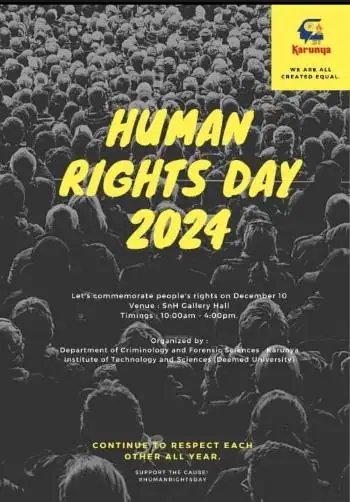
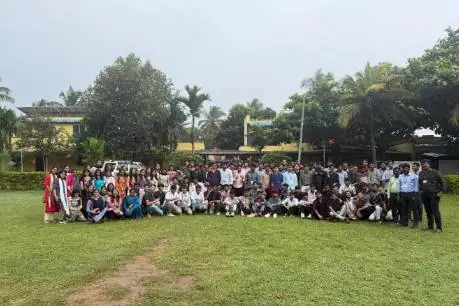
- Human Rights Day awareness programme (Division of Criminology and Forensic Science, December 2024): an awareness programme attended by 80 participants.
- Webinar on Legal Awareness (Division of Criminology and Forensic Science, 03.10.2024): led by Mrs. C. Puline Peter, AdSP (Retd.), for 38 participants, explaining citizens’ legal rights and remedies.
- “Spreading Smiles” – Christmas outreach at Sevalayam (Department of Robotics Engineering, December 2024): 30 students celebrated Christmas with residents of the Sevalayam home.

7. Community Outreach and Extension Activities
During 2024–25, KITS conducted 13 structured extension and outreach initiatives engaging over 960 rural, tribal, and marginalized beneficiaries across Coimbatore, Erode, and adjacent districts.
- Community Connect Programme in Singampathi and Siruvani (rural villages near Coimbatore) - engaging local residents on human–wildlife conflict mitigation; outcomes included a locally deployable detection/bar-fence device.
- Rural Development Technological Mission, a university-wide initiative introducing sustainable solutions (clean water, biogas, agricultural advancements) to strengthen rural infrastructure, healthcare and self-employment opportunities.
- Medical Devices Innovation Mission - development of low-cost, indigenous medical devices (AI-driven prosthetics, diagnostics and rehabilitation aids) in collaboration with SEESHA, extending assistive technology to persons with disabilities.
- Rural Agriculture Work Experience (RAWE) - final-year B.Sc. (Hons) Agriculture students undertake a 20-week, 20-credit field programme (including a 4-week Agro-Industrial Attachment) under ICAR norms, working directly with farming communities.
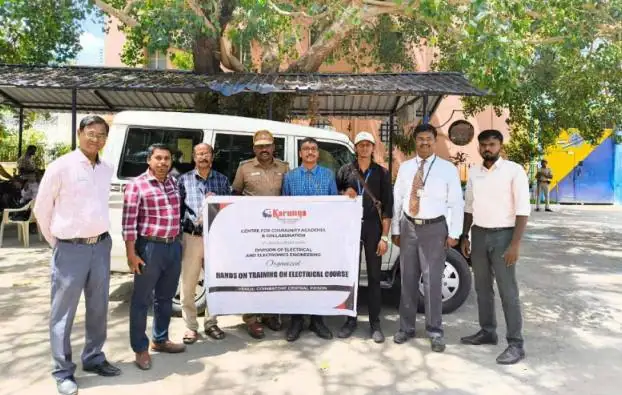
- Skill training for prison inmates - the Department of Electrical and Electronics Engineering (Dr. F. T. Josh, Dr. C. Benin Pratap and Mr. Shalom Irence) gave 35 inmates of the Central Prison, Coimbatore, hands-on training in electrical wiring and in repairing mixers, grinders and fans, building employable skills for their reintegration.
- Uplifting the nutritional status of tribes – Agriculture faculty (Dr. Natarajan, Dr. Umesh, Dr. Suresh and Dr. Udaykumar) set up model kitchen gardens, grow-bag vegetable units and fruit gardens with 100 tribal beneficiaries.
- Farmers’ Mela 2024 – organised by the School of Agricultural Sciences (Dr. K. Natarajan and Dr. R. Philip Sridhar), transferring coconut-cultivation technology to about 400 farmers.
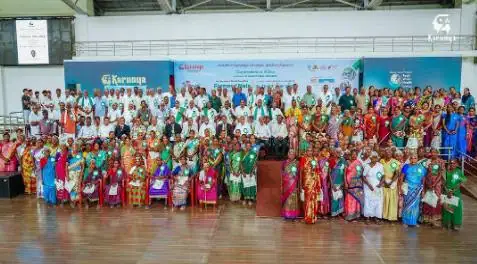
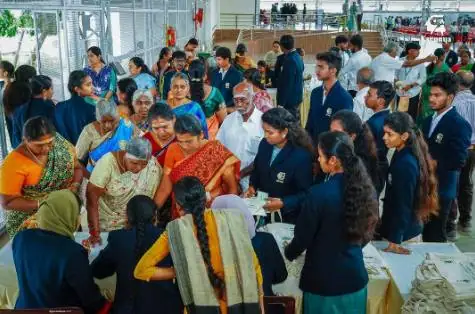
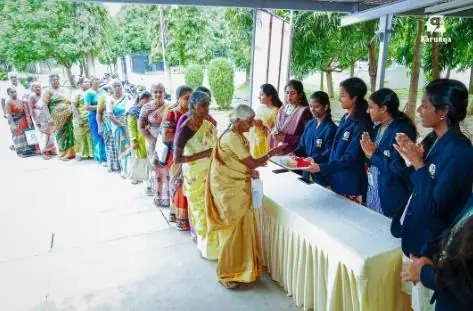
- IoT-based human–elephant conflict monitoring – the Department of ECE (Dr. Manoj) installed an IoT remote monitoring and alerting system for 40 village beneficiaries, continuing the Community Connect work in Singampathi and Siruvani.
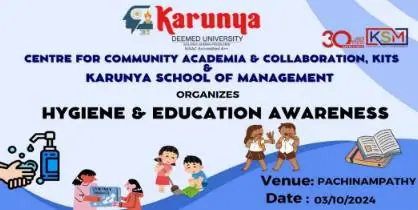
- Community development and Self-Help Group (SHG) outreach – the Division of Management ran a hygiene and education awareness programme for 65 beneficiaries (Dr. P. Dolly Diana) and a field visit to village SHGs with 38 participants (Dr. K. Martina Rani).
- Health and nutrition awareness – the Department of Food Processing Technology (Dr. R. Emilin Renitta and Dr. Manoj) reached 40 community members.
- Child-rights awareness – the Division of Criminology and Forensic Science (Dr. P. G. Sunanda Bhagavathy) ran an awareness campaign for 30 school students on the POCSO Act, child rights and the ill-effects of media addiction, and trained 35 teachers in disaster-risk management and first aid.
- Digital-inclusion outreach – the Departments of CSE (Dr. G. Naveen Sundar; 35 beneficiaries) and Data Science and Cyber Security (Dr. A. Jenefa; 45 beneficiaries, plus a seminar and tutorial on productive digitalisation for 67) transferred technical knowledge to local community members.
- Skill-based outreach – the Department of Mechanical Engineering (Dr. R. Raja) trained 30 participants in plumbing design and assembly for a house.
Student club activities
- Anti-Human Trafficking Unit – “Evils of Human Trafficking” awareness programme for 60 students, alerting young people to trafficking risks that fall hardest on vulnerable groups.
- Students Association of Biomedical Engineering (SABE) – an awareness programme on cardiac arrest and use of the Automated External Defibrillator (AED) for 85 participants (11.07.2025), spreading life-saving skills beyond clinical settings.
8. Partnerships and Collaborations
- SEESHA - collaboration for development of cost-effective, indigenous medical devices (AI-driven prosthetics, diagnostics, rehabilitation solutions) supporting persons with disabilities.
- IIT Palakkad Technology I-Hub Foundation - funding and collaboration for a solar drying technology project benefiting tribal-area agricultural producers.
- Indian Council for Social Science Research (ICSSR) - funded study on the socio-economic impact of solar-powered technologies on Tamil Nadu's agricultural (farming) community.
Table 8: Strategic Partnerships and Extension Collaborations Supporting Reduced Inequalities (2024–25)
| Partner / Organization | Nature of Partnership & Department | Target Group & Scope of Impact | SDG 10 Alignment |
|---|---|---|---|
| SEESHA (Social Educational Economic Service Habits) | Non-governmental organization partnership with the Medical Devices Innovation Mission | Persons with physical and neurological disabilities; rural patients | Co-development of low-cost, indigenous assistive devices, rehabilitation aids, and prosthetics |
| IIT Palakkad Technology I-Hub Foundation (IPTIF) | National Technology Mission grant partnership (Department of Robotics / Mechanical) | Smallholder and tribal-area farmers in regional forest fringe zones | Deployment of hybrid solar drying systems to augment tribal agricultural incomes |
| Indian Council of Social Science Research (ICSSR) | Sponsored national research alliance (Division of Management) | Small, marginal, and tenant farming households across rural Tamil Nadu | Quantitative socio-economic assessment of solar energy adoption on agrarian inequality |
9. Best Practices
Practice 1: Merit-based, capitation-free admission with need-based institutional scholarships
Background: KITS admits students purely on merit and has given institutional scholarships to 1,032 students in 2024-25.
Objective: remove financial and social barriers to quality higher education. Implementation: centralised scholarship disbursement alongside transparent, merit-based admission. Beneficiaries: 1,032 students in 2024–25.
Sustainability/Replicability: an annual, budgeted institutional commitment that can be scaled and replicated by other institutions.
Practice 2: Assistive and rehabilitation technology development with SEESHA
Background: the Medical Devices Innovation Mission partners with SEESHA to build low-cost, indigenous prosthetics, diagnostic and rehabilitation devices.
Objective: make assistive technology affordable and accessible to persons with disabilities.
Innovation: student/faculty-led design of devices such as EEG-controlled wheelchairs and bio-inspired prosthetic hands.
Sustainability: ongoing mission-mode research with potential for technology transfer and wider deployment.
Practice 3: Rural and tribal community technology outreach
Background: Community Connect programmes (Singampathi, Siruvani) and funded projects on solar drying technology for tribal-area farmers.
Objective: extend the University's technological capability to underserved rural/tribal populations.
Results: locally usable devices/solutions co-developed with residents.
Replicability: the Community Connect model can be extended to additional villages and themes.
10. Times Higher Education (THE) Impact Rankings Metrics:
Equity, Inclusion and Accessibility.
KITS supports students and staff from every background through clear policies, dedicated cells, accessible facilities and targeted academic support. In alignment with the Times Higher Education (THE) Impact Rankings methodology for SDG 10, Karunya Institute of Technology and Sciences tracks and implements comprehensive institutional mechanisms across all six core dimensions: advancing high-impact scholarly research on societal disparities; nurturing first-generation college entrants through targeted academic and financial safety nets; welcoming international scholars from developing nations; providing universal barrier-free infrastructure and academic accommodations for students with disabilities; maintaining equitable, non-discriminatory employment practices for staff with disabilities; and enforcing robust anti-discrimination and equal-opportunity statutory oversight across all university operations.
| Indicator | KITS (2024–25) |
|---|---|
| Research on reduced inequalities | 18 Scopus-indexed research publications published during 2024–25 covering assistive technologies, sign language recognition, algorithmic fairness, gender inclusion, and healthcare accessibility for marginalized groups. |
| First-generation students | Systematic tracking of first-generation college entrants at admission. Targeted support provided through differentiated faculty mentoring, remedial bridge courses, peer learning networks, and institutional scholarship schemes supporting rural and socio-economically disadvantaged youth. |
| International students from developing countries | Substantial international student enrollment representing low- and lower-middle-income countries (LLMICs). Dedicated institutional support provided via the International Admissions Cell, Language Support Centre (IELTS/TOEFL registration facilities), and cross-cultural orientation programs. |
| Students with disabilities | Comprehensive accessibility ecosystem: provision of exam scribes, note-takers, sign language interpreters, and compensatory exam time; barrier-free physical campus with wheelchair ramps and lifts; assistive technology labs equipped with NVDA screen readers and Braille learning collections. |
| Employees with disabilities | Enforced Equal Employment Opportunity Policy ensuring non-discrimination in recruitment, retention, and career progression. Campus infrastructure provides accessible administrative workstations, elevator access to all faculty floors, accessible restrooms, and health insurance support. |
| Measures against discrimination | Comprehensive statutory anti-bias governance: active Equal Opportunity Cell, Internal Complaints Committee (ICC), SC/ST Cell, Minority Cell, Student Grievance Redressal Committee, and Anti-Ragging Cell, ensuring proactive monitoring and zero tolerance. |
Measures Against Discrimination
| Measure | KITS Provision |
|---|---|
| Non-discriminatory admissions | Merit-based admission with no capitation fees or donations |
| Tracking under-represented groups | Admissions tracked by social category, gender and first-generation status |
| Recruiting under-represented groups | Scholarships for 1,032 students, Earn-While-You-Learn, and IELTS/ETS partnerships that ease admission for international students. |
| Anti-discrimination policy | Non-Discrimination, Diversity and Inclusion Policy, revised August 2025. |
| Support for under-represented groups | Mentoring for first-generation, rural and economically weaker students; counselling at the Karunya Wellness Centre. |
| Accessible facilities | Lifts, accessible lavatories, ramps and campus e-vehicles. |
| Disability support services | NVDA screen reader, braille collection and accessible digital library resources. |
| Disability access scheme | Mentoring through the EOC, plus scribes, note takers and sign language interpreters. |
| Disability accommodation policy | Reasonable accommodations on certified need, approved by the Controller of Examinations. |
| Anti-harassment policy | Non-Discrimination and Harassment Policy for Students (revised August 2025); ICC and Anti-Ragging Committee. |
Committees and Cells for Equity and Redressal
| Committee / Cell | Role |
|---|---|
| Internal Complaints Committee (ICC) | This cell addresses gender-based harassment and discrimination, ensuring a safe and respectful environment for women and all students. |
| Grievance Redressal Cell | Handles day-to-day grievances, including caste discrimination and other issues affecting marginalised students, ensuring impartial resolution. |
| Equal Opportunity Cell (EOC) | In compliance with the guidelines of the UGC, this Advisory Committee is constituted to ensure inclusive academic access and support equity for all students and staff. |
| Anti-Ragging Committee | This cell is constituted to eradicate the menace of ragging. For effective monitoring in the campus and hostels, the administration has formed an Anti-Ragging Flying Squad. |
Disability Support and Accessible Campus
The campus has lifts to classrooms, seminar halls and meeting rooms on upper floors, accessible lavatories in academic and administrative blocks, ramps at building entrances, and electric vehicles for getting around the campus.
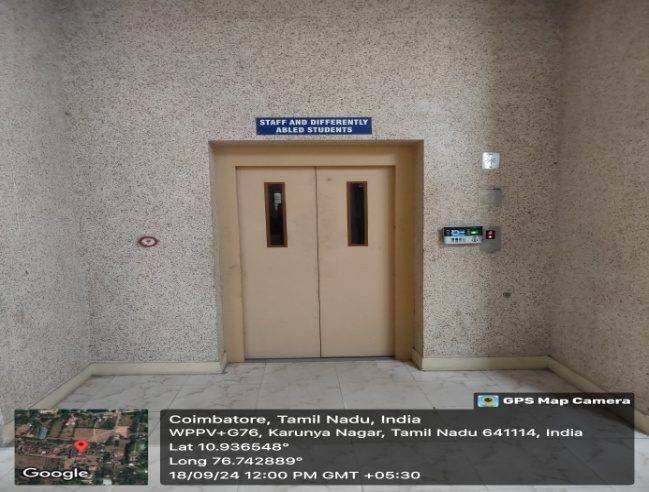
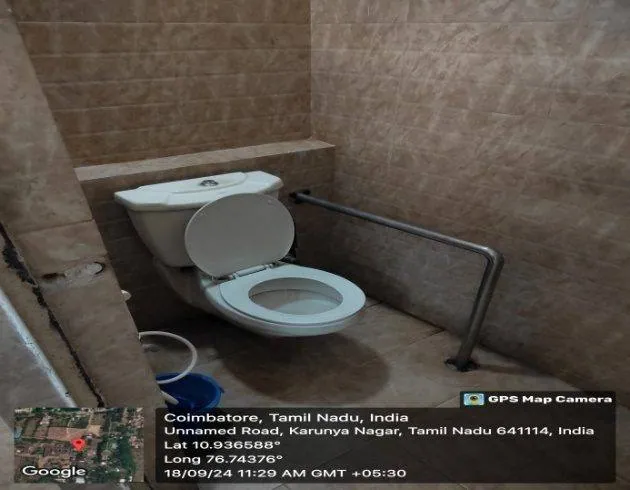
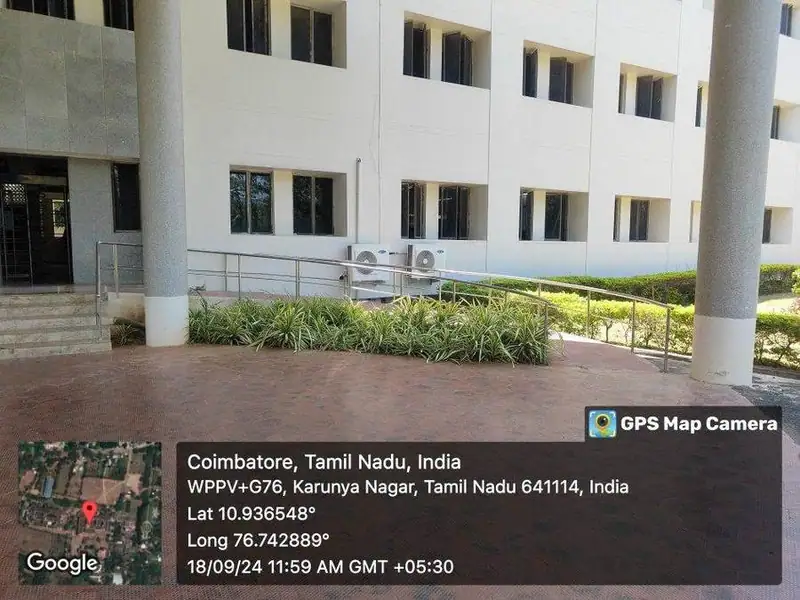
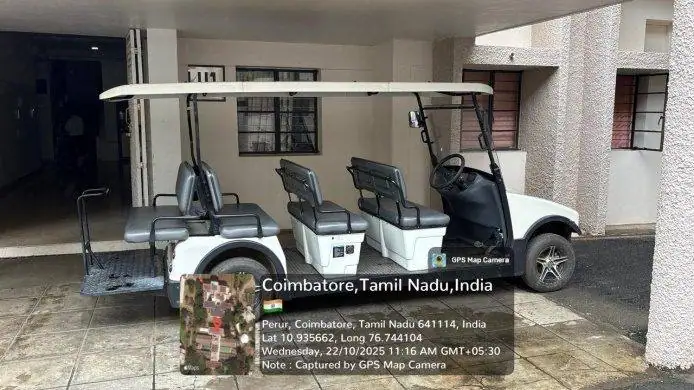
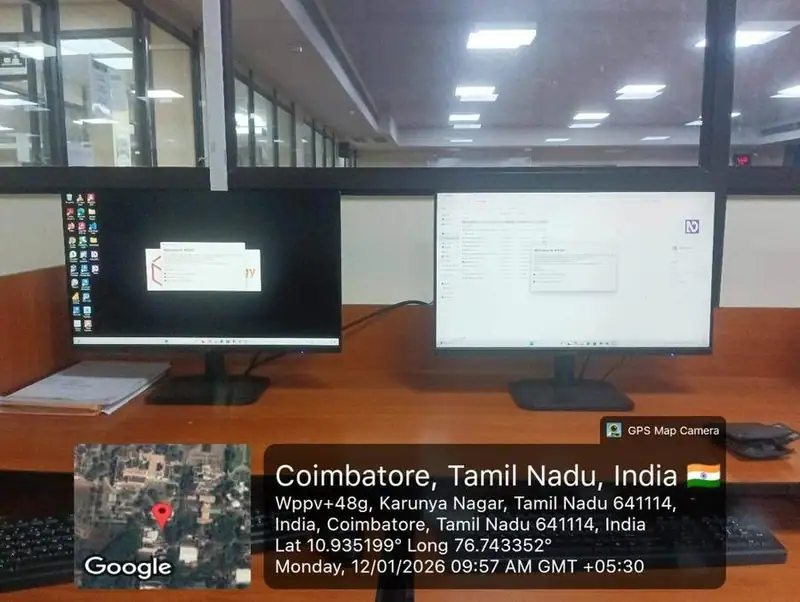
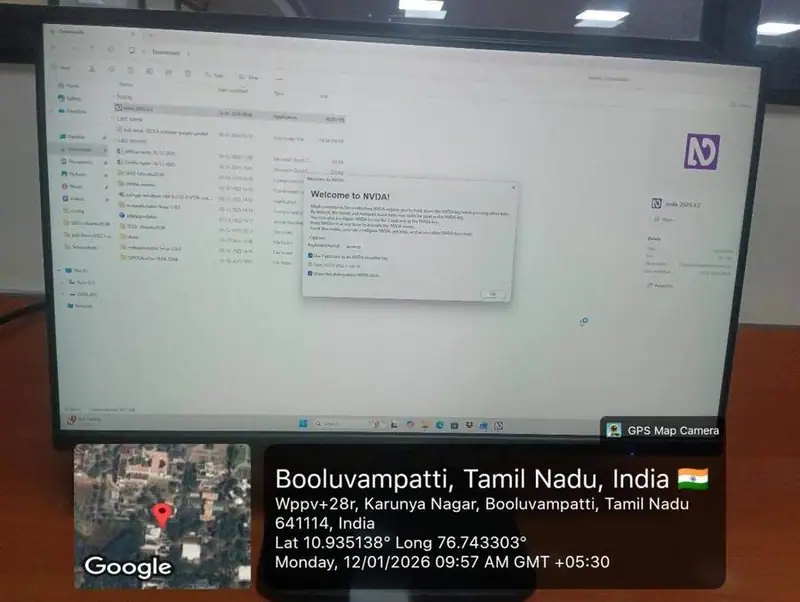
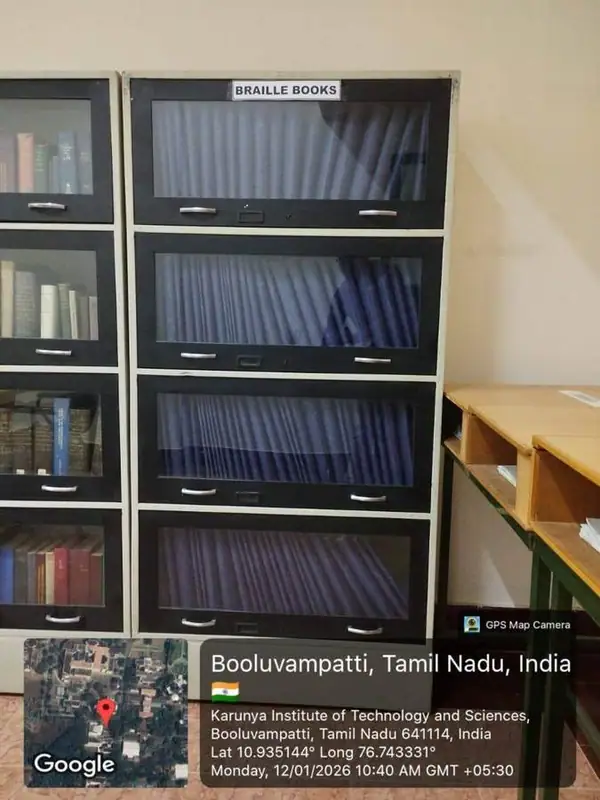
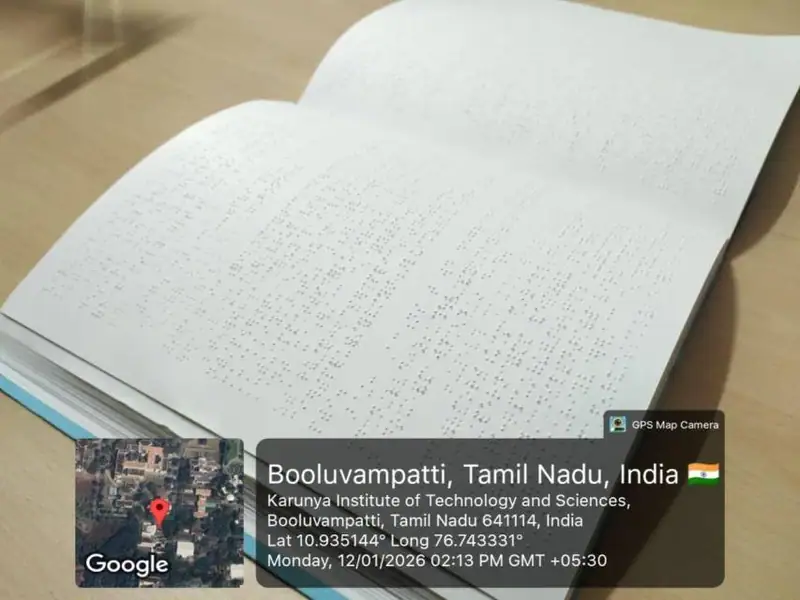
The NVDA screen reader is installed in the CTC laboratories, allowing visually impaired users to work independently with keyboard navigation and built-in OCR. The Central Library maintains 105 braille books, computers set up for assistive technologies, screen-reader-compatible e-books, ProQuest audiobooks and the JoVE video library.
In examinations, students with disabilities receive scribes, note takers, sign language interpreters and compensatory time. Requests are supported by medical certification and approved by the Controller of Examinations. Between 2023 and 2025, 12 students used scribe support in 20 examination sessions.
Language Support for International Students
The Language Support Centre offers pre-semester English bridge courses, academic English modules and one-to-one language mentoring. KITS is an official IELTS Registration Centre with IDP India and hosts an ETS India TOEFL/GRE Digital Lab, giving students fee waivers, discounted test fees, official study materials and score-based scholarships.
Key Institutional Inclusion Metrics and Statutory Governance Compliance (2024–25)
| Metric | KITS Status (2024–25) |
|---|---|
| Minority Educational Institution status | Recognised under Section 2(g) of the National Commission for Minority Educational Institutions Act. |
| Institutional scholarships | Scholarships given to 1,032 deserving and meritorious students. |
| Curricular flexibility | Choice-Based Credit System (CBCS) lets students choose courses across disciplines. |
| Inclusive-technology research | Co-Innovation Centre with IIT Delhi focused on inclusive technologies. |
11. Conclusion
During 2024–2025, Karunya Institute of Technology and Sciences demonstrated a comprehensive, measurable commitment to UN SDG 10 (Reduced Inequalities) by operationalizing equity across academic governance, admissions, curriculum design, translational research, and community outreach. As a recognized Minority Educational Institution governed by merit-based, capitation-free admissions, KITS disbursed institutional scholarships to 1,032 deserving students, while maintaining an inclusive gender ratio with women comprising approximately 40% of the student body.
Curricular alignment was substantiated by 281 final-year student capstone projects explicitly mapped to SDG 10, complemented by 18 Scopus-indexed research publications addressing assistive technologies, health equity, and social inclusion. Beyond the campus, 13 structured extension initiatives directly impacted over 960 rural, tribal, and marginalized individuals, ranging from electrical vocational training for prison inmates to solar technology transfers in tribal belts. Backed by active statutory bodies (Equal Opportunity Cell, ICC, and Grievance Redressal Cell) and accessible campus infrastructure complying with the RPwD Act 2016, KITS continues to build an equitable academic environment where socio-economic, physical, and geographic disparities are systematically dismantled. Going forward, KITS will consolidate first-generation learner data at admission, compile institution-wide figures for students and employees with disabilities, align international scholarships with World Bank income classifications, and further strengthen research on inequality-reduction themes.