1. SDG Overview
Sustainable Development Goal 4 (SDG 4) of the United Nations 2030 Agenda mandates higher education institutions to “ensure inclusive and equitable quality education and promote lifelong learning opportunities for all.” In modern global benchmarking, higher education institutions (HEIs) are evaluated not solely as degree-granting bodies for traditional youths, but as open, civic learning ecosystems that dismantle barriers between enrolled scholars and external society. SDG 4 encompasses equal access to affordable tertiary and technical education (Target 4.3), vocational and entrepreneurial skilling for decent employment (Target 4.4), elimination of gender and social disparities for vulnerable populations (Target 4.5), universal adult and youth literacy and numeracy (Target 4.6), education for sustainable development, STEM, and global citizenship (Target 4.7), safe and inclusive learning environments (Target 4.a), and the expansion of qualified teachers to strengthen educational ecosystems (Target 4.c).
Importance in the Context of Karunya Institute of Technology and Sciences (KITS):
Karunya Institute of Technology and Sciences (Declared as a Deemed-to-be University under Section 3 of the UGC Act, 1956; NAAC A++ Accredited; Approved by MoE, UGC & AICTE) was founded with the explicit civic mission of uplifting rural, agrarian, and socioeconomically disadvantaged communities in Coimbatore, Tamil Nadu, and the surrounding Western Ghats foothills. At KITS, education is strategically embraced as the single most potent instrument for breaking intergenerational poverty cycles and driving upward social mobility.
All developmental, academic, and research programmes at KITS are strategically aligned with the United Nations Sustainable Development Goals. As a premier technological and multidisciplinary institution, KITS operationalizes SDG 4 by creating transformative learning experiences across engineering, agricultural sciences, biotechnology, arts, science, and management. By opening its libraries, digital learning repositories, advanced laboratories, demonstration farms, and faculty mentorship to external citizens, school pupils, local farmers, self-help group (SHG) women, and first-generation learners, KITS translates the global ideals of Quality Education into daily, measurable regional impact.
2. Institutional Policies and Commitments
Karunya Institute of Technology and Sciences has established a comprehensive, statutory governance architecture to support and sustain SDG 4. These policies, approved by the Board of Management and the Academic Council, enforce equitable access, non-discrimination, academic mentoring, research democratization, and community extension across the entire institution.
Key Institutional Policies and Statutory Directives:
| Policy / Directive Name | Document Code | Year | Purpose & Support to SDG 4 |
|---|---|---|---|
| Lifelong Learning Access Policy | KITS/POLICY/LLAP/2024/01 | 2024 | Institution-wide statutory framework formally guaranteeing free or non-prohibitive, non-discriminatory access to physical and digital learning assets (libraries, laboratories, online lecture repositories, vocational clinics) for external citizens, rural school students, and non-traditional adult learners. |
| Policy on Diversity, Inclusion & Equal Opportunities | KITS/POLICY/EQ/2023/02 | 2023 | Guarantees zero-tolerance for socioeconomic, gender, religious, or caste discrimination; reserves campus work-study opportunities and hostel accommodations; mandates targeted bridge courses for rural and first-generation entrants. |
| Student Mentoring & Pastoral Care Policy | KITS/POLICY/MENTOR/2022/04 | 2022 | Enforces a mandatory 1:15 faculty-to-student mentoring ratio. Mentors conduct bi-weekly pastoral and academic tracking, psychological counseling, and personalized remedial clinics specifically monitored for first-generation scholars. |
| Institutional Merit-cum-Means Scholarship Regulations | KITS/SCH/REG/2024/01 | 2024 | Allocates institutional scholarship endowments providing tuition fee concessions, complete fee waivers, and flexible payment installment schemes for Below Poverty Line (BPL) and first-generation degree entrants. |
| Open Access & Digital Repository Policy | KITS/LIB/OAR/2023/01 | 2023 | Mandates that faculty video lectures (116 full-length course lectures), Ph.D. theses (814 theses across 25 departments), question banks, and research publications be deposited in open-access digital repositories without subscription paywalls. |
| Divyangjan (Barrier-Free) Accessibility Policy | KITS/POLICY/DIV/2022/01 | 2022 | Mandates campus-wide universal physical and digital accessibility, including wheelchair ramps, tactile pathways, accessible restrooms, assistive NVDA screen readers, and dedicated braille collections. |
| Community Library Outreach & Extension Directive | KITS/LIB/OUTREACH/2024/02 | 2024 | Requires the Central Library to host regular guided library tours for rural government schools, conduct off-campus reading promotion drives, and deliver annual 21-day practical internships for external library science postgraduates. |
3. SDG Objectives
KITS has defined clear, actionable operational objectives aligned with SDG 4 parameters across teaching, research, campus infrastructure, and societal outreach:
1. Universal Democratization of Knowledge (UN Targets 4.4, 4.6 & 4.7):
Curate, update, and maintain the open-access web portal “One Library, All of Karunya”, ensuring free global and local access to 35 e-book repositories, 150+ open journals, 814 institutional Ph.D. theses, 15 patent databases, 42 multilingual newspapers, and 116 multidisciplinary faculty video lectures.
2. Equitable Tertiary Education & Equal Opportunity (UN Target 4.3):
Eliminate financial, linguistic, and geographical barriers to higher education for rural, tribal, and economically vulnerable entrants through merit-cum-means scholarships, bridge courses, and vernacular parental orientations.
3. Vocational Trade Skilling & Micro-Enterprise Creation (UN Target 4.4):
Deliver structured, certified vocational courses (tailoring, aari embroidery, jute product fabrication, mushroom cultivation, poultry rearing, cosmetology) to non-enrolled adult learners, coupling technical instruction with ₹10,000 seed-capital micro-grants and SHG credit linkages.
4. Empowering First-Generation Scholars & Eliminating Disparities (UN Target 4.5):
Sustain a high proportion of first-generation degree entrants (achieving 32.99% in AY 2024–25) through 1:15 pastoral mentoring, Student Induction Programs (SIP), and targeted academic remedial clinics.
5. Foundational Remedial Literacy & School Support (UN Targets 4.1 & 4.6):
Operate 14 off-campus CCAC Rural Remedial Education Centres (220 pupils) and 40 SEESHA Child Learning Centres (3,000 children) in foothill villages, coupled with the annual distribution of 25,000 educational resource kits to eliminate school dropout risks.
6. Public STEM Democratization & Environmental Stewardship (UN Target 4.7):
Regularly open university auditoriums, engineering laboratories, and demonstration farms to school pupils, farmers, and civic bodies through flagship events like Mindspark, Farmers’ Mela, ZESTRO robotics, and World Water Day forums.
7. Teacher Professional Competence & Pedagogical Training (UN Target 4.c):
Equip university graduates across science, engineering, agricultural, and arts disciplines with pedagogical competencies, mentorship skills, and instructional mastery to enter the teaching profession, achieving 92.25% qualified graduates in AY 2024–25.
4. Curriculum Integration
KITS embeds the principles of Quality Education and inclusive pedagogy deeply into its academic curriculum, learning methodologies, and student development frameworks.
Pedagogical Competencies & Teacher Preparation:
The university integrates structured pedagogical training, curriculum design, micro-teaching sessions, and instructional communication modules across undergraduate and postgraduate programmes in sciences, agriculture, digital arts, and engineering. Students undergo classroom management training, peer tutoring, and practical teaching exposure in regional schools. This deliberate pedagogical orientation ensures that 1,773 out of 1,922 graduates in AY 2024–25 (92.25%) attained verified teaching qualifications for schools, strengthening the external education pipeline.
Bridge Courses, Remedial Modules & Student Induction (SIP):
To bridge curriculum gaps for entrants from rural government schools and vernacular-medium backgrounds, KITS mandates structured foundational modules prior to regular coursework:
| Bridge Module / Initiative | Target Student Cohort | Curriculum Focus & Core Competencies Imparted | Duration | Delivery Department |
|---|---|---|---|---|
| English Language Proficiency & Bridge Course | Vernacular-medium & rural first-gen entrants | Technical communication, vocabulary building, phonetics, professional grammar, and presentation skills. | 3 Weeks (Pre-Semester) | Division of English & Foreign Languages |
| Remedial Mathematics & Engineering Foundations | Rural school entrants with curriculum gaps | Differential calculus, linear algebra, vector calculus, computational problem-solving, and mathematical logic. | 4 Weeks (Evening Clinic) | Division of Mathematics & First-Year Engineering |
| Basic Computing & Digital Literacy Clinic | Rural scholars lacking prior PC access | Operating system navigation, MS Office suite, basic coding concepts in Python/C, and LMS portal usage. | 2 Weeks (Hands-on Lab) | Department of Computer Science & Engineering |
| Universal Human Values & Life Skills (UHV) | All newly admitted degree entrants | Emotional resilience, ethical decision-making, interpersonal communication, peer bonding, and stress management. | 3 Weeks (Full-time SIP) | Division of Value Education & Student Affairs |
Experiential Learning & Technical Infrastructure Exposure:
Undergraduate engineering students undergo hands-on technical training at the state-of-the-art Siemens Centre of Excellence (Siemens S7-1200 PLC, TIA Portal, HMI interfacing, and Ladder Logic) and the FESTO Industrial Robotics Laboratory. Furthermore, students participate in community-engaged research, field visits to rural panchayats, and student hackathons/hydrothons solving water conservation and environmental challenges.
5. Research and Innovation
The research ecosystem at Karunya Institute of Technology and Sciences actively generates and disseminates knowledge contributing to educational equity, pedagogical innovation, technological literacy, and community sustainability.
Scopus-Indexed Pedagogical & Lifelong Learning Research Clusters:
During the reporting period, KITS faculty and research scholars authored 35 Scopus-indexed research papers exploring effective pedagogical models, digital educational technologies, and community skilling across five thematic clusters:
| Cluster | Pedagogical Research Cluster Theme | Scopus Papers | Representative Publication Title | Indexed Journal / Publisher |
|---|---|---|---|---|
| Cluster 1 | Digital Knowledge Dissemination & Open Educational Resources (OER) | 8 | Empirical Evaluation of Cloud-Based Repositories in Democratizing STEM Resources | Journal of Educational Technology Systems (Scopus) |
| Cluster 2 | Vocational Training Models & Livelihood Skill Acquisition | 7 | Socio-Economic Empowerment of Rural Women through Decentralized Apparel Skilling | International Journal of Vocational Education (Scopus) |
| Cluster 3 | AI & Educational Technology for Non-Traditional Learners | 9 | Adaptive Micro-Learning Algorithms for Open Access Agricultural Extension | Computers & Education Open (Elsevier / Scopus) |
| Cluster 4 | Environmental, Sustainability & Climate Literacy in Communities | 6 | Community-Led Water Resource Pedagogies: Empirical Insights from Rural Forums | Sustainability & Environmental Education (Scopus) |
| Cluster 5 | Inclusive Education & Universal Accessibility for Marginalized Groups | 5 | Universal Design for Learning (UDL) in Rural Engineering Classrooms | Higher Education Pedagogies (Taylor & Francis / Scopus) |
Open-Access Institutional Ph.D. Theses Repository (814 Theses):
Under its Open Access and Digital Repository Policy, KITS has digitized and openly published 814 full-text Ph.D. theses across 25 academic departments on its institutional digital repository and the national Shodhganga platform, providing unrestricted scholarly assets for global researchers:
| S.No. | Academic Department | Ph.D. Theses | S.No. | Academic Department | Ph.D. Theses |
|---|---|---|---|---|---|
| 1 | Department of Aerospace Engineering | 9 | 14 | Department of Forensic Science | 3 |
| 2 | Department of Bio Informatics | 16 | 15 | Department of Information Technology | 8 |
| 3 | Department of Biotechnology | 52 | 16 | Department of Library & Information Science | 11 |
| 4 | Department of Chemistry | 65 | 17 | Department of Management | 72 |
| 5 | Department of Civil Engineering | 62 | 18 | Department of Mathematics | 56 |
| 6 | Department of Commerce | 2 | 19 | Department of Mechanical Engineering | 59 |
| 7 | Department of Computer Application | 18 | 20 | Department of Nanotechnology | 16 |
| 8 | Department of Computer Science & Technology | 57 | 21 | Department of Physical Education | 5 |
| 9 | Department of Electrical & Electronics Engg. | 42 | 22 | Department of Physics | 66 |
| 10 | Department of Electronics & Communication Engg. | 112 | 23 | Department of Robotics Engineering | 3 |
| 11 | Department of Electronics & Instrumentation Engg. | 18 | 24 | Department of Visual Communication | 3 |
| 12 | Department of English | 43 | 25 | Department of Water Resources Management | 5 |
| 13 | Department of Food Processing | 11 | — | Total Verified Ph.D. Theses at KITS | 814 |
Conferences, Patents & Innovation Centres:
- Second International Conference on Computer Vision & IoT (ICCVIoT ’24): Hosted on 10–11 December 2024, inaugurated by Vice-Chancellor Dr. G. Prince Arulraj, featuring keynote research addresses by distinguished global experts and open paper presentations.
- International Conference on Aerospace & Mechanical Engineering (AeroMech ’25): Conducted on 21–22 March 2025, exploring sustainable propulsion, gas turbine heat transfer optimization, and aircraft emissions reduction.
- Open Patent Databases: The Central Library portal provides public search links to 15 national and international patent databases (IP India InPASS, Google Patents, Espacenet, WIPO PATENTSCOPE, USPTO), stimulating grassroots innovation.
6. Events Organized Related to SDG
During Academic Year 2024–25, KITS organized a wide spectrum of major public educational events, technical symposiums, exhibitions, and community forums. These events were completely free of charge and open to the general public, regional school pupils, teachers, and agrarian communities.
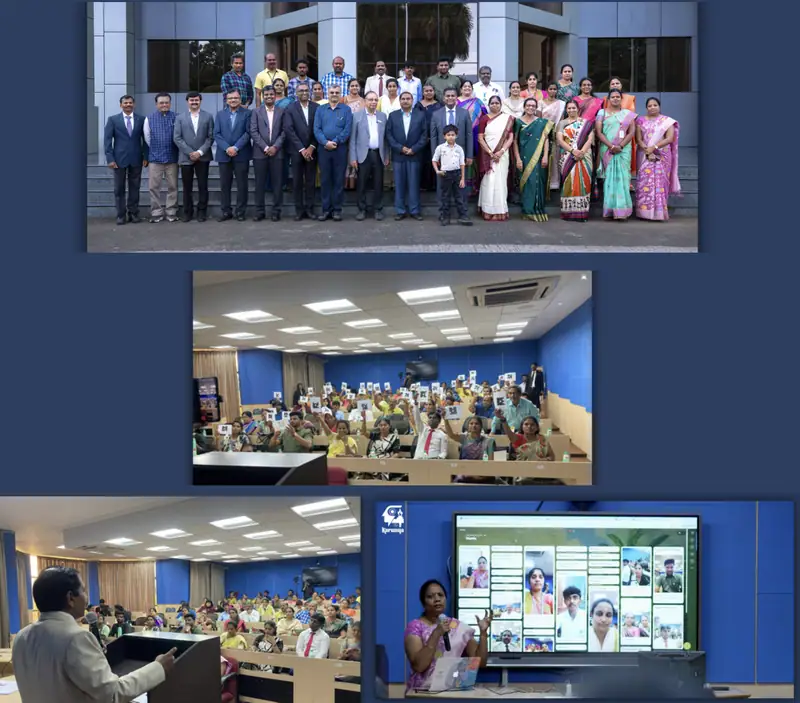
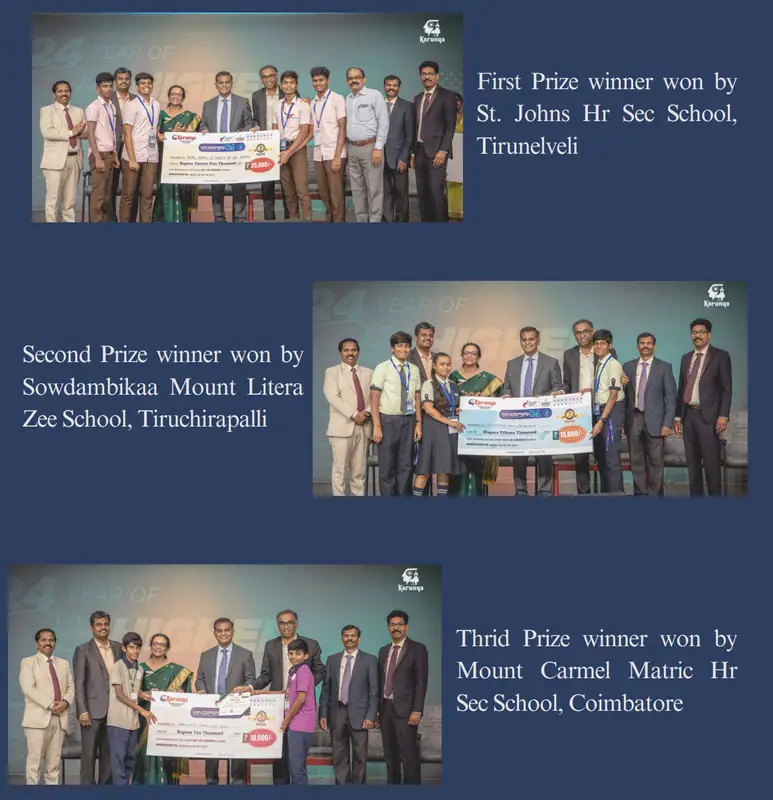
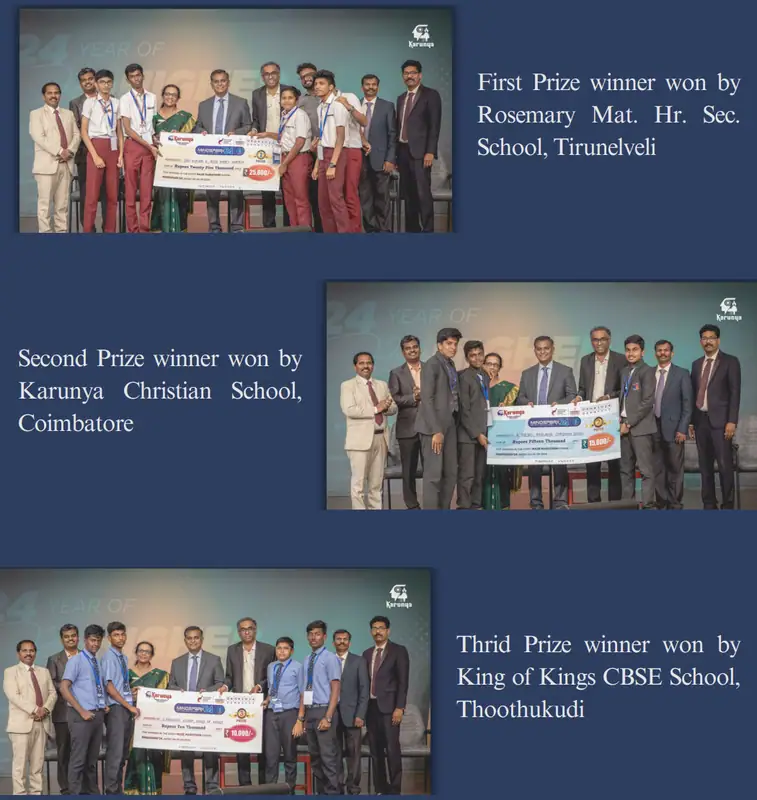
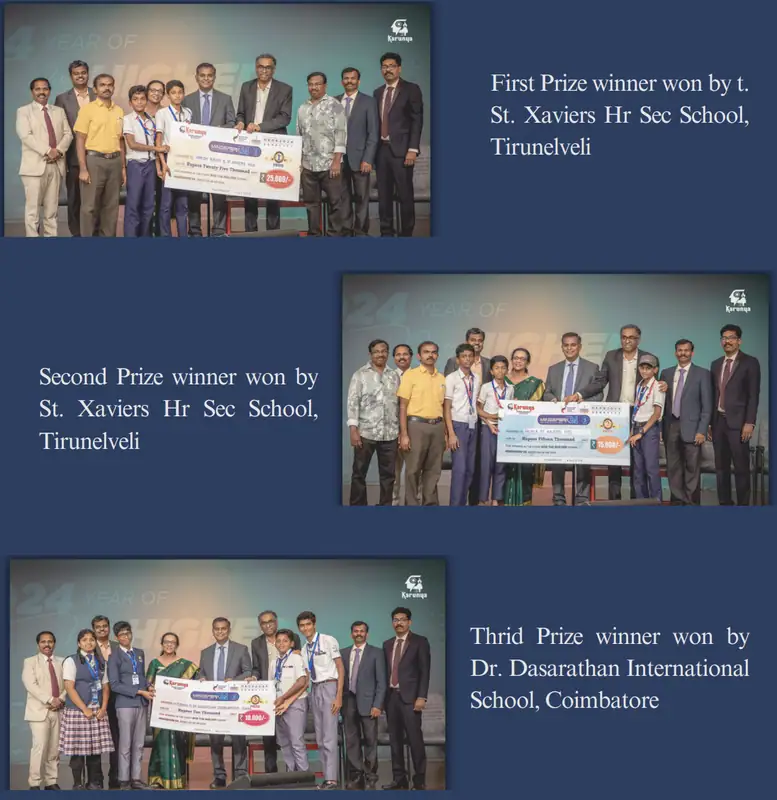
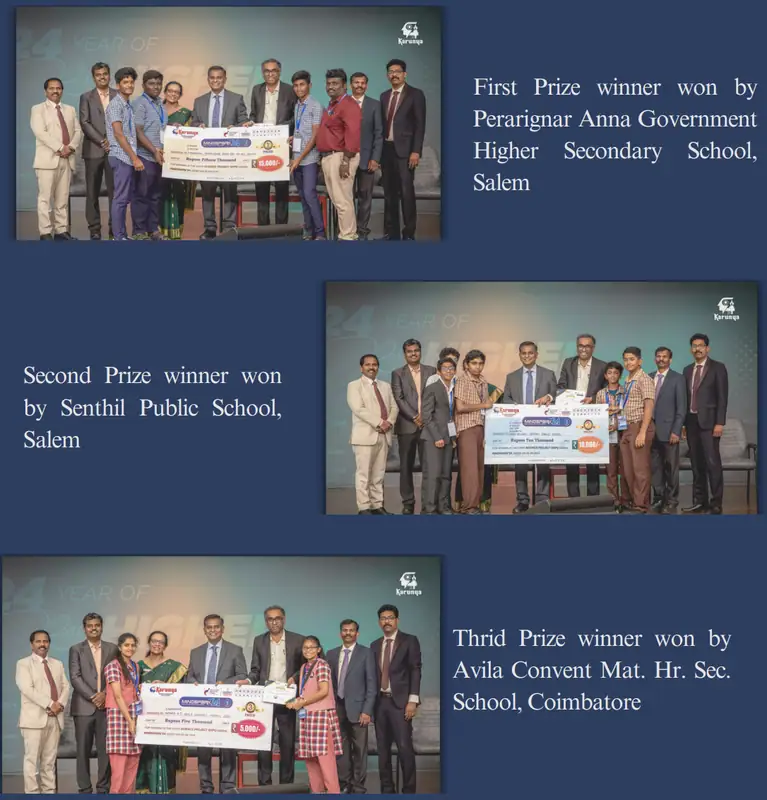
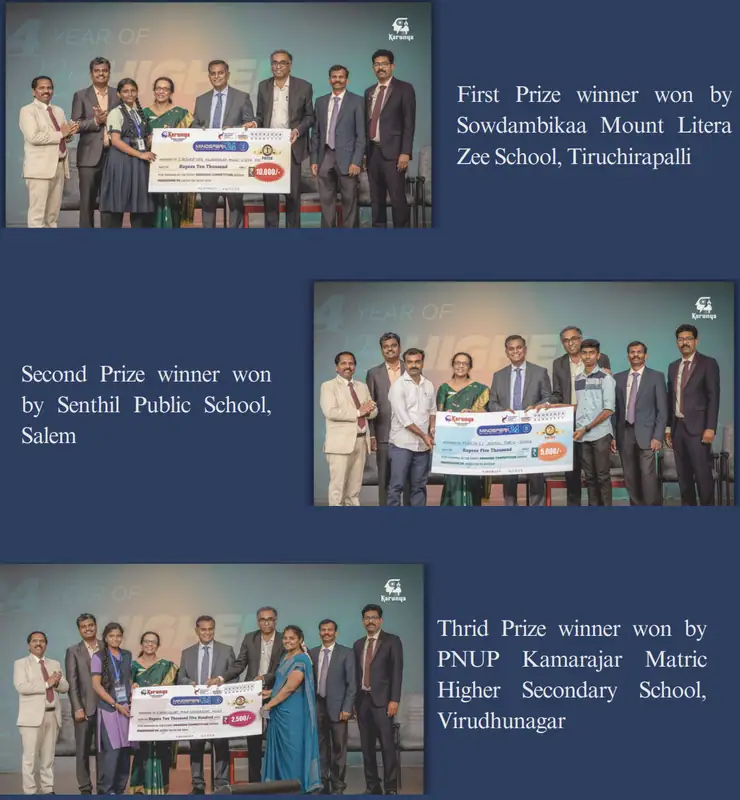
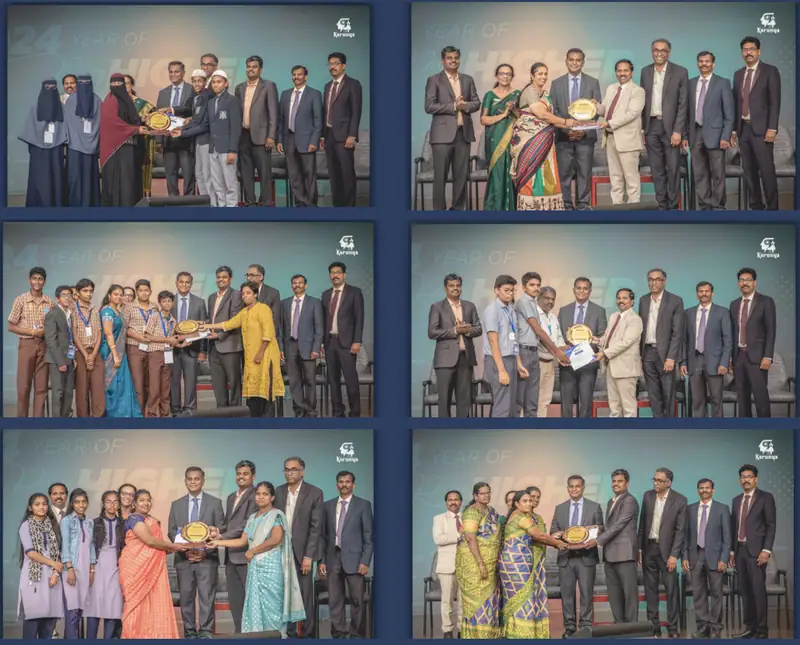
1. Mindspark 2024: National Science & Innovation Expo (06 September 2024):
Organized at the Dr. D.G.S. Dhinakaran Auditorium and Central Exhibition Halls, Mindspark 2024 hosted 805 school pupils and 82 accompanying principals and teachers representing 44 regional schools (887 total participants). The expo featured competitive student science exhibitions, the DIY Virtual Reality Viewer Challenge, Bob the Builder structural competitions, Maze Marathon, and an Educator’s Conclave. Mindspark demystified university-level science, sparking technical aspirations among young rural learners.
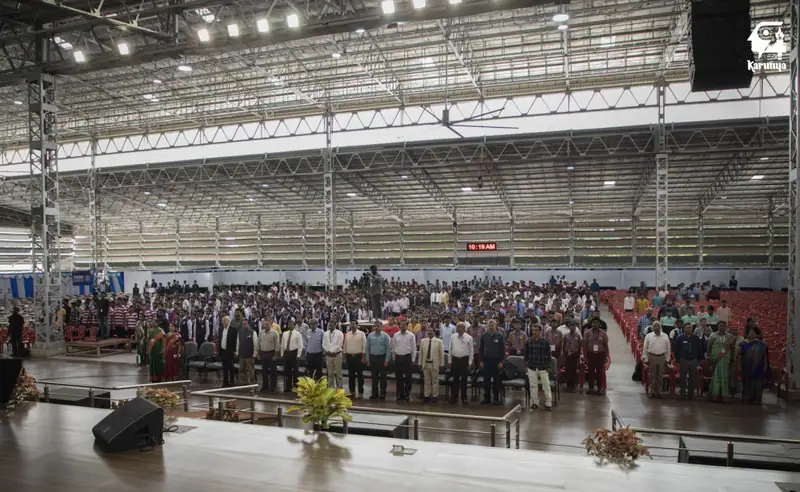
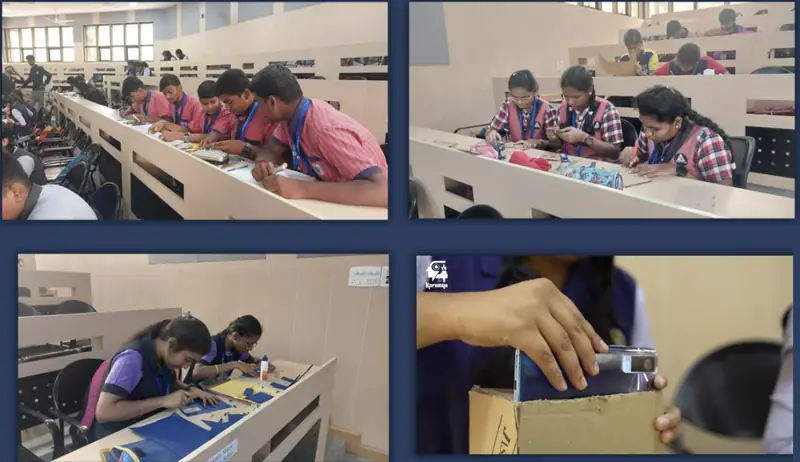
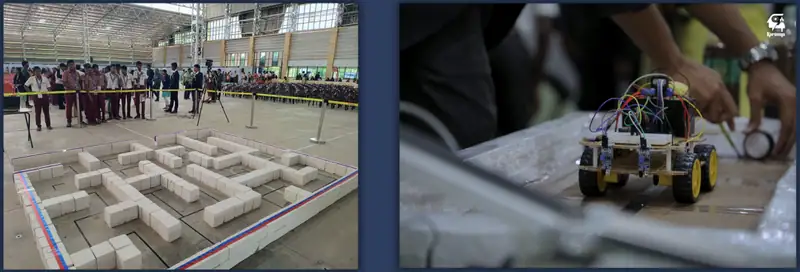
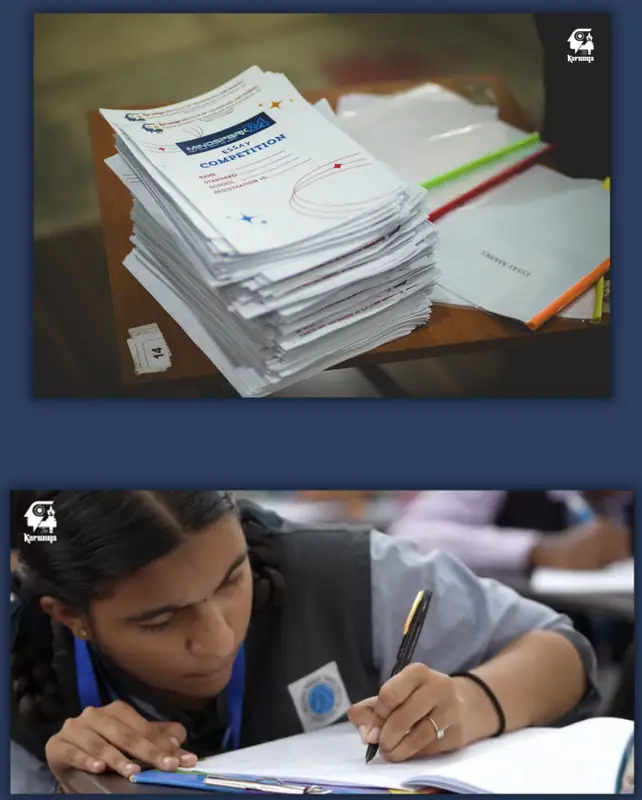
Figure 6.2 a: School participants demonstrating creative models during the Science Project Expo and DIY VR Viewer Challenge
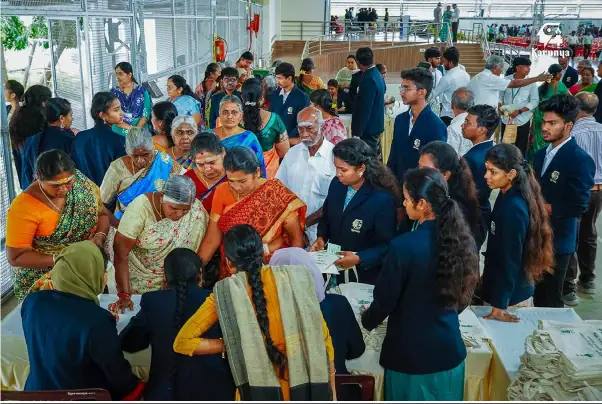
2. Farmers’ Mela 2024 (World Food Day Convention - 16 October 2024):
Organized by the School of Agricultural Sciences at the DGS Center and University Demonstration Farm, Farmers’ Mela 2024 served nearly 400 smallholder farmers from regional agrarian blocks. Inaugurated by Sri Suba Nagarajan (Chairman, Coconut Development Board), the convention delivered technical seminars on coconut cultivation policies, farm mechanization, precision drip irrigation, biocontrol pest agents, and organic input preparation, translating university agronomic research into practical farming knowledge.
3. World Water Day 2025 Public Stewardship Forum (22 March 2025):
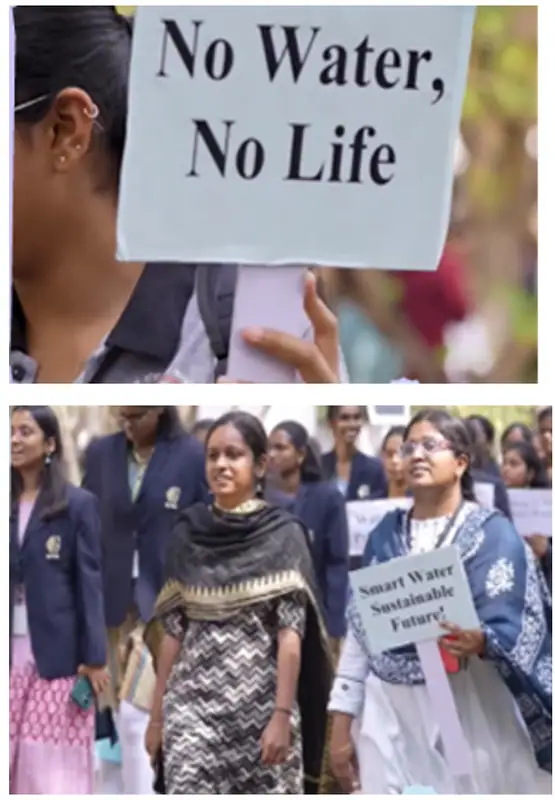
Co-hosted by the School of Agricultural Sciences, Water Institute, SUEZ India, and leading daily Malayala Manorama, this civic event brought together 420+ participants. Activities included an open community water awareness rally, an open water quiz, a student painting competition on river conservation, and a campus Hydrothon/Hackathon at KTBIP Discussion Hall where students pitched innovative water monitoring prototypes.
4. ZESTRO ’25: National Level Technical Symposium (25–26 February 2025):
Organized by the CAIRA Association (Department of Robotics Engineering) in technological partnership with FESTO India, ZESTRO ’25 hosted 240+ participants, including 90 students from four regional schools (Karunya Christian School, Evangeline Matriculation School, Velammal Bodhi Campus, and Chinmaya International Residential School). School pupils engaged in live industrial robotics demonstrations, automated line-following robot contests, and interactive engineering clinics.
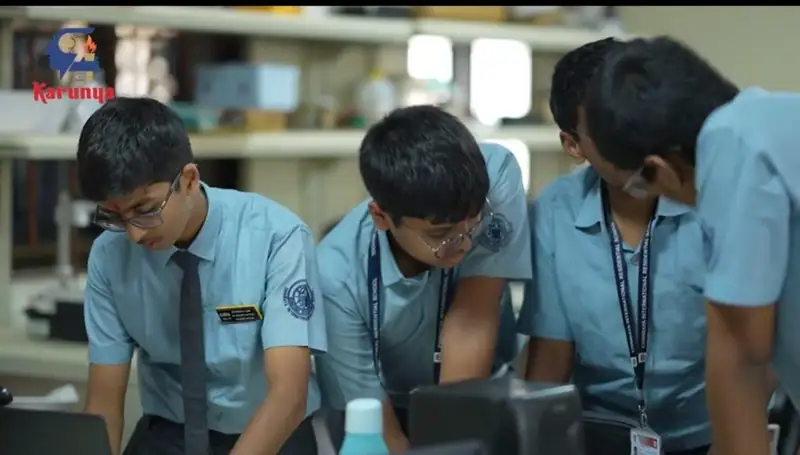
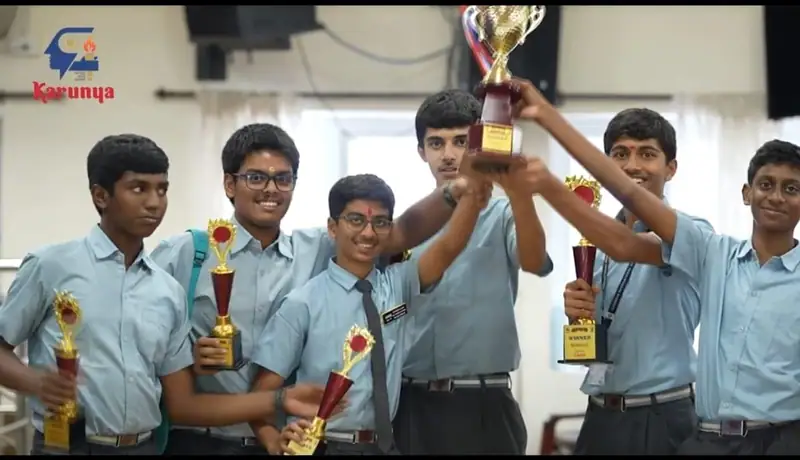
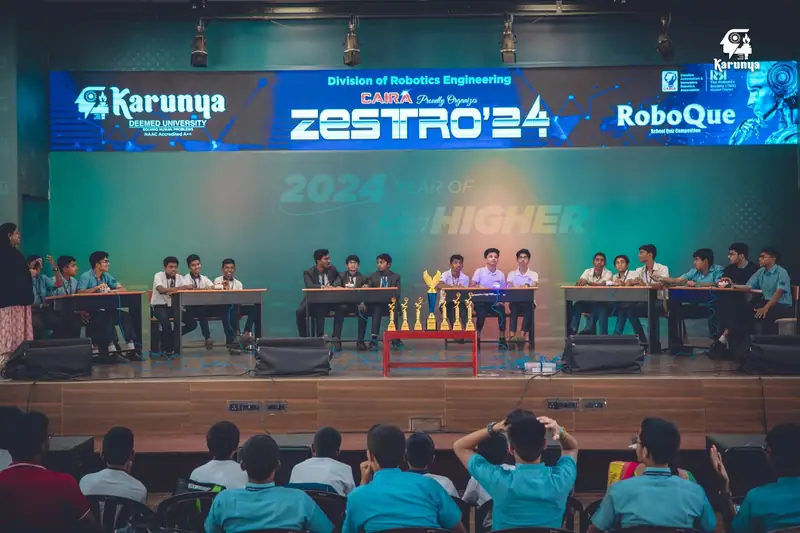
Figure 6.5: School students engaging with industrial robotics and automation demonstrations during ZESTRO ’25
5. National Librarian’s Day Community Development Programme (09 August 2024):
Conducted jointly by the Central Library and Karunya School of Management (KSM) at Panchayat Union Middle School, Irrutupallam. Featuring Chief Guest Mr. Kittusamy (Village Panchayat President) and Dr. D. Mercy Lydia (Librarian In-Charge), the program included interactive storytelling, book donations, educational skits by MBA students on the transformative power of reading, and educational games with refreshments sponsored for all pupils.
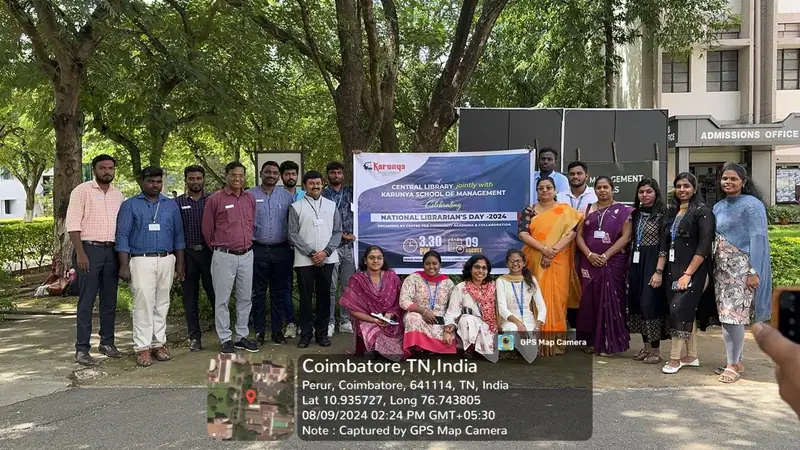
Public Events Master Dossier (AY 2024–25):
| Event Title & Date | Venue | Organizing Units & External Partners | Target Audience | Participants | SDG Target & Key Outcome |
|---|---|---|---|---|---|
| Farmers’ Mela 2024 (16 Oct 2024) | DGS Center & Demo Farm | School of Agricultural Sciences & Coconut Development Board | Smallholder farmers, coconut growers, rural youth | 400+ Farmers | SDG 4.4 & 4.7: Transfer of agronomic technology, pest management, and coconut development. |
| Mindspark 2024: Science Expo (06 Sept 2024) | Dr. DGS Dhinakaran Auditorium | School of Engineering & Regional School Consortium | Primary & secondary school pupils, teachers, principals | 887 Total (805 pupils + 82 teachers from 44 schools) | SDG 4.1 & 4.7: Democratizing STEM learning through hands-on project expo and DIY VR viewer. |
| World Water Day Forum (22 March 2025) | Campus Grounds & Emmanuel Auditorium | Water Institute, SUEZ India & Malayala Manorama | Citizens, school/college students, civic leaders | 420+ Participants | SDG 4.7: Public water stewardship rally, Hydrothon, quiz, and painting competition. |
| ZESTRO ’25 Robotics Expo (25–26 Feb 2025) | Central Auditorium & FESTO Lab | Department of Robotics Engineering & FESTO India | School pupils (4 schools) & polytechnic students | 240+ Total (incl. 90 school pupils) | SDG 4.4: Exposure to industrial robotics, automation, and basic PLC systems. |
| National Librarian’s Day (09 Aug 2024) | Panchayat Union Middle School, Irrutupallam | Central Library, KSM & Mathuvarayapuram Panchayat | Rural primary/middle school children | 120+ Students & Teachers | SDG 4.6: Reading habit skit, library book donations, and educational games. |
| ICCVIoT ’24 Conf. (10–11 Dec 2024) | ECE Division Academic Halls | Division of ECE & IEEE Technical Co-Sponsors | Scholars, faculty, external postgraduate researchers | 180+ Delegates | SDG 4.3 & 4.7: Global dissemination of computer vision, IoT, and AI research. |
| AeroMech ’25 Conf. (21–22 March 2025) | Mechanical Sciences Complex | Aerospace & Mechanical Engg. Divisions | Engineering students, polytechnic youth, industry | 150+ Attendees | SDG 4.4: Technical knowledge on reducing aircraft emissions and clean energy. |
7. Community Outreach and Extension Activities
KITS projects its academic capital, student volunteers, and physical assets beyond campus perimeters to serve surrounding rural and tribal settlements in the Thondamuthur block and Western Ghats foothills. During AY 2024–25, KITS organized over 100 off-campus educational outreach events.
1. CCAC 14 Rural Remedial Education Centres (220 Students):
Spearheaded by the Centre for Community Academia Collaboration (CCAC), KITS operates 14 daily evening remedial education centres across 14 adopted foothill villages (including Pachinampathy, Sapanimadai, Sadivayal, Madhuvarayapuram, Alandurai, and Siruvani settlements). Staffed by trained local tutors and mentored by KITS faculty and students, these centres provide free coaching in mathematics, science, and English to 220 rural primary and middle school pupils, strengthening foundational literacy and numeracy.
2. SEESHA Child Learning Centres Network (3,000 Children) & School Kit Project (25,000 Kits):
In structured partnership with social partner SEESHA, KITS supports the operation of 40 Child Learning Centres (including 8 local foothill centres), delivering daily evening tuition and life skills to over 3,000 underprivileged children. To eliminate the acute economic barriers that force vulnerable children to discontinue schooling, KITS and SEESHA execute the massive Annual School Kit Project, distributing comprehensive educational resource kits (sturdy school bags, notebooks, geometry boxes, and stationery) to 25,000 disadvantaged children annually across rural Tamil Nadu and neighbouring regions.
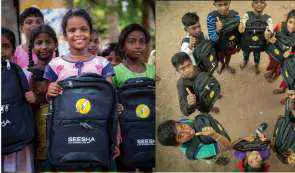
3. NSS 10-School Educational Support Camps (650+ Pupils):
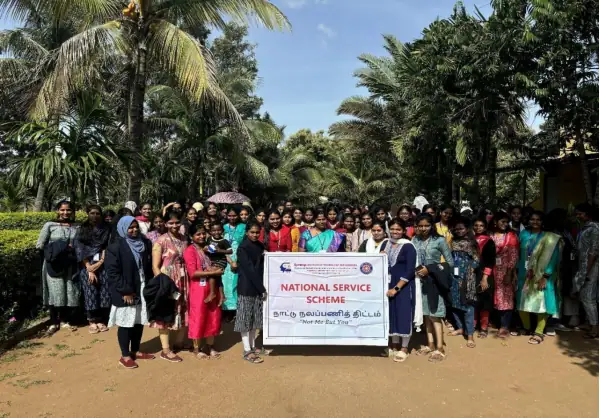
The National Service Scheme (NSS) units of KITS conducted a 7-day residential educational support camp (10–17 January 2025) across 10 regional Panchayat Primary Schools. Over 650 rural pupils benefited from tailored student-led modules: Tech Talk Minis (introducing emerging technologies), Connect India General Knowledge Quiz, AI basics for school children, health and hygiene demonstrations, elephantiasis prevention, road safety campaigns, and 'Blooms & Branches' tree plantation drives.
4. Central Library Community Access Visits & External Professional Internships:
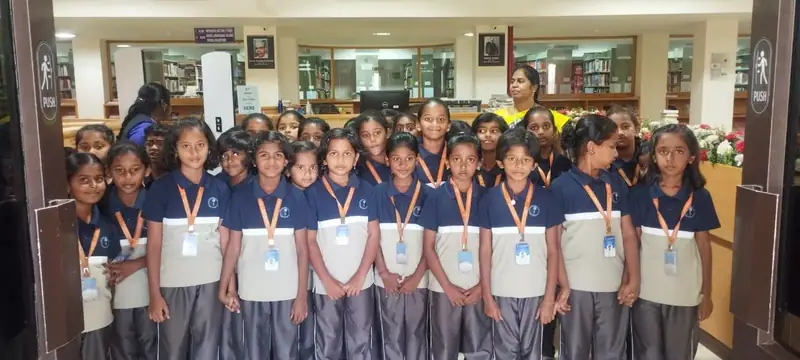
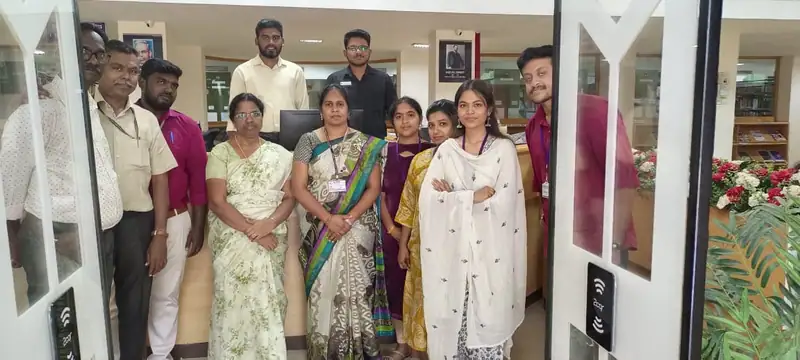
The Central Library hosts guided educational tours for external school cohorts and educators. During AY 2024–25, 95 students and 6 teachers from Sri Nachammal School (Avinashi), 105 students and 8 teachers from C.S.I. Girls Higher Secondary School (Dharapuram), and 43 teachers and librarians from Kendriya Vidyalaya Schools (Chennai, Kochi, Thrissur) visited the library to study modern digital library automation, RFID Kiosks, and book collections.
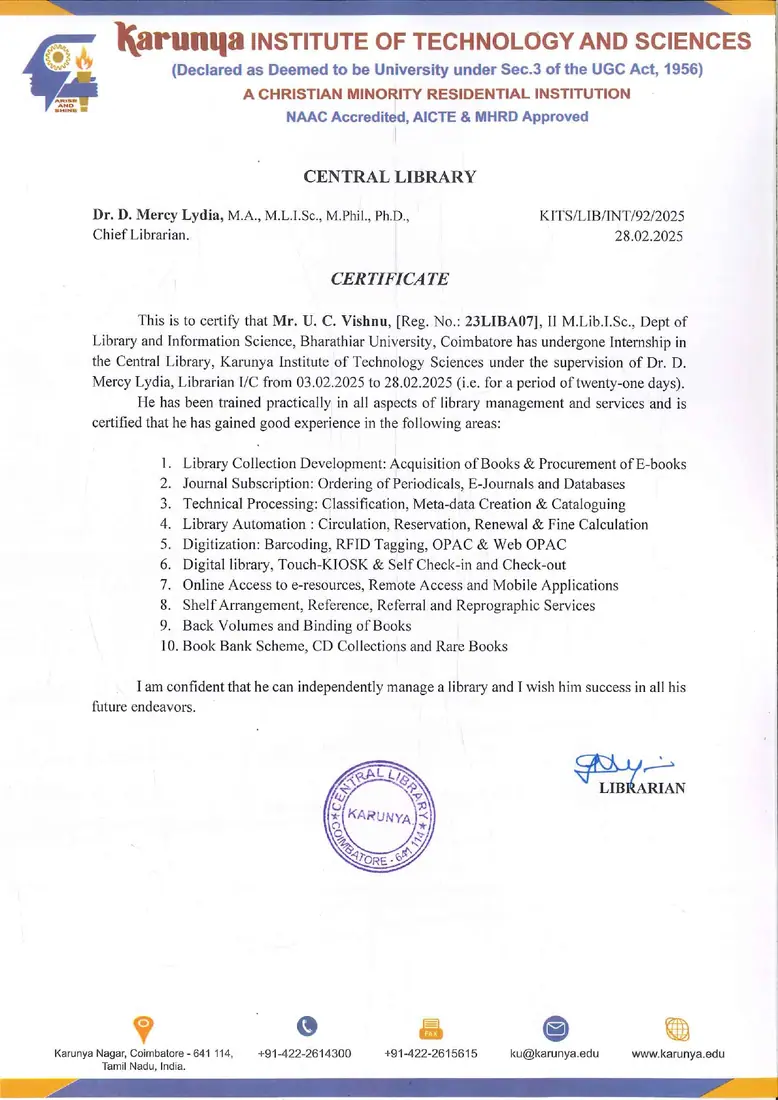
Furthermore, the Central Library successfully conducted a 21-day practical internship training program (03.02.2025 – 28.02.2025) for Master of Library and Information Science (M.Lib.I.Sc) students from Bharathiar University (Ms. Priya D, Ms. Sindhu Devi, Ms. Yogeswari R, Mr. Vishnu U.C.), providing free professional training in cataloguing, RFID tagging, DSpace repository management, and OPAC systems.
Community Educational Outreach Summary Dossier:
| Outreach Activity Title | Nature & Schedule | Target Location | Organizing Unit / Partner | Beneficiaries | Educational Impact |
|---|---|---|---|---|---|
| CCAC Rural Remedial Network | Programmed (Daily Evening) | 14 Foothill Villages (Thondamuthur) | CCAC, KITS | 220 Tribal & Rural Pupils | Free foundational tutoring in English, Maths, Science. |
| SEESHA Child Learning Centres | Programmed (Year-round) | 40 National Centres (8 Foothills) | SEESHA & KITS | 3,000 Underprivileged Children | Daily evening remedial coaching and life skills. |
| Annual School Kit Project | Programmed (Annual Drive) | Rural & Tribal Schools across TN | SEESHA, KITS & Donors | 25,000 School Children | Full school kits (bags, books, stationery) preventing dropouts. |
| NSS 10-School Special Camp | Programmed (10–17 Jan 2025) | 10 Regional Panchayat Schools | NSS Units, KITS | 650+ School Students | Tech Talk Minis, AI basics, Quiz, Hygiene, Road Safety. |
| Librarian's Day School Outreach | Ad-hoc (09 Aug 2024) | Panchayat Union School, Irrutupallam | Central Library & KSM | 120+ Students | Reading habit skit, book donations, interactive games. |
| Library Community Visits | Programmed (AY 2024–25) | Central Library, KITS Campus | Central Library | 243 Students & Educators | Guided library literacy, RFID Kiosk demos, digital access. |
| Postgraduate Library Internship | Certified (03–28 Feb 2025) | Central Library, KITS Campus | Central Library & Bharathiar Univ. | 4 Postgraduates | 21-day practical training in library automation & metadata. |
8. Partnerships and Collaborations
KITS maintains formal, sustained collaborations with governmental agencies, non-governmental organizations, multinational corporations, professional associations, and civic bodies to maximize the impact of its educational and vocational skilling programs:
| Partner Entity | Category & Nature | Collaboration Scope & Activity Conducted | Target Beneficiaries | Contribution to SDG 4 & Outcome |
|---|---|---|---|---|
| SEESHA (Social NGO) | Non-Governmental Organization (Renewed 10.05.2023) | Joint operation of 40 child learning centres, 14 remedial centres, annual distribution of 25,000 school kits, vocational tailoring training, and women micro-enterprise support. | 3,000+ children, 25,000 students, rural women | SDG 4.1, 4.4, 4.5: Eliminates economic barriers to school education; enables grassroots livelihoods. |
| DXC Technology India | Multinational Corporate Partner (Active CSR Partnership) | Sponsored 30 motorized industrial sewing machines, trainer honorariums, fabric raw materials, and digital training aids for the Karunya Nagar Tailoring Centre. | Rural BPL women, widows, unemployed youth | SDG 4.4 & 4.5: Provided certified apparel manufacturing skills; enabled self-employment. |
| RSETI (Ministry of Rural Development / Canara Bank) | Government Skill Consortium (MoU dated 15.02.2024) | Co-designed and co-delivered certified training in Jute Product & Eco-Friendly Bag Manufacturing; coordinated government micro-enterprise financing linkages. | SHG women, rural artisans | SDG 4.4: Certified adult learners in eco-friendly bag fabrication with institutional seed linkages. |
| Malayala Manorama & SUEZ India | Media & Environmental Industry Consortium | Co-organized the World Water Day 2025 Public Stewardship Forum, open community water rally, student Hydrothon, and regional painting competition. | 420+ citizens, school/college students | SDG 4.7: Expanded public literacy on water security, river basin preservation, and environmental conservation. |
| FESTO India & Siemens | Industrial Technology Partners | Provided technical curriculum, hardware, and trainer certifications for the Siemens Centre of Excellence (PLC automation) and FESTO Robotics lab for ZESTRO ’25. | School students, polytechnic youth, engineering scholars | SDG 4.4: Democratized industrial automation and robotics education for non-enrolled school students. |
| Bharathiar University | State University System (Academic MoA) | Annual institutional library access and 21-day intensive practical internship training for Master of Library & Information Science (M.Lib.I.Sc) candidates. | Postgraduate library science interns | SDG 4.4: Provided free advanced training in RFID tagging, cataloguing, and digital repository systems. |
| Village Panchayats (Mathuvarayapuram, Alandurai) | Local Civic Authorities (Standing Agreements) | Community mobilization, hall allocation, trainee identification, and joint organization of school reading drives and farmers' extension clinics. | Rural farming households, school children | SDG 4.1 & 4.6: Enabled direct community access and localized delivery of remedial schooling. |
9. Best Practices
Karunya Institute of Technology and Sciences has institutionalized four standout best practices that exemplify innovation, sustainability, community impact, and high replicability:
Best Practice 1: “One Library, All of Karunya” — Universal Open-Access Knowledge Portal & Public Infrastructure
- Background: High subscription costs and digital paywalls exclude rural school teachers, independent scholars, and non-enrolled citizens from accessing high-quality academic literature.
- Objective: Democratize tertiary learning assets and research outputs by establishing an un-gated digital knowledge commons accessible to anyone worldwide, free of cost.
- Implementation: The Central Library engineered a dedicated open web portal (www.karunya.edu/central-library/free-public-access/) aggregating 35 open-access e-book repositories, 150+ open journals, 814 full-text KITS Ph.D. theses across 25 departments, 15 patent databases, 42 multilingual newspapers across 10 languages, 16 MOOC platforms, and 116 full-length video lectures delivered by Karunya faculty. On-site, external school students and teachers receive free daily visitor passes and guided tours.
- Results & Sustainability: The portal records continuous global and regional utilization; over 240 external teachers and school students visited on-site; 4 postgraduates completed free internships. Hosted entirely on sustainable institutional cloud servers, the model is fully replicable across all higher education institutions.
Best Practice 2: The CCAC-SEESHA Remedial Education & Child Learning Center Network
- Background: Children in remote tribal settlements and foothill agrarian villages suffer from severe learning gaps, lack of evening study environments, and acute economic distress leading to high school dropouts.
- Objective: Ensure universal foundational literacy and numeracy (SDG Target 4.1 & 4.6) by operating decentralized evening coaching centres and providing material school supplies.
- Implementation: KITS established 14 CCAC Rural Remedial Centres (serving 220 tribal students) and partnered with SEESHA to operate 40 Child Learning Centres (serving 3,000 children). Classes are held daily from 5:30 PM to 7:30 PM with local tutors and KITS student volunteers. Furthermore, KITS and SEESHA execute the Annual School Kit Project, distributing comprehensive educational toolkits (bags, books, stationery) to 25,000 children annually.
- Results & Replicability: Participating schools report significant improvements in pass rates and retention. Supported by CSR partnerships, donor sponsorships, and university student clubs, the model offers a highly replicable university-NGO-community synergy framework.
Best Practice 3: Integrated Vocational Skilling with Seed-Capital Micro-Grants
- Background: Conventional vocational training often stalls in the classroom because rural women and marginalized youth lack the startup capital required to procure machinery and launch micro-enterprises.
- Objective: Bridge the gap between vocational education and sustainable self-employment (SDG Target 4.4) through an integrated training-to-enterprise pipeline.
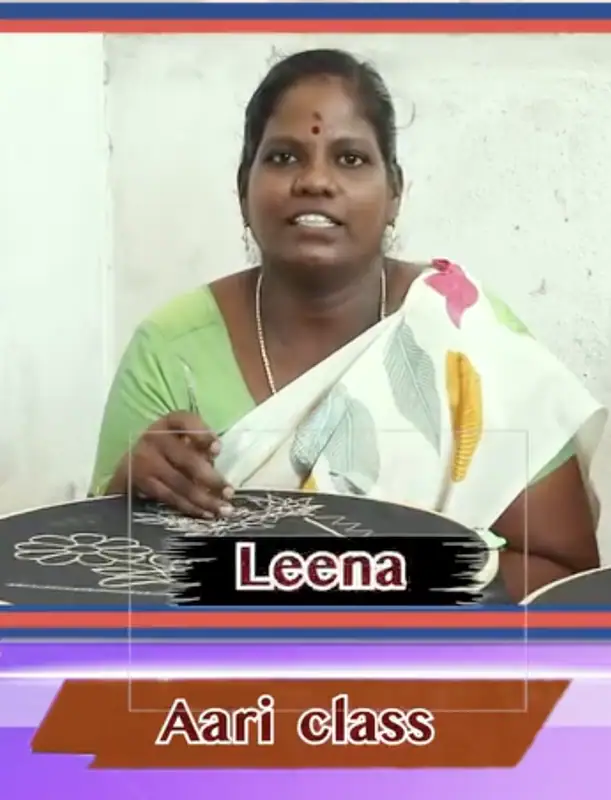
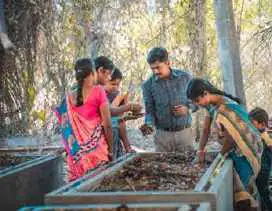
- Implementation: KITS, SEESHA, RSETI, and corporate partner DXC Technology deliver 8 certified vocational trade courses (Tailoring, Aari Embroidery, Jute Product Fabrication, Mushroom Spawning, Poultry Rearing, Cosmetology, and Tally ERP). Trainees receive intensive hands-on instruction on industrial machinery. Upon certification, graduating women are provided ₹10,000 seed-capital micro-grants and linkages to Self-Help Group (SHG) bank credit.
- Results: In AY 2024–25, KITS certified 254 non-enrolled adult learners across core trades, plus 108 specialized extension participants (prison inmates and SHG treasurers), totaling 362 community beneficiaries. Over 70% of certified trainees successfully transitioned into independent tailoring units or home-based micro-enterprises.
Best Practice 4: Comprehensive First-Generation Scholar Equity & Mentoring Ecosystem
- Background: First-generation college entrants from rural agricultural families experience acute transition challenges, including imposter anxiety, English language gaps, and financial vulnerability.
- Objective: Guarantee academic retention, psychosocial well-being, and competitive degree completion for first-generation scholars (SDG Target 4.3 & 4.5).
- Implementation: KITS implements an institutional equity pipeline comprising: (1) Pre-semester English bridge courses and remedial mathematics; (2) Vernacular parental orientation during Student Induction Programs (SIP); (3) Enforced 1:15 pastoral faculty-student mentoring with bi-weekly check-ins; and (4) Institutional merit-cum-means tuition fee concessions and laptop support.
- Results: In AY 2024–25, 572 out of 1,734 new degree-starting undergraduate students were verified First-Generation College Entrants (32.99%). First-generation retention rates exceed 95%, permanently uplifting family socioeconomic trajectories.
10. THE Impact Rankings Metric/Indicator
This section provides a consolidated, evidence-based summary of all official Times Higher Education (THE) Impact Rankings SDG 4 metrics and indicators for Karunya Institute of Technology and Sciences:
| Metric Title & Definition | KITS Official Institutional Performance (AY 2024–25) | Official Formula / Quantitative Base |
|---|---|---|
| Proportion of Graduates with Teaching Qualification | 92.25% of graduates gained qualifications relevant for teaching in primary and secondary schools. | (1,773 / 1,922) × 100 Total Graduates: 1,922 Teaching Qualified: 1,773 |
| Public Access to Lifelong Learning Resources | Operates dedicated open web portal “One Library, All of Karunya” providing free access to 35 e-book repos, 150+ journals, 814 theses, 15 patent databases, 116 video lectures; free physical access for external school pupils and teachers. | 11 Resource Categories; 814 Ph.D. Theses; 116 Video Lectures; 243 External Visitors |
| Public Educational Events Open to the Community | Organized 6 major flagship open events: Mindspark 2024 (887 school participants), Farmers' Mela 2024 (400+ farmers), World Water Day Forum (420+ participants), ZESTRO '25 Robotics (240+ participants), KINDLE 2025, and ICCVIoT '24. | 6 Major Flagship Events; 2,800+ Total Community & School Participants |
| Vocational Training Events (Lifelong Learning) | Delivered 8 core programmed vocational trade courses certifying 254 non-enrolled adult learners, complemented by 108 extension trainees (prison inmates & SHGs), totaling 362 verified community beneficiaries with ₹10,000 seed micro-grants. | 254 Certified Adult Trainees; 108 Specialized Participants; 362 Total Beneficiaries |
| Educational Outreach Activities Beyond Campus | Executed over 100 off-campus educational outreach campaigns, including 14 CCAC Rural Remedial Centres (220 pupils), 40 SEESHA Child Learning Centres (3,000 children), NSS 10-School Camps (650+ pupils), and Annual School Kit Drive (25,000 kits). | 100+ Off-Campus Events; 28,870+ Total Rural & School Beneficiaries Reached |
| Lifelong Learning Access Policy | Enacted formal statutory Policy No: KITS/POLICY/LLAP/2024/01 approved 01 July 2024 by Board of Management & Academic Council, guaranteeing free/subsidized, non-discriminatory access across gender, religion, and ethnicity. | Board Approval: BM/68/2024/14; Academic Council: AC/54/2024/09; Public Web URL Active |
| Proportion of First-Generation Students | 32.99% of new degree-starting undergraduate intake verified as First-Generation College Entrants, sustained by 1:15 pastoral mentoring and need-based fee waivers. | (572 / 1,734) × 100 Total Intake: 1,734 First-Gen Entrants: 572 |
11. Conclusion
The comprehensive assessment of Sustainable Development Goal 4 (Quality Education) at Karunya Institute of Technology and Sciences for Academic Year 2024–25 demonstrates an institution fundamentally dedicated to educational equity, lifelong learning democratization, and societal transformation.
KITS has moved decisively beyond conventional campus boundaries. Through its statutory Lifelong Learning Access Policy, the university ensures that its vast scholarly repositories, digital courseware, advanced robotics laboratories, and demonstration farms serve as public goods for the wider community. Over 28,000 children, rural youth, women, farmers, and external educators were directly empowered through KITS’s educational ecosystem during the reporting period.
Key Highlights of KITS's Contribution to SDG 4:
- Teacher Workforce Contribution: 92.25% of graduates (1,773 / 1,922) attained verified qualifications for school teaching, directly strengthening school education ecosystems (SDG 4.c).
- Social Mobility & Inclusion: 32.99% of newly enrolled undergraduate students (572 / 1,734) are First-Generation Scholars, backed by 1:15 pastoral mentoring and comprehensive fee waivers (SDG 4.3 & 4.5).
- Democratization of Knowledge: Operating the un-gated “One Library, All of Karunya” portal with 814 Ph.D. theses, 116 video lectures, 35 e-book repositories, and physical library access for schools (SDG 4.4 & 4.7).
- Public Science & Technology Forums: Hosting major events including Mindspark 2024 (887 school participants), Farmers’ Mela (400+ farmers), ZESTRO ’25 Robotics, and World Water Day forums (SDG 4.7).
- Grassroots Vocational Empowerment: Certifying 362 community members across 8 trades with ₹10,000 startup seed grants and SHG bank linkages (SDG 4.4).
- Rural Remedial Network: Sustaining 14 CCAC centres (220 pupils), 40 SEESHA centres (3,000 children), and distributing 25,000 school kits annually to eradicate rural illiteracy (SDG 4.1 & 4.6).
Through these sustained, verifiable, and policy-backed initiatives, Karunya Institute of Technology and Sciences stands as a national exemplar of how higher education institutions can advance United Nations Sustainable Development Goal 4, establishing an unassailable empirical foundation.