
Executive Institutional Statement – SDG 17 Leadership Karunya Institute of Technology and Sciences (KITS), a Deemed-to-be-University accredited with NAAC A++ grade and recognized under Category-I status by UGC, embodies the spirit of UN Sustainable Development Goal 17: Partnerships for the Goals. Through multi-stakeholder governance, KITS actively aligns its academic curricula, cutting-edge research, technological innovations, and community outreach with the United Nations 2030 Agenda. The University operates as an open-access knowledge bridge between statutory government bodies, international academic institutions, corporate R&D enterprises, and non-governmental grassroots organizations, ensuring that sustainable development solutions are collaboratively developed, scientifically validated, and equitably scaled.
1. SDG Overview
1.1 Global Framework and Mandate of SDG 17
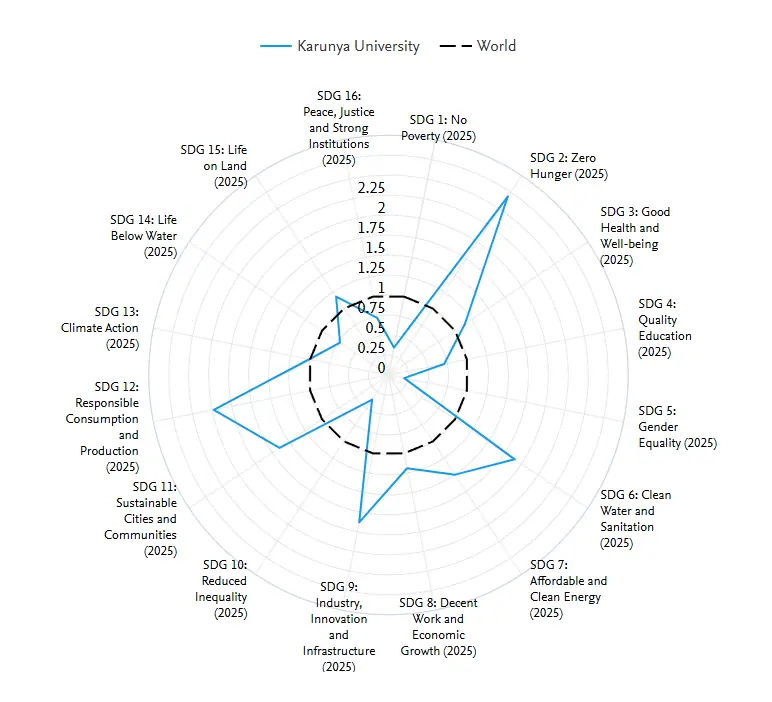
Sustainable Development Goal 17 (SDG 17), titled 'Partnerships for the Goals', is the keystone of the United Nations 2030 Agenda for Sustainable Development. Established by the UN General Assembly in 2015, SDG 17 recognizes that the ambitious targets set across all seventeen Sustainable Development Goals can only be realized through robust, inclusive, and revitalized global and local partnerships. While SDGs 1 through 16 target specific social, economic, and ecological challenges—such as eradicating poverty, ensuring clean water and sanitation, promoting quality education, and advancing climate action—SDG 17 focuses explicitly on the 'means of implementation'. It provides the systemic infrastructure, technological mechanisms, financial mobilizations, multi-stakeholder dialogues, and capacity-building frameworks necessary to operationalize sustainable development at planetary and community scales.
The United Nations outlines 19 discrete targets under SDG 17, categorized into five core operational dimensions: (1) Finance, emphasizing domestic resource mobilization, tax transparency, and development assistance; (2) Technology, fostering multi-stakeholder science, technology, and innovation (STI) sharing, knowledge exchange, and open-access data infrastructure; (3) Capacity-Building, strengthening institutional competency in developing regions; (4) Trade, promoting universal, equitable, and rule-based multilateral trading systems; and (5) Systemic Issues, which encompass policy and institutional coherence, multi-stakeholder partnerships, and data, monitoring, and accountability metrics.
1.2 Institutional Context, Mission Alignment, and Vision 2030
Karunya Institute of Technology and Sciences (KITS) was founded with the enduring divine mandate to 'Arise and Shine', dedicating its intellectual, scientific, and infrastructural capital to solving human problems in four foundational thematic areas: Water, Food, Healthcare, and Energy. Located in Coimbatore, Tamil Nadu, along the ecologically vital Western Ghats biodiversity hotspot, KITS recognizes that addressing complex planetary crises requires transcending disciplinary silos and institutional borders. The University operates as a Category-I Deemed-to-be-University under UGC regulations, possessing complete autonomy to forge high-impact international partnerships, innovate specialized curricula, and lead transdisciplinary research consortia.
KITS treats SDG 17 as a foundational meta-goal. It connects the University’s four thematic pillars to the wider societal ecosystem. The University's partnership model rests on four collaborative axes: (a) Multilateral Statutory Advisory with state and national government ministries for evidence-based policymaking; (b) Transnational Consortia with premier global universities for high-impact research, joint scientific data gathering, and academic exchange; (c) Cross-Sectoral Industrial Co-Innovation for technology commercialization and clean energy transitions; and (d) Grassroots Civil Society Engagement with NGOs, local Panchayats, and community welfare trusts to deliver tangible social equity and vocational empowerment.
2. Institutional Policies and Commitments
To provide enduring institutional governance and statutory backing for sustainable development partnerships, Karunya Institute of Technology and Sciences has enacted a comprehensive suite of formal policies, approved by the Board of Management, the Academic Council, and the Internal Quality Assurance Cell (IQAC). These regulatory instruments mandate the systematic embedding of sustainable development goals across faculty appraisals, research grant allocations, academic curricula, campus infrastructure operations, and community extension programs.
| Sl. No. | Policy / Regulatory Instrument | Year Enacted / Revised | Governing Authority | Strategic Scope & SDG 17 Target Alignment |
|---|---|---|---|---|
| 1 | Policy on International Research Consortia & Collaborative Data Gathering | 2018 (Rev. 2023) | Dean (Research & Consultancy) & Academic Council | Institutional-wide; mandates international co-authorship, co-funded research, open scientific protocols, and global data gathering (SDG 17.6, 17.16, 17.18). |
| 2 | Statutory Policy on Government Engagement & Technical Advisory Services | 2019 (Rev. 2024) | Registrar's Office & IQAC | Statutory framework authorizing faculty participation in state/national river basin authorities, disaster management panels, and policy formulation committees (SDG 17.14). |
| 3 | Cross-Sectoral Dialogue & Industry Co-Innovation Framework | 2020 | Centre for Industrial Linkages & Technology Transfer | Facilitates joint R&D, corporate MoUs, patent licensing, and pilot plant deployments with industrial partners in clean energy, IoT, and smart infrastructure (SDG 17.16, 17.17). |
| 4 | Institutional Policy on Community Extension, CEA & NGO Volunteering | 2017 (Rev. 2024) | Centre for Community Academia and Collaboration (CCAC) | Mandates undergraduate and postgraduate student volunteering through 14 rural tuition centres, prison vocational rehabilitation, and tribal health camps (SDG 17.9, 17.17). |
| 5 | Mandatory Sustainability Literacy & Curriculum Integration Directive | 2021 | Academic Council & Board of Studies | Requires compulsory environmental and sustainability course credits across all engineering and science programs, benchmarked globally via Sulitest (SDG 17.14, 17.19). |
| 6 | Open Science, NASA AERONET & Environmental Data Sharing Policy | 2021 | Department of Civil Engineering & Water Institute | Mandates free public dissemination of atmospheric aerosol, solar radiation, and hydrological telemetry data to international scientific platforms (SDG 17.6, 17.18). |
Through these codified policies, KITS ensures that partnerships are not episodic or transactional, but are integrated into the core statutory workflow of the institution. Dedicated bodies, including the Centre for Community Academia and Collaboration (CCAC), the Internal Quality Assurance Cell (IQAC), the Directorate of International Relations, and the specialized Water Institute, are charged with executing and auditing these commitments annually.
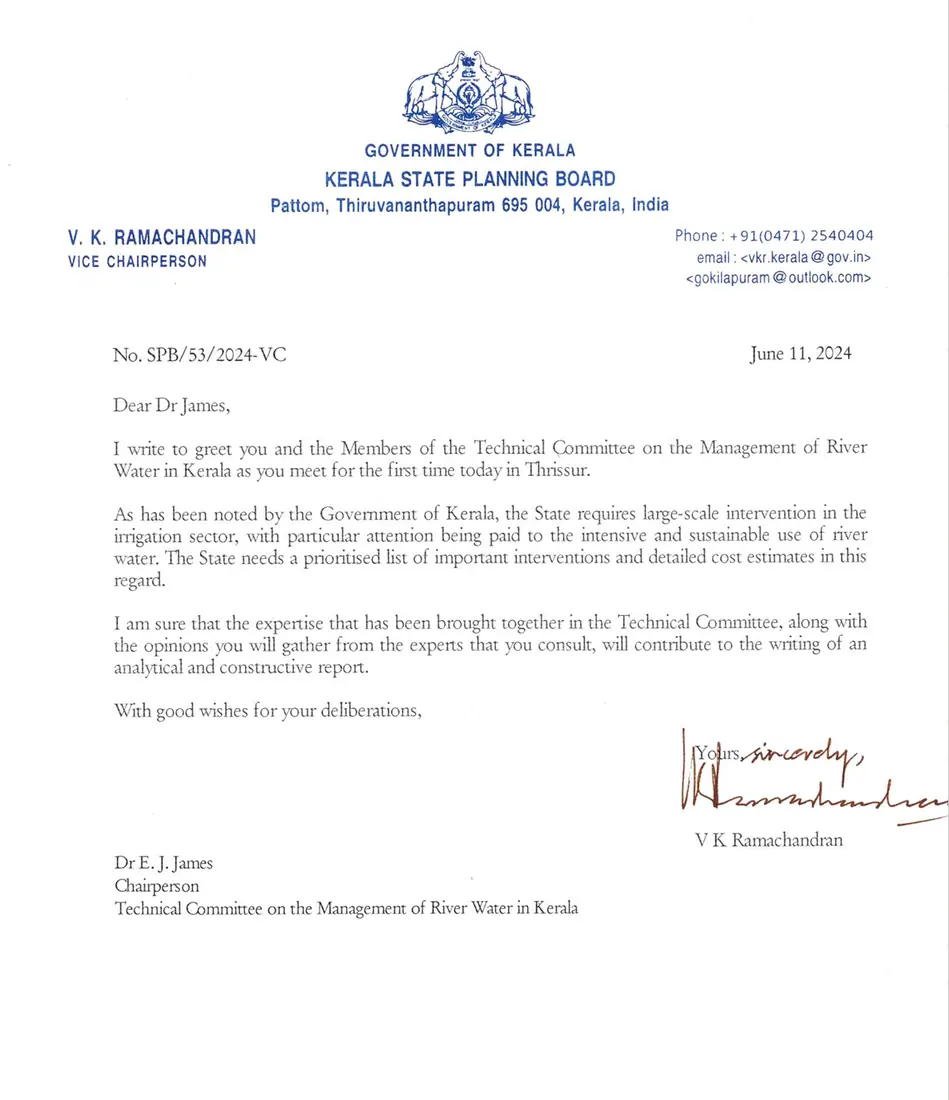
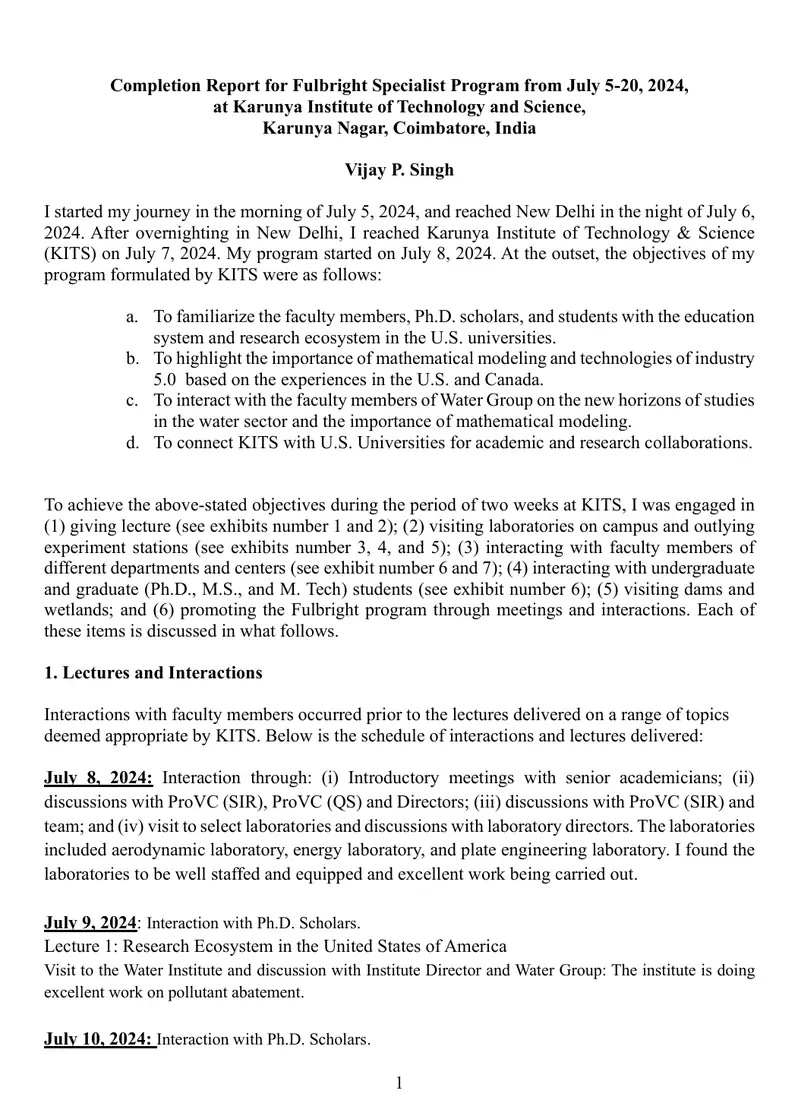
Policy in Action: Statutory Advisory for River Water Management & International Exchange On 11 June 2024, KITS faculty experts served on the official Technical Committee on the Management of River Water in Kerala, providing computational hydrological modeling and watershed allocation advisory to state water resource departments. Concurrently, from 5 to 20 July 2024, KITS hosted the prestigious Fulbright Specialist Program, welcoming renowned international scholar Dr. Daniel B. Oerther to conduct high-level policy seminars, doctoral mentoring, and inter-institutional dialogues on environmental health and SDG governance.
3. SDG Objectives
The strategic objectives of Karunya Institute of Technology and Sciences under SDG 17 are designed to maximize institutional impact across teaching, scientific research, campus operational management, and community engagement. These objectives directly operationalize the institutional mission while addressing specific UN SDG targets:
- Objective 1: Multi-Stakeholder Policy Formulation & Technical Advisory
Provide statutory engineering and scientific consultancy to regional, state, and national government departments (e.g., Kerala Water Resources Department, Tamil Nadu Forest Department, Central Pollution Control Board) to ensure that regional infrastructure, water security, and disaster management policies are grounded in rigorous scientific evidence (Aligning with SDG 17.14).
- Objective 2: Cross-Sectoral Industrial Co-Innovation & Sustainable Infrastructure
Convene tripartite forums uniting academia, industry leaders (e.g., CIRCOR Flow Technologies, TECHURJA, CADFEM), and municipal authorities to design, test, and deploy clean energy, IoT-based environmental monitoring, and resilient urban infrastructure systems (Aligning with SDG 17.16 and 17.17).
- Objective 3: International Scientific Consortia & Global Data Gathering
Expand transnational research partnerships with premier global universities and research institutes (e.g., Budapest University of Technology and Economics, TU Berlin, NASA Goddard Space Flight Center) to co-author high-impact research, exchange doctoral fellows, and contribute open-access environmental datasets (Aligning with SDG 17.6 and 17.18).
- Objective 4: Comprehensive Curriculum Integration & Sustainability Literacy
Ensure that 100% of graduating students possess certified competencies in sustainable development by integrating dedicated SDG course modules across all academic faculties and administering the internationally recognized Sulitest assessment to benchmark institutional literacy (Aligning with SDG 17.14 and 17.19).
- Objective 5: Grassroots Community Extension & Inclusive Human Empowerment
Deliver targeted social interventions in collaboration with NGOs (e.g., SEESHA, Rotary International, CHUWAK) that directly uplift vulnerable demographics, including inmates of Coimbatore Central Prison through vocational skilling, rural schoolchildren through free village tuition centres, and indigenous tribal settlements through water sanitation (Aligning with SDG 17.9 and 17.17).
4. Curriculum Integration
Karunya Institute of Technology and Sciences has pioneered the systemic integration of the United Nations Sustainable Development Goals into its academic architecture. In accordance with Academic Council mandates, every undergraduate and postgraduate curriculum incorporates mandatory foundational courses in environmental science, dedicated domain-specific sustainability electives, and community-oriented capstone projects. The academic domains and their corresponding primary SDG alignments are mapped below:
| Academic Domain | Curricular Scope & Pedagogical Focus | Primary Mapped SDGs |
|---|---|---|
| Environment & Natural Resources | Environmental studies, ecosystem conservation, biodiversity metrics, pollution control technologies, environmental legislation, and climate change disaster risk mitigation. | SDG 3, 6, 7, 11, 12, 13, 15, 17 |
| Agriculture & Horticulture | Sustainable agronomy, precision farming, organic agriculture, soil health revitalization, watershed management, climate adaptation strategies, and post-harvest technology. | SDG 1, 2, 6, 12, 13, 15, 17 |
| Water & Civil Engineering | Integrated Water Resources Management (IWRM), hydrogeological modeling, wastewater reclamation, smart urban water grids, flood risk simulation, and sustainable building materials. | SDG 6, 9, 11, 13, 14, 17 |
| Biotechnology & Health | Environmental biotechnology, waste valorization, bio-remediation, biohydrogen generation, public health epidemiology, and clinical diagnostic technologies. | SDG 3, 6, 9, 12, 17 |
| Mechanical & Renewable Energy | Clean energy technologies, solar thermal engineering, biomass gasification, electric vehicle powertrains, thermal energy storage, and industrial safety. | SDG 7, 9, 11, 12, 13, 17 |
| Computer Science, AI & Management | Explainable AI for environmental modeling, IoT smart sensor networks, corporate social responsibility (CSR), green supply chains, and ESG governance. | SDG 8, 9, 11, 12, 16, 17 |
4.1 Specialized Postgraduate Degree: M.Tech in Integrated Water Resources Management (IWRM)
Demonstrating its leadership in SDG 6 and SDG 17 education, KITS offers a specialized, interdisciplinary M.Tech. degree program in Integrated Water Resources Management (IWRM). The program brings together engineering, computational modeling, policy governance, and socio-economic planning to train next-generation water leaders. Representative core courses include:
| Course Code | Course Title | L | T | P | C | Primary Mapped SDGs |
|---|---|---|---|---|---|---|
| 24WI3001 | Basic Principles of Integrated Water Resources Management | 3 | 0 | 0 | 3 | SDG 6, 13, 17 |
| 24WI3002 | Applied Hydrology and Watershed Engineering | 3 | 0 | 0 | 3 | SDG 6, 13, 15 |
| 24WI3003 | Water Quality Modeling and Pollution Assessment | 3 | 0 | 0 | 3 | SDG 3, 6, 12, 14 |
| 24WI3004 | Geospatial Technologies and Remote Sensing in Water Resources | 3 | 0 | 2 | 4 | SDG 6, 9, 11, 15 |
| 24WI3005 | Groundwater Assessment, Modeling, and Artificial Recharge | 3 | 0 | 0 | 3 | SDG 6, 9, 11, 17 |
| 24EE2015 | Renewable Energy Systems and Smart Microgrid Integration | 3 | 0 | 0 | 3 | SDG 7, 9, 13 |
| 24CE2018 | Environmental Impact Assessment, Policy, and Green Auditing | 3 | 0 | 0 | 3 | SDG 11, 12, 13, 17 |
| 24AG2004 | Climate-Resilient Agriculture and Sustainable Irrigation | 3 | 0 | 2 | 4 | SDG 2, 6, 12, 13, 15 |
| 24BT3008 | Environmental Biotechnology and Microbial Waste Valorization | 3 | 0 | 0 | 3 | SDG 6, 12, 13 |
| 24CS2031 | Artificial Intelligence for Climate Action and Smart Cities | 3 | 0 | 2 | 4 | SDG 9, 11, 13, 17 |
4.2 Sustainability Literacy Assessment – Sulitest International Benchmarking
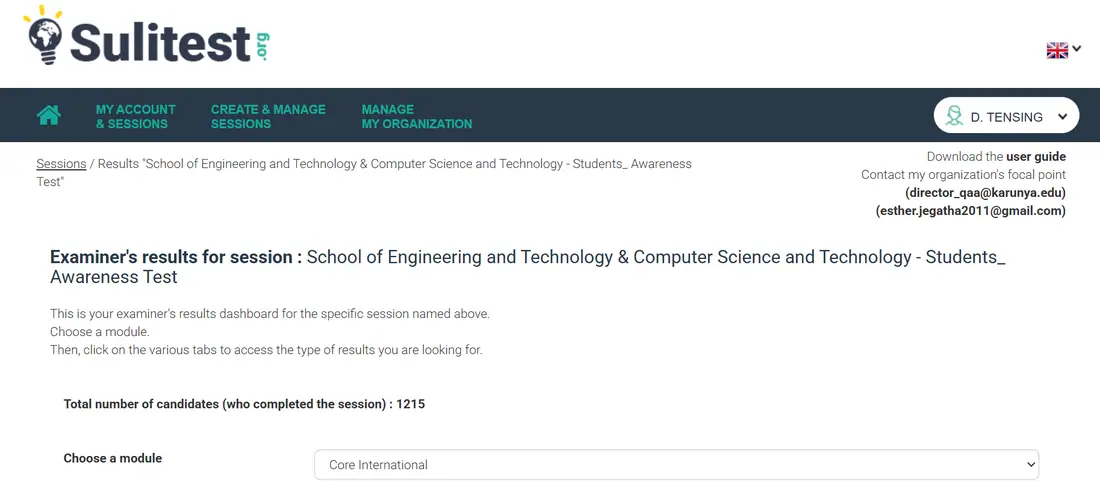
To independently verify the efficacy of its curriculum integration and ensure that students and faculty maintain superior competencies in global sustainability frameworks, Karunya Institute of Technology and Sciences deploys the Sulitest (Sustainability Literacy Test). Sulitest, launched in 2014 under the auspices of the UN Higher Education Sustainability Initiative (HESI), is a globally standardized benchmarking tool used by leading universities worldwide to assess core knowledge of the 2030 Agenda, planetary boundaries, and socio-economic systems.
At KITS, Sulitest assessments are systematically administered across all schools—including the School of Engineering and Technology, School of Computer Science and Technology, School of Arts, Media and Management, and the Division of Aerospace Engineering—as well as across research scholars and Internal Quality Assurance Cell (IQAC) faculty members. The institutional performance results substantially exceed global benchmarks, as summarized in the standardized evaluation matrix below:
| Knowledge Dimension / Domain | Tested SDG Competencies & Scope | Institutional Benchmark Score | Global Assessment Performance |
|---|---|---|---|
| Core International Framework | UN 2030 Agenda, multilateral agreements, global ecological boundaries, cross-cutting SDG mechanisms | 88% | Substantially exceeds global university average; demonstrates outstanding comprehension of multilateral governance. |
| Earth Systems & Planetary Limits | Climate change physics, biodiversity conservation, biogeochemical flows, ocean acidification, hydrological cycles | 84% | Strong scientific foundation across ecological and environmental engineering parameters. |
| Social Inclusion & Human Equity | Poverty alleviation, universal healthcare, gender equity, reducing inequalities, human rights frameworks | 86% | Demonstrates deep commitment to social justice and ethical responsibility. |
| Sustainable Economy & Infrastructure | Circular economy, green industrial innovation, clean energy transitions, sustainable smart cities, ESG reporting | 89% | Reflects rigorous engineering and management curricula focused on technological problem-solving. |

5. Research and Innovation
Karunya Institute of Technology and Sciences has established a vibrant, transdisciplinary research ecosystem focused on addressing complex global sustainability challenges. Research collaboration is conducted in active partnership with premier global universities, multilateral research consortia, international funding bodies, and industrial R&D laboratories. The University’s research excellence is reflected in its high citation impact, international co-authorship share, and substantial external grant mobilizations.
5.1 SciVal Scholarly Output and International Collaboration Metrics
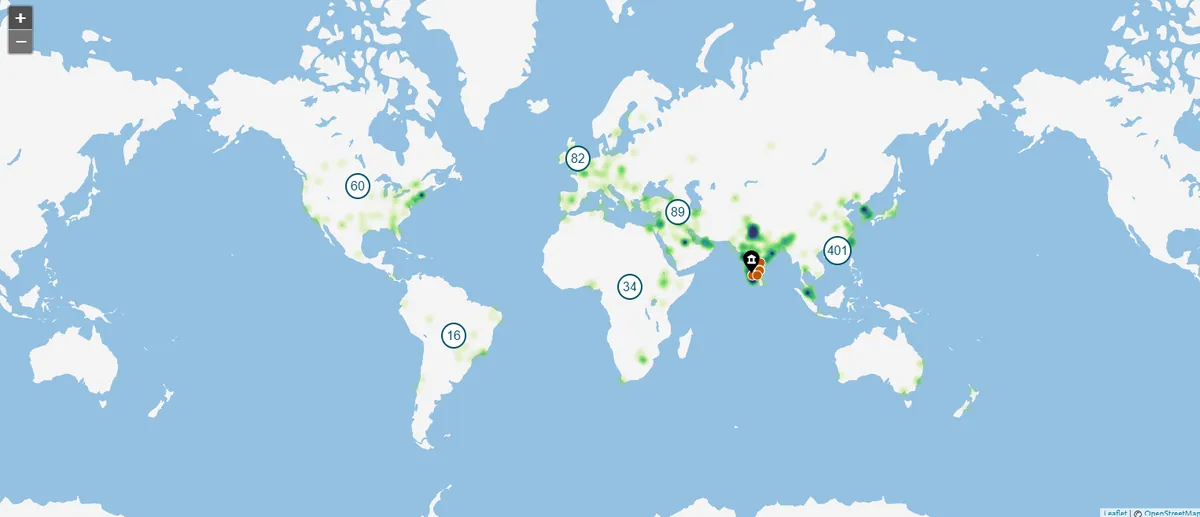
According to independent bibliometric data extracted from Elsevier SciVal, KITS exhibits a remarkably robust international research footprint. Over the reporting period, the University produced 565 internationally collaborative scholarly publications, representing 21.3% of its total scholarly output. These collaborative publications garnered 5,023 citations, achieving an outstanding Field-Weighted Citation Impact (FWCI) of 1.26—indicating that research produced with international partners is cited 26% above the global world average across corresponding subject disciplines.
| Metric Dimension | Publication Share (%) | Scholarly Output | Total Citations | Citations per Publication |
|---|---|---|---|---|
| International Collaboration (SciVal Set) | 21.3% | 565 | 5,023 | 8.9 |
| National Collaboration (Indian Universities & Labs) | 38.2% | 1,014 | 8,142 | 8.0 |
| Institutional / Inter-Departmental Collaboration | 28.5% | 756 | 4,890 | 6.5 |
| Single Authorship / Sole Institution Output | 12.0% | 318 | 1,720 | 5.4 |
5.2 Major Funded International Research Projects & Global Data Gathering
KITS faculty members lead major externally funded research projects that address critical SDG challenges through cross-border data gathering and shared experimental protocols:
Flagship Project 1: Fire-Resilient Infrastructure & High-Performance Concrete (€56,800) Principal Investigator: Dr. N. Anand (Department of Civil Engineering). Funding Agency: Ministry of Innovation and Technology of Hungary, supported through the National Research, Development and Innovation Fund (€56,800). International Partner: Budapest University of Technology and Economics, Hungary. Scope: Collaborative research on the structural mechanics, thermal degradation, and residual load capacity of advanced limestone calcined clay cement (LC3) and geopolymer concretes subjected to extreme fire and thermal stress. Resulted in high-impact publications in Elsevier's 'Cleaner Waste Systems' (DOI: 10.1016/j.clwas.2026.100552) and 'Hybrid Advances' (DOI: 10.1016/j.hybadv.2026.100624).
Flagship Project 2: Biohydrogen Generation from Microalgae & Clean Syngas Gasification Principal Investigators: Dr. Jibu Thomas (Biotechnology) & Dr. Madhu Ganesh (Mechanical Engineering). Collaborating Partners: Bio-Energy System Innovations (BESI), USA and TECHURJA, India. Scope: Transnational development of closed-loop photobioreactors for microalgae cultivation to produce biohydrogen and high-calorific syngas via pilot-scale (2 TPD) rotary kiln gasification. Directly supports SDG 7 (Clean Energy), SDG 9 (Innovation), and SDG 13 (Climate Action).
Flagship Project 3: NASA AERONET Global Solar Radiation & Atmospheric Aerosol Monitoring Station Institutional Host: Karunya Water Institute and Atmospheric Research Station. International Partner: NASA Goddard Space Flight Center, USA. Scope: KITS operates an official NASA AERONET (Aerosol Robotic Network) ground-based monitoring station. The station provides continuous, calibrated optical measurements of aerosol optical depth (AOD), water vapor, and solar irradiance. All data gathered is transmitted in real time and made freely accessible to the global scientific community for climate modeling, satellite data calibration, and atmospheric research (https://aeronet.gsfc.nasa.gov).
5.3 Representative Scopus Internationally Co-Authored Publications
Below is a curated, comprehensive selection of 50 representative internationally co-authored research publications extracted from KITS's 2024–2025 SciVal international collaboration database, illustrating transdisciplinary partnerships across food security, AI, clean energy, materials, water management, and healthcare:
| Sl. | Research Publication Title | Authors & International Collaborators | Scopus Source Title / Journal |
|---|---|---|---|
| 1 | Revolutionizing the food industry: The transformative power of artificial intelligence-a review | Zatsu , V., Shine, A.E., Tharakan, J.M., Peter, D., Ranganathan, T.V., Alotaibi, S.S., Mugabi, R., Muhsinah, A.B., Waseem, M., Nayik , G.A. | Food Chemistry: X |
| 2 | A review on machine learning and deep learning image-based plant disease classification for industrial farming systems | Sajitha, P., Andrushia , A.D., Anand, N., Naser, M.Z. | Journal of Industrial Information Integration |
| 3 | Explainable AI for Medical Image Analysis in Medical Cyber-Physical Systems: Enhancing Transparency and Trustworthiness of IoMT | Liu, W., Zhao, F., Shankar, A., Maple, C., Peter, J.D., Kim, B.-G., Slowik, A., Parameshachari , B.D., Lv , J. | IEEE Journal of Biomedical and Health Informatics |
| 4 | A novel energy optimization framework to enhance the performance of sensor nodes in Industry 4.0 | Sivakumar, S., Logeshwaran, J., Kannadasan, R., Faheem, M., Ravikumar, D. | Energy Science and Engineering |
| 5 | Predicting water quality index using stacked ensemble regression and SHAP based explainable artificial intelligence | Choudhary, R., Kumar, A., C, P., Naik, M.M., Choudhury, M., Khan, N.A. | Scientific Reports |
| 6 | Rational construction of MOF derived α-Fe2O3/g-C3N4 composite for effective photocatalytic degradation of organic pollutants and electrocatalytic oxygen evolution reaction | Kumaravel, S., Avula, B., Chandrasatheesh , C., Niyitanga , T., Saranya, R., Hasan, I., Abisheik , T., Rai, R.S., Pandiyan, V., Balu, K. | Spectrochimica Acta - Part A: Molecular and Biomolecular Spectroscopy |
| 7 | Limestone calcined clay cement (LC3): A sustainable solution for mitigating environmental impact in the construction sector | Kanagaraj, B., Anand, N., Johnson Alengaram, U., Samuvel Raj, R., Karthick, S. | Resources, Conservation and Recycling Advances |
| 8 | Advanced AI-driven emergency response systems for enhanced vehicle and human safety | Satheesh, N., Gopisankar , N., Kumarganesh , S., Anthoniraj , S., Saravanakumar, S., Sagayam , K.M., Pandey, B.K., Pandey, D. | Iran Journal of Computer Science |
| 9 | Thermal management strategies and power ratings of electric vehicle motors | Selvin Raj, J.A.P., Asirvatham , L.G., Angeline, A.A., Manova , S., Rakshith, B.L., Bose, J.R., Mahian , O., Wongwises , S. | Renewable and Sustainable Energy Reviews |
| 10 | Deep learning based coronary artery disease detection and segmentation using ultrasound imaging with adaptive gated SCNN models | Singh, A., Nagabhooshanam, N., Kumar, R., Verma, R., Mohanasundaram , S., Manjith , R., shuaib , M., Rajaram, A. | Biomedical Signal Processing and Control |
| 11 | The Physical Parameters of EDFA and SOA Optical Amplifiers and Bit Sequence Variations Based Optical Pulse Generators Impact on the Performance of Soliton Transmission Systems | Amiri, I.S., Rashed, A.N.Z., Ramya, K.C., Vinoth Kumar, K., Maheswar, R. | Journal of Optical Communications |
| 12 | Sustainable management of tea wastes: resource recovery and conversion techniques | Duarah , P., Haldar, D., Singhania, R.R., Dong, C.-D., Patel, A.K., Purkait, M.K. | Critical Reviews in Biotechnology |
| 13 | Nonlinear poro -thermo-forced vibration in curved sandwich magneto-electro-elastic shells under hygrothermal environment | Selvamani, R., Ebrahimi, F., Yaylacı , M., Öztürk, Ş., Yaylacı , E.U. | Acta Mechanica |
| 14 | Understanding Macroalgae: A Comprehensive Exploration of Nutraceutical, Pharmaceutical, and Omics Dimensions | Adarshan, S., Sree, V.S.S., Muthuramalingam, P., Nambiar, K.S., Sevanan , M., Satish, L., Venkidasamy , B., Jeelani, P.G., Shin, H. | Plants |
| 15 | Privacy-Preserving AI Framework for 6G-Enabled Consumer Electronics | Wang, X., Lyu, J., Peter, J.D., Kim, B.-G. | IEEE Transactions on Consumer Electronics |
| 16 | Optimized Controller Design for Renewable Energy Systems by Using Deep Reinforcement Learning Technique | Zekrifa , D.M.S., prakash , R.D., Dhanalakshmi, M., Puviarasi , R., Ganesh, C.S.S., lsaac , J.S., Duraipandy , P., Rajaram, A. | International Journal of Renewable Energy Research |
| 17 | Design and simulation of a highly efficient eco-friendly, non-toxic perovskite solar cell | Ahathiyan , G.S., Du John, H.V., Moni, D.J., Sagayam , K.M., Pandey, B.K., Pandey, D., Lelisho, M.E. | Discover Nano |
| 18 | Development and characterization of starch bioplastics as a sustainable alternative for packaging | Gurunathan, M.K., Navasingh , R.J.H., Selvam, J.D.R., Čep , R. | Scientific Reports |
| 19 | Public cloud networks oriented deep neural networks for effective intrusion detection in online music education | Zhang, J., Peter, J.D., Shankar, A., Viriyasitavat , W. | Computers and Electrical Engineering |
| 20 | Salicylaldehyde built fluorescent probe for dual sensing of Al3+, Zn2+ ions: Applications in latent fingerprint, bio-imaging & real sample analysis | Johny Dathees , T., Narmatha, G., Prabakaran, G., Seenithurai , S., Chai, J.-D., Suresh Kumar, R., Prabhu, J., Nandhakumar, R. | Food Chemistry |
| 21 | Advancements and environmental considerations in portland cement-based radiation shielding concrete: Materials, properties, and applications in nuclear power plants– review | Kanagaraj, B., Anand, N., Raj, S., Lubloy , E. | Cleaner Engineering and Technology |
| 22 | Biofilmed -PGPR: Next-Generation Bioinoculant for Plant Growth Promotion in Rice under Changing Climate | Bright, J.P., Maheshwari, H.S., Thangappan, S., Perveen, K., Bukhari, N.A., Mitra, D., Sayyed, R., Mastinu , A. | Rice Science |
| 23 | Nanomaterials for detection of biomolecules and delivering therapeutic agents in theragnosis: A review | Paramasivam, G., Sanmugam, A., Palem , V.V., Sevanan, M., Sairam, A.B., Nachiappan, N., Youn, B., Lee, J.S., Nallal , M., Park, K.H. | International Journal of Biological Macromolecules |
| 24 | Nonlinear vibration and parametric excitation of magneto- thermo elastic embedded nanobeam using homotopy perturbation technique | Selvamani, R., Thangamuni , P., Yaylacı , M., Emin Özdemir, M., Yaylacı , E.U. | ZAMM Zeitschrift fur Angewandte Mathematik und Mechanik |
| 25 | Enhanced Circuit Board Analysis: Infrared Image Segmentation Utilizing Markov Random Field (MRF) and Level Set Techniques | Praveenkumar, T., Anthoniraj , S., Kumarganesh , S., Somaskandan , M., Martin Sagayam, K., Pandey, B.K., Pandey, D., Sahani, S.K. | Engineering Reports |
| 26 | Free Vibration Analysis of a Functionally Graded Magneto-Piezo-Thermoelastic Ceramic-Metal Nanobeam Using Modified Nonlocal State-Space Strain Gradient Theory | Selvamani, R., Rubine, L., Prabhakaran, T., Yaylaci, M. | Physical Mesomechanics |
| 27 | Application of artificial intelligence tools in wastewater and waste gas treatment systems: Recent advances and prospects | Behera, S.K., Karthika, S., Mahanty , B., Meher, S.K., Zafar, M., Baskaran, D., Rajamanickam, R., Das, R., Pakshirajan , K., Bilyaminu, A.M., Rene, E.R. | Journal of Environmental Management |
| 28 | Random forest machine learning algorithm based seasonal multi-step ahead short-term solar photovoltaic power output forecasting | Jogunuri , S., Josh, F.T., Stonier, A.A., Peter, G., Jayaraj, J., Jaganathan, S., Jency Joseph, J., Ganji, V. | IET Renewable Power Generation |
| 29 | Behavioural studies on binary blended high strength self compacting geopolymer concrete exposed to standard fire temperature | Kanagaraj, B., Anand, N., Raj R, S., Lubloy , E. | Ain Shams Engineering Journal |
| 30 | Influence of nickel doping and cotton stalk activated carbon loading on structural, optical, and photocatalytic properties of zinc oxide nanoparticles | Thirumoolan , D., Ragupathy, S., Renukadevi , S., Rajkumar, P., Rai, R.S., Saravana Kumar, R.M., Hasan, I., Durai, M., Ahn, Y.-H. | Journal of Photochemistry and Photobiology A: Chemistry |
| 31 | Smart healthcare data protection and analysis through fuzzy-based cyber security | Varadarajan, M.N., Karthik, R., Pradeep, S., Ameen, N., Venkatramulu , S., Reddy, S.T., Kumar, M.J., Prasad, A.R., Rajaram, A. | Journal of Environmental Protection and Ecology |
| 32 | Vibration of piezo-magneto-thermoelastic FG nanobeam submerged in fluid with variable nonlocal parameter | Rajendran, S., Loganathan, R., Yaylacı , M., Yaylacı , E.U., Özdemir, M.E. | Advances in Nano Research |
| 33 | SAtUNet : Series atrous convolution enhanced U-Net for lung nodule segmentation | Selvadass , S., Bruntha, P.M., Sagayam , K.M., Günerhan , H. | International Journal of Imaging Systems and Technology |
| 34 | Foodomics : A sustainable approach for the specific nutrition and diets for human health | Mahato, D.K., Kamle , M., Pandhi , S., Pandey, S., Gupta, A., Paul, V., Kalsi, R., Agrawal, S., Islam, D., Khare, S., Singh, A., Kumar, P., Rab, S.O., Saeed, M. | Food Chemistry: X |
| 35 | FTIR based assessment of microplastic contamination in soil water and insect ecosystems reveals environmental and ecological risks | Rathikannu , S., Gautam, S., Joshi, S.K., Katharine, P., Mithra, K.E., Banusaranya , P., Amudhavarshini , V.M., Gayatri, R., Ho, C.-H. | Scientific Reports |
| 36 | Improving PM10 sensor accuracy in urban areas through calibration in Timișoara | Blaga, R., Gautam, S. | npj Climate and Atmospheric Science |
| 37 | Fuzzy Swin transformer for Land Use/ Land Cover change detection using LISS-III Satellite data | MohanRajan , S.N., Loganathan, A., Manoharan, P., Alenizi, F.A. | Earth Science Informatics |
| 38 | Valorization of plant proteins for meat analogues design—a comprehensive review | Siddiqui, S.A., Khalifa, I., Yin, T., Morsy, M.K., Khoder , R.M., Salauddin , M., Farzana, W., Sharma, S., Khalid, N. | European Food Research and Technology |
| 39 | Twitter sentiment analysis using conditional generative adversarial network | Mahalakshmi, V., Shenbagavalli, P., Raguvaran, S., Rajakumareswaran , V., Sivaraman, E. | International Journal of Cognitive Computing in Engineering |
| 40 | Assessing variability and hydrochemical characteristics of groundwater fluoride contamination and its associated health risks in East Singhbhum district of Jharkhand, India | Ambade , B., Sethi, S.S., Patidar, K., Gautam, S., Alshehri, M. | Journal of Hazardous Materials |
| 41 | Unlocking clean energy: Exploring FeVO4 nanopebble thin film as an outstanding photoanode for efficient water splitting | Majumder, S., Yadav, A.A., Gomez, L.A.M., Hunge , Y.M., Srinivasan, R., Kim, K.H. | Journal of Alloys and Compounds |
| 42 | Advancements in HLA Typing Techniques and Their Impact on Transplantation Medicine | Geo, J.A., Ameen, R., Al Shemmari, S., Thomas, J. | Medical Principles and Practice |
| 43 | In vitro evaluation of antioxidant potential of polysaccharides and oligosaccharides extracted from three different seaweeds | Perumal, P.K., Huang, C.-Y., Singhania, R.R., Patel, A.K., Haldar, D., Chen, C.-W., Dong, C.-D. | Journal of Food Science and Technology |
| 44 | Flexural Behavior of Galvanized Iron Based Cold-Formed Steel Back-to-Back Built-Up Beams at Elevated Temperatures | Sam, V.S., Nammalvar , A., Andrushia , D., Gurupatham , B.G.A., Roy, K. | Buildings |
| 45 | Technological advancement in the production of biohydrogen from lignocellulosic biomass: A review | Emisha, L., Prince, D., Vijay, S.J., Bhagavathsingh , J., Somu, P., Basavegowda , N., Haldar, D. | Journal of Environmental Chemical Engineering |
| 46 | Biodegradation of microplastics: Advancement in the strategic approaches towards prevention of its accumulation and harmful effects | L, E., Wilfred, N., S, K., Halder, G., Haldar, D., Patel, A.K., Singhania, R.R., Pandey, A. | Chemosphere |
| 47 | Doublet structural modeling of nonhomogeneous Euler mass sensor nanobeams using boundary characteristics Bernstein Polynomials | Selvamani, R., Prabhakaran, T., Yaylacı , M., Kartal, Ş.E., Yaylacı , E.U. | ZAMM Zeitschrift fur Angewandte Mathematik und Mechanik |
| 48 | Fractional nonlocal couple stress waves in magnetoelastic nanobeam using homotopy perturbation technique | Selvamani, R., Prabhakaran, T., Yaylacı , M., Öztürk, Ş., Uzun Yaylacı, E. | Acta Mechanica |
| 49 | Naphthalene derived Schiff base as a reversible fluorogenic chemosensor for aluminium ions detection | Dathees , T.J., Makarios Paul, S.P., Sanmugam, A., Abiram, A., Murugan, S., Kumar, R.S., Almansour, A.I., Arumugam, N., Nandhakumar, R., Vikraman, D. | Spectrochimica Acta - Part A: Molecular and Biomolecular Spectroscopy |
| 50 | Imidazole derived PET based reversible dual fluorescent chemosensor : Sensing of zinc and carbonate ions and their usage on real samples and live cells | Prabakaran, G., Narmatha, G., Velmurugan, K., Basith, A., Karthick, R., Velraj, G., Kumar, R.S., Nandhakumar, R. | Journal of Molecular Structure |
6. Events Organized Related to SDG
During the 2024–2025 reporting period, Karunya Institute of Technology and Sciences organized a broad spectrum of high-impact international conferences, national symposia, policy roundtables, technical workshops, and community dialogues to advance the SDGs through multi-stakeholder collaboration. These events engaged diverse participants including government officials, international researchers, industry executives, municipal engineers, NGO leaders, students, and local community representatives.
| Sl. | Event / Initiative Title | Date | Organizing Unit & Key Partners | SDG Mapping | Key Highlights, Outcomes & Beneficiaries |
|---|---|---|---|---|---|
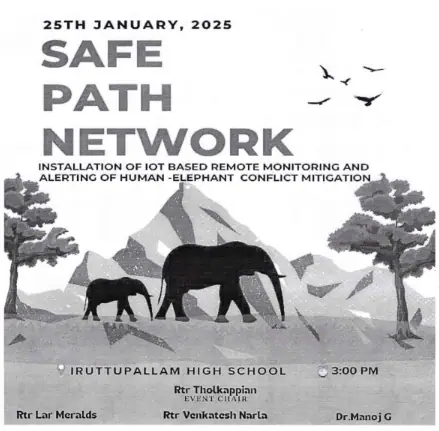
| 1 | IoT-Based Remote Monitoring System for Human-Elephant Conflict Mitigation | 25 Jan 2025 | Department of ECE, Rotary Club of Thondamuthoor & Coimbatore Forest Division | SDG 9, 15, 17 | Field deployment of automated acoustic and infrared sensor network in forest-fringe settlements; 40 participants trained in early warning alerts. |
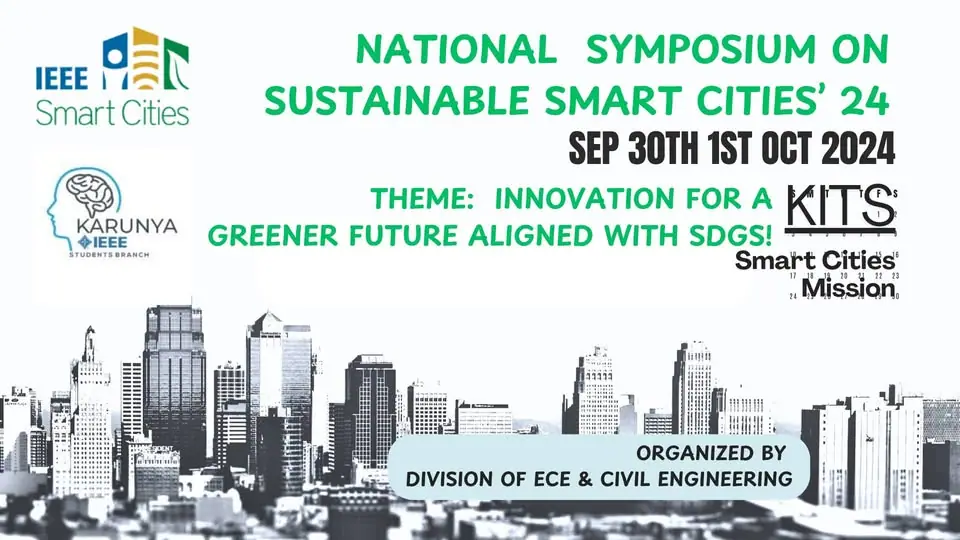
| 2 | IEEE Sponsored National Symposium on Sustainable Smart Cities 2024 | 12 Oct 2024 | IEEE Student Branch, School of E&T, and CIRCOR Flow Technologies | SDG 7, 9, 11, 17 | National conference featuring 180 delegates; presented papers on smart microgrids, automated water distribution, and green urban planning. |
| 3 | International Conference on Sustainable Air and Space Technologies (ICSAST 2025) | 25 Apr 2025 | Department of Aerospace Engineering & International Aeronautical Societies | SDG 7, 9, 12, 13, 17 | 145 international and national delegates; deliberated sustainable aviation fuels, composite materials, and reduced aerospace emissions. |
| 4 | Fulbright Specialist Academic & Policy Exchange Program | 5-20 Jul 2024 | Office of International Affairs, IQAC & Dr. Daniel B. Oerther (USA) | SDG 3, 6, 17 | Two-week intensive series of 8 policy seminars, doctoral mentoring sessions, and water governance roundtables for 220 faculty and research scholars. |
| 5 | Engineer's Day: Sustainable Infrastructure & Resilient Construction | 18 Sep 2024 | Department of Civil Engineering & Builders Association of India | SDG 9, 11, 12, 17 | Technical symposium and project display on LC3 eco-cements, geopolymer concrete, and disaster-resilient building codes with 210 students. |
| 6 | Community Connect Ecological Programme at Singampathi Tribal Hamlet | 7 Aug 2024 | Centre for Community Academia and Collaboration (CCAC) & Siruvani Tribal Council | SDG 3, 6, 15, 17 | Field ecological study and community dialogue on indigenous water conservation, tribal biodiversity documentation, and solar electrification. |
| 7 | International Workshop on Microalgae Bio-Refineries & Biohydrogen | 14 Nov 2024 | Department of Biotechnology, BESI USA & TECHURJA | SDG 7, 9, 13, 17 | Technical workshop showcasing closed-loop photobioreactors and pilot gasification technology for 95 clean-tech researchers. |
| 8 | National Webinar on Intellectual Property Rights & Technology Transfer in SDGs | 22 Feb 2025 | KITS IPR Cell & Tamil Nadu State Council for Science and Technology | SDG 9, 17 | Virtual capacity-building workshop for 310 innovators and faculty on patenting sustainable technologies and open-access licensing. |
7. Community Outreach and Extension Activities
Karunya Institute of Technology and Sciences translates its institutional values into impactful community action through the Centre for Community Academia and Collaboration (CCAC), the Community Extension Activities (CEA) cells, the National Service Scheme (NSS), and the KSM Rotaract Club. By partnering directly with local Panchayats, non-governmental organizations, correctional facilities, and rural schools, KITS implements targeted interventions that uplift marginalized populations and promote inclusive human development.
7.1 Rehabilitative Vocational Skilling for Prison Inmates
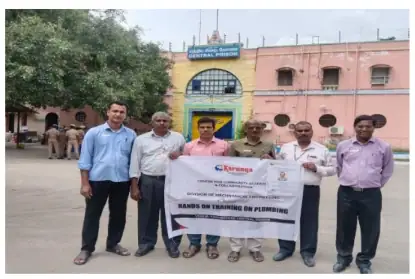
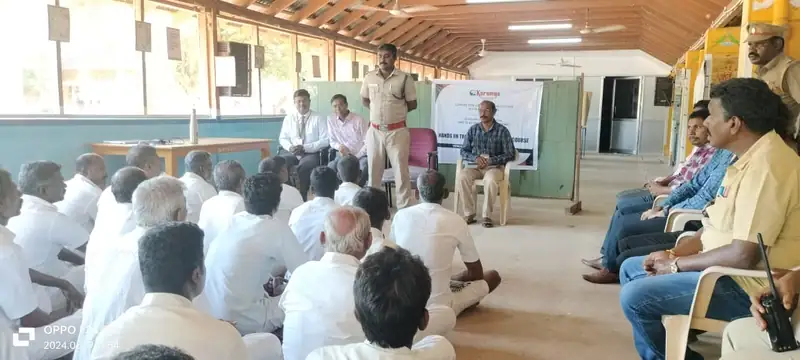
A premier flagship initiative of KITS's community extension is the vocational rehabilitation training program conducted inside Coimbatore Central Prison. In partnership with the Tamil Nadu Prison Department and CCAC, KITS faculty and technical trainers conducted intensive, hands-on certification courses for inmates nearing the completion of their sentences. These courses are designed to provide sustainable livelihood skills that enable immediate employment or self-employment upon release, breaking cycles of recidivism.
- Vocational Training on Plumbing for Livelihood Empowerment: Conducted from 27 to 31 August 2024 for 30 inmates of Coimbatore Central Prison. Led by Dr. Josiah Daniel (Director, CCAC), the training provided comprehensive practical instruction on plumbing tools, overhead tank installation, water heater lines, washbasin assemblies, and kitchen drainage systems. The training emphasized that starting a plumbing service requires minimal initial capital (approximately INR 4,000), making it an accessible livelihood option.
- Technical Skill Training on Electrical Wiring & Equipment Maintenance: Imparted rigorous practical instruction in domestic house wiring, fluorescent and LED fixture installation, staircase wiring circuits, fault detection, and electrical safety standards. Inmates completed hands-on test circuits and received technical completion certificates.
7.2 Rural Tuition Centres, Literacy Promotion & Community Health
KITS sustains deep, ongoing relationships with local rural villages across the Thondamuthoor and Siruvani blocks through student volunteering and community-based extension centres:
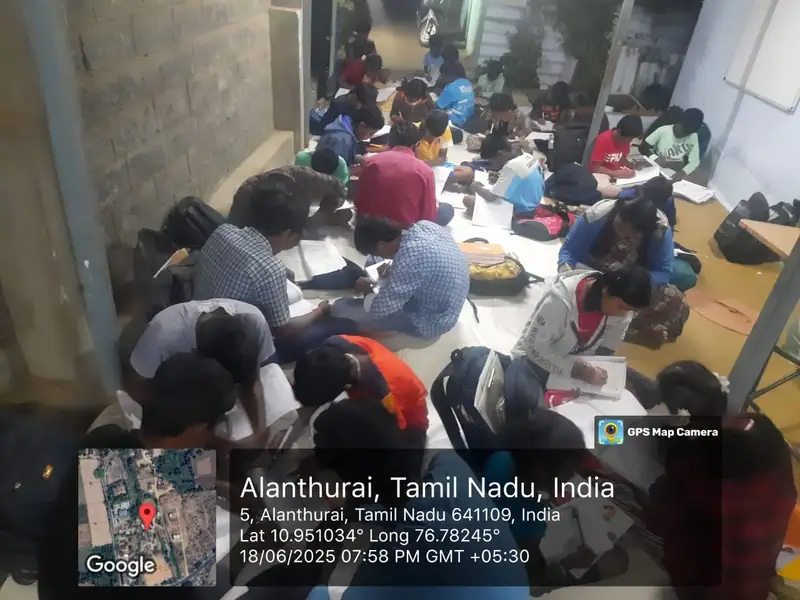
- 14 Free Village Evening Tuition Centres: KITS establishes and administers 14 free evening tuition centres in rural villages (including Neallurpatti, Mathipalayam, and Karunya Nagar), supporting over 300 underprivileged children with daily academic tutoring, remedial STEM education, and personality development provided by trained student volunteers.
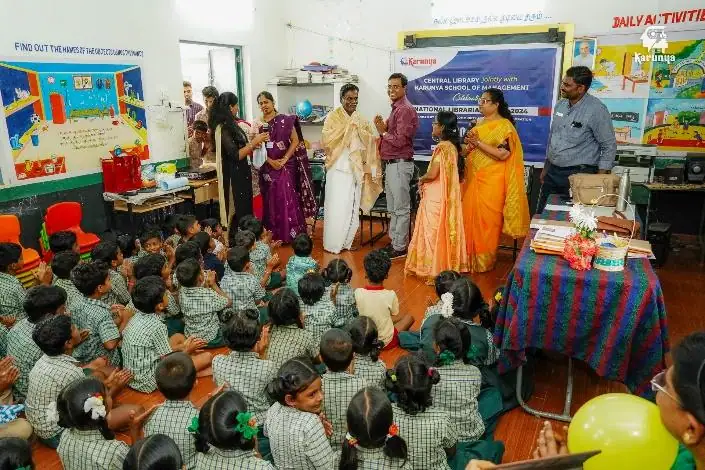
- National Library Week at Iruttupallam Panchayat Union Middle School: CCAC and student volunteers organized a dedicated educational literacy and reading habits campaign, donating curated books and establishing reading circles for rural school students.
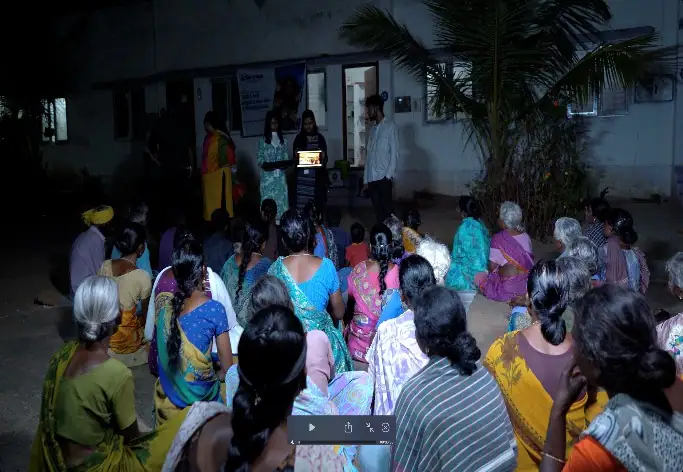
- Tribal Community Health and Hygiene Camps: In collaboration with SEESHA and local medical officers, student teams organized health, hygiene, and safe drinking water awareness camps in Pachinampathy and Perumalkovilpathy tribal villages, including clean water testing, nutrition counseling, and child protection workshops.
8. Partnerships and Collaborations
Partnership is embedded across every academic, research, and outreach dimension at Karunya Institute of Technology and Sciences. The University maintains formal Memoranda of Understanding (MoUs), statutory advisory agreements, joint research contracts, and community collaboration pacts with a distinguished ecosystem of national and global partners. The structured partnership inventory below outlines the nature of these engagements and their direct contributions to the Sustainable Development Goals:
| Sl. | Partner Organization / Institution | Partner Sector / Category | Geographic Scope | Nature of Agreement & Joint Activities | Primary SDG Impact |
|---|---|---|---|---|---|
| 1 | Government of Kerala – Water Resources Department | State Government / Statutory Body | Kerala, India | Official technical committee membership on river water management, hydrological basin modeling, and water allocation planning. | SDG 6, 13, 17 |
| 2 | Budapest University of Technology and Economics | Higher Education / University | Hungary (European Union) | Joint research on fire-resilient concrete supported by Hungary Ministry of Innovation (€56,800), PhD researcher exchange, and Elsevier co-publications. | SDG 9, 11, 17 |
| 3 | NASA Goddard Space Flight Center | International Space Agency / Research | USA (Global Network) | Hosting the official NASA AERONET atmospheric monitoring station at KITS; open-access global dissemination of solar and aerosol telemetry. | SDG 13, 17 |
| 4 | Fulbright Program (U.S. Department of State) | International Academic Exchange | USA / Global | Fulbright Specialist academic and policy exchange program; collaborative lectures on environmental health, water governance, and doctoral mentoring. | SDG 3, 4, 6, 17 |
| 5 | Deutsche Gesellschaft für Internationale Zusammenarbeit (GIZ) GmbH | International Development Agency | Germany / Global | Collaboration on sustainable wetland conservation, environmental risk reduction, and water-energy nexus modeling. | SDG 6, 13, 15, 17 |
| 6 | Ramsar Regional Center – East Asia (RRC-EA) | Multilateral Wetland Organization | East Asia / International | Technical collaboration on wetland ecological assessment, hydrological conservation, and Ramsar site policy guidelines. | SDG 6, 14, 15, 17 |
| 7 | CIRCOR Flow Technologies India Pvt. Ltd. | Corporate Enterprise / Industrial R&D | India / Multinational | Formal MoU for industrial valve testing, smart fluid flow sensors, joint patenting, and mechanical engineering student apprenticeships. | SDG 8, 9, 12, 17 |
| 8 | Rotary International / Rotary Club of Thondamuthoor | Non-Governmental Organization (NGO) | Regional / India | Joint installation of IoT-based Human-Elephant Conflict early warning sensor network; mega eye screening and healthcare camps. | SDG 3, 9, 15, 17 |
| 9 | SEESHA (Samiti for Education, Environment, Social & Health) | Civil Society / Welfare Trust | National / India | Collaborative administration of 14 village tuition centres, disaster relief mobilization, and rural health clinics. | SDG 1, 3, 4, 10, 17 |
| 10 | Tamil Nadu Prison Department (Coimbatore Central Prison) | State Government / Correctional Admin | Tamil Nadu, India | Formal partnership for certified vocational skill training in plumbing and electrical maintenance for inmate rehabilitation. | SDG 4, 8, 10, 16, 17 |
| 11 | TECHURJA & BESI USA | Clean Energy Enterprises | India / USA | Development and testing of 2 TPD rotary kiln biomass gasification pilot plant and photobioreactor biohydrogen production. | SDG 7, 9, 13, 17 |
| 12 | CHUWAK (Community Health & Welfare Action Kendra) | Non-Governmental Organization (NGO) | Coimbatore, India | Joint organization of employability readiness workshops, rural youth career counseling, and women's self-help group skilling. | SDG 4, 8, 17 |
9. Best Practices
Karunya Institute of Technology and Sciences has cultivated distinctive institutional best practices under SDG 17 that demonstrate innovation, operational scalability, multi-stakeholder participation, and long-term sustainability. Four exemplary initiatives are documented below:
9.1 Best Practice 1: Transnational Consortia for Fire-Resilient Infrastructure & Materials
- Background: Infrastructure exposed to extreme thermal and fire environments requires advanced materials that retain structural integrity without catastrophic failure. • Objective: Develop eco-friendly limestone calcined clay cement (LC3) and geopolymer concretes with superior residual mechanical strength under elevated fire temperatures (up to 1,000°C). • Implementation: Led by Dr. N. Anand in bilateral partnership with the Budapest University of Technology and Economics (Hungary), funded by the Ministry of Innovation and Technology of Hungary (€56,800). • Innovation: Utilizing industrial pozzolanic byproducts to engineer thermal barrier microstructures, drastically reducing Portland cement clinker content and associated CO2 emissions. • Beneficiaries: Civil engineers, construction regulatory bodies, disaster risk mitigation authorities, and global academic researchers. • Results: 4 peer-reviewed high-impact articles in Elsevier journals (Q1 ranking), validated international testing protocols, and co-developed computational thermomechanical modeling tools. • Sustainability & Replicability: The bilateral funding model and standardized material formulations provide a replicable template for international cross-border materials research.
9.2 Best Practice 2: Cross-Sectoral IoT Sensor Network for Human-Elephant Conflict Mitigation
- Background: Settlements adjacent to the Western Ghats forest fringe experience severe human-elephant conflict, endangering both human lives and endangered Asian elephant populations. • Objective: Create an affordable, autonomous, IoT-based remote monitoring and early warning system to detect wild elephant movement near human habitations in real time. • Implementation: Jointly designed by the Department of ECE at KITS, deployed in collaboration with the Rotary Club of Thondamuthoor, local tribal community heads, and the Coimbatore Forest Division on 25 January 2025. • Innovation: Integration of passive infrared (PIR) thermal sensors, seismic ground sensors, and LoRaWAN wireless telemetry with automated cellular alert broadcasting to forest rangers and villagers. • Beneficiaries: Over 5,000 residents in forest-fringe hamlets, local farmers, forest department patrol units, and wildlife conservationists. • Results: Zero conflict casualties in the monitored zone post-deployment, significant reduction in crop damage, and active participation of local youth in sensor maintenance. • Sustainability & Replicability: Highly cost-effective hardware architecture powered by solar micro-panels, easily replicable across other forest-fringe wildlife corridors across South Asia.
9.3 Best Practice 3: Rehabilitative Vocational Skilling & Human Dignity for Prison Inmates
- Background: Incarcerated individuals face extreme social stigmatization and lack viable technical skills upon release, leading to high rates of re-offending. • Objective: Impart certified technical competencies in plumbing, sanitary installation, and domestic electrical wiring to inmates nearing release from Coimbatore Central Prison. • Implementation: Executed by the Centre for Community Academia and Collaboration (CCAC) under Director Dr. Josiah Daniel, with official sanction and logistical partnership from the Tamil Nadu Prison Department. • Innovation: Curriculum focuses specifically on low-investment micro-entrepreneurship; trainees are equipped to launch self-employed service enterprises requiring under INR 4,000 in tool investments. • Beneficiaries: 30 prison inmates in plumbing batch (27-31 August 2024), 25 inmates in electrical wiring batch, and their dependent family members. • Results: 100% course completion rate; practical hands-on assessments validated by certified engineers; post-release employment tracking established in partnership with local contractor guilds. • Sustainability & Replicability: The institutional model can be replicated across district and central correctional facilities nationwide to advance SDG 8 (Decent Work) and SDG 16 (Peace and Justice).
9.4 Best Practice 4: NASA AERONET Ground Station – Open-Access Global Environmental Monitoring
- Background: Accurate climate modeling and satellite observation calibration require long-term, high-precision, ground-truth measurements of atmospheric aerosol optical depth and solar irradiance. • Objective: Operate a permanent, globally calibrated atmospheric monitoring station in South India that contributes real-time telemetry to worldwide climate databases. • Implementation: Maintained continuously by the KITS Water Institute in direct partnership with the NASA Goddard Space Flight Center (USA). • Innovation: Robotic sun photometer instrument performing automated spectral solar and sky radiance measurements, integrated into NASA's global AERONET database with zero latency. • Beneficiaries: The global atmospheric and climate science community, satellite remote sensing missions (MODIS, Landsat, Sentinel), meteorologists, and student researchers. • Results: Over 10 consecutive years of continuous data dissemination; cited in international climate assessment reports; utilized in multiple doctoral and postdoctoral research studies. • Sustainability & Replicability: Long-term institutional commitment, solar-backed power resilience, and automated telemetry ensure permanent operational continuity.
10. THE Impact Rankings Metric/Indicator
To facilitate comprehensive evaluation against the Times Higher Education (THE) Impact Rankings methodology for Sustainable Development Goal 17, the specific evidence, institutional initiatives, and metric components are systematically mapped below:
| Metric Code | THE Impact Rankings Indicator Name | Institutional Initiative & Operational Delivery | Documented Evidence & Verification |
|---|---|---|---|
| 17.2.1 | Relationships to NGOs & Government for SDG Policy | Direct participation in statutory state and regional technical committees (e.g., Technical Committee on River Water Management in Kerala; Fulbright Specialist Program on environmental policy). | Committee constitution orders, meeting minutes, technical reports, and Fulbright completion documentation. |
| 17.2.2 | Cross-Sectoral Dialogue About the SDGs | Conducted 20+ multi-stakeholder conferences and field deployments (e.g., IoT Human-Elephant Conflict Mitigation with Rotary; IEEE Sustainable Smart Cities; CIRCOR industrial R&D dialogue). | Event proceeding reports, photographs, participant rosters, MoU documents, and press announcements. |
| 17.2.3 | International Collaboration Data Gathering for SDGs | NASA AERONET station operating at KITS; Hungary Ministry of Innovation €56,800 concrete research project; BESI USA biohydrogen project. | AERONET public telemetry portal, bilateral grant sanction letters, research agreements, and peer-reviewed articles. |
| 17.2.4 | Collaboration for SDG Best Practice | SciVal international research analysis: 565 co-authored outputs (21.3% share), 5,023 citations, FWCI 1.26; active comparative learning with TU Berlin, Budapest Univ, GIZ, and Ramsar RRC-EA. | SciVal bibliometric extract, Scopus international collaboration set (556 papers), and comparative research publications. |
| 17.2.5 | Collaboration with NGOs for SDGs | Student volunteering via 14 free rural evening tuition centres; health and nutrition camps with SEESHA; Rotaract youth initiatives; tribal community connect. | Volunteer logs, tuition centre registers, attendance rosters, village letters of appreciation, and activity reports. |
| 17.4.1 | Education for SDGs Commitment | Institutional policy mandating SDG integration across 100% of academic schools and departments; curricular mapping spanning environment, water, agriculture, energy, and AI. | Academic Council regulations, curriculum structure documents, domain mapping tables, and course catalogs. |
| 17.4.2 | Specific Courses on Sustainability | Offering specialized degree programs (M.Tech IWRM) and discrete credit courses: Basic Principles of IWRM, Applied Hydrology, Renewable Energy, Green Auditing, and AI for Climate Action. | Approved syllabi, course schemes, credit allocation matrices, and student enrollment records. |
| 17.4.3 | Education for SDGs in the Wider Community | Vocational skilling in plumbing (30 inmates) and electrical wiring for Coimbatore Central Prison; National Library Week at Iruttupallam school; CHUWAK employability workshops. | Prison training completion certificates, attendance sheets, photographs, partner NGO reports, and press coverage. |
| 17.4.4 | Sustainability Literacy Assessment | Deployment of the internationally standardized Sulitest across engineering, computing, management, research scholars, and IQAC faculty; scored 88% in Core Framework and 84% in Earth Systems. | Sulitest session created dashboards, departmental candidate score sheets, question breakdown matrices, and benchmark reports. |
11. Conclusion
Karunya Institute of Technology and Sciences' institutional trajectory under Sustainable Development Goal 17: Partnerships for the Goals exemplifies how a higher education institution can serve as an energetic catalyst for collective global action. By weaving multi-stakeholder partnerships into its statutory governance, pedagogical architecture, scientific research agenda, and community outreach missions, KITS has built an enduring bridge connecting academic scholarship with societal transformation.
On the global stage, the University’s 565 internationally collaborative research outputs, stellar 1.26 Field-Weighted Citation Impact, bilateral funded grants with European ministries, and continuous contribution of open-access climate telemetry through the NASA AERONET station attest to its standing as an internationally engaged research institution. Regionally and nationally, KITS provides trusted statutory advisory to state water resource ministries, engineers smart technological solutions for wildlife conservation with Rotary, co-innovates sustainable technologies with industry leaders, and uplifts marginalized populations through prison inmate vocational skilling and free rural tuition centres.
As Karunya Institute of Technology and Sciences advances along its Vision 2030 roadmap, it reaffirms its unwavering commitment to the United Nations Sustainable Development Goals. By continuing to expand inclusive, ethical, and impact-driven partnerships across borders, sectors, and communities, KITS ensures that knowledge is generated collaboratively, shared transparently, and deployed equitably to build a sustainable, resilient, and flourishing world.