
1. SDG Overview
The SDG 1 - No Poverty Overview for the Academic Year 2024–2025 highlights the contributions of Karunya Institute of Technology and Sciences (KITS), Coimbatore, towards poverty alleviation, inclusive growth and sustainable socioeconomic development. It encompasses institutional initiatives such as scholarships, financial assistance and student welfare programmes to promote equitable access to higher education; curriculum integration, experiential learning and skill development to enhance employability and entrepreneurship; research, innovation and funded projects addressing agricultural productivity, livelihood diversification, women's empowerment and financial inclusion; and agricultural extension activities, farmer training, technology demonstrations and plant clinics to strengthen rural livelihoods. The overview also highlights community outreach, government and institutional collaborations, financial literacy programmes, tribal livelihood development and disaster relief initiatives that support economically disadvantaged and vulnerable communities. Collectively, these initiatives demonstrate KITS' commitment to empowering individuals, creating sustainable livelihood opportunities, strengthening economic resilience and advancing inclusive community development in alignment with the United Nations Sustainable Development Goal 1 – No Poverty.
Extreme poverty, officially measured by the United Nations under Target 1.1 as living on less than US$2.15 per person per day (2017 PPP) and updated in recent World Bank benchmarks to US$3.00 per day (2021 PPP), has declined remarkably over recent decades.
According to the United Nations Sustainable Development Goals Report 2024, approximately 712 million people (9% of the global population) were living in extreme poverty in 2022. The COVID-19 pandemic and subsequent economic shocks, coupled with climate-related challenges, have hindered global efforts to eradicate poverty. If current trends persist, approximately 590 million people (6.9% of the global population) are projected to remain in extreme poverty by 2030.
At the same time, we are seeing a shocking resurgence of hunger back to levels last observed in 2005. Equally concerning is the persistent rise in food prices across more countries today than between 2015 and 2019. This dual crisis of poverty and food insecurity remains a critical global concern.
If current trends persist, only one in five countries is projected to succeed in halving their national poverty levels by 2030, underscoring the urgent need for targeted social protection and inclusive economic policies
In 2025, 7.9% of the global workforce (284 million workers) lived in extreme poverty, down from 11% in 2015.
For the first time on record, over half of the world’s population receives at least one social protection benefit. Despite this milestone, 3.8 billion people remain completely uncovered.
Development aid focused on poverty reduction has fallen sharply, erasing a decade of progress and returning to 2015 levels.
Advanced economies spend a significantly higher share of government budgets on essential services (like education, health, and social protection) compared to emerging and developing nations.
Guaranteeing basic social security floors in low- and middle-income countries requires an additional $1.4 trillion annually, equal to 3.3% of their combined GDP in 2024.
Global Targets
1.1 By 2030, eradicate extreme poverty for all people everywhere, currently measured as people living on less than $2.15 a day
1.2 By 2030, reduce at least by half the proportion of men, women and children of all ages living in poverty in all its dimensions according to national definitions
1.3 Implement nationally appropriate social protection systems and measures for all, including floors, and by 2030 achieve substantial coverage of the poor and the vulnerable
1.4 By 2030, ensure that all men and women, in particular the poor and the vulnerable, have equal rights to economic resources, as well as access to basic services, ownership and control over land and other forms of property, inheritance, natural resources, appropriate new technology and financial services, including microfinance
1.5 By 2030, build the resilience of the poor and those in vulnerable situations and reduce their exposure and vulnerability to climate-related extreme events and other economic, social and environmental shocks and disasters
1.6 Ensure significant mobilization of resources from a variety of sources, including through enhanced development cooperation, in order to provide adequate and predictable means for developing countries, in particular least developed countries, to implement programmes and policies to end poverty in all its dimensions
1.7 Create sound policy frameworks at the national, regional and international levels, based on pro-poor and gender-sensitive development strategies, to support accelerated investment in poverty eradication actions.
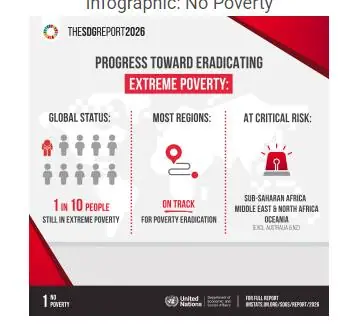
Sustainable Development Goal 1 (SDG 1): No Poverty is one of the 17 Sustainable Development Goals adopted by the United Nations under the 2030 Agenda for Sustainable Development. Its primary aim is to end poverty in all its forms everywhere. SDG 1 focuses not only on reducing extreme poverty but also on improving access to basic services, social protection, economic opportunities, resources, and resilience against economic and environmental shocks.
Importance of SDG 1
SDG 1 is fundamental because poverty affects almost every aspect of human development. Its importance includes:
Eradicating extreme poverty and improving living standards.
Ensuring access to food, education, healthcare, housing, water and sanitation.
Promoting equal economic opportunities and decent livelihoods.
Supporting vulnerable communities through social protection and financial inclusion.
Reducing inequalities and enabling people to participate meaningfully in society.
Building resilience to climate change, disasters and economic crises.
Empowering individuals and communities to become self-reliant and sustainable.
Role of Karunya SDG 1
SDG1 has particular relevance for our institution, as we contribute to poverty reduction through education, innovation, entrepreneurship, community engagement and rural development.
Providing quality education – Higher education equips students with knowledge and skills that improve employability and income-generation opportunities.
Supporting economically disadvantaged students – Scholarships, fee assistance, student support systems and inclusive educational opportunities have helped students from economically weaker backgrounds pursue higher education.
Promoting skill development and entrepreneurship – Trainings conducted for students in entrepreneurship, technology, agriculture and other employable skills have created pathways to sustainable livelihoods and employment.
Rural and community development – Institutional outreach programmes address rural livelihoods, agricultural productivity, digital literacy, financial awareness, and socio-economic challenges faced by vulnerable communities.
Agricultural innovation – Through agricultural education, research and extension activities, KITS has promoted technologies that have improved farmers' productivity, reduced input costs, and strengthened rural livelihoods.
Innovation for affordable solutions – Research and student projects developed as low-cost technologies in areas such as agriculture, water, renewable energy, healthcare and sanitation, have benefited low-income communities.
Creating socially responsible graduates – Integrating poverty alleviation, sustainability and social responsibility into education has encouraged students to become agents of positive social change.
Overall Significance
SDG 1 extends beyond income generation to ensuring that every individual has access to opportunities that promote dignity, security and self-reliance. At Karunya Institute of Technology and Sciences, this commitment is reflected in the use of education, research, innovation and community engagement to address poverty and improve the quality of life of underprivileged communities.
“No Poverty” at Karunya can be envisioned as transforming knowledge into opportunity, opportunity into livelihood, and livelihood into a better quality of life for individuals, families and communities.
2. Institutional Policies and Commitments
| Sl. No. | Policy / Initiative / Committee / Cell | Purpose | Contribution to SDG 1 – No Poverty |
|---|---|---|---|
| 1 | Institutional Scholarship & Financial Assistance Programme | Provide financial assistance to students from different socio-economic backgrounds | Under KITS Statutory Admissions & Scholarship Framework, the University maintains an affirmative intake framework prioritizing students from the national bottom socioeconomic quintile, backed by tuition fee waivers, direct scholarships (₹7.20 Crores disbursed to 1,032 students in 2024–25; 13.1% of total enrollment), and subsidized residential accommodations, eliminating financial barriers to degree completion. |
| 2 | Student Benevolent Fund | Support students who face severe financial hardship following the death of a family breadwinner | Prevents students from discontinuing education because of sudden loss of family income. KITS provides tuition and/or accommodation support subject to the Committee's recommendation. |
| 3 | Government & External Scholarship Facilitation | Facilitate access to Central/State Government, UGC, AICTE and private scholarships | Expands access to higher education for low-income, women, minority, SC/ST and other eligible groups. The SDG-1 report lists schemes including Adi-Dravidar Welfare, Pudhumai Penn, Ishan Uday and AICTE Pragati. |
| 4 | Institutional Merit Scholarships | Reward academic performance while reducing the financial burden of higher education | Enables academically capable students to continue higher education with reduced tuition burden. |
| 5 | Sports Scholarship | Provide financial support to talented sports students | Provides financial and institutional support to students excelling in sports, including those who have represented the state or nation at the national level, enabling them to pursue higher education while developing their sporting talents. |
| 6 | Student Loan / Financial Support Facilitation | Assist economically disadvantaged students in obtaining financial resources to complete their education | Facilitates access to higher education for students from lower-income backgrounds by providing financial assistance and support to overcome affordability barriers and successfully complete their degrees. |
| 7 | First-Girl-Child Financial Support and Merit scholarship for girl student | Provide targeted educational assistance to economically vulnerable students | Facilitates access to higher education for all girl students, empowering them through education to improve their socioeconomic opportunities and break the cycle of intergenerational poverty. |
| 8 | Fee concession following accidental death of family breadwinner | Prevents interruption of education after a major family financial shock | Provides a social-safety mechanism and protects students from dropping out due to sudden poverty. KITS reports a 50% fee waiver in the specified circumstance. |
| 9 | Innovation, Incubation and Entrepreneurship Policy | Establish institutional support for innovation, incubation and entrepreneurship | Encourages commercialization, enterprise creation and employment, contributing to economic empowerment and poverty reduction. |
| 10 | Earn while you learn | Enable students to earn an income while pursuing their degree through part-time campus employment, technical assignments and industry-linked projects, while gaining practical skills and work experience. | Promotes financial independence and reduces the financial burden of higher education by providing students with learning opportunities during their studies, supporting educational continuity and helping students from economically disadvantaged backgrounds move towards self-reliance. |
| 11 | Policy on Identifying and Engaging with Local Stakeholders | Institutionalize structured engagement with local communities, panchayats, NGOs, industries and government agencies | Explicitly supports rural and tribal empowerment, participatory development, social justice and sustainable community development. |
3. SDG Objectives
Institutional Objectives
Improve access to higher education for economically disadvantaged students through scholarships, financial assistance and the Earn While You Learn scheme.
Promote research and innovation to address poverty, food security, healthcare and socio-economic challenges.
Enhance employability and income generation through skill development, vocational training and entrepreneurship.
Strengthen community and rural development through outreach programmes, free tuition and educational support.
Empower women and vulnerable groups through education, skill development and livelihood opportunities.
Promote sustainable agriculture and livelihoods through technology transfer, resource efficiency and farmer support.
Improve community well-being and poverty awareness through healthcare, education and awareness programmes.
Strengthen partnerships and assess impact through stakeholder collaboration, measurable indicators and continuous improvement.
4. Curriculum Integration
| S.No. | Focus of Target | Relevant Courses | Contribution to SDG 1 |
|---|---|---|---|
| 1 | Eradicate extreme poverty | Fundamentals of Agronomy Crop Production Technology I & II Practical Crop Production I & II Farming System & Sustainable Agriculture Fruit and Vegetable Processing Technology Dairy Process Engineering Meat, Poultry and Fish Processing Technology Plantation and Spices Product Technology Milling Technology of Cereals, Pulses and Oil Seeds Fat and Oil Processing Processing of Food Commodities | Develops knowledge and practical skills in crop production and food processing to improve agricultural productivity, reduce post-harvest losses, promote value addition and create livelihoodopportunities. |
| 2 | Reduce poverty in all dimensions | Rural Sociology & Educational Psychology Agricultural Economics Farm Management, Production & Resource Economics Agricultural Extension Education Process Economics and Plant Layout Design Food Plant Utility Systems Food Industry Waste Management | Builds understanding of rural poverty, resource management, production costs and economic feasibility to support informed decisions and sustainable livelihood development. |
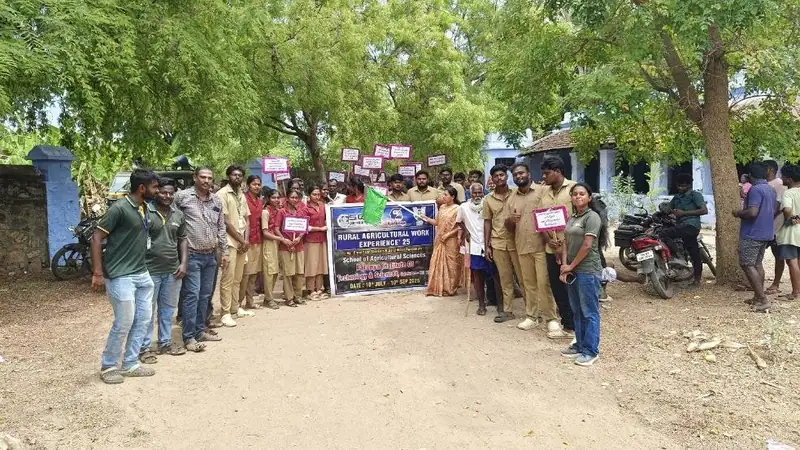
| 3 | Social protection for poor and vulnerable | Rural Sociology Agricultural Extension Education RAWE (Rural Agricultural Work Experience)& AIA (Agro-Industry Attachment) NSS (National Service Scheme) | Creates awareness of the challenges faced by vulnerable rural communities and familiarizes students with extension services, community support systems and rural development programmes. |
| 4 | Equal access to economic resources, land, technology and financial services | Agricultural Finance & Cooperation Agricultural Marketing, Trade & Prices Agri-Informatics Precision Farming Agricultural Extension Food Supply Chain Management Food Process Equipment Design | Develops knowledge of agricultural finance, market access, digital technologies and processing equipment to support access to productive resources and economic opportunities. |
| 5 | Build resilience against climate and other shocks | Environmental Studies & Disaster Management Agro-meteorology & Climate Change Rainfed Agriculture &Watershed Management Climate-Smart Agriculture Farming System & Sustainable Agriculture | Promotes knowledge of climate-resilient agriculture, watershed management and sustainable farming practices to reduce livelihood vulnerability to climate and environmental risks. |
| 6 | Mobilise resources for poverty reduction | Entrepreneurship Development Agri-Business Management Agricultural Finance & Cooperation Experiential Learning Programmes Bakery and Beverages and Confectionery Technology for Beginners | Develops entrepreneurial, financial and business management skills to encourage enterprise development, investment and income-generating opportunities in agriculture and food processing. |
| 7 | Pro-poor and gender-sensitive development strategies | Rural Sociology Agricultural Extension Education RAWE Agricultural Journalism Agricultural Economics | Promotes awareness of inclusive rural development, gender-sensitive extension approaches and effective communication to support equitable access to agricultural knowledge and livelihood opportunities. |
1. Semester-wise detailed mapping
I Year – Semester I
| S.No. | Course | SDG 1 Linkage |
|---|---|---|
| 1 | Fundamentals of Horticulture | Horticultural crops provide diversified farm income and livelihood opportunities |
| 2 | Fundamentals of Plant Biochemistry & Biotechnology | Introduces technologies that can contribute to improved crop productivity and resource utilization |
| 3 | Fundamentals of Soil Science | Soil fertility knowledge supports sustainable productivity and productive use of agricultural land |
| 4 | Introduction to Forestry | Agroforestry and forest resources can contribute to rural livelihoods and resilience |
| 5 | Comprehension & Communication Skills | Communication competency supports dissemination of livelihood and agricultural information |
| 6 | Fundamentals of Agronomy | Improves crop production efficiency and farmer livelihood potential |
| 7 | Rural Sociology & Educational Psychology | Addresses rural communities, social structures, vulnerable groups and rural development |
| 8 | Agricultural Heritage | Preserves traditional agricultural knowledge and locally adapted livelihood practices |
| 9 | Human Values & Ethics | Encourages social responsibility, equity and ethical engagement |
| 10 | NSS/NCC | Community engagement and service activities can support vulnerable communities |
| 11 | Bakery and Beverages and Confectionery Technology for Beginners | Promotes food entrepreneurship and small-scale income generation. |
I Year – Semester II
| S.No. | Course | SDG 1 Linkage |
|---|---|---|
| 1 | Fundamentals of Genetics | Genetic improvement contributes to productive and resilient crops |
| 2 | Agricultural Microbiology | Microbial technologies and bio-inputs can reduce production constraints and input dependence |
| 3 | Introductory Soil & Water Conservation Engineering | Conserves productive land and water resources and reduces vulnerability to degradation |
| 4 | Fundamentals of Crop Physiology | Supports understanding of crop productivity |
| 5 | Fundamentals of Agricultural Economics | Directly addresses farm economics, resource allocation and livelihood improvement |
| 6 | Fundamentals of Plant Pathology | Reduces crop losses caused by diseases |
| 7 | Fundamentals of Entomology | Supports pest management and reduction of economic crop losses |
| 8 | Fundamentals of Agricultural Extension Education | Transfers agricultural technologies and development information to farming communities |
| 9 | Communication Skills & Personality Development | Enhances communication and employability |
| 10 | Fruit and Vegetable Processing Technology | Reduces post-harvest losses and improves farmers’ income through value addition. |
The official curriculum lists these courses in Semester II, including Agricultural Economics, Agricultural Extension Education, Agricultural Microbiology, Soil and Water Conservation Engineering and Plant Pathology.
II Year – Semester III
| S.No. | Course | SDG 1 Linkage |
|---|---|---|
| 1 | Crop Production Technology–I (Kharif Crops) | Improves productivity and farm income |
| 2 | Fundamentals of Plant Breeding | Develops improved crop varieties |
| 3 | Agricultural Finance & Cooperation | Promotes financial access, cooperation and productive investment |
| 4 | Agri-Informatics | Provides access to digital agricultural information and technology |
| 5 | Farm Machinery & Power | Mechanisation can improve labour productivity and farm efficiency |
| 6 | Production Technology for Vegetables & Spices | Diversifies income through high-value crops |
| 7 | Environmental Studies & Disaster Management | Builds capacity to address environmental and disaster-related livelihood risks |
| 8 | Statistical Methods | Supports evidence-based agricultural planning and development |
| 9 | Livestock & Poultry Management | Supports diversified farm livelihoods and income generation |
| 10 | Dairy Process Engineering | Promotes dairy value addition and rural livelihood opportunities. |
II Year – Semester IV
| S.No. | Course | Contribution |
|---|---|---|
| 1 | Crop Production Technology–II (Rabi Crops) | Productivity and income generation |
| 2 | Production Technology for Ornamental Crops, MAP & Landscaping | Supports alternative enterprises and entrepreneurship |
| 3 | Renewable Energy & Green Technology | Promotes resource-efficient and resilient agricultural technologies |
| 4 | Problematic Soils & Their Management | Restores degraded/problematic agricultural land |
| 5 | Production Technology for Fruit & Plantation Crops | Supports long-term farm income diversification |
| 6 | Principles of Seed Technology | Improves access to quality planting material |
| 7 | Farming System & Sustainable Agriculture | Promotes resilient and economically sustainable farming systems |
| 8 | Agricultural Marketing, Trade & Prices | Improves understanding of markets, prices and farmer income |
| 9 | Agro-meteorology & Climate Change | Builds resilience to climate-related risks |
| 10 | Agri-Business Management | Develops agricultural enterprises and employment opportunities |
| 11 | Basics of AI in Agriculture | Enables access to advanced technologies for efficient and resilient agriculture |
| 12 | Food Supply Chain Management | Improves market access, supply-chain efficiency and producer income. |
The curriculum specifically includes Agricultural Marketing, Farming System & Sustainable Agriculture, Agro-meteorology & Climate Change, Renewable Energy and Green Technology, and Agri-Business/AI electives.
III Year – Semester V
| S.No. | Course | Contribution |
|---|---|---|
| 1 | Integrated Pest & Disease Management | Reduces crop losses and promotes efficient resource use |
| 2 | Manures, Fertilizers & Soil Fertility Management | Improves soil productivity and efficient input management |
| 3 | Pests of Crops & Stored Grain Management | Reduces post-production economic losses |
| 4 | Diseases of Field & Horticultural Crops–I | Protects agricultural productivity |
| 5 | Crop Improvement–I | Supports productive and resilient crops |
| 6 | Entrepreneurship Development & Business Communication | Creates entrepreneurship and income-generation opportunities |
| 7 | Geoinformatics, Nanotechnology & Precision Farming | Improves access to modern agricultural technologies |
| 8 | Practical Crop Production–I | Develops practical farm-production competencies |
| 9 | Intellectual Property Rights | Supports innovation, technology commercialisation and entrepreneurship |
| 10 | Climate-Smart Agriculture(elective) | Strengthens resilience of farming communities |
| 11 | Drones & Applications in Agriculture(elective) | Promotes technology-enabled agricultural decision-making |
| 12 | Food Process Equipment Design | Supports affordable processing equipment and small-scale enterprises. |
| 13 | Meat, Poultry and Fish Processing Technology | Promotes value addition, employment and income generation in livestock and fisheries. |
| 14 | Milling Technology of Cereals, Pulses and Oil Seeds | Promotes grain value addition and small-scale processing enterprises. |
III Year – Semester VI
| S.No. | Course | Contribution |
|---|---|---|
| 1 | Rainfed Agriculture & Watershed Management | Supports livelihoods in water-stressed and vulnerable regions |
| 2 | Protected Cultivation & Secondary Agriculture | Enables high-value production and value addition |
| 3 | Diseases of Field & Horticultural Crops–II | Reduces production losses |
| 4 | Post-harvest Management & Value Addition | Reduces losses and creates additional income/value |
| 5 | Management of Beneficial Insects | Supports biological processes and sustainable production |
| 6 | Crop Improvement–II | Develops productive and resilient crop varieties |
| 7 | Practical Crop Production–II | Develops practical production skills |
| 8 | Principles of Organic Farming | Promotes sustainable production and resource conservation |
| 9 | Farm Management, Production & Resource Economics | Directly addresses economic efficiency and resource allocation |
| 10 | Principles of Food Science & Nutrition | Supports food utilisation, processing and livelihood diversification |
| 11 | Biopesticides & Biofertilizers(elective) | Provides biological alternatives and supports sustainable production |
| 12 | Agrochemicals(elective) | Promotes appropriate and efficient input management |
| 13 | RS, GIS & GPS in Precision Farming(elective) | Improves access to precision technologies |
| 14 | Food Plant Utility Systems | Promotes energy efficiency and reduces food-processing costs. |
| 15 | Plantation and Spices Product Technology | Enhances income through spice and plantation crop value addition. |
IV Year – Semester VII
S.No.
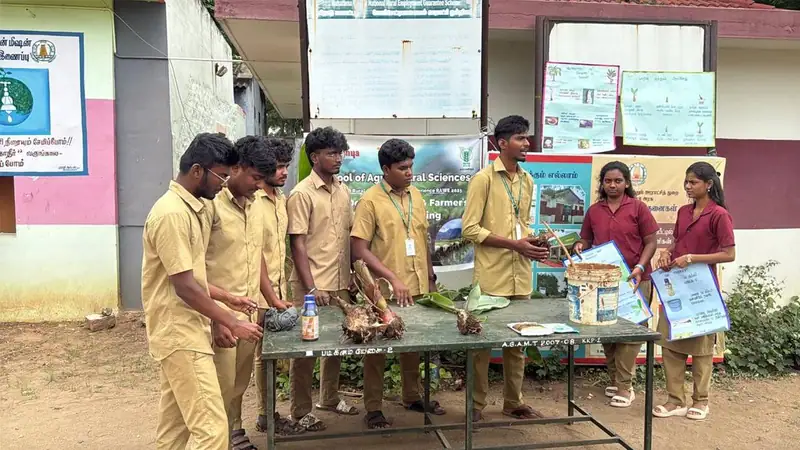
Experiential Learning Programme
Poverty/Livelihood Linkage
1
RAWE &AIA
The curriculum provides 20 credits for RAWE and Agro-Industrial Attachment.
2
Food Industry Waste Management
Promotes waste valorisation, resource recovery and additional income generation.
3
Fat and Oil Processing
Promotes oilseed value addition and small-scale enterprise development.
4
Processing of Food Commodities
Promotes food value addition and livelihood opportunities.
IV Year – Semester VIII
| S.No. | Experiential Learning Programme | Poverty/Livelihood Linkage |
|---|---|---|
| 1 | Seed Production Technology | Seed enterprise and improved productivity |
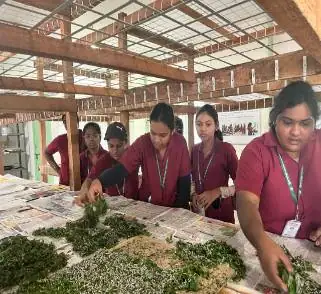
| 2 | Soil, Plant & Water Testing Services | Agricultural service entrepreneurship |
| 3 | Organic Production Technology | Sustainable production and market opportunities |
| 4 | Commercial Floriculture & Landscaping | Income and entrepreneurship |
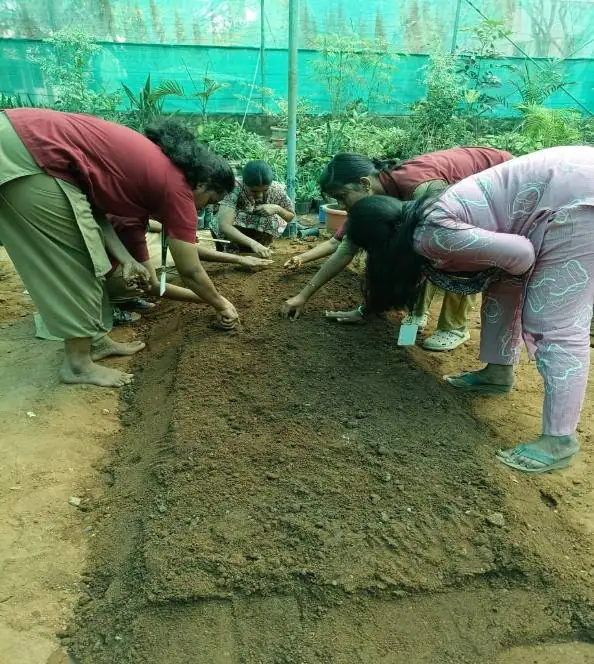
| 5 | Commercial Nursery Management & Protected Cultivation | Enterprise development and employment |
| 6 | Production Technology of Biofertilizer | Bio-input production and agricultural enterprise |
| 7 | Mushroom Cultivation Technology | Small-scale livelihood enterprise |
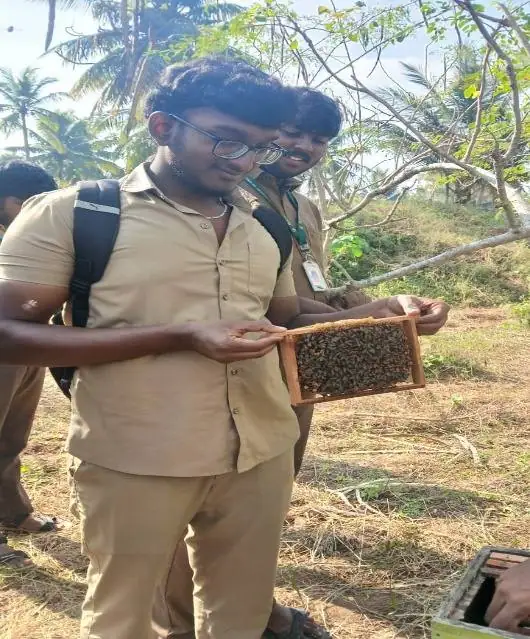
| 8 | Commercial Beekeeping | Alternative livelihood and entrepreneurship |
| 9 | Agribusiness Management | Enterprise creation and rural employment |
| 10 | Agricultural Information Support Services | Access to agricultural information and technology |
| 11 | Broiler Production Technology | Livelihood diversification |
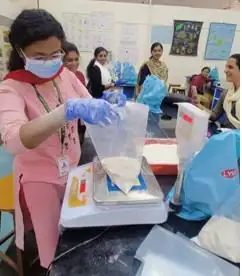
| 12 | Food Processing | Value addition, employment and income generation |
| 13 | Biocontrol Agents Production | Sustainable input enterprise |
| 14 | Commercial Sericulture | Rural livelihood diversification |
| 15 | Turmeric Production & Processing | Value addition and market-oriented agriculture |
| 16 | Small Onion Production & Storage | Reduces losses and enhances farmer income |
| 17 | Quail Production Technology | Diversified livelihood enterprise |
| 18 | Process Economics and Plant Layout Design | Supports cost-effective enterprises and livelihood generation. |
5. Research and Innovation
Research publications – 2024
| S. No. | 2024 Research Publication | Authors | SDG-1 relevance |
|---|---|---|---|
| 1 | Mitigating Economic losses in Potato farming: Accurate identification of Potato leaves diseases | Jeffrey Philip, K. Ramalakshmi, R. Venkatesan, G. Naveen Sundar, Golden Nancy | Early disease detection can reduce crop losses and protect farmer income |
| 2 | Revolutionizing Agricultural Efficiency With Advanced Coconut Harvesting Automation | Yona Davincy R., Ebenezer Veemaraj, Bijolin Edwin, E. Steward Kirubakaran, Roshni Thanka M., Dafny Neola | Agricultural mechanisation can improve labour productivity and reduce harvesting constraints |
| 3 | Multi-class classification and pretrained sustainable agriculture model for plant leaf disease detection using ResNet-101 | Shirley, C. Thomas George | AI-based disease detection supports crop protection and reduction of economic losses |
| 4 | Integrated Pest Management Strategies Using Endophytic Entomopathogenic Fungi | S. Sumaiya Parveen, P.S. Rashtrapal | Sustainable pest management can reduce crop losses and dependence on chemical inputs |
| 5 | Deep-millet: a deep learning model for pearl millet disease identification to envisage precision agriculture | Johnson I. et al. | Precision disease diagnosis can support productivity of smallholder/millet farming systems |
| 6 | Farm-era: Precision Farming with GIS, AI Pest Management, Smart Irrigation, Data | Reddy K.P. et al. | Precision agriculture improves resource-use efficiency and farm productivity |
| 7 | Assessing LDPE microplastics' impact on green gram (Vigna radiata L.) | Sravya G.C. et al. | Understanding environmental effects on crops supports protection of agricultural productivity |
| 8 | Genome Editing of Plant Growth-Promoting Microbes towards Smart Bioformulations for Sustainable Agriculture | Thankappan S. et al. | Plant-growth-promoting technologies can contribute to productive and sustainable agriculture |
| 9 | Decision − support framework for translating strategic vulnerability assessment of freshwater wetlands: From theoretical concept to operational application | Srinithisathian, S., Brema, J., James, E. J., Anandhi, A | Environmental vulnerability, livelihood protection and resilience of communities dependent on freshwater resources |
| 10 | Government Schemes Recommendation API with Multi-Language Chatbot using RAG Vector Search and Conversational AI | Reddy, V. S., Bell, J. B. B. | Improving access to government schemes and social protection programmes |
| 11 | Women fintech adoption-a base tam framework | Aswathy, K. M., Aruna, K., Priya, K. L. | Women's access to financial technology and financial services, supporting economic inclusion |
| 12 | Zero-Trust Framework-based Intrusion Detection and Prevention Mechanism for IoT Environment | Babu, N. Basil Xavier, S. | Cybersecurity protection can support secure digital infrastructure |
| 13 | Factors influencing achievement motivation of clients in technology acceptance in digitalisation of the microfinance sector | Sajan, D., Joseph, C. S., Navaneetham, B., Thangam, D. M. V | Microfinance, financial inclusion and access to financial services |
Funded projects
| S. No. | Project | PI / Co-PI | Funding agency | Amount | Relevance to SDG 1 |
|---|---|---|---|---|---|
| 1 | Scale Up of Heat Pipe-Assisted Hybrid Solar Drying System for Agricultural Products in Tribal Areas | Dr. A. Asha Monicka; Dr. A. Brusly Solomon | IIT Palakkad Technology iHub Foundation | ₹9.99 lakh | Technology for tribal livelihood improvement, post-harvest loss reduction and value addition |
| 2 | Assessing the Socio-Economic Impact of Solar-Powered Technologies in Tamil Nadu's Agricultural Landscape | Dr. B. Navaneetham; Dr. S. Ushanandhini, Dr. V. Kavitha, Dr. M. Uma Gowri, Dr. Deepak Das | ICSSR, Ministry of Education | ₹10.00 lakh | Directly studies socio-economic effects of agricultural technology and farmer livelihoods |
| 3 | Women Entrepreneurship Development Program | Dr. Wasiya Farzana | WEDP, DST | ₹2.00 lakh | Entrepreneurship, women's economic participation and income generation |
| 4 | Development of an Eco-friendly Sustainable Technology – A Pilot Plant to Recycle Non-ferrous Metallic Waste Scrap | Dr. S.J. Vijay; Dr. M. Wilson Kumar, Dr. Madhu Ganesh | DST-TTI-WMT | ₹9.98 lakh | Green technology, resource recovery and potential employment/enterprise generation |
Conferences / workshops / knowledge-sharing – 2024
| S.No. | Event | Date / year | SDG-1 relevance |
|---|---|---|---|
| 1. | INSPIRE-2024 | 14–15 March 2024 | Professional skills, innovation and employability |
| 2. | Training cum Certification Programme – Trending Novel Technologies in Agriculture Research and Social Development | 15 May–5 June 2024 | Agricultural technology and social development |
| 3. | Farm-to-Fork: Enhancing Food Quality through Post-harvest Handling | May 2024 | Post-harvest loss reduction and value addition |
| 4. | Workshop on IPRs and IP Management for Start-up | 3–9 May 2024 | Commercialisation and entrepreneurship |
| 5. | Strategies to Cultivate Innovation and Entrepreneurial Skills | 16 Aug 2024 | Entrepreneurship and self-employment |
| 6. | Industry-Academia Strategy Conclave – IASC 2024 | 18 Oct 2024 | Industry linkage, innovation and enterprise |
| 7. | International Business Colloquium | 30 Oct 2024 | Business/enterprise development |
6. Events Organized Related to SDG
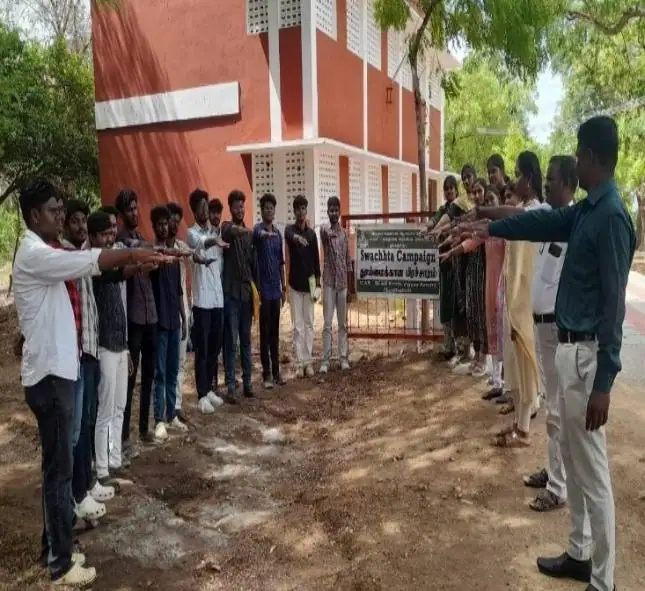
Digital Awareness & Swabhav Swachhata Sanskaar Swachhata (21.09.2024)
The rally aimed to address the growing need for digital literacy in today’s fast-paced, technology-driven society. With increasing reliance on the internet and digital platforms, it has become crucial for individuals of all ages to understand both the benefits and risks associated with digital interactions. The cadets set out to raise awareness on:
Cybersecurity: Educating people on safeguarding personal information and avoiding cyber threats such as phishing, hacking, and identity theft.
Privacy Protection: Informing the public on the importance of privacy, including ways to manage personal information on social media and avoid oversharing.
Digital Literacy: Encouraging individuals to learn the basics of internet usage, including online research, safe browsing practices, and using verified sources of information.
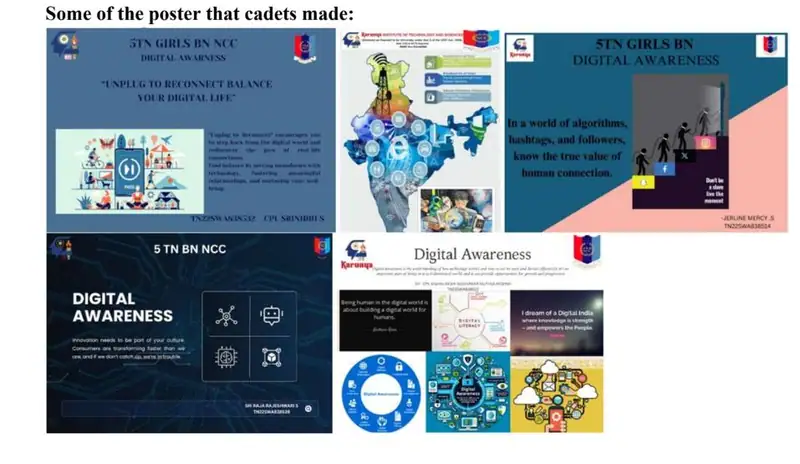
Selected poster of the events:
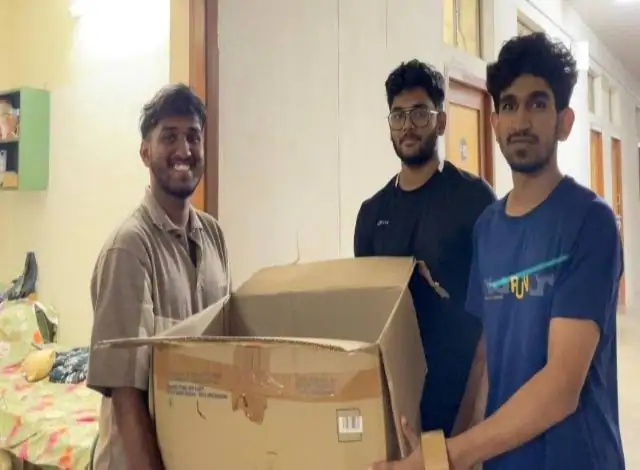
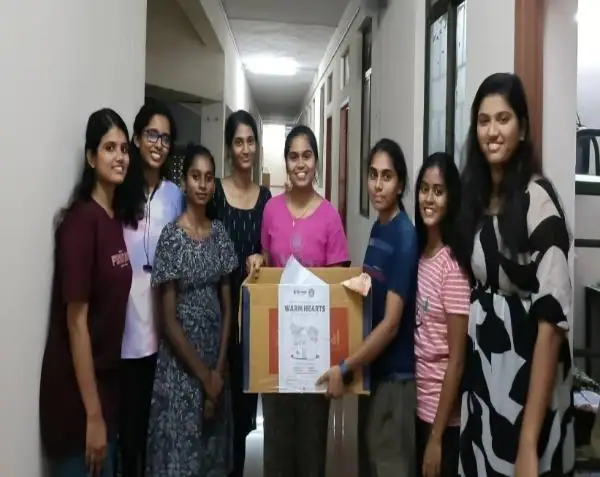
Warm Hearts for Wayanad :05.08.2024
The highlight of this event was gathering relief donations from students, including sanitary napkins, blankets, packaged foods, medicines, and essential provisional items to support families affected by the calamity. Relief collection and distribution were systematically coordinated by a dedicated team of student NSS volunteers.
Future Funds :08.08.2024
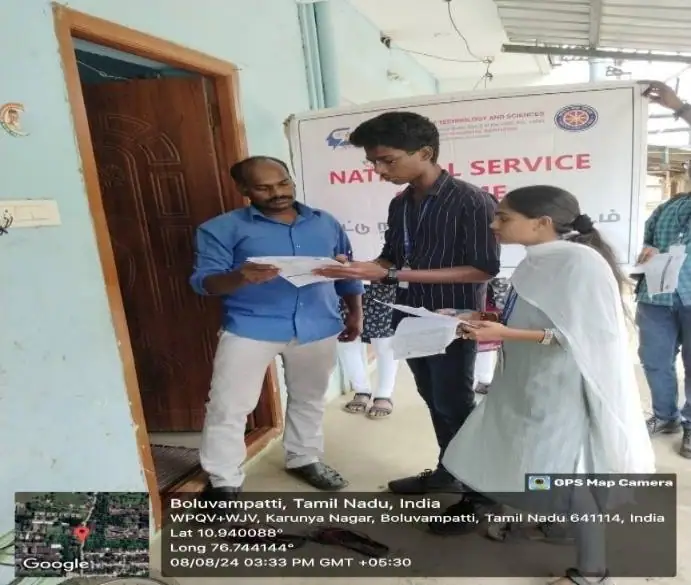
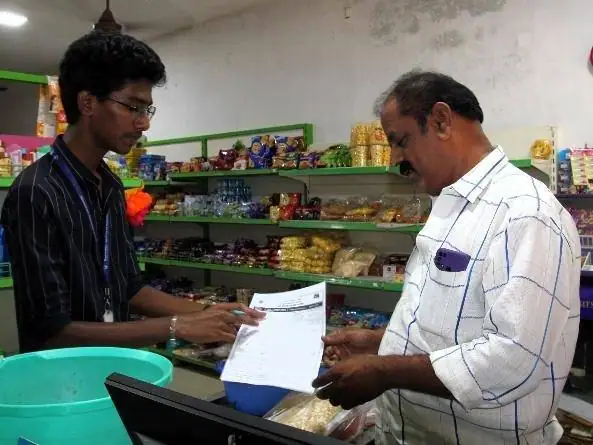
Volunteers from NSS provided valuable information on various financial schemes, such as savings accounts, recurring deposits, and postal life insurance, emphasizing the importance of secure savings and financial planning. The event was well-received by the local community, who appreciated the efforts to make financial services more accessible and understandable.
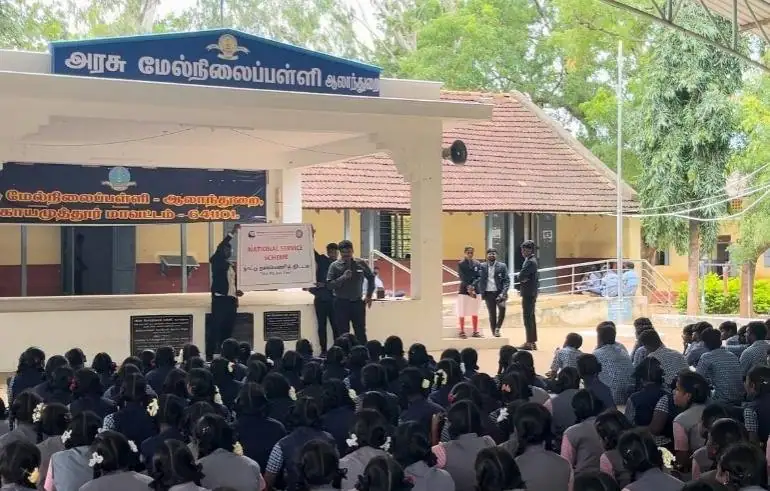
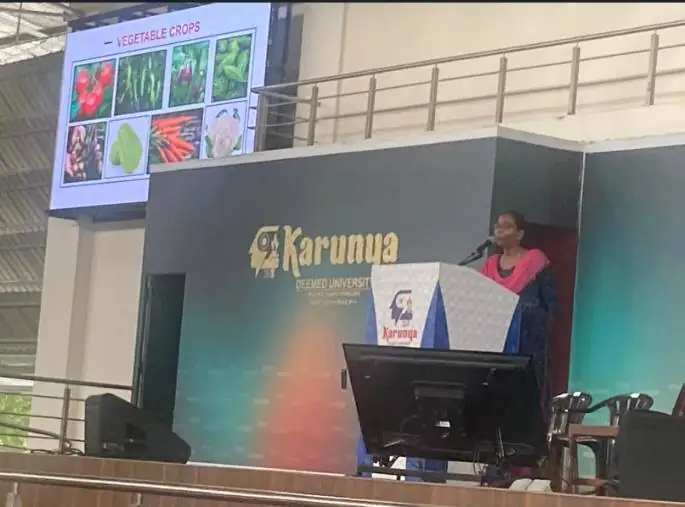
Expert Talk on Horticulture Techniques and Sustainable Development Goals: 19/10/2024
The session highlighted the significance of horticulture in the Indian agricultural landscape, particularly in enhancing nutritional security and rural livelihoods. The expert speaker, explained how horticulture, unlike conventional farming, emphasizes high-value crops such as fruits, vegetables, spices, and medicinal plants all of which contribute to better income generation for small and marginal farmers.
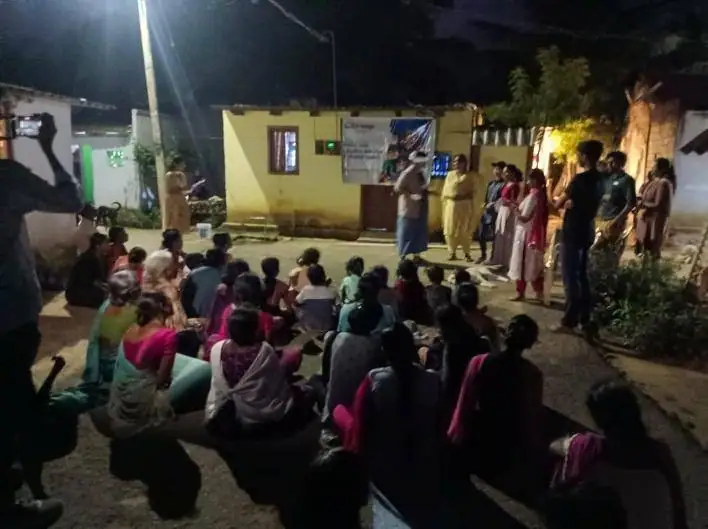
Health and Hygiene Awareness Programme at Pachinampathy Village :03/10/2024
CCAC and Karunya School of Management jointly organised a health and hygiene awareness programme at Pachinampathy village. Students performed a skit on the importance of health and cleanliness, then spoke to villagers about hand washing and demonstrated the correct hand-washing steps. Hygiene materials were distributed to participants who took part enthusiastically.
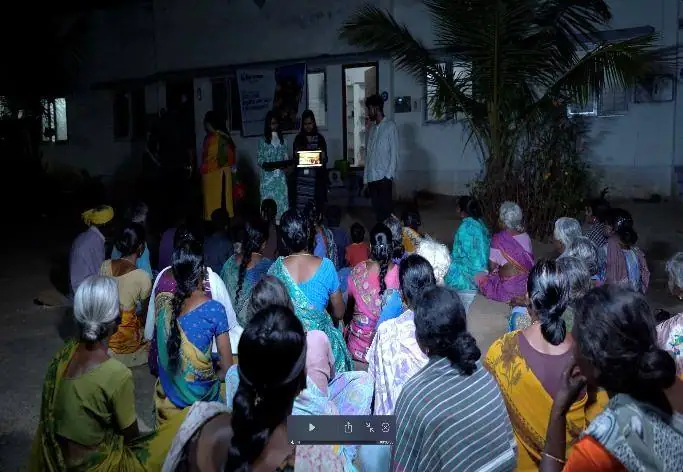
Nutrition Awareness Programme at Perumalkovilpathy Village (29.11.2024)
A nutrition awareness programme was conducted with the Division of Food Processing Technology at Perumalkovilpathy village. Students performed a skit on the importance and benefits of locally available, value-added food products, followed by a dance performance and a talk on nutrition for the villagers.
7. Community Outreach and Extension Activities
| Sl. No. | Community / Beneficiary Group | Problem Identified | No. of Beneficiaries | Duration |
|---|---|---|---|---|
| 1 | Local community affected by human–animal encounters, Singampathi, Siruvani | Human–animal encounters and the need for protective measures | 40 | 07.08.2024 |
| 2 | Community members / beneficiaries of Sevalayam, Sevalayam, Thaliyur | Need for social interaction and community engagement | 30 | 01.12.2024 |
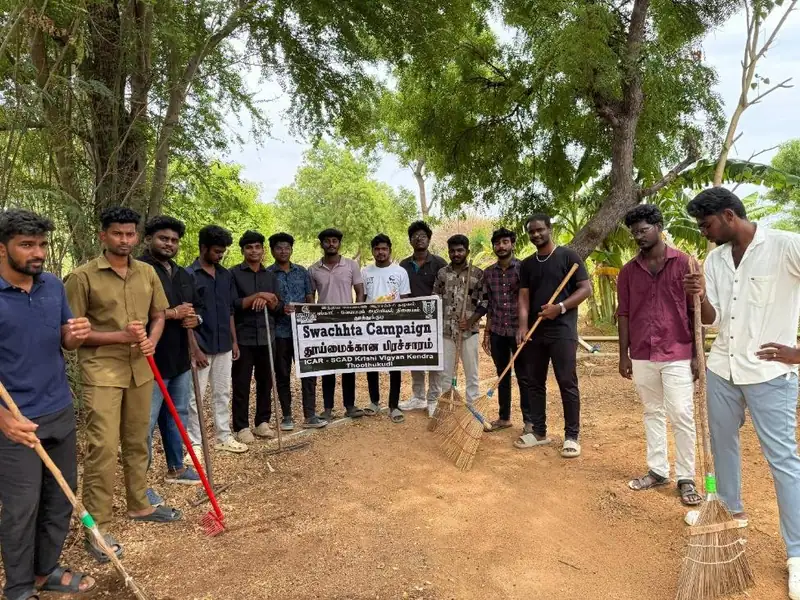
| 3 | NCC cadets and surrounding community | Need for cleanliness awareness and responsible environmental practices | 30 | 21.11.2024 |
| 4 | General public / digital users | Need for awareness regarding responsible and safe use of digital platforms | 30 | 21.11.2024 |
| 5 | NCC cadets / student community, Karunya / institutional setting | Need for career awareness and exposure to defense services | 30 | 21.11.2024 |
| 6 | Local / surrounding community | Need for community-oriented innovation and problem solving | 70 | 07.10.2024 |
| 7 | Students / community stakeholders, Karunya / community-oriented setting | Need for social responsibility and civic engagement | 150 | 20.09.2024 |
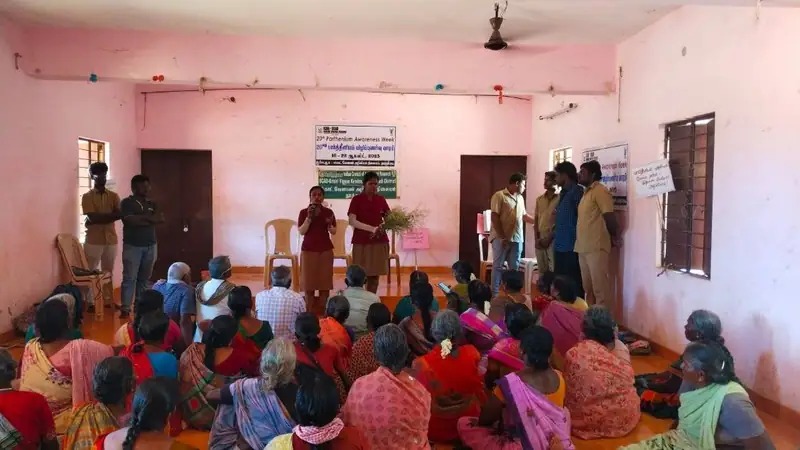
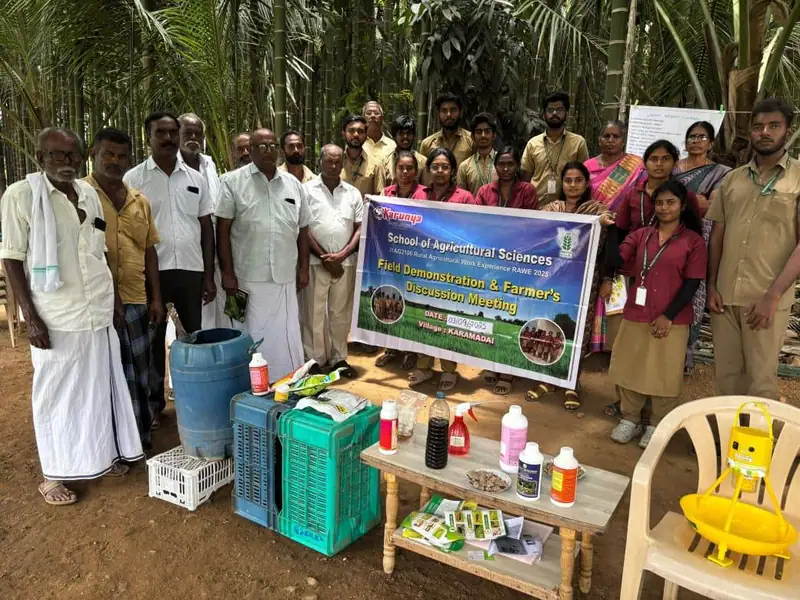
| 8 | Farmers involved in coconut, banana and vegetable cultivation, Veerapandi, Sirumugai, S.S. Kulam, Sambaravalli, Annur and Karamadai | Need for improved crop management, pest control and sustainable farming practices | 125 | August–September 2024 |
| 9 | Livestock farmers, Sirumugai | Livestock tick infestation and need for improved fodder nutrition | 25 | 2024-25 |
| 10 | Farmers cultivating coconut, banana, sugarcane and paddy, Vettaikarankoil, Kalingiyam, Vellalapalayam and T.N. Palayam | Need for improved nutrient management, crop productivity and soil health | 62 | 19–23.08.2024 |
| 11 | Farmers cultivating banana and other crops, KITS Field, Farmer Field – Gurusamy | Need for eco-friendly crop production and reduced reliance on conventional chemical inputs | 25 | 28–29.08.2024 |
| 12 | Farmers using precision agriculture technologies, Trivandrum, Kerala | Need for improved agricultural efficiency and technology adoption | 21 | 26.08.2024 |
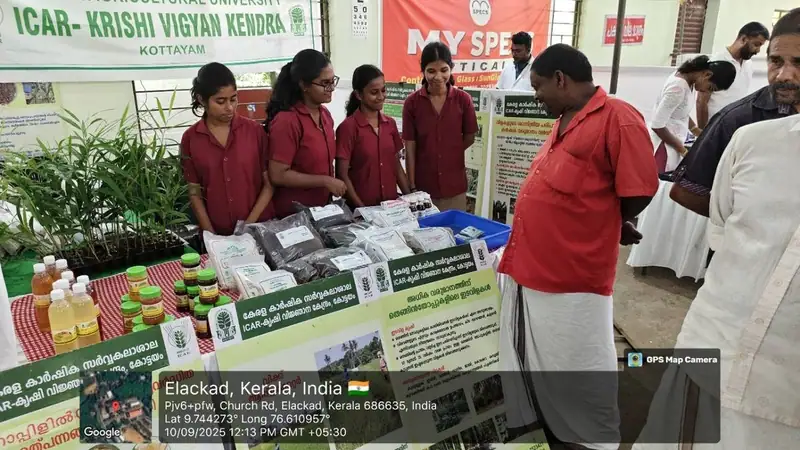
| 13 | Farmers and crop producers, Kottayam, Kerala | Soil-borne diseases and the need to improve soil health through biological methods | 20 | 2024-25 |
| 14 | Farmers and agricultural stakeholders, Thrissur, Kerala | Need for accessible digital agricultural advice and practical crop protection measures | 15 | 2024-25 |
| 15 | Coconut farmers, S.S. Kulam, Coimbatore | Coconut rugose spiralling whitefly infestation | 20 | 03.09.2024 |
| 16 | Banana farmers, Annur, Coimbatore | Banana rhizome weevil infestation and Panama wilt | 20 | 22.08.2024 |
| 17 | Vegetable farmers, S.S. Kulam, Coimbatore | Viral diseases affecting vegetable crops | 23 | 03.09.2024 |
| 18 | Coconut farmers, Thoothukudi, Tamil Nadu | Coconut nutrient deficiencies and red palm weevil infestation | 35 | 21.08.2024 |
| 19 | Paddy farmers, Vadakarai, Tenkasi | Brown planthopper and leaf-folder infestation in paddy | 12 | 23.08.2024 |
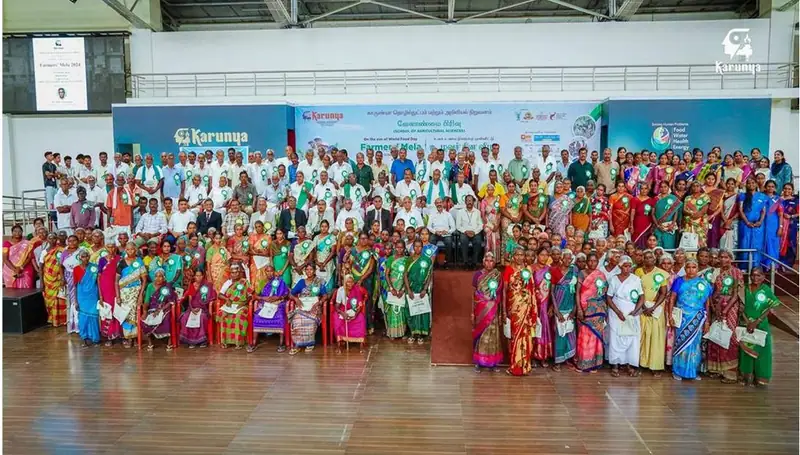
| 20 | Farmers from Coimbatore and Erode districts, Karunya Institute of Technology and Sciences | Need for technical knowledge, improved agricultural practices, marketing support and financial awareness | 400 | 16.10.2024 |
| 21 | Farmers in rural villages, 21 villages of Madukkarai | Need for digital registration and improved access to agricultural schemes and services | 40 student volunteers participated | 18–21.02.2024 |
8. Partnerships and Collaborations
| SDG 1 Target | Relevant KITS partnerships |
|---|---|
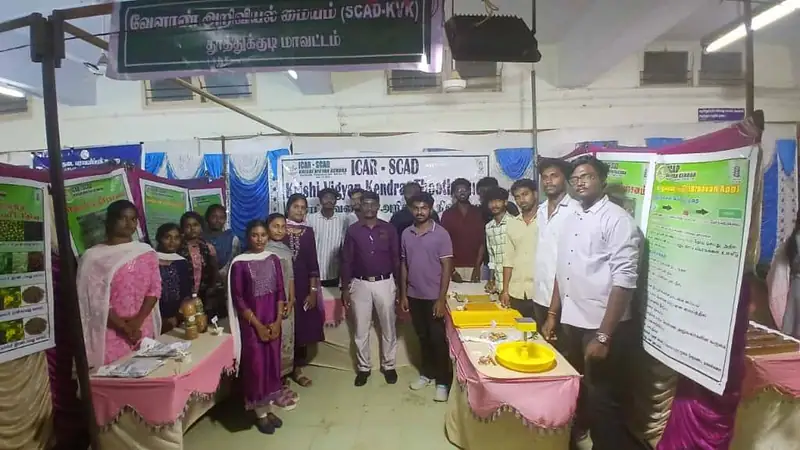
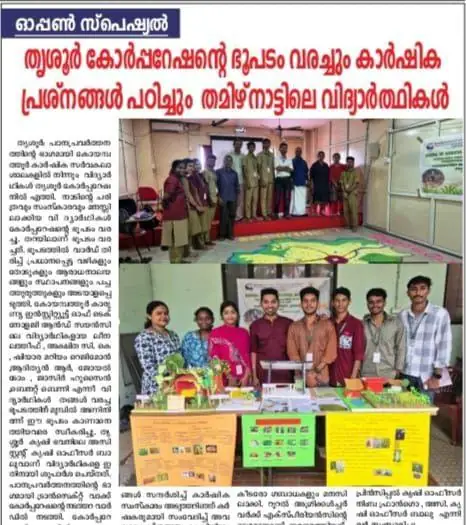
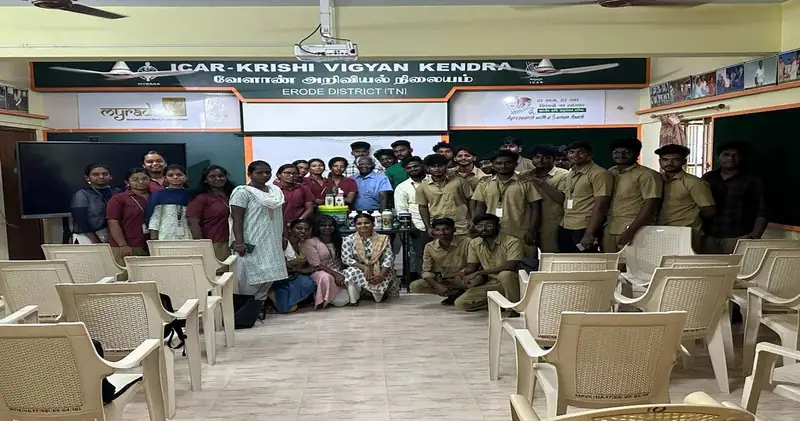
| Eradicate extreme poverty | Agricultural extension and farmer training programmes on coconut, banana and organic crop management; integrated pest and nutrient management at ICAR–KVK, Thoothukudi; Farmers’ Mela for farmers from Coimbatore and Erode districts. |
| Reduce poverty in all dimensions | Farmer capacity-building through hands-on training in crop management, livestock and fodder management, organic farming, and sustainable pest management. The report records 125 farmers benefiting from coconut, banana and organic crop management programmes. |
| Social protection | Agristack Farmer Registration Initiative, conducted in collaboration with the Assistant Director of Agriculture (ADA) Office, Madukkarai, from 18–21 February 2024. Forty School of Agricultural Sciences students volunteered across 21 villages to assist with farmer registration. This supports access to digital agricultural services. |
| Equal rights to economic resources, technology and services | Technology transfer and practical training on coconut shredder mechanisation, seed treatment, organic inputs, nutrient management, banana pest and disease management, precision agriculture, and digital agricultural registration. The report also documents the Agristack initiative with the ADA Office, Madukkarai. |
| Resilience to climate/environmental shocks | Training on eco-friendly crop production, biological pest control, soil-health improvement, organic formulations, botanical extracts, and sustainable crop and livestock management. Precision-agriculture training in Trivandrum covered drone-assisted foliar spraying and digital soil-moisture sensors. |
| Mobilization of resources | The Farmers’ Mela, held on 16 October 2024, brought together approximately 400 farmers and included sessions on coconut farming, marketing, financing and organic farming, along with an exhibition of agricultural products, tools, inputs and agri-banking products. The report records the participation of the Chairman of the Coconut Development Board, Government of India, as the inaugurating guest; it does not establish a formal funding partnership. |
| Equitable Socioeconomic Development strategies | Community-oriented agricultural extension, farmer-field demonstrations, plant clinics and digital farmer-registration support. The plant clinics addressed coconut pests and nutrient deficiencies, banana rhizome weevil and Panama wilt, vegetable viral diseases, and paddy pests. These activities support farmer knowledge and access to agricultural advice. |
9. Best Practices
| S.No. | Initiative | Main SDG 1 focus | Institutional Impact & Scalability |
|---|---|---|---|
| 1 | SEESHA–KITS Sustainable Livelihood & Skill Development | Women's/youth skills, self-employment and income generation | Successful, sustainable, scalable |
| 2 | Solar-Powered Agricultural Technology Research | Agricultural productivity, technology access and farmer economic resilience | Innovative, scalable, replicable |
| 3 | Agricultural Extension, RAWE & Farmer-Field Partnership Model | Farmer knowledge, technology transfer and livelihood improvement | Sustainable, scalable, replicable |
10. THE Impact Rankings Metric/Indicator
| THE SDG 1 metric | KITS evidence (2024–25) |
|---|---|
| 1.1 Research on poverty | 13 Scopus-indexed research publications on poverty alleviation, microfinance, digital agriculture, rural fintech, and smallholder resilience; 4 sponsored research projects (₹. 31.97 lakh). |
| 1.2 Financial aid to students | The University extended ₹7.20 Crores in need-based institutional scholarships and fee waivers to 1,032 students from low-income households, representing 13.1% of the University’s total full-time student enrollment (7,863 total students), ensuring that financial hardship does not cause any student to discontinue their degree. Additional targeted relief was provided through the Student Benevolent Fund (for students facing the sudden loss of a family breadwinner), special fee concessions, and on-campus 'Earn While You Learn' opportunities. |
| 1.3 Low-income student support | Transparent merit-cum-means admission policy; Student Benevolent Fund providing full tuition/hostel assistance; 'Earn While You Learn' on-campus employment scheme; mentoring and career training for first-generation learners. |
| 1.4 Community anti-poverty programmes | 21 targeted community outreach and extension programmes benefiting over 1,000 rural residents; Farmers' Mela (400 farmers); Agristack digital registration in 21 villages; solar drying technology for tribal communities; women entrepreneurship training (DST-WEDP); free health and nutrition camps. |
11. Conclusion
In conclusion, Karunya Institute of Technology and Sciences (KITS) demonstrates its commitment to SDG 1 – No Poverty through a holistic approach integrating education, research, skill development, entrepreneurship and community-based interventions. The institution's initiatives in agricultural innovation, solar-powered post-harvest technologies, women's empowerment, vocational training and rural livelihood development contribute to creating sustainable income-generating opportunities and strengthening the economic resilience of vulnerable communities. Collaborative efforts with government agencies, research institutions, KVKs and community organizations further enhance knowledge dissemination, technology adoption and inclusive growth. Through these continued efforts, KITS strives to empower disadvantaged populations, promote self-employment, improve livelihood opportunities and contribute towards a poverty-free and sustainable society.