
1. SDG Overview
Sustainable Development Goal 15 (Life on Land) focuses on protecting, restoring and sustainably managing terrestrial ecosystems, forests and biodiversity, while preventing land degradation and desertification. This goal is particularly relevant to Karunya Institute of Technology and Sciences (KITS), which is situated on a 720-acre green campus at the foothills of the Western Ghats, a globally significant biodiversity region.
The natural landscape surrounding the institution provides an important setting for biodiversity conservation, ecosystem protection, sustainable land management and climate resilience. KITS promotes a green-campus approach through the conservation of vegetation, natural resources and habitats, thereby contributing to the protection of local flora and fauna and the maintenance of ecological balance. These initiatives support the broader objectives of SDG 15 by encouraging responsible stewardship of land and natural ecosystems while creating a sustainable environment for the campus community.
As part of Green Campus initiatives, the Institution installed a 115-kW grid-tied solar power plant, 30 solar thermal water heating systems (87,600 LPD), 15,066 energy-efficient 18W LED tube lights, four anaerobic biogas plants, four centralized sewage treatment plants with a total capacity of 2,450 KLD (yielding 980 KLD of recycled water for 100% on-campus irrigation), and 33 engineered rooftop rainwater soak pits.
The water from the STP is reused for irrigation.
The entire campus is planted with trees to bring down carbon foot-print, most of the plants are indigenous species of the Western Ghats. Biogas Plant
Four Biogas Plants in the hostels, produce energy leading to a saving of LPG fuel.
The eco-friendly paper recycling plant produces folders using 200 kg/day of waste paper
Soil and water conservation measures are adopted in the campus in addition to rain water harvesting, waste water treatment and recharging.
2. Institutional Policies and Commitments
Karunya Institute of Technology and Sciences (KITS) supports SDG 15 – Life on Land through institutional policies that promote sustainability-oriented education, research, innovation, technology development and responsible use of campus resources. The connection to SDG 15 is direct where environmental sustainability is addressed and indirect where the policy provides an institutional framework for sustainability-related teaching, research and innovation.
| Policy / Initiative | Year introduced / revised | Contribution to SDG 15 |
|---|---|---|
| Climate Change Mitigation and Sustainability Policy | Created: July 2022; Revised: 29 August 2025 | Promotes sustainable land use, ecosystem conservation, climate resilience and environmentally responsible campus operations. Supports terrestrial ecosystem protection through integration of ecosystem conservation initiatives, sustainability research and responsible land-resource management. |
| Karunya Institute's Innovation Council (K-IIC/IIC) | Under KIEP framework | Provides an institutional mechanism through which environmental and natural-resource-related innovations, technologies and student projects can be promoted, developed and incubated. |
| Policy on Teaching and Learning Process | June 2020 | Provides a framework for field-based learning, environmental studies, agriculture, natural-resource-related projects and community engagement, supporting awareness and responsible management of terrestrial ecosystems. |
| Eco-Friendly Transportation Policy | Created: July 2022; Revised: 29 August 2025 | Supports SDG 15 by reducing transport-related emissions and air pollution, promoting environmentally responsible campus mobility and integrating sustainable transportation into campus design and land-use planning |
| Energy and Carbon Management Policy | Created: July 2021; Revised: 29 August 2025 | Supports SDG 15 through large-scale tree plantation and green-cover expansion, enhancement of carbon sinks, climate resilience and sustainable campus ecosystems. The policy specifically recognizes tree plantation as a contribution to India's carbon-sink commitments |
| Maximizing Water Reuse Policy | Created: July 2012; Revised: 29 August 2025 | Supports SDG 15 through groundwater recharge, rainwater harvesting, stormwater percolation, treated wastewater reuse for gardening and conservation of water resources essential for terrestrial ecosystems and campus green spaces. |
3. SDG Objectives
The institutional activities of Karunya Institute of Technology and Sciences (KITS) related to SDG 15 - Life on Land aim to conserve biodiversity, promote sustainable management of land and natural resources, strengthen environmentally responsible agriculture, generate research-based solutions, and extend knowledge to farming and rural communities. The objectives are aligned with the institution's documented SDG 15 activities in teaching, research, campus management and community outreach.
| Teaching and learning | Create awareness and develop knowledge on terrestrial ecosystems, biodiversity and sustainable land management among students. | Curriculum mapping, RAWE, Experiential Learning Programmes, field demonstrations, instructional farms, butterfly garden, medicinal garden and agroforestry-based learning provide experiential exposure to ecosystems and sustainable agriculture. |
|---|---|---|
| Sustainable agriculture | Promote environmentally sustainable and resource-efficient agricultural practices. | Students and farmers are trained in organic inputs, vermicomposting, biological pest management, soil health improvement, biofertilizers and sustainable crop production. |
| Research | Encourage research addressing biodiversity conservation, land degradation, soil and ecosystem health and sustainable natural-resource management. | KITS reports research on soil erosion, vegetation dynamics, groundwater, biodiversity, phytoremediation, forest wildfire detection, sustainable agriculture and related land-ecosystem issues. |
| Innovation and solutions | Develop and disseminate innovative, eco-friendly solutions for agricultural and environmental problems. | Demonstrations include biological pest control, organic formulations, soil-health practices, precision agriculture, digital soil-moisture sensing and other farm technologies. |
| Biodiversity conservation | Conserve and enhance local biodiversity and protect native plant and animal resources. | KITS maintains native/wild plant diversity, a butterfly garden, medicinal garden, germplasm collections and agroforestry areas, while also taking measures to prevent introduction of invasive plant species. |
| Campus sustainability | Maintain and improve the ecological quality of the campus through sustainable land and resource management. | More than 75% green cover is maintained, along with rainwater harvesting, landscape development, soil-erosion control and efficient irrigation systems. |
| Waste and pollution reduction | Minimize the environmental impact of campus activities and promote responsible waste management. | Sewage treatment, biogas generation, reuse of STP sludge as organic fertilizer, reduction of single-use plastics and scientific management of biological, chemical and recyclable wastes are implemented. |
| Community engagement | Improve awareness and capacity of farmers and rural communities to adopt sustainable land-use and agricultural practices. | Farmer-oriented demonstrations, plant clinics and outreach programmes provide practical training in organic farming, biological control, soil health, sustainable pest management and other eco-friendly practices. |
| Farmer well-being and sustainable livelihoods | Support sustainable agricultural livelihoods by transferring appropriate technologies and knowledge to farming communities. | Farmer training covers crop management, soil health, livestock management, organic inputs, pest and disease management and precision agriculture. The documented programmes include beneficiaries from Tamil Nadu, Kerala and other regions. |
| Long-term institutional commitment | Promote responsible stewardship of terrestrial ecosystems and natural resources in the Western Ghats region. | The SDG 15 review identifies conservation of biodiversity, sustainable land management and responsible stewardship of natural resources as institutional priorities for maintaining a sustainable green campus. |
4. Curriculum Integration
UG Courses in alignment with SDG 15:
1. Core courses aligned with SDG 15
| S. No. | Course code | Course name | Relevance to SDG 15 |
|---|---|---|---|
| 1 | 21AG1003 | Introduction to Forestry | Forest conservation, biodiversity protection and sustainable forest management |
| 2 | 21AG1301 | Fundamentals of Soil Science | Soil health, soil biodiversity, land degradation prevention and restoration |
| 3 | 21AG1451 | Introductory Soil and Water Conservation Engineering | Soil erosion control, watershed protection and sustainable land management |
| 4 | 21AG1303 | Agricultural Microbiology | Soil microorganisms, nutrient cycling and maintenance of terrestrial ecosystems |
| 5 | 21AG1351 | Fundamentals of Plant Pathology | Plant health and protection of agricultural plant biodiversity |
| 6 | 21AG1151 | Fundamentals of Entomology | Insect biodiversity, beneficial insects and ecological balance |
| 7 | 21AG2006 | Farming System & Sustainable Agriculture | Sustainable land use, resource conservation and resilient agricultural systems |
| 8 | 21AG2307 | Problematic Soils and their Management | Reclamation of degraded soils and restoration of productive land |
| 9 | 21AG2306 | Manures, Fertilizers and Soil Fertility Management | Soil fertility improvement, nutrient cycling and sustainable soil management |
| 10 | 21AG2009 | Rainfed Agriculture & Watershed Management | Watershed conservation, land and water management in rainfed areas |
| 11 | 21AG2011 | Principles of Organic Farming | Soil biological health, biodiversity conservation and reduced dependence on synthetic inputs |
| 12 | 21AG2354 | Principles of Integrated Pest and Disease Management | Ecological pest management and protection of beneficial organisms |
| 13 | 21AG2153 | Management of Beneficial Insects | Conservation of pollinators and other beneficial insects |
| 14 | 21AG1302 | Introductory Agro-meteorology & Climate Change | Climate impacts on terrestrial ecosystems and adaptation of land-based agriculture |
| 15 | 21AG1001 | Fundamentals of Agronomy | Sustainable crop management and efficient use of agricultural land |
| 16 | 21AG2004 | Crop Production Technology – I (Kharif Crops) | Sustainable management of crop-growing environments and agricultural land |
| 17 | 21AG2005 | Crop Production Technology – II (Rabi Crops) | Sustainable crop production and management of land resources |
| 18 | 21AG2102 | Fundamentals of Genetics | Genetic diversity and conservation of plant genetic resources |
| 19 | 21AG2202 | Fundamentals of Plant Breeding | Crop genetic diversity and development of resilient crop varieties |
| 20 | 21AG2203 | Principles of Seed Technology | Conservation and availability of quality seed and crop genetic resources |
| 21 | 21AG2401 | Livestock and Poultry Management | Sustainable livestock systems and management of interactions between livestock and land |
| 22 | 21HO1251 | Fundamentals of Horticulture | Plant diversity, horticultural biodiversity and sustainable cultivation |
| 23 | 21HO2272 | Production Technology for Ornamental Crops, MAP and Landscaping | Ornamental plant diversity, medicinal and aromatic plants, and landscape vegetation |
| 24 | 21HO1270 | Production Technology for Fruit and Plantation Crops | Perennial vegetation, tree-based production systems and biodiversity-friendly land use |
| 25 | 21AG2304 | Environmental Studies and Disaster Management | Ecosystem conservation, environmental protection and disaster risk reduction |
2. Elective courses aligned with SDG 15
| S. No. | Course code | Course name | Relevance to SDG 15 |
|---|---|---|---|
| 1 | 24AG2310 | Climate-Smart Agriculture | Climate-resilient agriculture and sustainable land management |
| 2 | 23AG2309 | Biopesticides & Biofertilizers | Biological pest control, soil health and reduced chemical impacts |
| 3 | 22AG2308 | Agrochemicals – Elective Course 3 | Responsible agrochemical use and reduction of harmful impacts on terrestrial ecosystems |
| 4 | 21AG2012 | Weed Management – Elective Course 2 | Weed control and management of invasive or problematic plants where covered in the syllabus |
| 5 | 23HO2277 | Micropropagation Technologies | Plant propagation and potential conservation of threatened or valuable plant species |
| 6 | 23AG2205 | Commercial Plant Breeding | Crop genetic diversity and development of resilient crop varieties |
| 7 | 22HO2275 | Landscaping – Elective Course 1 | Green spaces, landscape vegetation and habitat improvement |
| 8 | 24AG2014 | RS, GIS & GPS in Precision Farming | Spatial assessment of land resources and support for sustainable land-use planning |
| 9 | 23AG2454 | Protected Cultivation | Efficient resource use and reduced pressure on agricultural land when appropriately implemented |
| 10 | 23HO2278 | Hi-tech. Horticulture | Resource-efficient horticultural production and sustainable crop management |
3. Experiential Learning Programme (ELP) courses relevant to SDG 15
| S. No. | Course code | Course name | Relevance to SDG 15 |
|---|---|---|---|
| 1 | 23AG2110 | Experiential Learning Program – Soil, Plant, and Water Testing Services | Soil quality assessment and identification of land and soil constraints |
| 2 | 23AG2111 | Experiential Learning Program – Organic Production Technology | Organic production practices and soil biodiversity |
| 3 | 23AG2114 | Experiential Learning Program – Production Technology of Biofertilizer | Biological nutrient management and soil microbial activity |
| 4 | 23AG2121 | Experiential Learning Program – Production Technology of Biocontrol Agents | Biological pest management and protection of beneficial organisms |
| 5 | 23AG2116 | Experiential Learning Program – Commercial Beekeeping | Pollinator conservation and pollination services |
| 6 | 23AG2113 | Experiential Learning Program – Commercial Nursery Management and Protected Cultivation | Nursery production, plant propagation and potential support for native plant restoration |
PhD & PG RESEARCH (2024-25)
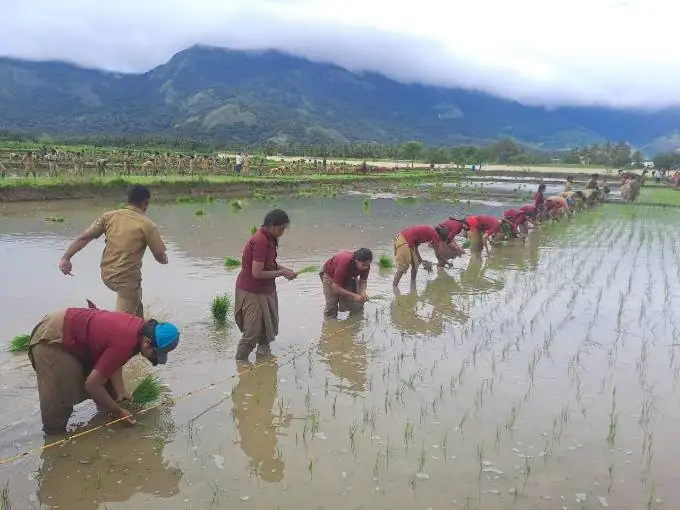
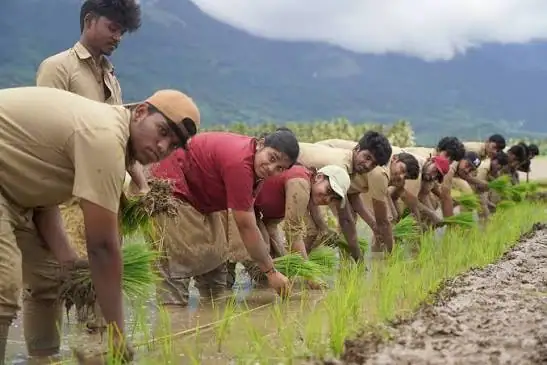
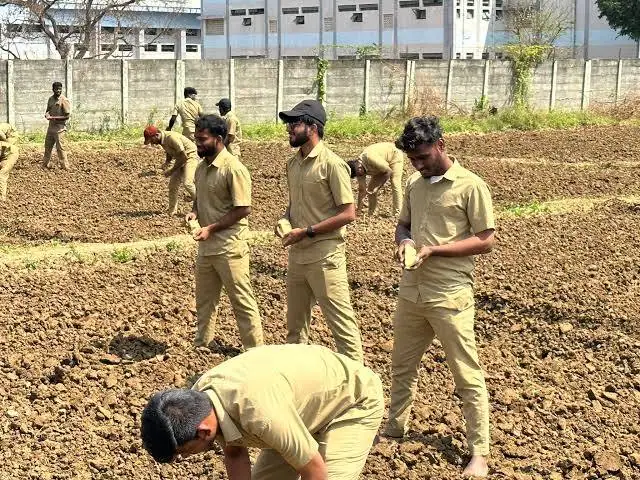
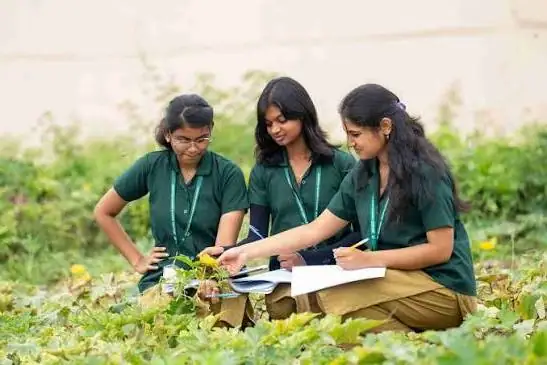
PhD Research-Field Trial Plots
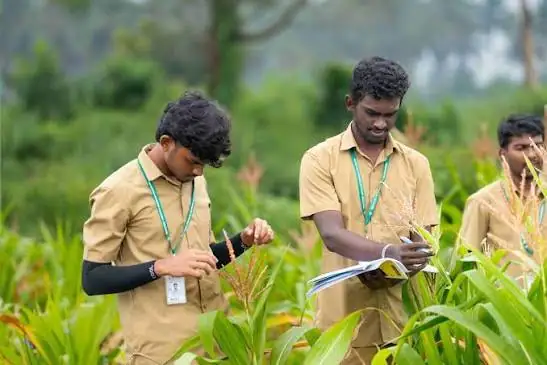
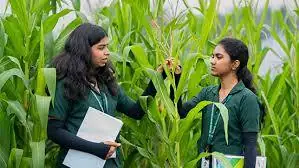
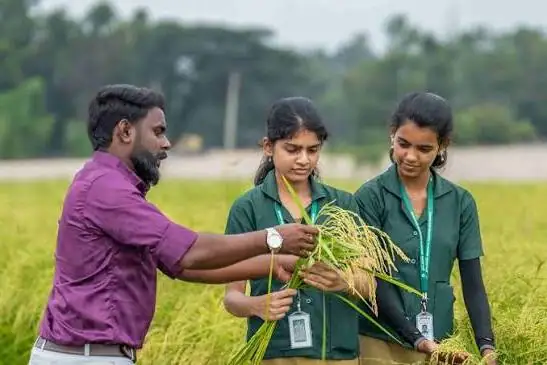
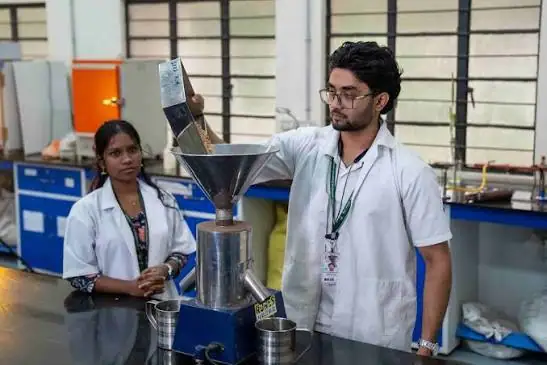
PhD Research Topics
| S. No | Name | Supervisor | Members of the advisory committee | Title |
|---|---|---|---|---|
| 1 | Mr. Pradeep T S | Dr. K. Sharmili, Assistant Professor, Division of Agronomy, KITS. | Dr. R. Mohanapriya, Assistant Professor, Division of Agronomy, KITS. Dr. J. Patricia Kalairasi Assistant Professor & Head, Division of Crop Physiology, KITS. Dr. S Praveena Katharine Assistant Professor, Division of Soil Science, KITS | Effect of paired row planting pattern on maize-soyabean intercropping system. |
| 2 | Ms.Shalini.C | Dr. P A Joseph, Retd. Professor (Agronomy), KITS. | Dr. Augustine. R Associate Professor and Head, Division of Agronomy, KITS. Dr. P Dinesh Kumar Assistant Professor Division of Agricultural Statistics, KITS. Dr. S Praveena Katharine Assistant Professor Division of Soil Science, KITS. | Effect of soil application of fertilizers along with or without foliar feeding with specialty fertilizers in transplanted paddy under alternate wetting and drying system of water management. |
| 3 | Ms. Jaya Anjana Sunil | Dr. K. Indira Petchiammal Assistant Professor, Division of Genetics and Plant Breeding, KITS. | Dr. N.B. John Kingsly Assistant Professor, Division of Genetics & Plant Breeding, KITS. Dr. M. Nivedhitha Assistant Professor (Seed Science & Tech.), Division of Genetics and Plant Breeding, KITS. Dr. Lokeshwari M, Assistant professor (Statistics), Division of Agricultural Economics, KITS. Dr. P. Ravathi, Senior Scientist, Plant Breeding and Crop Improvement, Indian Institute of Rice Research, Hyderabad. | Identification and Mapping of QTLs for an Abiotic Stress Compendium in Paddy (Oryza Sativa L.) |
| 4 | Christina Cathrine J | Dr. Augustine. R Associate Professor and Head, Division of Agronomy, KITS. | Dr. P A Joseph Professor, Division of Agronomy, KITS. Dr. P Dinesh Kumar Assistant Professor Division of Agricultural Statistics, KITS. Dr. S Praveena Katharine Assistant Professor Division of Soil Science, KITS | Integrated Weed Management with Brown Manuring under variable irrigation regimes and hydrogel application |
| 5 | Sri Abisankar M | Dr.Augustine. R Associate Professor and Head, Division of Agronomy, KITS. | Dr. P A Joseph Professor of Agronomy, Division of Agronomy, KITS Dr. P Dinesh Kumar Assistant Professor Division of Agricultural Statistics, KITS. Dr. S Praveena Katharine Assistant Professor Division of Soil Science, KITS. | Optimising crop geometry for improve yield and Resource Use Efficiency in wheat-chickpea intercropping |
| 6 | Vivekavadhani A R | Dr. P A Joseph Professor, Division of Agronomy, KITS. | Dr. Augustine. R Associate Professor and Head, Division of Agronomy, KITS. Dr. S Praveena Katharine Assistant Professor Division of Soil Science, KITS. Dr. P Dinesh Kumar Assistant Professor Division of Agricultural Statistics, KITS. | Optimization of water regime and weed management practices on Water Use Efficiency, weed control, growth and yield of transplanted paddy. |
| 7 | P. Shiny Sharone | Dr. P A Joseph Professor, Division of Agronomy, KITS. | . Dr.Augustine. R Associate Professor and Head, Division of Agronomy, KITS Dr. S Praveena Katharine Assistant Professor, Division of Soil Science, KITS. Dr. P Dinesh Kumar Assistant Professor Division of Agricultural Statistics, KITS. | Standardising the combination of NPK fertilizers, Azolla and biofertilizers on growth, yield and Nutrient Use Efficiency of transplanted paddy. |
| 8 | Godwin Gilbert J | Dr.S.Ramchander Assistant Professor, Division of Genetics and Plant Breeding, KITS. | Dr. N. Devasena Assistant Professor, Division of Genetics and Plant Breeding, KITS Dr.R.Naveen Kumar, Assistant Professor, Division of Pathology K. Udhaya Kumar Assistant Professor Division of Agronomy, KITS | Genetic characterisation of germplasm accessions and mutant population to develop glyphosate resistance in rice. |
| 9 | Mr. Ajay Arockia Iraiyanban A | Dr. R Isaac Manuel Associate Professor and Head, Division of Agronomy, KITS. | Dr. R Augustine Associate Professor Division of Agronomy, KITS. Dr. B Balaganesh Assistant Professor Division of Soil Science, KITS. Dr. P Dinesh Kumar Assistant Professor Division of Agricultural Statistics, KITS. | Effect of Magnetized Water as a Foliar Spray Fluid on Various Macro and Micro Nutrients in Pearlmillet-Chickpea cropping System. |
| 10 | Mr. Alex Immanual Jeyasingh R | Dr.Isaac Manuel Associate Professor and Head, Division of Agronomy, KITS. | Dr. R Augustine, Associate Professor, Division of Agronomy, KITS. Dr. M. Suguna Devakumari, Assistant Professor and Head of Division of Soil Science, KITS. Dr. P Dinesh Kumar Assistant Professor Division of Agricultural Statistics, KITS. | Augmenting Irrigation Efficiency Through Superabsorbent Polymers (hydrogel) in Pearl Millet (Pennisetum glaucum) Cultivation. |
| 11 | Ms. Visuvasa Anto Shiny A | Dr. P A Joseph Professor of Agronomy, Division of Agronomy, KITS. | Dr. R Isaac Manuel Associate Professor and Head, Division of Agronomy, KITS. Dr. S Praveena Katharine Assistant Professor Division of Soil Science, KITS. Dr. P Dinesh Kumar Assistant Professor Division of Agricultural Statistics, KITS. | Effect of nitrogen management in transplanted paddy under alternate wetting and drying system of irrigation |
| 12 | Ms.Dhivyalakshmi T | Dr. R Augustine Associate Professor, Division of Agronomy, KITS. | Dr. R Isaac Manuel Associate Professor and Head, Division of Agronomy, KITS. Dr. S Praveena Katharine Assistant Professor Division of Soil Science, KITS. Dr. P Dinesh Kumar Assistant Professor Division of Agricultural Statistics, KITS. | Study of agronomic biofortification of pearl millet cultivars to iron application. |
| 13 | Mr. R. Santhosh Anto Kumar | Dr. R Augustine Associate Professor, Division of Agronomy, KITS. | R Isaac Manuel Associate Professor and Head, Division of Agronomy, KITS. Dr. S Praveena Katharine Assistant Professor Division of Soil Science, KITS. Dr. P Dinesh Kumar Assistant Professor Division of Agricultural Statistics, KITS. | Effect of micronutrient fortification on Maize (Zea Mays L.) through different fertilizing approach |
| 14 | Mr. Giriprasath R S | Dr.Umesh Chimmalagi Assistant Professor Division of Horticulture | Dr. Sajan Kurien Dean School of Agricultural Sciences, KITS. Dr. R. M. Vijayakumar Professor, KITS. Division of Horticulture Dr. D. Wilson. Professor Division of Horticulture, KITS. | Study on morphological and biochemical responses of Dragon fruit species to intercropping and different crown supporting structures |
| 15 | Mr. Krishna Prasanth Y | Dr. R.M. Vijayakumar. Professor Division of Horticulture | .Dr. K.N. Satheeshan Professor Division of Horticulture, KITS. Dr. Kumari Sugitha Assistant professor microbiology Division of soil science and Agril chemistry, KITS. Dr. J. Lydia Pramitha Assistant Professor Division of Genetics and Plant Breeding, KITS. | Studies on genetic diversity of jackfruit in Cuddalore district of TamilNadu |
| 16 | Mr. Jervin Ananth S R | Dr.Sajan Kurien Dean School of Agricultural Sciences | Dr. K Indira Petchiammal Assistant Professor Division of genetics and plant breeding, KITS. Dr. V. Suresh Assistant Professor Division of Horticulture, KITS. Dr. P. Dinesh Kumar Assistant Professor Division of agriculture economics, KITS. | Diversity studies in Jamun (Sygyzium cumini L. Skeels) in humid tropics of Kanyakumari district and semi-arid tracts of Coimbatore district in TamilNadu. |
| 17 | Mr. Bharanidharan A | Dr. P. Ranchana Assistant Professor – Horticulture | .Dr. Vijaya Kumar R M Professor Division of Horticulture, KITS. Dr. C. Mayilswami Professor & HOD I/C Water Institute – Agricultural Engineering, KITS. Dr. J. Patricia Kalairasi Assistant Professor Crop Physiology, KITS. | Standardization of PRD (Partial Root Zone Drying) Irrigation, nutrient application (biostimulants), and shelf life in Red Banana |
| 18 | Mr. A S Kamalakannan | Dr. S. Praveena Katharine | Dr. M.Suguna Devakumari Assistant Professor Division of Soil Science, KITS. Dr. P. Dinesh Kumar Assistant Professor Division of Agricultural Economics, KITS. Dr. V.Suresh Assistant Professor Division of Horticulture, KITS. Dr. P. Suresh Kumar Professor & Head (Retired) Radiotracer Lab College of Agriculture Kerala Agricultural University, Vellanikkara | Soil Test Crop Response correlation studies on Turmeric under Integrated Plant Nutrition System in Inceptisol. |
PG Research Topics
| S. No | Name | Chairman | Research Collaborations | Title |
|---|---|---|---|---|
| 1 | Ms. Asha Mary J | Dr. K. Indira Petchiammal | ICRISAT, Patancheru, Hyderabad | Genetic dissection of root dynamics and drought resilient traits in Finger Millet (Eleusine coracana L. Gaertn.) |
| 2 | Ms. Aswin Sneka J | Dr. N. Devasena | IIMR, Hyderabad | Phytochemical diversity and Genetic potential of Finger Millet (Eleusine coracana (L.) Gaertn.) Genotypes |
| 3 | Mr. Aldrin Wilkinson R | Dr. J. Lydia Pramitha | IIMR, Hyderabad | Characterization of Barnyard Millet Genotypes for Stay Green and Physiological Attributes |
| 4 | Ms.Shankara Gomathi M R | Dr. J. Lydia Pramitha | IIMR, Hyderabad | Genetic analysis of Foxtail Millet (Setaria italica L.) genotypes under salinity stress |
| 5 | Mr.Krishna Prabhu A | Dr. J. Lydia Pramitha | IIMR, Hyderabad | Genetic Architecture of Kodo Millet for yield and root associated traits under drought conditions |
| 6 | Ms.Sneha. K | Dr.N.Devasena | IIRR, Hyderabad | Genetic diversity of bioactive compounds and yield -related traits in diversity panels of rice (Oryza sativa L.) |
| 7 | Mr. Pranav K Prakash | Dr.N.Devasena | IIRR, Hyderabad | Functional Interrelationship of Culm Rigidity and Panicle Architecture in Rice Genotypes |
| 8 | Ms.Nithisha Paul | Dr. N.B. John Kingsly | - | EcoTILLING for Identification of Aroma-Associated Allelic Variants in Rice (Oryza sativa L.) |
| 9 | Mr. Kuppi Reddy Dilli Venkatesh Reddy | Dr. K. Indira Petchiammal | ICRISAT, Patancheru, Hyderabad | Expression Profiling of Chlorophyll Catabolic Genes and their association with Stay-Green Trait under Terminal Drought in Finger Millet (Eleusine coracana L. Gaertn.)" |
| 10 | Ms.Bavnaa S | Dr. N.B. John Kingsly | - | Genetic and Physio-Chemical Characterization of Resistant Starch in Rice (Oryza sativa L.) Germplasm |
| 11 | Ms.Tryphena T | Dr. Jeevitha D | - | Morphological and biochemical profiling of pineapple (Ananas comosus L.) genotypes in Tamil Nadu. |
| 12 | Ms.Anjana K | Dr. Karishma Sebastian | - | Quantification of bioactive components of fruits, seeds and leaves of West Indian Cherry |
| 13 | Ms.Jeena Auslin J | Dr. Karishma Sebastian | - | Evaluation of different edible coatings for extending the shelf life of (Carica papaya L.) |
| 14 | Ms.Tehilin Steephen | Dr. Manjula B. S. | - | Comparative Analysis of Morphological And Biochemical Traits in 5 Indigenous Banana (6Musa spp.) V7arieties of Kanyakumari District |
| 15 | Ms.Nandana V P | Dr. Jeevitha D | - | Comparative morphological and biochemical profiling of papaya (Carica papaya L.) genotypes. |
| 16 | Ms.Malavika P | Dr. Umesh B C | - | Evaluation of Cape gooseberry (Physalis peruviana L.) genotypes for yield and bioactive compounds |
| 17 | Ms.Vinsha J S | Dr. Manjula B. S. | - | Influence of seed priming agents and growing media on the germination and early development of Surinam Cherry (Eugenia uniflora L.), seeds |
| 18 | Ms.Gopika M | Dr. Manjula B. S. | - | Influence of biochar as a soil amendment on growth & survival of Fig (Ficus carica L.) stem cuttings |
| 19 | Mr. Alan Jeffre B | Dr. Suresh V | - | Effect of pruning levels on growth, yield and quality of five selected grape varieties |
| 20 | Mr.Jaganathan K | Dr. Suresh V | - | Evaluation of Bioactive Compounds and Antioxidant Activity in Three Different Leaf Developmental Stages of selected Guava (Psidium guajava L.) Varieties |
| 21 | Mr.Amruthraaj H | Dr. Karishma Sebastian | - | Quantification of bioactive components from peel and pulp of five selected citrus species |
| 22 | Ms.Gunavazhagi | Dr. Suresh V | - | Standardization of Banana Peduncle-Derived Biochar Compost Amended with Cattle Bone, Fish Waste, and Crab Shell and Its Effect on Seed Germination Response of Papaya (Carica papaya L.) |
| 23 | Mr. Sugan S.G. | Dr. R. Mohanapriya | Efficacy of different microporous soil amendments on nanoplastics immobilisation and productivity of Rice (Oriza sativa L.) | |
| 24 | Mr. Suriya B | Dr. K Sharmili | Stimulation of Rhizobium Biofertilizer with Nano Zn to improve the yield of Groundnut (Arachis hypogea L.) | |
| 25 | Ms. Aliance Guria | Dr. K Sharmili | Joint supervisor: Dr.Sivamathy Sivachandran University of Jaffna, Sri Lanka | Effect of Organic Substrates and Silica Applications on growth, yield and Quality of Polyhouse Tomato (Solanum lycopersicum L.) under a low Inorganic Fertilizer Regime |
| 26 | Ms. Madhumitha S | Dr. R. Mohanapriya | Dr.Sivamathy Sivachandran University of Jaffna, Sri Lanka | Optimization of organic substrate for cucumber (Cucumis sativus L.) production under protected cultivation |
| 27 | Mr.Ravinson R. | Dr. R. Mohanapriya | Effect of different organic nutrient sources on productivity, nutrient uptake and economics of transplanted finger millet (Eleusine coracana L.) | |
| 28 | Mr.Sridhar Raj R | Dr. R. Mohanapriya | Effect of biodegradable mulches on soil microclimate, weed dynamics and productivity of irrigated groundnut (Arachis hypogaea L.) |
5. Research and Innovation
During 2024–2025, KITS researchers published 61 peer-reviewed Scopus papers dedicated directly to terrestrial biodiversity conservation, wildlife monitoring and human-wildlife conflict mitigation, satellite remote sensing of vegetative cover and soil erosion, agro-ecology, and botanical bioprospecting. The research ecosystem is further supported by externally sponsored projects from ICSSR and KSTRG institutional seed grants.
SCOPUS PUBLICATIONS
| S.No. | Title | Authors | Year | Scopus Source title | Volume | Issue | Pages |
|---|---|---|---|---|---|---|---|
| 1 | A Study on AI-ML-Driven optimizing energy distribution and sustainable agriculture for environmental conservation | Glady, J.B.P.| D'Souza, S.M.| Priya, A.P.| Amuthachenthiru, K.| Vikram, G.| Boopathi, S. | 2024 | Harnessing High-Performance Computing and AI for Environmental Sustainability | - | - | 1-27 |
| 2 | Navigating climate change in southern India: A study on dynamic dry-wet patterns and urgent policy interventions | Gautam, S.| Shany V, J. | 2024 | Geosystems and Geoenvironment | 3 | 2 | - |
| 3 | A Review on Bacterial Exopolysaccharides for Heavy Metal Remediation: Mechanisms, Challenges, and Sustainable Applications | Verma, L.| Ekka, A.| Banjara, R.| Ambade, B.| Kumar, A.| Gautam, S. | 2025 | Water Environment Research | 97 | 10 | - |
| 4 | A Hybrid Deep Learning Model for Aromatic and Medicinal Plant Species Classification Using a Curated Leaf Image Dataset | Shareena, E.M.| Chandy, D.A.| P. M, S.| Poulose, A. | 2025 | AgriEngineering | 7 | 8 | - |
| 5 | Nanomaterials and Microbial Compatibility: Synergistic and Antagonistic Mechanisms | Sathyamoorthy, S.| Venugopal, A.| Lenin, M.J.| Tirkey, S.| Sevanan, M. | 2025 | Nano-Bioremediation for Wastewater Treatment | - | - | 35-72 |
| 6 | Treatment of Chlorinated Volatile Organic Compounds Using Different Bioreactor Systems: Microbial Communities and Pollutant Removal | Baskaran, D.| Behera, S.K.| Mahanty, B.| Aliveli, M.| Elmanadely, A.| Bilyaminu, A.M.| James, A.| Rene, E.R.| Rajamanickam, R. | 2025 | Water, Air, and Soil Pollution | 236 | 7 | - |
| 7 | Understanding Microplastic Pollution in Groundwater: Pathways, Health Implications and Solutions | Sumam, S.B.| Gautam, S.| Arulraj, P. | 2025 | Water Environment Research | 97 | 7 | - |
| 8 | Plant-based biopolymers for wastewater pollutants mitigation | Harshan, K.| Rajan, A.P.| Kingsley, D.| Sheikh, R.A.| Aashmi, J.| Rajan, A.P. | 2024 | Physical Sciences Reviews | 9 | 5 | 1973-1989 |
| 9 | Bibliometric and Scientometric Assessment of the Environmental Impact and Sustainability of Open Cast Iron Ore Mining: A 1Comprehensive Analysis | Singh, V.V.| Gautam, S. | 2024 | Water, Air, and Soil Pollution | 235 | 4 | - |
| 10 | Spatial analysis and assessment of soil erosion in the southern Western Ghats region in India | B, A.| K.R, R.| R, S.R.| M, M.D.| K, R. | 2024 | Environmental Monitoring and Assessment | 196 | 9 | - |
| 11 | Water quality degradation and eutrophication risk in the Ashtamudi wetland: role of physicochemical factors and microplastics | K Biju, M.| J, B. | 2025 | Environmental Monitoring and Assessment | 197 | 12 | - |
| 12 | Natural biopolymer mediated green synthesis of silver nanoparticles and its applications in environmental remediation | Shobana, N.| Prakash, P.| Samrot, A.V.| Saigeetha, S.| Dhiva, S.| Thirumurugan, A.| Rajalakshmi, D.| Renitta, R.E.| Abirami, S. | 2025 | Biomass Conversion and Biorefinery | 15 | 1 | 531-544 |
| 13 | Insights into azithromycin biodegradation by freshwater microalgae Chlorella thermophila: Assessing removal kinetics and co-metabolic activity | Mohanty, S.S.| Mohanty, K. | 2025 | Journal of Hazardous Materials Advances | 19 | - | - |
| 14 | Forest Wildfire Detection from Satellite Image Using Deep Learning | Elizaroshan, D.| Raj Kumar, J.S. | 2024 | 2024 International Conference on Communication, Computing and Internet of Things, IC3IoT 2024 - Proceedings | - | - | - |
| 15 | Assessment of Vegetative Cover Dynamics During Pre and Post Covid-19 Period Using Sentinel-2A Imageries in the Western Ghats, South India | Sathian, S.| Brema, J. | 2024 | Mapan - Journal of Metrology Society of India | 39 | 2 | 229-242 |
| 16 | Hybrid Modeling with Artificial Neural Networks for Predicting In-Situ Bioremediation Dynamics of Diesel Fuel-Spiked Soil | Mahanty, B.| Behera, S.K.| Godio, A.| Chiampo, F. | 2025 | Water, Air, and Soil Pollution | 236 | 5 | - |
| 17 | Decision − support framework for translating strategic vulnerability assessment of freshwater wetlands: From theoretical concept to operational application | Srinithisathian, S.| Brema, J.| James, E.J.| Anandhi, A. | 2025 | Ecological Indicators | 179 | - | - |
| 18 | Proactive Conservation: Predicting Deforestation Risks Using Machine Learning and Satellite Imagery Analysis | Rishwanth, E.| Brindha, D.| Kumar, C.H. | 2025 | 2025 3rd International Conference on Communication, Security, and Artificial Intelligence, ICCSAI 2025 | - | - | 626-631 |
| 19 | Sustainable groundwater development using semi-supervised learning and community-led total forestry and pasture approach | S, U.M.| Alphy, A.| Deivasikamani, G.| Prakash, U.| Shadrach, F.D.| Kumar, M.A.| Manoj, S. | 2024 | Groundwater for Sustainable Development | 25 | - | - |
| 20 | Unveiling the Microbial Symphony: Exploring Emerging Contaminants in Zoological Environments for Enhanced Animal Welfare | Jesse Joel, T.| Gomez, P.L.A.| Gautam, S.| Likhith, B.| Mary, C.R.D.| Upadhyay, R.| Abhilash, P. | 2025 | Aerosol Science and Engineering | 9 | 3 | 308-319 |
| 21 | DL-GIS Fusion for Spatiotemporal Vulnerability Mapping of Plantation Ecosystems Under Extreme Climate Events | Vidhya, K.| Joyal Paustin, T.| Sharmila, D.| Thiyagu, T.M.| Catherine Joy, R.| Archpaul, J. | 2025 | 2025 6th International Conference on Data Intelligence and Cognitive Informatics, ICDICI 2025 | - | - | 28-33 |
| 22 | Wildlife Detection and Behavioral Analysis in Farmland using YOLOv8m and LSTM | Cybi, M.| Joy, E.| Evangeline, S.| Paul, J.| Sanjai, S. | 2025 | Proceedings - 3rd International Conference on Self Sustainable Artificial Intelligence Systems, ICSSAS 2025 | - | - | 246-251 |
| 23 | Metalloproteomics: Unraveling the Metal Binding Proteins of Diverse Metal-Resistant Bacteria | Jamunasri, N.| Iyer, A.| Prabha, M.L.| Issac, R.| Murugan, S. | 2024 | Asian Journal of Chemistry | 36 | 3 | 531-542 |
| 24 | Determining the Efficacy of SENet Integrated YOLO Models For Animal Detection | Deenu, S.| Malin Bruntha, P.| Reethu, G.| Jesli Sharon, A.R.| Karunya, A. | 2025 | Proceedings - 2025 5th International Conference on Expert Clouds and Applications, ICOECA 2025 | - | - | 1119-1123 |
| 25 | Observations on iNaturalist reveal the establishment of non-native Eucalyptus weevil Gonipterus platensis (Coleoptera: Curculionidae) in Tamil Nadu, India | H M, Y.| Viswanathan, A.| Hariharakrishnan, S.| Brown, S.D.J.| Karuppannasamy, A.| Hiremath, S.R. | 2025 | Journal of insect science (Online) | 25 | 2 | - |
| 26 | Unveiling the Hydrological NDWI: Random Forest Analysis of Landsat Images - Siruvani Dam, India | Sam Navin, M.| Mithun, N.| Joel Richard, G. | 2024 | International Conference on Smart Systems for Applications in Electrical Sciences, ICSSES 2024 | - | - | - |
| 27 | Wild Animal Intrusion Detection and Alert System using Machine Vision | Monikuttan, T.| Jacob, P.M. | 2025 | Proceedings of 10th International Conference on Communication and Electronics Systems, ICCES 2025 | - | - | 1527-1532 |
| 28 | Blue Sky, Blue Water: Strategies for Protecting Air and Water Quality in the 21st Century | Gautam, S.| Joshi, S.K.| Ambade, B. | 2025 | Blue Sky, Blue Water: Strategies for Protecting Air and Water Quality in the 21st Century | - | - | 1-505 |
| 29 | Integrating the NDVI-Random Forest Classification for Vegetation Analysis - Yercaud Hills, India | Navin, M.S.| Aravind Sidharth, B.G.| Richard, G.J. | 2024 | 2nd IEEE International Conference on Data Science and Information System, ICDSIS 2024 | - | - | - |
| 30 | Intraseasonal and interannual variability of the Total Ozone Column (TCO) in Brazilian biomes: An analysis of the multibiome trend in Mato Grosso do Sul - Brazil | Songa, M.| de Souza, A.| de Oliveira-Júnior, J.F.| Alencar Cardoso, K.R.| Gautam, S. | 2025 | Journal of Atmospheric and Solar-Terrestrial Physics | 277 | - | - |
| 31 | Recovery of Elements Using Green Plants for Potential Valorization of Waste Metals | Mamatha Bhanu, L.S.| Mitra, A.| Iyer, A.| Gupta, D.K.| Chatterjee, S. | 2024 | Valorization of Resources from Urban Mined Materials: World Scientific Series on Advances in Environmental Pollution Management - Volume 3 | 3 | - | 173-200 |
| 32 | Smart Energy Optimization using Random Forest for Accurate Forecasting and Sustainable Growth | Nivethitha, R.| Pearly Princess, J.| Ancylin Albert, P. | 2025 | 2025 6th International Conference for Emerging Technology, INCET 2025 | - | - | - |
| 33 | Green Revolution to Restore Contaminated Soil for a Sustainable Future | Jamunasri, N.| Rai, R.S.| Chandrapragasam, V.| Gomez, L.A.| Shepherd, R.| Thathapudi, J.J. | 2025 | Environmental Science and Engineering | 256 | - | 481-504 |
| 34 | Cultivating Power: A Conceptual Review on Harnessing Bio-derived Activated Carbon for Advanced Electrical Energy Storage in the Environmentally Conscious Era | Shadap, M.| Ayyasamy, S. | 2025 | Environmental Science and Engineering | 1 | - | 73-119 |
| 35 | Enhancing Wildlife Monitoring: Real-Time Alerts Through Email and Messaging | Vidhya, K.| Ruban Clement, F.| Nagarajan, B.| Thiyagu, T.M.| Archpaul, J.| Shirley, C.P. | 2025 | Proceedings of 6th International Conference on Intelligent Communication Technologies and Virtual Mobile Networks, ICICV 2025 | - | - | 1779-1785 |
| 36 | Biocalcification-Based Stabilization of Cadmium-Enriched Phytoremediation Biomass Using Advenella sp. AV1 | Shah, V.| Mahanty, B.| Daverey, A. | 2024 | Water, Air, and Soil Pollution | 235 | 3 | - |
| 37 | Investigation of Grey Wolf Algorithm for Solving Heterogeneous Unmanned Aerial Vehicle Task Assignment Problem | Bestus, P.M.J.| Issac, T.| Terence, J.S.| Subash, T.D. | 2024 | 2024 International Conference on Advances in Modern Age Technologies for Health and Engineering Science, AMATHE 2024 | - | - | - |
| 38 | Comparative Evaluation of Random Forest and KNN on Privacy Preserving Synthetic Medical Data Generated By CTGAN | Nisha, K.| Princess, P.J.B. | 2025 | Proceedings of International Conference on Sustainable Communication Networks and Application, ICSCN 2025 | - | - | 1650-1655 |
| 39 | Automated Wildlife Species Identification using Deep Learning Techniques | Cibisearan, P.| Jebaseeli, T.T.J.| Vijula, V.| Rajan, J.J. | 2025 | 16th International Conference on Advances in Computing, Control, and Telecommunication Technologies, ACT 2025 | 2 | - | 11133-11139 |
| 40 | Comprehensive phytochemical exploration of red, sweet and sour tamarind genotypes through GC-MS analysis | Amaravel, M.| Thankappan, S.| Binodh, A.K.| Singh, B.C.| Akshayasri| Krishnan, R.G.| Nagarajan, B.| Mayavel, A. | 2024 | Plant Science Today | 11 | - | 280-288 |
| 41 | Advanced Soft Computing Paradigm For Crop Mapping Using Remote Sensing And Artificial Intelligence: A Review | Meerasha, B.| Sagayam, K.M.| Bruntha, P.M.| David, J.| Koduri, V. | 2025 | Archives for Technical Sciences | 17 | 34 | 1297-1306 |
| 42 | Microbial immobilization as an adept bioremediation tool for dye degradation | Krishnan, S.K.| Subbiah, K.| Subramanian, K.| Kandasamy, S. | 2024 | Emerging Innovative Trends in the Application of Biological Processes for Industrial Wastewater Treatment | - | - | 71-90 |
| 43 | A study on the assessment of pollution and strategies for rejuvenation of Bharathapuzha river in Kerala, India | Anto, C.A.| Verghese, V.| Kurian, P.K.| Cyriac, M.G.| Archana, S. | 2024 | International Journal of Water | 16 | 1 | 42-68 |
| 44 | Microbial taxonomic profiling of textile industry effluent from Tiruppur, Tamil Nadu for water recycling using Kaiju metagenome classifier | Iyer, A.| Murugan, S. | 2025 | Ecological Genetics and Genomics | 35 | - | - |
| 45 | Microbial Therapy for Recovery of Contaminated Agricultural Soil | Laurence, L.A.| Rai, R.S.| Chandrapragasam, V.| Gomez, L.A.| Shepherd, R.| Thathapudi, J.J. | 2025 | Environmental Science and Engineering | 256 | - | 273-282 |
| 46 | Hybrid Machine Learning Model for Efficient Detection of Lumpy Skin Disease in Livestock | Anil, E.| Jeba, A.P.| Rajan, J.J. | 2025 | 16th International Conference on Advances in Computing, Control, and Telecommunication Technologies, ACT 2025 | 2 | - | 10347-10353 |
| 47 | Synthetic Microbial Consortia for Targeted Biodegradation of Butachlor and Related Herbicides | Mohanty, S.S.| Jena, H.M. | 2025 | Industrial Biotechnology | - | - | - |
| 48 | Unveiling mungbean yellow mosaic virus: molecular insights and infectivity validation in mung bean (Vigna radiata) via infectious clones | Dr.B.Madhumitha | 2024 | Frontiers in Plant science | |||
| 49 | Morphological and Productivity Response of Chickpea (Cicer arietinum L.) to Nano Biofertilization (Research Article) | Dr. R. Augustine | 2024 | Legume Research - An International Journal | |||
| 50 | Genetic improvement of fiber quality in tetraploid cotton: an overview of major QTLs and genes involved in and edited for the quality of cotton fibers | Dr.S.Ramchander | 2024 | Journal of Cotton Research | |||
| 51 | Dynamics of microbial ecology,particulate matter and bacterial aerosol in Agriculture:Implications for health and sustainability | S.Rathikannu | 2024 | Water Air Soil Pollution | |||
| 52 | Molecular interactions and genetic improvements of fungal entomopathogens | S. Sumaiya Parveen, R. Vinu Radha and R. Philip Sridhar | 2024 | Plant Science Today | |||
| 53 | Biofilmed-PGPR: Next-Generation Bioinoculant for Plant Growth Promotion in Rice under Changing Climate | Sugitha Thankappan | 2024 | Rice Science | |||
| 54 | Exploration of Entomopathogenic Fungi for Insect Pest Management. | Dr.R. Naveenkumar, Dr. E. Adlin Pricilla Vasanthi, Dr. S. Sumaiya Parveen Dr. B.Sangeetha | 2024 | Entomopathogenic Fungi: Prospects and Challenges: Conference Proceedings | |||
| 55 | Refining the major-effect QTL and candidate genes associated with grain number per panicle by QTL-seq in rice (Oryza sativa L.) | N. Devasena | 2024 | Euphytica | |||
| 56 | Evaluation of the agronomic performance of nerium genotypes (Nerium oleander L.) under the Eastern dry zone of Karnataka | Dr.Manjula | 2024 | Journal of applied and natural science | |||
| 57 | Evaluation of glycemic index, glycemic load and biochemical traits of rice associated with anti- diabetic properties. | Dr.S.Ramchander | 2025 | Plant Science Today | |||
| 58 | Enrichment of Chlorophyll Content of Maize (Zea mays L.) Hybrid Through Biodegradable Polymer Coated Urea Fertilizers | Dr. B.Balaganesh | 2025 | Agricultural Science Digest | |||
| 59 | Infrared‐Assisted Hot Air Drying of Turmeric Slices: Effects on Drying Kinetics,Quality, Efficiency, Energy Considerations, and Mathematical Modeling | Dr. A. Asha Monicka | 2025 | Heat Transfer | |||
| 60 | Revisiting Intercropping Indices in Pearl Millet- Pulse Intercropping System under Rainfed Condition | K.Sharmili, R.Mohana Priya, B.Balaganesh | 2025 | Agricultural Science Digest | |||
| 61 | Evaluating the performance of millet- based pulse intercropping on weed dynamics, nutrient uptake and productivity of little millet (Panicum sumatrense L.) under rainfed condition | R.Mohana Priya and K.Sharmili | 2025 | Journal of Applied and Natural Science |
Paper presentation in Conferences by faculty
| S. No | Name of the Faculty | Title of paper / article | Name of the Book / Conference Proceeding | Page No., Year / Publication No (Ex: ISBN) | National / International | Date of publication |
|---|---|---|---|---|---|---|
| 1 | Sugitha Thankappan | Flagellin (Flg22) tweaks defense response in non-host plants by activating salicylic acid pathway | 9th Asian PGPR Conference Proceedings | 2024 | National | 30 July, 2024 |
| 2 | Sugitha Thankappan | Signature metabolites associated with finger millet (Eleucine coracana L. Gaertn) core microbiome and their functional role in moisture stress resilience | 9th Asian PGPR Conference Proceedings | 2024 | National | 30 July, 2024 |
| 3 | Dr.R. Naveenkumar, Dr. E. Adlin Pricilla Vasanthi, Dr. S. Sumaiya Parveen Dr. B.Sangeetha | Exploration of Entomopathogenic Fungi for Insect Pest Management. | Entomopathogenic Fungi: Prospects and Challenges, | 101-125.2024 Springer Nature. ISBN 978-981-97-5991-0. https://doi.org/10.1007/978-981-97-5991-0_5 | International | 26.10.2024 |
| 4 | Dr.J.Lydia Pramitha | Genetic Divergence among the Traditional Landraces and Varieties in Small Millets for yield and its attributing traits | International Conference on 1st Asian Pacific Congress: Alternate Crops for Health and Nutritional Security | Royal Global University, Assam | - | 09.09.24-12.09.24 |
Projects
| S. No | Principal Investigator (Name and Designation) | Title of the project | Sponsoring Agency | Date of Sanction | Valid up to | Funds received in Rs. |
|---|---|---|---|---|---|---|
| 1 | Dr.P. Jegathambal | High Performance Integrated Two-Stage Electrochemical Technology for Recovery of water from Electroplating Effluent with Real Time Monitoring and Control System | Demonstration of Lab Scale Project, TMD, DST, GoI | 2020-2024 | 43,24,760 | |
| 2 | Dr. B. Balaganesh Asst.Prof. | Development of Novel Slow-Release Nitrogen Fertilizer Based on Calcium Silicate Encapsulated Urea | KSTRG - Seed money | March 12, 2024 | August 12, 2024 | 50000 |
| 3 | Vanathi Asst.Prof. | Risk Assessment of Sustainable Livelihood parameters for tribal households of Siruvani micro watershed | KSTRG - Seed money | March 12, 2024 | August 12, 2024 | 50000 |
| 4 | Dr. Iyarin Thanka Mahil. Asst.Prof. | Effect of ZnO - Nanosilica composite on paddy cultivation under saline condition | KSTRG - Seed money | March 12, 2024 | August 12, 2024 | 50000 |
| 5 | Dr. Sangamesh Hiremath | Biodiversity and Invasion Risks of Leaf-Feeding and Wood-Boring Beetles in Fruit Agroecosystems Across India, Central Asia, and Russia | DST-Indo-Russian | 2025 | 2.10 Crores | |
| 6 | Dr. Asha Monicka | Scale Up of Heat Pipe-Assisted Indirect Solar Dryers for Agricultural Products suitable for tribal populations | UYARE IIT Palakkad- | 2025 | 9,95,000 | |
| 7 | Dr. B. Navaneetham | Assessing the Socio-Economic Impact of Solar-Powered Technologies in Tamil Nadu's Agricultural Landscape | ICSSR- Mini project | 2025 | 12.0 Lakhs |
6. Events Organized Related to SDG
Webinars/Training Programme / Conferences / Symposiums / Seminars organized in Campus
| S. No | Title of the Webinar/ conference/ Training | Date | No. of delegates participated | Resource person & Designation |
|---|---|---|---|---|
| 1 | Domain specific workshop on water - Recent trends in Integrated Water Resources Management | 10th October 2024 | 59 | Dr.E.J.James, Pro VC (SIR), KITS, Coimbatore Dr.Maurizio Polemio, Senior Scientist, CNR-IRPI, Bari, Italy Dr.Martin Mkandawire, Professor, Cape Breton University, Canada |
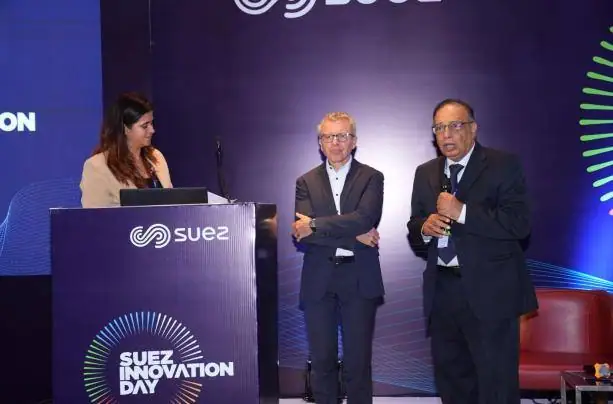
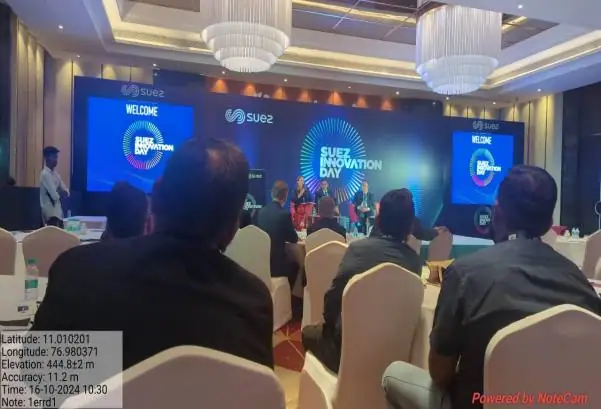
| 2 | Innovation day of Suez lab | 17th October 2024 | 20 | Dr.E.J.James, Pro VC (SIR), KITS, Coimbatore and his team Dr. Nicolas Bochhoff, SUEZ Projects, Private Ltd., Bangalore and his team Dr.Jegathambal, Professor, Water Institute, SAS. |
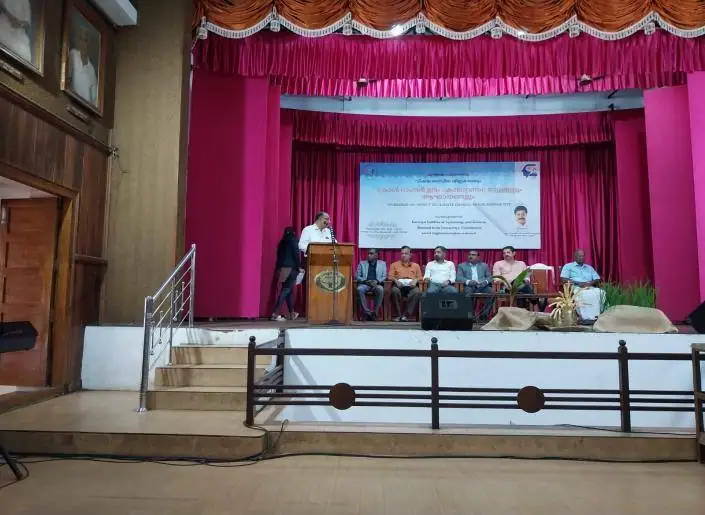
| 3 | Workshop on Climate change and its implications on Kole Ramsar Site | 22nd October, 2024 | 30 | Dr.E.J.James, Pro VC (SIR), KITS, Coimbatore Dr.Sajan Kurien, Dean (SAS) |
| 4. | Industry - Academia Strategy Conclave IASC 2024 | 18th October, 2024 | Dr.E.J.James, Pro VC (SIR), KITS, Coimbatore Presentation by Dr.SajanKurien, Dean (SAS) | |
| 5. | Training for seasonal work program, Germany | 22.01.2025 | 3rd year and final year girls | Mr. Irene Farnandis |
Guest Lectures by External Resource Persons
| S.No | Nature of the Programme | Date | Topic | Resource person & Designation |
|---|---|---|---|---|
| 1 | Guest lecture | 31.7.2024 | Soil-borne Supremacy: Functional role of beneficial microbiome for plant health | Dr. Harsh Bais, Professor, Delaware University, USA |
| 2 | Guest lecture | 28.08.2024 | Modern Breeding Concepts to improve Genetic gain | Dr Mahender Anumalla, Scientist – I Breeding Long duration Rice, IRRI, ICRISAT, Hyderabad, Telangana |
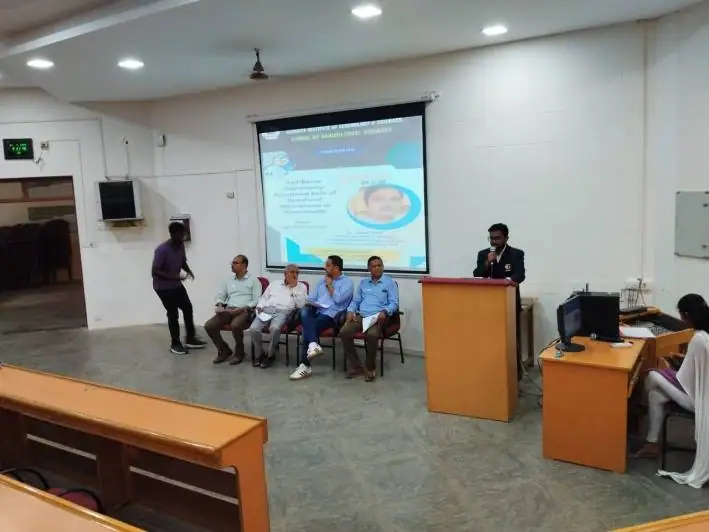
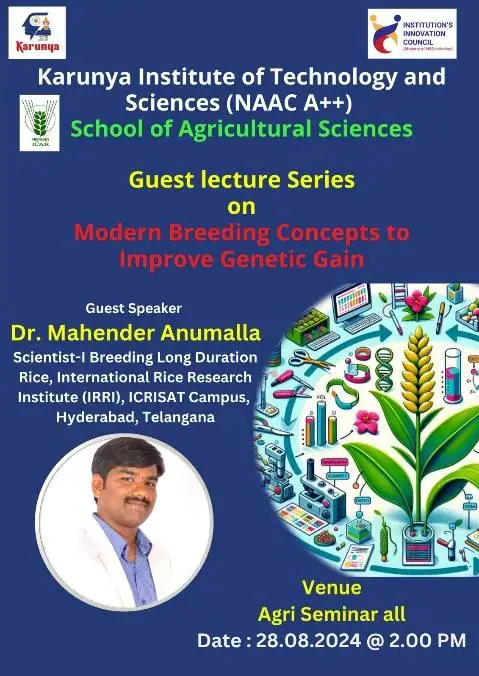
Guest Lectures by faculty
| S.No | Name of the faculty & Designation | Date | Topic | Nature of the Programme | Venue |
|---|---|---|---|---|---|
| 1. | Dr. Sajan Kurien (Dean, School of Agriculture) Dr R. Augustine (Associate Professor) Dr D. Alice (Professor) Dr Dhanusha Balakrishnan (Assistant Professor) | 4.08.2024 | Webinar on SMART AGRICULTURE | Online Webinar THE HINDU Education Plus Career Counselling Series | Online |
Guest lecture on Plant Phenotyping
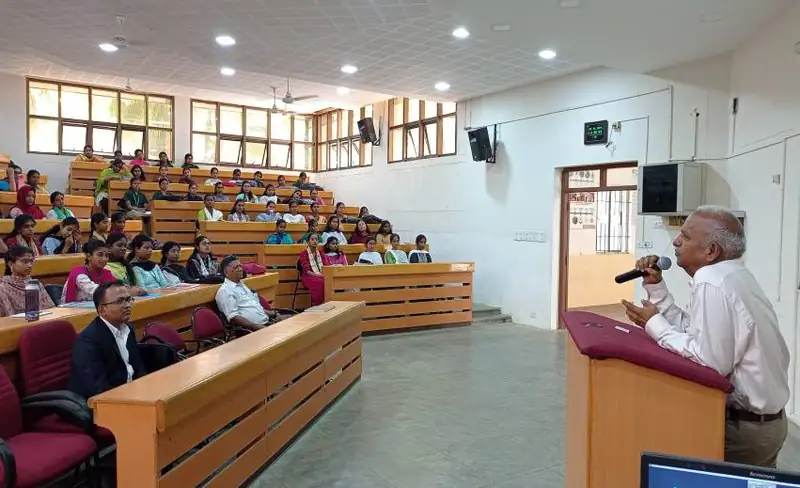
Achievements:
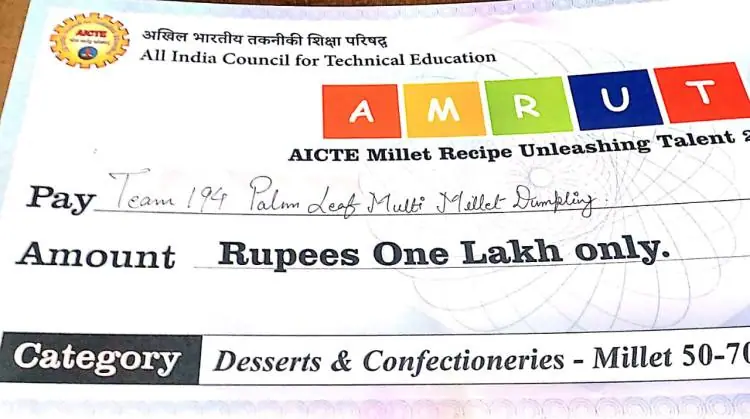
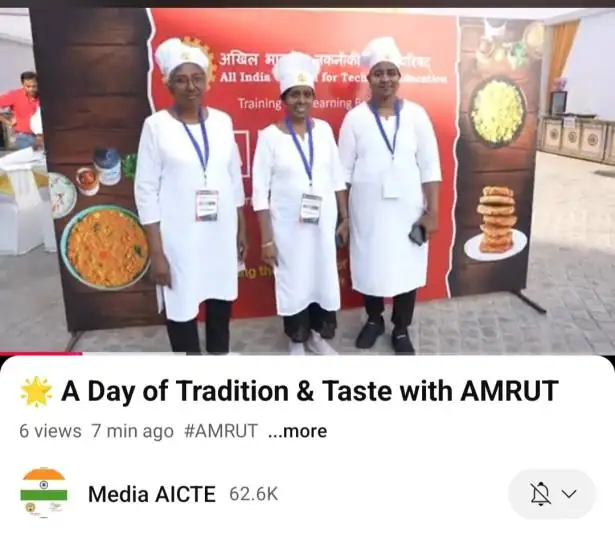
Dr. C. Mayilswami Participated as a co-convener of the organizing committee for the International conference on Water and agricultural Sustainability under changing climate from 7-9, October 2024 organized by the Centre for water and geospatial studies, TNAU, Coimbatore and presented a felicitation address during the valedictory function.
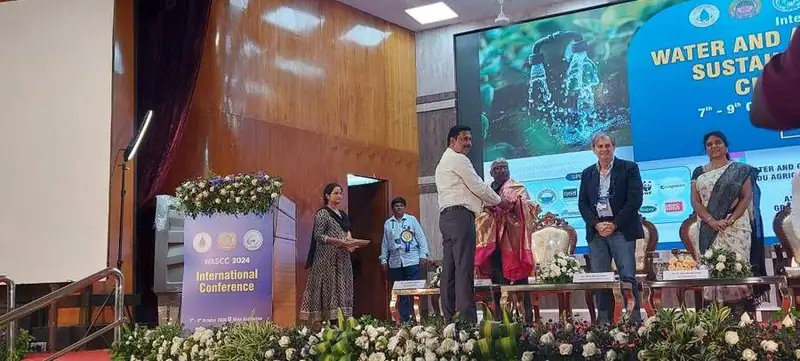
Club Activity
On the 21st of September, the first non academic day, the seven clubs of School of Agricultural Sciences kick started for the year 2024-25. The club activity was conducted during the non -academic days. The activities organized by the different clubs are as follows:
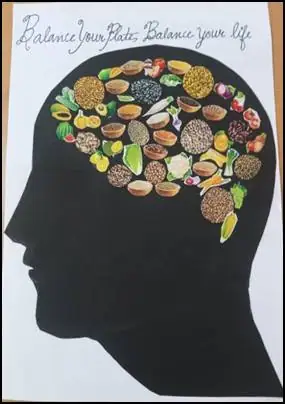
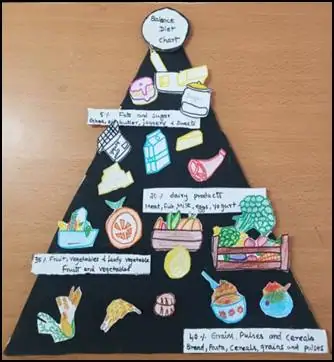
Nutrition club : Riddles on nutrition and identifying the Indian State with its signature food/traditional food on the theme “Balanced diet for healthy life”
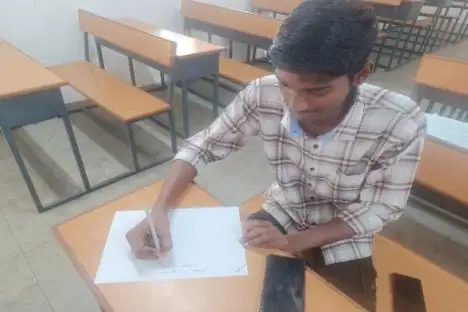
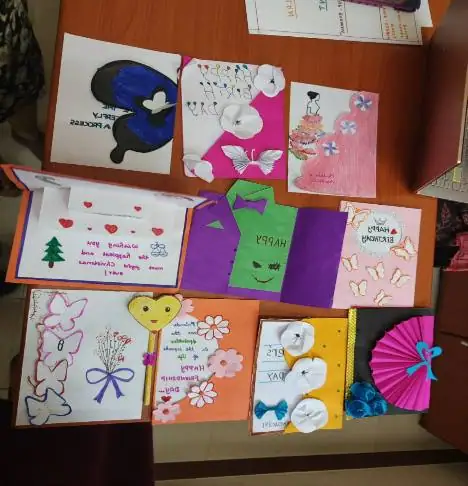
Crafts and Creation Club : Theme - Artful gift card
Literary Club:
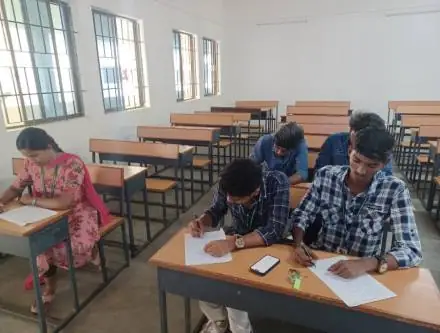
In view of World Food Day, a Haiku Hunt with the theme “Don’t waste your food” was organized on 19.10.24. On 24th October, to improve communication skill and presentation skills, video content development was conducted.
Garden Club:
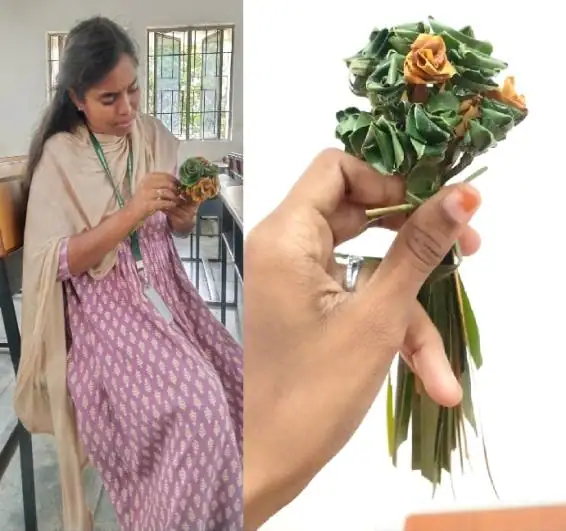
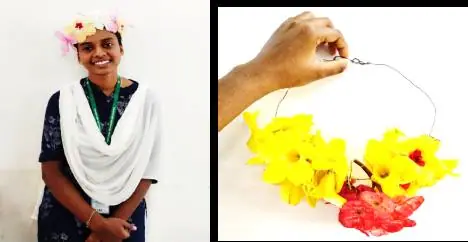
The students were given hands-on training on bouquet making using the available flowers. The students presented a basket bouquet and a hanging bouquet. The afternoon session involved a discussion on sustainability and the responsibility of students towards a sustainable future. On 24th October, Dr. P. A. Joseph, Professor of Agronomy, commenced the session with an insightful talk on the Importance and Components of Landscaping. His talk covered key elements of landscaping, emphasizing its value in enhancing aesthetic appeal, ecological balance, and functionality in various spaces. Later in the day the students were engaged in floral crown making from flowers housed from KITS.
Wealth from Waste Club:
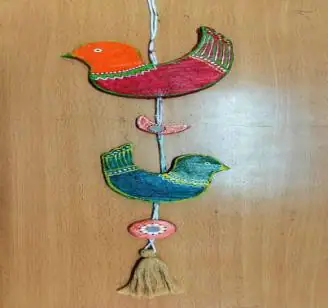
The students collected waste from in and around the campus and hostel. With the collected waste materials various craft items such as key chains, flower vase, pen holder and items from gunny bags were made by the students.
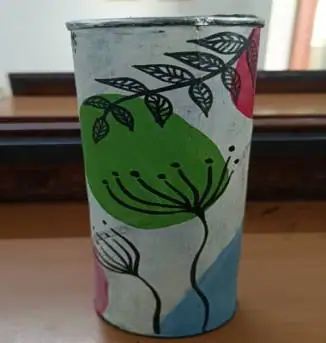
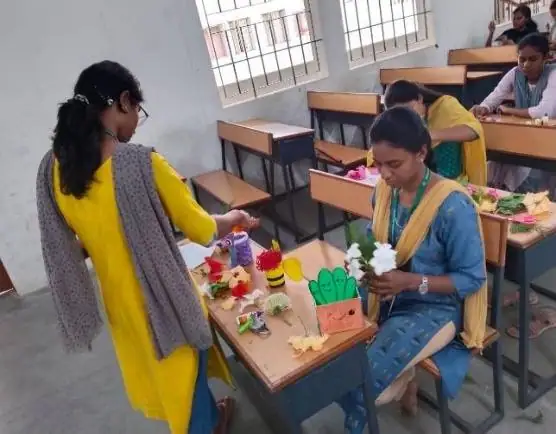
Nature Club
Date: 21-9-2024: Nature club orientation & Guest Lecture
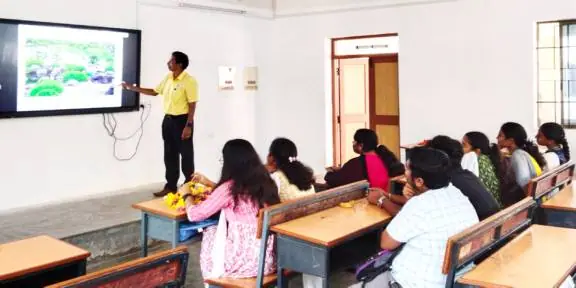
As part of the Nature Club’s ongoing efforts to raise awareness about environmental conservation, a special lecture was organized on 21st September 2024. The session was graced by Dr. M. S. A. MUTHU KUMAR NADAR, Assistant Professor, Division of Biotechnology, who delivered an insightful talk on the topic “Save the Nature.”
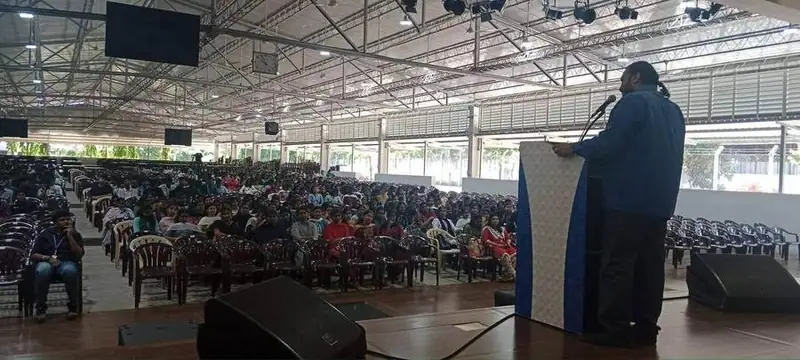
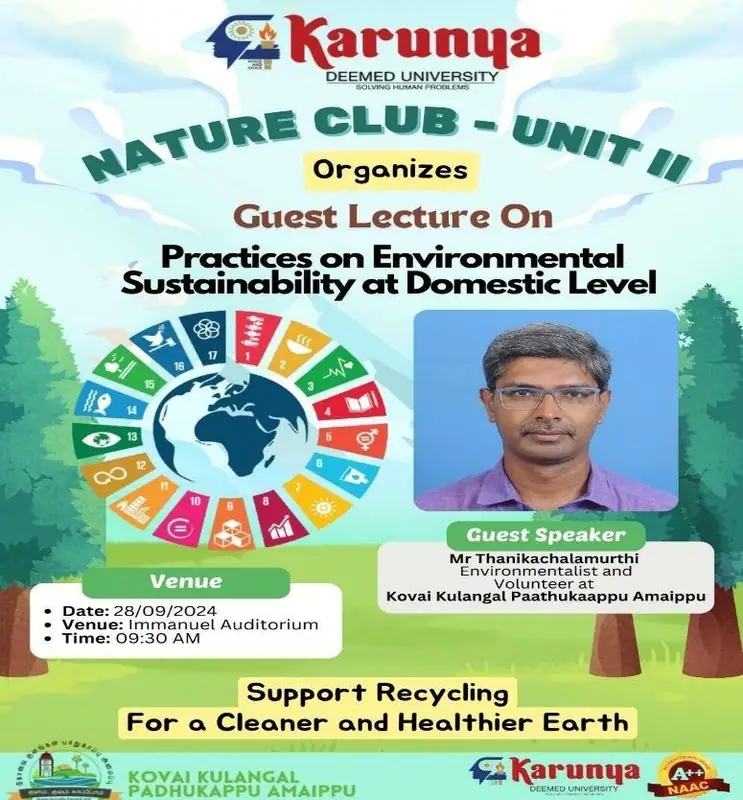
The Division of Biotechnology, Karunya Institute of Technology and Sciences, in collaboration with Nature Club – Unit II, conducted a guest lecture on “Practices on Environmental Sustainability at Domestic Level” on 28/9/2024
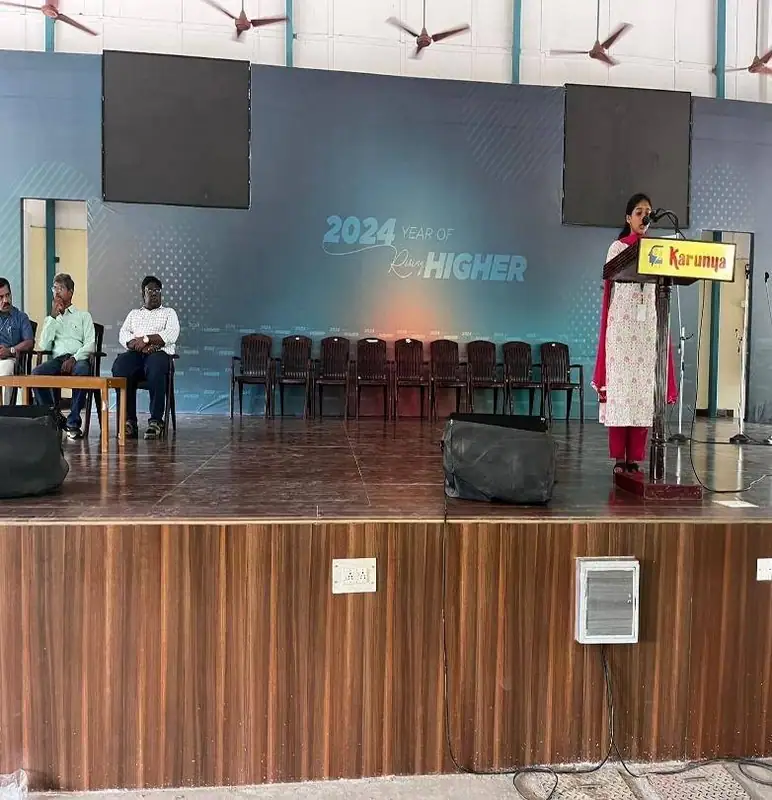
An expert talk was organized on 19th October 2025 to enhance students' knowledge in the areas of modern agriculture and sustainable development. The event featured two distinguished speakers Dr. P. Ranchana, who shared insights on Horticulture Techniques, and Dr. T. V. Ranganathan, who addressed the importance of Sustainable Development.
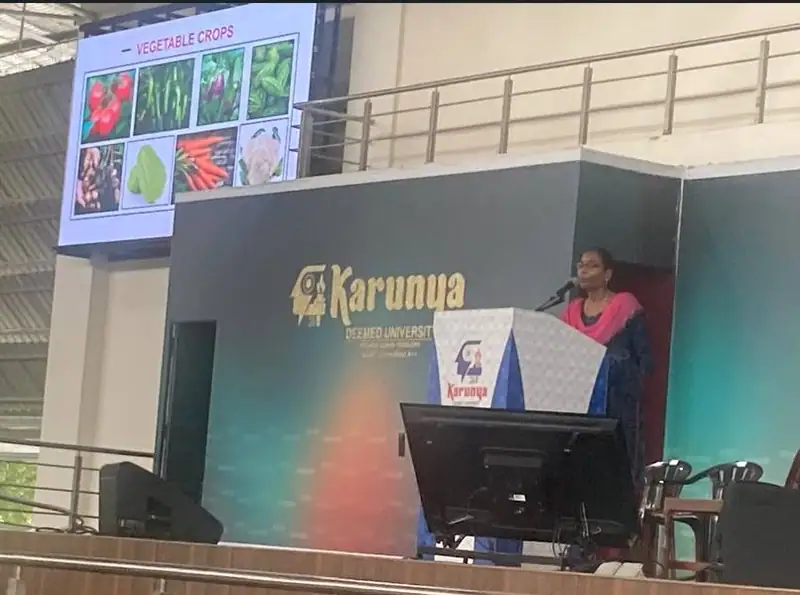
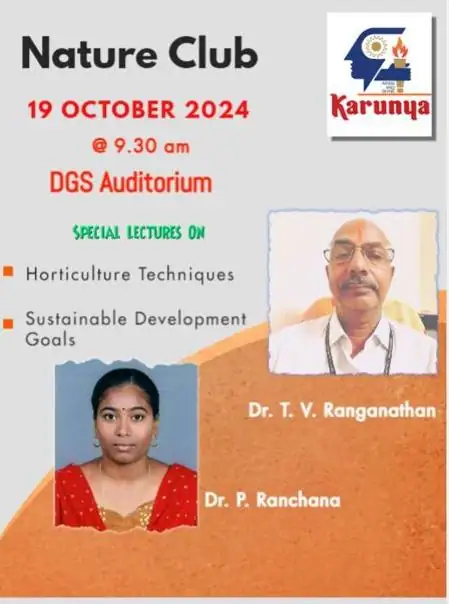
The second session of the expert talk featured Dr. T. V. Ranganathan, a respected sustainability consultant and environmental policy advocate, known for his contributions to grassroots sustainability movements and policy framing. His session focused on the United Nations Sustainable Development Goals (SDGs)—a universal call to action to end poverty, protect the planet, and ensure peace and prosperity for all by 2030.
On October 26, 2024, a group of students participated in a short nature walk from our college to the nearby village of Sadivayal.
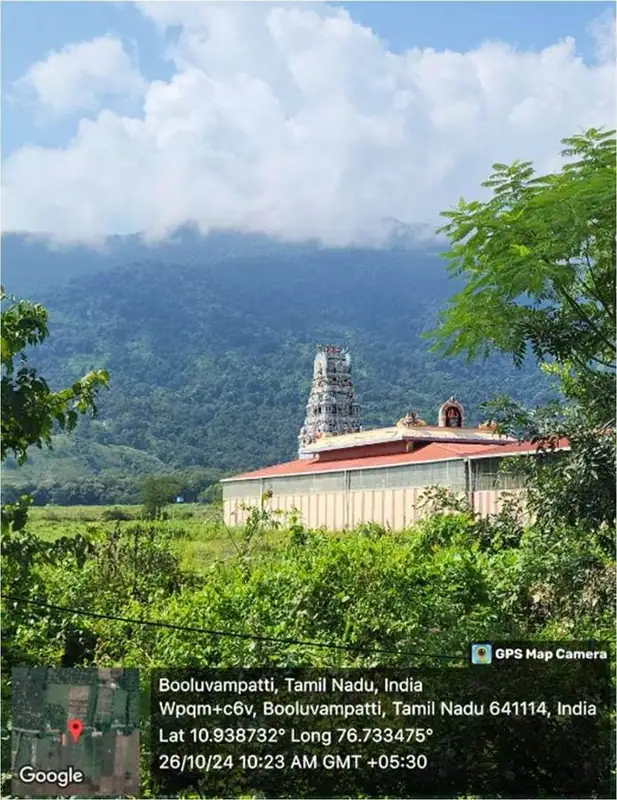
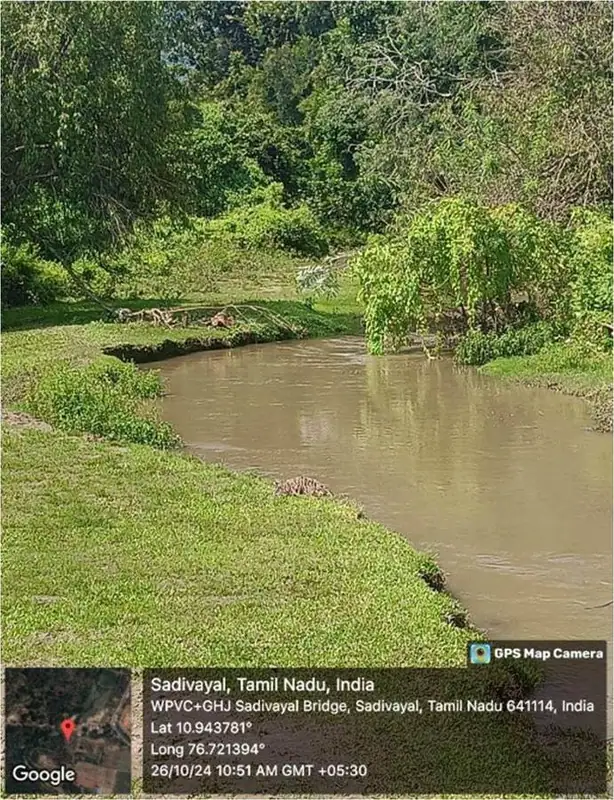
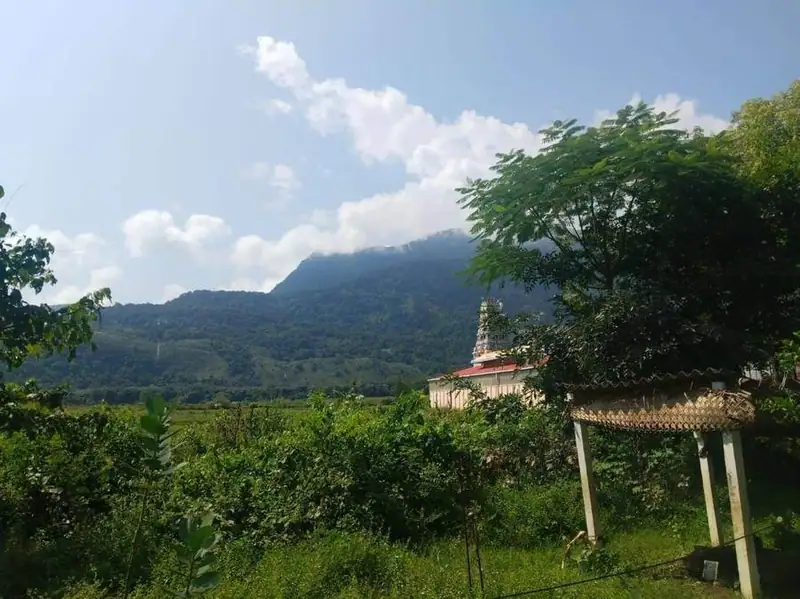
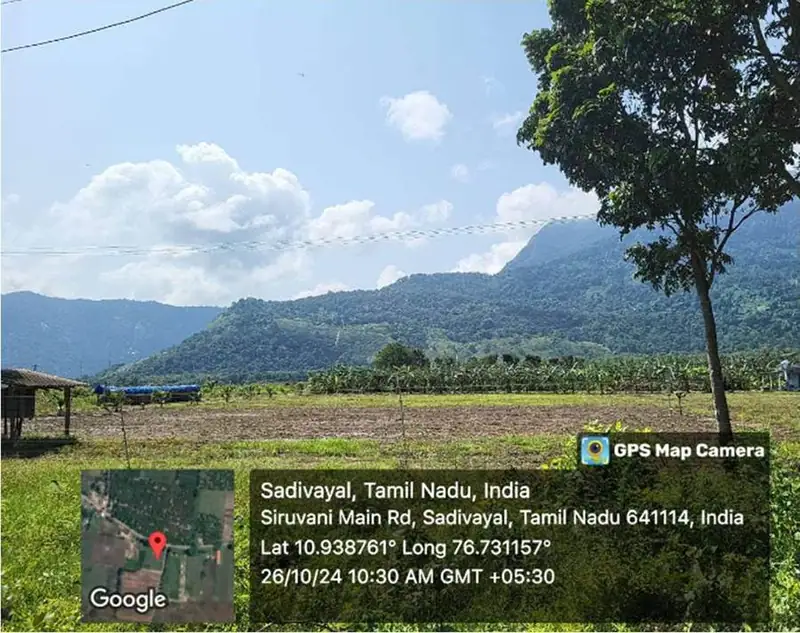
The walk served as an effective break and rejuvenating experience, contributing positively to the students’ mental well-being and offering them a refreshing change from classroom activities.
On 14/12/2024, the lecture titled "My Experiences with Nature Studies" was delivered by Dr. E.J. James, a renowned hydrology scientist with extensive experience in studying the water resources and natural environments of India.
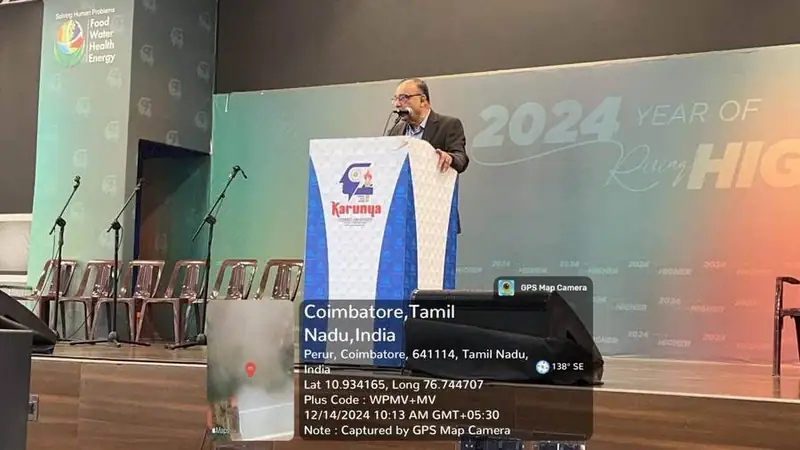
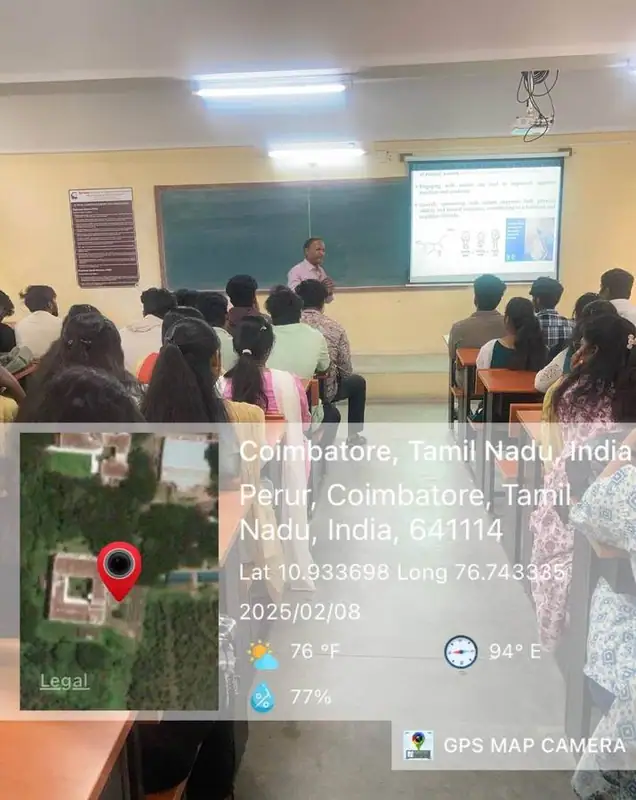
The Department of Environmental Science, in collaboration with the university's Eco Club, organized a one-hour expert lecture on the topic “Conservation of Nature in the Indian Context”. The session was held on 12th April 2025 and was attended by students, faculty members, and research scholars from various departments. The lecture was delivered by Dr. V. Madhu, an esteemed professor and environmental expert known for his work in biodiversity conservation and sustainable development.
The Nature club of Karunya Institute of Technology and Sciences hosted an expert talk on the topic “SDG 17 – In Indian Context” on 22 February2025. The event was conducted as part of the university’s Sustainable Development Awareness Initiative, aimed at sensitizing students and faculty towards the United Nations' Sustainable Development Goals (SDGs).
The invited speaker, Ms. Sherly, a Lead Auditor and specialist in Green, Environmental, and Waste Management audits from the Nature Science Foundation (NSF), Coimbatore, brought valuable insights from her hands-on experience in environmental governance and sustainability practices.
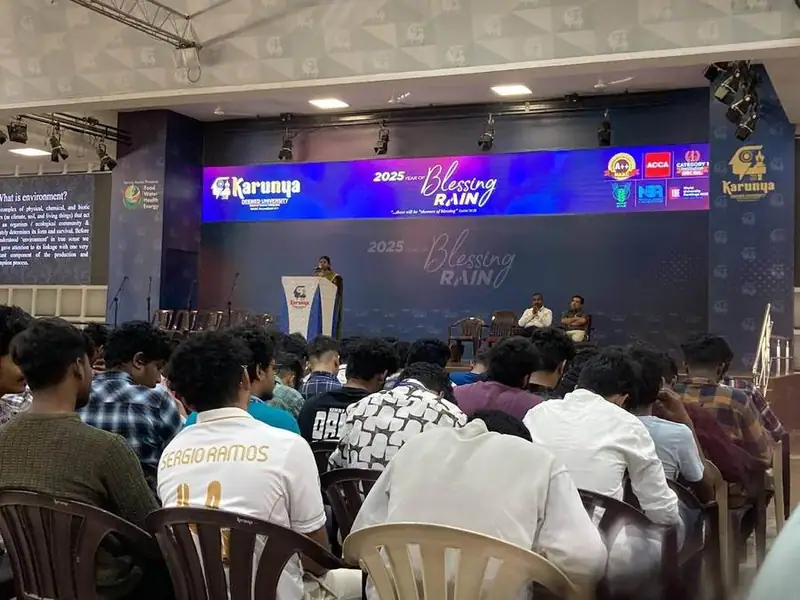
7. Community Outreach and Extension Activities
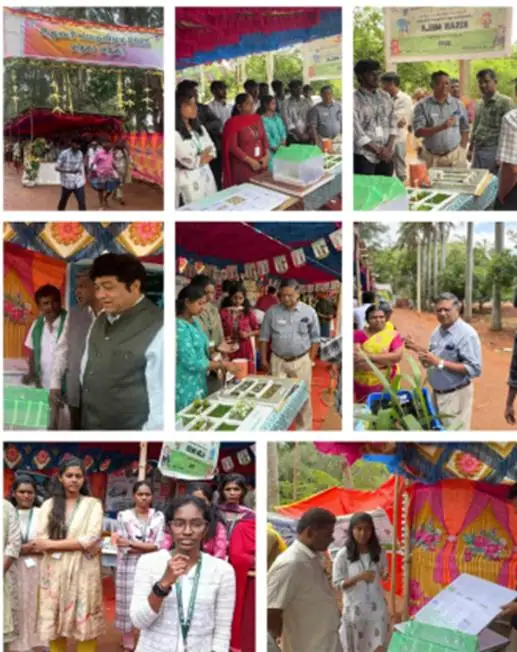
a. Farmers Mela 2024
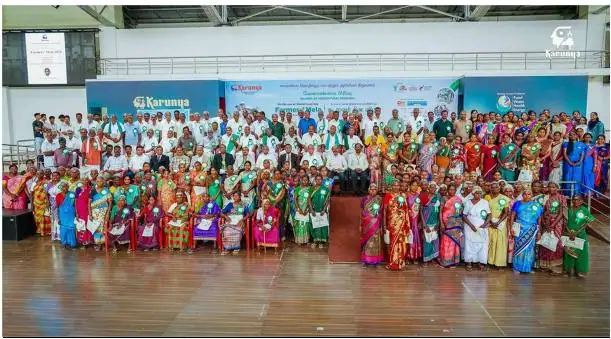
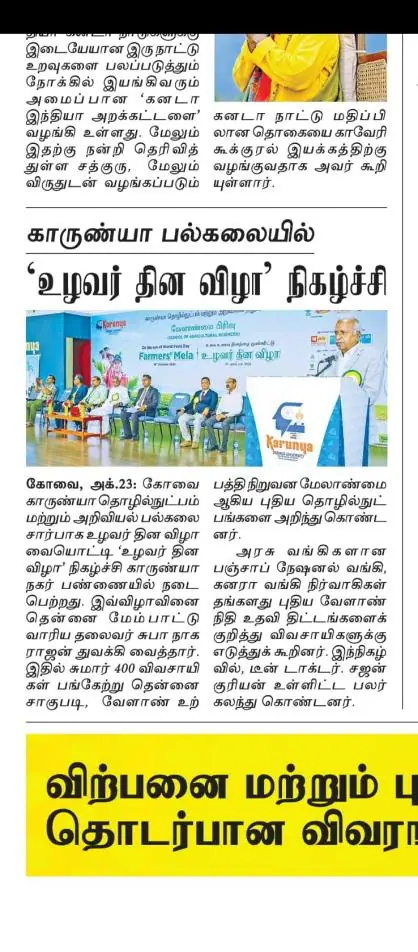
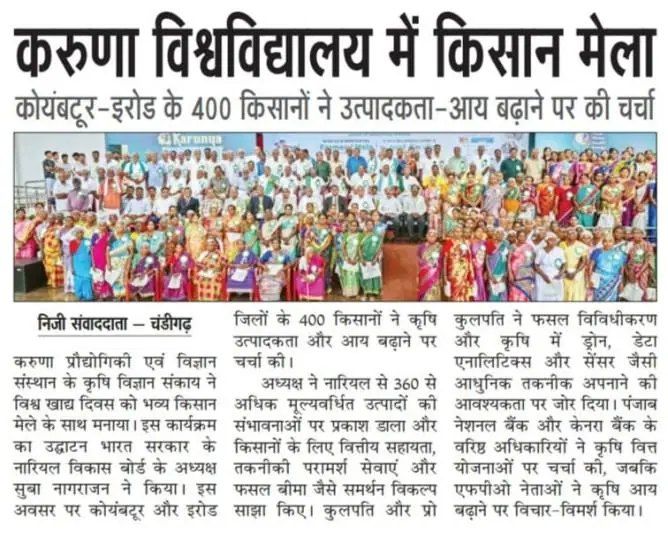
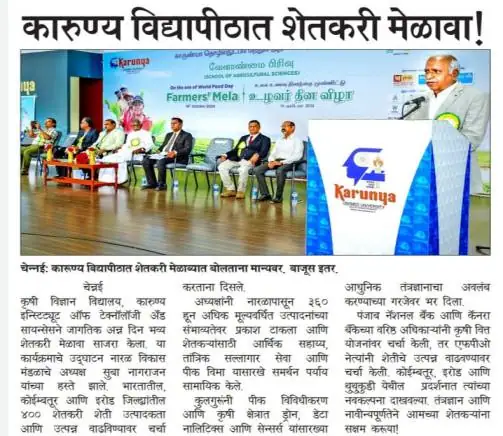
Farmers’ Mela was inaugurated by Sri.Suba Nagarajan, Chairman, Coconut Development Board, Govt.of India. Honorable Vice Chancellor of KITS and top executives took part in the inaugural session. The technical sessions were handled by Leaders of Farmers’ Producer Organizations – Velliangri Uzhavan FPC, Thondamuthur FPO, Siruvani FPO and Jaihind FPO.
In the exclusive session on Agricultural credit, Mr. Vijay Anand, senior agri credit officer of Punjab National Bank made a detailed presentation on the PNB facilities available for farmers. Mr. Ramkumar, Canara Bank explained Canara finance facilities for farmers. Both PNB and Canara put up their kiosks in the exhibition to provide credit advices to the farmers. Mr. Arusamy, Ex-Chairman of Primary Agriculture Credit Society, Devarayapuram talked about the saving and credit services available for farmers. Mr. Kishore Kumar, innovative organic farmer made a presentation on the natural farming practices he had been following for the past 15 years and the rich benefits he reaped out of them. He showed photographs of his farms that featured the soil quality, desi animals, and healthy coconut palms. Mr. Shanmuga Sundaram, from Chittode (Erode district) spoke about the vertical farming practices and banana based crop intensification techniques that he follows and profitability associated with them. Mrs.Devagi Amma, progressive farmer of Narasipuram village appealed to School of Agriculture to organize more village level meetings among farmers to share best practices. Coimbatore, Erode MYRADA and Thuthukudi Krishi Vygyan Kendras (KVKs) participated in the mela and displayed their products in the exhibition.
Twenty three exhibitors showcased their products and services for the Farmers Mela.
Number of farmers participated: 400
Farmers Mela was organized in commemoration of World Food Day observed on 16 October 2024. Four hundred farmers participated in the event. The Farmers’ Mela event featured three sessions: Inaugural Session, Technical session and Exhibition. KITS management officials and Chief Guest delivered presidential, inaugural, felicitation address. Technical session comprised of deliberations on coconut farming, marketing, financing, organic farming, etc. Exhibition stalls displayed multi-various agroproducts, farming techniques, tools, inputs and agri-banking products. Programme was presided over by the Honourable Vice-Chancellor and inaugurated by Sri.Suba Nagarajan, the Chairman, Coconut Development Board, Govt.of India. Around 400 farmers from Coimbatore and Erode districts attended benefitted from mela. The major theme of this edition was Coconut Development. Coconut crop is the base of the farming system followed by farmers farming on the fringes of Western Ghats for several decades. Prompted by dwindling income in coconut groves, farmers have come together to farm Farmers Producer Organizations to augment the production and marketing efficiency in past few years.
b. Industry Lectures
Two industry lectures were delivered in the School of Agricultural Sciences. Mr. P. Sengottaiyan from Jain Irrigation System delivered a lecture on “Smart Agriculture through Drip and Sprinkler Irrigation” on 1st September 2025 at 11:00 am, focusing on efficient water management and modern irrigation technologies. Mr. Rajarathinam K. delivered a lecture on “Smart Agriculture: Farm Machinery for Coconut-based Cropping System” on 3rd September 2025 at 11:00 am, highlighting innovative mechanization approaches for sustainable coconut farming.
c. Consultancy
- The Division of Soil Sciences provided 10 no of external consultancy services through sample analysis
- A team of experts from the School of Agriculture (KITS) comprising Dr. Sangamesh R Hiremath, Dr. Sajan Kurien, Dr. R. Philip Sridhar and Dr. Umesh Chimmalagi visited the gherkin processing factory of IAP (International Agricultural Processing Pvt. Ltd.) Nilakottai, Tamil Nadu on 12 July 2024, based on the felt need of an infestation by a dipteran fly (Musca sp.) During the visit, a heavy infestation was observed. The infestation was prevalent in all the unit operation areas, including the receiving, sorting, cleaning, and packing yards. To address the infestation problem, a report detailing the observations, findings, and outcomes of the future action plan for gherkin fly management was submitted to the clients.
d. Important Days
International Soil Day
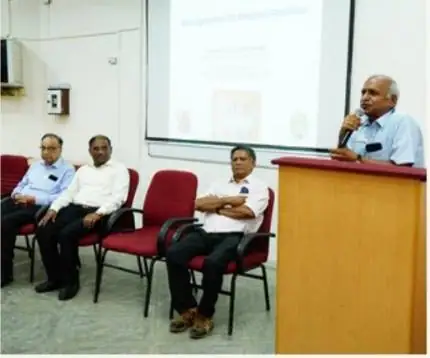
The Division of Soil Science, School of Agricultural Sciences, commemorated World Soil Day on December 5, 2024, with the theme "Caring for Soils: Measure, Monitor, and Manage. "As part of the celebrations, an expert lecture was delivered by Dr. K. S. Subramanian, Former Director of Research, TNAU, Coimbatore, and Scientific Advisor, Coromandel International Ltd. Speaking on "Nano Agriculture to Achieve an Evergreen Revolution," Dr. Subramanian highlighted the transformative role of nanotechnology in enhancing soil health, improving nutrient efficiency, and ensuring sustainable agricultural practices. The event emphasized the importance of soil conservation, innovative agricultural solutions, and scientific advancements in achieving long-term food security.
World Water Day
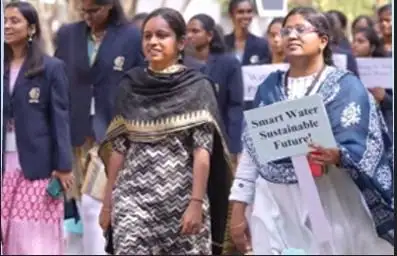
On March 22, 2025, Karunya Institute of Technology and Sciences commemorated World Water Day with a series of engaging and awareness-driven activities aimed at promoting the importance of water conservation. The event featured a vibrant water rally, drawing attention to responsible water usage and sustainability. Additionally, painting and drawing competitions were conducted for both school and college students, allowing young minds to creatively express their thoughts on water-related themes. A water - quiz competition was also held, testing participants’ knowledge on water resources, conservation practices, and global water issues. The celebration created awareness, creativity, and a sense of responsibility among the participants towards preserving water for future generations.
e. Farmer capacity building through digitalisation initiatives
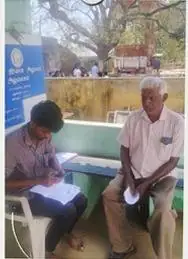
As part of the Agristack Farmer Registration Initiative, students from the School of Agricultural Sciences, Karunya Institute of Technology and Sciences actively contributed to bridging the digital gap in agriculture. Collaborating with the Assistant Director of Agriculture (ADA) Office, Madukkarai, the initiative aimed at enrolling farmers in Agristack—an integrated digital platform designed to streamline government agricultural schemes and services.The program, held from 18th to 21st February 2025, provided farmers with access to digital records, personalized scheme benefits, and improved resource allocation. 40 students of SAS, acted as volunteers in 21 villages of Madukkarai and played a crucial role in facilitating this process, ensuring farmers could leverage digital advancements for better agricultural opportunities. This initiative highlights the institution's commitment to agricultural development and digital empowerment, recognizing students' efforts in making a meaningful impact on rural communities.
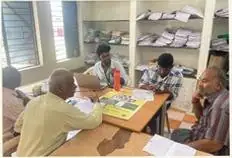
f. Extension activities under RAWE programme
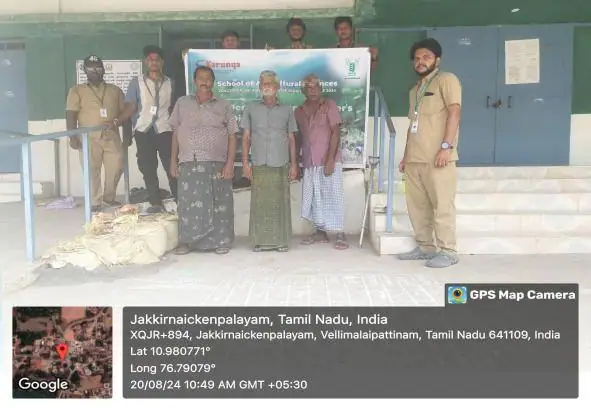
Students of the final year B.Sc. (Hons) Agriculture undergoing RAWE programme, completed their village attachment, KVK/ NGO/ Research Station attachment and currently is undergoing Agro industry attachment in various industries of Tamil Nadu and Kerala. Each students have visited 1 to 2 industries so far thus totalling up to 50 industries. A total of 264 students are undergoing their RAWE.
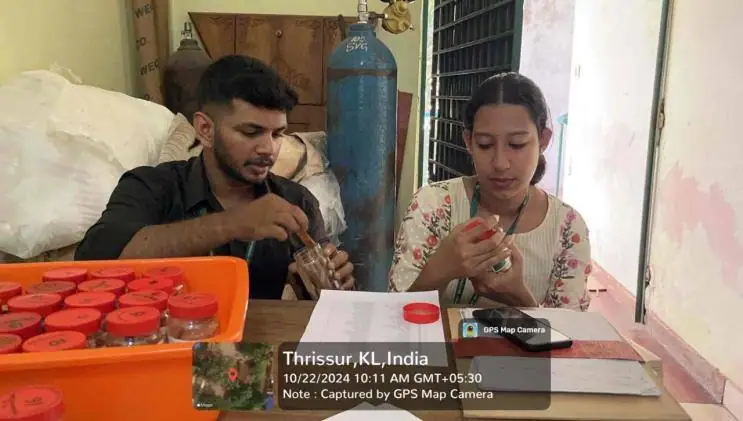
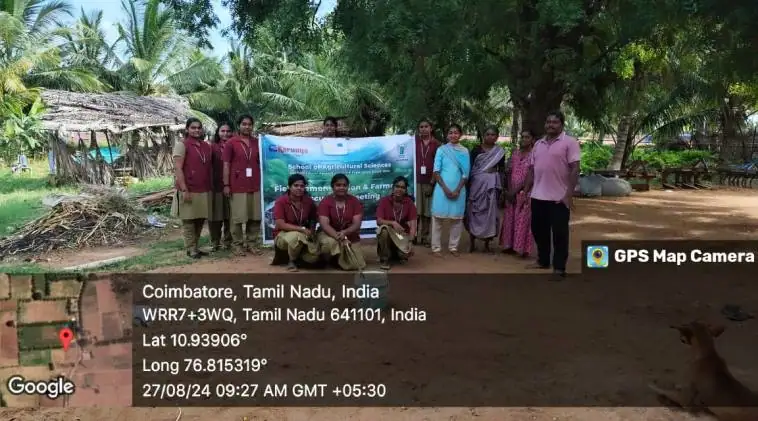
Industrial visit of RAWE students to Oushadi, Thrissur
8. Partnerships and Collaborations
Karunya University and SUEZ Partnership:
Karunya University has partnered with SUEZ, a global leader in water management, to address challenges in water quality and distribution. As part of this collaboration, a state-of-the-art industrial laboratory has been established on campus, featuring a pilot-scale water distribution network equipped with advanced sensors and SCADA integration for real-time water quality monitoring. From this academic year, Karunya University is offering an industry-linked M.Tech. program in Integrated Water Resources Management (IWRM). This program combines academic rigor with industry expertise, providing students with hands-on experience in addressing real-world water issues. SUEZ experts handle classes for the students.
Strategic Collaborations for Terrestrial Biodiversity:
1. Forest Department of Tamil Nadu (Coimbatore Circle): Technical collaboration on AI-driven human-elephant conflict early-warning sensor networks along the Western Ghats forest boundary.
2. Central Tuber Crops Research Institute (CTCRI): Collaborative field trials on soil-enriching tuber varieties and organic pest control.
3. Regional Farmer Producer Organisations (FPOs): Joint training on organic certification, seed banks, and traditional millet propagation.
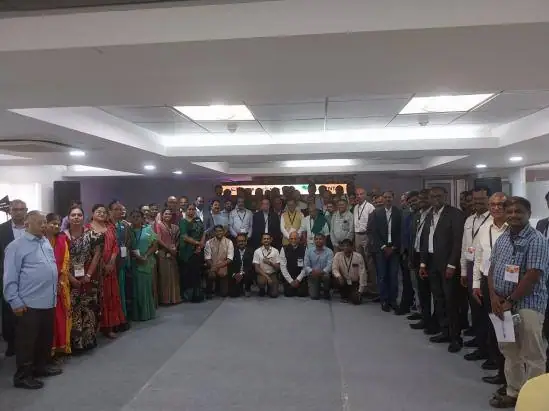
Innovation day of SUEZ Industry Academia Strategy Conclave
Climate change and its implications on Kole Ramsar site
9. Best Practices
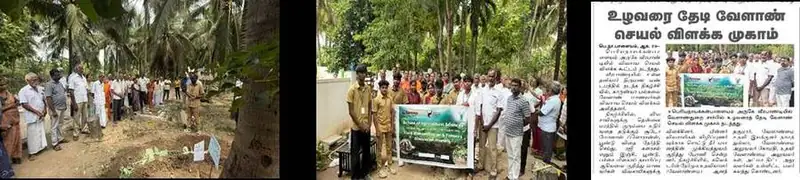
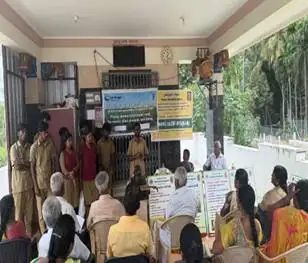
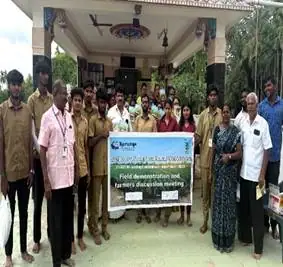
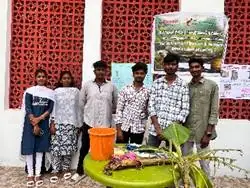
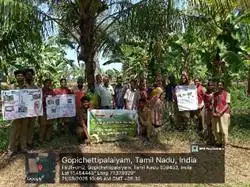
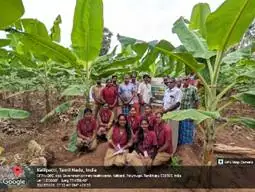
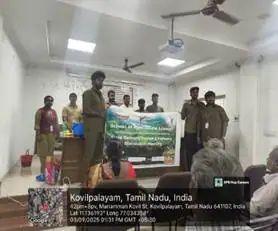
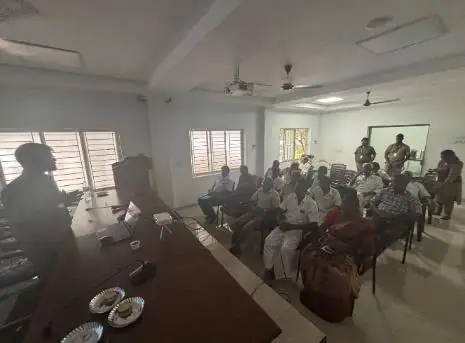
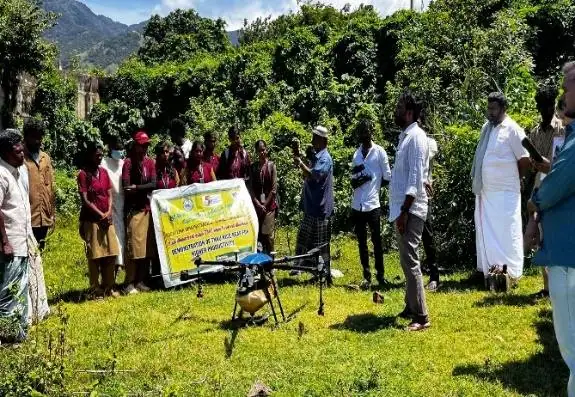
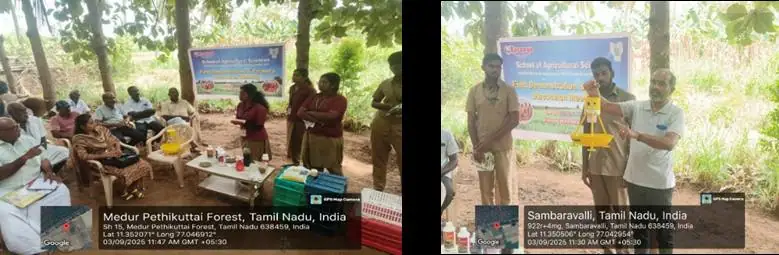
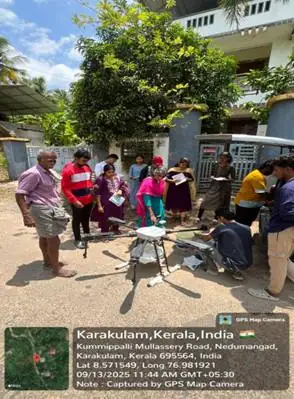
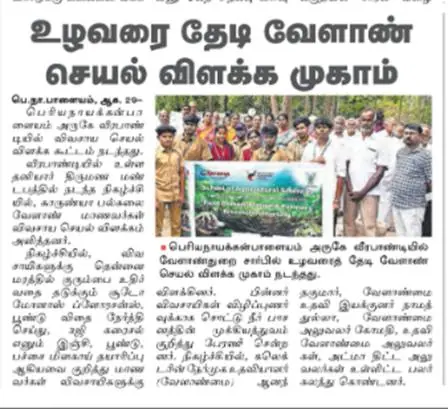
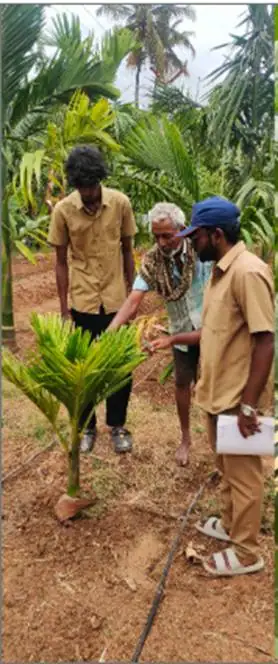
A. Farmer-Oriented Knowledge Dissemination (8 programmes, about 393 farmers)
Western Zone (Coimbatore and Erode): hands-on training in coconut, banana, and organic crop management, including organic formulations, Pseudomonas seed treatment, Panama wilt management, and biological pest control. A second session covered fodder and livestock care, and a third covered nutrient management for coconut, banana, sugarcane, and paddy.
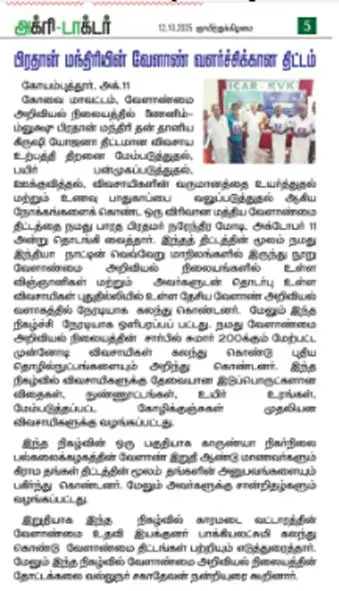
Southern Zone (Thoothukudi): integrated pest and nutrient management at ICAR-KVK, covering traps, Red Palm Weevil control, and botanical extracts (100 farmers).
Central Zone (KITS field): eco-friendly banana cultivation and organic inputs (25 farmers).
Kerala (Trivandrum, Kottayam, Thrissur): drone-assisted spraying and soil moisture sensors, Trichoderma for soil health, and digital advisory apps (Kadhir, Plantix, Tumaini).
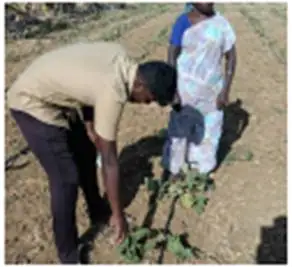
B. PLANT CLINICS (5 clinics, about 110 farmers)
The clinics diagnosed problems in coconut (whitefly, Red Palm Weevil, nutrient deficiency), banana (rhizome weevil, Panama wilt), vegetables (viral diseases), and paddy (brown planthopper, leaf folder). Farmers were advised to use biological control and cut back on pesticides.
10. Sustainable Management of Land for Agriculture & Community Outreach
KITS being situated in the lap of Western Ghats, is a habitat for diverse insects, birds (both resident and migratory), indigenous and exotic plant species including medicinal herbs, and a host of invertebrates and vertebrates. With an immense interest to conserve the biodiversity, considerable effort has been taken for afforestation, establishment of ornamental and herbal gardens, conservation of germplasm for indigenous millets and rice, creation of farm ponds, installation of polyhouse and greenhouse for protected cultivation and preservation of underutilized plant genetic resources.
Rose Garden
Rose garden was established with the aim to impart knowledge to the B.Sc (Hons) Agri students about the different types of roses, their cultivation and their utility in cut flower and perfume industries. The total area of the garden is 70 cents wherein seven kinds of roses namely Miniature, Floribunda, Hybrid Tea, Grandiflora, Polyantha, Climbing and Edward roses are raised for academic demonstrations.
Butterfly Garden
In KITS Butterfly Garden, one can witness native butterflies hovering in the open landscape such as Nymphalidae, Papilionidae, Pieridae, Lycaenidae etc.
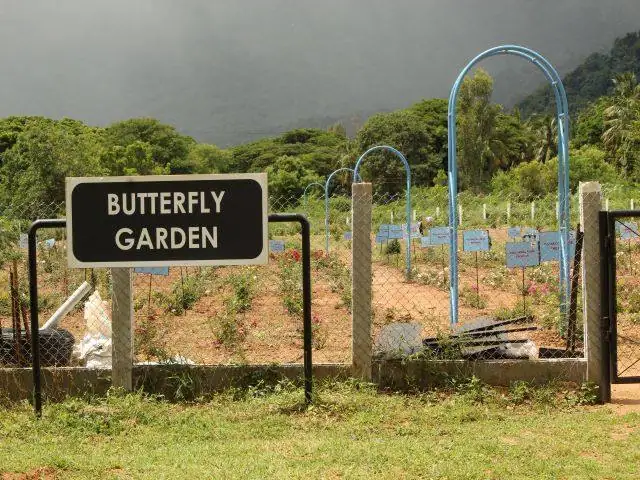
Overview of butterfly Garden Medicinal Garden
Indigenous and Herbal medicine is one of the 25 technology missions of KITS. The medicinal garden spans across an area of 70 cents housing 15 tree species, 10 shrubs, 15 climbers and 40 annuals. The medicinal plants are broadly grouped into various categories such as anti-cancerous, anti-asthmatic, anti-analgesic, anti-inflammatory, anti-diabetic, skin care, insect bites, hair care, gastrointestinal disorders, liver and kidney functioning.
11. Monitoring IUCN and Conservation Species on Campus (policies)
Ensuring the rich biodiversity in the green campus is an important parameter which reflects the real-time ecosystem. Plants are indicators for assessing the varying levels of environmental quality. In general, plants improve the outdoor air quality with increased oxygen levels and reduced temperature and carbon-di-oxide. The green and varying colour of the flowering plants improve the ambience of the Organization environment. The record on maintenance of the plant biomass and its management are important with respect to green campus initiatives. The existence of such plants and birds in the green campus may be recorded for the rich flora and fauna which are considered as a value addition to the campus.
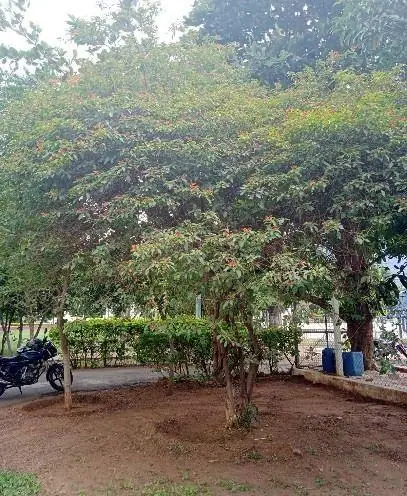
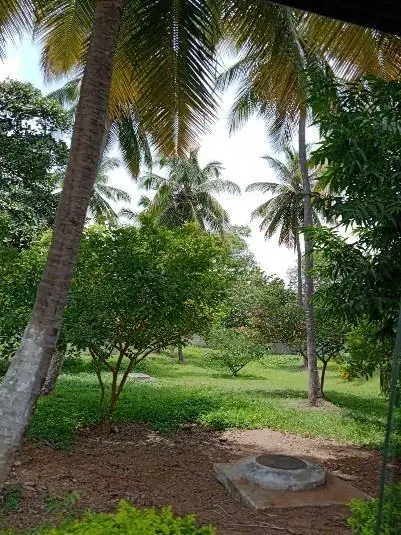
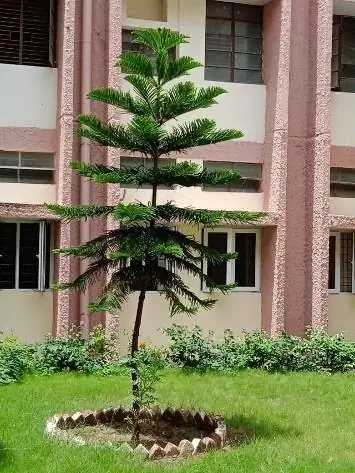
KITS campus has more than 85% of wild as well as native plant species and the other 15% plant species are ornamental in nature. The native plant traits promote the indigenous fauna at the site area. Hence, the accountancy of 75% of the wild traits are leveraged for the native animals and birds. The commonly available native as well as wild plant species in the KITS campus are Neem (Azardirachta indica), Amla (Phyllanthus emblica), Coconut (Cocos nucifera), Hibiscus (Hibiscus rosasinensis), Peacock Flower (Caesalpinia pulcherrima), Royal poinciana (Delonix regia), Pongam (Pongamia pinnata), Pampas grass (Cortaderia selloana), Portia tree (Thespesia populnea), Star Gooseberry (Phyllanthus acidus), Henna (Lawsonia inermis), Guava (Psidium guajava), Assyrian plum (Cordia myxa), Red lucky seed (Adenanthera pavonina), Asna (Terminalia elliptica), Mastwood (Calophyllum inophyllum), Arjun tree (Terminalia arjuna) Star Gooseberry (Phyllanthus acidus), Pala indigo plant (Wrightia tinctoria), Maramalli (Millingtonia hortensis), Magizhamboo (Mimusops elengi), Murungai (Moringa oleifera), Iyal vagai (Peltophorum ferrugineum), Nettilingam (Polyalthia longifolia),
12. Local Biodiversity Inclusion in Campus Planning & Development
Growing many types of herbal plants having medicinal importance in the campus becomes more attractive and useful if concept gardens are maintained. Medicinal plant gardens can contain the locally available medicinal plants, RET (Rare Endangered Threatened) listed plants and those plants are most useful in terms of economic importance. The tree garden / arborea can be planted based on the zodiac signs which would attract the public and students, faculties, staff members, employees and educate them based on their uses. In the tree gardens, trees as linings all over the campus can act as oxygen corridors. Native trees along with trees like Azadirachta, Pongamia and Ficus species can be cultivated at the maximum as these plants are used to remove the dust particles and carbon lead from the air and purifies the air considerably. Similarly, the ornamental plants with beautiful flowers can be maintained in the frontage gardens of campus for attraction and good ambience. This will give an overall aesthetic look and also provide fresh air for healthy respiration to the stakeholders.
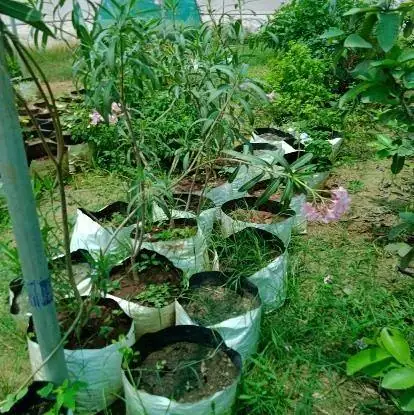
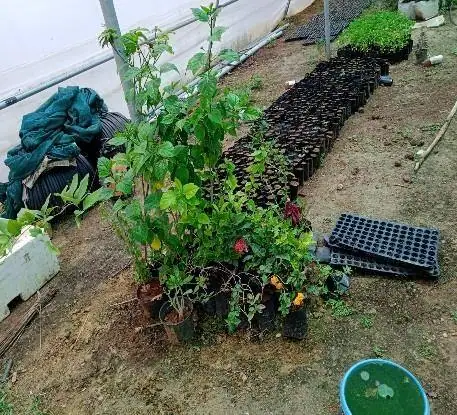
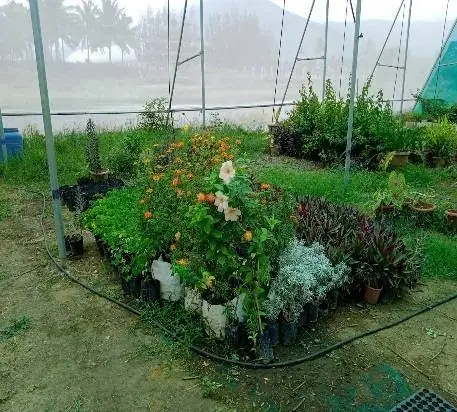
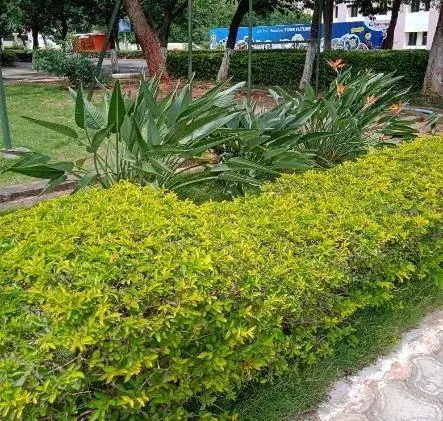
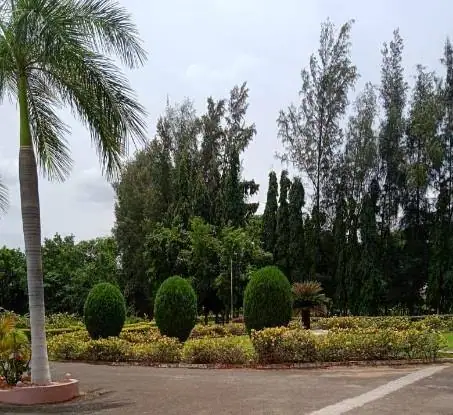
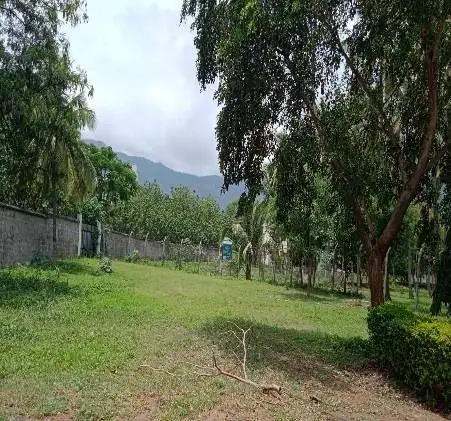
Natural topography means the original geographical features of the campus, around 15- 20% of the organization should have the natural features like rocks, water resources, slopes, landscape, pathways, etc. and the altered topography can be accounted for, it is facilitated. The vegetation in the land alone is considered as they are part of the natural topography. The vegetation in the artificially created structures are also accounted for when it is reported more than 25% of the claimed green campus audit site. Vegetation is the cultivation of a bunch of plants irrespective of the plant taxa for the covering of the area or ground topography. Natural topography is better appreciated with wild vegetation than the artificially created topography like pathways and parking areas. The observation at the KITS campus indicated that more than 85% natural topography and vegetation have been maintained.
13. Alien and Invasive Species Impact Reduction
In KITS, alien or invasive plant species are prevented from the first point itself to encourage the native biodiversity. No exotic plant species are permitted inside the campus premises without proper authentication and clearance from quarantine.
14. Sustainably Farmed Food Production on Campus
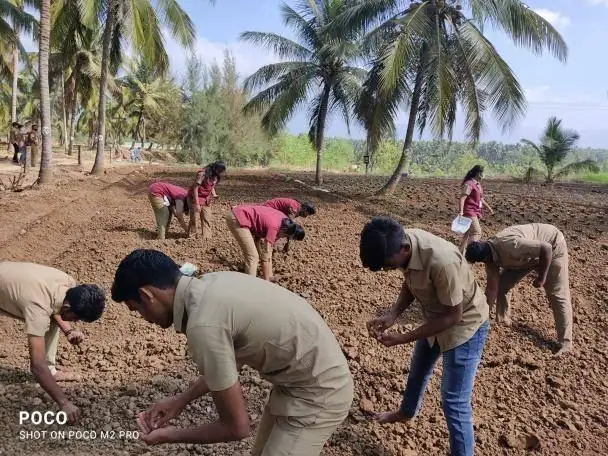
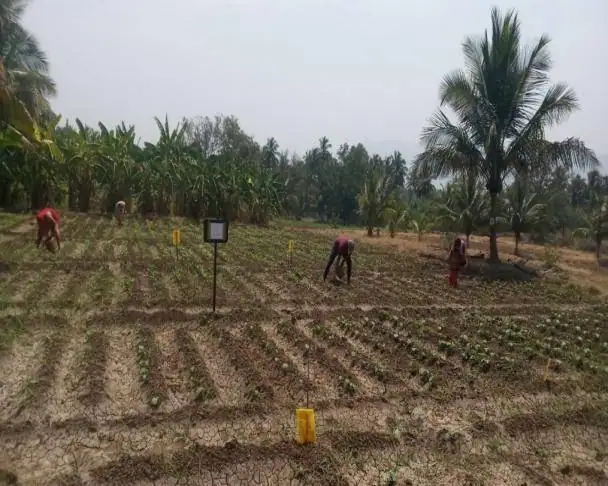
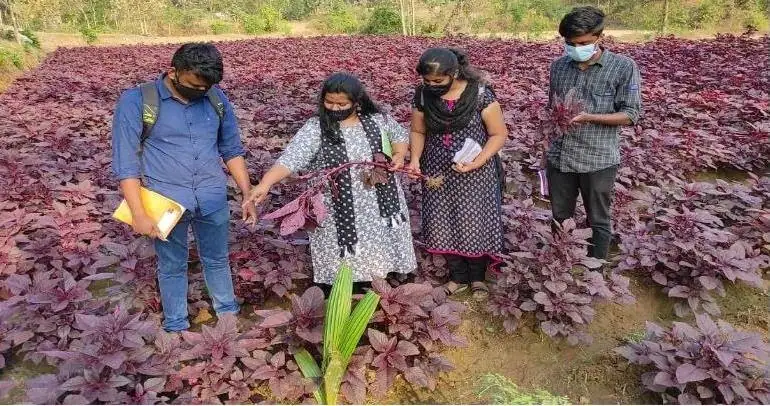
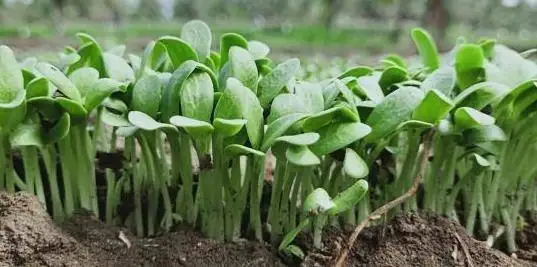
The campus produces sustainable farmed food on campus by growing organic greens in 0.75 acres. Greens such as amaranthus, coriander and spinach are cultivated using the organic input such as cowdung, cow urine, vermi-compost, panchagavya, dasagavya, and 3G extract. Azolla is also cultivated in the coconut farm to enrich soil and to be used as poultry feed. Besides two units of biocontrol agents production, biofertilizer production, vemicomposting units, and mushroom cultivation contribute to SDG 15 through efficient recycling of farm waste.
Students’ Involvement in Organic Greens Production Plot
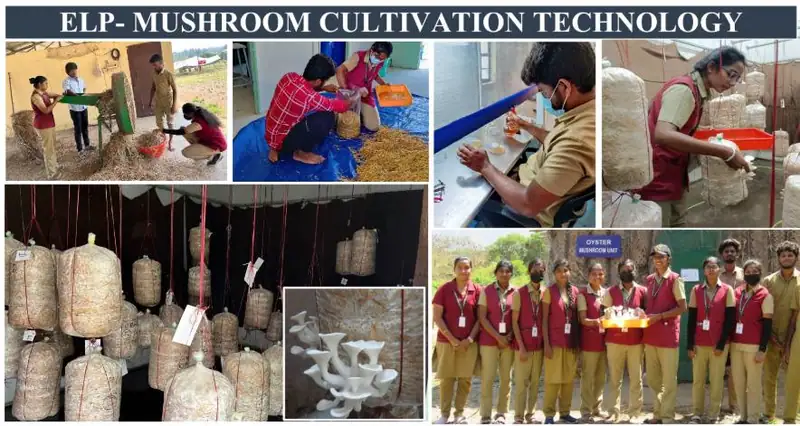
Mushroom Production
Mushroom Production Technology, a vital branch of Plant Pathology, focuses on the scientific cultivation of edible and medicinal mushrooms. This field plays a significant role in food security, nutritional enhancement, sustainable waste recycling, and rural employment. The ELP, Mushroom Production Technology equips students with the necessary technical knowledge and hands-on skills in mushroom cultivation, ensuring employability, entrepreneurial readiness, and professional competence.
Bee Keeping and Honey Extraction
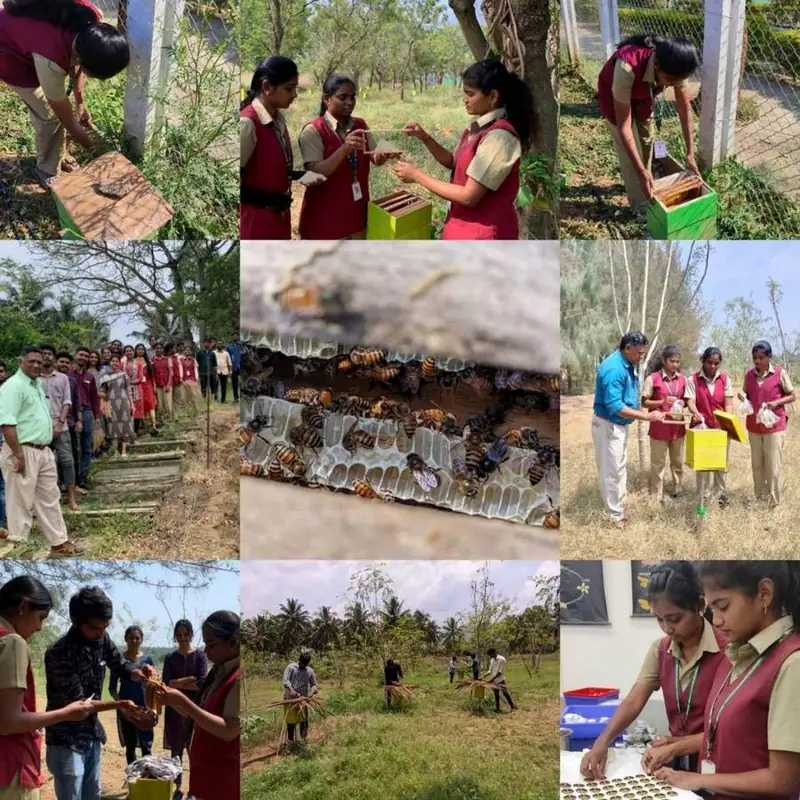
A major component of the ELP, Beekeeping program involves honey extraction and processing, where students gain practical exposure to using honey extractors, filtration, moisture determination, and hygienic packaging for market readiness. Emphasis is placed on quality assurance, branding, and the economic feasibility of small-scale honey enterprises. The program also highlights the ecological significance of bees in crop pollination and biodiversity conservation, aligning with SDG 15 (Life on Land).
15. THE Impact Rankings Metric/Indicator
Water discharge guidelines and standards
KITs have installed adequate number of STPs in different locations inside the campus to treat the waste water as per the guidelines of Tamil Nadu Pollution Control Board. Four anaerobic biogas plants are actively operated in student residences to treat domestic blackwater and kitchen waste (generating 114 kg/day of biogas and displacing ₹23.10 lakh in commercial LPG), while domestic wastewater undergoes tertiary treatment across four centralized Sewage Treatment Plants (2,450 KLD total design capacity) ensuring 100% circular effluent reuse and zero external discharge. The sludge that is derived from these STPs is repurposed as a form of organic fertilizer
Policy on plastic waste reduction
KITS enforces a strict ban on single-use plastics across all food courts, campus cafeterias, and hostels under the national Mission LiFE initiative. Single-use polymers have been fully substituted with compostable paper cups, plates, and carry bags. Regular plastic-free campus drives and mechanical shredding/recycling programs ensure zero synthetic polymer leakage into campus soils or surrounding natural ecosystems.
Policy on hazardous waste disposal
Wastes generated in and around KITS are handled in a scientific way to ensure an environment- friendly residential campus. Effective solid waste management practices are being implemented to make the campus ‘Zero Garbage Zone’. The biological, chemical and recyclable wastes collected from the campus premises arising out of various activities, such as laboratory, research, farm operations, maintenance and cleaning operations at the University level are disposed-off safely following the Central and State Government guidelines for waste disposal.
16. Conclusion
Karunya Institute of Technology and Sciences demonstrates an exemplary, evidence-backed institutional model for SDG 15 (Life on Land) during 2024–25, documented across four operational pillars:
1. Terrestrial Ecosystem Stewardship & Biodiversity Protection: Located in the UNESCO-recognized biodiversity hotspot of the Western Ghats, KITS actively preserves 720 acres of natural terrain, ensuring that over 85% of campus flora consists of native species, while strictly controlling invasive weeds through systematic eradication.
2. Sustainable Agriculture & Farmed Food: Operation of a 329-acre agricultural and horticultural instructional farm utilizing 100% tertiary-treated wastewater for irrigation, coupled with a 0.75-acre zero-chemical organic greens plot, vermicomposting units, bio-pesticide labs, apiculture honey production, and scientific mushroom cultivation supplying residential dining halls.
3. Research, Innovation & Wildlife Technologies: Publication of 61 peer-reviewed Scopus research papers (2024–2025) addressing satellite vegetation monitoring, deforestation risk prediction, soil bio-remediation, and AI-driven elephant intrusion detection to mitigate human-wildlife conflict along forest fringes.
4. Experiential Learning & Agrarian Community Outreach: Delivery of 41 specialized core and elective courses in sustainable agriculture and forestry, complemented by the 20-week Rural Agricultural Work Experience (RAWE) programme empowering local farming communities across the Siruvani basin with organic soil management, crop health clinics, and climate-resilient farming techniques.