1. SDG Overview
Sustainable Development Goal 14 (SDG 14), “Life Below Water,” aims to conserve and sustainably use the oceans, seas, and marine resources for sustainable development. It focuses on reducing marine pollution, protecting marine and coastal ecosystems, preventing overexploitation of marine resources, and promoting the sustainable use of aquatic biodiversity.
Importance in the context of the institution
SDG 14 is relevant to higher educational institutions because they play an important role in promoting environmental awareness, scientific research, innovation, and sustainable practices. Through academic programmes, student projects, community outreach, and interdisciplinary research, the institution can contribute to reducing water pollution, managing plastic waste, protecting aquatic biodiversity, and developing eco-friendly technologies. Biotechnology, Physical Sciences, Civil Engineering and Water Institute departments can support this goal through wastewater treatment, bioremediation, microbial degradation of pollutants, and research on sustainable waste management.
Importance of the relevant SDG
SDG 14 is essential for maintaining ecological balance, conserving marine biodiversity, protecting aquatic food chains, and supporting the livelihoods of communities dependent on aquatic resources. Its implementation helps reduce pollution from land-based activities, promotes responsible consumption and production, and strengthens environmental sustainability. By integrating SDG 14 into teaching, research, and institutional activities, the institution can contribute to aquatic ecosystem conservation and foster environmental responsibility among students and staff.
Water stewardship and prevention of aquatic pollution
Water treatment and desalination research
Wetland and aquatic biodiversity conservation
Curriculum, experiential learning and student research
Community awareness and environmental partnerships
2. Institutional Policies and Commitments
KITS identifies Water among its core institutional thrust areas. Through interdisciplinary Technology and Innovation Missions—specifically Water Treatment & Desalination and Wetland Conservation—the University integrates aquatic habitat preservation, wastewater reclamation, and catchment stewardship into institutional governance and campus operations.
| Institutional initiative | Implementation / purpose | SDG 14 linkage |
|---|---|---|
| Water institutional thrust area | Interdisciplinary teaching and research on water challenges | Water security, aquatic biodiversity preservation, and pollution prevention |
| Water Treatment & Desalination Mission | Research on cost-effective potable and greywater treatment | Advanced water purification, reducing stress on natural freshwater and coastal aquifers |
| Wetland Conservation Mission | Wetland restoration and water-quality focus | Freshwater wetland conservation and aquatic habitat protection |
| Green Campus / sewage treatment | Operation of 4 centralized STPs (2,450 KLD capacity) with tertiary treatment and 100% recycling. | Complete prevention of untreated sewage runoff into regional aquatic ecosystems |
| Rainwater harvesting and recharge | 33 engineered soak pits (1.8m dia × 3.0m depth) and dedicated balancing reservoirs. | Catchment stewardship, aquifer replenishment, and prevention of silt-laden runoff |
| Outcome-based curriculum | Water-related learning outcomes, projects, and Hackathons | Aquatic environmental literacy and water conservation stewardship |
University Green Campus, Environment and Energy Conservation Policy
Karunya Institute of Technology and Sciences is committed to safeguarding regional water bodies and aquatic ecosystems through integrated water resource management. The policy mandates the capture, containment, and tertiary treatment of domestic greywater and blackwater across all residential and academic blocks. By ensuring that 100% of treated wastewater is re-channeled into campus agricultural and landscape irrigation with zero discharge into natural drainage lines, the policy prevents land-based nutrient enrichment, eutrophication, and microbiological pollution in the downstream Siruvani and Noyyal river basins, directly advancing SDG 14.
Climate Change Mitigation and Sustainability Policy
KITS recognizes that climatic shifts severely impact freshwater availability, aquatic habitats, and watershed equilibrium. The policy integrates water security into institutional climate action by promoting water-efficient infrastructure, smart IoT-enabled pump controllers, and low-energy thermal desalination technologies. By substituting freshwater extraction with treated water and harvesting monsoonal runoff through 33 recharge soak pits, the institution maintains natural water tables, minimizes hydrological depletion, and protects sensitive freshwater aquatic ecosystems from climate-induced degradation.
Energy and Carbon Management Policy
The policy couples energy efficiency with sustainable water utility operations, recognizing the high energy intensity of water pumping and purification. By powering treatment systems and solar street fixtures with on-campus renewable energy, and replacing fossil-fuel heating with 30 solar water-heating systems (87,600 LPD), the policy lowers operational greenhouse gas emissions that contribute to atmospheric warming and ocean acidification. Furthermore, systematic monitoring of campus wastewater pumping prevents pump overruns and overflow leakages, maintaining the integrity of campus aquatic buffer zones.
Waste and Resource Management Policy
KITS enforces a comprehensive campus-wide ban on single-use plastics and hazardous waste leakage under the national Mission LiFE guidelines. Through strict source segregation, mechanical waste processing, and laboratory chemical neutralization, the policy prevents solid non-biodegradable polymers, microplastics, and toxic chemical effluents from entering stormwater channels, open drainage networks, and surrounding aquatic habitats. By eliminating plastic litter and synthetic contaminants at the institutional source, the policy directly mitigates the risk of microplastic ingestion, habitat degradation, and chemical toxicity in aquatic food chains under SDG 14.
Operational commitments
Operate four centralized sewage treatment plants with a combined capacity of 2,450 KLD (JMR 1,000 + PRGR 600 + Ladies Residence 450 + FDR/EGR 400 KLD), yielding 980 KLD of recycled water under a strict Zero Liquid Discharge regime
Reuse treated STP water for irrigation and maintain rainwater harvesting and groundwater recharge measures.
Encourage water-quality research, wastewater treatment, pollution monitoring and wetland protection.
Promote student learning and environmental stewardship through projects and outreach.
3. SDG Objectives
Objective 1 – Aquatic ecosystem awareness
Increase awareness of freshwater and marine ecosystem health, pollution pathways and responsible water use.
Objective 2 – Water-related education
Integrate water scarcity, pollution prevention and sustainable treatment technologies into curricula.
Objective 3 – Research and innovation
Advance desalination, wastewater treatment, water-quality monitoring and wetland studies.
Objective 4 – Pollution prevention
Improve responsible wastewater treatment and reuse practices.
Objective 5 – Biodiversity conservation
Support wetland conservation and research relevant to aquatic organisms and habitats.
Objective 6 – Community engagement
Encourage environmental education and local stewardship.
Objective 7 – Monitoring and accountability
Develop indicators for water reuse, effluent quality and environmental outcomes.
4. Curriculum Integration
Direct curriculum integration
The institutional curriculum addresses water scarcity, environmental pollution and sustainable technologies through outcome-based learning. It includes 31 water-related courses across academic programs, alongside interdisciplinary projects and practical learning.
Quantitative curriculum evidence
| Curriculum category | Reported number of courses | Relevance |
|---|---|---|
| Water-related courses | 31 | Direct SDG 14 and water stewardship relevance |
| Renewable-energy courses | 24 | Supporting sustainable treatment energy systems |
| Next-generation technology courses | 697 | Potential enabling tools; not all directly SDG 14 |
Experiential learning
Student learning approaches include mini-projects, capstone projects, internships, field visits, simulations and participation in funded research. Relevant activities can involve water-quality testing, treatment-process design, sensor-based monitoring and ecosystem assessment. These are examples of possible SDG-aligned learning pathways, not separately verified 2024–25 event counts.
Relevant Technology Missions
Water Treatment & Desalination – cost-effective treatment solutions for potable and grey water.
Wetland Conservation – wetland restoration and improved water quality.
Rural Development – clean-water solutions and local environmental needs.
Smart Technology / AI – enabling water-quality monitoring and decision support.
5. Research and Innovation
Funded Desalination & Aquatic Research Projects
| Project / Programme | Investigators / agency | Reported funding |
|---|---|---|
| Ongoing thermal desalination project | Faculty-led project described in the additional institutional information supplied; agency and project title not specified | ₹4.5 crore (₹45 million) |
| Experimental Investigation of a Novel Low Temperature MED Desalination Technology | Dr. L. Godson Asirvatham / Dr. B. Jefferson Raja Bose; Indian Academy of Sciences | ₹44.75 lakh |
The ongoing ₹4.5 crore thermal desalination project represents a significant investment in freshwater-production technology. Thermal desalination separates freshwater from saline feedwater using heat-driven processes; project-specific capacity, energy source, brine handling, test results and environmental performance were not supplied. The ₹44.75 lakh MED project is separately identified in the source report and should not be treated as the same grant without documentary confirmation.
Additional background supplied for the report describes a faculty research portfolio supported by DST, BRFST, MoES and ISRO and the Centre for Research in Material Science and Thermal Management (CRMS&TM), Department of Mechanical Engineering. The specific funding agency for the ₹4.5 crore project has not been confirmed.
Water and aquatic-environment research grants
| Short-term research topic | Reported amount |
|---|---|
| Chlorine Decay Model in Drinking Water Distribution Network | ₹90,000 |
| Machine Learning-based Water Quality Analysis and Prediction System | ₹10,000 |
| Water Pollution Monitoring System | ₹17,050 |
Publications
| Title | Authors | Year | Scopus Source title | Volume | Issue |
|---|---|---|---|---|---|
| A sustainable solution for mitigating environmental corrosion in the construction sector and its socio-economic concern | Kanagaraj, B.| Priyanka, R.| Anand, N.| Kiran, T.| Andrushia, A.D.| Lubloy, E. | 2024 | Case Studies in Construction Materials | 20 | - |
| Characterization, distribution, and risk assessment of microplastic in fish and sediment from the longest river of Bangladesh | Siddiqa, S.| Gautam, S.| Eti, S.A.| Khatun, F.| Rahman, M.M.| Solayman, H.M.| Aziz, A.A.| Khan, B. | 2025 | Water Environment Research | 97 | 2 |
| Regional air quality: biomass burning impacts of SO2 emissions on air quality in the Himalayan region of Uttarakhand, India | Gautam, A.S.| Kumar, S.| Gautam, S.| Singh, K.| Ram, K.| Siingh, D.| Ambade, B.| Sharma, M. | 2024 | Air Quality, Atmosphere and Health | 17 | 1 |
| Understanding Microplastic Pollution in Groundwater: Pathways, Health Implications and Solutions | Sumam, S.B.| Gautam, S.| Arulraj, P. | 2025 | Water Environment Research | 97 | 7 |
| Recent progress in seaweed valorization for sustainable applications | Benita, S.| Subbiah, K.| Periyasamy, S. | 2025 | Discover Sustainability | 6 | 1 |
| ICP-MS-based quantitative analysis and risk assessment of metal(loid)s in fish species from Chennai, India | Ray, S.| Jangid, C.| Francis, G.A.| Pathak, S.S.| Chavan, P.| Vashishth, R. | 2025 | Frontiers in Public Health | 13 | - |
| Assessing air pollution in a coastal urban setting: contributions of PM₁₀, vehicular emissions, and public health impacts | Reshmy, D.S.| Swarnalatha, K.| Gautam, S.| Mathew, B.S.| Hegde, P. | 2025 | Journal of Atmospheric Chemistry | 82 | 2 |
| Water quality degradation and eutrophication risk in the Ashtamudi wetland: role of physicochemical factors and microplastics | K Biju, M.| J, B. | 2025 | Environmental Monitoring and Assessment | 197 | 12 |
| Edge AI-powered marine pollution classification with customized CNN model | Palanisamy, S.| Bonny, T.| Nasir, N.| Al Shabi, M.| Al Shammaa, A. | 2025 | Neural Computing and Applications | 37 | 9 |
| Ocimum sanctum as a Source of Quorum Sensing Inhibitors to Combat Antibiotic Resistance of Human and Aquaculture Pathogens | Issac Abraham, S.V.P.| Arumugam, V.R.| Mary, N.I.| Dharmadhas, J.S.| Sundararaj, R.| Devanesan, A.A.| Rajamanickam, R.| Veerapandian, R.| John Bosco, J.P.| Danaraj, J. | 2024 | Life | 14 | 7 |
| Decision − support framework for translating strategic vulnerability assessment of freshwater wetlands: From theoretical concept to operational application | Srinithisathian, S.| Brema, J.| James, E.J.| Anandhi, A. | 2025 | Ecological Indicators | 179 | - |
| Urban wetlands as buffers against airborne microplastics and associated pollutants: Implications for public health and sustainable urban management | Gautam, S.| Rathikannu, S.| Marbaniang, G.C.| Gupta, P.| Varghese, D.G.| Ho, C.-H. | 2025 | Journal of Hazardous Materials Advances | 20 | - |
| Advanced electrochemical sensing of Pb2+ ions using V12-CoO/WO nanocomposite-modified Au electrode | Sundaresan, S.| Sowmya, S.| Madhu, V.| Vijaikanth, V. | 2025 | Microchemical Journal | 213 | - |
| Fate of Micro/Nano Plastic Pollutants in the Marine Ecosystem | Thathapudi, J.J.| Gomez, L.A.| Vijay, V.| Chandrapragasam, V.| Shepherd, R.| Paul, S.| Lee, M.-J.| Somu, P. | 2024 | Remediation of Plastic and Microplastic Waste | - | - |
| Sources, effects, and fate of microplastics in aquatic environment | Mahanty, B.| Zafar, M.| Behera, S.K.| Atri, T.R.| Rene, E.R. | 2025 | Microplastic Pollution: Occurrence, Health Risk and Challenges | - | - |
| Blue Economic Growth from the Southern Coast of Bangladesh: Barriers, Opportunities, and Policy Instruments | Auyon, S.T.| Islam, H.M.R.| Khatun, F.| Khan, M.B.| Gautam, S. | 2025 | Blue Sky, Blue Water: Strategies for Protecting Air and Water Quality in the 21st Century | - | - |
| Metal oxide doping for sensor applications | Gururajan, B.| Narasihman, V.| Paul, D.R.| Sasikumar, D.| Liu, W.-S.| Kondapavuluri, B.| Srinivasan, P.| Madanagurusamy, S. | 2025 | Doping of Metal Oxides: From Fundamentals to Applications | - | - |
| Correction: ICP-MS-based quantitative analysis and risk assessment of metal(loid)s in fish species from Chennai, India (Frontiers in Public Health, (2025), 13, (1609067), 10.3389/fpubh.2025.1609067) | Ray, S.| Francis, G.A.| Pathak, S.S.| Chavan, P.| Vashishth, R. | 2025 | Frontiers in Public Health | 13 | - |
| Machine Ears: Audio Frequency Based Automobile Engine Health Analysis | Shajie, D.A.| Juliet, S.D.| Ezra, K.| Flora, B.A.J. | 2025 | Journal of Machine and Computing | 5 | 1 |
| Microbial Therapy for Recovery of Contaminated Agricultural Soil | Laurence, L.A.| Rai, R.S.| Chandrapragasam, V.| Gomez, L.A.| Shepherd, R.| Thathapudi, J.J. | 2025 | Environmental Science and Engineering | 256 | - |
| Bioactive molecules from marine derived microbes against fish pathogens | Saravana Kumari, P.| Abiyoga, M.| Murugan, S. | 2025 | Marine Microbiome and Microbial Bioprospecting: Diversity and Bioactive Potential | - | - |
Technology Development and Innovation
KITS’ research-to-application model links funded studies, student work, technology development and entrepreneurship. For SDG 14, the most directly relevant pathways are desalination, water-quality sensing, wastewater treatment, wetland decision support and sustainable utilization of aquatic biomass. No verified SDG 14-specific patent count was supplied.
6. Events Organized Related to SDG
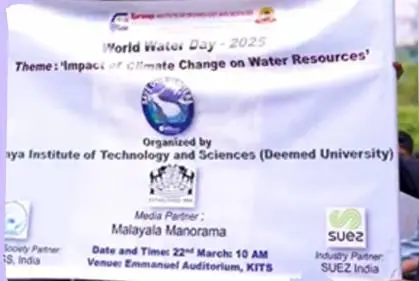
WORLD WATER DAY CELEBRATION – 2025
Organized by: School of Agricultural Sciences, Karunya Institute of Technology and Sciences, Coimbatore, School of Agricultural Sciences, Karunya Institute of Technology and Sciences, Coimbatore, Malayala Manorama, Suez India
Date: 22 March 2025 Time: 10.00 a.m. Venue: Karunya Institute of Technology and Sciences, Coimbatore
1. Objectives
To create awareness among students about the importance of water conservation and sustainable water management.
To promote responsible water usage and encourage the protection of water resources.
To stimulate innovative thinking and problem-solving skills through the Hackathon/Hydrothon.
To encourage environmental awareness and creative expression through painting competitions.
To enhance students’ knowledge of water resources, conservation practices, and global water-related challenges.
To foster environmental responsibility and collective action towards preserving water for future generations.
2. Report on the Programme
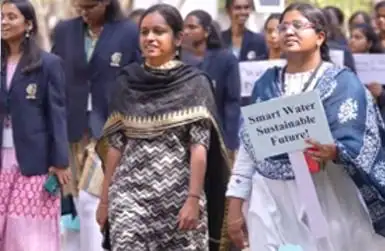
The School of Agricultural Sciences, Karunya Institute of Technology and Sciences, celebrated World Water Day on 22 March 2025 with a series of educational and awareness-oriented activities emphasizing the importance of water conservation, sustainable water management, and the responsible use of water resources. The programme commenced at 10.00 a.m. and involved faculty members, college students, and school students.
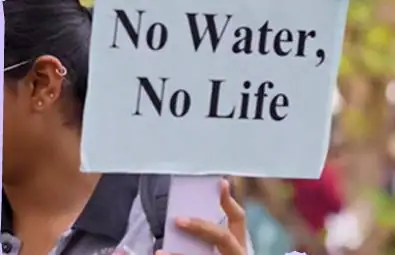
A water rally was organized to create public awareness about water conservation and the need to protect water resources for future generations. The rally highlighted the importance of sustainable water use and encouraged participants to adopt water-saving practices in their daily lives.
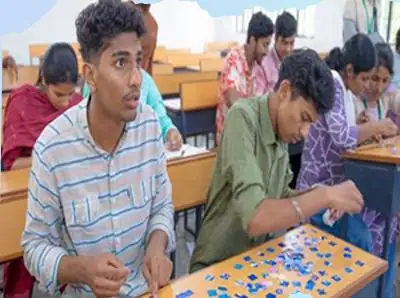
A Hackathon/Hydrothon was conducted at the KTBIP Discussion Hall, providing a platform for KITS students to explore innovative ideas and develop solutions to water-related challenges. The event encouraged creativity, critical thinking, and the application of scientific knowledge to address issues concerning water conservation and management.
A water quiz competition was organized at Emmanuel Auditorium to enhance students’ knowledge of water resources, conservation techniques, and global water-related challenges. The competition received registrations from 18 teams, including 11 teams from KITS and 7 teams from schools. Each team consisted of three members.
A painting competition was conducted at the KTBIP Seminar Hall for school and college students. The competition included individual events such as crayon colouring and pencil drawing, providing participants with an opportunity to express their ideas on water conservation and environmental protection through creative artwork.
The events were coordinated by faculty members and student coordinators from the participating units. Faculty members served as quiz masters, evaluators, and event coordinators, ensuring the smooth conduct of the programme. Participation was encouraged among students from different academic years, including postgraduate and doctoral scholars, along with students from neighbouring schools.
The celebration concluded with a prize distribution ceremony to recognize and appreciate the achievements of the participants.
3. Outcomes
Increased awareness among students regarding water conservation, sustainable water management, and the protection of water resources.
Enhanced knowledge of water-related issues and conservation practices through the quiz competition.
Encouraged innovation, critical thinking, and problem-solving abilities through the Hackathon/Hydrothon.
Promoted creativity and environmental communication through the painting competition.
Strengthened student engagement and interaction between school and college communities.
Fostered environmental responsibility and encouraged participants to adopt water-conscious practices in their daily lives.
The World Water Day celebration successfully combined awareness, innovation, knowledge sharing, and creative expression to emphasize the importance of conserving water. The water rally, quiz competition, painting competition, and Hackathon/Hydrothon provided students with opportunities to learn, collaborate, and contribute ideas towards sustainable water management.
The programme reinforced the message that water is a precious natural resource, and its conservation is essential for environmental sustainability and the well-being of future generations. The celebration encouraged students to become responsible water users and active contributors to sustainable development.
Alumni Contribution as Co-Investigator in DST-Sponsored Research Project
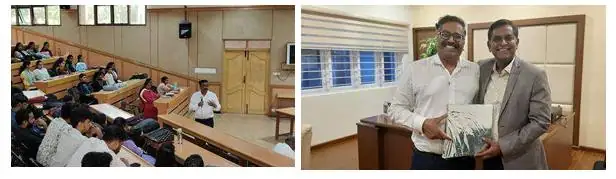
On September 18, 2024, Dr. Justin Robert, an alumnus from the M.E. (Thermal) program (1999-2001), currently based in Dubai and serving as a co-investigator on a DST-sponsored project focused on desalination visited KITS for Research interaction. During his visit, Dr. Robert was engaged in discussion with Junior Research Fellows and the Head of the Department regarding the above Research project. His insights and expertise provided valuable encouragement for impactful Research.
7. Community Outreach and Extension Activities
Environmental cleanliness awareness
7.1 River Basin & Wetland Cleanliness Campaigns:
The “Swabhav Swachatha Sanskar Swachatha” activity was organized on 21 November 2024. NCC cadets developed video vlogs and posters promoting cleanliness and responsible surroundings. This is indirectly relevant to SDG 14 through prevention of litter and land-based pollution.
Conservation and campus stewardship
7.2 Catchment Stewardship in the Siruvani Foothills:
Tree plantation, responsible waste handling, wastewater reuse and water conservation contribute to watershed stewardship. The reference report also records an NCC Tree Plantation Drive on 16 November 2024; its primary SDG alignment is terrestrial and climate-related, with indirect relevance to catchment protection.
8. Best Practices
Best Practice 1 – Integrated wastewater management
Four STPs with a combined treatment capacity of 2,450 KLD and reuse of treated water for irrigation provide a campus-level framework for wastewater management. Capacity is not equivalent to actual daily throughput or demonstrated pollutant removal; operational logs and effluent test reports are needed to quantify results.
Best Practice 2 – Desalination research-to-application pathway
The ongoing ₹4.5 crore thermal desalination project and the separately listed ₹44.75 lakh low-temperature MED investigation illustrate the institution’s focus on water technology. Energy intensity, brine disposal, freshwater output and lifecycle performance are recommended measures for assessing aquatic sustainability.
Best Practice 3 – Wetland and water-quality research
The Wetland Conservation mission and research on wetland vulnerability, drinking-water chlorine decay, water-quality prediction and pollution monitoring connect research with aquatic ecosystem stewardship.
Best Practice 4 – Water-focused curriculum and interdisciplinary missions
The 31 water-related courses and Technology and Innovation Missions connect education with practical water challenges, providing a replicable model for sustainability-oriented teaching.
| Indicator | Evidence status |
|---|---|
| STP installed treatment capacity | 2,450 KLD |
| Number of STPs | 4 |
| Water-related courses | 31 |
| Thermal desalination project funding | ₹4.5 crore |
| Aspect | Campus wastewater reuse | Student innovations on aquatic waste | Deep-sea microbes for aquaculture |
|---|---|---|---|
| Background | Campus wastewater load | Plastic and floating waste in water bodies | Pathogens threaten aquaculture |
| Objective | Prevent discharge to water bodies | Remove and replace plastics | Find new antimicrobial compounds |
| Implementation | Four STPs, rainwater harvesting | Surface vehicle, edible cutlery, seaweed bioplastic sample testing | Isolating deep-sea microbes |
| Innovation | Treated water irrigates campus | Robot collects floating waste | Quorum sensing, not antibiotics |
| Beneficiaries | Campus and watershed | Student innovators, water bodies | Aquaculture farmers (prospective) |
| Results | 2,450 KLD capacity; ₹2 lakh yearly savings from water measures | Edible cutlery startup incubated and active; a testing service for seaweed (Kappaphycus) bioplastic samples recorded for Biotechnology | ₹1.25 crore funding |
| Sustainability | Operating plants, recurring savings | KTBIP incubation support | Multi-year funded research |
| Replication | Any residential campus | Other engineering colleges | Other coastal laboratories |
9. STRATEGIC PARTNERSHIPS AND COLLABORATIONS (THE Metric 14.3)
KITS maintains active collaborative linkages supporting aquatic conservation, water technology, and marine research:
1. Suez India & Malayala Manorama: Joint co-organizers of World Water Day 2025, public water rallies, and student Hydrothon innovation challenges.
2. Central Tuber Crops Research Institute (CTCRI): Research partnership on organic crop mulching to eliminate chemical fertilizer runoff into river drainage systems.
3. Department of Science and Technology (DST) & Ministry of Earth Sciences (MoES): Institutional sponsorship for solar multi-effect distillation (MED) and low-temperature desalination.
4. Local Village Panchayats & Water Users Associations (Siruvani & Noyyal Basins): Regular knowledge exchange and seasonal water testing services provided by KITS Water Institute laboratories.
10. Conclusion
Karunya Institute of Technology and Sciences demonstrates a comprehensive, multidisciplinary institutional commitment to SDG 14 (Life Below Water) during 2024–25 across four operational domains:
1. Advanced Desalination & Water Technology: Development of novel solar thermal and low-temperature multi-effect distillation (MED) technologies supported by national funding agencies (DST, MoES), providing sustainable freshwater alternatives while mitigating coastal ecological pressures.
2. Land-Based Pollution Control & Zero Liquid Discharge: Strict enforcement of a campus-wide single-use plastic ban, paired with four centralized STPs (2,450 KLD capacity) yielding 980 KLD of recycled water for 100% on-campus landscaping and agricultural irrigation, ensuring zero untreated domestic effluent enters regional drainage systems.
3. Aquatic Research & Marine Bioprospecting: Publication of 17 high-impact Scopus papers investigating microplastic contamination in riverine and marine food chains, heavy metal toxicity in coastal fisheries, AI-driven marine debris classification, and deep-sea microbial compounds combating antibiotic-resistant aquaculture pathogens.
4. Academic Stewardship & Community Literacy: Delivery of 31 water-related courses, annual World Water Day celebrations featuring the student Hydrothon and water rallies, and technical outreach to rural communities across the Siruvani catchment basin to safeguard shared aquatic resources.