
1. SDG Overview
SDG 8 – Decent Work and Economic Growth calls for the promotion of sustained, inclusive and sustainable economic growth, full and productive employment, and decent work for all. For a higher education institution such as Karunya Institute of Technology and Sciences (KITS), this goal is directly linked to its core mission of producing industry-ready, employable graduates; nurturing entrepreneurial talent that creates new enterprises and jobs, generating research and innovation that contributes to technological and economic advancement; and building partnerships with industry, government and civil society that expand livelihood and employment opportunities. It is equally linked to the Institution's own conduct as an employer: its commitment to a living wage, non-discrimination, safe working conditions and fair labour practices for its own staff.
KITS advances SDG 8 through a four-pronged approach: (i) strengthening graduate employability through curriculum, training, mentoring and placement support; (ii) building a robust entrepreneurship and incubation ecosystem that converts student and faculty innovation into start-ups and enterprises; (iii) undertaking funded research, consultancy and industry collaboration that supports technology-driven economic growth; and (iv) upholding ethical, non-discriminatory and equitable employment practices for its own workforce, in line with a living-wage principle. During 2024-25, these efforts translated into 868 students placed in reputed organisations, 259 students proceeding to higher studies, 21 externally funded research projects worth ₹906.12 lakhs, 38 patents granted, 79 SDG 8-relevant publications in Scopus-indexed journals (2024-25), and a growing portfolio of student and faculty start-ups nurtured under the Karunya Technology Business Incubation Park (KTBIP).
2. Institutional Policies and Commitments
Karunya Innovation and Incubation Centre (KIIC): Established by the Institution to foster a thriving environment for innovation, research and entrepreneurial endeavours in science and technology, KIIC promotes technology-centred entrepreneurship and enables the practical application of knowledge to address societal and economic needs. It is an institution-wide facility administered under the Office of Research and Innovation.
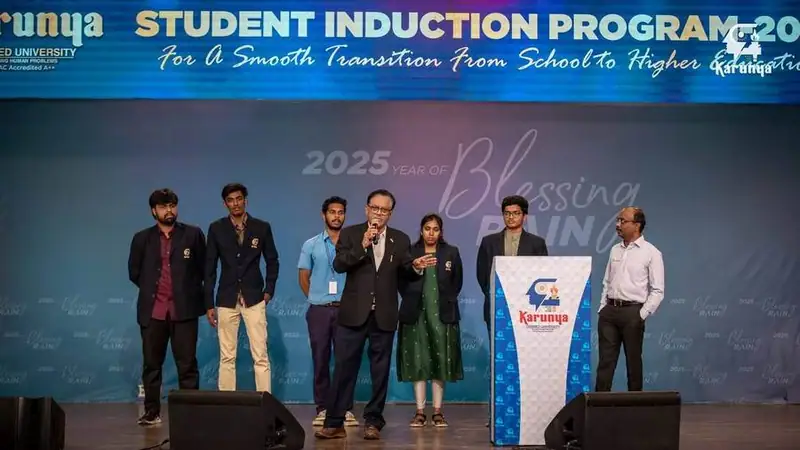
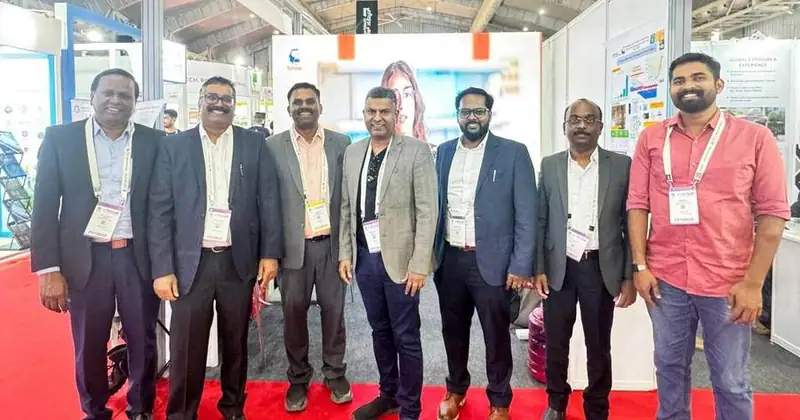
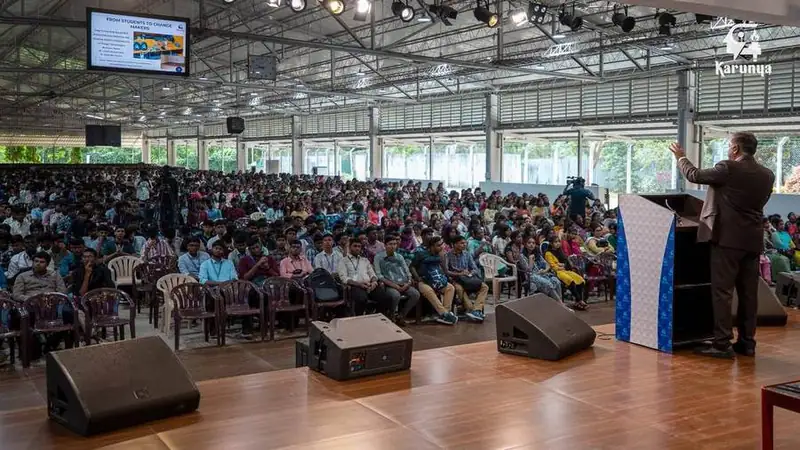
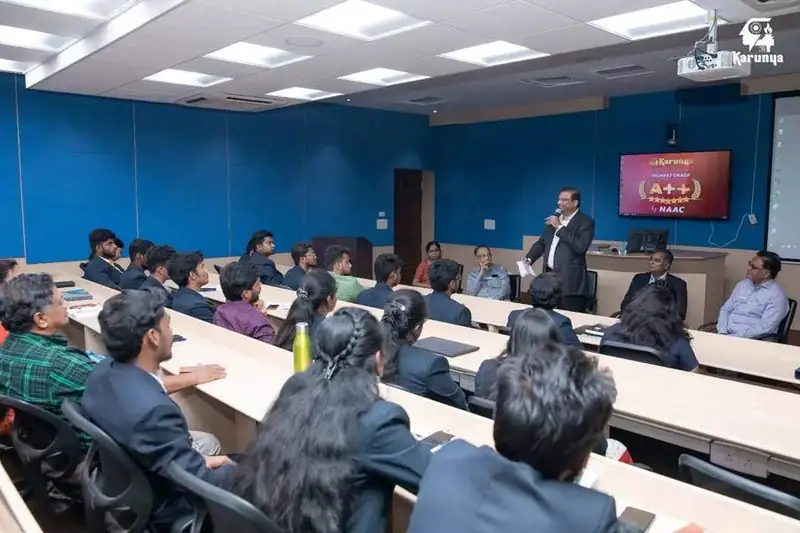
Karunya Technology Business Incubation Park (KTBIP): Functioning under the Karunya Incubation Foundation (KIF), KTBIP is the Institution's flagship policy vehicle for translating innovation into enterprise. It provides ideation guidance, pre-incubation mentoring, prototype development assistance, product validation, market linkage, intellectual property support and business acceleration to students, faculty, researchers and aspiring entrepreneurs, with the explicit objective of contributing to "economic growth and the advancement of technology-driven entrepreneurship." It is institution-wide and is coordinated through the incubation cell.
Innovation, Incubation and Entrepreneurship Course (IGNITE Entrepreneurship Programme): Introduced in collaboration with the NEN-Wadhwani Foundation, this is a structured, credit-based 14-week entrepreneurship curriculum offered from the early years of undergraduate education. The purpose is to institutionalise entrepreneurial thinking as part of the formal academic policy, rather than as an extracurricular add-on, so that every student is exposed to opportunity identification, business-model development and venture planning. It is administered by the academic departments in coordination with KTBIP and is institution-wide.
Merit-based, Capitation-free Admissions Policy: KITS admits students purely on merit "without resorting to capitation fees or donations," a policy that safeguards equal and fair access to the education that underpins future decent work and economic opportunity for students from diverse economic backgrounds.
Student Mentoring Policy: Every faculty member is assigned 18-20 mentees to guide students academically and professionally, supporting their readiness for the workforce. The policy is institution-wide and is administered through the Dean of Student Affairs.
Value-Added Course Policy: Departments are mandated to integrate value-added courses into the curriculum to enhance student employability by imparting critical life skills and professional competencies, updating content in line with industry requirements.
HR Policy on Living Wage and Scale of Pay: KITS pay salaries and wages that are higher than the standard cost of living, adhering to the norms of the 7th Central Pay Commission (with applicable HRA/DA) for faculty positions across the School of Engineering and Technology, School of Agricultural Sciences and School of Management, and equivalent structured pay scales for non-teaching (construction, maintenance, technical and administrative) staff. This is an institution-wide HR policy administered by the HR Section.
Equal Employment Opportunity Policy: As a self-financing Christian minority institution, KITS commits that no employee or applicant will face discrimination on account of race, colour, age, sex, religion, marital status, disability, military status or any other legally protected characteristic, across all terms of employment, recruitment, hiring, promotion, training, evaluation, compensation and termination.
Policy Against Harassment (including Sexual Harassment): KITS maintains a zero-tolerance policy towards discrimination and harassment of any kind, with a defined complaint procedure (reportable to the HoD/Director/Dean/Registrar/Pro-Vice Chancellor/Vice-Chancellor), a no-retaliation guarantee, and disciplinary consequences up to unpaid suspension or termination for violations. An Internal Complaints Committee specifically addresses gender-based discrimination and harassment.
Grievance Redressal Policy: All faculty can raise concerns through a dedicated email platform ([email protected]); grievances are acknowledged and a resolution or explanation is provided within 24 hours. Escalated matters are referred to the Grievance Redressal Committee, comprising senior university officials, for further investigation and a final, transparent decision.
Policy on Modern Slavery, Forced Labour and Child Labour: KITS's service rules (commencement of service, probation, confirmation, resignation/termination, and superannuation at age 58 with possible extension to 70 based on performance) are governed by clearly defined, non-exploitative conditions, with mandated notice periods and formal exit procedures, in line with Indian labour law and international conventions against forced labour, child labour and human trafficking.
3. SDG Objectives
Through its teaching, research, campus initiatives, community engagement and internal HR practice, KITS pursues the following objectives in relation to SDG 8:
- Enhance graduate employability by embedding employability and life-skills training, value-added courses and industry-aligned curricula across all programmes.
- Cultivate an entrepreneurial mindset among students and faculty so that they become job creators and not only job seekers, through structured entrepreneurship education and incubation support.
- Promote SDG-aligned research and innovation that contributes to technological advancement, productivity and economic growth, including patents, products, consultancy and funded projects.
- Strengthen industry and institutional partnerships that create internship, training, employment and start-up opportunities for students.
- Support fair and inclusive access to opportunity through merit-based admissions, mentoring and financial support mechanisms (including alumni contributions towards student fees).
- Encourage lifelong learning and up-skilling of both students and faculty through MOOCs, certifications and professional development programmes that keep pace with evolving labour-market needs.
- Uphold decent work standards for its own workforce, including a living wage, non-discrimination, pay equity, freedom from forced/child labour, and fair grievance redressal, so that the Institution models the SDG 8 principles it teaches.
4. Curriculum Integration
SDG 8 is embedded in teaching and learning at KITS through dedicated courses, structured programmes and experiential components:
Innovation, Incubation and Entrepreneurship Course / IGNITE Programme: A 14-week, activity-based course (developed with the NEN-Wadhwani Foundation) covering opportunity identification, problem validation, design thinking, market analysis, business-model development, venture planning, prototyping and start-up execution. It uses case studies, simulations, innovation challenges and mentoring from industry experts and successful entrepreneurs.
Entrepreneurship, Management and Skill-Development Courses: Woven into the multidisciplinary "Technological Mission" framework, where students from Engineering, Science and Agriculture work in teams to address societal problems, alongside dedicated courses in entrepreneurship, management, skill development and value education.
Value-Added Courses: Departments across the Institution offered contemporary value-added courses in 2024-25 designed to enhance student employability and professional competency. Example: a 14-day "Entrepreneurship Development Programme" was conducted by the Department of Physical Sciences.
MOOC-based Learning: Students and faculty completed courses relevant to employability and entrepreneurship on NPTEL and other MOOC platforms, including "Business Fundamentals for Entrepreneurs" and "Introduction to Interaction Design" and Faculty also completed the Wadhwani Foundation's "Certified Entrepreneurship Educator Counselling Master Course" to strengthen their ability to mentor student entrepreneurs.
Student-led Innovation Bodies: Curriculum-linked platforms such as KarunyaHacks (technical team), KarunyaKreatives (design team) and Karunya E-Cell (entrepreneurship team) give students hands-on, credit-recognised experience in innovation and enterprise development.
Evidence: Course syllabi, value-added course logs, MOOC completion certificates, and IGNITE/KTBIP annual venture reports.
5. Research and Innovation
Funded Research Projects: Seven externally funded projects worth ₹906.12 lakhs were sanctioned to faculty members during 2024-25; over the preceding three years the Institution secured ₹1,413.88 lakhs in research funding from national and international agencies directly relevant to SDG 8's emphasis on research and development for economic diversification and productivity. As per HR PDA policy, Principal Investigators receive 50% of the overhead expenses allotted by the funding agency, credited monthly to their Personal Development Account, incentivising sustained research output.
Patents: 38 patents were granted during 2024-25, translating academic research into potential commercial and industrial applications.
SDG 8-Specific Publications: Of the Institution's overall Scopus/Web of Science output, faculty members published 79 research papers directly relevant to SDG 8 (economic growth, employment, industrial and agricultural productivity, and technology-driven livelihoods) during 2024-2025, spanning engineering, agricultural science and management disciplines. Representative titles are listed in Table 1 below (full list of 79 papers on record with the Office of Research and Innovation):
Table 1: Representative SDG 8-relevant publications by KITS faculty (2024-2025)
| Sl.No. | Title | Year | Journal & Scopus Source title |
|---|---|---|---|
| 1 | A Study on AI-ML-Driven optimizing energy distribution and sustainable agriculture for environmental conservation | 2024 | Harnessing High-Performance Computing and AI for Environmental Sustainability |
| 2 | Energy-efficient and location-aware IoT and WSN-based precision agricultural frameworks | 2024 | International Journal of Computational and Experimental Science and Engineering |
| 3 | FTIR based assessment of microplastic contamination in soil water and insect ecosystems reveals environmental and ecological risks | 2025 | Scientific Reports |
| 4 | Navigating climate change in southern India: A study on dynamic dry-wet patterns and urgent policy interventions | 2024 | Geosystems and Geoenvironment |
| 5 | Beyond the surface: Microplastic pollution its hidden impact on insects and agriculture | 2024 | Physics and Chemistry of the Earth |
| 6 | Jackfruit waste for the production of sustainable biorefinery products: a step towards bio-economic advancement | 2025 | Biomass Conversion and Biorefinery |
| 7 | Genome editing of Plant Growth-Promoting Microbes (PGPM) towards developing smart bioformulations for sustainable agriculture: Current trends and perspectives | 2024 | Genome Editing in Bacteria (Part 2) |
| 8 | Advancements in soil moisture estimation through integration of remote sensing and artificial intelligence techniques | 2025 | Science of the Total Environment |
| 9 | Biofilm-associated microplastic contamination in rural soil and water: emerging hazards to ecosystems | 2025 | Science of the Total Environment |
| 10 | Nanomaterials and Microbial Compatibility: Synergistic and Antagonistic Mechanisms | 2025 | Nano-Bioremediation for Wastewater Treatment |
| 11 | Assessing LDPE microplastics' impact on green gram (Vigna radiata L. Wilczek) cultivation: A greenhouse pot experiment | 2024 | Physics and Chemistry of the Earth |
| 12 | Eco-friendly alkali-activated nano concrete: Impact of nano-GGBFS on mechanical and microstructural properties | 2025 | Case Studies in Chemical and Environmental Engineering |
| 13 | Mitigation of drought stress effects on alfalfa (Medicago sativa L.) callus through CaO nanoparticles and graphene oxide in tissue culture conditions | 2024 | Plant Cell, Tissue and Organ Culture |
| 14 | Energy-Efficient Architecture Design in Information Service Infrastructure | 2025 | Indian Journal of Information Sources and Services |
| 15 | Digital Transformation and Organizational Culture: A Study of How Culture Impacts Digital Adoption | 2025 | Indian Journal of Information Sources and Services |
| 16 | Bibliometric and Scientometric Assessment of the Environmental Impact and Sustainability of Open Cast Iron Ore Mining: A Comprehensive Analysis | 2024 | Water, Air, and Soil Pollution |
| 17 | Dynamics of Microbial Ecology, Particulate Matter, and Bacterial Aerosols in Agriculture: Implications for Health and Sustainability | 2024 | Water, Air, and Soil Pollution |
| 18 | Plant Disease Detection and Pesticide Recommendation Using Deep Learning | 2024 | 10th International Conference on Advanced Computing and Communication Systems, ICACCS 2024 |
| 19 | Secure smart city application using webservice model and mayfly optimization-based lightweight CNN | 2024 | Transactions on Emerging Telecommunications Technologies |
| 20 | Sustainable Air: Strategies for Cleaner Atmosphere and Healthier Communities | 2024 | SpringerBriefs in Geography |
| 21 | Spatial analysis and assessment of soil erosion in the southern Western Ghats region in India | 2024 | Environmental Monitoring and Assessment |
| 22 | Redefining Supply Chain Practices in the Textile Industry – Sustainable Development through Blockchain Technology | 2025 | Textile and Leather Review |
| 23 | Enhancing Solar PV Deployment: Land Suitability Assessment and Site Selection using AHP | 2024 | 2024 International Conference on Advances in Modern Age Technologies for Health and Engineering Science, AMATHE 2024 |
| 24 | Influence of Microbial-enriched Organic Manures and Nanoemulsion Biofertilizers Combined with Inorganic Nutrients on the Growth, Yield and Economics of Chickpea Cultivation | 2025 | Indian Journal of Agricultural Research |
| 25 | Petroleum and oil industries | 2025 | Green Chemistry: A Path to Sustainable Development |
| 26 | Bamboo reinforced panels with recycled concrete aggregates: A comparative study between cement and geopolymer concrete | 2025 | Developments in the Built Environment |
| 27 | Multi-class Classification and Pretrained Sustainable Agriculture Model for Plant Leaf Disease Detection Using Resnet-101 | 2024 | IET Conference Proceedings |
| 28 | Release kinetics of nanoherbicides in aqueous and soil environments—a comprehensive review of release dynamics of nanoherbicide in water and soil | 2025 | Polymer Bulletin |
| 29 | Microplastics Detection in Soil and Water: Leveraging IoT Technologies for Environmental Sustainability | 2024 | International Conference on Computing and Intelligent Reality Technologies, Proceedings of ICCIRT 2024 |
| 30 | A brief review on world of foxtail millet: From botanical characteristics to market trends | 2025 | Journal of Applied Biology and Biotechnology |
| 31 | Monitoring Industrial Protection Gear Using Intelligent System | 2024 | Proceedings of the 2nd IEEE International Conference on Networking and Communications 2024, ICNWC 2024 |
| 32 | Machine Learning Based Hybrid System for Rainfall Prediction and Crop Recommendation | 2024 | 2024 International Conference on Advances in Modern Age Technologies for Health and Engineering Science, AMATHE 2024 |
| 33 | Design of Greenhouse System with Internet of Things and Machine Learning | 2024 | 10th International Conference on Advanced Computing and Communication Systems, ICACCS 2024 |
| 34 | The Role of Digital Twins and Estimating their Impact on the Field of Agriculture in Promoting Sustainability | 2024 | Proceedings - 2024 4th International Conference on Pervasive Computing and Social Networking, ICPCSN 2024 |
| 35 | Thermophilic Microbes: Their Role in Plant Growth Promotion and Mitigation of Biotic Stress | 2024 | Extremophiles for Sustainable Agriculture and Soil Health Improvement |
| 36 | Plant Disease Forecasting: A Comprehensive Review | 2025 | International Journal of Horticultural Science and Technology |
| 37 | Comparative transcriptome profiling to untie the drought tolerance molecular mechanism of backcross rice (Oryza sativa L.) inbred | 2024 | Plant Breeding |
| 38 | Advancements and Challenges in Flood Risk Assessment: A Scientometric Analysis of Global Trends | 2025 | Blue Sky, Blue Water: Strategies for Protecting Air and Water Quality in the 21st Century |
| 39 | Mechanical and sustainability performance of concrete with discarded coconut coir as an alternative to conventional sand | 2025 | Discover Applied Sciences |
| 40 | Metarhizium anisopliae: Unlocking green solutions for sustainable pest management | 2025 | Plant Science Today |
| 41 | Scouting rice (Oryza sativa L.) landraces for moisture stress tolerance using morphometric diversity analysis | 2024 | Plant Science Today |
| 42 | Plant Disease Detection using CNN and Image Processing | 2024 | 15th International Conference on Advances in Computing, Control, and Telecommunication Technologies, ACT 2024 |
| 43 | Metals Recovery from Electrical and Electronic Waste | 2024 | Valorization of Resources from Urban Mined Materials: World Scientific Series on Advances in Environmental Pollution Management - Volume 3 |
| 44 | Advancements in toxic elements extraction for enhanced instrumental profiling | 2025 | Discover Applied Sciences |
| 45 | Recovery Approaches for Spent Batteries: A Review | 2024 | Prabha Materials Science Letters |
| 46 | Comparable Works in Blockchain Technology | 2024 | Blockchain Intelligent Systems: Protocols, Application and Approaches for Future Generation Computing |
| 47 | Development of CNN Model for Detecting Groundnut Leaf Diseases Using Mobile Net | 2024 | Proceedings of 2024 International Conference on Science, Technology, Engineering and Management, ICSTEM 2024 |
| 48 | VGG-16 based Deep Learning Approach for Plant Species Detection | 2024 | 2024 International Conference on Advances in Modern Age Technologies for Health and Engineering Science, AMATHE 2024 |
| 49 | Feature-Optimized Multiclass Water Quality Detection in Kerala's Medium Minor Rivers Using Siamese Networks | 2025 | 2025 IEEE 2nd International Conference on Advances in Modern Age Technologies for Health and Engineering Science, AMATHE 2025 - Proceedings |
| 50 | Sustainable Strategies and Innovative Solutions for Protecting Blue Sky and Blue Water to Enhance Environmental Health | 2025 | Blue Sky, Blue Water: Strategies for Protecting Air and Water Quality in the 21st Century |
| 51 | Empowering early detection of plant diseases in agriculture using artificial intelligence | 2025 | Plant Science Today |
| 52 | Green Revolution to Restore Contaminated Soil for a Sustainable Future | 2025 | Environmental Science and Engineering |
| 53 | Evaluation on the Influence of Cropping Systems and Nutrient Management Practices in Pearl Millet (Pennisetum glaucum) Growth, Crop Nutrient Uptake and Soil Fertility Status | 2025 | Indian Journal of Agricultural Research |
| 54 | WOMEN FINTECH ADOPTION-A BASE TAM FRAMEWORK | 2025 | International Journal of Applied Mathematics |
| 55 | Evaluating the Efficacy Levels of Zinc Fertilizers on Growth, Yield and Quality of Maize (Zea mays L.) | 2025 | Agricultural Science Digest |
| 56 | Advanced Deep Learning Solutions for Enhancing Pearl Millet Crop Health and Productivity | 2025 | Lecture Notes in Networks and Systems |
| 57 | Treatment of acidic electroplating effluent from small scale industries using batch and continuous flow adsorption reactor | 2024 | Engineering Research Express |
| 58 | Quantum Machine Learning for Bitter Gourd Disease and Nutrient Deficiency Detection | 2025 | 4th International Conference on Applied Artificial Intelligence and Computing, ICAAIC 2025 |
| 59 | Blue Economic Growth from the Southern Coast of Bangladesh: Barriers, Opportunities, and Policy Instruments | 2025 | Blue Sky, Blue Water: Strategies for Protecting Air and Water Quality in the 21st Century |
| 60 | AI and Deep Learning based Plant Disease Detection using GAN, GNN and XAI Algorithm | 2025 | 16th International Conference on Advances in Computing, Control, and Telecommunication Technologies, ACT 2025 |
| 61 | Deep Learning Based Rice Plant Disease Detection and Classification System with Automated Treatment Recommendation Engine | 2025 | 4th International Conference on Applied Artificial Intelligence and Computing, ICAAIC 2025 |
| 62 | GLREM-Net: Groundnut Leaf Disease Detection using Deep Learning based ResMobileNet | 2025 | 2025 3rd International Conference on Sustainable Computing and Smart Systems, ICSCSS 2025 |
| 63 | Impact of zinc fortification on yield and quality of Pearl millet (Pennisetum glaucum L.) in the Western ghat region of Coimbatore District under irrigated conditions | 2025 | Journal of Applied and Natural Science |
| 64 | Circular Models and Strategies to Reduce and Reuse Food Waste | 2024 | Novel Approach to Sustainable Temperate Horticulture |
| 65 | IoT-Driven Precision Agriculture: Real-Time Soil Nutrient Monitoring for Enhanced Soil Fertility Management | 2025 | Proceedings - 2025 International Conference on Recent Innovation in Science Engineering and Technology, ICRISET 2025 |
| 66 | Explainable Regression Models for Crop Productivity Prediction | 2025 | 4th International Conference on Applied Artificial Intelligence and Computing, ICAAIC 2025 |
| 67 | Synergistic effect of pulse intercropping on productivity pattern of little millet (Panicum sumatrense L.) under rainfed condition | 2025 | Environment Conservation Journal |
| 68 | Monsoon Shifts and Their Impact on Air Quality and Weather: A Case Study of the Amaravathi River Basin, India | 2024 | Aerosol Optical Depth and Precipitation: Measuring Particle Concentration, Health Risks and Environmental Impacts |
| 69 | Factors influencing achievement motivation of clients in technology acceptance in digitalisation of the microfinance sector | 2025 | Journal of Tropical Agriculture |
| 70 | An Ensemble Machine Learning Model for Vehicular Engine Health Prediction | 2025 | 16th International Conference on Advances in Computing, Control, and Telecommunication Technologies, ACT 2025 |
| 71 | Enhancing Agricultural Productivity IoT Based Soil Quality Prediction and Irrigation Planning | 2025 | AIP Conference Proceedings |
| 72 | Pre and Post Harvesting Monitoring System using Machine Learning | 2025 | 16th International Conference on Advances in Computing, Control, and Telecommunication Technologies, ACT 2025 |
| 73 | BERT-Based Agricultural Crop Prediction System Using Soil and Weather Parameters with Interactive Streamlit Deployment | 2025 | 4th International Conference on Applied Artificial Intelligence and Computing, ICAAIC 2025 |
| 74 | Rescuing Banks in Financial Distress: A Case Study of Yes Bank Using The EAGLES Model | 2025 | International Journal of Accounting and Economics Studies |
| 75 | AI-Driven Smart Farming: An Integrated Approach for Crop Advisory, Pest Detection, and Farmer Support Systems | 2025 | 4th International Conference on Automation, Computing and Renewable Systems, ICACRS 2025 - Proceedings |
| 76 | A Hybrid Stacked Ensemble Approach for Stock Market Volatility Prediction | 2025 | Proceedings of 3rd International Conference on Intelligent Cyber Physical Systems and Internet of Things, ICoICI 2025 |
| 77 | Estimation of air quality index (AQI) in and around municipal solid waste (MSW) dump yard using artificial intelligence (AI) in India | 2025 | Asian Journal of Civil Engineering |
| 78 | Detecting Plant Diseases using DQN Algorithm: Enhancing Agricultural Health Insights | 2025 | 16th International Conference on Advances in Computing, Control, and Telecommunication Technologies, ACT 2025 |
| 79 | Comprehensive analysis of stability in rice genotypes for dry weight and grain yield under multi-environment stress | 2025 | Plant Science Today |
Start-Up and Entrepreneurship Portfolio: 28 active student- and faculty-led ventures supported under KTBIP and Karunya Incubation Foundation (KIF), several with direct economic and livelihood relevance, including a reverse vending machine for compacted recyclables ("boosting revenue and reducing downstream processing costs"), Mensch Robotics Private Limited (teaching-assistance robots), Teshuvah Bionics (3D-printed biomedical spares), banana-cellulose-based bio-composites, and Zephyr (a smart safety technology venture). These reflect the Institution's role in converting research into job-creating enterprise.
Products Developed by Students and Faculty: A range of technology products were developed during the year, several with commercialization and industry potential.
Consultancy: Faculty completed 130 consultancy and technical testing assignments during 2024–25, generating ₹27.91 lakhs in revenue for industries, institutions and individuals, generating income and strengthening industry linkages. Under the HR PDA Consultancy Policy, proceeds are shared transparently for projects using institutional infrastructure, 35% to the Consultancy Coordinator, 35% to the Institution, 20% to the Department budget and 10% to the Lab Assistant; for projects not using institutional infrastructure, 55% to the Consultancy Team, 30% to the Institution and 15% to the Department.
Publications and Books: More than 1,229 research papers were published in Scopus and Web of Science indexed journals, and 125 books/book chapters were published in 2024–25. Under the HR PDA Policy, faculty receive publication incentives ranging from ₹2,000 to ₹20,000 per paper depending on discipline and journal impact factor, encouraging sustained SDG-relevant research output.
6. Events Organized Related to SDG
KTBIP Innovation and Entrepreneurship Activities: Throughout 2024-25, KTBIP organised awareness programmes, boot camps, workshops, innovation contests, leadership talks, start-up conclaves, ideation camps and technical training sessions for students and aspiring entrepreneurs, with mentoring from industry experts, start-up founders and investors. Objective: build entrepreneurial capability and market readiness. Target group: students and faculty across departments; Outcome: strengthened pipeline of incubated ventures.
Alumni-led Mock Interview Sessions: On 11 March 2025, alumni working at Robert Bosch, Cognizant and Cimpress conducted mock interviews for third-year ECE students to improve interview readiness and employability.
Industrial Training Programme with Hyundai: A two-day industrial training programme for the Hyundai Procurement team was held on 5-6 November 2024, organised by the School of Management Studies and coordinated by an alumnus serving as Senior Manager, HR Development at Hyundai Motor India.
Trias Hackathon: A 72-hour hackathon on "Patient Care Focused Web Development" engaged students in building digital solutions for underserved regions, developing technology and employability skills with social and economic relevance.
Departmental Seminars, Workshops, FDPs and Guest Lectures: Numerous seminars, conferences, symposia, workshops, faculty development programmes and guest lectures were organised by academic divisions during the year, several with an employability/entrepreneurship focus (e.g., the Physical Sciences Department's 14-day Entrepreneurship Development Programme).
IAESTE LC Karunya International Internship Drive: IAESTE LC Karunya expanded to 1,736 members (5.59% growth), with 387 students registering for international internship opportunities during 2024-25, widening students' access to global work-readiness experience.
Evidence: Programme reports, photographs and attendance records held by KTBIP, the School of Management Studies, IAESTE LC Karunya and respective academic departments.
7. Community Outreach and Extension Activities
KITS extends its contribution to SDG 8 beyond the campus principally through its interdisciplinary "Technological Mission," under which student teams from Engineering, Science and Agriculture work in groups to address societal needs using their technical training, and through its incubated ventures that carry direct community and livelihood benefit for example, an edible-cutlery alternative to single-use plastics, a baby-food supplement using natural sweeteners, and safety technology for women, each of which has potential to generate local livelihoods as the ventures scale. IAESTE LC Karunya's international internship placements also connect students with work opportunities and cross-cultural professional experience beyond the campus.
During 2024–25, the Centre for Extension Activities (CEA) and departmental outreach units conducted 21 structured community and agro-enterprise training camps across adopted village clusters in Coimbatore and Erode districts, engaging 1,203 rural beneficiaries (including 400 farmers participating in the KITS agricultural technology empowerment workshop, rural women in micro-savings initiatives, and local youth in digital skills programmes). Concurrently, community-oriented ventures incubated under KTBIP generated localized livelihoods in peri-urban clusters through sustainable production of biodegradable tableware, bio-fertilizers, and natural food supplements.
8. Partnerships and Collaborations
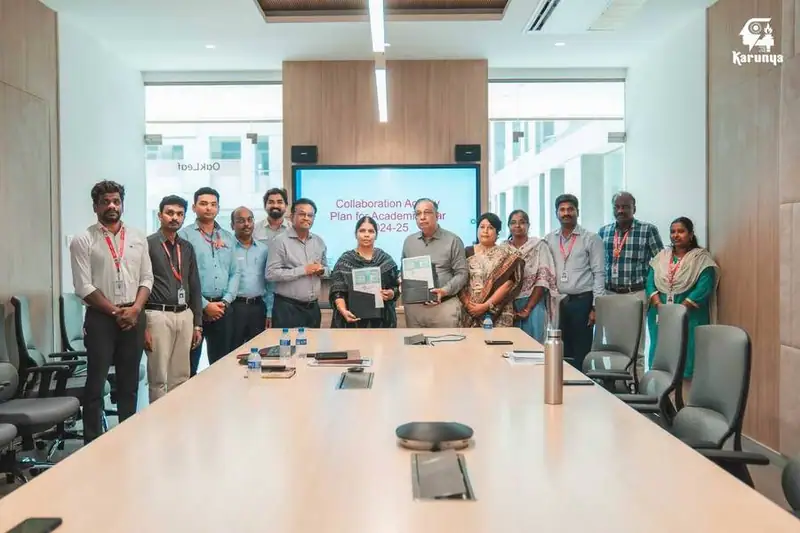
During 2024-25, KITS signed 45 MoUs/MoAs, of which the following are most directly aligned with SDG 8 (decent work, entrepreneurship and economic growth):
ESAF Small Finance Bank (Department of Management, 11.12.2024) supports financial inclusion and access to banking/credit services, a direct SDG 8 target (8.10).
Confederation of Indian Industry, CII (IIE, 22.03.2025) links the Institution with India's apex industry body to align curricula and research with industry and economic-growth priorities.
Ynos Venture Engine CC Pvt. Ltd. (IIE, 14.12.2024) a venture-engine partner supporting start-up funding, mentoring and market access for incubated ventures.
Karpagam Innovation and Incubation Council (KIIC) and iTNT (IIE, 31.08.2024 and 09.09.2024) inter-institutional incubation-network partnerships that widen market and mentoring access for KTBIP incubatees.
Biotech Consortium India Limited and Indigram Labs Foundation (IIE, 08.07.2024 and 19.08.2024) support technology commercialisation and bio-entrepreneurship.
- Festo India Pvt Ltd,
- e-Royce Motors India Limited,
- ABE Semiconductor Designs,
- Amara Raja Advanced Cell Technologies,
- Phoenix Medical Systems,
- HLL Lifecare Ltd,
- CIRCOR Flow Technologies,
- Garuda Aerospace Private Limited
Industry MoUs (Robotics, EEE, Biomedical and Aerospace departments) enabling students' industrial training, internships and future employment pathways in high-growth technology sectors.
35 international university partnerships (with institutions in the UK, USA, Spain, Italy, Georgia, Poland, Korea, France, UAE and elsewhere) expand global academic and professional mobility, exposing students to international standards of workplace readiness.
For each partnership, the purpose, activities and contribution to SDG 8 are as summarised above; durations and renewal dates are recorded against each entry. Evidence: MoU/MoA register, Annual Report 2024-25, Section 7.3 (full list of 45 partnerships with signing dates).
9. Best Practices
1. Karunya Technology Business Incubation Park (KTBIP):
Background/Objective: provide end-to-end incubation support (ideation to market) under the Karunya Incubation Foundation.
Implementation: mentoring, prototyping facilities, IP support and business acceleration.
Innovation: Integrates academic learning, research and industry collaboration into a single incubation pipeline.
Beneficiaries students, faculty and external aspiring entrepreneurs.
Measurable Results 28 incubated ventures.
Sustainability/Replication model is scalable to other institutions through its incubation-network partnerships (KIIC, iTNT).
2. IGNITE Entrepreneurship Programme (with NEN-Wadhwani Foundation):
Background/Objective: embed entrepreneurship education within the formal undergraduate curriculum. Implementation: 14-week activity-based course with industry mentoring.
Innovation credit-recognised, curriculum-integrated (not extracurricular) entrepreneurship training. Beneficiaries: Undergraduate students’ institution-wide.
Measurable Results improved learner confidence, and several teams progressed to prototype/start-up registration.
Sustainability/Replication backed by a national foundation partnership, making it replicable across departments and cohorts.
3. Alumni-Industry Employability Support Model:
Background/Objective leverage the alumni network for mock interviews, industrial training and placement mentoring.
Implementation: structured alumni engagement (e.g., Bosch/Cognizant/Cimpress mock interviews; Hyundai industrial training). Innovation direct industry-practitioner involvement in employability preparation.
Beneficiaries: final-year students.
Measurable Results improved interview readiness and direct industry exposure.
Sustainability sustained through the Institution's active Alumni Affairs division.
4. Value-Added Course and MOOC-Driven Employability Enhancement:
Background/Objective: Supplement core curricula with employability-focused short courses. Implementation: department-run value-added courses and structured MOOC participation.
Innovation: continuous curriculum updating to match industry needs.
Beneficiaries: all students.
Measurable Results: broad-based skills upgrade.
Sustainability institutionalized as a standing academic requirement.
5. Living-Wage and Equitable Employment Framework for Staff:
Background/Objective: ensure KITS models decent-work standards internally, not only through student-facing programmes.
Implementation of 7th CPC-linked pay scales, transparent PDA incentive schemes for research/consultancy, a 24-hour grievance-redressal platform ([email protected]), and documented anti-discrimination, anti-harassment and anti-modern-slavery policies.
Innovation combines statutory compliance with proactive incentive-linked pay structures.
Beneficiaries: all 665 employees (2024–25) across teaching and non-teaching cadres.
Measurable Results: 9.02% of staff (60 facullty), on transparent, fixed-term contracts with defined renewal pathways and 90.98% on permanent appointments; documented pay-equity review process.
Sustainability is embedded in the standing HR Policy Manual.
10. THE Impact Rankings Metric/Indicator
KITS participates in the Times Higher Education (THE) Impact Rankings and was placed in the 1001–1500 band overall in THE Impact Rankings 2024, alongside recognised bands for Clean Water and Sanitation (SDG 6), Affordable and Clean Energy (SDG 7) and Good Health and Well-Being (SDG 3). For SDG 8 specifically, the Institution tracks the following indicators, consistent with the THE Impact Rankings methodology:
10.1 Research on Economic Growth and Employment
KITS conducts research across engineering, science and management that is published in reputable Scopus and Web of Science indexed journals, influencing policy and contributing to economic-growth strategies. As a hub of innovation, the Institution's research in emerging technologies drives industry-specific advancement, generating employment and supporting the scaling up of the nation's economy. Faculty members published 79 research papers relevant to SDG 8 in Scopus-indexed journals during 2024 and 2025 (see Section 5 and Table 1 above for the representative list and full count).
10.2 Employment Practice
10.2.1 Living Wage
KITS's living-wage principle aligns with SDG 8's call for continuous, inclusive and comprehensive employment and satisfactory work for everyone. KITS pays salaries and wages well above standard livelihood requirements, in line with Institutional norms and Government Pay Commission guidelines. The rationalised entry pay for faculty positions in the School of Engineering and Technology / School of Agricultural Sciences / School of Management, as per the 7th Central Pay Commission (plus HRA and DA as applicable), is shown in Table 2:
Table 2: Rationalized entry pay scale for faculty positions (7th Central Pay Commission)
| S.No. | Designation | Rationalized Entry Pay |
|---|---|---|
| 1 | Assistant Professor (Grade I) | ₹57,700 |
| 2 | Assistant Professor (Grade II) | ₹68,900 |
| 3 | Assistant Professor (Selection Grade) | ₹79,800 |
| 4 | Associate Professor | ₹1,05,100 |
| 5 | Professor | ₹1,44,200 |
Faculty also receive Personal Development Account (PDA) incentives for publications in Scopus-indexed journals (₹2,000-₹20,000 per paper depending on discipline and impact factor), for funded projects (50% of overhead expenses credited monthly), and a transparent revenue-share for consultancy assignments. Non-teaching staff (construction, maintenance, technical and administrative cadres) are covered by parallel, qualification-linked pay scales and defined promotion pathways set out in the HR Policy Manual (Figs. 6-9), ranging from approximately ₹5,200-₹39,100 (pre-revised UGC scale) plus grade pay at entry level, rising with experience and grade. Evidence: HR Policy Manual Personnel Policy on Scale of Pay, PDA Policy.
10.2.2 Freedom of Association & Employee Representation
Karunya Institute of Technology and Sciences upholds fair labour standards, decent work principles, and the legal right to Freedom of Association in accordance with the Constitution of India and national labour statutes. The Institution ensures transparent, democratic employee participation in institutional governance by including faculty and administrative staff representatives in statutory decision-making bodies, including the Board of Studies (BoS), the Academic Council, and the Internal Quality Assurance Cell (IQAC).
To facilitate collective and individual workplace communication, the Institution maintains an open-door consultative framework through departmental faculty forums and structured employee review meetings. In parallel, KITS provides a dedicated online grievance-redressal platform via [email protected], ensuring that any employee concern regarding working conditions, compensation, or professional welfare is formally acknowledged and addressed with a guaranteed response within 24 hours. Formal institutional grievances are adjudicated by the university's statutory Grievance Redressal Committee and the Internal Complaints Committee (ICC), guaranteeing due process, fairness, and freedom from retaliation.
10.2.3 Policy on Discrimination
KITS upholds anti-discrimination and equal-opportunity policies covering religion, gender, age, marital status and other protected characteristics. The Institution's Code of Professional Ethics and Equal Employment Opportunity Policy ensure that no employee or applicant is discriminated against on the basis of race, colour, age, sex, religion, marital status, disability or military status, across recruitment, hiring, promotion, training, evaluation, compensation and termination. A Policy Against Harassment (including sexual harassment) is enforced with a clear complaint procedure, no-retaliation guarantee, and disciplinary consequences up to unpaid suspension or termination. An Internal Complaints Committee specifically addresses gender-related grievances. Additional equitable practices include payment based solely on designation (not religion, sexuality, gender, age or refugee status), and non-discretionary Christmas gifts and newly-wed gifts extended equally to all employees' families.
10.2.4 Modern Slavery
KITS maintains policies contributing to the elimination of forced labour, human trafficking and child labour, in line with Indian labour law and international conventions, extending protection to vulnerable groups such as early-stage researchers. Its service rules define clear, non-exploitative conditions of employment including commencement of service, a one-year probation period (extendable by one year based on performance), confirmation criteria, a one-month notice period (or wages in lieu) for resignation or termination on either side, a structured staff relieving process with exit interviews, and superannuation at 58 years (with possible year-by-year extension to 70 based on medical fitness, teaching, research and administrative contribution). These provisions ensure that no employee is bound to service without fair notice, due process or recourse.
10.2.5 Equivalent Rights for Outsourced Workers
KITS strictly enforces statutory labour standards, decent work principles, and equivalent rights across all third-party contracted services on campus, covering five designated operational areas: (i) security operations; (ii) catering and canteen services across academic blocks and student residences; (iii) sanitation, housekeeping, and hygiene maintenance; (iv) civil and campus electrical infrastructure maintenance; and (v) landscape management. Institutional service contracts legally mandate vendor compliance with the Contract Labour (Regulation and Abolition) Act, statutory Minimum Wages, Employees' Provident Fund (EPF), Employees' State Insurance (ESI), and workplace occupational safety standards. Contracted workers have direct access to on-campus emergency healthcare facilities at the Karunya Health Centre, safe drinking water, rest facilities, personal protective equipment (PPE), and institutional grievance redressal channels, including the dedicated [email protected] platform. In parallel, transparent remuneration frameworks govern adjunct, visiting, and part-time academic roles, ensuring equity across all service tiers.
10.2.6 Pay Scale Equity
KITS upholds pay equity and the elimination of gender pay gaps through its non-discrimination policies. Salary structures are assessed regularly to identify and correct discrepancies, ensuring faculty, staff and students are offered equal opportunity regardless of gender, age or ethnicity. Pay is determined transparently by designation and grade (as tabulated in Table 2) rather than by any protected characteristic.
10.2.7 Tracking Pay Scale for Gender Equity
KITS monitors its pay structures on an ongoing basis, evaluating salary data to ensure male and female employees receive equitable pay for equivalent roles, responsibilities and qualifications across academic and administrative cadres. This tracking supports transparency and reinforces a supportive, equitable campus environment; the HR policy governing this process is available on the Karunya intranet portal.
10.2.8 Appeal Process
Grievances from students, staff and other stakeholders are managed through the Grievance Redressal Cell. A grievance may be submitted in person, by email or via an online portal; the Cell acknowledges it and forwards it to the relevant department, which must respond within seven working days. Unresolved or contested matters escalate to the Grievance Redressal Committee (comprising senior university officials), which investigates, holds hearings if necessary, and communicates a final decision to both parties. In parallel, the [email protected] platform provides employees a fast-track appeal channel with resolution or explanation within 24 hours.
10.2.9 Labour Rights
KITS adheres to labour rights consistent with national and international standards, applying a strict code of conduct promoting equality, non-discrimination and fairness. Equal employment opportunity is offered regardless of gender, religion, ethnicity, disability or other protected characteristics, and discrimination, harassment or misconduct of any kind is prohibited. The Grievance Redressal Policy ensures complaints are addressed promptly and impartially, and the Institution maintains a barrier-free environment for persons with disabilities as part of its broader diversity and inclusion commitments.
10.3 Expenditure per Employee
In 2024-25, KITS employed a total of 665 staff, whose work sustains the Institution's daily academic and administrative operations. Total institutional expenditure to sustain this workforce and its operations encompassing salaries, infrastructure maintenance, research initiatives and academic development amounted to ₹109.55 crores for the year.
10.4 Proportion of Students Taking Work Placements
All undergraduate and postgraduate degree programmes at KITS mandate credit-bearing work placements (comprising industrial training, institutional internships, industry projects, or clinical postings) of one to six months' duration as a statutory graduation requirement. In the 2024–25 academic year, out of an institutional enrollment of 7,390 Full-Time Equivalent students (7,863 headcount), 100% of graduating undergraduate and postgraduate students (1,900 students: 1,554 UG and 346 PG, within a total graduating class of 1,968 including 68 Ph.D. scholars) successfully completed curriculum-mandated work placements prior to graduation, with more than 2,035 student internships logged across leading technology and industrial partners. Concurrently, through the Institution's Centre for Training and Placement, graduating students secured 1,354 corporate career appointments, resulting in 868 students placed in industry across engineering, IT, biotechnology, and management disciplines, while 259 students transitioned into advanced postgraduate and doctoral studies.
10.5 Proportion of Employees on Secure Contracts
Of the Institution's 665 Full-Time Equivalent employees in 2024-25, 60 faculty members (9.02% of total staff on roll and 90.98% on regular, secure appointments are employed on a contract basis, with the remaining 90.98 % on regular, secure appointments reflecting the Institution's predominant reliance on stable, long-term employment relationships.
11. Conclusion
Karunya Institute of Technology and Sciences demonstrates a substantive and multi-dimensional contribution to SDG 8 during 2024-25 spanning institutional policy (KIIC, KTBIP, the IGNITE entrepreneurship curriculum), curriculum integration, ₹906.12 lakhs in funded research, 38 patents and 79 SDG 8-relevant publications, a growing incubated start-up portfolio, 868 student placements (with 1,354 of 7,390 enrolled students placed institution-wide in 2024-25), 45 industry and academic partnerships, and participation in the THE Impact Rankings framework. Equally significant is the Institution's internal record as an employer: a documented living-wage policy, 7th CPC-aligned pay scales, transparent research and consultancy incentive structures, robust anti-discrimination, anti-harassment and anti-modern-slavery policies, a 24-hour grievance platform, and 91.4% of its 697 employees on secure, non-contract appointments. Continued strengthening of structured community/extension outreach data, and periodic publication of gender pay-gap audit results, would further consolidate the Institution's evidence base for SDG 8 reporting in future cycles.