Introduction: Clean Energy Beyond the Campus
Karunya Institute of Technology and Sciences (KITS), Coimbatore, sits at the foothills of the Western Ghats, surrounded by rural and tribal communities around Siruvani that rely on farming and on small solar installations for lighting, water and crop protection. The University believes that clean energy only makes a difference when the people who use it understand it and can maintain it. KITS therefore takes its energy expertise out of the laboratory and into the community.
Led by the Division of Electrical and Electronics Engineering (EEE) and the Karunya Conservation and Management Centre (KCMC), faculty members and student volunteers work directly with villagers, farmers, rural households, school pupils and NGOs. The outreach combines awareness (why energy efficiency and clean energy matter), demonstration (seeing solar, biogas and efficient technology at work) and skills (diagnosing, cleaning, repairing and maintaining solar systems), so that communities are left with working systems and the confidence to keep them working.
This work is grounded in institutional commitment. The KITS Climate Change Mitigation and Sustainability Policy (KITS/CCMSP/2025/01) commits the Institute to climate-literacy and awareness programmes for the community, and the University’s Green Energy Technology Mission focuses research and training on solar, wind, geothermal, ocean and biomass energy, electrochemical power sources and fuel cells – the technical base on which this outreach draws.
At a glance – the KITS community energy outreach model
| Strand | Programmes | Beneficiaries |
|---|---|---|
| Village solar skills | A. Solar awareness & street-light servicing B. Solar drip irrigation training C. Solar pump restoration D. Solar fencing training | Villagers, farmers and rural households around Siruvani |
| Community awareness | E. Solar & LED lighting and energy conservation campaigns F. Solar e-bicycle at public expos J. NSS and NCC low-carbon living drives | Rural households, school students, college youth, general public |
| Open campus and talks | G. Solar, solar water heater and biogas demonstrations; KCMC guided tours I. Clean energy talks and symposia | Schools, community groups, NGOs, visitors, participants from other institutions |
| Local stakeholders | H. Solar-powered gate boom with the Forest Department | Forest Department, forest-fringe communities |
| A · Solar Awareness Programme in Villages: Solar Energy Orientation and Solar Street-Light Servicing |
| Venue | Villages near Siruvani, Coimbatore District |
|---|---|
| Organised by | Division of Electrical and Electronics Engineering, KITS |
| Participants | Village residents, with KITS faculty members and student volunteers |
| SDG mapping | SDG 7 – Affordable and Clean Energy; SDG 11 – Sustainable Cities and Communities; SDG 17 – Partnerships for the Goals |
Background and Objective
Solar street lights are a vital source of light and safety in the villages around the University, but when a panel is shaded, a wire works loose or a battery connection fails, a light can stay dark for months because no one nearby knows how to fix it. The programme helps residents understand how solar energy works, why clean energy matters for their households, and how to keep their own installations working.
Activities
KITS faculty and student volunteers visit nearby villages to hold orientation sessions for residents on the use of solar energy – how a panel turns sunlight into electricity, how the battery stores it for the night, and how efficient LED lamps make the most of every unit generated.
Alongside the sessions, the team repairs and services village solar street lights: correcting the wiring, cleaning the terminals, checking the battery connections and clearing tree shade from the panels. Residents watch and take part as each step is explained, and learn the basic maintenance checks they can carry out themselves.
Impact
By pairing awareness with hands-on repair, the programme leaves behind both working lights and people who know how to keep them working, and builds trust in solar energy as a dependable source of power for rural households.
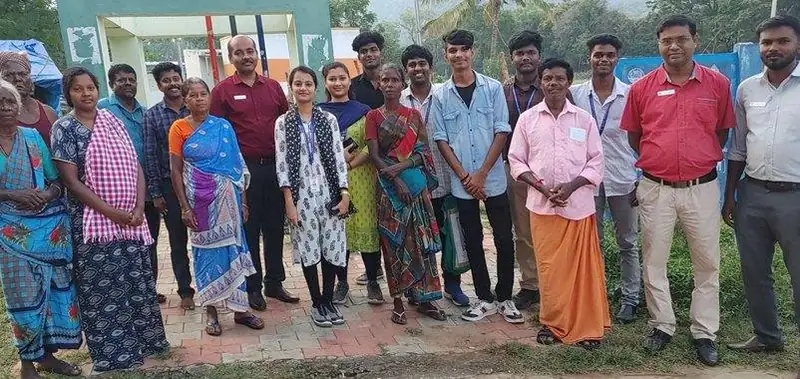
Figure VII (4.1) – 1 : Solar Awareness Programme – KITS faculty and student volunteers with village residents
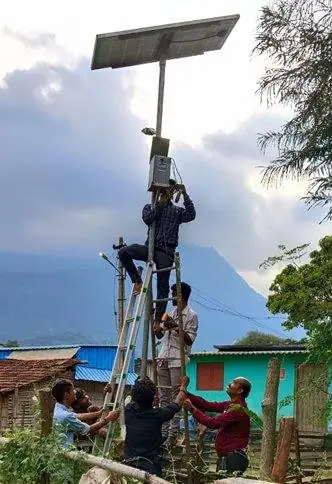
Figure VII (4.1) – 2 : Hands-on servicing of a village solar street light by KITS volunteers
| B · Solar-Powered Drip Irrigation Training for Farmers |
| Venue | Near Siruvani, Coimbatore District |
|---|---|
| Organised by | Division of Electrical and Electronics Engineering, KITS |
| Participants | Local farmers and local households |
| SDG mapping | SDG 2 – Zero Hunger; SDG 6 – Clean Water and Sanitation; SDG 7 – Affordable and Clean Energy |
Background and Objective
Irrigation pumps that run on diesel or grid power are a major cost for small farmers and a source of emissions. The training introduces farmers to solar-powered pumping combined with water-efficient drip irrigation as a clean, low-cost alternative.
Activities
Farmers and households are shown how a solar pump works, how drip irrigation delivers water efficiently to the root zone, and how to choose crops suited to solar-powered, water-efficient farming.
Impact
The training encourages a shift away from diesel and grid-dependent irrigation, lowering farmers’ energy costs while saving water.
| C · Solar Water Pump Restoration and Training Workshop |
| Venue | Village near Siruvani, Coimbatore District |
|---|---|
| Organised by | Division of Electrical and Electronics Engineering, KITS |
| Participants | Villagers |
| SDG mapping | SDG 6 – Clean Water and Sanitation; SDG 7 – Affordable and Clean Energy; SDG 11 – Sustainable Cities and Communities |
Background and Objective
A village solar water pump that had stopped working for several months had left residents without a reliable water supply. The workshop set out to restore the pump and to train villagers so that future faults could be handled locally.
Activities
EEE faculty and students diagnosed and repaired the pump and returned it to service. Villagers were then trained in basic fault diagnosis, safe cleaning of solar panels, and keeping the panels correctly oriented and free of shade to maximise output.
Impact
The restored pump brings back a clean-energy water supply, and the trained villagers now have the skills to keep it running.
| D · Community Training on Solar Fencing Systems |
| Venue | Farming villages near Siruvani, Coimbatore District |
|---|---|
| Organised by | Division of Electrical and Electronics Engineering, KITS |
| Participants | Villagers and farmers |
| SDG mapping | SDG 2 – Zero Hunger; SDG 7 – Affordable and Clean Energy; SDG 15 – Life on Land |
Background and Objective
Farms near the Western Ghats forests rely on solar-powered fences to protect crops from wild animals. When a fence fails, crops are exposed. The training helps villagers understand and maintain these systems themselves.
Activities
Villagers learned how a solar fence works – its circuit components, how the battery is charged and operated, how to troubleshoot common faults, and how to replace fuses safely.
Impact
Communities can keep their solar fences working without waiting for outside help, protecting both their crops and their livelihoods with clean energy.
| E · Solar and LED Lighting for Community Areas and Energy Conservation Campaigns |
| Venue | Villages near the KITS campus |
|---|---|
| Organised by | Division of EEE and Karunya Conservation and Management Centre (KCMC), KITS |
| Participants | Villagers, farmers and rural households |
| SDG mapping | SDG 7 – Affordable and Clean Energy; SDG 12 – Responsible Consumption and Production; SDG 13 – Climate Action |
Activities
KITS demonstrates solar lighting installed in village areas and trains villagers in basic battery replacement and correct panel orientation. The team promotes LED lighting for safer streets and lower electricity use.
Alongside these demonstrations, awareness campaigns for villagers, farmers and rural households cover energy conservation at home, the adoption of renewable energy, and sustainable household practices.
Impact
Households learn simple, low-cost steps to reduce their electricity use and see for themselves that solar and LED lighting are practical choices.
| F · Solar-Charged Electric Bicycle Demonstration at Public Expos |
| Venue | Public expos and exhibitions |
|---|---|
| Organised by | Solar Energy Lab, Division of EEE, KITS |
| Audience | School students, college youth and community members |
| SDG mapping | SDG 7 – Affordable and Clean Energy; SDG 11 – Sustainable Cities and Communities; SDG 13 – Climate Action |
Activities
An electric bicycle charged entirely by the grid-connected solar PV system of the KITS Solar Energy Lab is taken to public expos and exhibitions. Visitors see a working example of clean mobility powered by the sun, and learn how switching to solar-charged transport reduces fuel use and emissions.
Impact
The demonstration brings clean energy to audiences who might never visit a laboratory, especially young people, and makes the link between renewable power and everyday transport tangible.
| G · Clean Energy on Display: Campus Demonstrations and Guided Tours |
| Venue | KITS campus, Coimbatore |
|---|---|
| Organised by | Karunya Conservation and Management Centre (KCMC) and Division of EEE |
| Visitors | Schools, NGOs, community groups and visitors |
| SDG mapping | SDG 4 – Quality Education; SDG 7 – Affordable and Clean Energy; SDG 13 – Climate Action |
Background and Objective
The KITS campus is itself a working demonstration of clean energy. As reported in the Annual Report 2024–25, the University operates 115 kWp of grid-tied solar PV power plants (Admin Block 95 kW + EVR Mess 20 kW), 30 solar water heating systems (87,600 LPD), four biogas plants, and 15,066 retrofitted LED tube lights (within 15,288 total LED fixtures). The University opens these facilities to the community so that people can see renewable energy and efficiency working at scale.
Activities
- Rooftop solar PV and energy monitoring: visitors see the rooftop panels, their orientation and wiring, and a real-time monitoring system that shows energy generation, efficiency and the CO₂ emissions avoided.
- Solar water heating: a demonstration of the solar water heaters (87,600 litres per day), explaining how heat from the sun replaces electric water heating.
- Biogas – zero LPG cooking: the hostel biogas plants show how kitchen and organic waste becomes cooking gas, replacing LPG and solving a waste problem at the same time.
- KCMC guided tours: awareness sessions under the theme “Reduce, Reuse, Recycle”, covering solar power, LED efficiency and sustainable practices.
Impact
Seeing clean energy in daily use makes it real for visitors in a way a lecture cannot, and gives pupils and community members practical ideas to take home.
| H · Clean Energy Solutions with Local Stakeholders: Solar-Powered Gate Boom |
| Partner | Tamil Nadu Forest Department |
|---|---|
| Organised by | Division of Electrical and Electronics Engineering, KITS |
| SDG mapping | SDG 7 – Affordable and Clean Energy; SDG 15 – Life on Land; SDG 17 – Partnerships for the Goals |
Activities
KITS held a joint discussion with Forest Department officials on replacing a manually operated barricade at a forest check post with a solar-powered automatic gate boom. A feasibility study was started covering the electrical load, solar panel capacity, battery backup and safety requirements.
Impact
The project shows local stakeholders how clean energy can solve everyday operational problems in remote locations without grid power.
| I · Clean Energy Talks and Symposia, 2024-25 |
| Period | September 2024 – May 2025 |
|---|---|
| Organised by | Division of Mechanical Engineering, Karunya Institute Innovation Council, IEEE Smart Cities and other divisions of KITS |
| Participants | 472 participants across four events |
| SDG mapping | SDG 4 – Quality Education; SDG 7 – Affordable and Clean Energy; SDG 13 – Climate Action |
Overview
KITS invites industry experts and researchers to share the latest in clean energy, electric mobility and energy storage, through talks, webinars and symposia that bring together students, faculty and participants from other institutions.
| Date | Event | Resource person(s) | Participants |
|---|---|---|---|
| 30 September – 01 October 2024 | IEEE Smart Cities National Symposium on Sustainable Smart Cities 2024 – paper presentations and hands-on training on thermoelectric generators | Dr Suhasini, VIT; Prof. Vinodh Ewards, KITS | 174 |
| 04.11.2024 | Guest lecture: Electric Vehicle Technology | Mr Reigen K.P., AMZ Automotive | 52 |
| 17.12.2024 | Seminar: Futuristic Green Energy Technologies – National Energy Conservation Day | Er. James Solomon G, GM – Sustainability & Green Energy, Summits Hygronics Pvt. Ltd., Coimbatore | 91 |
| 16.05.2025 | Online expert talk: Energy Science and Technology – Battery Revolution | Dr M. V. Reddy, Senior Professional Researcher, Nouveau Monde Graphite, Canada | 155 |
Highlights
- National Energy Conservation Day (17 December 2024): the seminar “Futuristic Green Energy Technologies”, organised by the Division of Mechanical Engineering with the Karunya Institute Innovation Council, covered hydrogen production, carbon sequestration and sustainable energy practices.
- Battery Revolution (16 May 2025): an online talk on advances and future trends in battery and energy technologies – the storage that makes renewable energy dependable – which attracted 155 participants.
- Sustainable Smart Cities 2024: an IEEE-sponsored national symposium on sustainable urban development, with hands-on training on thermoelectric generators.
| J · Low-Carbon Living in the Community: NSS and NCC Drives |
| Period | October 2024 – February 2025 |
|---|---|
| Organised by | National Service Scheme (NSS) and National Cadet Corps (NCC), KITS |
| Participants | Members of the public, with NSS volunteers and NCC cadets |
| SDG mapping | SDG 7 – Affordable and Clean Energy; SDG 12 – Responsible Consumption and Production; SDG 13 – Climate Action |
Activities
KITS student volunteers take low-carbon, sustainable living into the public sphere, in line with Mission LiFE:
- Meendum Manjapai (19 and 26 October 2024; 22 February 2025): NSS volunteers distributed reusable bags and raised public awareness of eco-friendly alternatives to plastic; the initiative received a strong public response.
- Tree Plantation Drive (16 November 2024): NCC cadets planted saplings to increase green cover and fight global warming.
- Swachh Bharat Drive at Siruvani: NSS volunteers cleaned natural surroundings and raised community awareness of environmental stewardship.
Impact
These drives build the everyday habits – reducing waste, choosing reusable products and protecting green cover – that underpin a low-carbon community.
| K · Policy Framework for Community Energy Literacy |
| Policy | Climate Change Mitigation and Sustainability Policy, KITS/CCMSP/2025/01 |
|---|---|
| Revised | 29 August 2025 (28th IQAC Meeting) |
| Related | KITS Carbon Reduction Target and Net Zero Commitment |
Commitment to the Community
KITS’s community energy outreach rests on a formal policy commitment. Under Section 3.1 “Engaging and Empowering the Community”, the policy commits the University to:
- Establish a Centre for Sustainable Development
- Form sustainability clubs and support student-led initiatives
- Run climate-literacy and awareness programmes
The KITS Net Zero Commitment maps this outreach to India’s Nationally Determined Contributions: KITS integrates climate and sustainability into its curriculum, MOOCs, NSS/NCC activities, student clubs, public lectures and community outreach to develop long-term behavioural change aligned with Mission LiFE.
Summary of Outreach Programmes
| Programme | Community reached | Organised by | |
|---|---|---|---|
| A | Solar awareness and street-light servicing in villages | Village residents | Division of EEE |
| B | Solar-powered drip irrigation training | Farmers and households | Division of EEE |
| C | Solar water pump restoration and training | Villagers | Division of EEE |
| D | Solar fencing training | Villagers and farmers | Division of EEE |
| E | Solar and LED lighting; energy conservation campaigns | Rural households | Division of EEE; KCMC |
| F | Solar e-bicycle at public expos | Students, youth, public | Solar Energy Lab, EEE |
| G | Campus clean-energy demonstrations and tours | Schools, NGOs, community groups | KCMC; Division of EEE |
| H | Solar-powered gate boom feasibility | Forest Department | Division of EEE |
| I | Clean energy talks and symposia (4 events) | 472 participants | KITS divisions; IIC; IEEE |
| J | NSS and NCC low-carbon living drives | General public | NSS; NCC |
Conclusion
Through village solar programmes, farmer training, open campus demonstrations, public exhibitions, expert talks and student-led community drives, Karunya Institute of Technology and Sciences carries the knowledge of clean energy and energy efficiency beyond its gates. By helping local communities understand, use and maintain renewable energy, KITS contributes directly to SDG 7 and to a fairer, low-carbon future for the region it serves.