1. Consolidated Energy Efficiency Plan
KITS has documented an energy efficiency plan intended to reduce overall campus energy consumption. The plan combines energy-efficient appliances and infrastructure, renewable energy deployment, periodic audits, energy-use monitoring, corrective action, and awareness initiatives.
2. Energy-Efficient Measures Reported
| S. No. | Energy-efficient measure | Reported percentage |
|---|---|---|
| 1 | Conversion of conventional tube lights and street lights to LED tube lights and LED street lights | 97% |
| 2 | Star-rated air conditioners | 65% |
| 3 | Energy-efficient computers | 55% |
| 4 | Passenger and goods lifts | 65% |
| 5 | Motors and pumps controlled through wireless water-level controllers and capacitors for energy savings | 95% |
| Average in total (as reported in the source document) | 75.4% | |
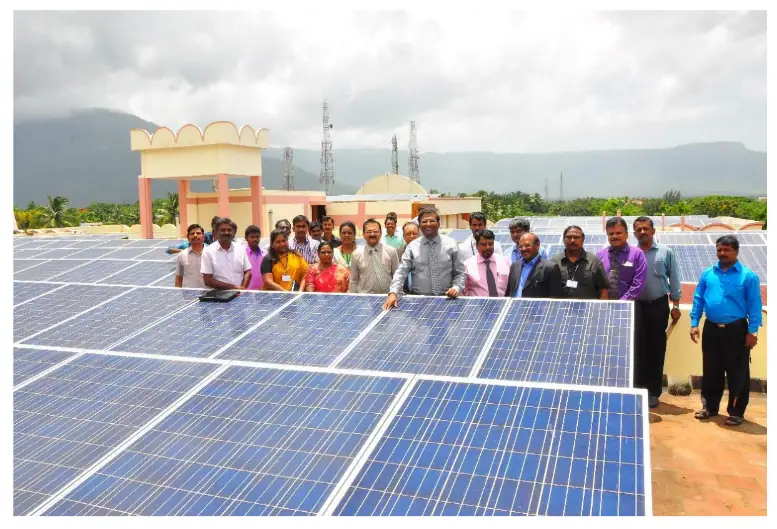
The SDG 7.2.4 document also reports installation of solar PV systems, solar water heaters, and waste-to-energy conversion plants, and states that green audits are carried out regularly.
3. Policy Framework and Implementation Provisions
Energy conservation: Prioritize energy-efficient practices in lighting, cooling, heating, and equipment use; conduct annual energy audits to identify wastage and implement corrective measures.
Renewable energy integration: Progressively support rooftop solar panels, microgrids, and hybrid renewable systems to meet campus requirements.
Energy-efficient infrastructure: Apply energy-efficiency standards to new construction, renovation, and retrofit projects.
Monitoring and reporting: Identify high-consumption areas and equipment inefficiencies through audits, monitoring, and stakeholder feedback; submit quarterly energy-consumption reports for review.
Corrective action and documentation: Classify identified issues, assign corrective timelines and responsibilities, record actions in an Energy & Carbon Register, and verify outcomes in subsequent audits.
Awareness and accountability: Promote energy-saving behavior through institution-wide campaigns, training, and stakeholder participation; publish sustainability reporting as provided for in the policy.
4. Energy Efficiency Implementation Synthesis & Governance
Karunya Institute of Technology and Sciences (KITS) has an energy efficiency plan in place to reduce overall energy consumption across the campus. The institution reports energy conservation measures including the replacement of conventional lighting with LED lighting, use of star-rated air conditioners and energy-efficient computers, and energy-saving measures for motors, pumps, and lifts. The implementation status of these energy-efficient measures achieves an overall weighted average of 75.4% across campus facilities. KITS also reports the installation of solar PV systems, solar water heaters, and waste-to-energy conversion plants, alongside regular green audits. The Energy and Carbon Management Policy provides a framework for annual energy audits, monitoring of energy use, renewable energy integration, energy-efficient infrastructure, corrective actions, and reporting. These documented initiatives support the institution’s commitment to reducing overall energy consumption and improving energy management.
5. Policy on Mitigating the Impact on Climate and the Environment
The atmosphere, ocean, cryosphere, and biosphere have undergone rapid changes due to human-caused climate change. It is affecting hydrological extremes in every region across the globe and leads to adverse impacts, losses, and damages to nature and people. To offset the climatic conditions and to have sustainable environment, KITS is committed to carry out all its operations by considering climate and the environment in line with the national and international policies. India in its Nationally Determined Contributions (NDC) has pledged to reduce the emission intensity of its Gross Domestic Product (GDP) by 45% by 2030. This is a measure of the amount of greenhouse gas emitted per unit of economic activity.
KITS shall carry out a comprehensive range of activities stipulated in this policy document to reduce its carbon footprint, thereby contributing to global climate mitigation and supporting the Nation’s NDC commitments. Carbon offset measures shall be taken to mitigate part of its carbon footprint. The efforts will continue until it becomes effectively carbon neutral.
Green Energy
KITS shall use solar heating systems by making solar water heaters mandatory in buildings
KITS shall use solar as an off-grid solution to provide electricity and reduce the consumption from fossil-fuel based power plants
Use of energy efficient equipment, appliances including lighting
Utilizing natural lighting in all the buildings
Using renewable energy sources to meet the energy requirement
Transforming its buildings into more green and smart ones
Awareness campaign on energy conservation shall be conducted for all the stakeholders of the institution
Usage of IC engine vehicles inside the campus shall be minimal
Avoiding fossil fuel-based vehicles and introduction of EVs and HEVs
Solar PV charging infrastructure to be installed
Flow battery-based energy storage units to be adopted as the backup energy source
Annual energy auditing to be conducted
Sustainable Habitat
Adopting a holistic approach to solid and liquid waste management to ensure their full potential for energy recovery, recycling, and reuse
Planning and developing an eco-friendly and energy-efficient campus featuring green pedestrian pathways and dedicated bicycle trails
Envisions a net-zero waste and emission campus by 2040
Sustaining and enhancing the floral and faunal biodiversity of the campus
Utilizing technologies for producing energy from waste
Water Conservation
Automatic control system to be installed in all the water distribution networks to avoid overflow and dry run
Regular maintenance to be carried out to avoid water leakage which will reduce the need for pumping of water
Waste water treatment methods to be adopted
Installation of rain water harvesting systems
Promote water purification and desalination techniques
Provide guidelines for different water users on efficient water usage
Awareness campaign on water conservation shall be conducted for all the stakeholders of the institution.
6. Operational Waste, Resource & Environmental Protocols (Energy and Carbon Management Framework)
a. Recycling of Plastic and Paper
Plastic usage inside the institution shall be restricted.
Plastic and non-recyclable solid wastes on campus shall be converted into energy, utilizing the existing on-site Rotary Kiln Gasification Plant.
Paperless administration is envisaged and the paper waste, if any, has to be recycled using eco-friendly paper recycling unit in the campus.
b. E-Waste Management
The Institution’s stores officer has to collect all the E-Wastes at the end of every month from various academic divisions, research laboratories, workshops, hostel buildings etc. and shall transport to the authorized dismantler or recycler.
The Institution will ensure that no damage is caused to the environment on account of transporting such items.
A detailed inventory to be maintained on E-Waste Disposal
Following components/equipment/Appliances are considered as E-Waste after their life period
All forms of Computers (Desktops, Laptops, Notebook Computers, Notepad Computers)
Computer Peripherals (Keyboards, Mouse, Display Units, Printers, Copiers and Scanners)
Telephones, Cordless telephones, Cellular telephones
Television sets [including sets based on Liquid Crystal Display (LCD) and Light Emitting Diode (LED) technology]
Refrigerators, Washing Machines, Air-conditioners (excluding centralized air conditioning plants)
Fluorescent lamps, lamps which contain mercury, and other Consumer electrical and electronic items.
c. Sustainable Agriculture
The School of Agricultural Sciences of KITS will be involved in the following activities with the support of other Schools.
Development of strategies to evolve low input agriculture by creating crops with enhanced water and nitrogen use efficiency.
Use of micro irrigation systems
Promotion of agricultural techniques like precision farming, organic farming and rain water conservation
Production of large scale bio-fertilizer in the campus to substitute chemical fertilizers
d. Strategic knowledge for climate change
Curriculum on low carbon operational practices
More research shall be initiated related to sustainable environment and climate change to create technologies that mitigate climate change
Postgraduate and undergraduate students shall be encouraged to design and devise innovative methods to reduce campus and community carbon emissions.
More research on water neutral and water positive technologies
7. Conclusion
KITS has installed solar PV systems, solar water heaters and waste to energy conversion plants. Energy efficiency criteria have been followed for lighting and other appliances. Green audit is carried out regularly. With the support of this policy, efforts will be taken to reduce greenhouse gas emission and support the environment to improve the climate. The Institution is committed to zero emission from the Campus to be achieved by 2040.