
University as a body have a policy in place for ensuring all renovations / new builds following energy efficiency standards
Karunya Institute of Technology and Sciences is deeply committed to promoting environmental sustainability and energy conservation across its campus infrastructure. In alignment with national and international green building principles, the university ensures that all new constructions and renovation projects adhere to prescribed energy efficiency standards and sustainable design practices. The institution prioritizes the use of eco-friendly materials, energy-efficient lighting and HVAC systems, water conservation technologies, and renewable energy integration. This proactive approach reflects Karunya’s dedication to minimizing its carbon footprint, optimizing resource utilization, and creating a sustainable learning environment that supports the goals of clean energy and climate action.
The University follows a robust policy to ensure that all renovations / new builds are following energy efficiency standards. The constant monitoring of the policy in the campus has resulted in decrease of Carbon emissions, optimizing the electricity consumption and minimizing wastage by using energy efficient fixtures and reducing the running cost.
Energy and Carbon Management Policy
KITS/ECMP/2025/01
PREAMBLE
Karunya Institute of Technology and Sciences (KITS) recognizes energy efficiency and carbon management as fundamental responsibilities in the pursuit of sustainable development. In line with its Vision and Mission, the Institute is committed to achieve carbon neutrality, conserving energy resources and aligns with India’s Nationally Determined Contributions (NDCs) under the Paris Climate Agreement.
KITS seeks to integrate sustainable practices into academic, research and operational processes while ensuring compliance with UGC, AICTE, ABET, ISO 50001 (Energy Management Systems), ISO 14001 (Environmental Management Systems), and UN Sustainable Development Goals (SDG 7: Affordable and Clean Energy, SDG 12: Responsible Consumption, and SDG 13: Climate Action).
RATIONALE
The rapid pace of climate change and the growing energy demands of higher education institutions necessitate a structured and accountable approach to energy and carbon management. KITS recognizes this responsibility to:
- National & International Mandates: Align with UGC’s Green Campus initiatives, AICTE’s sustainability guidelines, ISO 50001, ISO 14001 and ABET’s environmental sustainability outcomes.
- Climate Responsibility: Support India’s National Action Plan on Climate Change (NAPCC) and NDCs by reducing campus-based carbon emissions.
- Resource Efficiency: Optimize energy use across academic, administrative, and residential facilities.
- Innovation & Leadership: Foster research and innovation in renewable energy, green technologies, and energy-efficient infrastructure.
- Equity & Inclusion: Ensure sustainable practices that benefit not only the campus but also surrounding communities.
- Infrastructure: All new buildings and major renovations to adhere to national energy efficiency standards (ECBC/GRIHA/IGBC) ensuring sustainable design and reduced carbon footprint.
- Alignment with India’s NDCs: KITS commits to contributing to India’s nationally determined climate goals under the Paris Agreement by:
- Reducing KITS carbon emissions per student, staff, and research output in a structured manner, contributing proportionally toward India’s national target of a 45% reduction in emissions intensity by 2030 (from 2005 levels)
- Increasing its reliance on renewable energy sources to support India’s target of 50% non-fossil fuel capacity by 2030.
- Undertaking large-scale tree plantation and green cover expansion projects that contribute to India’s pledge of creating 2.5–3 billion tonnes of CO₂ equivalent carbon sink by 2030.
- Progressively moving towards net-zero emissions by 2070, in alignment with India’s long-term climate strategy announced at COP26, Glasgow.
This rationale ensures that the policy is not only aspirational but also grounded in national and global climate frameworks, thereby reinforcing KITS’s commitment to inclusive growth, sustainable development, and responsible citizenship.
EXECUTIVE SUMMARY
This policy establishes KITS’s commitment to energy conservation and carbon neutrality through structured programs, performance monitoring and awareness campaigns.
The salient features of this policy are summarized as follows:
- Alignment with UGC Green Campus Guidelines, AICTE Sustainability Framework, ISO standards, UN SDGs (7, 12, and 13), and India’s NDCs.
- Achievement of a zero fossil fuel target on campus by 2040 through progressive adoption of renewable energy.
- Annual reviews by Energy and SDG Teams to ensure accountability and compliance.
- Integration of sustainable practices into teaching, research, operations and outreach.
- Establishment of transparent monitoring, grievance redressal, and continuous improvement mechanisms.
- Comprehensive financial planning and resource allocation, including mobilization of external funding for sustainability projects.
- Direct contribution to India’s Updated NDC (2022), including non-fossil energy adoption, emission intensity reduction, and carbon sink enhancement.
- Implementation of green infrastructure standards such as GRIHA (Green Rating for Integrated Habitat Assessment), LEED (Leadership in Energy and Environmental Design), and ECBC (Energy Conservation Building Code) in all new construction and renovation projects.
- Engagement of stakeholders through curriculum integration, staff training, and student-led sustainability initiatives.
- Data transparency through publication of annual sustainability reports benchmarked against global indices.
- Promotion of research and innovation in energy efficiency technologies.
- Integration of green procurement, waste-to-energy systems, and lifecycle sustainability practices across operations.
PURPOSE AND SCOPE
The purpose of this policy is to:
- Ensure energy efficiency and carbon reduction across all institutional activities.
- Promote awareness of energy conservation among stakeholders.
- Align with national and international energy and environmental standards.
- Support India’s climate goals and UN SDG targets.
- Foster a sustainable institutional ecosystem.
This policy applies to:
- All KITS students, staff, faculty, and community participants.
- On-campus and off-campus facilities, including hostels, laboratories, and administrative units.
- All contractors, vendors, and partners working with the Institute.
DOCUMENT CONTROL & REVISION HISTORY
| Policy Title | Energy and Carbon Management Policy |
|---|---|
| Reference Number | KITS/ECMP/2025/01 |
| Version | 2.0 |
| Issue | 02 |
| Policy Created on | July 2022 |
| Revision History | Revised on 29th August 2025 (28th IQAC Meeting). |
| Responsible Executives | Vice-Chancellor and Director (Quality Assurance & Accreditation) |
| Responsible Office | Internal Quality Assurance Cell (IQAC) |
| Policy Review Frequency | Policy shall be reviewed every three years, or earlier if required by UGC, AICTE, ISO or other regulatory authorities. |
The policy is described in the following articles
ARTICLE 1
STATEMENT OF POLICY
KITS is committed to integrate sustainability into all academic, administrative, and community practices. KITS recognizes that energy conservation and carbon reduction are not only compliance requirements but also moral and social responsibilities.
- Carbon Neutrality Goal: KITS shall achieve carbon neutrality by 2040 through a structured roadmap, supported by renewable energy adoption, behavioural transformation and continuous innovation.
- Integration across functions: Energy and carbon management shall be embedded across teaching, research, community outreach, and administrative functions.
- Multi-Stakeholder Responsibility: Students, faculty, staff, contractors, and community partners shall actively contribute towards energy efficiency and carbon reduction.
- Alignment with Standards: KITS shall comply with UGC, AICTE, ISO 50001, ISO 14001, and ABET standards to ensure quality and sustainability in operations.
- Transparency and Accountability: Annual performance reviews shall be conducted, published, and benchmarked against global sustainability best practices.
- Financial Commitment: KITS shall allocate necessary resources and develop a financial strategy to support renewable energy projects, energy efficiency measures, and sustainable infrastructure, while progressively divesting from carbon-intensive energy industries and promoting green investment opportunities.
- Fossil Fuel Divestment Policy: KITS shall adopt a responsible investment approach by progressively divesting institutional funds from carbon-intensive energy industries, especially coal and oil. The institution shall prioritize investments in renewable energy, green technology, and low-carbon sectors, ensuring alignment with India’s climate goals, global sustainability frameworks, and ethical financial practices.
ARTICLE 2
POLICY OBJECTIVES
This policy aims to:
- Minimize greenhouse gas emissions and fossil fuel dependence.
- Optimize energy use in infrastructure, laboratories, and hostels.
- Support renewable energy integration (solar, wind, bio-energy).
- Encourage behavioral change among stakeholders through awareness and training.
- Benchmark against global sustainability standards.
- Ensure compliance with India’s Nationally Determined Contributions (NDCs) and related national energy policies
ARTICLE 3
POLICY PRINCIPLES
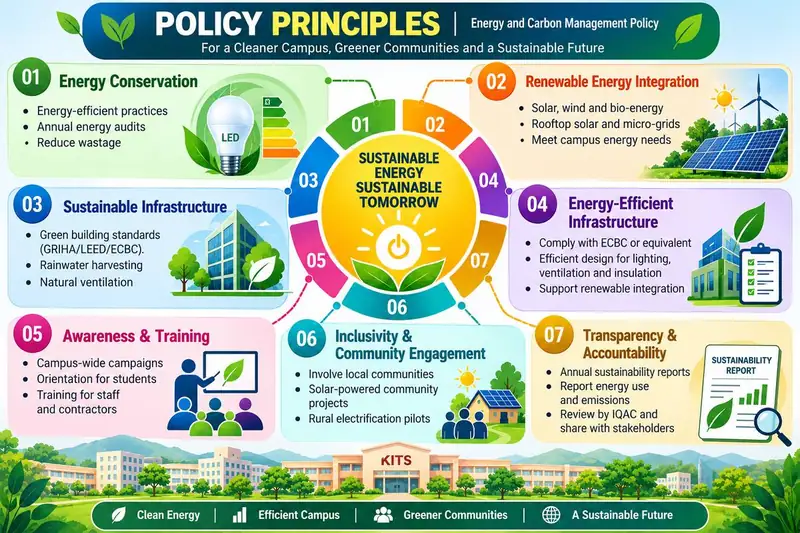
The Institute ensures to implement the following principles for effective Energy and Carbon Management Policy.
3.1 Energy Conservation
KITS shall prioritize energy-efficient practices in lighting, cooling, heating, and equipment usage. Energy audits shall be conducted annually to identify areas of wastage, and corrective measures shall be implemented promptly.
3.2 Renewable Energy Integration
KITS shall maximize the use of renewable energy sources such as solar, wind, and bio-energy. Rooftop solar panels, micro-grids, and hybrid renewable systems shall be progressively installed to meet campus requirements.
3.3 Sustainable Infrastructure
All construction projects shall adhere to green building certification standards (GRIHA/LEED/ECBC). Rainwater harvesting, natural ventilation, and thermal insulation shall be mandated in all new facilities.
3.4 Energy-Efficient Infrastructure
All new constructions, renovations, and retrofits within the KITS campus shall comply with Energy Conservation Building Code or equivalent energy-efficient building standards, ensuring optimal design for lighting, ventilation, insulation, and renewable integration.
3.5 Awareness & Training
Institution-wide campaigns shall be launched to promote energy-saving behavior. Orientation sessions for students and training for staff and contractors shall ensure consistent implementation of sustainability practices.
3.6 Inclusivity & Community Engagement
Local communities shall be involved in awareness programs and benefit from campus-driven renewable projects. Initiatives like solar-powered community lighting and rural electrification pilots shall extend KITS’s role beyond its campus.
3.7 Transparency & Accountability
KITS shall publish annual sustainability reports highlighting energy use, carbon emissions, and progress towards neutrality. These reports shall be reviewed by IQAC and shared with stakeholders.
ARTICLE 4
ROLES & RESPONSIBILITIES
| S. No. | Role / Responsibility | Key tasks and responsibilities |
|---|---|---|
| 1 | Vice-Chancellor | • Provide strategic leadership aligned with the institutional vision and mission. • Authorize major initiatives. • Chair annual performance reviews and monitor carbon-neutrality goals. |
| 2 | Registrar | • Oversee policy adoption and institutional compliance. • Maintain controlled documentation for audits and accreditation. |
| 3 | Internal Quality Assurance Cell (IQAC) | • Set sustainability benchmarks and integrate them into quality assurance. • Conduct periodic reviews and prepare compliance reports for governing bodies, UGC, AICTE and ISO audits. |
| 4 | Chief Engineer (Construction & Maintenance) | • Implement renewable-energy systems, green construction and infrastructure upgrades. • Coordinate with vendors and contractors to ensure energy-efficient execution. |
| 5 | Finance Officer | • Develop and maintain the sustainability financial plan. • Allocate budgets for renewable energy, efficient infrastructure and carbon reduction. • Ensure transparent financial reporting. |
| 6 | Energy & SDG Teams | • Conduct carbon-footprint studies and monitor energy consumption. • Prepare sustainability dashboards. • Organize campus-wide energy-saving campaigns. |
| 7 | Faculty and Students | • Faculty: Integrate sustainability into curricula and research. • Students: Participate in green clubs, energy audits, hackathons and eco-projects. |
| 8 | External Stakeholders & Contractors | • Vendors and contractors: Comply with KITS’s green procurement policy. • Contractors: Follow institutional energy-efficiency guidelines during construction and maintenance. |
ARTICLE 5
MONITORING & EVALUATION
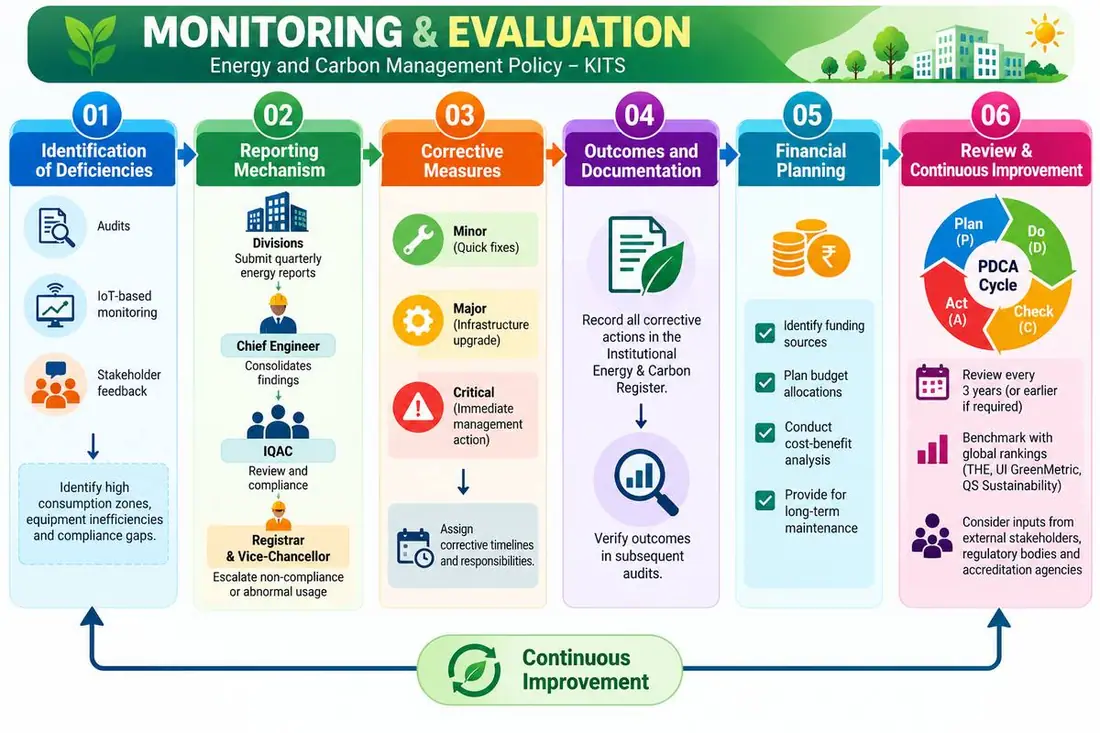
5.1 Identification of Deficiencies
Deficiencies in energy management, such as high consumption zones, equipment inefficiencies, or poor compliance, shall be identified through audits, IoT-based monitoring, and stakeholder feedback.
5.2 Reporting Mechanism
Divisions must submit quarterly energy consumption reports to the Chief Engineer, who shall consolidate findings for IQAC. Any non-compliance or abnormal usage shall be escalated to the Registrar and Vice-Chancellor.
5.3 Corrective Measures
Issues identified shall be classified as minor (quick fixes), major (requiring infrastructure upgrade), or critical (requiring immediate management action). Corrective timelines and responsibilities shall be assigned.
5.4 Outcomes and Documentation
All corrective actions shall be documented in an institutional Energy & Carbon Register. The outcomes shall be verified in subsequent audits to ensure accountability and continuous improvement.
5.5 Financial Planning
KITS shall develop a detailed financial plan to support the implementation of sustainability initiatives. This plan shall outline funding sources, budget allocations, cost-benefit analyses for energy efficiency and renewable energy projects, and provisions for long-term maintenance of sustainable infrastructure.
5.6 Review & Continuous Improvement
The policy shall be reviewed every three years, or earlier if required by UGC, AICTE, or ISO. The PDCA (Plan–Do–Check–Act) cycle will guide updates, and benchmarking against global sustainability rankings (THE Impact Rankings, UI GreenMetric, QS Sustainability) shall ensure excellence. The review shall also consider recommendations from external stakeholders, regulatory bodies, and accreditation agencies.
ARTICLE 5A
APPEALS PROCESS
- Right to Appeal: If a learner, faculty, or stakeholder is not satisfied with the decision of the Energy & Carbon Policy grievance or corrective action, they may submit a written appeal to the Registrar within 10 working days of receiving the resolution.
- Resolution Timeline: The Registrar will review the appeal and provide a written response within 15 working days.
- Documentation: All appeals, proceedings, and resolutions will be formally recorded and maintained under institutional records, in alignment with Article 5.4: Outcomes and Documentation.
- Non-Retaliation: No individual shall face retaliation, bias, or disadvantage for exercising the right to appeal (see Article 6.5: Non-Retaliation).
ARTICLE 6
VIOLATIONS
Violations of this policy shall be taken seriously and addressed proportionately:
- Students: Shall face counseling, warnings, or suspension from activities for non-compliance (e.g., misuse of energy resources).
- Staff/Faculty: Shall be subject to performance review notes, mandatory retraining, or disciplinary action.
- Contractors/Vendors: Breaches of sustainability clauses in contracts shall result in penalties, suspension, or blacklisting.
- Severe Cases: Repeated or intentional violations shall be escalated to statutory bodies (UGC, AICTE, or relevant regulatory authorities).
- Non-Retaliation: Stakeholders who report violations in good faith are protected from discrimination, intimidation, or adverse action. Retaliation itself shall be treated as a violation of this policy.
References
- India’s Updated First Nationally Determined Contribution Under Paris Agreement (2021-2030) https://unfccc.int/sites/default/files/NDC/2022-08/India%20Updated%20First%20Nationally%20Determined%20Contrib.pdf
- National Action Plan for Climate Change & Human Health, Ministry of Health & Family Welfare, Government of India https://ncdc.mohfw.gov.in/wp-content/uploads/2024/04/27505481411548674558.pdf
- ISO 50001:2018 – Energy Management Systems
- ISO 14001:2015 – Environmental Management Systems
- UGC Green Campus Guidelines (2023)
- AICTE Approval Process Handbook (Sustainability Section)
- ABET Accreditation Criteria – Sustainability Outcomes
- UN SDG 7, 12, 13 – Affordable and Clean Energy, Responsible Consumption, and Climate Action
- Energy Conservation Act, 2001 (amended 2022)
Definitions
For the purpose of this policy, the following terms are defined to ensure clarity and consistency in interpretation:
- Carbon Neutrality: Net-zero carbon emissions achieved through reduction and offset measures.
- Energy Efficiency: Using less energy to provide the same service.
- Renewable Energy: Energy derived from natural resources (solar, wind, hydro, biomass) that are replenished sustainably.
- Carbon Footprint: The total greenhouse gas emissions caused by an individual, institution, or activity.
- Deficiency: Any gap in achieving energy or carbon reduction goals.
- Net Zero: A state where greenhouse gas emissions are balanced by removals or offsets, resulting in no net increase in atmospheric concentrations
- Green Procurement: purchasing policy favouring sustainable goods/services.
- Lifecycle Assessment (LCA): Evaluation of environmental impact of materials/equipment.
- Non-Retaliation: Protection provided to any stakeholder who, in good faith, reports a violation without facing discrimination or adverse action.
Abbreviations
| Acronym | Full Form |
|---|---|
| ABET | Accreditation Board for Engineering and Technology |
| AICTE | All India Council for Technical Education |
| ECBC | Energy Conservation Building Code |
| GRIHA | Green Rating for Integrated Habitat Assessment |
|---|---|
| GDP | Gross Domestic Product |
| GHG | Greenhouse Gas |
| ICT | Information and Communication Technology |
| IQAC | Internal Quality Assurance Cell |
| ISO | International Organization for Standardization |
| LCA | Life Cycle Assessment |
| LEED | Leadership in Energy and Environmental Design |
| MoHFW | Ministry of Health and Family Welfare |
| NAPCC | National Action Plan on Climate Change |
| NCDC | National Centre for Disease Control |
| NDC | Nationally Determined Contribution |
| PDCA | Plan–Do–Check–Act |
| PV | Photovoltaic |
| QAA | Quality Assurance & Accreditation |
| SDG | Sustainable Development Goal |
| UGC | University Grants Commission |
| UN | United Nations |
| UNFCCC | United Nations Framework Convention on Climate Change |
ANNEXURE: POLICY ALIGNMENT WITH INDIA’S NDCs (2022 UPDATE)
| KITS Policy Action | Corresponding India’s NDC Goal (2022 Update) | Institutional Commitment |
|---|---|---|
| Adoption of renewable energy (solar PV, wind, bio-energy) | Achieve about 50% cumulative electric power installed capacity from non-fossil fuel-based energy resources by 2030 | KITS commits to progressively expand renewable energy capacity on campus. Interim milestones (e.g. 50% of campus energy from non-fossil by 2030, 80% by 2035), with the ambition of full reliance by 2040, subject to feasibility. |
| Reduction of campus energy intensity through audits, smart meters, and efficient infrastructure | Reduce the emissions intensity of its GDP by 45% by 2030, from 2005 level | While GDP-intensity is a national metric, KITS contributes institutionally by reducing its energy use per student/research output through continuous monitoring, audits, and adoption of energy-efficient technologies. |
| Large-scale tree plantation and green cover initiatives on campus | Create an additional carbon sink of 2.5 to 3 billion tonnes of CO₂ equivalent through additional forest and tree cover by 2030 | KITS enhances its campus biodiversity and carbon sequestration capacity via afforestation, reforestation, and green landscaping. |
| Awareness, training, and student-led green clubs | Promote a sustainable lifestyle and climate justice through climate education, citizen participation, and sustainable practices | KITS integrates sustainability into teaching, training, and student activities, creating long-term behavioral change aligned with national climate education goals. |
| Net Zero target for KITS campus by 2040 | India to achieve Net Zero by 2070 | KITS shall achieve Net Zero by 2040, three decades ahead of India’s 2070 commitment, thus serving as a model campus for higher education climate leader. |
Evidences
1. Energy Efficient Appliances in Campus
LED fixtures are being extensively used for all new interior renovation works in the campus.
| Sl.No | Description | Existing Light Fittings | Replaced LED Tube Light fittings |
|---|---|---|---|
| 1 | Power Consumption | 40 Watts | 18 Watts |
| 2 | No of Light Fittings | 15066 Nos | 15066 Nos |
| 3 | Units consumed per day | 4,821 Units | 2,166 Units |
| 4 | LUX (Intensity of Light) | 95 Lx | 150 Lx |
| 5 | Units consumed per year | 15,66,825 Units | 7,04,925 units |
| 6 | EB Charges/year | Rs. 1,48,84,837/- | Rs. 66,96,787/- |
| 7 | Maintenance Charges/Year | Rs. 45,000/- | Replacement warranty upto 3 Years |
| Electricity Charges Savings/Annum | Rs,81,88,050/- | ||
Motion sensor lights are provided in computer science lab, staff cabins and toilets for energy savings. The Institute has an Air Quality Sensor Station which helps to know the air quality.
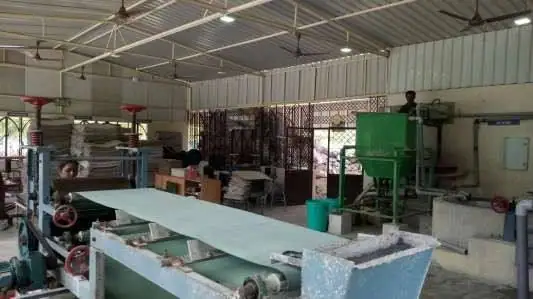
2. Paper Recycling Plant
Attractive eco-friendly files and folders produced at the Paper Recycling Unit using 150-200 kg of paper waste generated each day.
3. Sewage Treatment
No. of Biogas Plants: 4 Generation of Biogas: Five to Six Cylinders/ Day 400 KLD - FDR/EGR Campus
1000 KLD - New Gents Residence Campus 600 KLD - Ladies Residence Campus
450 KLD - PRGR Campus
5 KLD - Student Prayer Centre
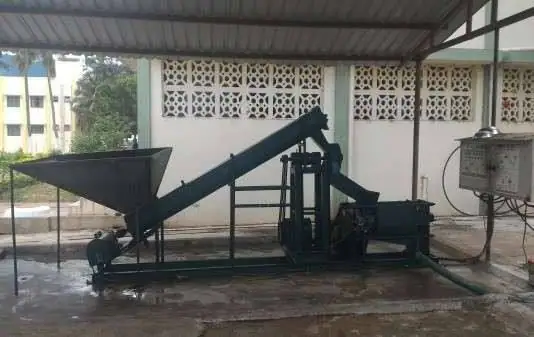
4. Design of 2 TPD Rotary Kiln Gasification Pilot Plant with high CV syngas production by Karunya Institute of Technology and Sciences, Coimbatore
R&D prototype of 2 TPD Rotary Kiln Gasification Pilot Plant for converting non-recyclable plastic waste into high quality syngas for generating steam is setting up at Karunya Institute of Technology and Sciences, Coimbatore in collaboration with its industry partner, Techurja Inc., Thiruvananthapuram and the institutional partner, Central Mechanical Engineering Research Institute, Durgapur. Since the quality of the syngas, specifically its calorific value is a key parameter that determines the efficiency and therefore the economics of the plant, it is considered as a major factor in deriving the objectives of the proposed project. The objectives of the project are:
- Integration of the Rotary Kiln TurnW2E gasifier with steam or power generator to treat hazardous and certain non-hazardous waste while complying to PCB norms
- Demonstration of sustainable solid waste to syngas production by rotary kiln gasification to achieve the goals of the Swachh Bharat Mission. The plant will process 2 TPD of non-biodegradable solid waste. Moisture level will be adjusted to meet process requirements.
- Creation of a technology platform and facility for pilot and techno-economic analysis
Project Progress
- Pre-procurement activities were completed
- Manufacturing and procurement of components for 2 TPD rotary kiln gasification pilot plant were completed
- Component installation of the pilot plant at KITS facility began in February 2023. 90% of the mechanical installation works completed and piping and ducting works under progress. Some of the installation photographs are presented below.
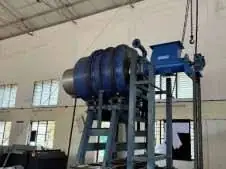
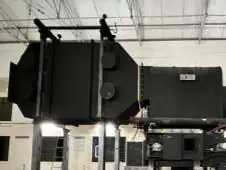
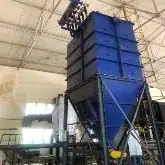
Feed Screw Alignment Heat Recovery Boiler Bag Filter
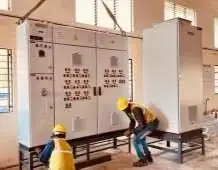
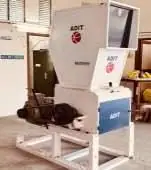
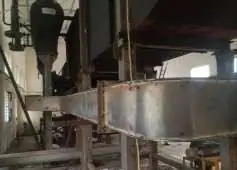
Control Panel Shredder Combustion Chamber Ducting
5. High Volume Low Speed Fans installed in DGS Center - KITS
High volume low speed (HVLS) fans are significantly more energy-efficient than multiple smaller fans because one HVLS fan can move the same amount of air as many smaller fans with far less power. The power required to move air increases dramatically with speed, so the low-speed operation of an HVLS fan drastically reduces energy consumption compared to the high-speed operation of numerous traditional fans.
Energy consumption comparison
- HVLS fans: Use less total energy to move a larger volume of air. A single HVLS fan can replace 10 to 20 smaller fans, resulting in substantial energy savings.
- Multiple smaller fans: Require much more power for the same amount of airflow. The power needed is roughly the cube of the average air speed, meaning a small increase in speed for many fans leads to a large increase in overall energy use.
- Cost-effectiveness: While the initial cost of an HVLS fan may be higher, the long-term energy savings, lower maintenance costs, and potential for a 1-2 year return on investment make it a more cost-effective solution over time
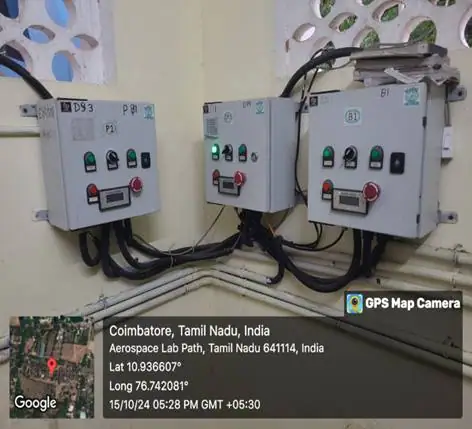
6. Motors & Pumps Controlled Through Wireless Water Level Controller & Capacitors For Energy Savings
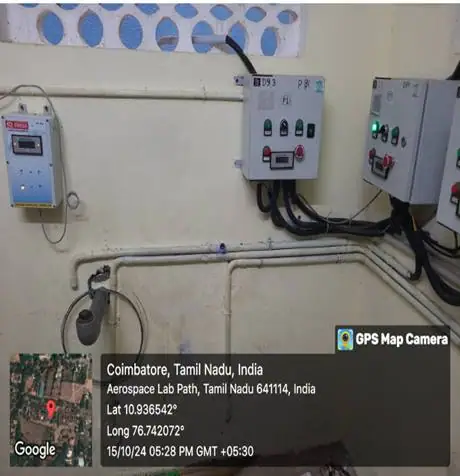
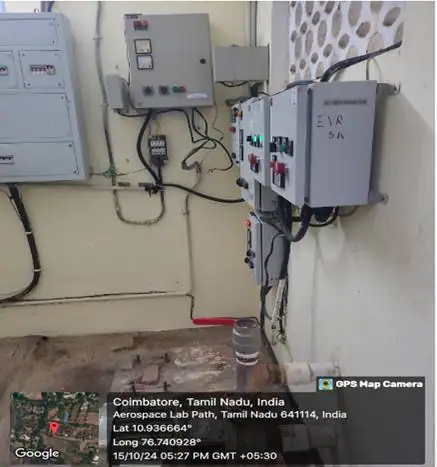
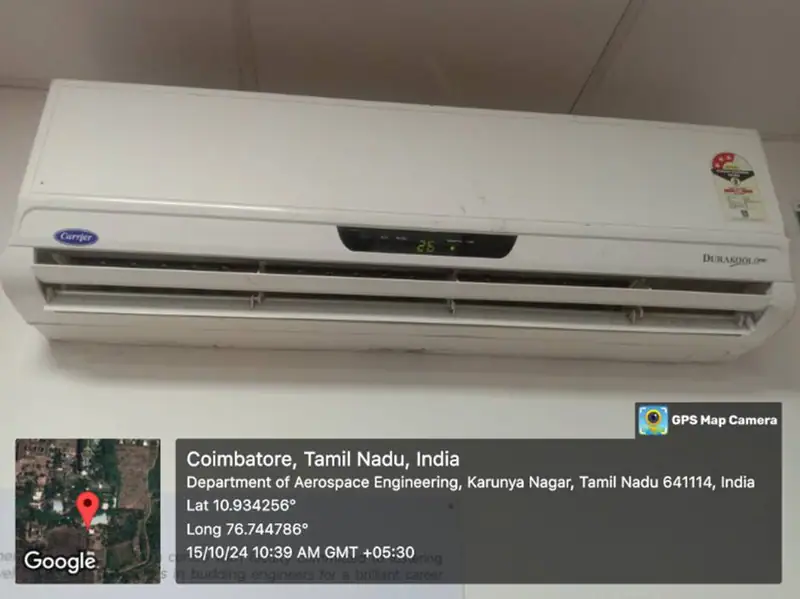
7. Star Rated Air Conditioners
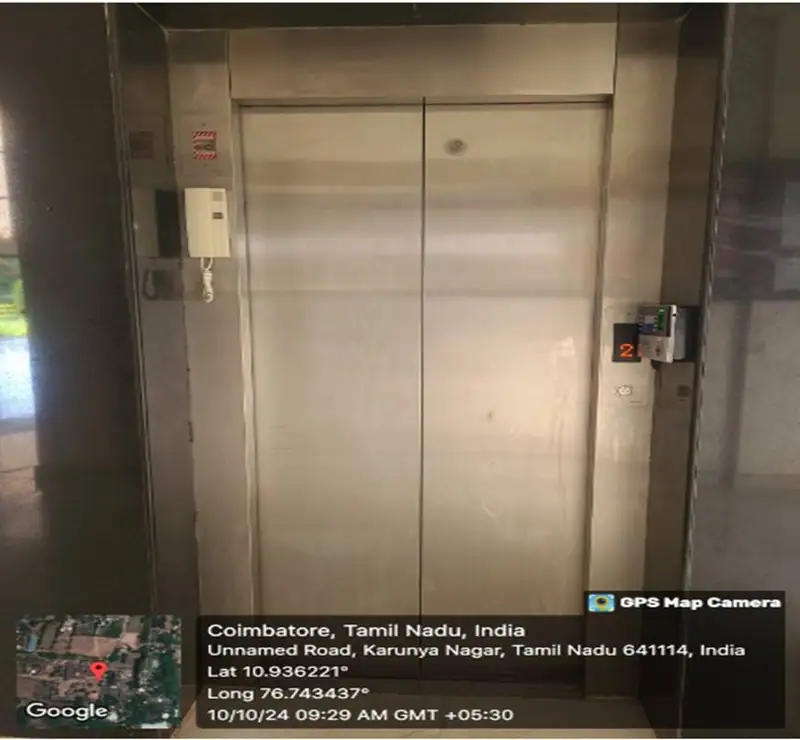
8. Passenger & Goods Lifts
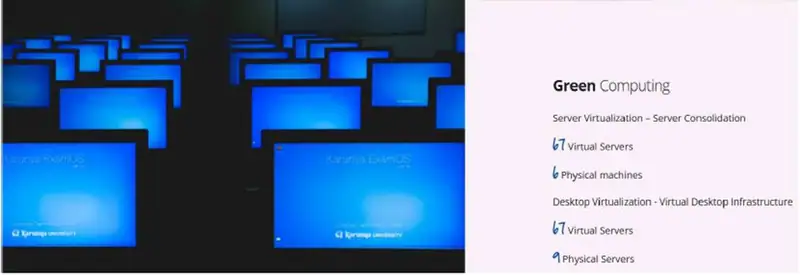
9. Green Computing - Energy efficient computers
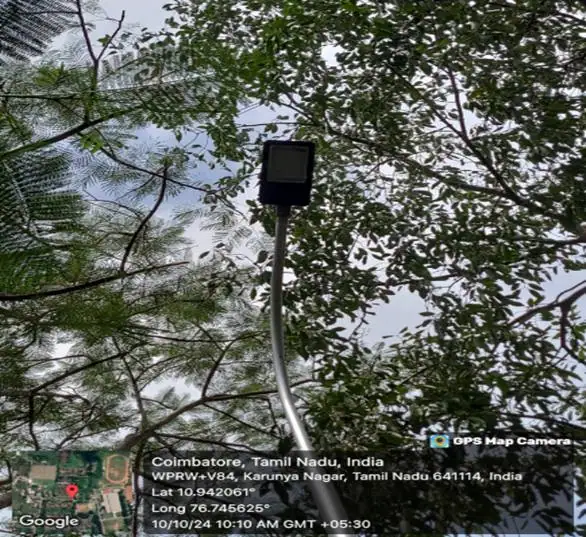
10. Solar Street Lighting in KITS
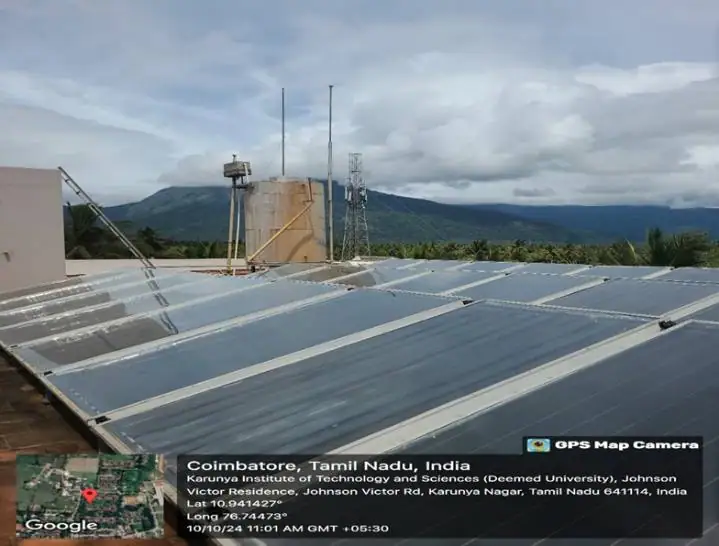
11. Solar Water Heater in KITS
12. Facilities in the Institution for the management of degradable and non-degradable waste:
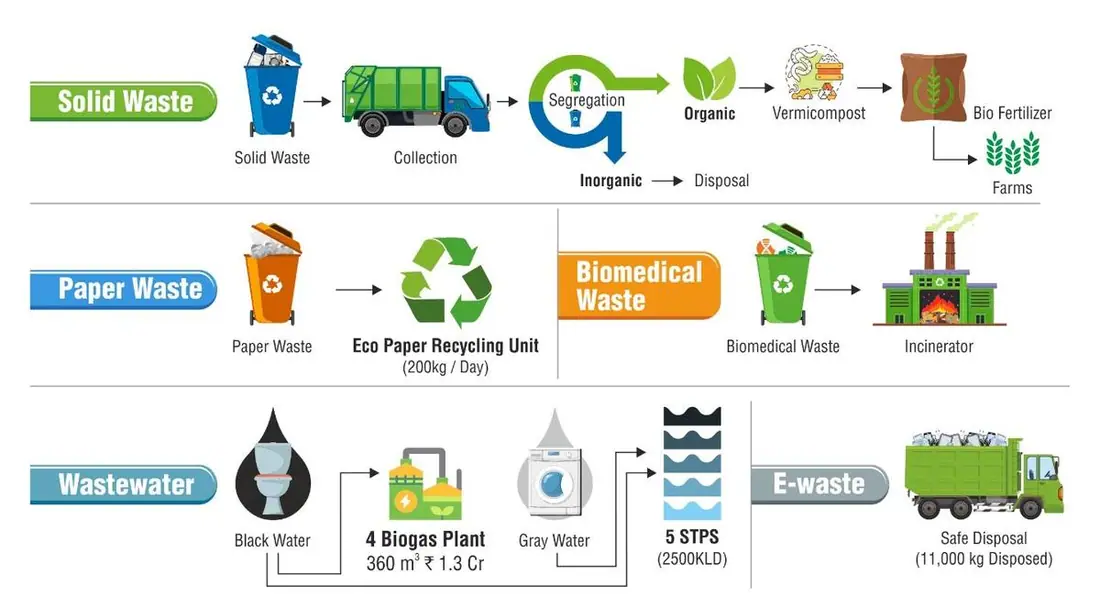
KITS being a residential institution with 7035 students and 468 faculty living in the 15 resident halls and 15 apartment complexes spread across 476-acre campus, several strategies have been adopted to implement the Sustainable Development Goals of UN, for effective management of solid waste, grey and black water.
Solid Waste Management and Recycling:
- To manage solid waste, collection bins have been placed at different locations on campus. After segregation, the biodegradable waste is subject to degradation by organic composting and the bio-fertilizer is utilized in the 329-acre experimental farm for academic, research and community development activities.
- Considering the health and hygiene of the students, 2 incinerators have been installed in the ladies’ residence.
| Type of Waste | Treatment / Management |
|---|---|
| Solid Waste | Collection, Segregation and disposal of waste Organic waste: Aerobic composting ,Vermicomposting |
| Paper Waste | Eco-Paper Recycling Unit to treat 150-200 kg of paper |
| E-Waste | 11000 kg generated and disposed through authorized agency of Pollution Control Board |
| Biomedical Waste | Incinerators |
| Kitchen and Food Waste | 80 cu.m Biogas Plant |
Liquid Waste Management:
The grey and black water from the residences are treated in the 5 Sewage Treatment Plants (STP) installed on campus, at an investment of Rs. 300 lakh. 2500 KLD of wastewater is treated through the primary, biological and tertiary units that are fitted with screens to remove large non-biodegradable and floating solids such as rags, papers, plastics, tins, containers and wood chips, a fluidized bed bio-reactor for aerobic treatment of degradation of wastewater and a filtration system to remove suspended matter, micro-organisms and algae, and a sludge drying bed. The water is reused for gardening and irrigation through 118 outlets on campus. The four Biogas plants of 360 cu.m capacity generate 114 kg of cooking gas/day (equivalent to 6 commercial gas cylinders) through the treatment of black and grey water from resident halls. The facility was installed with an investment of Rs. 130 lakh.
Hazardous Waste:
KITS follows the UGC guidelines, 2011 with regard to usage and storage of chemicals for academic and research purposes.
Scientific and Technological Intervention in Waste Management at KITS:
Faculty and students are involved in pilot projects, demonstration related to waste management. At the Water Institute – a Centre of Excellence, the following research activities are pursued with grants from MoEF&CC and DST, GoI
- Evaluating the performance of the unit operations in the STPs, based on modeling and simulation studies – Model
- Periodic monitoring and characterization of the raw and treated effluents from STPs
- Biochar preparation using agricultural farm waste for purification of contaminated water
- Isolation of microbes from campus STPs for the bioremediation of waste water and treatment of effluents from small scale textile dyeing units in and around Coimbatore
- Treatment of used cutting fluid from mechanical workshops on campus using the Petroleum Remediation Product (PRP®), a NASA product from UniRem Technology, Pittsburgh, USA
- Treatment of greywater using microbial fuel cells.
- Recycling and reuse of detergent water using electrocoagulation technology
A conceptual model on decentralized wastewater treatment at household and community level.