1. Introduction
Karunya Institute of Technology and Sciences (KITS) promoted cooperation on water security through institutional engagement with government departments, technical committees, research organizations and international academic programmes. The institution contributed academic and technical perspectives to discussions on river-water utilization, State Water Policy development, water-resource management and wetland conservation. These engagements provided opportunities for knowledge exchange, policy consultation and collaboration with external stakeholders to address water-related challenges. The following report presents the documented activities under local, regional, national and global levels of cooperation.
2. Cooperation with Local body
KITS adopted Pachinampathy village under its Integrated and Sustainable Village Development Model and undertook community-oriented development activities. The university's wider local engagement also included NSS and Unnat Bharat Abhiyan activities in nearby areas such as Perumal Kovilpathi, Mathuvarayapuram and Karunya Nagar. The activities identified in the institutional material include local water harvesting, construction or promotion of percolation pits, farm ponds and community awareness programmes. These initiatives support local water security by encouraging rainwater retention, groundwater recharge and awareness of responsible water-resource management.
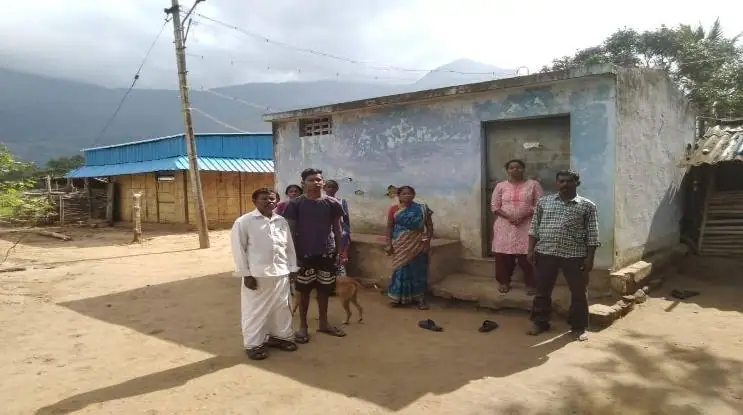
Under its Integrated and Sustainable Village Development Model, KITS has partnered with the local administration of Pachinampathy village to deploy affordable water-storage infrastructure, including the construction of a 25,000-litre low-cost ferrocement storage tank for community drinking supply. Tribal agricultural communities cultivating land in the hamlets surrounding the Siruvani Dam in the Western Ghats biodiversity hotspot receive routine agro-hydrological extension visits from KITS scientists. Faculty agronomists and water engineers conduct on-site soil-moisture testing, demonstrate micro-irrigation scheduling, and advise indigenous farmers on protecting natural springs and streams from seasonal depletion.
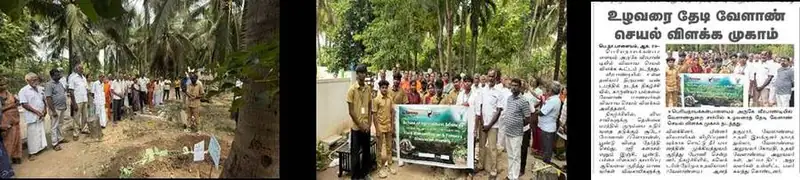
The tribal farmers farming in the hamlets around Siruvani Dam at Western Ghats are periodically visited by the scientists of School of Agriculture to diagnose the problems faced by them in agriculture and animal husbandry and offered advises to overcome the problems.
3. Cooperation with Regional Governments
KITS maintained regional-level engagement with the Government of Kerala through the State Planning Board's Technical Committee on the Management of River Water in Kerala and the State Water Policy Drafting Committee. The documented sequence included the initial technical committee engagement on 11 June 2024, the second meeting on 27 July 2024 and the third meeting on 11 September 2024. The deliberations addressed river-water utilization, irrigation development, regional water requirements, flood and drought mitigation, and the evaluation of proposed water-resource projects. KITS also participated in the review and drafting process for Kerala's State Water Policy, with evidence of committee engagement in September 2024 and meetings on 7 February and 12 March 2025. In addition, the institution presented the Ramsar Project to the Government of Kerala on 31 December 2024 and received an invitation to the KSCSTE-CWRDM Conclave on 11 February 2025. These activities provided opportunities to contribute academic and technical perspectives to regional water governance, wetland conservation and sustainable water-resource management.
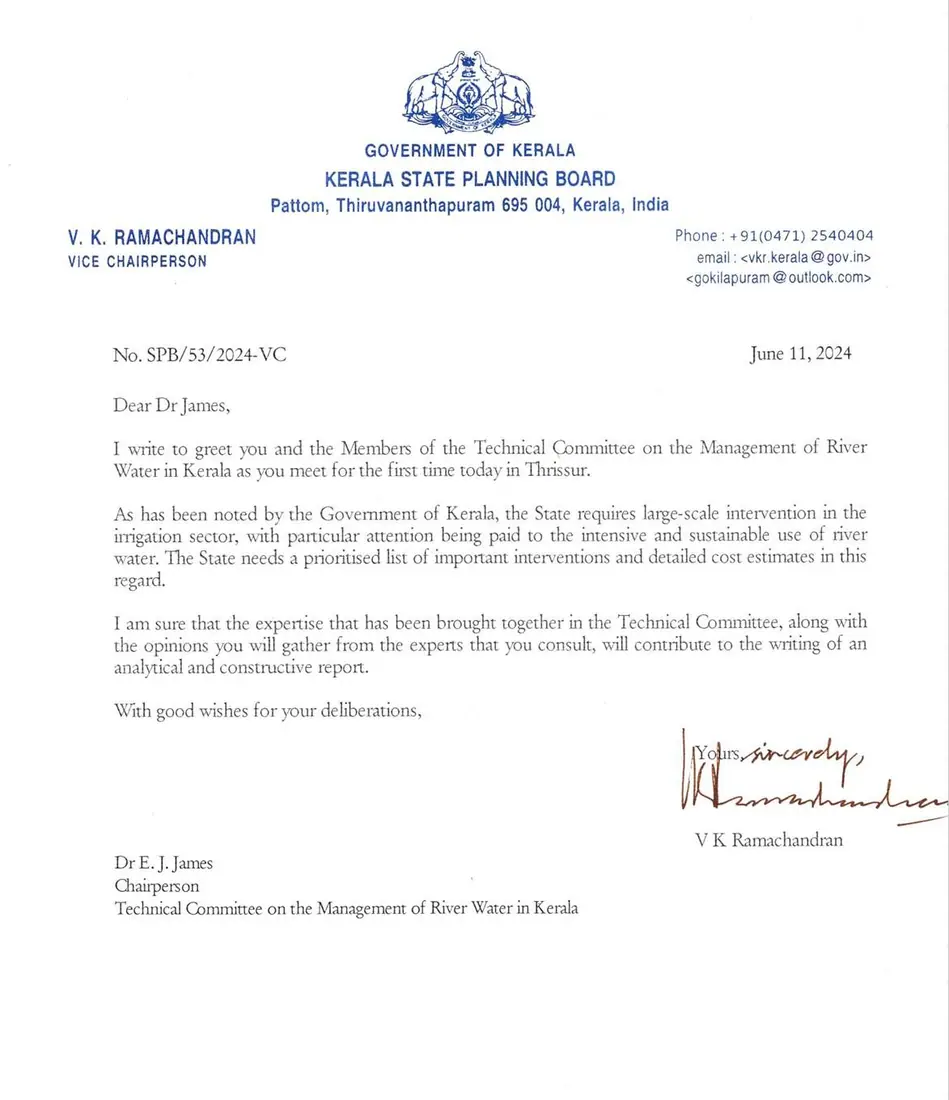
Letter from the Kerala State Planning Board dated 11 June 2024 concerning the Technical Committee on the Management of River Water in Kerala.
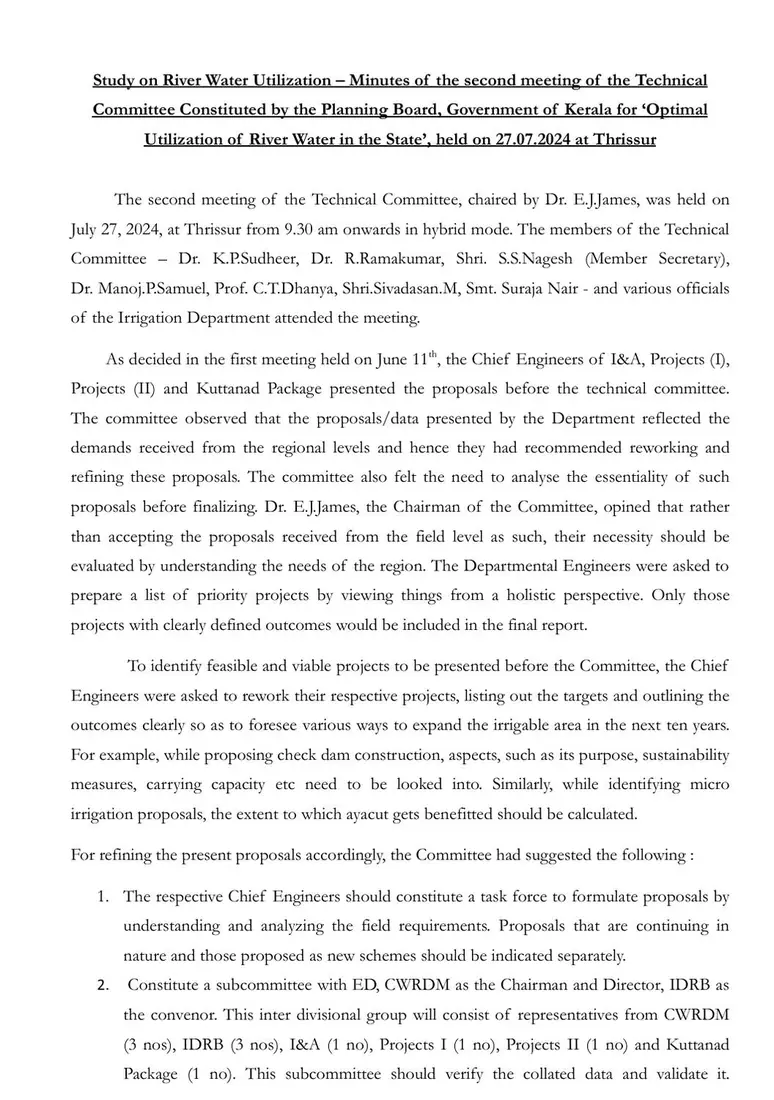
Minutes of the Second Technical Committee deliberations on river-water utilization, July 2024.
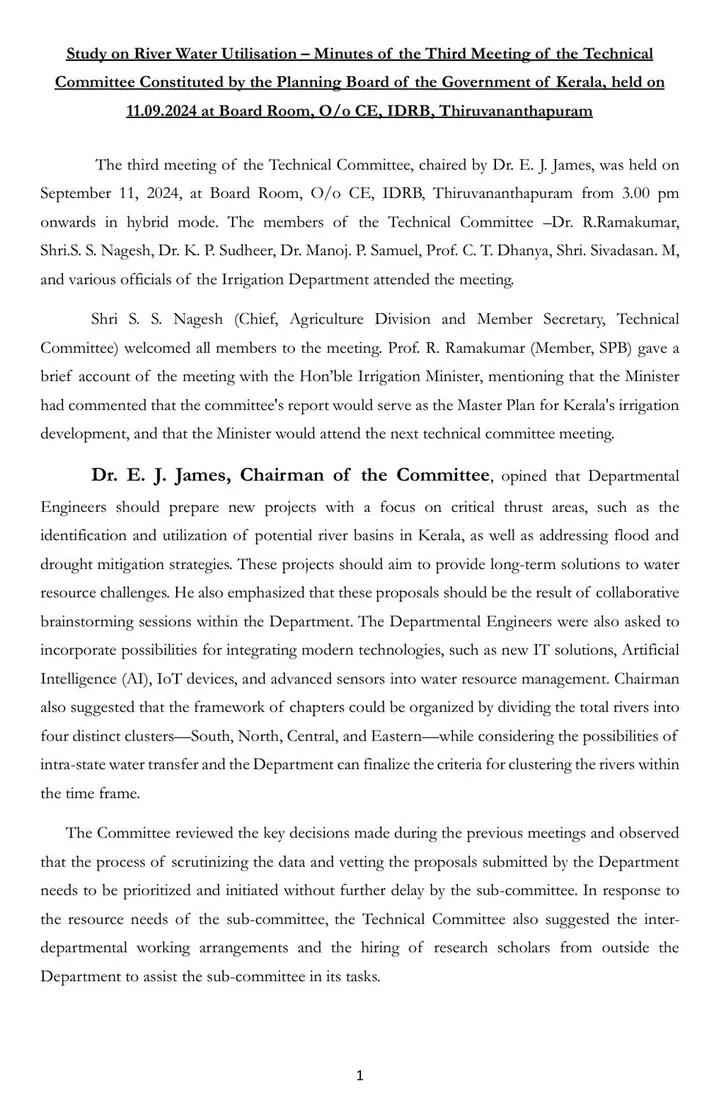
Minutes of the third Technical Committee deliberations on river-water utilization, September 2024.
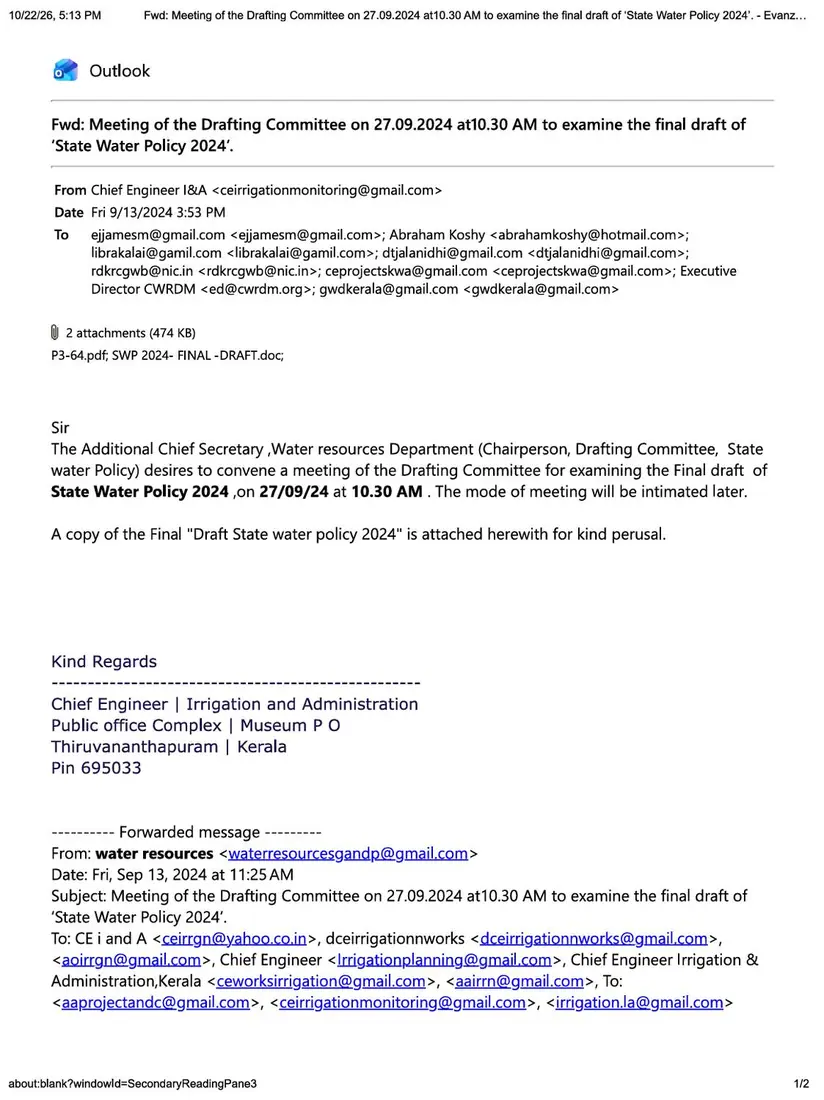
Correspondence relating to the review of Kerala State Water Policy 2024 and the drafting committee meeting.
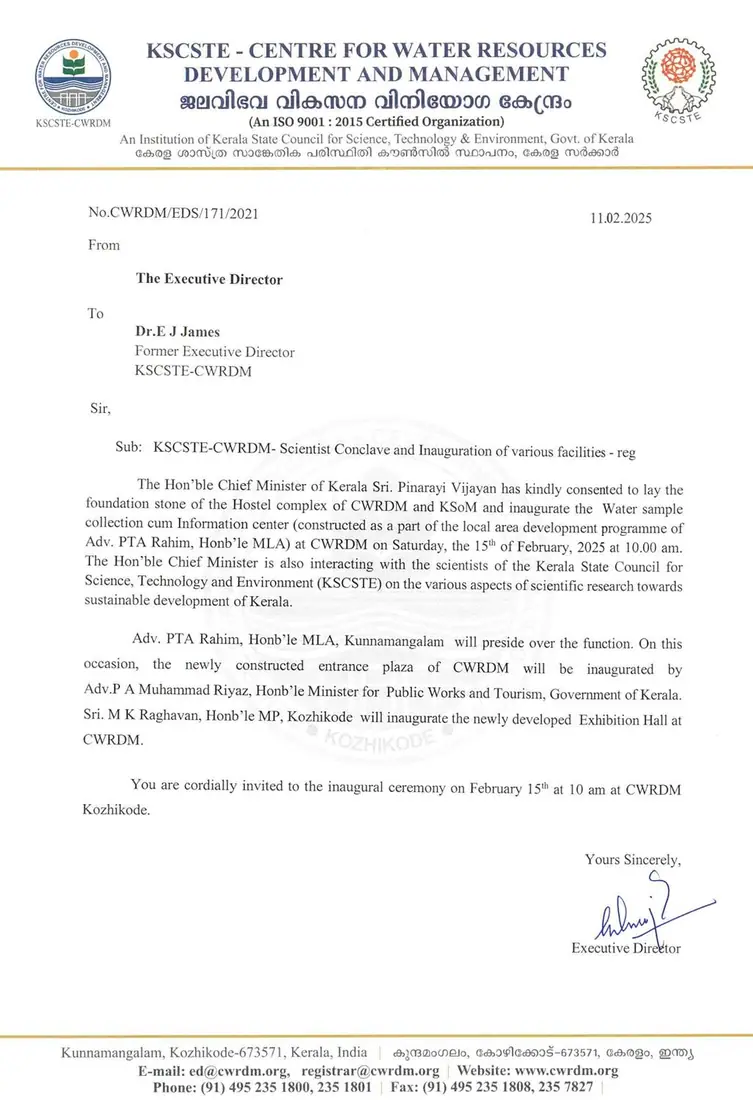
Invitation to the inaugural ceremony of the KSCSTE–CWRDM Conclave dated 11 February 2025.
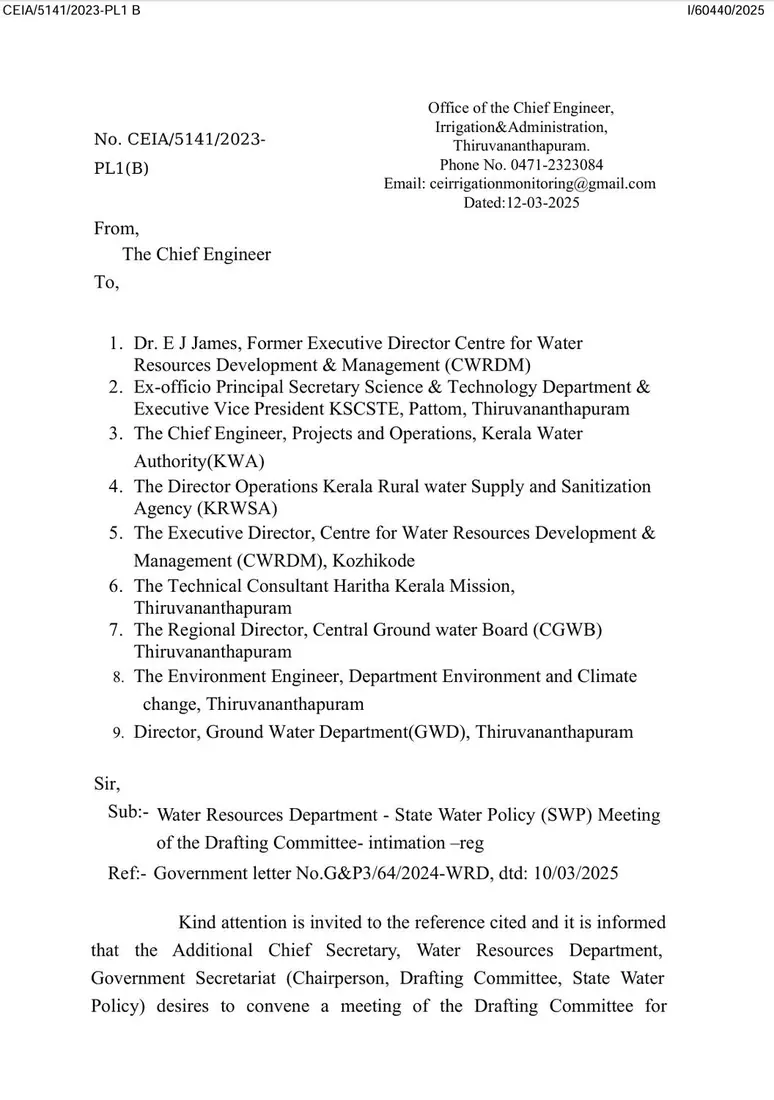
Correspondence relating to the State Water Policy Drafting Committee meeting dated 12 March 2025.
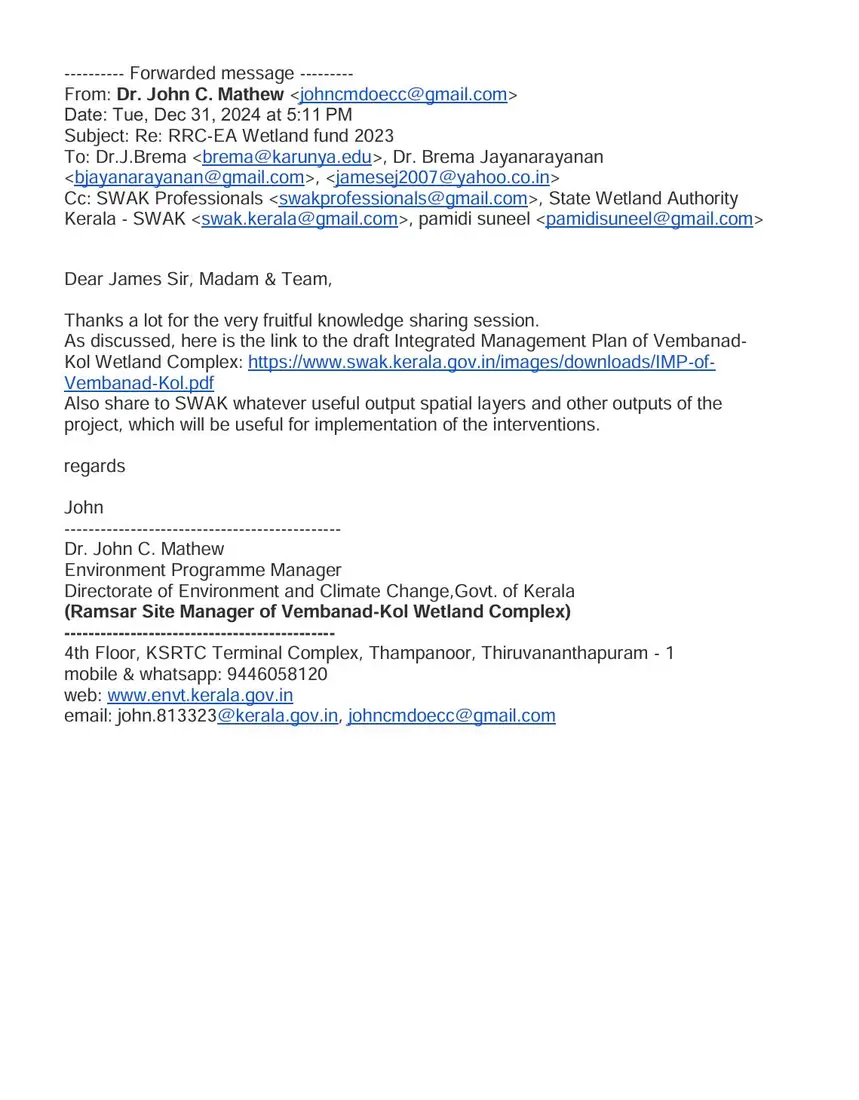
Email correspondence concerning the Ramsar Project presentation and the draft Integrated Management Plan for Vembanad-Kol Wetland Complex, dated 31 December 2024.
4. Cooperation with National Government and Institutions
KITS actively collaborates with national premier institutions under the Government of India to advance water-resource science and policy:
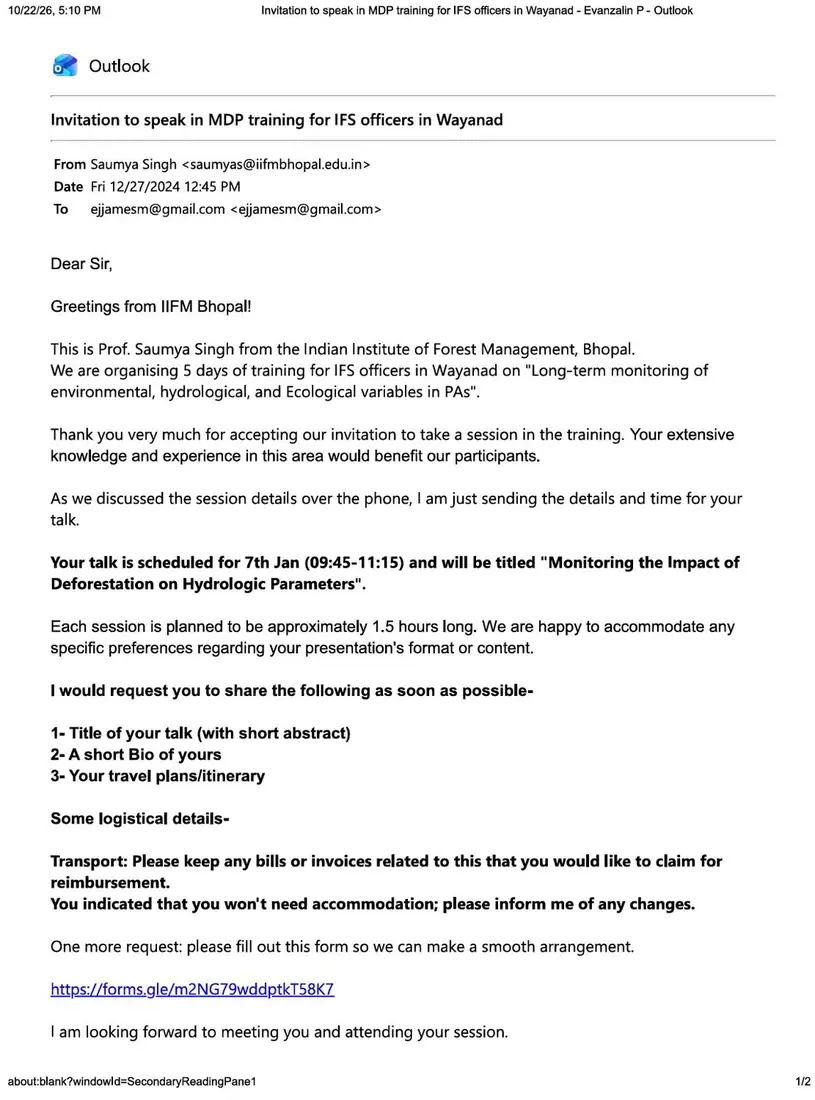
- Indian Institute of Forest Management (IIFM), Bhopal: Faculty from KITS served as expert resource persons for technical sessions organized by IIFM (an autonomous institute under the Ministry of Environment, Forest and Climate Change, Govt. of India), delivering specialized lectures on monitoring the hydrological and ecological impacts of watershed development programs.
- National Institute of Hydrology (NIH), Roorkee: KITS maintains active scientific exchange and research linkages with the National Institute of Hydrology (an apex research institute under the Ministry of Jal Shakti, Government of India), focusing on hydrological modeling, catchment runoff simulation, and regional groundwater recharge dynamics.
Email invitation from the Indian Institute of Forest Management, Bhopal, for an expert session on monitoring the impact of deforestation on hydrological parameters.
5. Cooperation at the Global / International Level
KITS promoted international knowledge exchange on water resources and sustainability through academic programmes and international institutional interactions. From 5 to 20 July 2024, the institution hosted activities under the Fulbright Specialist Program. The completion report records lectures and interactions on mathematical modelling in hydrology and water-resources engineering, discussions with the Water Group, and visits to dams and wetlands near Ooty and Coonoor. KITS also organized or participated in a workshop on Recent Trends in Integrated Water Resources Management on 10 October 2024. Further, a KITS representative received an invitation dated 13 January 2025 to visit the University of Oulu, Finland, as a Visiting Professor. These records demonstrate international academic exchange and knowledge sharing relevant to integrated water-resource management.
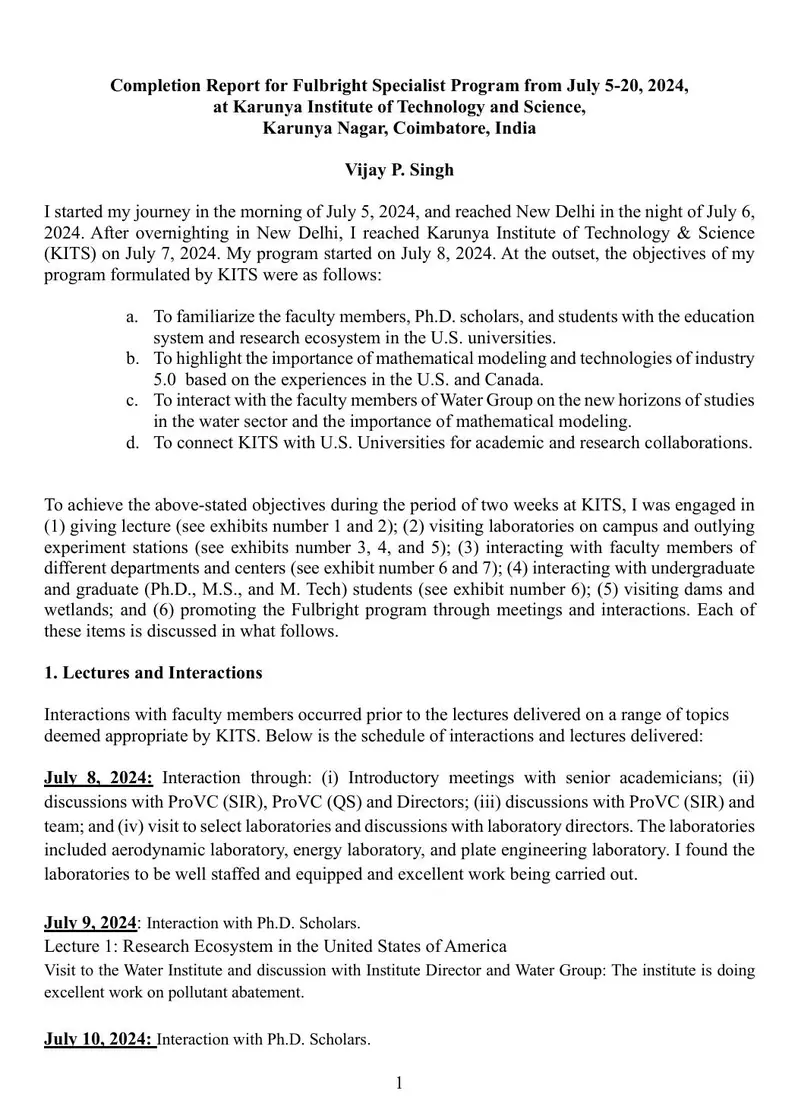
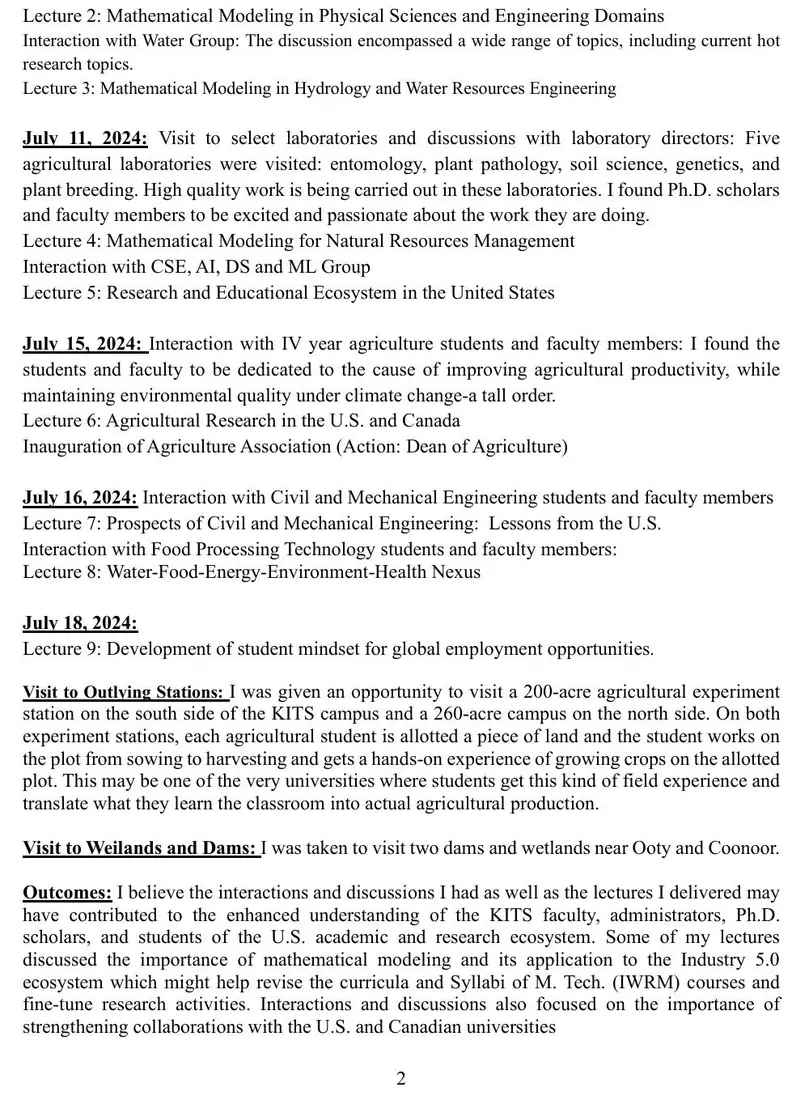
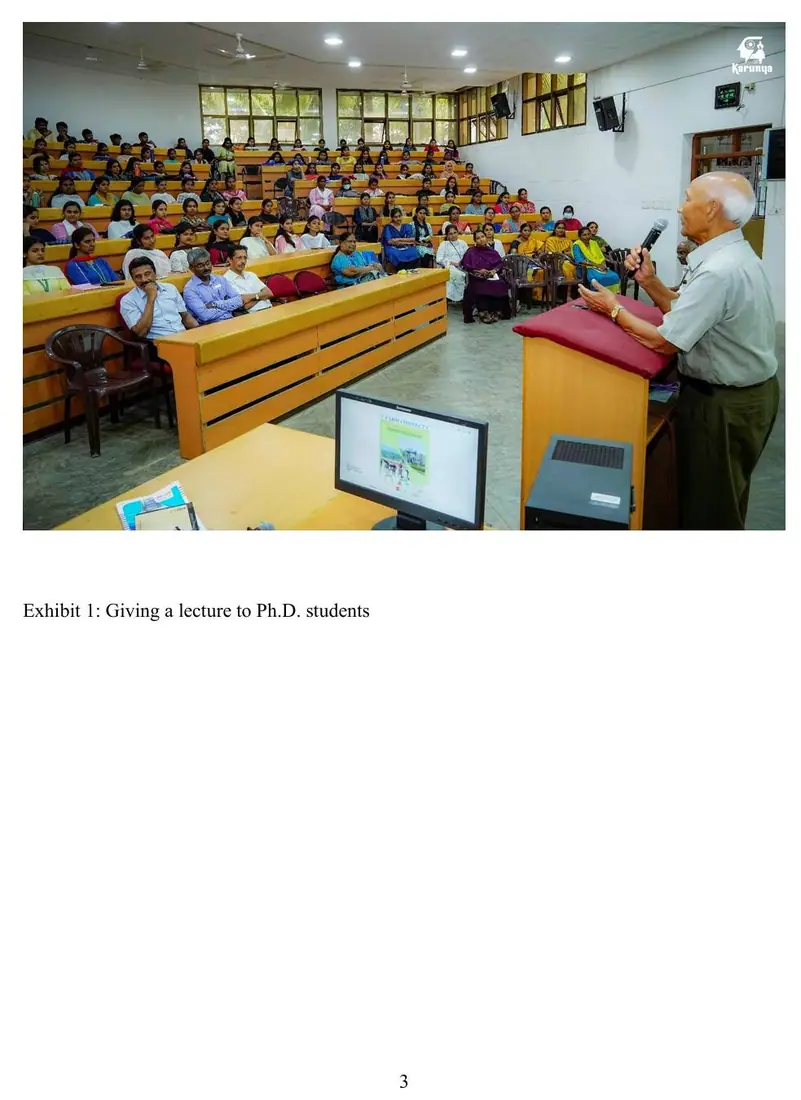
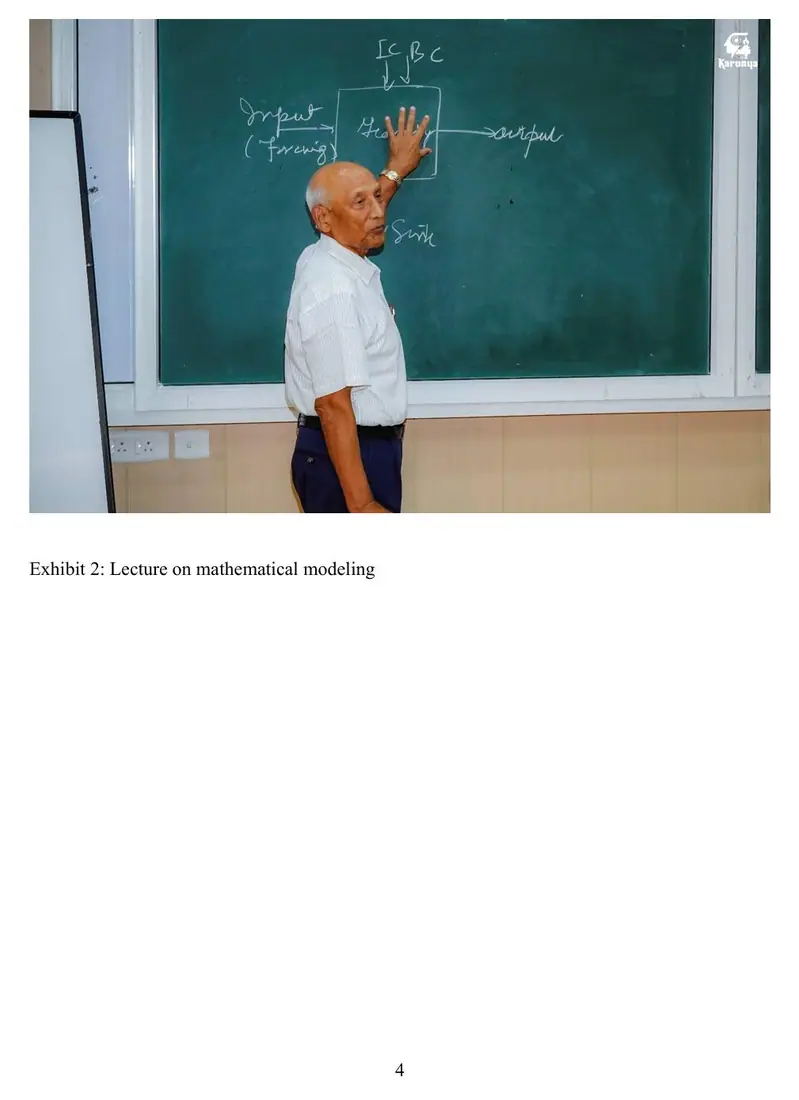
Completion report for the Fulbright Specialist Program conducted at KITS from 5–20 July 2024, describing the programme objectives and academic interactions.
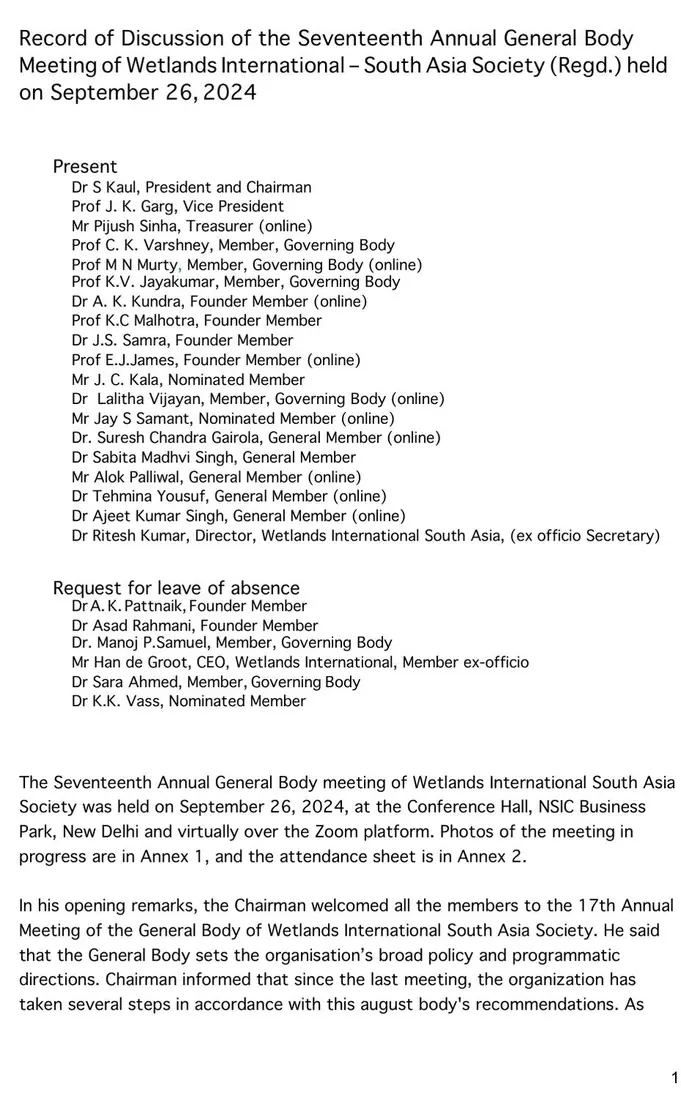
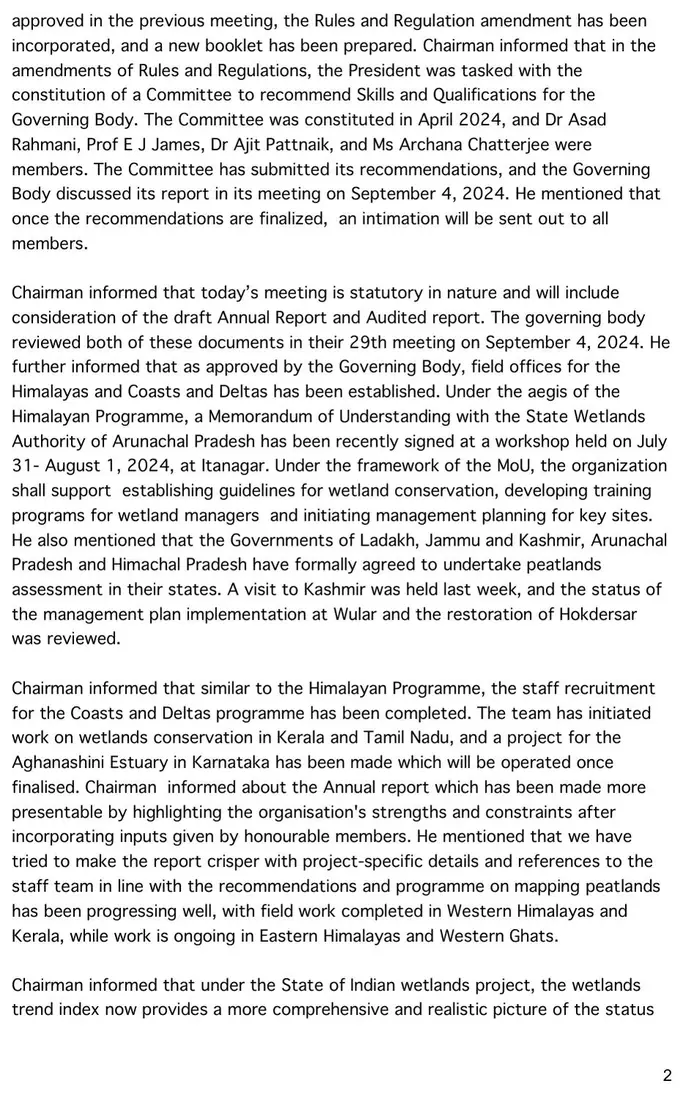
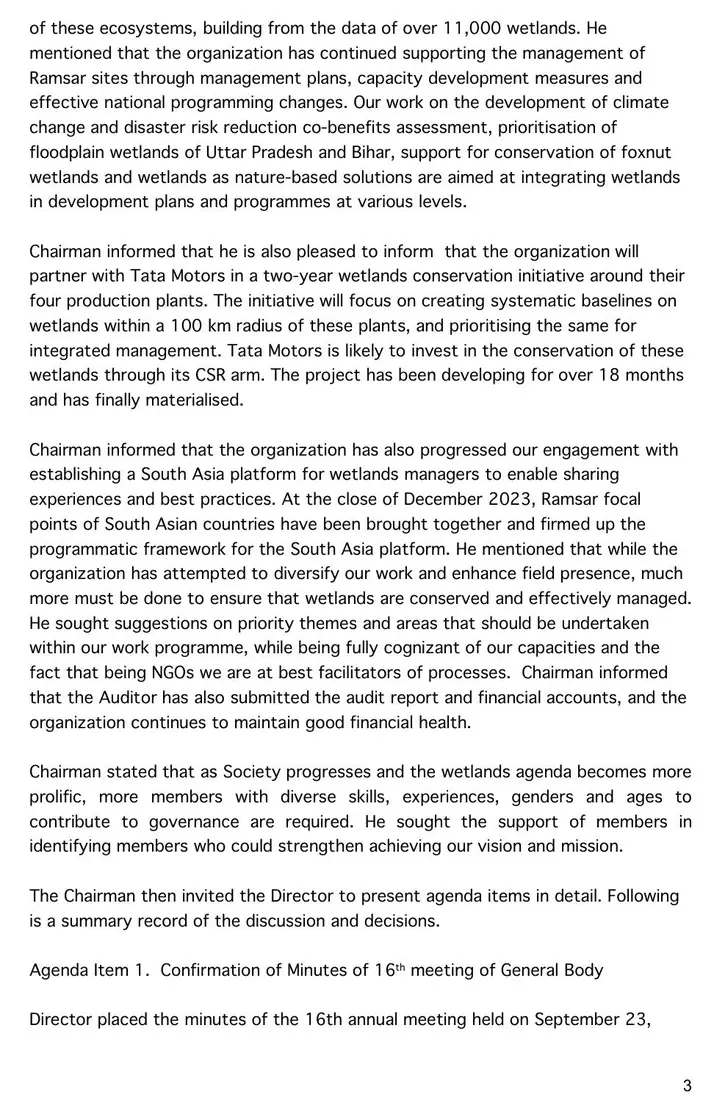
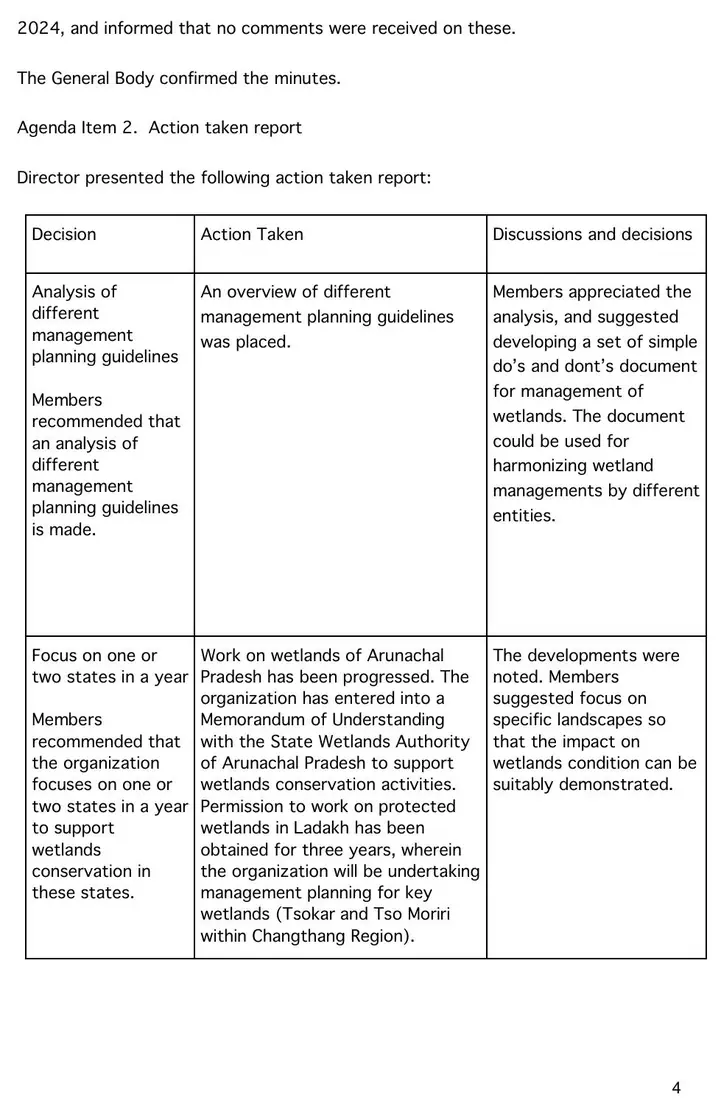
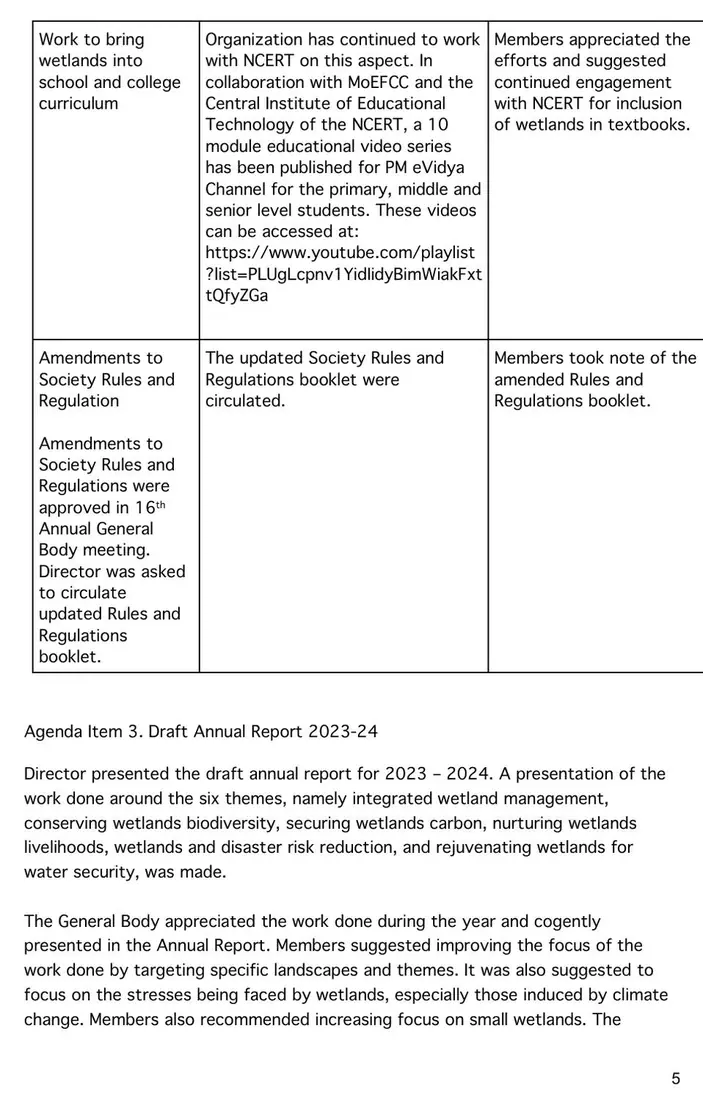
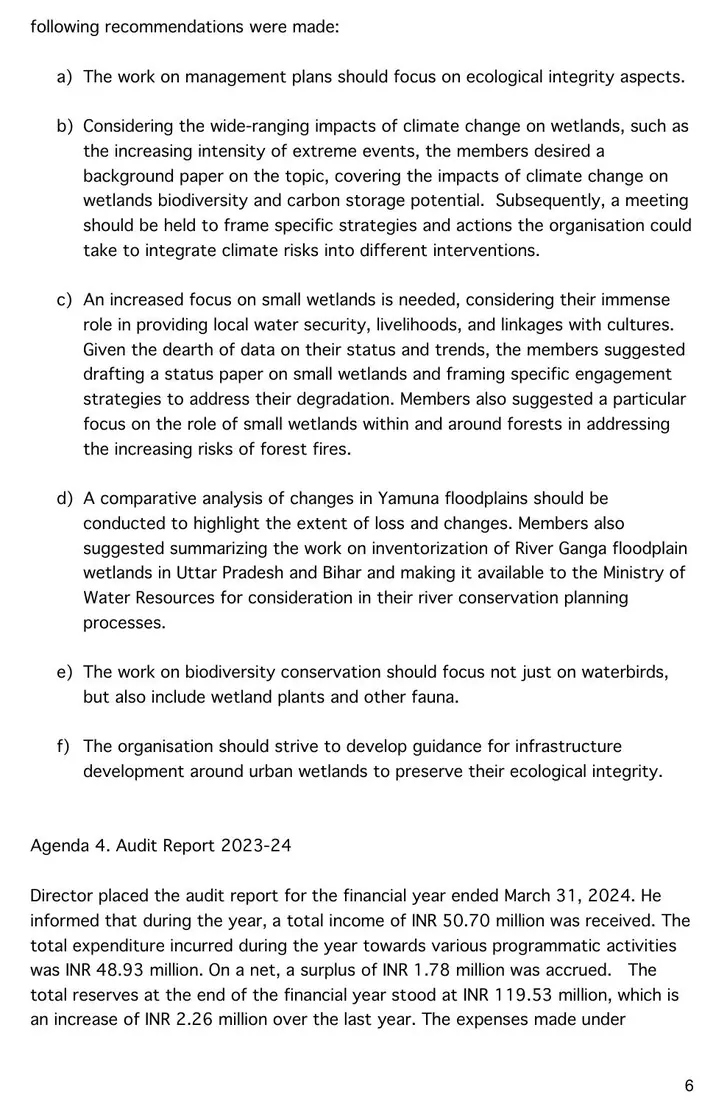
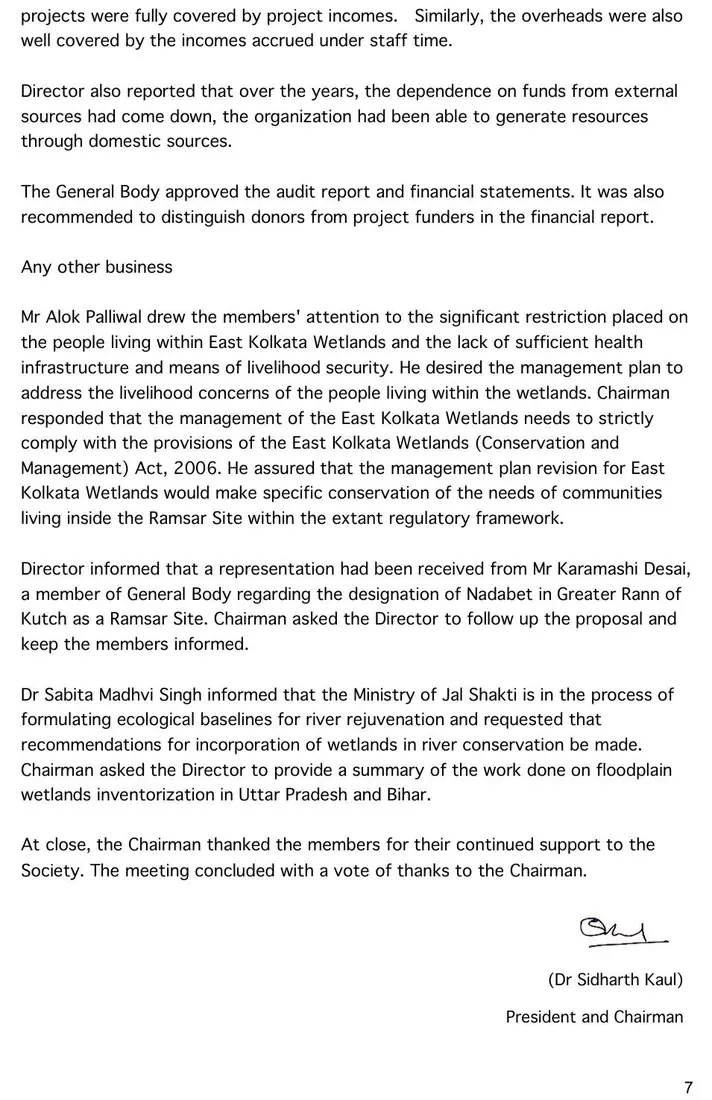
Record – 17th Annual General Body Meeting of Wetlands International – Sep 26, 2024
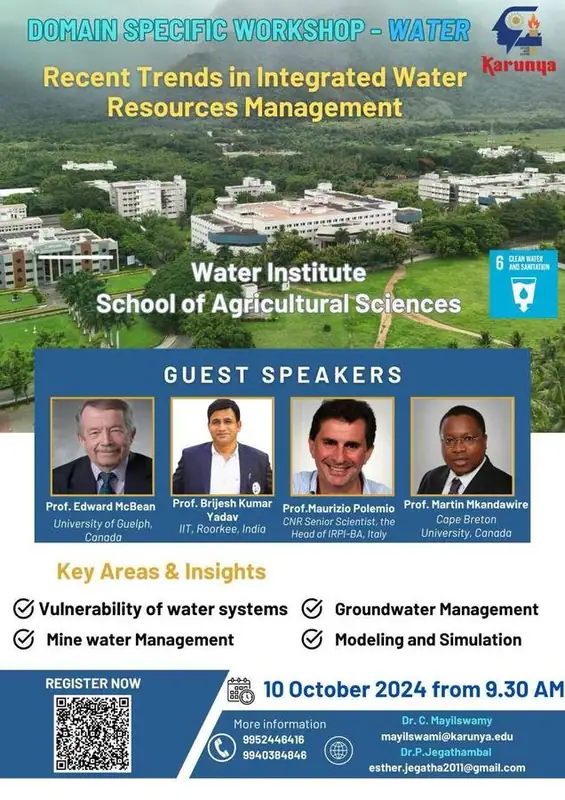
Programme poster for the workshop on Recent Trends in Integrated Water Resources Management, 10 October 2024.
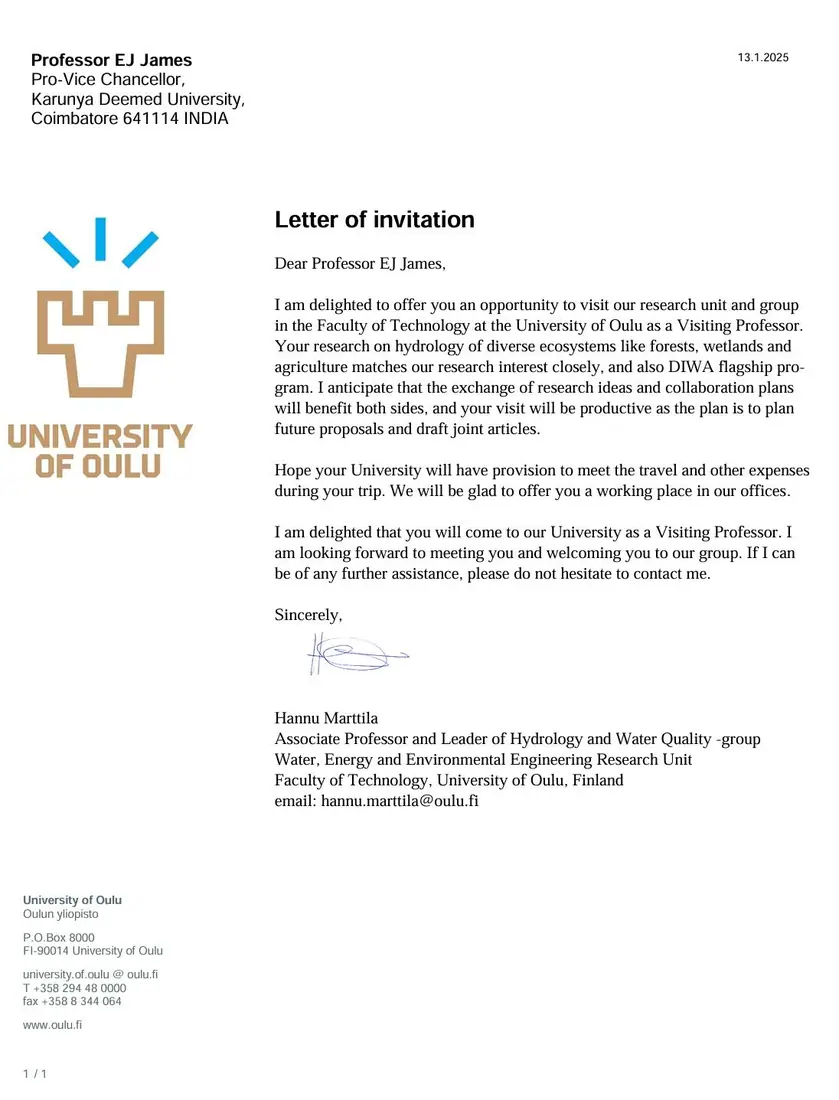
Invitation correspondence from the University of Oulu, Finland, dated 13 January 2025, concerning a Visiting Professor engagement.
Additional Regional Research Collaboration – Tamil Nadu and Kerala
KITS also identified Tamil Nadu Agricultural University (TNAU) and the Centre for Water Resources Development and Management (CWRDM) as institutional partners for research projects, publications, student internships and capacity-building activities. TNAU represents a state-level agricultural research and academic partner, while CWRDM is a regional water-resources research institution in Kerala. These collaborations provide opportunities for technical exchange and applied research relevant to water-resource management.
Additional National-Level Research Institution Collaboration
The institution also identified the National Institute of Hydrology (NIH), Roorkee, under the Ministry of Water Resources, and the National Environmental Engineering Research Institute (NEERI) as research and knowledge partners. The proposed areas of cooperation include joint research projects, publications, student internships and capacity-building activities. These institutions have relevance to hydrology, water-resource assessment and environmental engineering.
Industry Partnership Supporting Water Security – SUEZ India
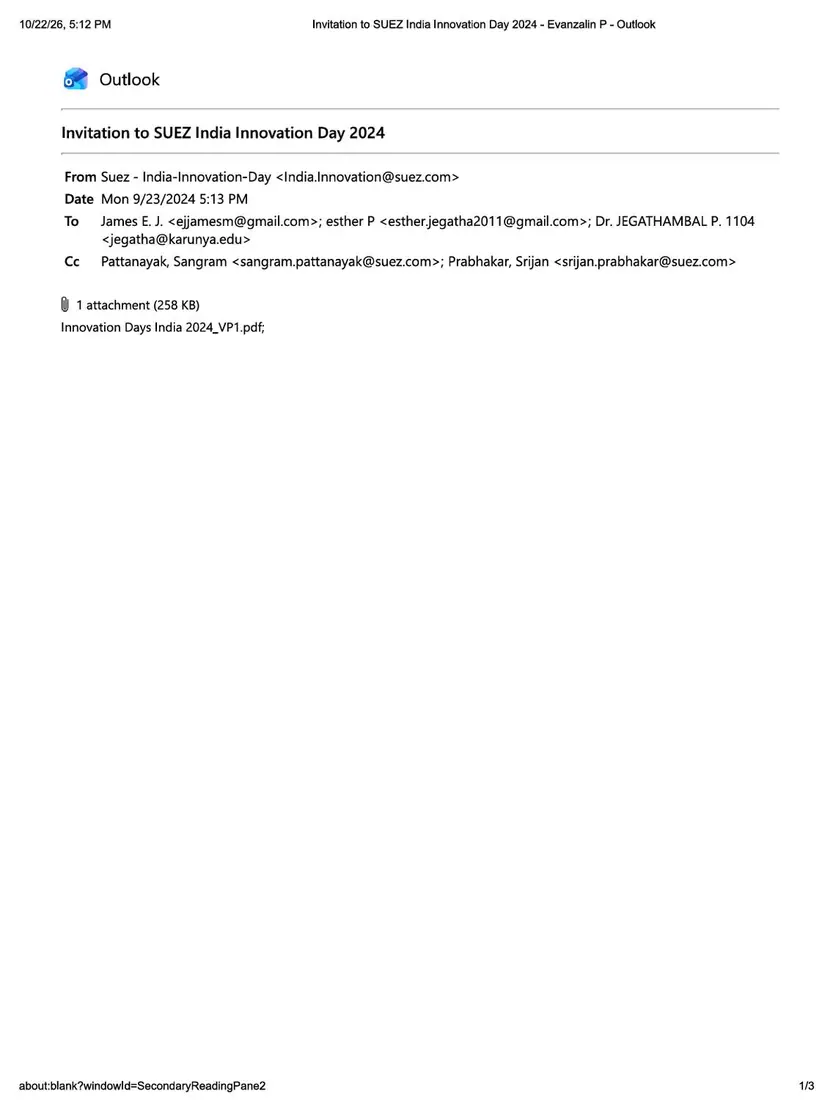
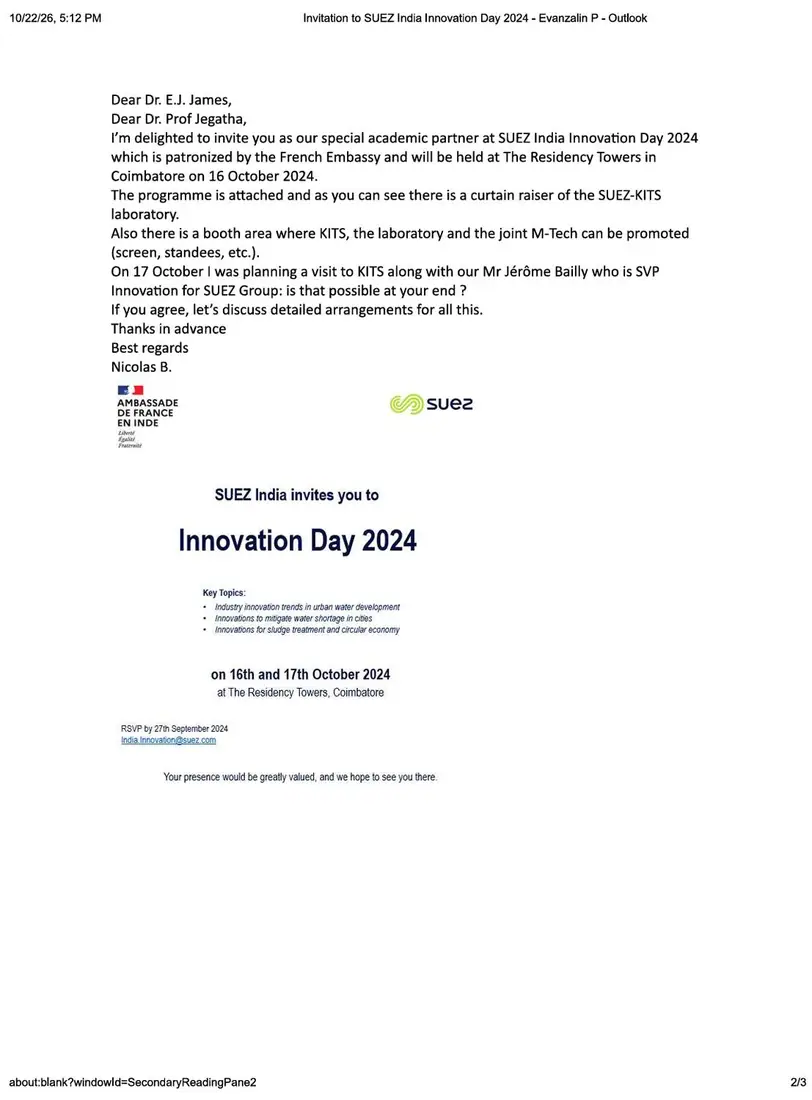
KITS established an academic and research partnership with SUEZ India in connection with the implementation of 24×7 water-supply schemes. Under this engagement, research studies on chlorine decay were undertaken to contribute to understanding water-quality maintenance in distribution systems. Students from B.Tech. and M.Tech. programmes undertook internships at SUEZ, providing industry exposure in water-supply engineering and related operational practices. Training programmes were also organized for students on Smart Water Meter Systems, WaterGEMS and computational optimization of water-distribution systems. These activities connected academic learning and applied research with practical challenges in continuous water supply, distribution-system modelling and water-quality management.
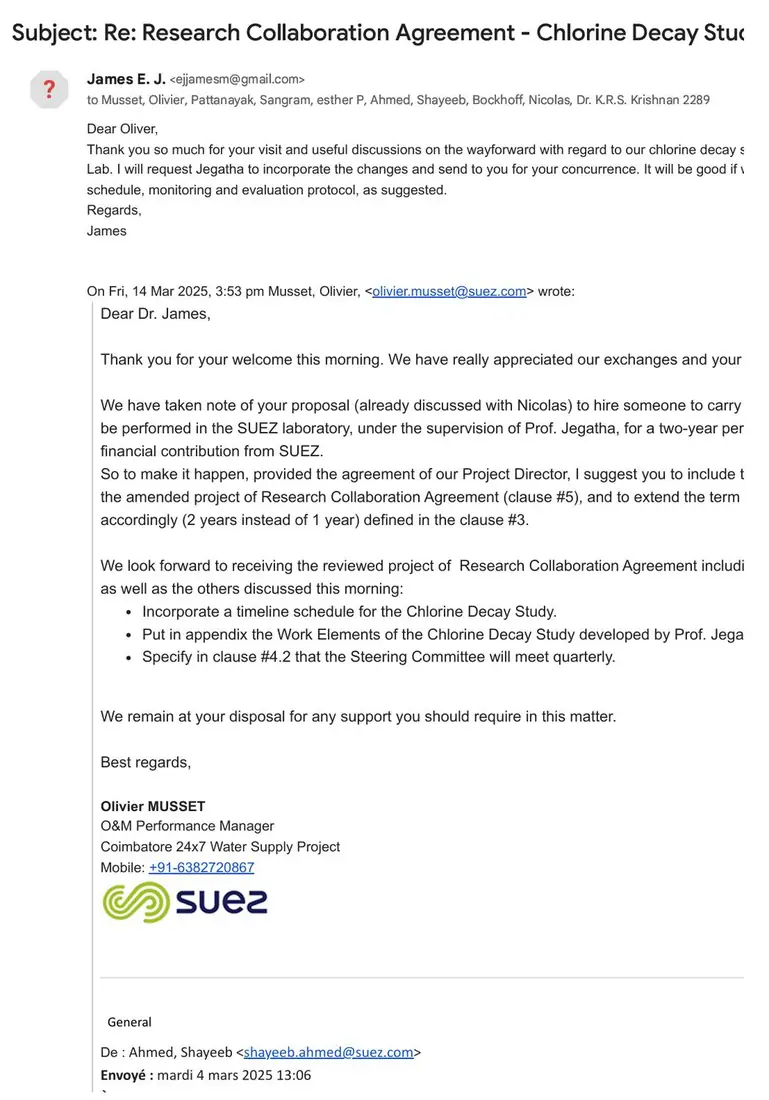
Research Collaboration Agreement – Chlorine Decay Study – March 14, 2025