
SDG Objective
To promote sustainable groundwater extraction and responsible water-resource management through groundwater recharge, rainwater harvesting, water storage and monitoring technologies across the university campus.
Implementation
Karunya Institute of Technology and Sciences has implemented an integrated water-resource management system incorporating groundwater extraction, rooftop rainwater harvesting and groundwater recharge mechanisms.
The institution infrastructure includes:
Five open wells and 23 borewells for groundwater extraction.
Thirty-three rainwater harvesting installations across campus buildings.
Thirty-three groundwater recharge soak pits to facilitate aquifer replenishment.
A 25,000-litre ferrocement rainwater storage tank at the Administrative Block.
Automatic water-flow controllers and monitoring systems to regulate water distribution and minimize wastage.
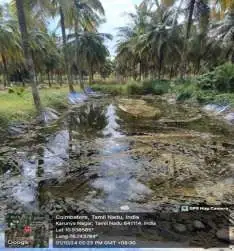
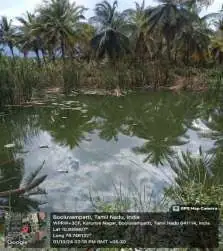
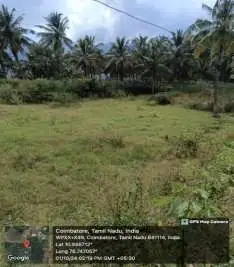
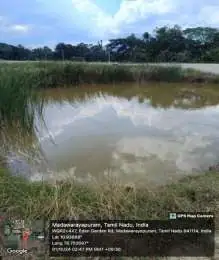
Farm ponds and water conservation structures for rainwater storage and conservation.
These initiatives support sustainable utilization of groundwater resources and enhance the institution's capacity to conserve and replenish water resources.
Evidence Submitted
| Evidence | Supporting document |
|---|---|
| Groundwater extraction infrastructure | Five open wells and 23 borewells – official water report |
| Rainwater harvesting | Photographs of harvesting installations |
| Groundwater recharge | Documentation of 33 recharge soak pits |
| Water storage | 25,000-litre ferrocement tank |
| Monitoring technologies | Photographs of water-flow controllers |
| Water conservation | Geotagged photographs of campus ponds |
Total Volume of Water Used in the University
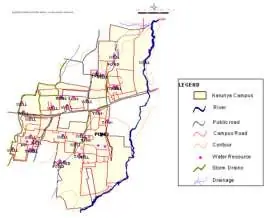
Location of Water Resources (wells)
Sources of Water Supply:
There are 5 open wells and 23 bore wells on campus supplying water to 166 storage tanks which meet the water demand of the students, faculty and staff (Total of 8087).
- Groundwater: 95% of water supply from aquifers to meet the demand in the campus
- Potable water supply from Siruvani reservoir: Drinking water in the campus and hostels
- Desalinated Water using RO plants: For cooking and drinking.
- Ferrocement -based roof top water harvesting structure and recycled water from 4 STP units in the student’s hostel: Water demand for gardening and irrigation.
| Facility | Quantity / Capacity | Function | Coverage |
|---|---|---|---|
| RO Plants | 2 Units (2000 LPH + 500 LPH) | Centralized purification for hostels and staff quarters | ~60% of potable supply |
| Water Purifiers | 86 Units | Secondary purification and cooling | 37 buildings (academic, admin, hostels) |
| Self-Closing Taps | 3,376 Nos. | Minimize wastage at outlets | 56.4% water-efficient |
| IoT-Level Controllers | 119 | Overflow and refill management | All sumps & OHTs |
| Overhead Tanks | 46 | Water storage | Monitored 24×7 |
| Sumps | 8 | Ground-level reservoirs | Smart sensor integrated |
| Stage | Infrastructure | Functional Capacity | Measurement System |
|---|---|---|---|
| Freshwater Input | Siruvani /TWAD + 23 Borewells + 5 Open Wells | 1.4–1.6 MLD | Operational Time and capacity |
| Treatment | 4 STPs | Domestic wastewater recycling | Flow meter |
| Potable Production | RO Plants (2000 & 500 LPH) | Drinking & cooking supply | Sensors and RO Logbook Registers |
| Storage & Distribution | Sumps + overhead tanks + Pumps | Internal distribution network | 119 IoT Level Controllers |
| Reuse Network | 113 Reuse Outlets | Irrigation | - |
The volume of water consumed/used in the hostel and university - 291,132 m3/year Total Volume of water consumed per person – 36.0 m3/year
Measurement of water consumption:
- Automatic water flow controllers have been installed in water tanks to measure the flow and avoid overflow. The water supply volume is determined based on motor power,
pumping duration for each tank, and the building height, allowing calculation of the water flow into each tank.
- For hostels, the volume of water used by students was estimated through semi-structured interviews covering water use for bathing, washing, flushing, drinking, and minor uses.
- Similarly, interviews were conducted at the university campus to estimate water consumption in canteens, laboratories, and construction sites.
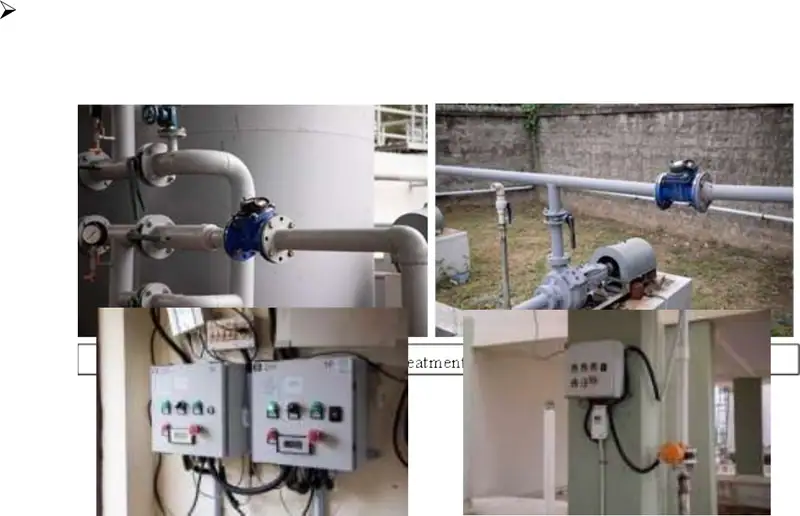
- Flow meters are installed at STP inlets and outlets to measure the inflow and reuse of treated water, as well as at RO plant intake and delivery points to track the volume of treated water used.
Automative waterflow controllers
The campus has established extensive rainwater harvesting and groundwater recharge systems to enhance sustainable water management. During the monsoon, rainwater collected from building terraces is quantified based on roof area and rainfall depth. A 25,000-litre ferrocement tank at the administrative block stores water from a 1,900 m² roof for washing use. Additionally, 33 soak pits—each 3 m deep and 1.8 m in diameter—are distributed near academic buildings and hostels to facilitate groundwater recharge. In total, 33 rainwater harvesting sites have been identified, with terrace areas ranging from 39 m² to 5,590 m² across key locations such as the administrative block, civil and mechanical departments, auditoriums, guest houses, and hostels, all contributing significantly to replenishing groundwater and promoting sustainable resource utilization.
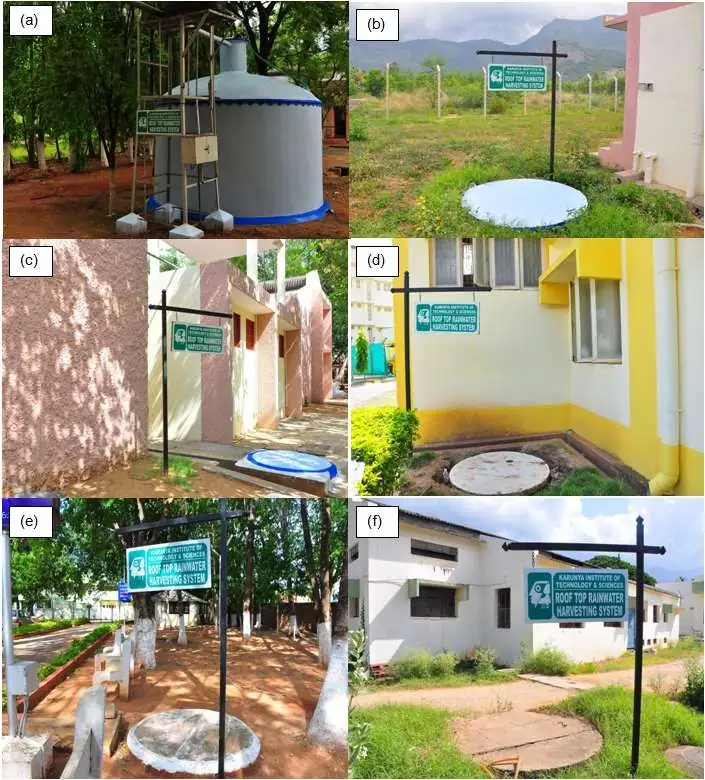
Location of Rain Water Harvesting System in KITS Campus
| Sl.No | Location | Area of Terrace |
|---|---|---|
| 1 | Behind Administrative Block | 1900 m2 |
| 2 | Adjacent to Administrative Block | |
| 3 | Adjacent to Aerospace Lab | 278 m2 |
| 4 | Adjacent to Old Bio Tech Block | 766 m2 |
| 5 | Adjacent to Ebenezer Auditorium | 1,100 m2 |
| 6 | Adjacent to CST Department | 1,247 m2 |
| 7 | Adjacent to Elohim Auditorium | 450 m2 |
| 8 | Adjacent to Mechanical Lab | 2960 m2 |
| 9 | Adjacent to Civil Department | 2812 m2 |
| 10 | Adjacent to Civil Lab | |
| 11 | Adjacent to Mechanical Workshop | 2,218 m2 |
| 12 | Adjacent to Food Processing Lab | 4,277 m2 |
| 13 | Adjacent to Computer Centre | 1,023 m2 |
| 14 | Adjacent to S & H Block | 5,590 m2 |
| 15 | Adjacent to Visitor Waiting Hall - LH | 150 m2 |
| 16 | Adjacent to Old DMR Dinning Hall | 600 m2 |
| 17 | Adjacent to Sewage Treatment Plant - LH - EVR | 2,814 m2 |
| 18 | Adjacent to Sewage Treatment Plant - LH - SRR Extn | 1,502 m2 |
| 19 | Adjacent to Oprah Residence | 1,800 m2 |
| 20 | Adjacent to Sundaraj Residence | 1,600 m2 |
| 21 | Adjacent to Sevagapandian Residence | 1,306 m2 |
| 22 | Adjacent to PRGR Residence | 1,910 m2 |
| 23 | Adjacent to DMR Residence | 1,609 m2 |
| 24 | Adjacent to Indoor Games - FDR | 748 m2 |
| 25 | Adjacent to FDR Mess | 1,841 m2 |
| 26 | Adjacent to FDR Residence | 2,324 m2 |
| 27 | Adjacent to EGR Residence | 1,484 m2 |
| 28 | Adjacent to Student Amenity Centre - AR/HR | 147 m2 |
| 29 | Adjacent to Hepzibah Gents hostel | 1,220 m2 |
| 30 | Adjacent to Post Office | 39 m2 |
| 31 | Adjacent to Baburaj Residence | 2,275 m2 |
| 32 | Adjacent to Guest House | 1,892 m2 |
| 33 | Adjacent to JMR Mess | 2,185 m2 |
Recycled water from sewage treatment plants (STPs) forms a vital component of the water management system. The university operates four STPs: JMR (1000 KLD capacity), FDR (400 KLD), Ladies Hostel (450 KLD), and PR GARG (600 KLD).
| STP Unit | Installed Capacity (KLD) | Annual Output (m³/year) | End-Use Application | Measurement |
|---|---|---|---|---|
| JMR Hostel | 1000 | 132,525 | Irrigation, lawns etc. | Flow Meters |
| FDR Hostel | 400 | 79,729 | Hostel & garden irrigation | |
| Ladies Hostel STP | 450 | 61,778 | Mess cleaning | |
| PR GARG Campus STP | 600 | 111,171 | Farm Irrigation (329 acres) | |
| Total | 2,450 KLD | 385,204 m³/year | 100% Recycled and Reused |
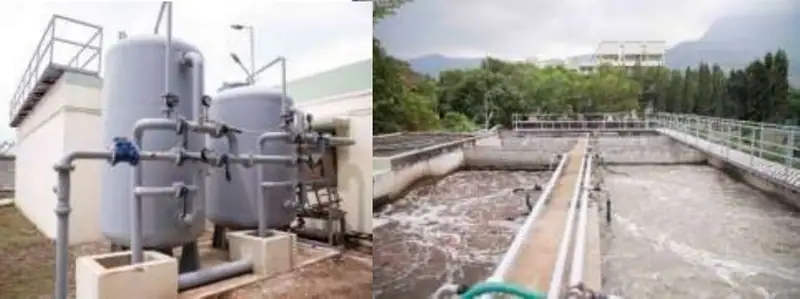
Desalination units also play an essential role in ensuring potable water availability. Two desalination units with a total capacity of 2000 litres per day for cooking and 500 litres per day for drinking are operated with flow meters installed to measure intake and delivery volumes. The treated water from RO plants is primarily used for drinking and cooking purposes. RO Treated Drinking Supply: 2,618 m³/year. Monitoring Tools: FREHNIG IoT Flow Transmitters + Database (LPS + cumulative flow).
Overall, the Karunya Institute of Technology and Sciences has developed an efficient and sustainable water management system by integrating groundwater, surface water, desalinated water, recycled wastewater, and harvested rainwater. Continuous monitoring through flow meters, automated controllers, and pumping records ensures optimal use and conservation of water resources. Through these measures, KITS effectively minimizes wastage, supports groundwater recharge, and promotes sustainability across its academic, residential, and agricultural zones.
Conclusion
Karunya Institute of Technology and Sciences demonstrates its commitment to sustainable water-resource management through groundwater extraction infrastructure, rainwater harvesting, groundwater recharge systems and water monitoring technologies. These initiatives contribute to responsible water extraction, aquifer replenishment and long-term campus water sustainability.