
- Karunya Institute of Technology and Sciences (KITS) is a residential campus comprises of 17 departments, accommodating a total of 7863 students and 665 faculty and staff members.
- It is a fully residential campus with 15 hostels for both girls and boys, along with 17 apartment complexes (quarters) that house approximately 500 faculty and staff.
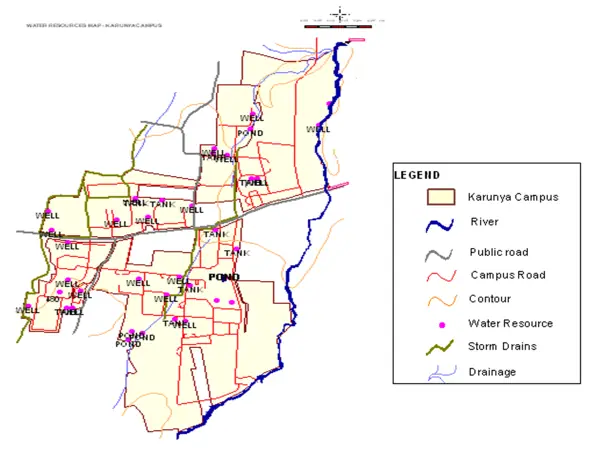
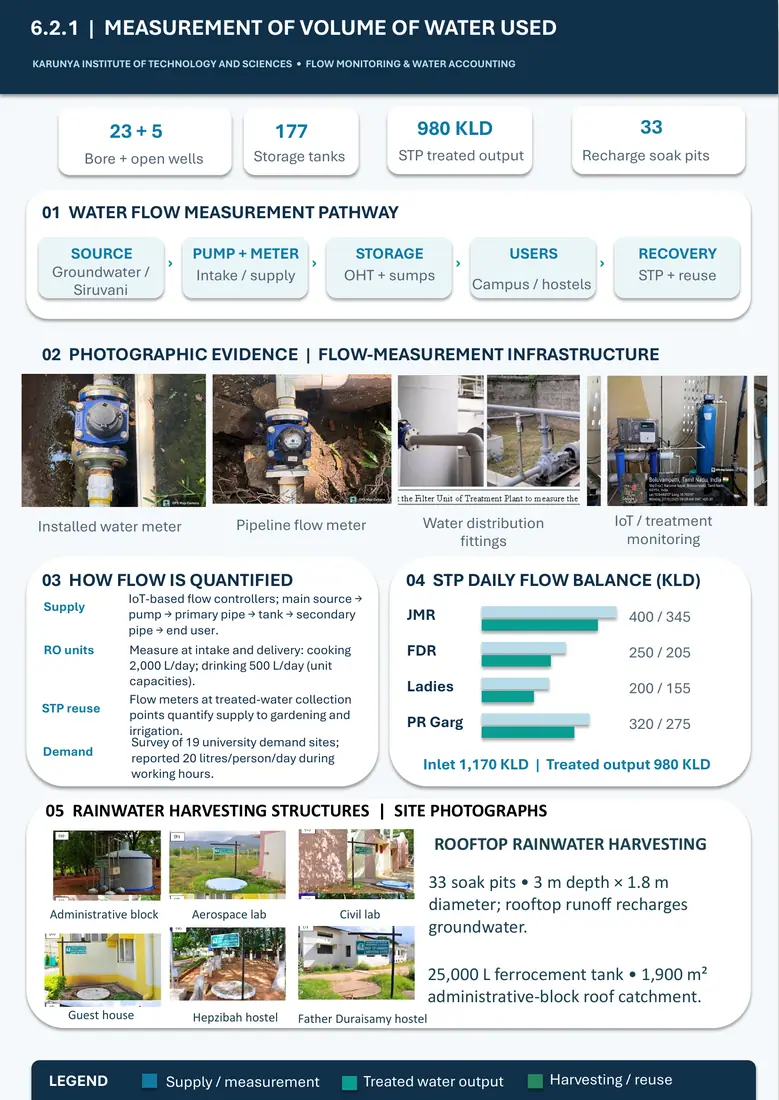
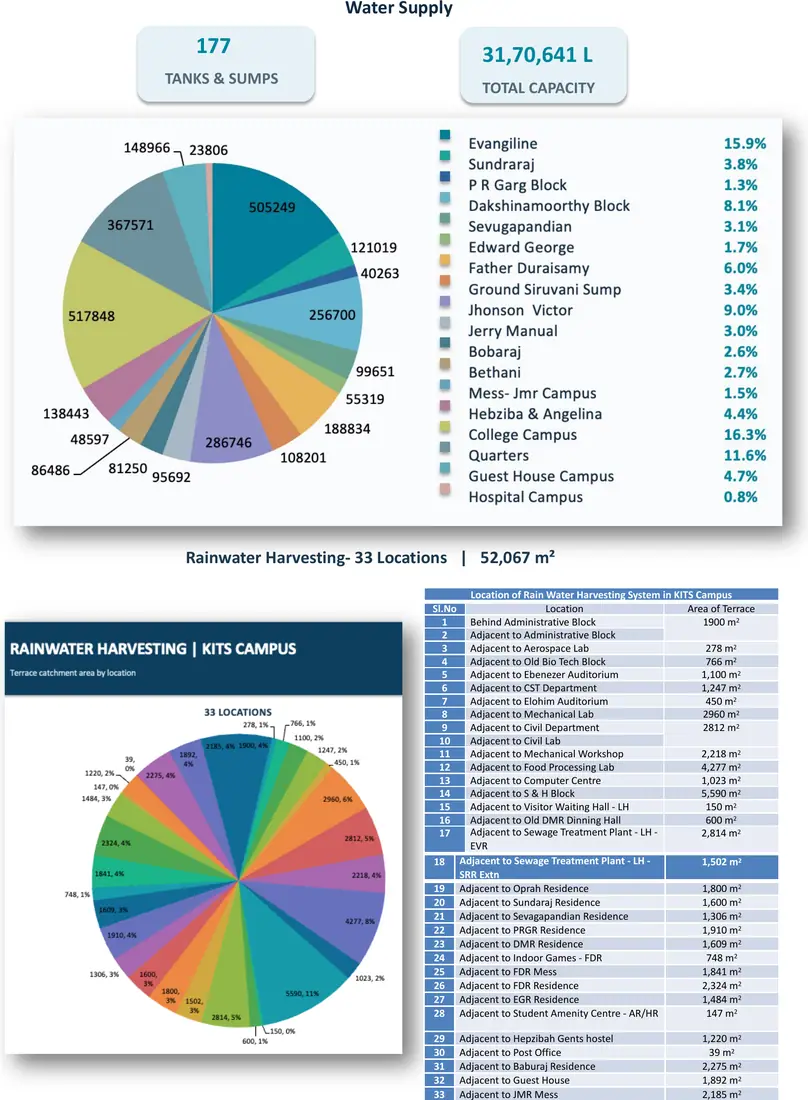
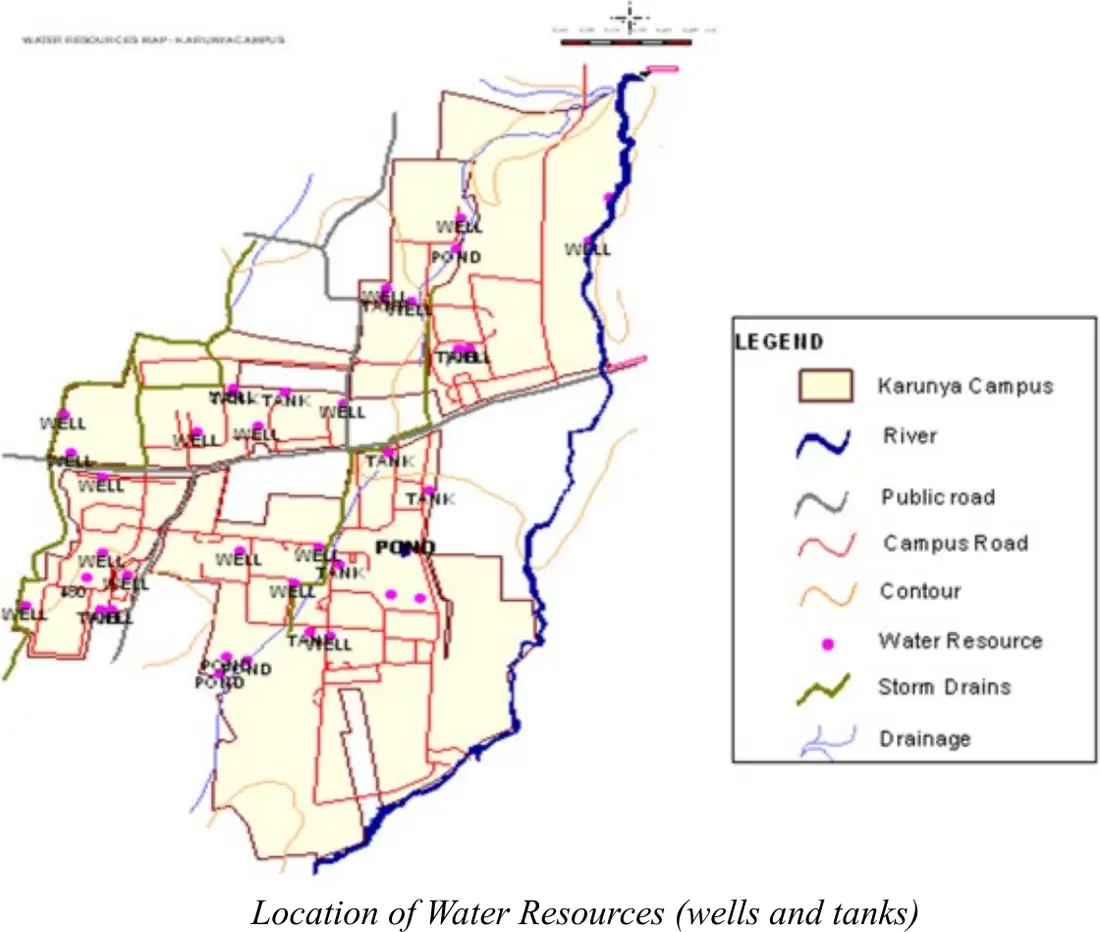
- Additionally, the School of Agriculture and Biosciences utilizes a vast expanse of 329 acres of agricultural land for their academic pursuits, research endeavours, and community development initiatives. There are 5 open wells and 23 bore wells on campus supplying water to 177 storage tanks which meet the water demand of the students, faculty and staff.
Geographic Location of Campus Water Resources (Wells and Reservoirs)
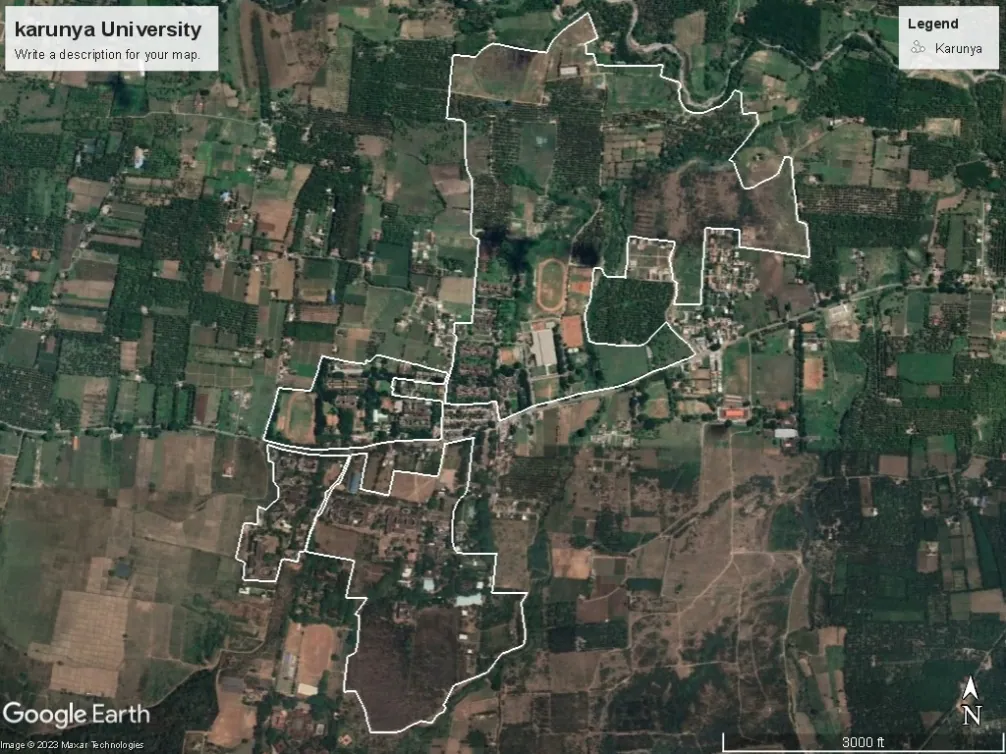
Primary Sources of Campus Water Supply:
- Groundwater: Water supply from aquifers (bore wells) to meet the demand in campus
- Potable water supply from Siruvani reservoir: For drinking purpose
- Reverse Osmosis (RO) Membrane-Purified Water: Two high-capacity commercial RO plants supplying cooking and potable drinking water.
- Rainwater Harvesting & Recycled Effluent: Ferrocement-based rooftop rainwater collection systems and recycled treated water from on-campus STP units utilized for campus landscaping and agricultural irrigation.
Quantitative Measurement of Water Supply and Consumption
- Water supply from subsurface (groundwater) and Siruvani Reservoir / Water Treatment Plant through storage tanks:
The water demand of the campus is met from available surface and groundwater resources (through 23 bore wells, 5 open wells, stormwater storage reservoirs across the campus and the municipal Siruvani water supply scheme).
Water distribution
Water is supplied from all the sources simultaneously to have 24 hours continuous supply of water in the whole campus. The main components of the water distribution system are:
Main water supply sources
Pump house
Primary pipelines
Overhead tanks
Secondary pipelines
- End users
Campus and Hostel Residences
Water demand calculation in University Campus
A semi-structured interview survey was conducted at the university campus, covering 19 demand sites including the canteen and construction sites. The survey involved students, staff, and workers to determine their water demand during working hours, and laboratory staff to assess water consumption for laboratory purposes, drinking, wash rooms, cleaning and leakage. The average water demand for above purposes is 20 lpcd.
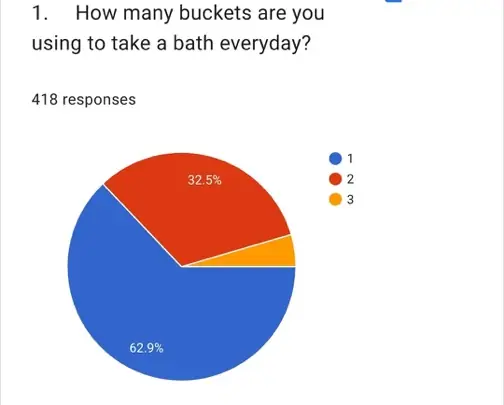
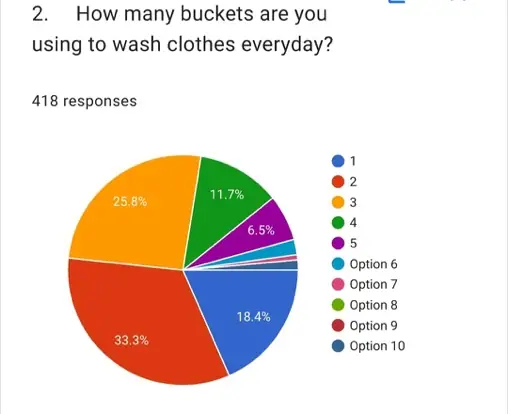
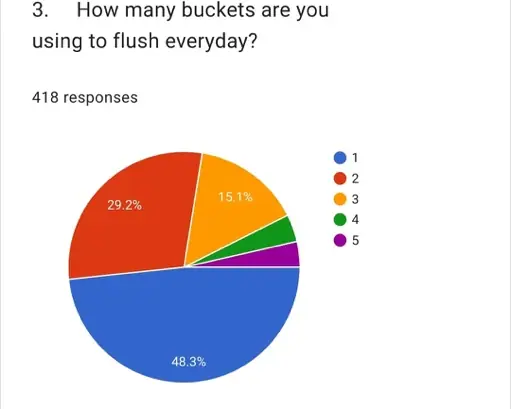
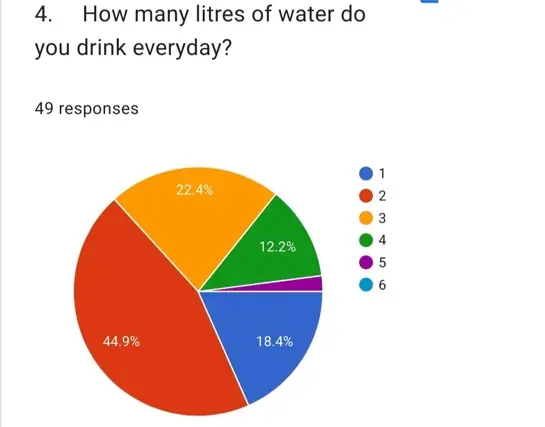
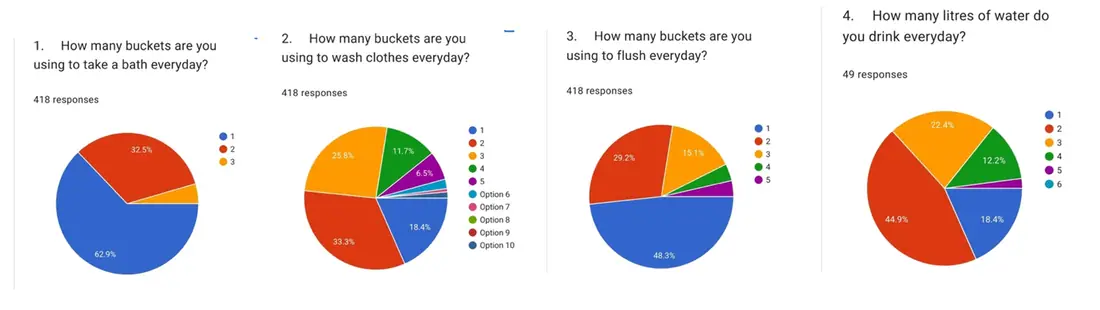
To determine the water demand of each hostel, a semi-structured interview was conducted in each hostel, covering details such as the amount of water used for bathing, washing clothes, flushing, drinking, and other minor uses. The amount of water required for flushing and bathing was calculated based on buckets of water, while drinking water was calculated based on bottles of water, with one bottle equalling one litre and one bucket equalling 15 litres. To determine student residential water demand, detailed empirical logging was conducted across student residences, analyzing volumetric consumption for bathing, laundry, sanitation, and drinking. Drinking water was logged via calibrated 1-litre dispenser tallies, while domestic washing was measured in 15-litre standardized units. Intensive sampling at the Ladies' Residence served as the baseline per-capita operational index, subsequently mapped across all 15 hostels according to verified occupancy censuses and catering headcounts.
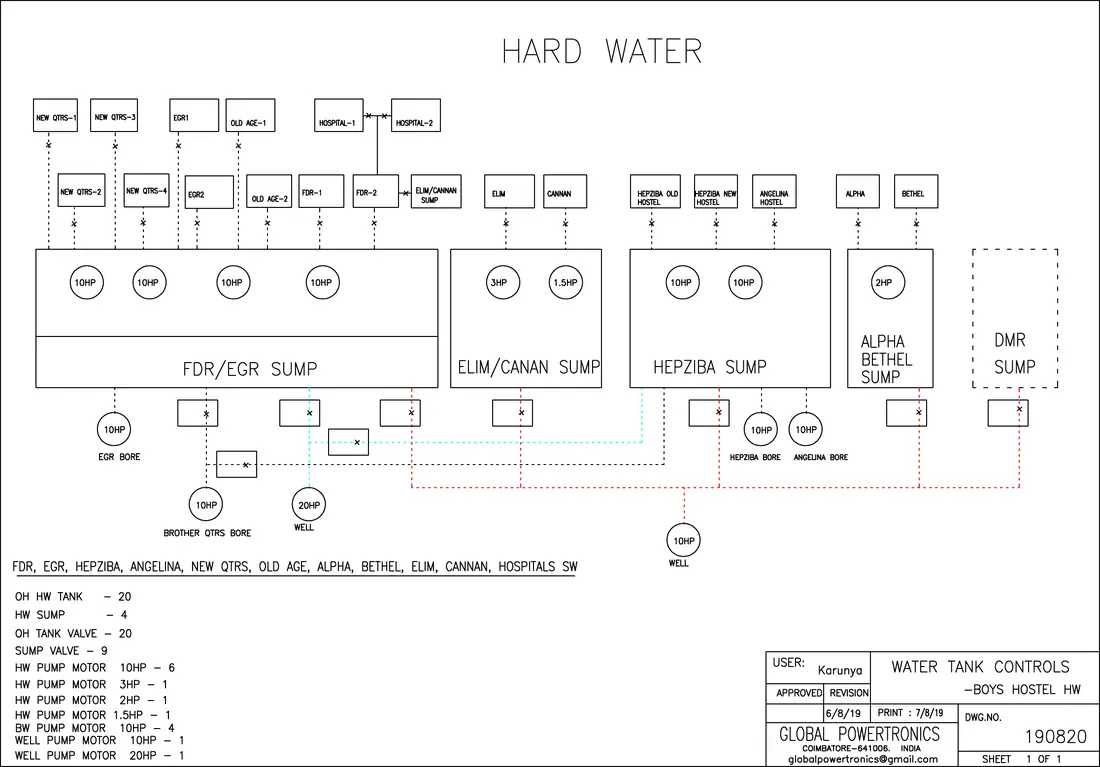
Water Supply Calculation (IoT based flow controllers)
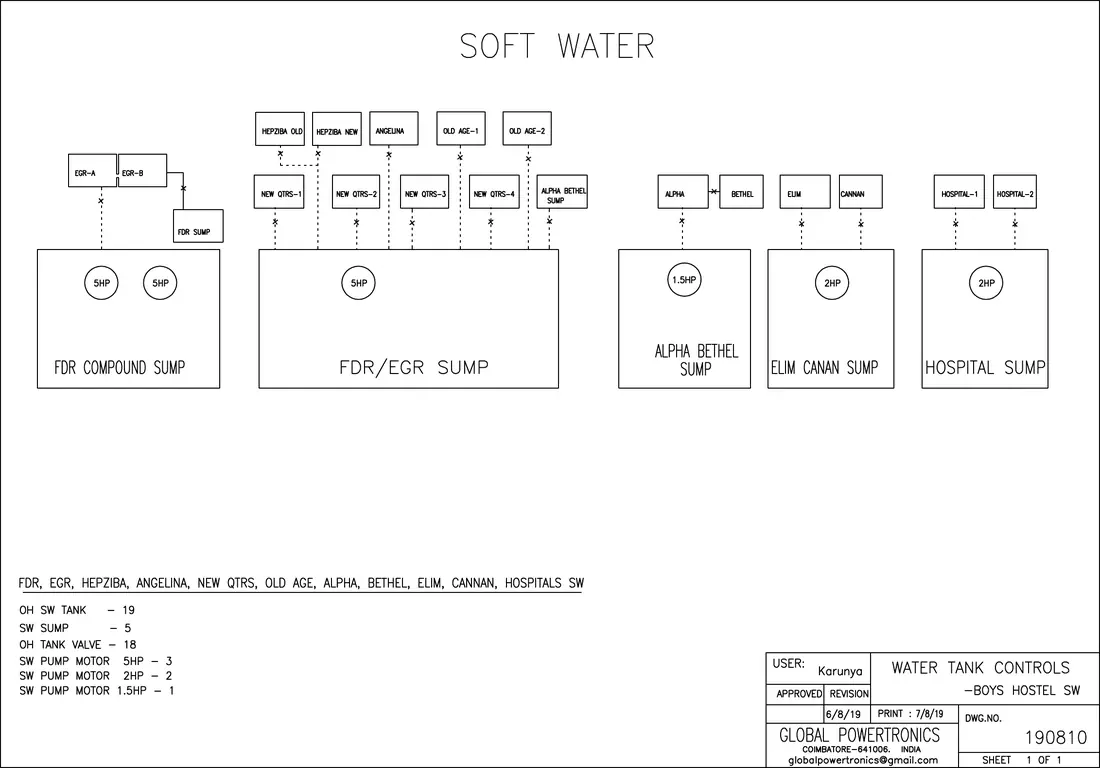
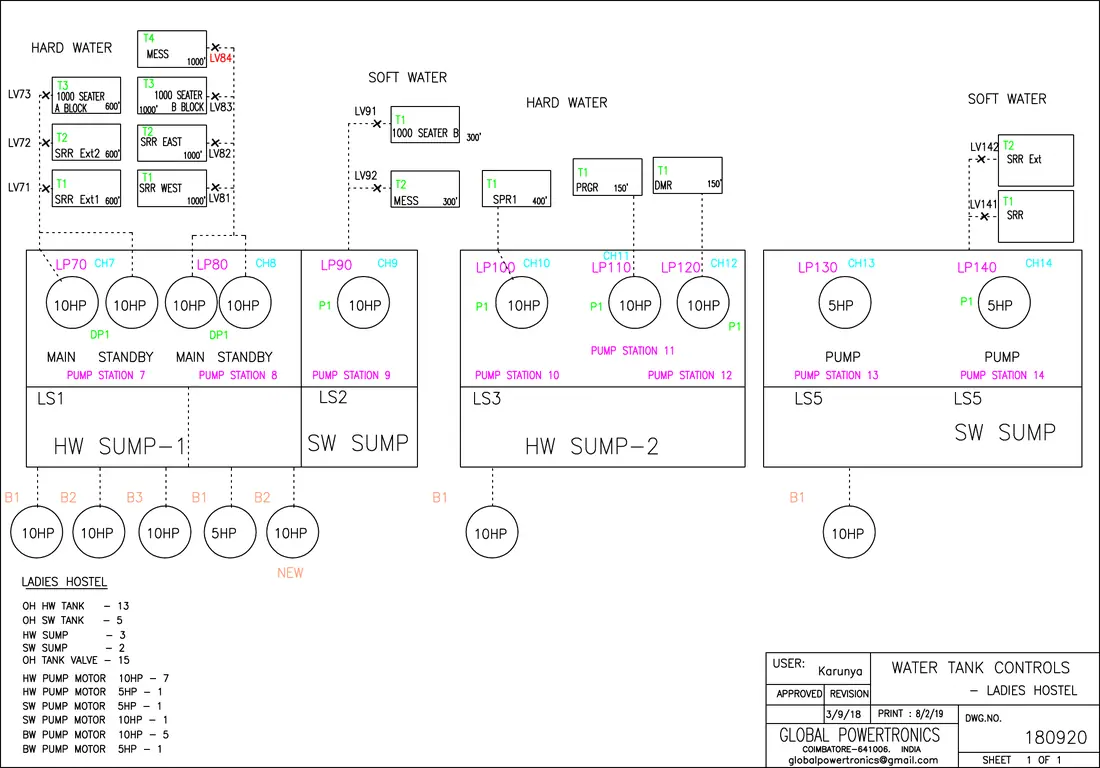
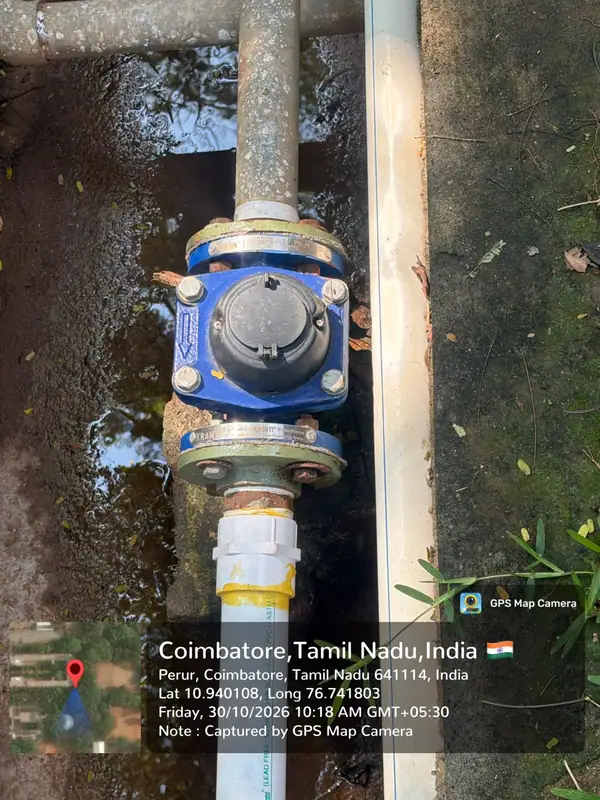
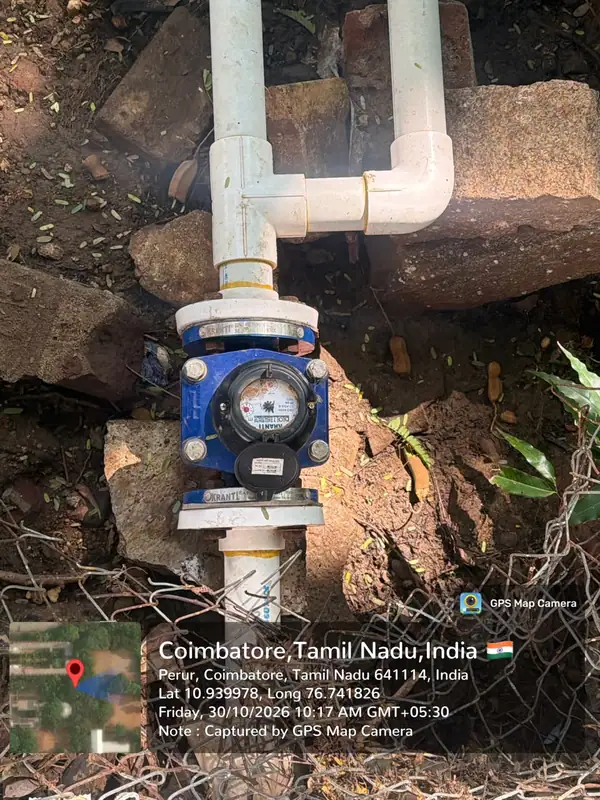
- Rainwater Harvesting Structures:
During monsoon season, the volume of water collected from terrace of each building is calculated using the terrace area and the depth of rainfall over the area. The water collected over the terrace is directed to augment the groundwater through soak pits located in each of the building.
Ferrocement Storage Tank (Partially underground)
In the campus, a roof top rainwater structure (with capacity of 25,000 litres) made of ferrocement has been installed to collect the storm water from the roof of the Administrative Block with an effective catchment area of 1,900 m². The harvested rainwater stored in the tank is utilized for non-potable domestic washing within the same facility.
Soak Pit (Groundwater Recharge)
Around 33 soak pits (3 m depth with 1.8 m diameter) are used to harvest rooftop water, which are located in front / behind the academic departments and student hostels. These structures improve the groundwater recharge in the campus and augment the groundwater potential. The details of locations of these structures and the area of catchment are furnished along with photographs.
Location of Rain Water Harvesting System in KITS Campus
| Sl.No. | Location | Area of Terrace |
|---|---|---|
| 1 | Behind Administrative Block | 1900 m2 |
| 2 | Adjacent to Administrative Block | |
| 3 | Adjacent to Aerospace Lab | 278 m2 |
| 4 | Adjacent to Old Bio Tech Block | 766 m2 |
| 5 | Adjacent to Ebenezer Auditorium | 1,100 m2 |
| 6 | Adjacent to CST Department | 1,247 m2 |
| 7 | Adjacent to Elohim Auditorium | 450 m2 |
| 8 | Adjacent to Mechanical Lab | 2960 m2 |
| 9 | Adjacent to Civil Department | 2812 m2 |
| 10 | Adjacent to Civil Lab | |
| 11 | Adjacent to Mechanical Workshop | 2,218 m2 |
| 12 | Adjacent to Food Processing Lab | 4,277 m2 |
| 13 | Adjacent to Computer Centre | 1,023 m2 |
| 14 | Adjacent to S & H Block | 5,590 m2 |
| 15 | Adjacent to Visitor Waiting Hall - LH | 150 m2 |
| 16 | Adjacent to Old DMR Dining Hall | 600 m2 |
| 17 | Adjacent to Sewage Treatment Plant - LH - EVR | 2,814 m2 |
| 18 | Adjacent to Sewage Treatment Plant - LH - SRR Extn | 1,502 m2 |
| 19 | Adjacent to Oprah Residence | 1,800 m2 |
| 20 | Adjacent to Sundaraj Residence | 1,600 m2 |
| 21 | Adjacent to Sevagapandian Residence | 1,306 m2 |
| 22 | Adjacent to PRGR Residence | 1,910 m2 |
| 23 | Adjacent to DMR Residence | 1,609 m2 |
| 24 | Adjacent to Indoor Games - FDR | 748 m2 |
| 25 | Adjacent to FDR Mess | 1,841 m2 |
| 26 | Adjacent to FDR Residence | 2,324 m2 |
| 27 | Adjacent to EGR Residence | 1,484 m2 |
| 28 | Adjacent to Student Amenity Centre - AR/HR | 147 m2 |
| 29 | Adjacent to Hepzibah Gents hostel | 1,220 m2 |
| 30 | Adjacent to Post Office | 39 m2 |
| 31 | Adjacent to Baburaj Residence | 2,275 m2 |
| 32 | Adjacent to Guest House | 1,892 m2 |
| 33 | Adjacent to JMR Mess | 2,185 m2 |
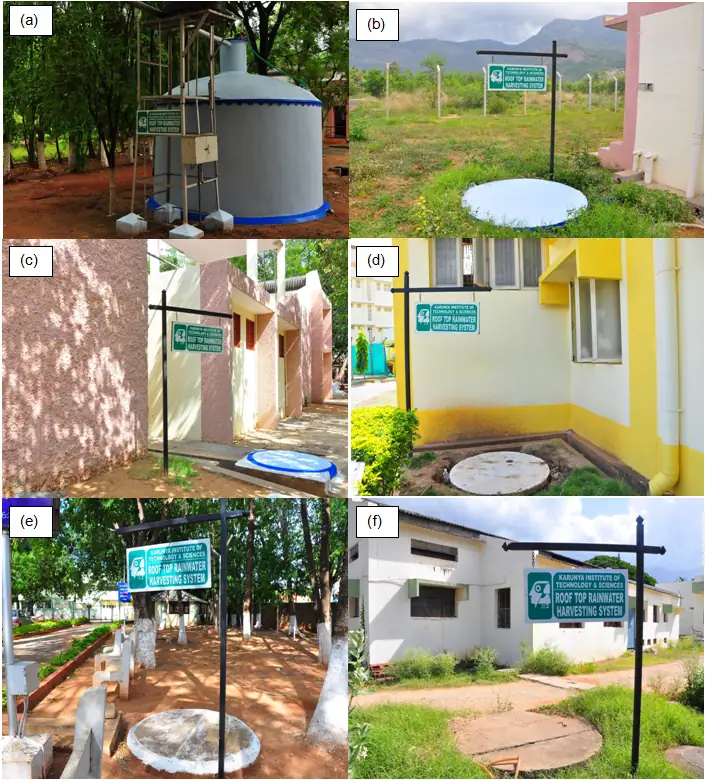
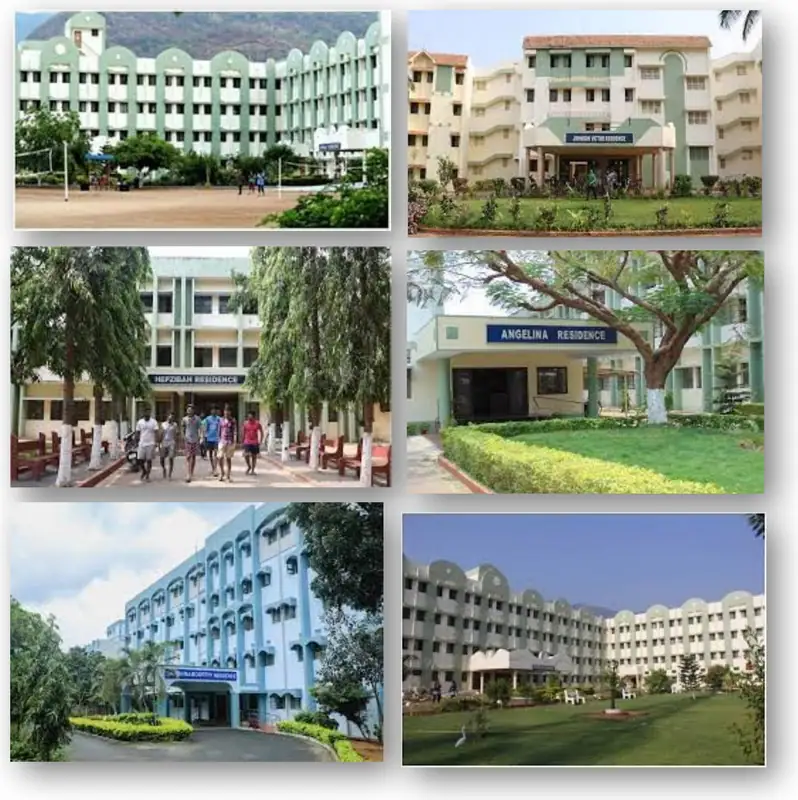
(a)Administrative block (b) Aerospace lab (c) Civil lab (d) Guest house (e) Hepzibah hostel and
(f) Father Duraisamy hostel
- Recycled Water from STPs:
Average Treated water Output from STP's in KITS Campuses
| Sl.No. | Location | Capacity of STP | Wastewater Flow Rate in STP | Output (Treated Water) |
|---|---|---|---|---|
| 1 | JMR STP | 1000 KLD (m3) | 400 KLD(m3) | 345 KLD(m3) |
| 2 | FDR STP | 400 KLD(m3) | 250 KLD(m3) | 205 KLD(m3) |
| 3 | Ladies Hostel STP | 450 KLD(m3) | 200 KLD(m3) | 155 KLD(m3) |
| 4 | PR GARG STP | 600 KLD(m3) | 320 KLD(m3) | 275 KLD(m3) |
| Total | 2,450 KLD (m³) |
- Desalinated Water:
There are two Desalination Units with capacity of 2000 Litres/day for cooking (washing rice) and 500 Litres/day for drinking. The measurement of water is done at the intake and delivery point.
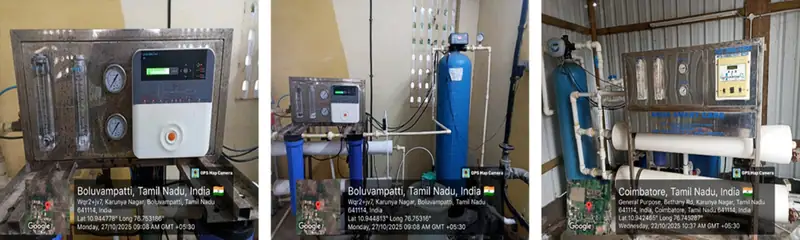
- Treated / New /Recycled water from STP:
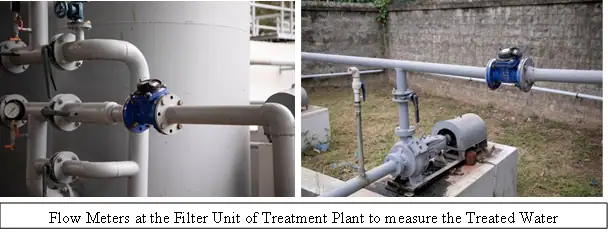
- The water from the treatment plants is used for gardening in the campus and irrigation for agricultural use in addition to groundwater. The flow meters have been fixed at the collection point of the treated water to measure the amount of water used for gardening and irrigation.
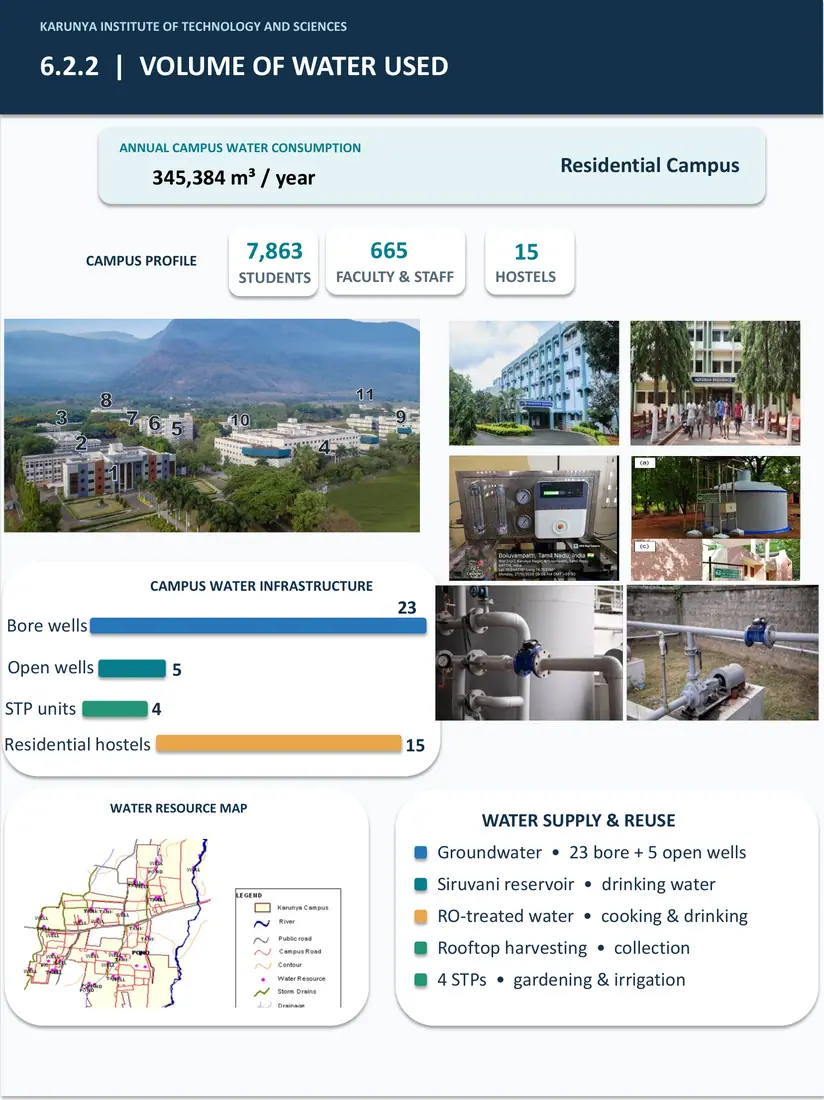
Campus Population: 7863 students and 665 faculty and staff – 8528
Total volume of water consumed in a year (University Campus) days = 345,384 m3 /year
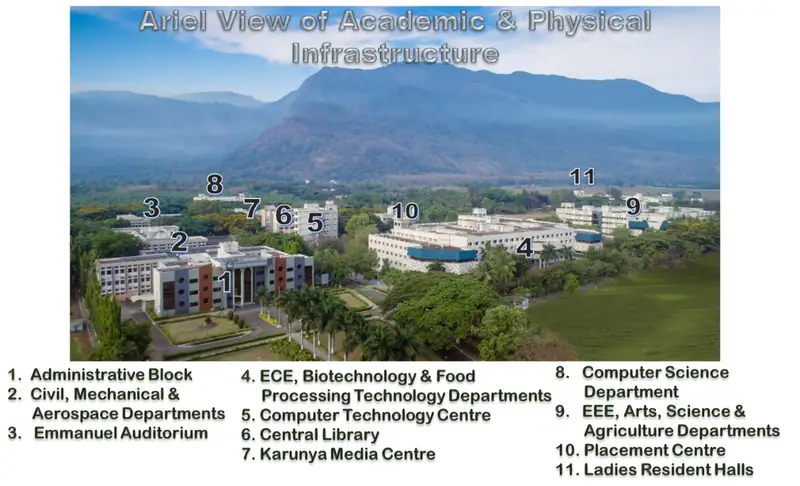
- Karunya Institute of Technology and Sciences (KITS) consists of 17 departments, accommodating 7863 students and supported by 665 faculty and staff members. The institute features a fully residential campus with 15 hostels for both male and female students, as well as 17 apartment complexes accommodating around 500 faculty and staff members. The School of Agriculture and Biosciences benefits from an extensive 329-acre tract of agricultural land, which is dedicated to academic activities, research projects, and community development programs.
Sources of Water Supply:
There are 5 open wells and 23 bore wells on campus supplying water to 177 storage tanks which meet the water demand of the students, faculty and staff.
- Groundwater: Water supply from aquifers (borewells) to meet the demand in the campus
- Potable water supply from Siruvani reservoir: Drinking water in the campus and hostels
- Desalinated Water using RO plants: For cooking and drinking.
- Ferrocement -based roof top water harvesting structure and recycled water from 4 STP units in the student’s hostel: Water demand for gardening and irrigation.
The sources of water supply for the University Campus are:
1. Groundwater - 5 openwells, 23 borewells, 177 storage tanks
2. Potable water supply from Siurvani Reservoir
3. Desalinated water using RO plants