1. SDG Overview & Institutional Outreach Mission
United Nations Sustainable Development Goal 4 (SDG 4) of the 2030 Agenda mandates higher education institutions to 'ensure inclusive and equitable quality education and promote lifelong learning opportunities for all.' Higher education institutions possess a profound civic responsibility to project their academic capital, human talent, and physical resources beyond campus boundaries into surrounding rural and socioeconomically disadvantaged communities. Within this framework, UN SDG Target 4.1 mandates equitable and quality primary and secondary education leading to relevant learning outcomes; Target 4.5 explicitly requires the elimination of gender disparities and equal access to education for vulnerable, remote, and indigenous children; and Target 4.a emphasizes providing safe, inclusive, and effective learning environments for all.
Karunya Institute of Technology and Sciences (KITS) operationalizes this statutory mandate through a vibrant, multi-tiered educational outreach ecosystem. Spearheaded by the Directorate of Community Development, the Centre for Community Academia Collaboration (CCAC), the Central Library, the National Service Scheme (NSS), the Karunya School of Management (KSM), and voluntary student organizations such as the Rotaract Club, KITS conducts sustained off-campus educational campaigns. Operating in close synergy with social partner SEESHA (Samiti for Education, Environment, Social and Health Action), local village panchayats, and government school headmasters, KITS focuses heavily on 14 adopted rural and tribal villages in the Thondamuthur block and surrounding Western Ghats foothills.
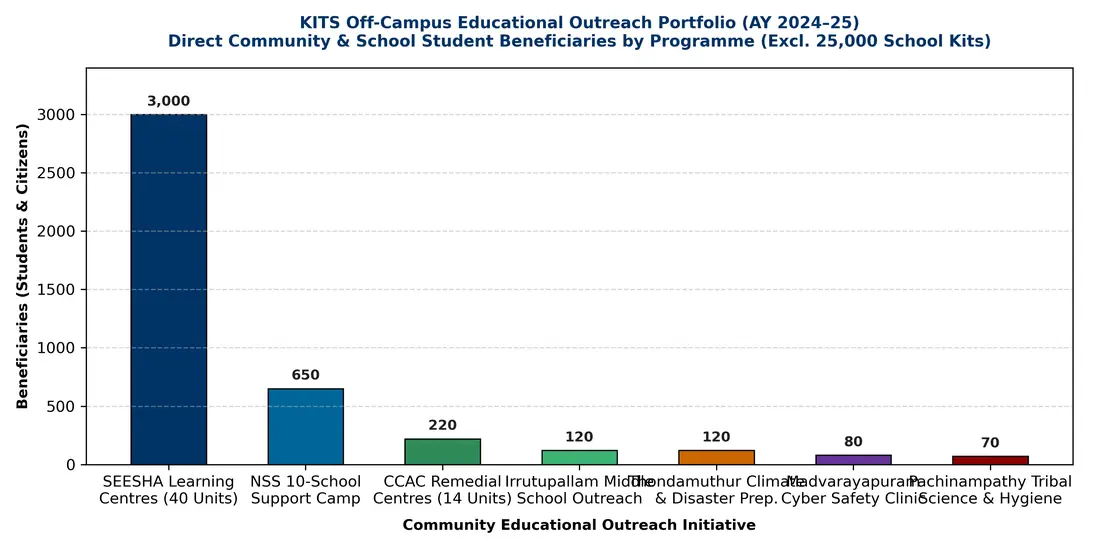
During Academic Year 2024–25, KITS organized over 100 off-campus educational outreach events. The institutional outreach portfolio purposefully combines ongoing 'Programmed' multi-centre learning hubs (operating 14 CCAC Rural Remedial Centres serving 220 tribal students and 40 SEESHA Child Learning Centres tutoring 3,000 children) with high-impact 'Ad-hoc' school campaigns (such as National Librarian's Day at Panchayat Union Middle School, Irrutupallam, NSS 10-School Special Educational Camps benefiting 650+ students, and annual school kit distributions supporting 25,000 children). By eliminating financial, material, and pedagogical barriers to basic schooling, KITS bridges the rural-urban educational divide and fosters transformative community development.
2. SDG Objectives for THE Metric 4.3.4
The off-campus educational outreach architecture at KITS is guided by five strategic objectives aligned with THE evaluation parameters:
- Remedial Academic Tutoring for Disadvantaged & Tribal Children: Deliver structured after-school tutoring, foundational literacy, and arithmetic coaching in remote foothill villages, enabling first-generation and tribal children to overcome severe academic deficits.
- Educational Material Philanthropy & School Retention: Provide complete annual educational kits (school bags, notebooks, geometry instruments, and writing stationery) to eliminate economic barriers that force impoverished children out of formal schooling.
- Promoting Reading Habits & Digital Book Access in Village Schools: Deploy university faculty, librarians, and postgraduate management scholars to rural panchayat schools to conduct interactive reading sessions, educational skits, and book donation drives.
- Voluntary Student-Run Civic Engagement Schemes: Mobilize hundreds of undergraduate student volunteers through NSS and Rotaract to deliver STEM experiments, digital literacy, cyber-safety, and hygiene education in adopted village schools.
- Tripartite Community-School-University Governance: Establish formal institutional linkages with village panchayat presidents, school headmasters, and rural parents to monitor educational retention and eliminate child labor.
3. National Librarian's Day at Irrutupallam (09.08.2024)
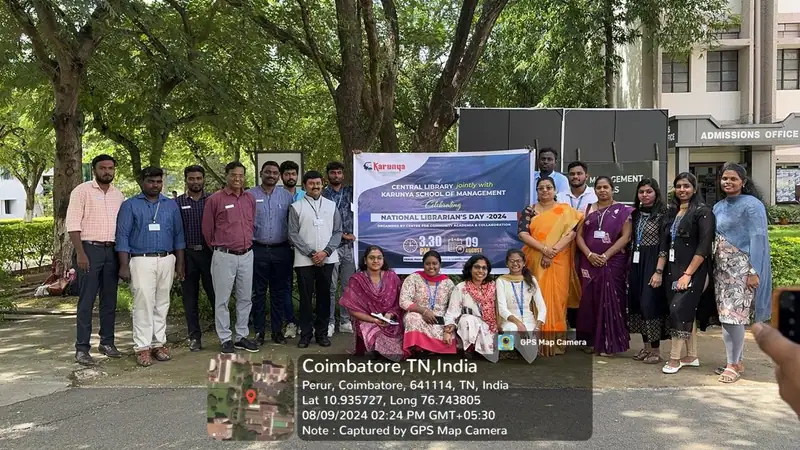
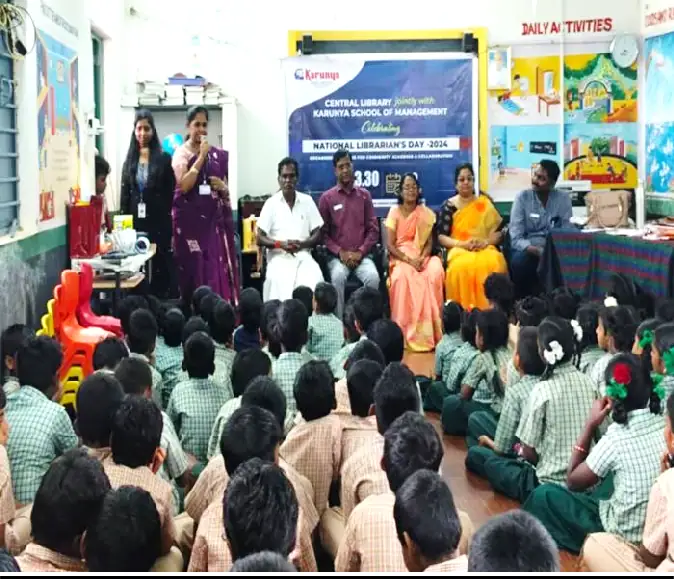
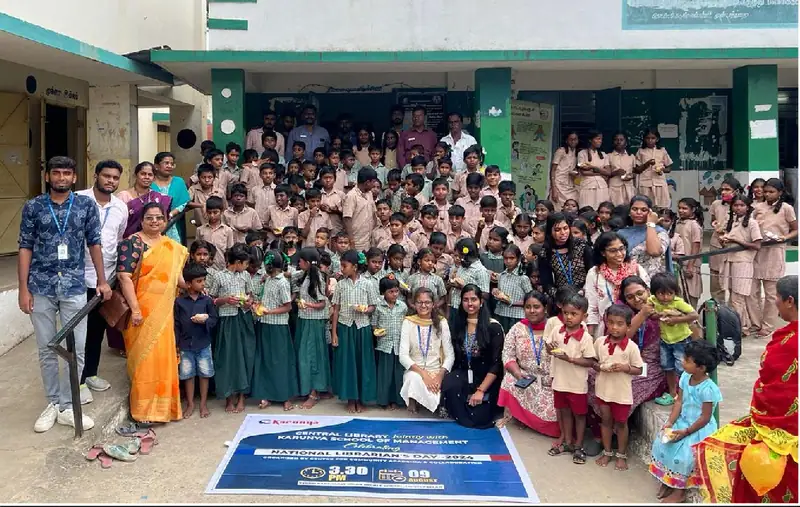
On 9 August 2024, the Central Library jointly with the Karunya School of Management (KSM) organized a comprehensive Community Development Programme for students of the Panchayat Union Middle School at Irrutupallam to commemorate National Librarian's Day:
- Institutional Leadership & Civic Coordination: The program was led by Dr. J. Clement Sudhahar (Professor & Dean, KSM), Dr. Josiah Daniel (Director, Community Development), Dr. D. Mercy Lydia (Librarian In-Charge), and Dr. P. Dolly Diana (Professor, KSM). Key local dignitaries included Mr. Kittusamy (Village Panchayat President, Mathuvarayapuram) as Chief Guest and Mrs. Hephzi (Headmaster, Panchayat Union Middle School).
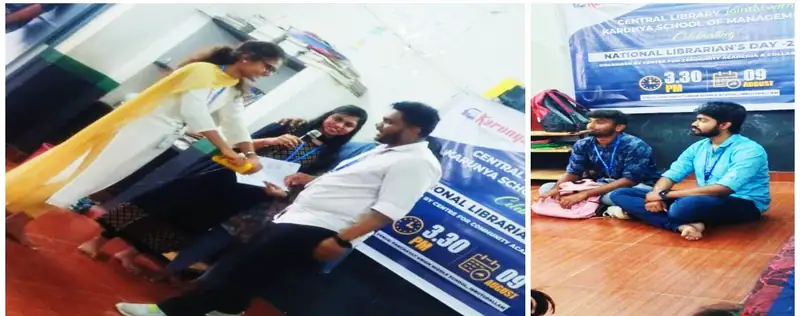
- Pedagogical Value & Theatrical Skit: Dr. D. Mercy Lydia delivered an inspiring keynote address illustrating the transformative power of libraries and stories in fostering academic perseverance. MBA students from KSM performed an educational drama on reading habits, followed by interactive quizzes and team-building games for school pupils.
- Material Support & Community Refreshments: KITS sponsored and distributed stationery gift packs, writing materials, and confectionery to all 120 school pupils. Nutritious refreshments were provided to the entire school cohort.
4. Programmed Off-Campus Remedial Education Networks
To ensure sustained academic progression rather than isolated interventions, KITS operates extensive networks of ongoing after-school learning hubs:
4.1 CCAC 14 Rural Remedial Education Centres (Adopted Foothill Villages)
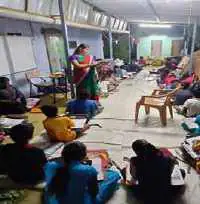
The Centre for Community Academia Collaboration (CCAC) maintains 14 free Remedial Education Centres across adopted village blocks in Thondamuthur block, benefiting approximately 220 students from underprivileged agrarian and tribal households. Through these centres, university volunteers and community tutors provide daily after-school homework assistance, foundational English coaching, and mathematics problem-solving. To establish comfortable, dignified learning environments, CCAC equipped each centre with modern magnetic whiteboards, foam floor mats, lighting infrastructure, and educational recreational kits.
4.2 SEESHA Child Learning Centres (40 Centres Nationally, 8 Regional Foothill Units)
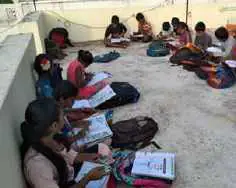
In structured collaboration with SEESHA, KITS supports the academic operations of 40 Child Learning Centres nationally, providing a safe, supportive after-school learning environment for nearly 3,000 children from marginalized families. In the rural Thondamuthur block surrounding the campus, SEESHA operates 8 dedicated evening centres (including Alandurai, Kallipalayam, and Allurement), benefiting over 290 local children. Even during challenging pandemic surges, these centres remained operational. In the recent Tamil Nadu State Board HSC (+2) and 10th examinations, all 162 students attending SEESHA centres passed with 100% success rate, with several rural toppers directly attributing their academic distinction to daily remedial tutoring.
4.3 SEESHA Annual School Kit Project (25,000 Children Benefited)
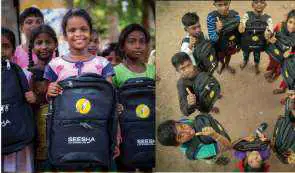
Recognizing that lack of basic stationery and school bags causes acute dropouts among low-income families, KITS co-developed and actively supports the SEESHA Annual School Kit Initiative. Each year, standardized educational supply kits—comprising high-grade school bags, ruled and unruled notebooks, geometry boxes, pencil cases, color crayons, and writing instruments—are distributed to children prior to the academic school reopening. During Academic Year 2024–25, the project mobilized resources to support 25,000 underprivileged schoolchildren across Tamil Nadu and neighbouring states, ensuring children begin their academic journey with confidence and dignity.
5. Student-Run Voluntary Schemes & Academic Outreach Campaigns (NSS & Rotaract)
KITS places extraordinary emphasis on student-led voluntary outreach, empowering undergraduate and postgraduate scholars to plan, fundraise, and execute transformative community education initiatives:
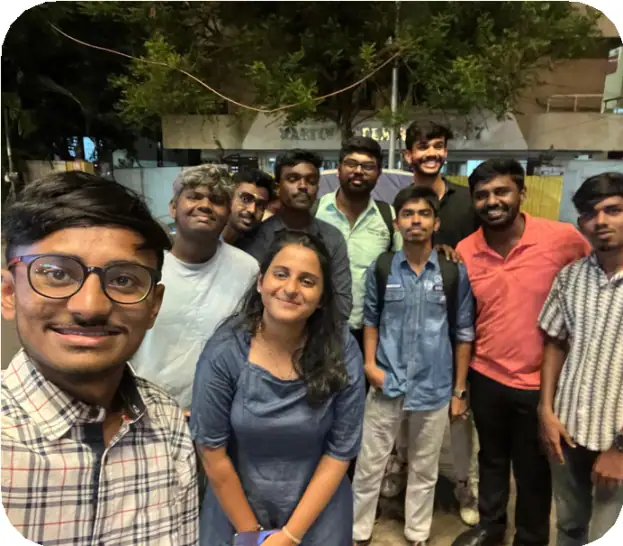
- NSS Special 10-School Educational Support Camp: From 10 to 17 January 2025, over 150 NSS volunteers conducted an intensive 7-day residential camp across 10 Panchayat Primary and Middle Schools in the Thondamuthur block. Volunteers renovated school blackboards, conducted basic digital literacy classes using laptop computers, created wall learning murals, and organized STEM science experiment fairs, directly engaging 650+ rural school students.
- Pachinampathy Tribal Health, Hygiene & Science Demonstration: On 3 October 2024, CCAC faculty and KSM students organized an interactive educational drive at Pachinampathy tribal village. Volunteers performed an educational drama on water hygiene, demonstrated proper handwashing protocols, and distributed hygiene toolkits and learning materials to 45 tribal children and 25 parents.
- Rural Disaster Preparedness & Climate Adaptation Campaign: On 26 October 2024, NSS volunteers and Environmental Engineering faculty delivered a community lecture and tabletop drill on disaster resilience and climate adaptation at Thondamuthur Community Centre for 120 residents.
- Rotaract Club Voluntary Youth Outreach Campaigns: The student-led Rotaract Club of KITS executed an extensive calendar of off-campus educational initiatives throughout AY 2024–25, including 'Ascension' (02.08.2024 - school literacy), 'Atelier' (31.08.2024 - arts education), 'Serve-a-Thon' (21.09.2024 - school cleanup and library setup), and 'Personal Branding & Mobile Detoxing' (08.02.2025 - adolescent mental health for rural school-leavers).
6. Master Off-Campus Educational Outreach Register (AY 2024–25)
The consolidated register below catalogs off-campus educational outreach events conducted across regional schools and communities during Academic Year 2024–25. To fulfill THE Impact Rankings Criterion 1, the portfolio includes both ongoing 'Programmed' multi-centre operations and high-impact 'Ad-hoc' school campaigns:
| Sl. | Outreach Event Title | Event Nature | Schedule | Target Location / School | Organizing Cell / Faculty | Beneficiaries Reached | Educational Competencies & Supplies Delivered |
|---|---|---|---|---|---|---|---|
| 1 | National Librarian's Day School Outreach | Ad-hoc (Flagship) | 09.08.2024 | Panchayat Union Middle School, Irrutupallam | Central Library & Karunya School of Management | 120 School Pupils + Panchayat Dignitaries | Reading habit keynote, MBA educational drama on perseverance, stationery kit distribution, chocolate & refreshments. |
| 2 | CCAC Rural Remedial Education Network | Programmed (Daily Evening) | Academic Year 2024–25 (Ongoing) | 14 Foothill Village Centres (Thondamuthur Block) | Centre for Community Academia Collaboration (CCAC) | 220 Tribal & Rural School Students | Daily after-school academic tutoring, whiteboards, floor study mats, recreational games, foundational math & English. |
| 3 | SEESHA Child Learning Centres Network | Programmed (Year-round) | Academic Year 2024–25 (Ongoing) | 40 National Centres (8 Local Foothill Hubs) | SEESHA NGO & KITS Outreach Volunteers | 3,000 Schoolchildren (290+ Local Foothill) | Remedial school education, daily homework mentoring, Board exam preparation (100% HSC/SSLC pass rate for 162 candidates). |
| 4 | SEESHA Annual School Kit Project | Programmed (Annual Drive) | Academic Year 2024–25 (Pre-reopening) | Underprivileged Schools across Tamil Nadu | SEESHA & KITS Institutional Sponsorship | 25,000 Disadvantaged School Students | Distribution of branded school backpacks, notebooks, geometry instrument boxes, writing stationery, and art materials. |
| 5 | Tribal Health, Hygiene & Science Demonstration | Ad-hoc (Field Drive) | 03.10.2024 | Pachinampathy Tribal Village Settlement | CCAC & KSM Student Volunteers | 45 Children & 25 Adult Parents | Proper handwashing protocols demonstration, educational skit on sanitation, hygiene kit and snack distribution. |
| 6 | Disaster Resilience & Climate Adaptation Lecture | Ad-hoc (Community) | 26.10.2024 | Rural Community Centre, Thondamuthur | NSS Units & Environmental Engineering Faculty | 120 Local Community Residents | Monsoon disaster preparedness, emergency evacuation routes, climate-resilient water storage practices. |
| 7 | NSS 10-School Educational Support Camp | Programmed (Annual Camp) | 10–17 January 2025 (7-Day Residential) | 10 Regional Panchayat Primary & Middle Schools | National Service Scheme (NSS) Directorate | 650+ Rural School Students | Blackboard repainting, interactive STEM demonstrations, digital literacy using laptop computers, sports drills. |
| 8 | Digital Literacy & Cyber Safety School Clinic | Ad-hoc (Specialized) | 15.02.2025 | Mathuvarayapuram Village Library Centre | Computer Science Extension Cell & Rotaract | 80 Village Youths & School Students | Safe internet browsing, phishing awareness, smart phone e-learning tools, digital public library navigation. |
| 9 | Rotaract Voluntary Civic Educational Campaigns | Ad-hoc (Student-run) | August 2024 – February 2025 (Every Saturdays) | Regional Adopted Foothill Schools & Hubs | Rotaract Club of KITS (Student-Run) | 350+ Rural Pupils & Village Youths | Ascension (literacy), Atelier (creative arts), Serve-a-Thon (school library renovation), Mobile Detoxing workshop. |
| — | Consolidated Off-Campus Outreach Portfolio | Both Programmed & Ad-hoc | Academic Year 2024–25 | Regional Schools, Tribal Hamlets & Village Hubs | KITS Directorate of Extension & Partners | 29,485+ Total Beneficiaries (Students & Citizens) | 100+ Structured Outreach Events Delivered Beyond Campus |
7. Geographic Footprint & Beneficiary Distribution
The educational outreach initiatives specifically target the Western Ghats foothill demographic, ensuring inclusive educational development across local schools, panchayat bodies, and forest-edge tribal settlements:
8. Conclusion
Karunya Institute of Technology and Sciences fulfills the mandate of United Nations SDG 4 and Times Higher Education Metric 4.3.4. Through the concerted initiatives of the Directorate of Community Development, the Centre for Community Academia Collaboration (CCAC), the Central Library, the National Service Scheme (NSS), the Rotaract Club, and partnership with SEESHA, the university has established an enduring, transformative model of off-campus educational outreach. By actively supporting local schools, providing year-round remedial tutoring to tribal children, distributing vital learning kits to 25,000 pupils, and promoting reading cultures across rural panchayats, KITS exemplifies the transformative power of higher education as an instrument of social justice, educational equity, and human flourishing.