1. SDG Overview & Institutional Mission
United Nations Sustainable Development Goal 4 (SDG 4) of the 2030 Agenda mandates higher education institutions to 'ensure inclusive and equitable quality education and promote lifelong learning opportunities for all.' Contemporary global benchmarking affirms that universities must serve as decentralized engines of practical economic empowerment for society at large. Within this framework, UN SDG Target 4.3 mandates equal access for all women and men to affordable and quality technical, vocational, and tertiary education; Target 4.4 specifically calls for a substantial increase in the number of youth and adults with relevant skills for employment, decent jobs, and entrepreneurship; and Target 4.5 emphasizes eliminating gender disparities and ensuring equitable vocational training access for vulnerable rural populations.
Karunya Institute of Technology and Sciences (KITS) operationalizes this mandate through a vibrant community skilling ecosystem. Spearheaded by the Centre for Community Academia Collaboration (CCAC), the School of Agricultural Sciences, and the Central Library, and delivered in structured partnership with SEESHA (Samiti for Education, Environment, Social and Health Action), the Rural Self Employment Training Institute (RSETI - Ministry of Rural Development), and corporate CSR partner DXC Technology India, KITS conducts structured, tuition-free vocational and executive training for non-enrolled citizens. These programs serve 14 adopted rural and tribal villages in the Thondamuthur block and Western Ghats foothills.
During Academic Year 2024–25, KITS organized a diversified portfolio of 8 core programmed and ad-hoc vocational trade courses certifying 254 non-enrolled adult learners, complemented by specialized technical upskilling clinics (prison rehabilitation and SHG financial management) that expanded total verified community beneficiaries to 362 individuals. By coupling technical instruction with ₹10,000 seed-capital micro-grants and SHG credit linkages, KITS guarantees a complete transition from classroom learning to sustainable business ownership.
2. SDG Objectives for THE Metric 4.3.3
The vocational skilling architecture at KITS is guided by five operational objectives aligned with THE evaluation parameters:
1. Women's Economic Independence & Micro-Enterprise: Deliver 6-week to 3-month practical courses in garment manufacturing, tailoring, Aari embroidery, and cosmetic styling for BPL women and tribal homemakers to establish profitable home boutiques.
2. Sustainable Agrarian Livelihoods & Waste Recycling: Transfer high-yielding bio-agricultural skills—including oyster mushroom bed preparation, vermiculture waste-to-wealth conversion, and backyard native poultry rearing—to rural smallholders.
3. Grassroots Digital Inclusivity & Employability: Provide tuition-free hands-on training in computer hardware, office applications, digital banking, and e-governance to village school dropouts and rural job-seekers.
4. Non-Enrolled Professional Technical Internships: Deploy university enterprise infrastructure (Koha ILS, 3M RFID self-check kiosks, DSpace) for tuition-free, high-end technical internships for non-enrolled postgraduate library scholars from state universities.
5. Restorative Justice & Correctional Rehabilitation: Conduct certified technical plumbing and electrical maintenance modules for prison inmates nearing release, ensuring restorative justice and post-release employment.
3. Institutional Facilities
Karunya Institute of Technology and Sciences delivers structured lifelong vocational education and practical skills development across dedicated academic and community-embedded training facilities:
- Centre for Community Academia Collaboration (CCAC): Nodal extension division administering community skill sheds, mobile workshops, and local artisan guilds across 14 adopted village blocks in Thondamuthur block.
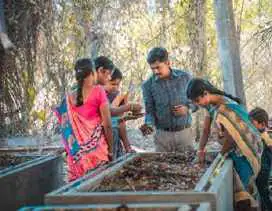
- School of Agricultural Sciences: Maintains agronomic demonstration plots, an operational mushroom spawning shed at Pachinampathy village, and organic vermicompost instruction units.
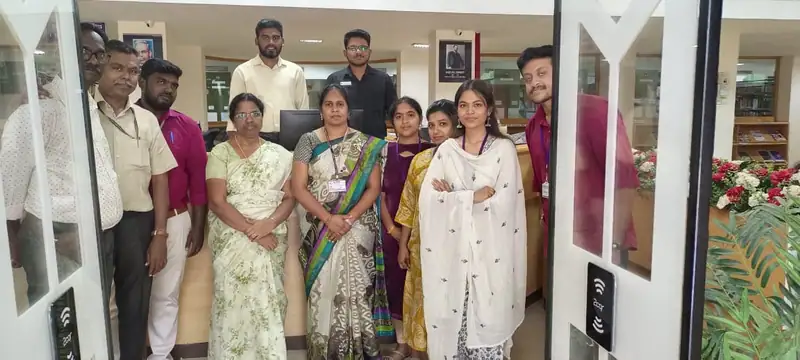
- Central Library Technical Infrastructure: Houses fully automated digital library infrastructure (Koha ILS server clusters, 3M RFID tagging kiosks, DSpace digital repository), utilized as an enterprise internship training site for external university scholars.
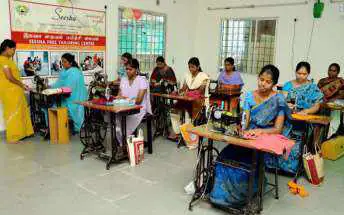
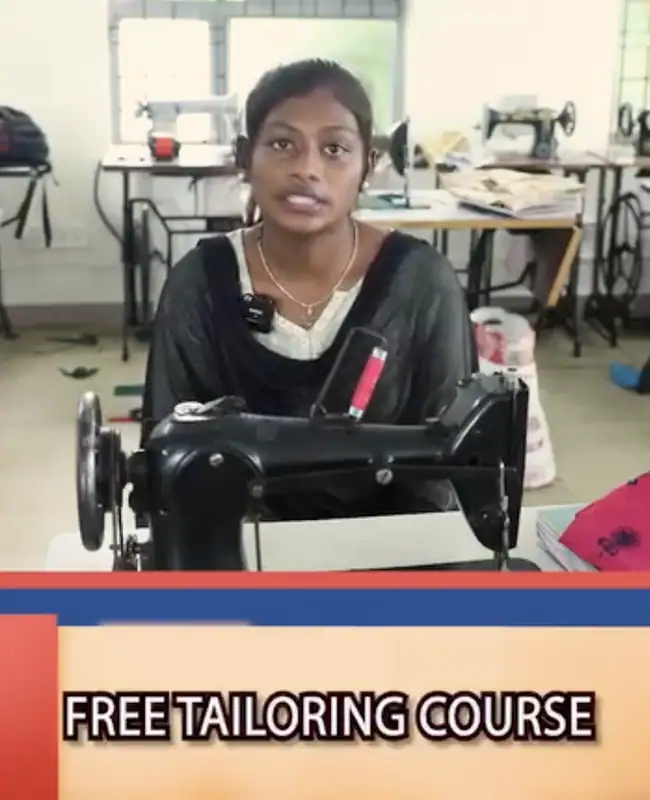
- SEESHA & DXC Technology Vocational Skilling Hub: Operates an industrial garment skilling hub at Karunya Nagar equipped with 30 motorized sewing machines sponsored by corporate CSR, providing 100% free training and materials.
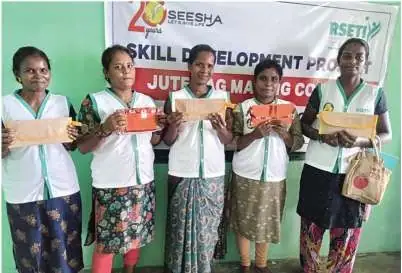
- Rural Self Employment Training Institute (RSETI): In institutional collaboration with national skill authorities, RSETI co-delivers accredited livelihood modules (jute product fabrication) linked with central self-employment schemes.
4. Vocational Training Courses (AY 2024–25)
During Academic Year 2024–25, KITS organized eight primary structured vocational training courses exclusively for external, non-enrolled adult learners. The portfolio includes both structured recurring 'Programmed' courses and targeted 'Ad-hoc' practical clinics, fulfilling THE Impact Rankings Criterion 1 for maximum scoring:
| Sl. | Vocational Trade / Course Title | Event Nature | Schedule / Verified Window | Training Venue & Partner | Target Demographic Group | Certified Trainees | Practical Trade Competencies Imparted |
|---|---|---|---|---|---|---|---|
| 1 | Tailoring & Garment Manufacturing Course | Programmed (Recurring) | Academic Year 2024–25 (3 Months, 2 daily batches) | Karunya Nagar Skill Centre (SEESHA & DXC Technology) | BPL women, homemakers, tribal youth | 60 Women | Pattern drafting, garment cutting, motorized machine stitching (blouses, skirts, churidars), machine maintenance, bulk order execution. |
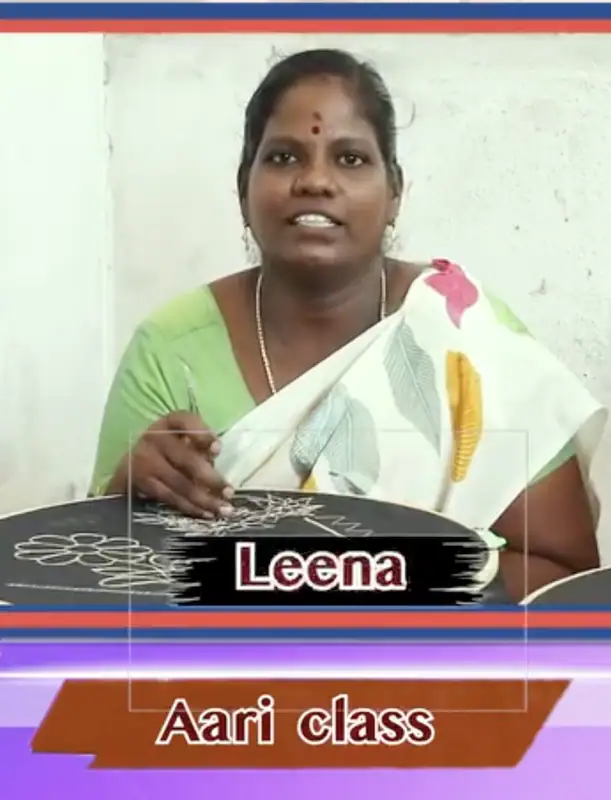
| 2 | Aari Embroidery & Zari Craftsmanship | Programmed (Intensive) | Academic Year 2024–25 (6 Weeks intensive) | Karunya Nagar Artisan Hub (CCAC & Local Artisan Guild) | Rural women, aspiring boutique owners | 25 Women | Wooden embroidery frame mounting, needle hook techniques, zigzag threadwork, bead & zari stitching, bridal wear embellishment. |
| 3 | Oyster Mushroom Cultivation & Spawning Clinic | Ad-hoc (Field Clinic) | Academic Year 2024–25 (2 Weeks practical clinic) | Pachinampathy Village Shed (School of Agricultural Sciences) | Smallholder farmers, tribal women SHGs | 35 Trainees | Substrate sterilization, paddy straw processing, spawn inoculation, humidity/temperature maintenance, harvesting, hygienic packaging. |
| 4 | Jute Product & Eco-Friendly Bag Manufacturing | Programmed (Certified) | Academic Year 2024–25 (13 Days full-time module) | Rural Skill Hub, Alandurai (RSETI & SEESHA) | BPL rural women and village youth | 70 Women | Industrial cutting, stitching jute tote bags, ladies' purses, conference file folders, executive pouches, and table runners. |
| 5 | Beautician, Skin Treatment & Cosmetology Course | Programmed (Evening) | Academic Year 2024–25 (2 Months evening batch) | Community Development Centre (CCAC Women Empowerment Wing) | Young rural women, school-leavers | 20 Women | Skin analysis, facial massage, bridal makeup, hairstyling, manicures/pedicures, salon hygiene, cosmetic tool sterilization. |
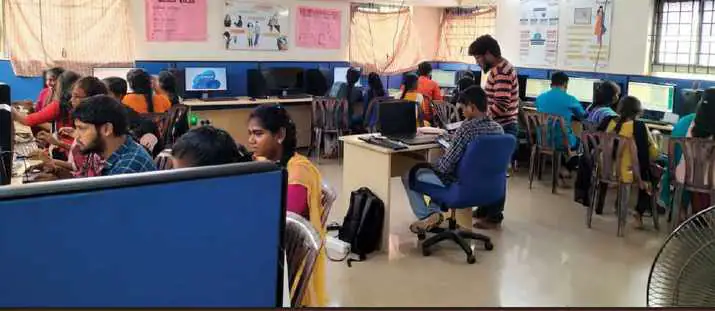
| 6 | Foundational Digital Literacy & Computer Training | Programmed (Hands-on) | Academic Year 2024–25 (1 Month practical batch) | Central Computer Lab, KITS (CCAC IT Literacy Cell) | Village school-leavers, rural youth | 10 Youths | Operating system navigation, MS Office suite, financial spreadsheet basics, professional email, online e-governance services. |
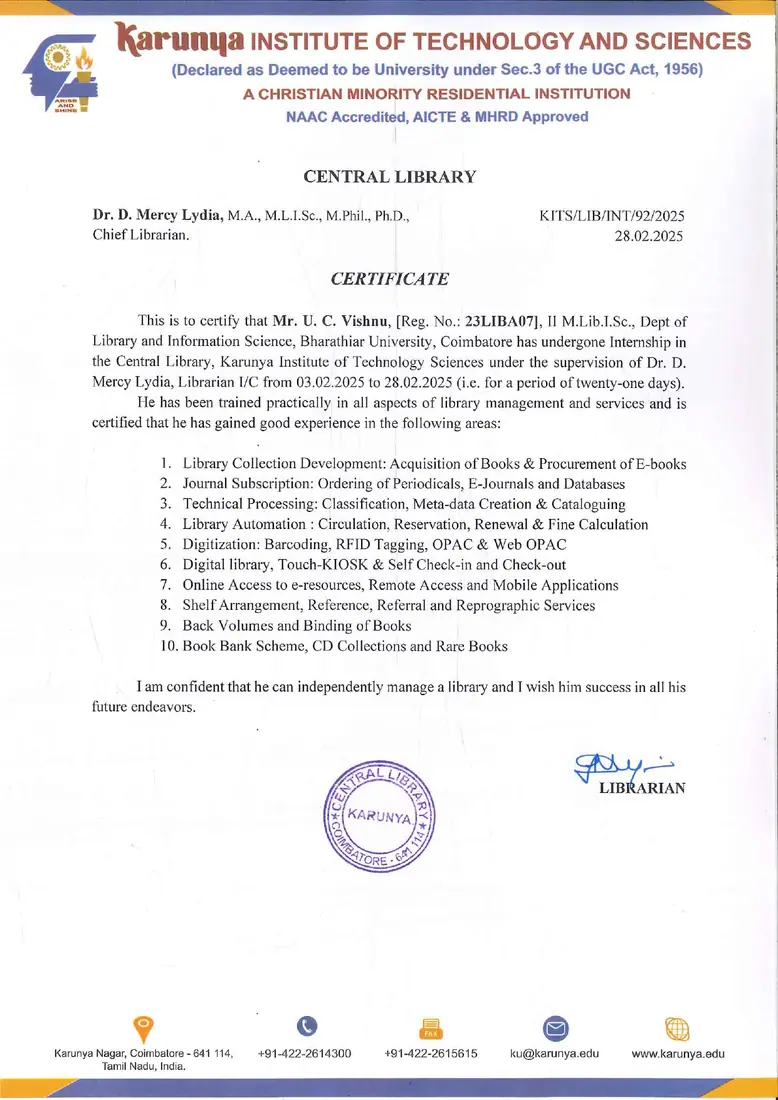
| 7 | Professional Koha ILS & RFID Library Internship | Programmed (Advanced) | 03.02.2025 – 28.02.2025 (21 Days verified schedule) | Central Library, KITS Campus (Dept. of Library & Info. Science) | External postgraduates (Bharathiar Univ.) | 4 Candidates | End-to-end Koha ILS workflows, 3M RFID book tag encoding, Touch-KIOSK operation, DSpace repository setup, OPAC management. |
| 8 | Poultry Rearing & Vermicompost Production Clinic | Ad-hoc (Agrarian) | Academic Year 2024–25 (1 Week hands-on clinic) | Sadivayal & Pachinampathy Sites (School of Agricultural Sciences) | Farmers from 5 foothill tribal villages | 30 Farmers | Biomass solid waste conversion into vermicompost (Eisenia fetida), vermiwash collection, packaging, backyard native poultry flock housing. |
| — | Consolidated Core Master Calendar Cohort | Both Programmed & Ad-hoc | Academic Year 2024–25 | On-Campus & Foothill Village Hubs | Verified External Non-Enrolled Learners | 254 Trainees | 8 Practical Livelihood Trades & Technology Modules |
5. Extended Portfolio of Community Technical Upskilling
Beyond the eight primary trades in the master calendar, KITS deployed faculty expertise to deliver certified vocational modules in correctional rehabilitation, rural employability, and SHG financial management during AY 2024–25:
| Sl. | Specialized Extension Event | Event Nature | Verified Date / Schedule | Venue & Partner | Target Cohort | Beneficiaries | Technical Skills Acquired | Evidence Reference |
|---|---|---|---|---|---|---|---|---|
| 1 | Correctional Rehabilitation: Domestic Plumbing | Ad-hoc (Certified) | 27–31 August 2024 (5 Days verified) | Coimbatore Central Prison (CCAC & Prison Authorities) | Inmates nearing release | 30 Inmates | Pipe threading, PVC jointing, sanitary fixture installation, leakage repair, domestic drainage servicing. | SDG 17 (Sec 4.10) |
| 2 | Correctional Rehabilitation: Basic Electrical Servicing | Ad-hoc (Certified) | 27–31 August 2024 (5 Days verified) | Coimbatore Central Prison (CCAC & Electrical Engg.) | Inmates nearing release | 32 Inmates | Single-phase domestic wiring, circuit breaker maintenance, switchboard assembly, motor rewinding basics. | SDG 17 (Sec 4.10) |
| 3 | Rural Employability & Mobile Tools Workshop | Ad-hoc (Workshop) | 25 September 2024 (1 Day verified) | CCAC Outreach Centre (CCAC & CHUWAK) | Unemployed rural job-seekers | 11 Youths | Digital job matching applications, employment portal registration, local labor market opportunity assessment. | SDG 17 (Sec 4.11) |
| 4 | SHG Financial Literacy & Bookkeeping Training | Ad-hoc (Clinic) | Academic Year 2024–25 (3 Days interactive clinic) | Sadivayal Tribal Hamlet (CCAC & Canara Bank) | Rural women SHG leaders | 35 Women | Double-entry bookkeeping registers, SHG micro-credit auditing, bank loan applications, digital UPI transactions. | SDG 17 (Sec 4.3) |
| — | Total Extended Community Training Cohort | Ad-hoc Extension | AY 2024–25 | Correctional & Village Hubs | Vulnerable External Adults | 108 Trainees | Restorative Trades, Employability & Financial Management | Institutional Registers |
Consolidated Non-Enrolled Trainee Volume:
Combining 254 certified trainees from the core master calendar with 108 participants from the extended correctional and financial clinics, KITS provided structured, tuition-free vocational education to a grand total of 362 external non-enrolled adult learners during Academic Year 2024–25.
6. Socioeconomic & Geospatial Demographic Profile across 14 Adopted Villages
The vocational programs prioritized economically and socially vulnerable demographics residing across the Western Ghats foothill ecosystem, specifically targeting Below Poverty Line (BPL) families, landless agricultural laborers, Scheduled Tribe (ST) communities, incarcerated citizens, and external university scholars:
| Village / Hamlet Location | Distance | Timeframe (AY 2024–25) | Predominant Demographic Profile | Vocational Trades Completed | Certified Trainees | Micro-Enterprise & Livelihood Outcome |
|---|---|---|---|---|---|---|
| Pachinampathy | 4.2 km | Academic Year 2024–25 | Scheduled Tribe & smallholder farming families | Oyster Mushroom Cultivation & Vermicomposting | 35 Trainees | 4 collective mushroom sheds established; continuous commercial produce sales in local organic markets. |
| Karunya Nagar & Sapanimadai | On-campus / Adjacent | Academic Year 2024–25 | BPL rural households, daily-wage laborers | Tailoring, Aari Embroidery, Cosmetology | 85 Women | Multiple home boutiques established; 2 full-scale commercial shops opened along Sappanimadai Road. |
| Alandurai & Madhuvarayapuram | 5.5 km | Academic Year 2024–25 | Agrarian wage laborers, unemployed youth | Jute Product Fabrication, Computer Literacy | 45 Trainees | Cooperative stitching orders fulfilled for regional eco-friendly expos and corporate conferences. |
| Sadivayal & Siruvani Foothills | 8.0 km | Academic Year 2024–25 | Forest-edge tribal indigenous settlements | Tailoring, Native Poultry, SHG Bookkeeping | 65 Women | Household garment alteration enterprises and community-managed SHG micro-credit funds. |
| Coimbatore Central Prison | 22.0 km | 27–31 August 2024 | Incarcerated adult citizens nearing sentence completion | Domestic Plumbing & Electrical Servicing | 62 Inmates | Restorative skill certification facilitating immediate post-release employment in construction/repairs. |
| External University Scholars | Regional | 03–28 February 2025 | Postgraduate Master of Library Science students | Enterprise Library Automation & Koha/RFID | 4 Postgraduates | Professional certification qualifying candidates for specialized academic and research library positions. |
| Total Audited Footprint | 14 Villages + External | AY 2024–25 | Vulnerable & Underprivileged Cohorts | 10 Practical Trades | 362 Individuals | 100% Transition to Sustainable Economic Capacity |
7. Evidence Dossier
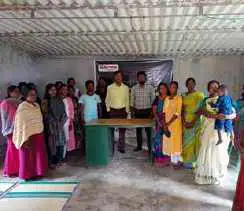
The photographic dossier below presents verified visual proof of active vocational training sessions, practical infrastructure, external scholar internships, and verified micro-enterprises launched by vocational graduates:
8. Strategic Partnerships with Industry, Government & Civil Society
To ensure curriculum relevance, industrial tool quality, and micro-financing avenues, KITS established formalized partnerships with diverse corporate, governmental, and academic bodies:
| Partner Entity | Category & Status | Vocational Course Co-Delivered | Financial & Technical Contribution |
|---|---|---|---|
| DXC Technology India | Multinational Corporate Partner (CSR) | Tailoring & Garment Manufacturing Centre | Sponsored 30 commercial motorized sewing machines, fabric raw materials, electrical infrastructure, and expert trainer honorariums. |
| Rural Self Employment Training Institute (RSETI) | Central Government Skill Consortium (MoRD) | Jute Product & Eco-Friendly Bag Manufacturing | Standardized government curriculum, master artisan trainers, and co-certification qualifying trainees for government Mudra loans. |
| SEESHA NGO | National Humanitarian Non-Profit Organization | Women SHG Livelihood Clinics & Seed Funding | Disbursed ₹10,000 seed grants per entrepreneur, monitored post-training business viability, and facilitated raw material procurement. |
| Bharathiar University (DLISc) | State Public University | Professional Library Automation Internship | Institutional MOU for zero-fee practical technical upskilling of postgraduate scholars on enterprise RFID and Koha ILS infrastructure. |
| Canara Bank Financial Inclusion Wing | Public Sector Commercial Bank | SHG Financial Literacy & Micro-Credit Clinics | Conducted financial literacy drives, opened zero-balance business accounts, and sanctioned low-interest credit lines for SHG micro-ventures. |
9. Best Practices in Community Vocational Empowerment
Best Practice 1: Tailoring Skilling Coupled with Seed-Capital Micro-Enterprise Incubation
- Problem Context: Vocational skill training frequently fails to yield permanent livelihoods if impoverished rural graduates cannot afford capital machinery upon course completion.
- Strategic Objective: Bridge the transition gap between skill training and commercial micro-enterprise ownership, ensuring 100% self-employment viability.
- Empirical Implementation: Graduates of the 3-month tailoring and Aari embroidery courses delivered with DXC Technology undergo business mentoring. High-performing graduates receive competitive seed-capital grants of ₹10,000 each funded through SEESHA-supported SHG funds. Two graduates—Mrs. Shyla and Mrs. Rameshwari—successfully established independent commercial shops (Everbright Boutique and Susana’s Beauty Parlour) along Sappanimadai Road, each generating an average net daily income of ₹500.
- Measurable Impact: 60 women trained annually; establishment of multiple home boutiques and commercial storefronts providing sustainable household financial security.
Best Practice 2: Zero-Fee Advanced Technology Internships for External University Scholars
- Problem Context: Students pursuing postgraduate library science degrees in state universities rarely gain operational access to automated enterprise infrastructure such as 3M RFID self-check kiosks and Koha open-source ILS systems.
- Strategic Objective: Provide tuition-free, enterprise-grade practical technical internships for non-enrolled university scholars using KITS's automated Central Library.
- Empirical Implementation: Under the supervision of Librarian In-Charge Dr. D. Mercy Lydia, the Central Library designed an intensive 21-day practical internship (03.02.2025–28.02.2025) for Bharathiar University scholars. Interns managed live book acquisitions, encoded 3M RFID tags, configured Touch-KIOSK systems, and ingested digital content into DSpace, culminating in recognized institutional certifications (Ref: KITS/LIB/INT/92/2025).
- Measurable Impact: Built direct technical competencies for external scholars at zero tuition cost, qualifying them for immediate competitive employment in automated academic libraries.
Best Practice 3: Restorative Justice & Correctional Vocational Rehabilitation for Prison Inmates
- Problem Context: Incarcerated individuals nearing release face severe socioeconomic stigma and lack marketable trade skills, leading to elevated recidivism rates upon release.
- Strategic Objective: Equip prison inmates with certified, high-demand mechanical and electrical trades to guarantee immediate economic reintegration.
- Empirical Implementation: KITS faculty and student trainers conducted certified 5-day vocational modules at Coimbatore Central Prison in Domestic Plumbing (30 inmates) and Basic Electrical Servicing (32 inmates) from 27–31 August 2024, covering sanitary installations, leak troubleshooting, switchboard wiring, and appliance repairs.
- Measurable Impact: 62 inmates certified in practical livelihood trades, establishing viable post-release employment pathways and reinforcing the restorative mission of higher education.
10. Methodological Alignment & Categorization Integrity
To guarantee complete audit purity during the Times Higher Education (THE) Impact Rankings evaluation, KITS strictly demarcates adult vocational training (Metric 4.3.3) from community educational outreach for school-age children (Metric 4.3.4):
Community Educational Activity Beneficiary Demographic Assigned THE Metric Methodological Rationale for Metric Allocation Structured Vocational Courses (Tailoring, Jute, Mushroom, Koha, etc.)
11. Conclusion
Karunya Institute of Technology and Sciences fulfills the mandate of United Nations SDG 4 and Times Higher Education Metric 4.3.3. Through the structured initiatives of the Centre for Community Academia Collaboration (CCAC), the School of Agricultural Sciences, the Central Library, and high-impact partnerships with DXC Technology, RSETI, and SEESHA, the university has established an enduring, community-embedded model of lifelong vocational education. By equipping vulnerable women, tribal farmers, prison inmates, and external scholars with market-relevant trade skills, official certifications, and catalytic micro-enterprise seed capital, KITS exemplifies the transformative power of higher education as an instrument of social justice, poverty eradication, and inclusive human dignity.