KITS/SFCP/2025/01
Smoke Free Campus Policy
PREAMBLE
Karunya Institute of Technology and Sciences (KITS) affirms its commitment to maintaining a healthy, safe, and productive campus environment for all students, staff, faculty, and visitors. Consistent with its vision to promote holistic education and environmental stewardship, the Institute enforces this Smoke-Free Campus Policy to safeguard the physical, mental, and social well-being of the entire community.
The policy prohibits smoking, use, possession, or distribution of tobacco and nicotine products including e-cigarettes and vaping devices within all academic, residential and administrative areas of the campus. This initiative reflects KITS’s proactive role in supporting national health legislation, accreditation standards and global sustainability goals.
ALIGNMENT WITH NATIONAL AND INTERNATIONAL FRAMEWORKS
This Policy is aligned with the following frameworks and directives:
Constitution of India
- Article 21: Protection of life and personal liberty.
- Article 47: Duty of the State to raise the level of nutrition and the standard of living and to improve public health.
- Article 51A (g): Fundamental duty of every citizen to protect and improve the natural environment.
Government of India and Regulatory Frameworks
- Cigarettes and Other Tobacco Products Act (COTPA), 2003.
- Prohibition of Electronic Cigarettes Act, 2019.
- Guidelines for Tobacco-Free Educational Institutions, Ministry of Health & Family Welfare (MoHFW).
- National Tobacco Control Programme (NTCP), Ministry of Health & Family Welfare.
Accreditation and Policy Frameworks
- National Education Policy (NEP 2020) – Health and wellness for holistic development.
- NAAC Manual – Institutional Values and Best Practices (Criterion 7).
International and UN Frameworks
- World Health Organization (WHO) Framework Convention on Tobacco Control (FCTC).
- UNESCO Education 2030 Framework for Action.
- UN Sustainable Development Goals (SDGs):
- SDG 3: Good Health and Well-being.
- SDG 4: Quality Education.
- SDG 11: Sustainable Cities and Communities.
LEGAL AND POLICY BASIS
The Policy derives authority from:
- The Constitution of India
- Cigarettes and Other Tobacco Products (Prohibition of Advertisement and Regulation of Trade and Commerce, Production, Supply and Distribution) Act, 2003
- Prohibition of Electronic Cigarettes Act, 2019
- MoHFW and UGC Notifications and Circulars
- AICTE Quality Mandates
- Institutional Code of Conduct and Student Handbook
RATIONALE
Smoking and tobacco use pose health risks including cancer, respiratory illness and cardiovascular disease. Exposure to second-hand smoke further endangers non-users, affecting both health and academic productivity.
This Policy seeks to:
- Protect every individual on campus from the hazards of tobacco and passive smoke.
- Cultivate a responsible, wellness-driven community.
- Promote a clean, sustainable, and safe learning environment.
- Uphold national and international commitments to health and well-being.
EXECUTIVE SUMMARY
The Smoke-Free Campus Policy establishes that all KITS campuses and facilities are 100% smoke-free zones. It prohibits the possession, consumption and sale of tobacco and nicotine products in any form, thereby ensuring health protection, institutional integrity and compliance with law.
Implementation and continuous campus monitoring are enforced by the Campus Anti-Tobacco and Substance-Abuse Monitoring Committee (ATSMC), chaired by the Director (Student Affairs) in coordination with the Proctorial Board and Chief Wardens. Violations will invoke disciplinary action under institutional rules.
This Policy is guided by the Constitution of India, national health legislation, accreditation standards and UN SDGs, affirming KITS’s leadership in promoting a healthy and ethical educational ecosystem.
PURPOSE AND SCOPE
Purpose
This Policy establishes a clear, accountable framework:
- To protect the health of all members of the KITS community.
- To comply with national legislation and accreditation requirements on public health.
- To promote social responsibility, environmental stewardship and sustainable campus culture.
Scope
This Policy applies to all:
- Students, faculty, staff, visitors and vendors within KITS premises.
- Academic, administrative, residential, transportation and recreational facilities.
- Institutional events or programs conducted on or off campus under the KITS banner.
DOCUMENT CONTROL & REVISION HISTORY
| Policy Title | Smoke Free Campus Policy |
|---|---|
| Reference Number | KITS/SFCP/2025/01 |
| Version | 2.0 |
| Issue | 02 |
| Policy Created on | July 2022 |
| Revision History | Revised on 29th August 2025 (28th IQAC Meeting). |
| Responsible Executives | Vice-Chancellor and Director (Student Affairs) |
| Responsible Office | Student Affairs office & Internal Quality Assurance Cell (IQAC) |
| Policy Review Frequency | Policy shall be reviewed every three years, or earlier if required by UGC, AICTE or other regulatory authorities. |
The policy is described in the following articles.
ARTICLE 1 - STATEMENT OF POLICY
It is the policy of Karunya Institute of Technology and Sciences that the use, possession, sale, or promotion of tobacco or nicotine products including cigarettes, cigars, bidis, chewing tobacco, gutkha, hookah and e-cigarettes is strictly prohibited within all areas of the Institute.
This prohibition applies to all persons - students, staff, faculty, visitors, vendors and contractors at all times.
ARTICLE 2 - POLICY OBJECTIVES
The Policy defines a structured framework of objectives to guide KITS in fostering a health-promoting and sustainable campus environment by ensuring that all members of the academic community are protected from the hazards of tobacco and nicotine use, thereby upholding institutional values of wellness, responsibility and environmental stewardship.
The specific objectives of the policy are to:
- Promote a safe, healthy and tobacco-free learning environment.
- Prevent exposure to second-hand smoke.
- Ensure compliance with national and international health regulations.
- Support awareness and cessation efforts.
- Maintain compliance regarding green and healthy campuses.
- Cultivate responsible citizenship and sustainable behaviour.
- Establish transparent procedures for reporting and accountability.
ARTICLE 3 - POLICY PRINCIPLES
Guided by the values of compassion, responsibility, respect, and wellness, this Policy upholds KITS’s mission to create a health-promoting, safe and sustainable academic environment. These principles direct every campus activity toward ensuring health protection, environmental care and personal responsibility among all members of the institutional community.
3.1 Health and Well-being
KITS is committed to promoting the physical and mental well-being of all students, staff, and visitors by maintaining a smoke-free and supportive campus environment.
3.2 Environmental Stewardship
The Institute recognizes its duty to preserve a clean and sustainable environment, aligning campus practices with constitutional and global mandates for environmental protection.
3.3 Safety and Responsibility
Every individual within the campus is expected to act responsibly and contribute to a safe, tobacco-free atmosphere that supports collective well-being.
3.4 Legal and Ethical Compliance
The Policy shall be implemented in accordance with the Cigarettes and Other Tobacco Products Act (COTPA, 2003), Prohibition of Electronic Cigarettes Act (2019), and all relevant UGC, AICTE, and MoHFW guidelines.
3.5 Awareness and Education
The Institute shall continually educate and sensitize its community on the harmful effects of smoking and tobacco use through regular awareness programmes, campaigns, and inclusion of health education in institutional activities.
3.6 Inclusiveness and Accessibility
All health promotion and awareness activities shall be inclusive, ensuring participation of students, faculty, staff, and contract workers across all departments and hostels.
3.7 Prevention and Early Intervention
KITS emphasizes proactive prevention through awareness and counselling rather than punitive measures, ensuring early intervention for behavioural support and cessation.
3.8 Confidentiality and Dignity
Reports or disciplinary proceedings related to policy violations shall be handled with utmost confidentiality, fairness and respect for individual dignity.
3.9 Continuous Improvement
The Smoke-Free Campus Policy shall be periodically reviewed and improved through audits, feedback and alignment with emerging national and global health standards.
ARTICLE 4 - ROLES & RESPONSIBILITIES
The Smoke-Free Campus Policy assigns distinct roles and responsibilities to ensure clear accountability, transparency and continuous compliance with national health legislation, institutional standards and accreditation frameworks.
Every officer, faculty member, and committee involved in implementing this Policy shall act in good faith, uphold confidentiality and fairness, and maintain all records of compliance, awareness activities, and enforcement actions for review by the Internal Quality Assurance Cell (IQAC).
4.1 Vice-Chancellor
- Provide overall leadership and ensure institutional compliance with statutory requirements.
- Approve the annual Smoke-Free Compliance Report.
- Authorize disciplinary or corrective measures for major violations.
4.2 Director (Student Affairs)
- Serve as Chairperson of the committee.
- Lead awareness and enforcement initiatives.
- Coordinate with the Registrar and IQAC for documentation and reporting.
4.3 Registrar
- Maintain official records of violations and disciplinary actions.
- Report compliance status to statutory and accreditation agencies.
4.4 Director (Security & Intelligence)
- Ensure surveillance and vigilance in all campus zones.
- Investigate and report any observed violations promptly.
4.5 Chief Wardens (Men and Women)
- Enforce the policy within hostels and residential areas.
- Conduct random inspections and submit compliance reports.
4.6 Faculty and Staff
- Model responsible behaviour and report observed violations.
- Encourage student awareness and adherence through mentoring.
4.7 Students
- Abide by the smoke-free policy as part of institutional conduct.
- Participate actively in awareness programmes and peer advocacy.
4.8 Contractors, Vendors and Visitors
- Comply fully with the smoke-free regulations as a contractual condition.
- Non-compliance may lead to termination of contract or denial of access.
4.9 Internal Quality Assurance Cell (IQAC)
- Audit policy effectiveness and monitor annual compliance reports.
- Integrate smoke-free indicators within institutional quality metrics.
ARTICLE 5 - MONITORING & EVALUATION
- Each responsible office shall maintain evidence of compliance including reports, meeting minutes and awareness records for IQAC audit.
- Negligence or non-compliance with this Policy shall invite disciplinary or administrative action under institutional service rules.
- The Vice-Chancellor shall present an Annual Smoke-Free Campus Statement to the Governing Body for review and record.
ARTICLE 6 - REPORTING AND GRIEVANCE MECHANISM
Any student, staff member or visitor observing a violation of the Smoke-Free Campus Policy may file a complaint in writing or through the institutional portal addressed to the Director (Student Affairs) or the Registrar within 15 working days of the incident.
Smoke-Free Compliance Review Committee (SFCRC)
- Chairperson – Director (Student Affairs)
- Member Secretary – Deputy Director (Security & Intelligence)
- Member – Chief Warden (Men/Women)
- Member – Director (QAA)
- Member – Faculty Representative
Procedure
- Preliminary review of the complaint within 10 working days.
- Fact-finding inquiry by the Committee, ensuring confidentiality and fairness.
- Submission of findings and recommendations to the Vice-Chancellor within 20 working days.
Appeals
An appeal may be submitted to the Vice-Chancellor within 10 working days from the date of communication of the Committee’s decision.
Non-Retaliation
No student, staff or visitor shall face any form of retaliation, penalty, or discrimination for reporting a violation in good faith under this Policy.
Record Maintenance
All records of complaints, inquiry proceedings and appeals shall be securely maintained by the Registrar’s Office for a minimum period of five years and shall be available for review by the Internal Quality Assurance Cell (IQAC) during audits.
ARTICLE 7 - VIOLATIONS
Violations of the Smoke-Free Campus Policy include possession, use or promotion of tobacco or nicotine products within campus premises, failure to enforce the policy, or any act that compromises its implementation or integrity.
Examples of Violations
- Smoking or using tobacco/nicotine products in any form on campus.
- Possession or distribution of cigarettes, e-cigarettes, or related paraphernalia.
- Sale or promotion of tobacco products within or near institutional premises.
- Negligence or deliberate non-enforcement of the Policy by staff or contractors.
- Obstruction of inspections or failure to report observed violations.
Corrective Measures
- Written warning or disciplinary action.
- Suspension or restriction of campus privileges.
- Removal from hostel or campus premises in case of repeated violations.
- Termination of service or contract for external vendors or staff.
- Reporting to local health or law enforcement authorities where required.
Severe or repeated violations shall be addressed under institutional service rules and, where applicable, under the Cigarettes and Other Tobacco Products Act (COTPA), 2003, the Prohibition of Electronic Cigarettes Act, 2019, or other relevant legal provisions.
ARTICLE 8 - OUTREACH AND ACCESS MEASURES
- The Institute shall organize awareness and outreach programmes to educate students, faculty, staff, and nearby communities on the health hazards of smoking and tobacco use.
- Information materials on tobacco control, cessation support and the Smoke-Free Campus Policy shall be displayed across all academic and residential areas and made available in accessible formats (digital, print, and visual).
- Orientation and induction programmes shall include sessions on institutional health and wellness policies, emphasizing smoke-free norms and responsible citizenship.
- The Institute shall collaborate with the District Tobacco Control Cell, public health departments, and non-governmental organizations to conduct regular health camps, counselling drives, and peer awareness initiatives.
- Special focus shall be given to students from rural or high-risk backgrounds, encouraging positive lifestyle changes through mentorship and continuous engagement.
ARTICLE 9 - TRAINING AND AWARENESS
- Conduct annual workshops and campaigns in collaboration with the District Tobacco Control Cell.
- Include health promotion modules in student induction.
- Encourage participation of student ambassadors in peer education.
ARTICLE 10 - POLICY REVIEW AND CONTINUOUS IMPROVEMENT
The policy shall be reviewed annually if required by new laws, court judgments or regulatory directives. Amendments shall be approved by the Vice-Chancellor on the recommendation of the IQAC.
REFERENCES
- Constitution of India (CoI) [https://www.indiacode.nic.in/bitstream/123456789/16124/1/the_constitution_of_india.pdf]
- Cigarettes and Other Tobacco Products Act (COTPA), 2003
- Prohibition of Electronic Cigarettes Act, 2019
- MoHFW – Guidelines for Tobacco-Free Educational Institutions (2022)
- NEP 2020 – Health and Well-being Framework
- WHO FCTC
- UN SDGs 3, 4, 11
DEFINITIONS
| Term | Definition |
|---|---|
| Smoking | The act of inhaling, exhaling, burning, or carrying any lit tobacco product, including cigarettes, cigars, pipes, or bidis. |
| Tobacco Products | Any product containing tobacco or nicotine intended for human consumption, including chewing tobacco, gutkha, snuff, or similar substances. |
| Electronic Cigarettes (E-Cigarettes) | Battery-operated devices that deliver nicotine or other substances through aerosolization or vaporization, prohibited under the Prohibition of Electronic Cigarettes Act, 2019. |
| Smoke-Free Campus | An institutional environment where the use, possession, sale, or distribution of tobacco and nicotine products is completely banned. |
| Violation | Any act or omission that contravenes the provisions of this Policy, including the use, possession, or sale of tobacco/nicotine products or non-cooperation with enforcement measures. |
| Awareness Programme | Any structured educational or promotional activity conducted to inform and sensitize the campus community about the dangers of smoking and the benefits of a tobacco-free lifestyle. |
| Compliance Report | The annual report documenting inspections, awareness initiatives, violations, and corrective actions prepared by the Director (Student Affairs) and submitted to IQAC. |
| Complainant / Respondent | The individual(s) reporting a policy violation or against whom the complaint is filed, respectively. |
| Non-Retaliation | Assurance that no adverse action shall be taken against any person reporting a violation in good faith. |
ANNEXURE I - HEALTH AND WELL-BEING INITIATIVES AT KITS
| Initiative / Activity | Implementing Office | Purpose / Outcome |
|---|---|---|
| Smoke-Free Campus Pledge Drive | Office of Student Affairs | Commitment to maintain a tobacco-free environment. |
| Annual World No-Tobacco Day Campaign | NSS Unit & IQAC | Awareness on health hazards of smoking. |
| Health and Cessation Counselling | University Health Centre | Support for students/staff seeking to quit tobacco. |
| Anti-Tobacco Signage Installation | Security & Maintenance Office | Compliance with COTPA 2003 Section 6. |
| Partnership with District Tobacco Control Cell | Student Affairs Office | Coordination for enforcement and outreach. |
ANNEXURE II - ALIGNMENT WITH UN SDGs
| SDG Goal | Focus Area | Implementation at KITS |
|---|---|---|
| SDG 3 – Good Health and Well-being | Reduce deaths and diseases caused by tobacco use. | Campus-wide smoking prohibition and health promotion. |
| SDG 4 – Quality Education | Promote inclusive and healthy learning environments. | Integration of health awareness in curriculum and induction. |
| SDG 11 – Sustainable Communities | Ensure sustainable and safe living spaces. | Pollution-free, health-conscious campus practices. |
ANNEXURE III - ACRONYMS AND ABBREVIATIONS
| Acronym | Full Form |
|---|---|
| KITS | Karunya Institute of Technology and Sciences |
| UGC | University Grants Commission |
| AICTE | All India Council for Technical Education |
| IQAC | Internal Quality Assurance Cell |
| MoHFW | Ministry of Health and Family Welfare |
| COTPA | Cigarettes and Other Tobacco Products Act |
| ISFCC | Institutional Smoke-Free Compliance Committee |
| NEP | National Education Policy |
| FCTC | Framework Convention on Tobacco Control |
| WHO | World Health Organization |
| NTCP | National Tobacco Control Programme |
| NAAC | National Assessment and Accreditation Council |
| SDG | Sustainable Development Goal |
| SFCRC | Smoke-Free Compliance Review Committee |
ANNEXURE IV - EVIDENCE OF IMPLEMENTATION: AWARENESS EVENTS
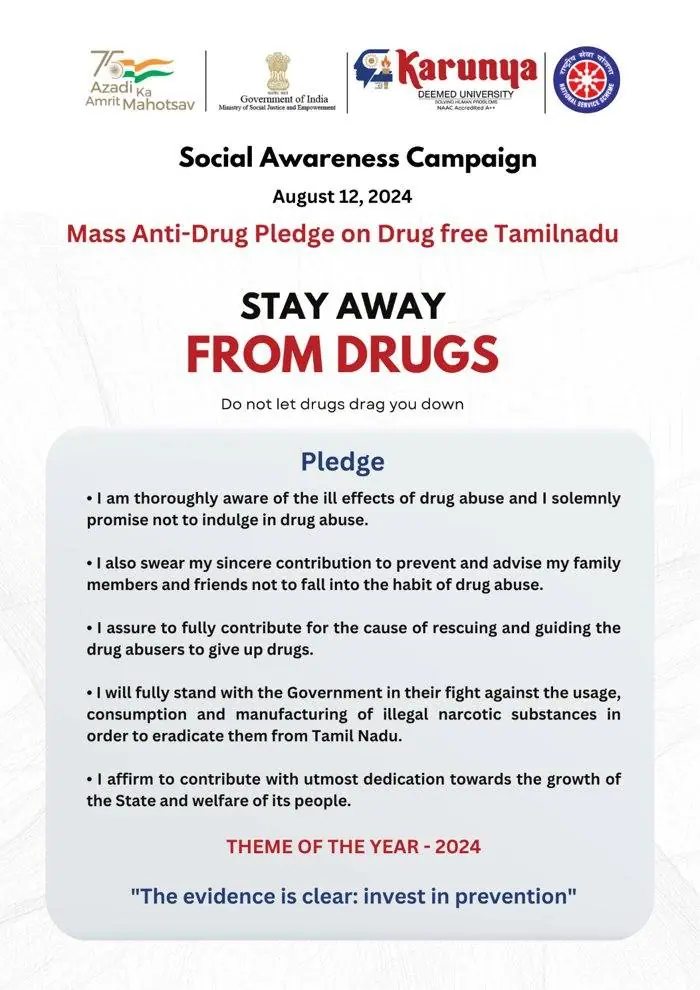
Event 1: Mass Anti-Drug Pledge – Drug Prevention Pledge (12 August 2024)
| Name of event | Drug Prevention Pledge – Mass Anti-Drug Pledge on Drug-free Tamil Nadu (Social Awareness Campaign) |
|---|---|
| Date | 12 August 2024 |
| Venue | Karunya Institute of Technology and Sciences, Coimbatore |
| Organised by | National Service Scheme (NSS) Unit, KITS |
| Number of participants | 1,500 students |
| Theme | “The evidence is clear: invest in prevention” (Theme of the Year 2024) |
| Policy link | Article 3.5 (Awareness and Education), Article 8 (Outreach and Access Measures), Article 9 (Training and Awareness); NSS Unit is an implementing office under Annexure I |
Event description
The National Service Scheme (NSS) of KITS organised a drug prevention awareness campaign with 1,500 students, in line with the Government of India’s initiative to eradicate the use and manufacture of drugs. The NSS student leader recited the pledge, and the NSS volunteers and students repeated it, committing to stay away from drug use and to help family members and friends do the same. The campaign focused on spreading awareness among the youth and was well received by students and faculty, who appreciated the effort to build a drug-free society. Through this initiative, the NSS unit helped empower students to make wise decisions and build a secure future, reinforcing the Institute’s commitment to a substance-free, health-promoting campus.
Event photographs (geo-tagged)
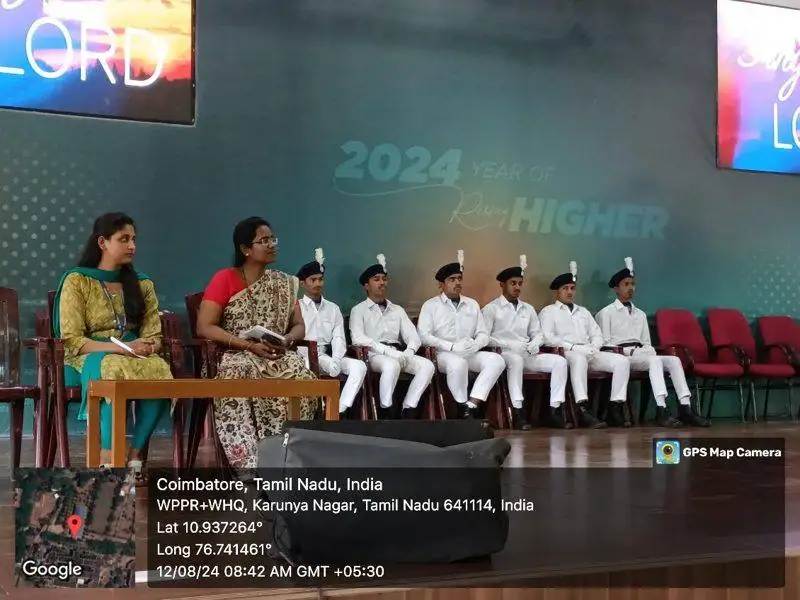
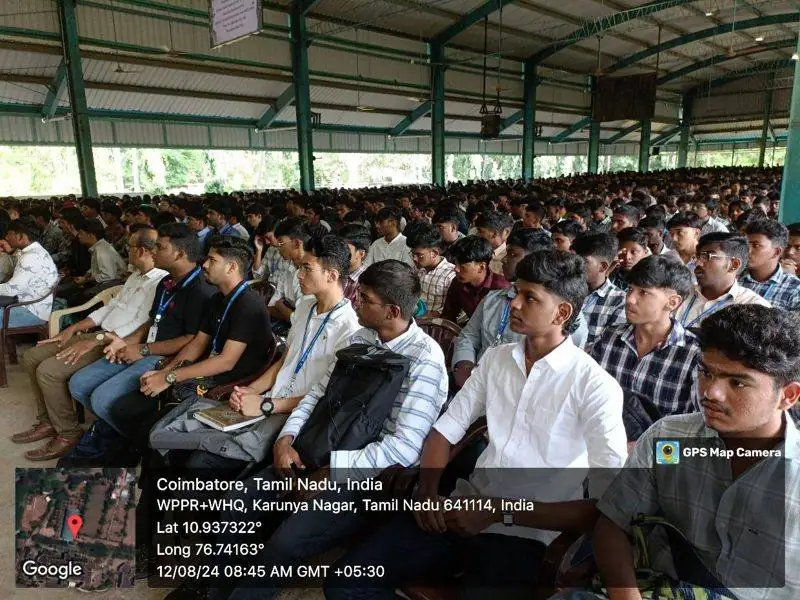
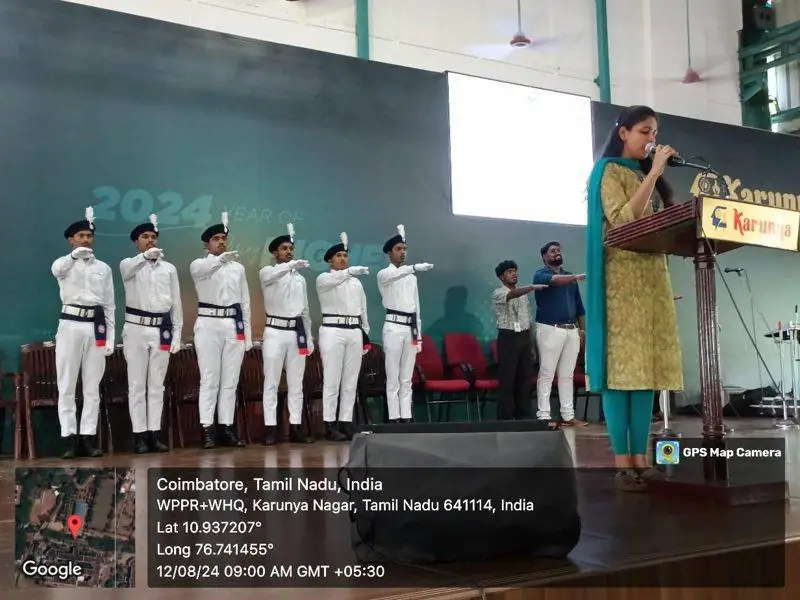

Drug Prevention Pledge, 12 August 2024, KITS campus, Coimbatore
Event poster