| THE 2027 Metric Component | Operational Scope & Delivery Mechanism |
|---|---|
| Student Volunteering Programmes with NGOs (Metric 17.2.5 - Component 1) | 14 distinct initiatives delivering free academic tutoring across 14 village tuition centers (mentoring 300 children), eye-care camps, geriatric support, hunger relief, tree plantation, and school infrastructure upgrades. |
| Research Programmes with NGOs (Metric 17.2.5 - Component 2) | 7 translational research projects including the IoT Safe Path Network elephant alert system (₹1,00,000 UBA funding), wildlife monitoring, solar lift irrigation, and 100 soil health diagnostic cards. |
| Development of Educational Resources with NGOs (Metric 17.2.5 - Component 3) | 12 co-developed educational resources including digital literacy/cyber-safety modules, SHG financial toolkits, SEESHA learning kits & curricula, Tally Prime courseware, and prison vocational modules. |
1. Overview & Institutional Collaboration Framework
At Karunya Institute of Technology and Sciences (KITS), partnerships bring together academic expertise, student participation and community organisations to advance the United Nations Sustainable Development Goals. Collaboration with SEESHA, Rotary clubs, community institutions and healthcare partners supports inclusive education, public health, sustainable livelihoods, and environmental responsibility.
The Centre for Community Academia Collaboration (CCAC) coordinates outreach in neighbouring rural and tribal communities. Free tuition centres, digital literacy sessions, reading initiatives, financial literacy programmes, and health awareness activities extend learning beyond the campus. Students contribute through tutoring, skits, demonstrations and practical service, while community members share their experience and local knowledge.
In formal association with the Samiti for Education, Environment, Social and Health Action (SEESHA), a registered non-governmental organisation, KITS supports educational and vocational opportunities for underserved communities. Learning centres, school kits, computer education, Tally training, tailoring and other vocational programmes address barriers to education and economic participation, contributing to SDGs 1, 4, 5 and 8.
Rotary-sponsored Rotaract clubs provide opportunities for students to serve through eye-screening camps, visits to care homes, food distribution, tree planting and public-learning activities. The Rotary Club of Thondamuthur and the Rotary Club of Coimbatore Aakruthi support these student networks, connecting volunteering with community needs and the spirit of service.
Applied technology projects connect engineering knowledge with local challenges. The Safe Path Network and related elephant-monitoring trials address community safety and human–wildlife coexistence. Soil testing, irrigation feasibility studies and farmer-training programmes support informed agricultural decisions and sustainable resource use.
Together, these initiatives link student volunteering, applied research and development, and educational resources with sustainable development. Through sustained community engagement and collaborative action, KITS contributes to healthier communities, wider learning opportunities and stronger partnerships for the Goals.
KITS collaborates with SEESHA to extend educational access and vocational learning among underserved communities. Programmes include after-school learning, digital education, school supplies and skills for employment and entrepreneurship.
The University Rotaract Club is parented by the Rotary Club of Thondamuthur. The KSM Rotaract Club is sponsored by the Rotary Club of Coimbatore Aakruthi. These documented relationships support student participation in organised civil-society service.
2. Student Volunteering Programmes in Collaboration with NGOs
Karunya Institute of Technology and Sciences structures student volunteering as a foundational pillar of its social responsibility mission. Through institutional partnerships with grassroots NGOs, including SEESHA, Rotary International clubs (Rotary Club of Thondamuthur, Rotary Club of Coimbatore Aakruthi), and local panchayat bodies, student volunteers directly deliver impactful community services across education, healthcare, elder care, poverty relief, and environmental preservation, with all activities structured through credited academic student volunteering under faculty mentorship.
2.1 Academic Mentorship & Free Tuition Centres
Free tuition centres and academic support
KITS administers 14 free village tuition centres supporting 300 underprivileged children through daily academic tutoring, personal mentorship, and a safe learning environment. During November 2024, Children’s Day educational activities were organized across all 14 centres, benefiting 300 children.
Relevant SDGs: 4, 10, 17.
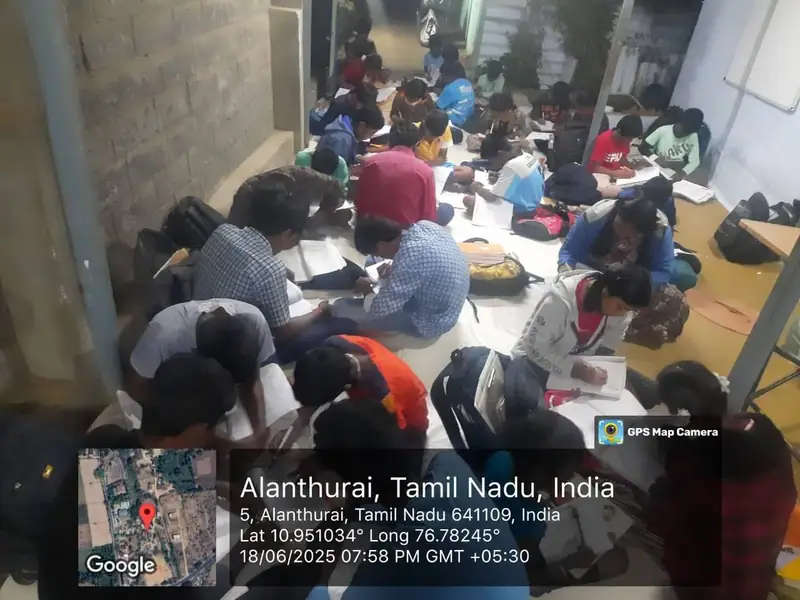
Learning support at Karunya free tuition centres
2.2 Community-Led Evening Tuition Centre at Neallurpatti
CCAC established an evening tuition centre near Karunya Institute of Technology and Sciences with support from village elder Mr. Ganesh and local teacher Mrs. Sindu during November 2024. The activity expanded access to academic support through community participation.
Relevant SDGs: 4, 10, 17.
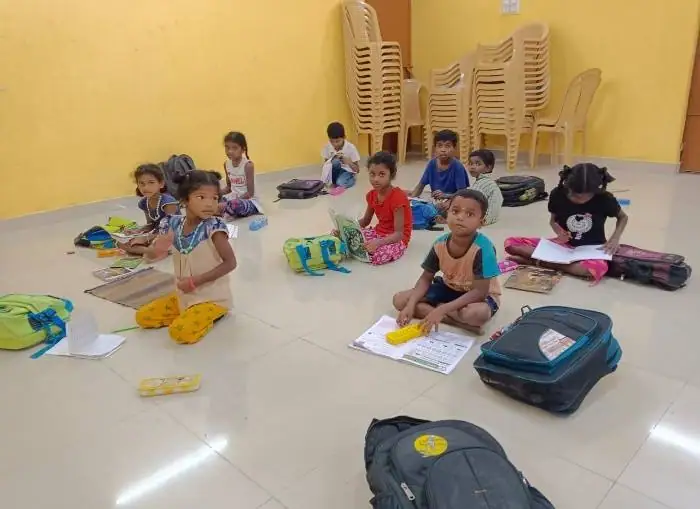
New tuition centre at Neallurpatti
2.3 Community Health and Hygiene Outreach at Pachinampathy
Health and hygiene awareness
CCAC and Karunya School of Management conducted a programme at Pachinampathy village on 3 October 2024. Student-led skits, talks, and practical demonstrations promoted community sanitation and personal hygiene, accompanied by the distribution of hygiene kits to participating village families.
Relevant SDGs: 3, 6, 17.
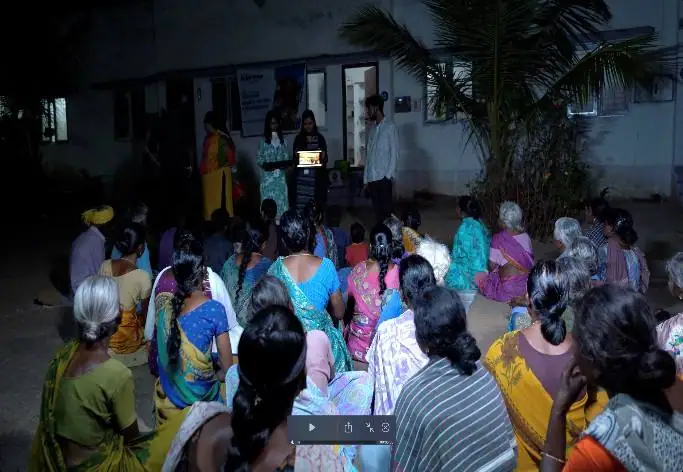
Health and hygiene awareness
2.4 Nutrition Awareness and Indigenous Food Security at Perumalkovilpathy
Nutrition awareness through local foods
At Perumalkovilpathy village on 29 November 2024, students of the Department of Food Processing Engineering conducted a skit, cultural presentation, and interactive nutrition seminar to explain the benefits of locally available value-added foods. The activity translated academic knowledge into accessible community education.
Relevant SDGs: 2, 3, 4, 17.
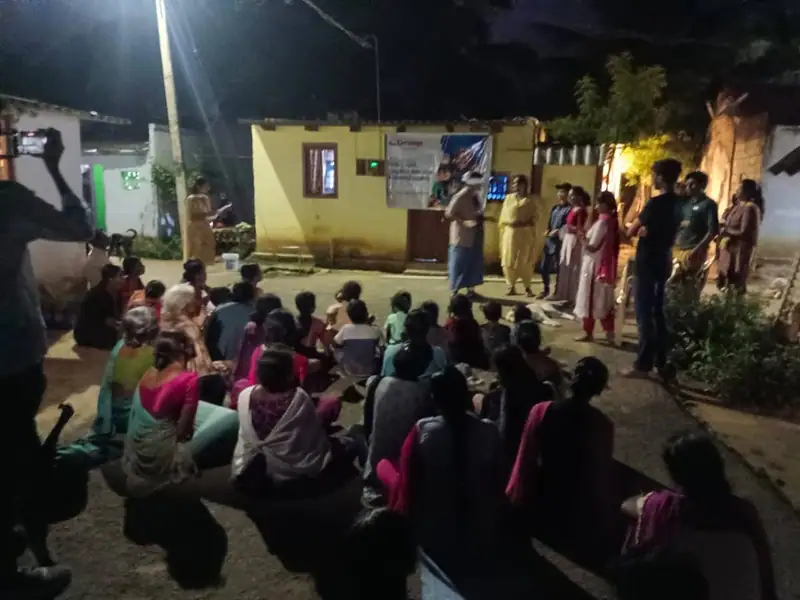
Nutrition awareness through local foods
2.5 Child Protection and Substance Abuse Prevention at Karamarthur
Child protection and drug-abuse awareness
CCAC and the Criminology and Forensic division organised an awareness programme for tuition centre children in Karamarthur village during November 2024. Faculty mentors and former DGP Ms. Sunanda Bhagavathy participated. The programme discussed drug use, child protection and harmful mobile-phone use.
Relevant SDGs: 3, 4, 16, 17.
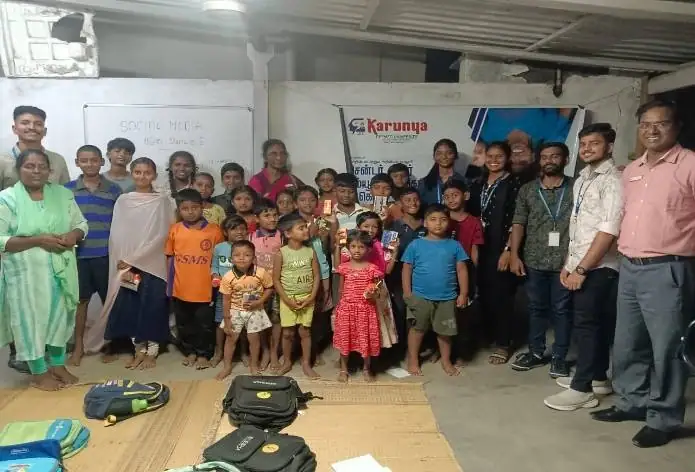
Child protection and drug-abuse awareness
Mega Eye Screening Camps with Madurai Eye Center
Mega eye screening programmes
The CCAC conducted a comprehensive diagnostic eye camp at Karunya Christian School in collaboration with the Division of Physical Sciences, Karunya Hospitals, the Rotaract Club of KITS, and Madurai Eye Center on 4 September 2024. Identified vision problems prompted guidance and parent follow-up. The Rotaract club also conducted a camp on 19 October 2024 with the theme “Prioritize Your Vision”.
Relevant SDGs: 3, 4, 17.
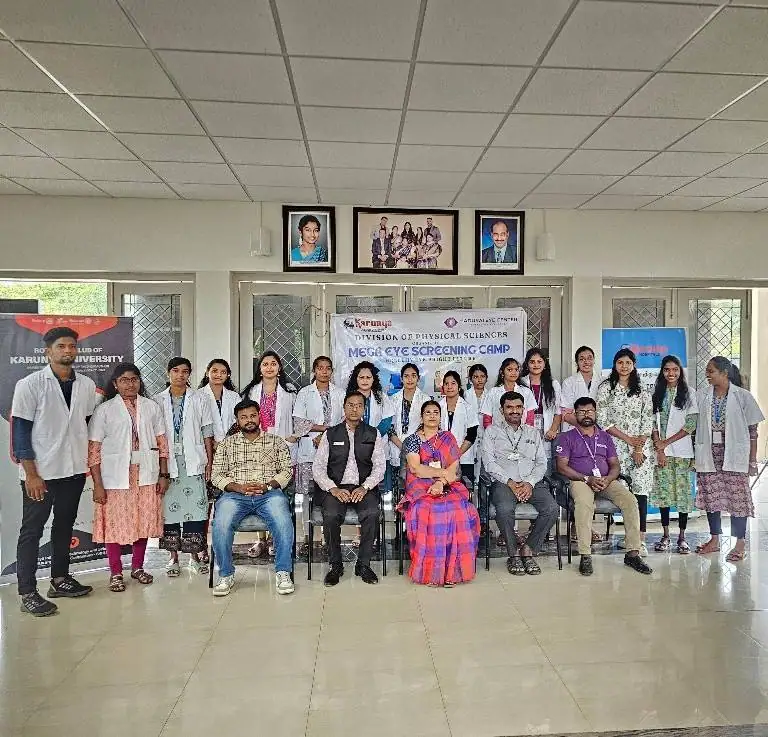
Mega eye screening programmes
2.7 Vision of Care and EYE-Dentify Geriatric Eye Health
Vision of Care and EYE-Dentify
The Vision of Care project was conducted at Sevalaya Old Age Home in collaboration with the Rotary Club of Thondamuthur (with support from the Rotary Club of Coimbatore Aakruthi) and the Department of Optometry. Eye screening was accompanied by games and storytelling with residents. The same report describes EYE-Dentify as a further initiative for early detection of vision problems among older people.
Relevant SDGs: 3, 10, 17.
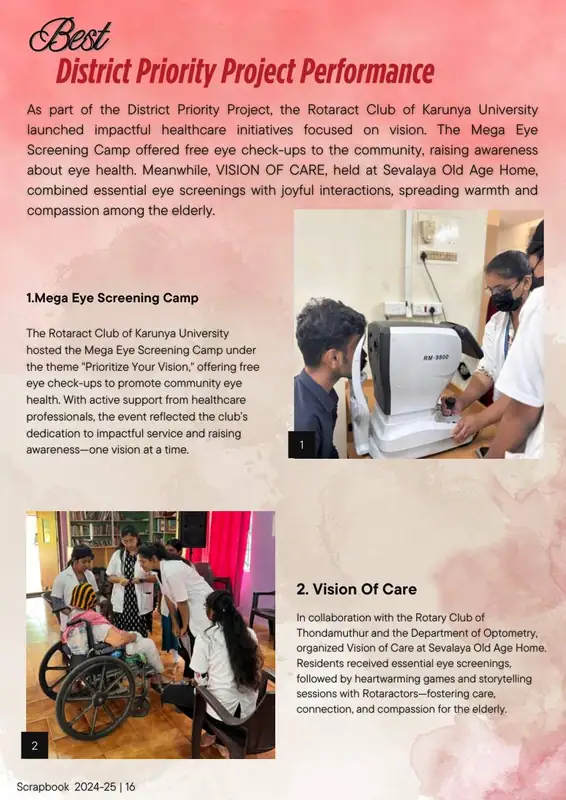
Mega Eye Screening Camp and Vision of Care
2.8 Care Home and Orphanage Engagement Initiatives
Orphanage and old age home visits
The Rotaract Club of Karunya University conducted an orphanage outreach visit on 22 February 2025 and a geriatric care visit on 15 March 2025 to community care homes in the Thondamuthur block, engaging 45 student volunteers in educational and companionship services.
Relevant SDGs: 3, 10, 17.
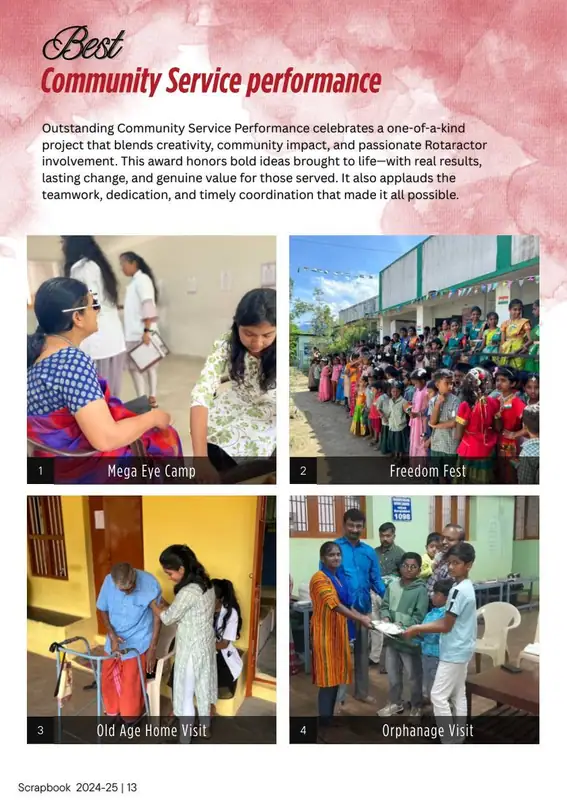
Community-service evidence through the home visits
2.9 'Spreading Smiles' Geriatric Christmas Celebration at Sevalayam
Spreading Smiles at Sevalayam
The institutional annual report lists “Spreading Smiles – A Christmas Celebration at Sevalayam”, Thaliyur, with 30 participants on 1 December 2024. The celebration brought participants together at the community institution.
Relevant SDGs: 3, 10, 17.
2.10 'Joyful Bites' Community Hunger Relief & Food Sharing
Joyful Bites community food distribution
As part of the Joyful Bites community hunger relief drive on 15 August 2024, KSM Rotaract student volunteers prepared and distributed over 150 packaged meals, nutritious desserts, and national flags to daily-wage workers and underprivileged families in Karunya Nagar, engaging in community dialogue to assess local nutritional needs. The initiative brought student volunteers and local residents together through food sharing and community interaction.
Relevant SDGs: 2, 10, 17.
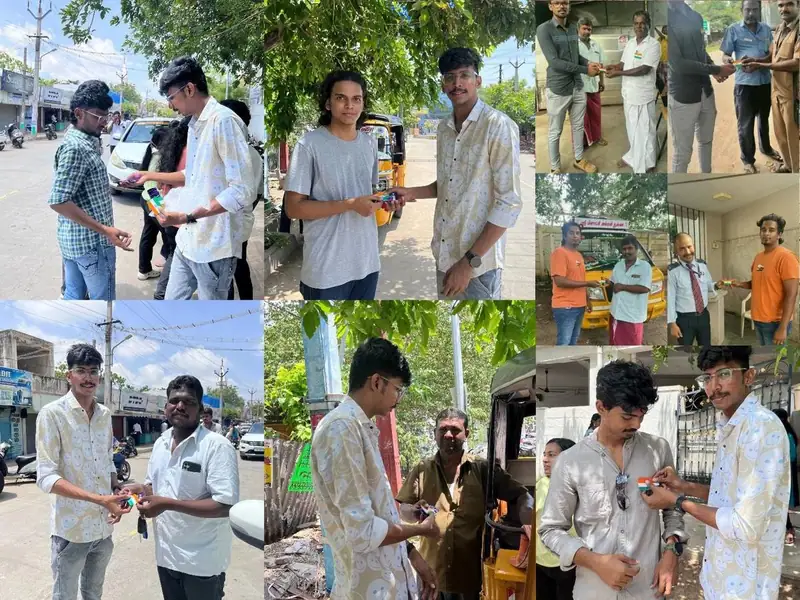
KSM Rotaract volunteers sharing food with the community
2.11 'Green Legacy' Native Tree Afforestation Drive
Green Legacy native sapling plantation
KSM Rotaract members and volunteers planted more than 62 native saplings around Karunya Nagar on 2 September 2024. Organised through the Rotary-sponsored student club, the programme engaged volunteers in local environmental conservation and collective stewardship.
Relevant SDGs: 13, 15, 17.
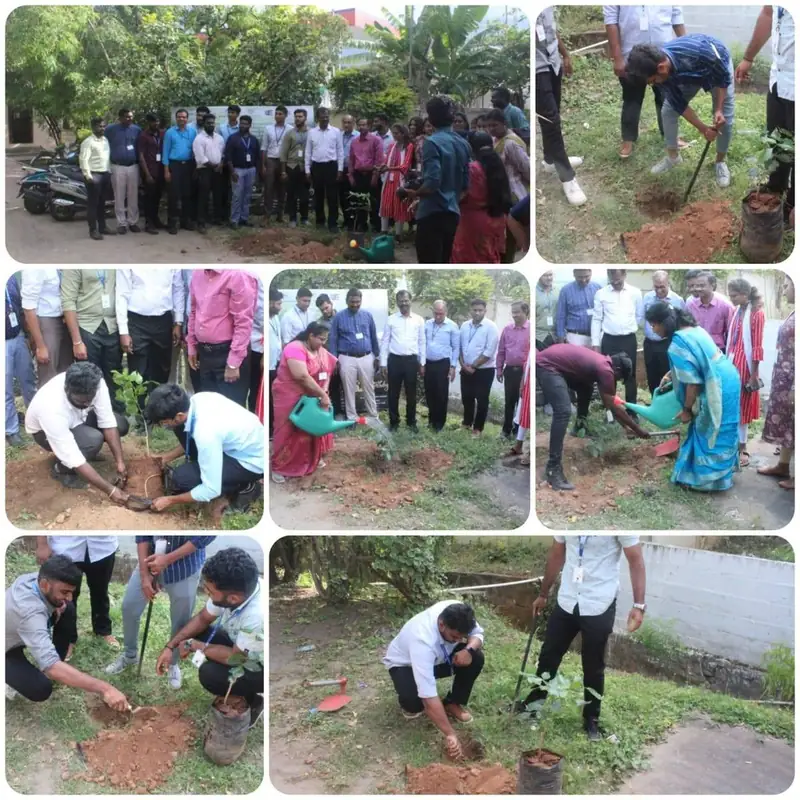
Green Legacy plantation activity
2.12 School Electrification and Sanitation Upgradation at Thombilipalayam
School electrification and handwashing station
CCAC and EEE students, supported by faculty, carried out storeroom electrification and installed a handwashing station at Panchayat Union Middle School, Thombilipalayam on 28 September 2024. The work combined practical student participation with improvements to school facilities.
Relevant SDGs: 3, 4, 6, 7, 17.
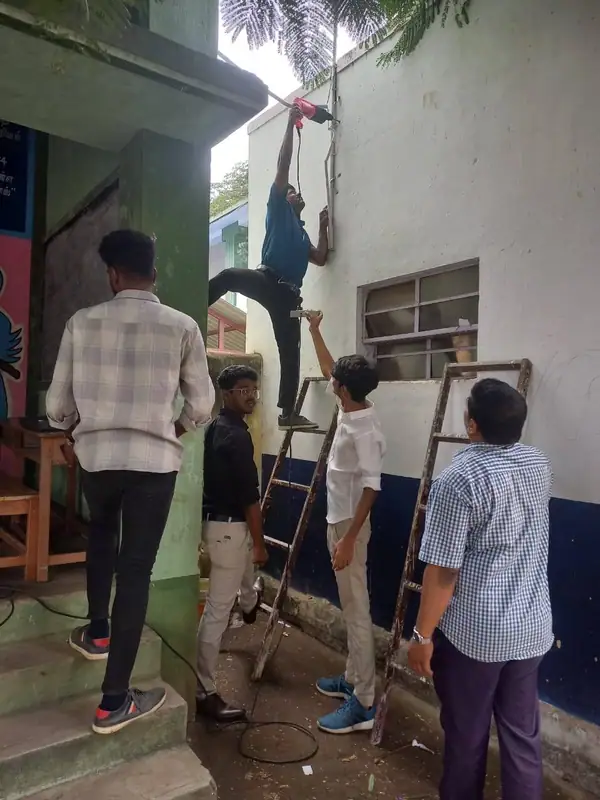
School electrification and handwashing station
2.13 Portable Solar Lighting Kits for Forest Fringe Tribal Households
Portable solar lights for forest communities
In September 2024, CCAC identified ten vulnerable households in remote forest-fringe tribal settlements lacking grid connectivity and provided them with portable solar home-lighting systems equipped with photovoltaic panels. The programme addressed a practical household energy need; the lights offered an alternative source of household illumination.
Relevant SDGs: 7, 10, 17.
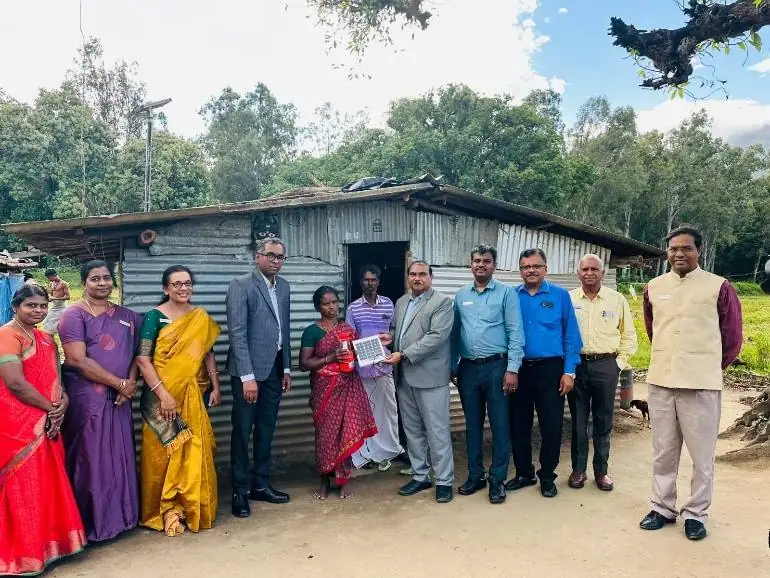
Portable solar lights for forest communities
2.14 Multi-Specialty Village Medical Camps with Karunya Hospitals
Village medical camps
CCAC and Karunya Hospitals organised medical camps at Thombilipalayam (33 patients) and Sadivayal (24 patients), providing consultations and medicines on 13 September and 25 October 2024. Knowledge Exchange also records a camp at Moongilmadaikuttai serving 17 patients. These are separate camp counts, not unique-person totals.
Relevant SDGs: 3, 10, 17.
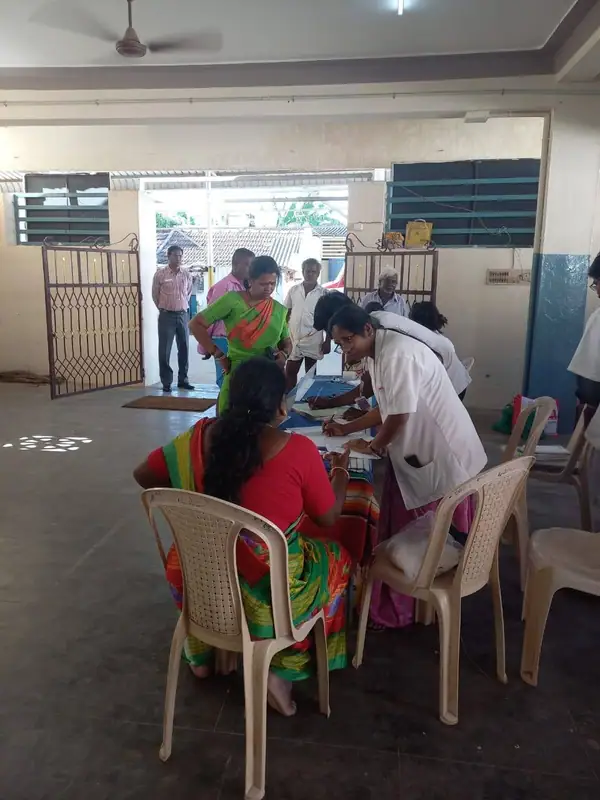
Village medical camps
3. Research Programmes in Collaboration with NGOs
Translational, community-embedded research is a central strategic priority at KITS. The university collaborates with non-governmental organisations, grassroots agrarian bodies, and community collectives to address real-world challenges in human–wildlife coexistence, renewable water infrastructure, soil nutrient depletion, and ecological agriculture. These research initiatives bridge academic laboratory findings with practical grassroots deployment.
3.1 Safe Path Network – IoT Elephant Intrusion Alert System (UBA Grant: ₹1,00,000)
Safe Path Network elephant-intrusion alert system
Supported by an Unnat Bharat Abhiyan (UBA) research grant of ₹1,00,000, student researchers from the Department of ECE and the Rotaract Club of Karunya University (parented by the Rotary Club of Thondamuthur) developed and deployed the Safe Path Network in Kalaimangalam village. The automated system utilizes infrared and seismic sensor nodes to transmit instant SMS alerts to village leaders and forest range officers upon detecting elephant movement within a 1 km radius. The club is parented by the Rotary Club of Thondamuthur.
Relevant SDGs: 9, 11, 15, 17.
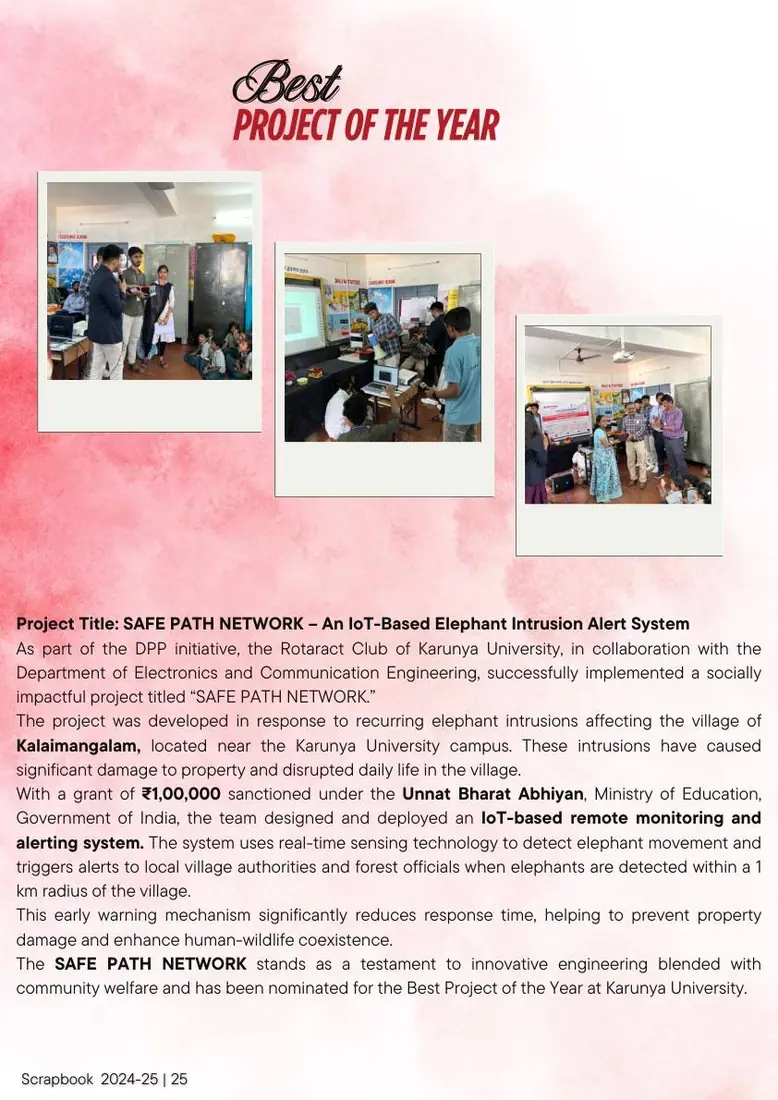
Original Safe Path Network evidence page
Human–Elephant Conflict (HEC) Monitoring & Corridor Mapping at Jakir Porethy
In response to recurring human–wildlife conflict at Jakir Porethy tribal settlement (inhabited by ten resident families), an ECE–Rotaract research team surveyed the migratory corridor and deployed field-level optical sensing devices to assess animal crossing frequencies. The team visited the village and selected CCTV locations for a trial of an ICT-based detection device.
Relevant SDGs: 9, 11, 15, 17.
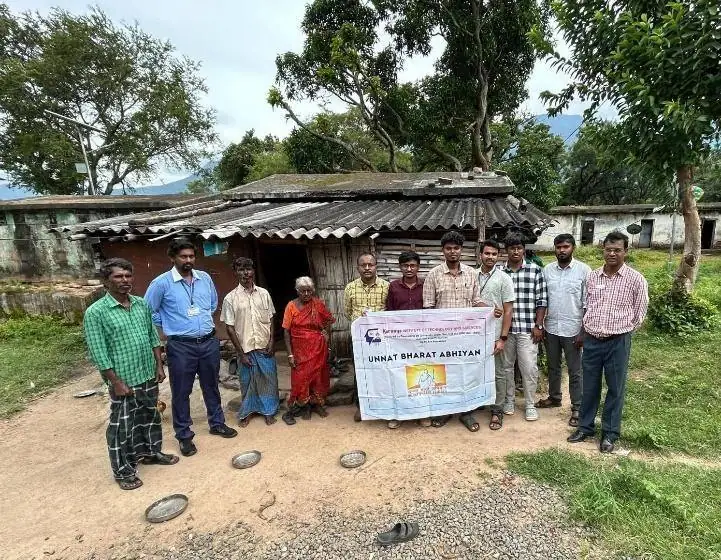
Human–elephant conflict monitoring at Jakir Porethy
3.3 Soil Nutrient Diagnostics and Farmer Health Report Cards
Soil testing and farmer report cards
Students and faculty of the School of Agricultural Sciences collected georeferenced soil samples across smallholder farms in the Siruvani basin, conducting laboratory nutrient assays and issuing 100 Soil Health Cards with customized fertilizer advisory plans to marginal farmers from Sadivayal and Portahy.
Relevant SDGs: 2, 12, 15, 17.
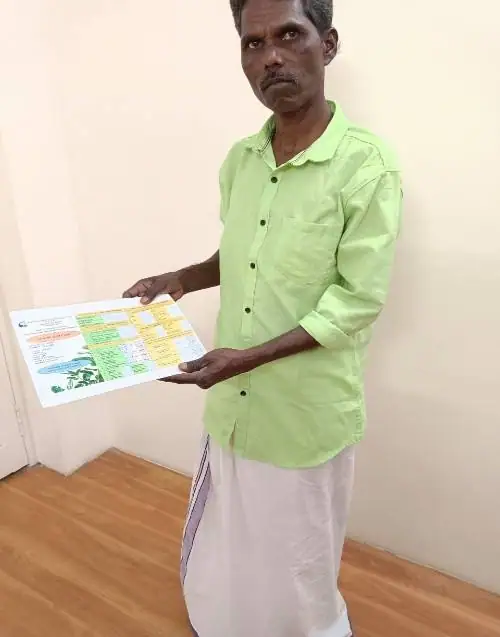
Soil testing and farmer report cards
3.4 Solar Lift Irrigation Engineering Feasibility Study at Portahy
Water-lift irrigation feasibility visits
CCAC facilitated visits to Portahy village on 21 October 2024 to examine solar-pump placement and wind-based irrigation options. Er. Brussely (Techno Group) and Dr. Raja (Department of Mechanical Engineering, KITS) evaluated the terrain and stream discharge to engineer a solar-assisted lift irrigation system, submitting an applied research proposal in partnership with IIT Palakkad to irrigate 40 acres.
Relevant SDGs: 2, 6, 7, 9, 17.
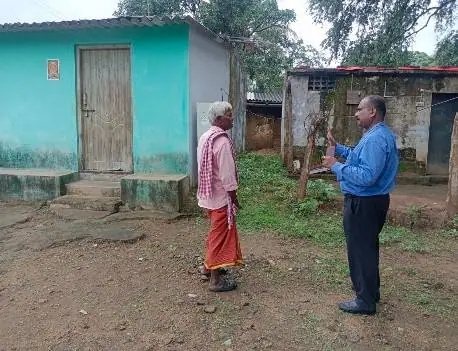
Water-lift irrigation feasibility visits
3.5 Regional Farmer Education and Agricultural Technology Transfer (Farmers Mela)
Farmer education and technology transfer
On 16 October 2024, KITS hosted the regional Farmers Mela, convening approximately 400 smallholder and marginal farmers for technical seminars and demonstrations on coconut management, organic cultivation, market linkages, and credit access, directly benefiting farming clusters from CCAC adopted villages.
Relevant SDGs: 2, 4, 8, 12, 17.
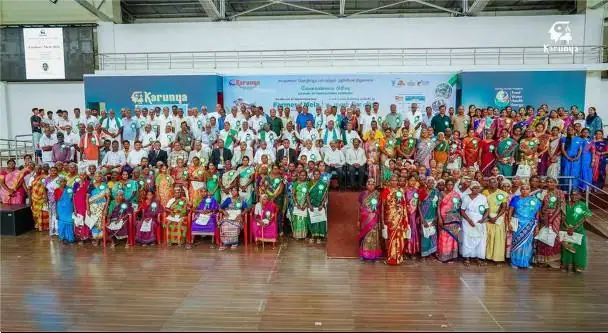
Farmer education and technology transfer
On-Farm Sustainable Crop and Livestock Management Demonstrations
Between August and October 2024, the School of Agricultural Sciences conducted five field demonstrations: paddy-pest management at Vadakarai (23 August 2024; 12 farmers), precision agriculture at Trivandrum (26 August 2024; 21 farmers), organic horticultural management across six regional blocks (125 farmers), livestock management at Sirumugai (25 farmers), and balanced nutrient management at Gobichettipalayam (19–23 August 2024; 62 farmers).
Relevant SDGs: 2, 4, 12, 15, 17.
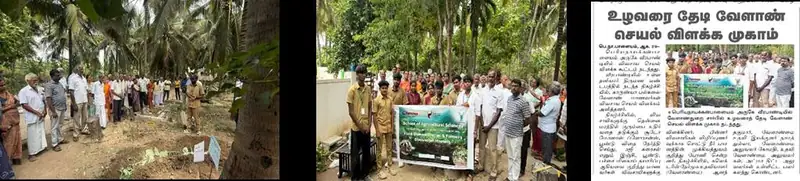
Sustainable crop and livestock demonstrations
3.7 Integrated Pest Management (IPM) & Organic Production Research Trials
Integrated pest management and eco-friendly production
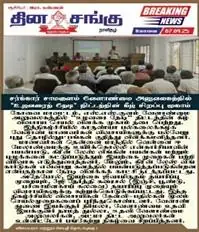
A programme at ICAR–Krishi Vigyan Kendra trained 100 farmers in pest traps, botanical extracts and nutrient management. An eco-friendly crop-production programme at the KITS/Gurusamy field on 28–29 August 2025 trained 25 farmers using practical demonstrations of banana management, organic formulations and yellow sticky traps.
Relevant SDGs: 2, 4, 12, 15, 17.
Integrated pest management and eco-friendly production
4. Development of Educational Resources in Collaboration with NGOs
To ensure sustainable knowledge equity, KITS faculty, students, and research centres collaborate with NGOs to co-design, publish, and disseminate tailored educational curricula, learning modules, digital kits, and vocational training courseware. These pedagogical resources target underprivileged schoolchildren, rural women's self-help groups (SHGs), unemployed rural youth, and incarcerated individuals.
4.1 Digital Literacy and Cyber-Safety Curriculum Modules
Digital literacy and cyber-safety awareness
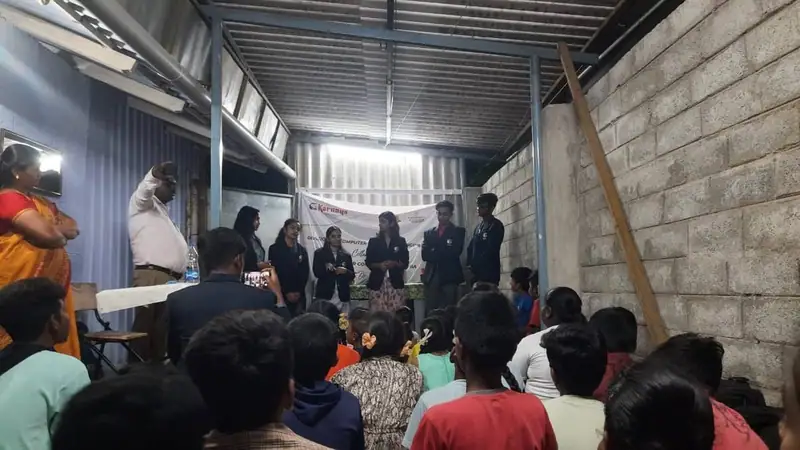
Students from Computer Engineering, Cyber Security, and AI and ML delivered awareness sessions at Kooduthurai Colony, Kallipalayam and Thenamanallur tuition centres on 21st September 2024. Explanations and a skit introduced digital literacy and prevention of digital crime.
Relevant SDGs: 4, 9, 17.
Digital literacy and cyber-safety awareness
4.2 Bilingual Educational Retention & Parental Awareness Modules at Moongilmadai
Education awareness in Moongilmadai
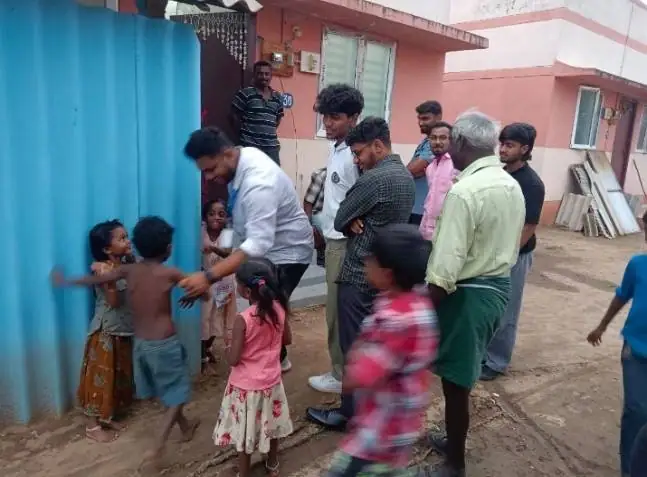
CCAC worked with Karunya Rotaract members and MBA students to visit households in Moongilmadai village on 19 October 2024. Volunteers explained the importance of education to parents and encouraged regular school attendance among children.
Relevant SDGs: 4, 10, 17.
Education awareness in Moongilmadai
4.3 Financial Literacy & Self-Help Group (SHG) Capacity Building Toolkits
Financial literacy for self-help groups
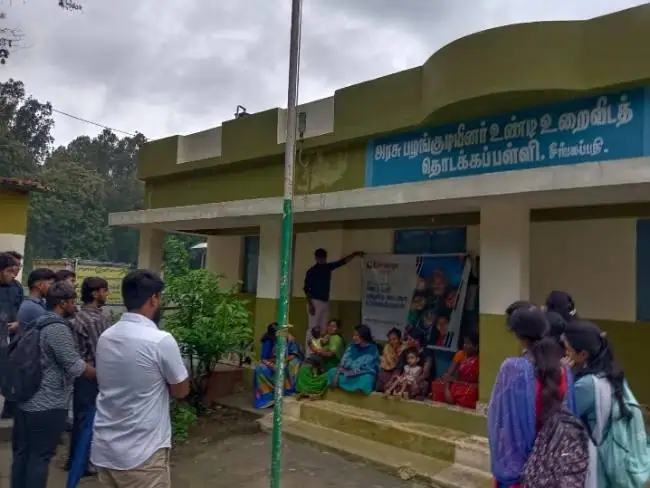
Faculty and MBA student researchers from the Karunya School of Management co-developed and distributed a bilingual practical handbook on Self-Help Group (SHG) accounting, digital banking security, and micro-credit ledger maintenance during an interactive workshop for 35 women SHG leaders at Sadivayal on 14 October 2024.
Relevant SDGs: 4, 5, 8, 17.
Financial literacy for self-help groups
4.4 Experiential Learning Through Play & Creative Expression Modules
Children’s Day and learning through play
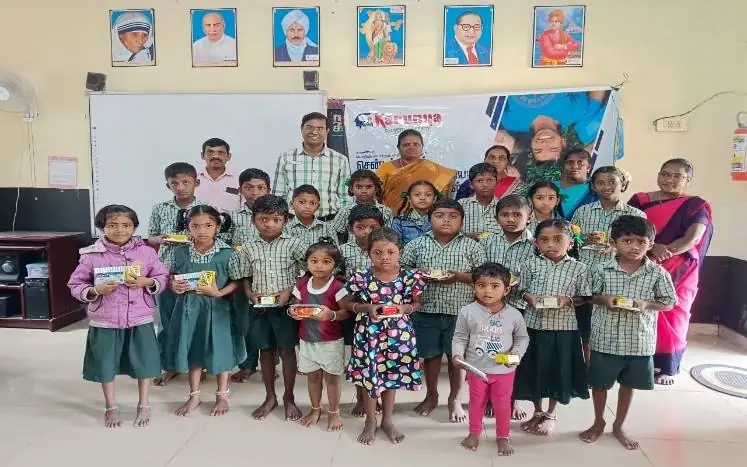
To foster cognitive and creative learning, CCAC educators formulated and deployed experiential learning kits—incorporating storytelling, artistic expression, and literacy games—engaging 300 rural children across 14 community tuition centres and Moongilmadai school during Children’s Day observances in November 2024.
Relevant SDGs: 4, 10, 17.
Children’s Day and learning through play
4.5 Foundational Reading Resources & National Reading Day Library Outreach
Reading initiatives at Iruttupallam school
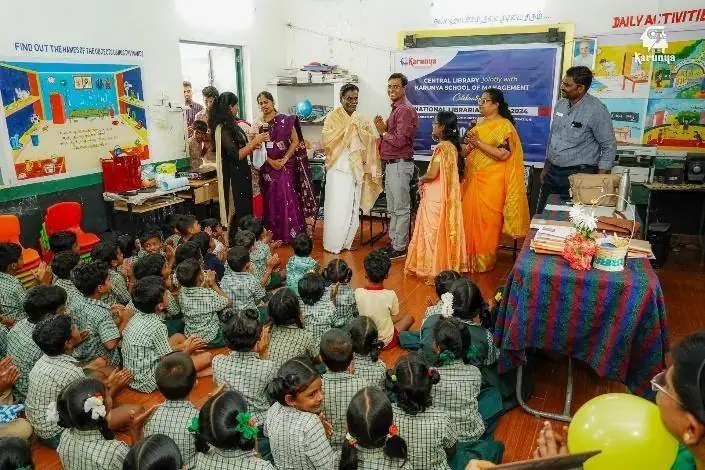
Karunya School of Management and the Central Library observed National Librarian’s Week at Panchayat Union Middle School, Iruttupallam. MBA students delivered a skit on education, and librarian Dr. Mercy Lydia explained the importance of reading and libraries.
Relevant SDGs: 4, 17.
Reading initiatives at Iruttupallam school
4.6 SEESHA Remedial Learning Centre Curricula & Computer Education
SEESHA learning centres and computer education
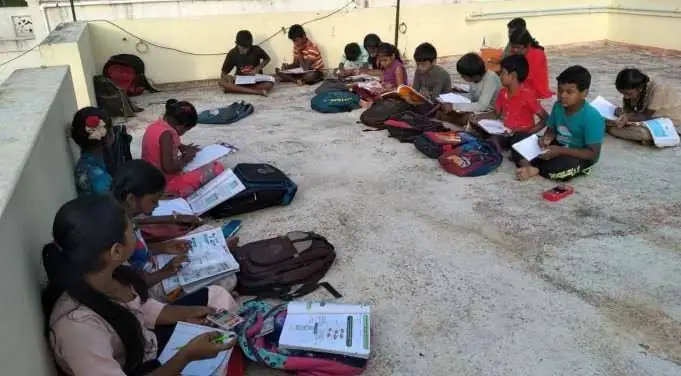
In structured partnership with SEESHA, KITS provides academic guidance and curriculum resources for 40 community learning centres serving approximately 3,000 children nationally, alongside dedicated pedagogical support for eight learning centres (benefiting 290 children) and a foundational computer-literacy lab in the Thondamuthur block.
Relevant SDGs: 4, 10, 17.
SEESHA learning-centre activities
Standardized School Educational Supply Kits Programme
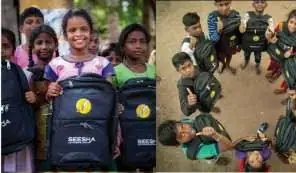
To eliminate material barriers to formal education, KITS co-developed and supported SEESHA’s school kit initiative, distributing standardized learning resource kits—comprising school bags, notebooks, geometry sets, and writing supplies—to disadvantaged rural schoolchildren across the district.
Relevant SDGs: 4, 10, 17.
SEESHA school-kit programme
4.8 Tally ERP Prime Accounting & Financial Employability Courseware
Tally ERP Prime and employability training
In partnership with SEESHA, KITS commerce faculty structured and delivered modular courseware in Tally ERP Prime and digital accounting at the SEESHA Vocational Training Centre, training 20 underprivileged rural youth during 2024–25 (building upon a cumulative alumni base of 160 certified candidates and 50 formal job placements). The activity links skill education with access to employment.
Relevant SDGs: 4, 5, 8, 17.
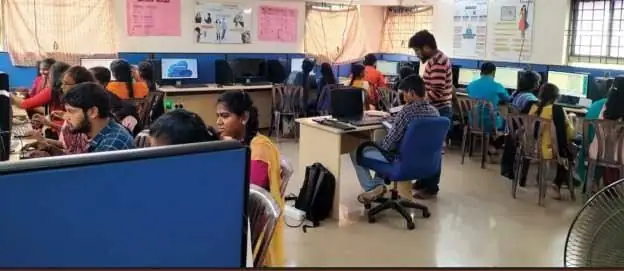
SEESHA Tally training
4.9 Women's Vocational Courseware in Tailoring & Handcrafts (SEESHA/RSETI/DXC)
Women’s vocational education and livelihood support
SEESHA programmes include jute products, tailoring, Aari embroidery, silk-thread jewellery and beautician training. KITS and SEESHA, in collaboration with the Rural Self Employment Training Institute (RSETI) and corporate partner DXC Technology, co-designed comprehensive skill training modules: 70 rural women completed certified training in eco-friendly jute bag fabrication, and 60 women completed tailoring and Aari embroidery courses at Karunya Nagar, supported by micro-enterprise seed funding.
Relevant SDGs: 1, 4, 5, 8, 17.
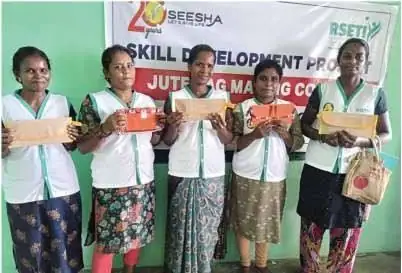
SEESHA vocational training
4.10 Correctional Livelihood Rehabilitation Curricula at Coimbatore Central Prison
Prison livelihood education
Under an institutional social-rehabilitation outreach initiative conducted with local civil-society welfare bodies, CCAC faculty and student trainers developed and delivered two vocational curricula for Coimbatore Central Prison inmates nearing release: a 5-day Domestic Plumbing course (27–31 August 2024; 30 inmates) and a certified Basic Electrical Servicing module (32 inmates).
Relevant SDGs: 4, 8, 10, 17.
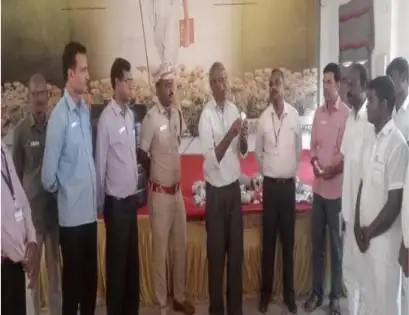
Prison livelihood education
4.11 Rural Employability and Mobile Digital Tools Training with CHUWAK
Employability awareness with CHUWAK
CCAC and CHUWAK organised a programme for local unemployed people, with 11 participants on 25 September 2024. CHUWAK’s CEO explained a mobile application, local job opportunities, market needs and skills development. The activity links community learning with employability.
Relevant SDGs: 4, 8, 17.
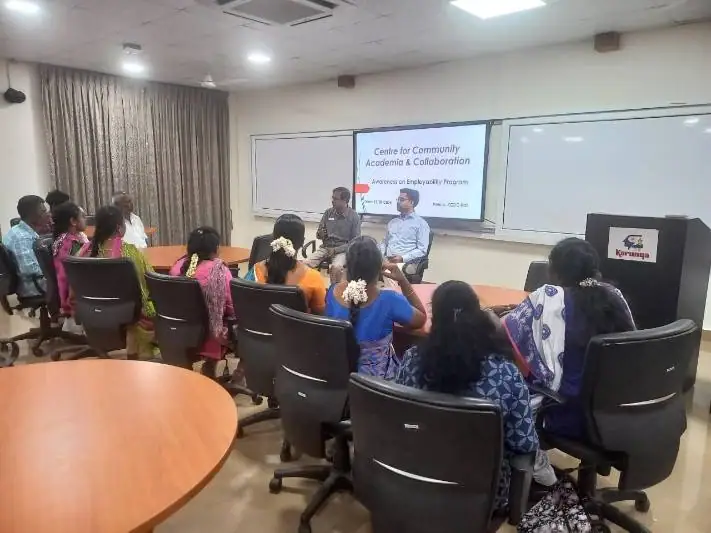
Employability awareness with CHUWAK
4.12 'POESIE' Creative Peace, Values & Civic Leadership Digital Platform
POESIE public learning through creative resources
To commemorate Gandhi Jayanti on 2 October 2024, KSM Rotaract launched 'POESIE', an educational creative-writing initiative engaging school children in composing original poetry on non-violence, ethical governance, and social harmony, curating and publishing the selected literary resources digitally as public educational content.
Relevant SDGs: 4, 16, 17.
5. Master NGO Collaboration & Impact Alignment Matrix
The matrix below consolidates all active collaborations between Karunya Institute of Technology and Sciences and non-governmental organisations, categorised strictly according to the three assessment pillars of THE Impact Rankings Metric 17.2.5, detailing partner entities, target SDGs, and confirmed beneficiary metrics.
| Partner NGO / Body | Collaboration Pillar | Joint Programme / Initiative | Target SDGs | Beneficiary Reach & Scope |
|---|---|---|---|---|
| SEESHA | Pillar 3: Educational Resources | 40 Learning Centres, School Kits, Tally ERP, Tailoring | SDG 1, 4, 5, 8, 10, 17 | 3,000 children; 60 women certified in tailoring; 40+ youth in Tally Prime |
| Rotary Club of Thondamuthur | Pillar 1: Student Volunteering | Green Legacy Afforestation, Tuition Support, Campus Drives | SDG 4, 13, 15, 17 | 62+ native trees planted; ongoing village greening & tutoring |
| Rotary Club of Coimbatore Aakruthi | Pillar 1: Student Volunteering | Mega Eye Screening & 'Vision of Care' Geriatric Eye Camps | SDG 3, 10, 17 | 120+ elderly care residents & rural community patients screened |
| Madurai Eye Center & Karunya Hospitals | Pillar 1: Student Volunteering | Comprehensive Community Eye Screening Camps | SDG 3, 4, 17 | 300+ schoolchildren & villagers screened with corrective lenses provided |
| Sevalaya Old Age Home | Pillar 1: Student Volunteering | 'Spreading Smiles' Geriatric Companionship & Health Drives | SDG 3, 10, 17 | 30+ elderly residents received direct health & festive care |
| Rotary Club of Thondamuthur & Kalaimangalam Village Development Committee (supported by UBA grant) | Pillar 2: Research Programmes | Safe Path Network IoT Elephant Intrusion Alert System | SDG 9, 11, 15, 17 | ₹1,00,000 UBA grant; protects 5,000+ fringe village residents & wildlife |
| Jakir Porethy Community Committee | Pillar 2: Research Programmes | Human–Elephant Conflict (HEC) Monitoring & Sensor Arrays | SDG 9, 11, 15, 17 | 3 key migratory crossing points monitored; real-time SMS alerts to farmers |
| Techno Group & IIT Palakkad | Pillar 2: Research Programmes | Portahy Village Solar Lift Irrigation Engineering Feasibility | SDG 2, 6, 7, 9, 17 | Feasibility completed for 45 tribal farming families |
| Siruvani Basin Farmers Collective | Pillar 2: Research Programmes | Soil Health Testing & Diagnostic Advisory Report Cards | SDG 2, 12, 15, 17 | 100 smallholder farmers received custom soil nutrient cards |
| Krishi Vigyan Kendra Farm Advisory Council & Siruvani Organic Farmers Association | Pillar 2: Research Programmes | Integrated Pest Management (IPM) & Eco-Friendly Production Trials | SDG 2, 4, 12, 15, 17 | 100 farmers trained in bio-traps; 25 trained in field organic methods |
| CCAC & Coimbatore Central Prison | Pillar 3: Educational Resources | Inmate Vocational Courseware (Plumbing & Electrical) | SDG 4, 8, 10, 17 | 62 inmates nearing release trained for post-release employment |
| CHUWAK Digital Foundation | Pillar 3: Educational Resources | Rural Employability App & Digital Career Guidance Modules | SDG 4, 8, 17 | Local rural job-seekers connected to local micro-enterprises |
| Thombilipalayam Panchayat School | Pillar 1: Student Volunteering | School Electrification & Hygiene Handwashing Station | SDG 3, 4, 6, 7, 17 | 150+ school children benefit from enhanced sanitation & lighting |
| Forest Fringe Tribal Hamlets | Pillar 1: Student Volunteering | Portable Solar Home Lighting Distribution | SDG 7, 10, 17 | 10 remote tribal households provided clean solar illumination |
| Karunya Hospitals & CCAC | Pillar 1: Student Volunteering | Multi-Specialty Village Healthcare Outreach Camps | SDG 3, 10, 17 | 74+ rural patients received free medical consultations & medicines |
| Village SHG Collectives (Sadivayal) | Pillar 3: Educational Resources | SHG Financial Literacy, Accounting & Credit Manuals | SDG 4, 5, 8, 17 | 35+ rural women SHG leaders & members trained in bookkeeping |
6. Institutional Governance, Monitoring & Continuous Impact Assurance
All NGO collaborations at KITS operate under a centralized governance architecture overseen jointly by the Centre for Community Academia Collaboration (CCAC) and the Internal Quality Assurance Cell (IQAC). Institutional Memoranda of Understanding (MoUs) formally define project milestones, ethical compliance, data confidentiality, community consent protocols, and measurable impact targets.
Student volunteering is formally accredited and tracked through academic co-curricular logs, ensuring that community service is integrated into degree learning outcomes. Research programmes undergo rigorous review by departmental research committees and field-level community advisory panels. Educational resources are validated for pedagogical efficacy and linguistic accessibility before community deployment. Through this holistic tripartite framework, KITS sustains transparent, measurable, and enduring contributions to the UN Sustainable Development Goals.